Scattered across every continent, ancient ruins tell the stories of civilizations that shaped our world long before smartphones and skyscrapers existed. From jungle-covered pyramids to cliff-carved cities, these sites are more than just old rocks — they are windows into the past.
Exploring them reveals how creative, intelligent, and ambitious our ancestors truly were. Whether you dream of traveling or just love a good history mystery, these 15 ruins will leave you absolutely speechless.
Machu Picchu — Peru
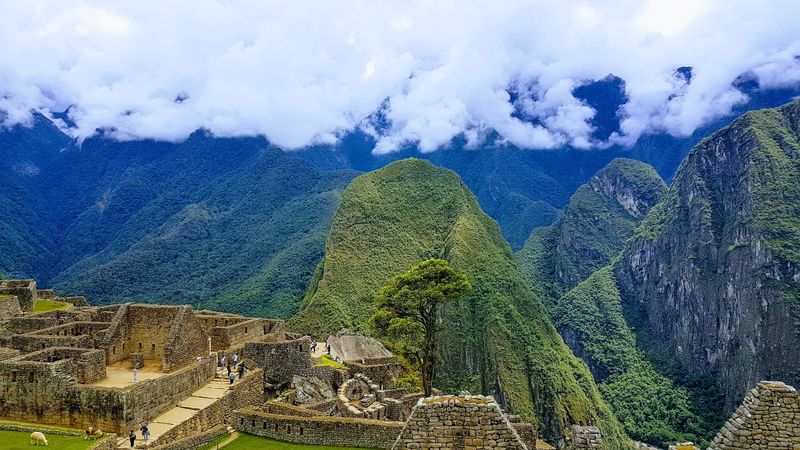
Perched so high in the Andes that clouds literally drift through its doorways, Machu Picchu feels less like a city and more like a dream someone forgot to wake up from. Built around 1450 AD by the Inca emperor Pachacuti, this mountaintop citadel was likely a royal estate and religious sanctuary.
What makes it jaw-dropping is not just the view — it is the engineering. The Inca cut massive stones so precisely that no mortar was needed, and the walls have survived centuries of earthquakes without crumbling.
The site includes temples, agricultural terraces, and water channels that still function today. Researchers believe it was abandoned just over a century after it was built, possibly due to the Spanish conquest.
Nobody sent a memo, so the jungle quietly swallowed it until explorer Hiram Bingham rediscovered it in 1911.
Visitors today can hike the famous Inca Trail or take a train through the Sacred Valley. Either way, standing at the Sun Gate and watching the citadel emerge from morning mist is one of those moments that rewires your brain permanently.
Pack a rain jacket — the mountains have opinions about weather.
Petra — Jordan
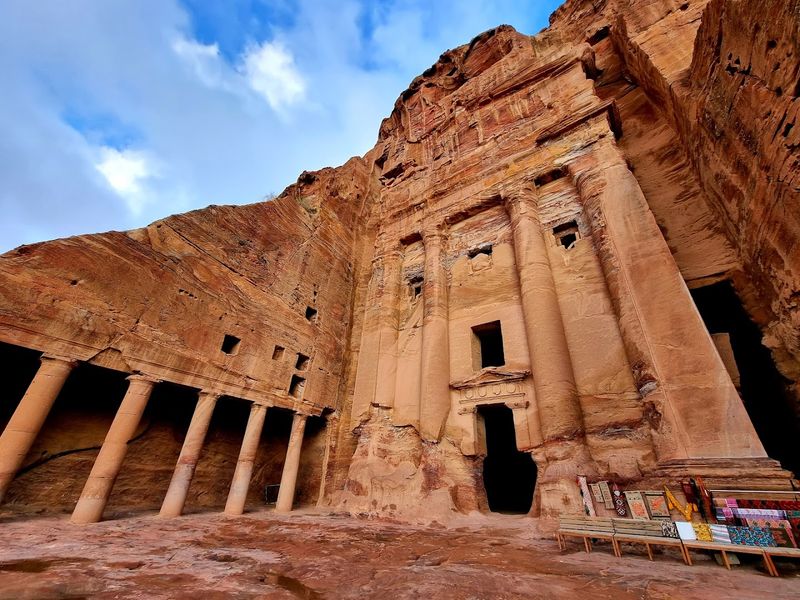
Imagine walking through a narrow crack in a cliff for over a kilometer, canyon walls towering above you on both sides, and then — boom — a rose-red temple carved directly into the rock face appears before your eyes. That is exactly what happens when you approach Petra’s famous Treasury, and no photograph has ever fully done it justice.
This ancient city was built by the Nabataean people around the 4th century BC and served as a powerful trading crossroads connecting Arabia, Egypt, and the Mediterranean.
The Nabataeans were master engineers who carved not just buildings but entire water systems into the sandstone. Petra once supported a population of around 20,000 people in a desert environment — no small feat.
The city includes hundreds of tombs, temples, a Roman-style colonnaded street, and a massive monastery reached by climbing 850 rock-cut steps.
Walking through Petra at night, when thousands of candles light the path to the Treasury, is considered one of the most magical travel experiences on Earth. The site covers about 264 square kilometers, meaning most visitors only scratch the surface.
Fun fact: the Treasury was used as a filming location in Indiana Jones and the Last Crusade.
Angkor Wat — Cambodia
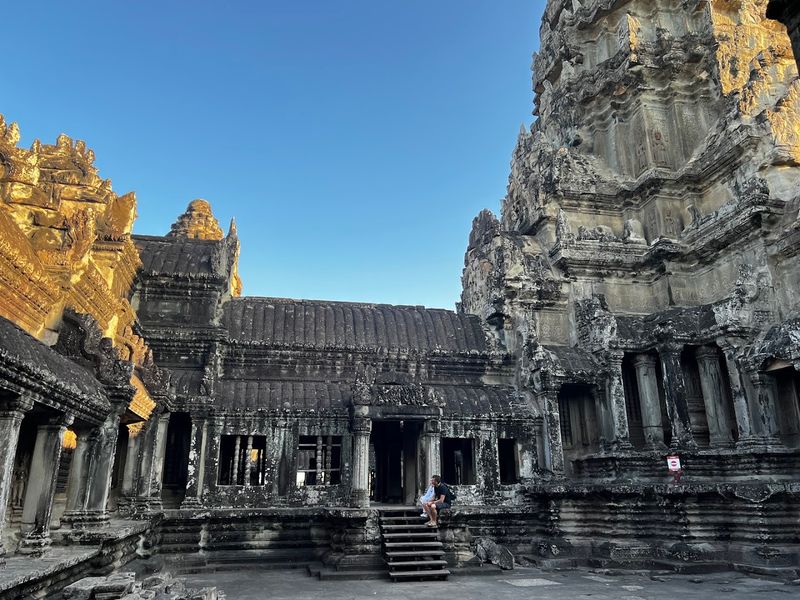
So large it can be seen from space, Angkor Wat holds the record as the biggest religious monument ever built by human hands — and it still makes people stop and stare open-mouthed more than 900 years after its construction. King Suryavarman II commissioned it in the early 12th century as a Hindu temple dedicated to the god Vishnu.
Over time, it transitioned into a Buddhist site, and today it remains an active place of worship. Monks in saffron robes walk the same stone corridors where ancient kings once paraded.
The temple covers about 400 acres and is surrounded by a massive moat that doubles as a reflection pool at sunrise. Its five towers represent the peaks of Mount Meru, home of the gods in Hindu cosmology.
The walls are covered with nearly half a mile of bas-relief carvings depicting mythological battles, historical events, and scenes of daily life.
Angkor Wat sits within the larger Angkor Archaeological Park, which contains dozens of other temples including the hauntingly beautiful Ta Prohm, where giant tree roots have wrapped around stone walls for centuries. Visiting at dawn, when the sky turns pink and gold above the towers, is an experience that earns its own category of wonderful.
The Colosseum — Rome, Italy
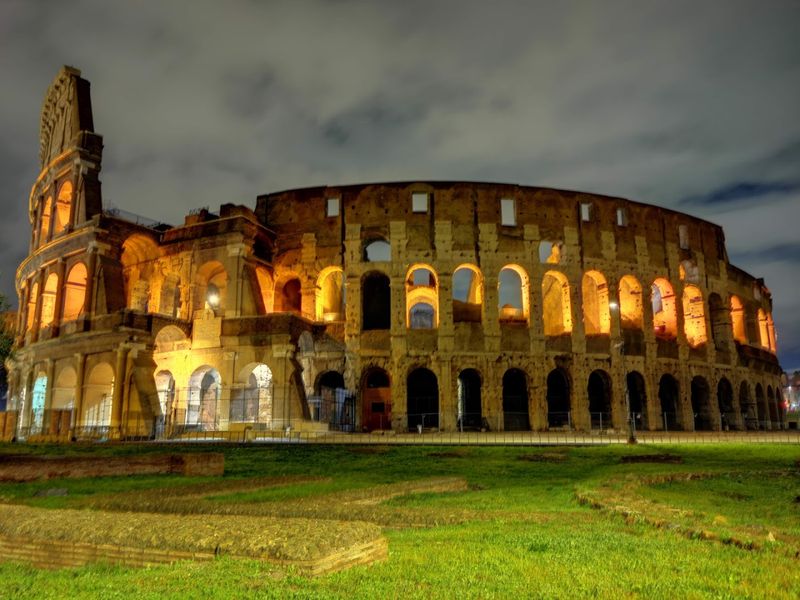
Nearly 2,000 years old and still the most recognizable stadium on the planet — the Colosseum was ancient Rome’s version of a sports arena, concert hall, and reality TV show all rolled into one. Construction began under Emperor Vespasian around 70 AD and was completed in just a decade, which is genuinely impressive considering they did not have cranes or concrete mixers.
When it opened, Emperor Titus celebrated with 100 days of games, involving gladiators, wild animal hunts, and elaborate theatrical performances.
At full capacity, the Colosseum held between 50,000 and 80,000 spectators who entered through numbered arches and sat in sections based on social class. The underground tunnels beneath the arena floor, called the hypogeum, housed gladiators, animals, and stage machinery.
Trapdoors and lifts could send lions or scenery shooting up through the floor mid-show — ancient special effects at their most dramatic.
About two-thirds of the original structure was stripped away during the Middle Ages for building materials, but what remains is still breathtaking. The Colosseum attracts around six million visitors each year, making it one of Italy’s most visited landmarks.
Seeing it lit up at night, glowing amber against a dark Roman sky, is unforgettable.
Chichén Itzá — Mexico
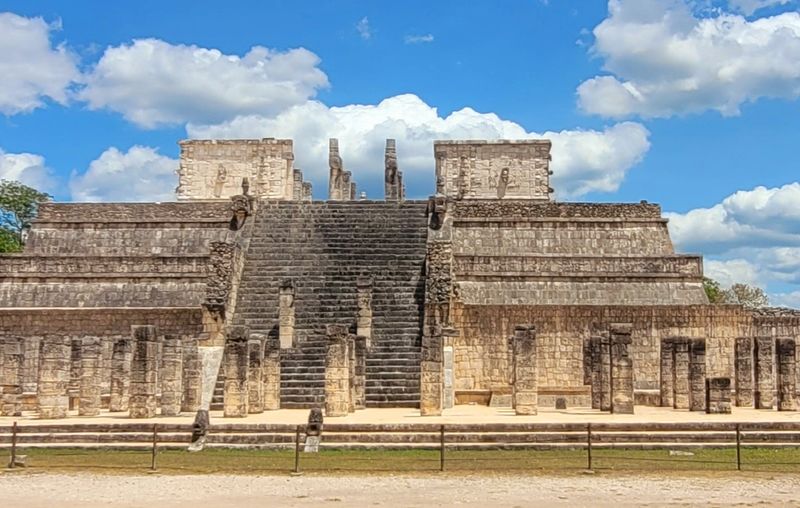
Every year on the spring and autumn equinoxes, something extraordinary happens at Chichén Itzá: the setting sun casts a shadow along the edge of El Castillo pyramid that looks exactly like a giant feathered serpent slithering down the staircase. The Maya did not stumble onto this effect by accident — they engineered it on purpose.
This level of astronomical precision is what makes Chichén Itzá one of the most mind-blowing ancient sites in the world. The city flourished between roughly 600 and 1200 AD as a major Maya political and religious center.
El Castillo, also called the Temple of Kukulcan, has 365 steps in total — one for each day of the year. The pyramid also has 52 panels on each side, matching the 52-year cycle in the Maya calendar.
Surrounding it are a sacred cenote (natural sinkhole used for offerings), a massive ball court, and the Temple of the Warriors with its famous thousand columns.
Chichén Itzá was named one of the New Seven Wonders of the World in 2007, and it draws over two million visitors annually. One practical tip for travelers: arrive early in the morning before the crowds and the Mexican midday heat both hit their peak intensity simultaneously.
Pompeii — Italy
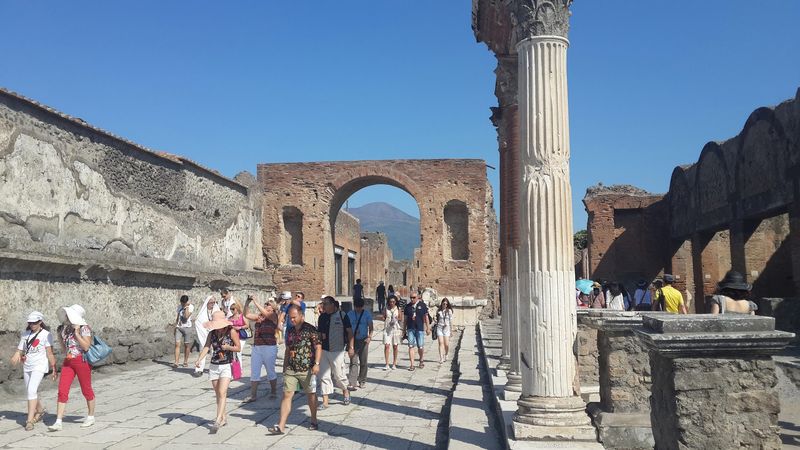
On August 24, 79 AD, Mount Vesuvius erupted with such violence that an entire Roman city was buried under nearly 20 feet of volcanic ash and pumice in less than 24 hours. That catastrophe was a tragedy for the people of Pompeii — but it accidentally created the world’s most detailed time capsule of ancient Roman life.
Preserved beneath the ash were homes, bakeries, taverns, theaters, and even graffiti scratched into walls. Some of that graffiti reads like ancient social media posts, including election endorsements and complaints about noisy neighbors.
Excavations began in the 18th century and are still ongoing today. Archaeologists have uncovered around two-thirds of the city, with new discoveries still being made regularly.
In 2023, a fast-food counter called a thermopolium was fully excavated, complete with painted images of the dishes that were once served there — the ancient Roman equivalent of a menu board.
Walking Pompeii’s stone streets today, past bakeries with millstones still in place and houses with original frescoes on the walls, creates a strange feeling that time folded in on itself. The plaster casts of victims, preserved in the exact positions they died in, are haunting and deeply human.
Pompeii is history you can almost touch.
The Acropolis — Athens, Greece
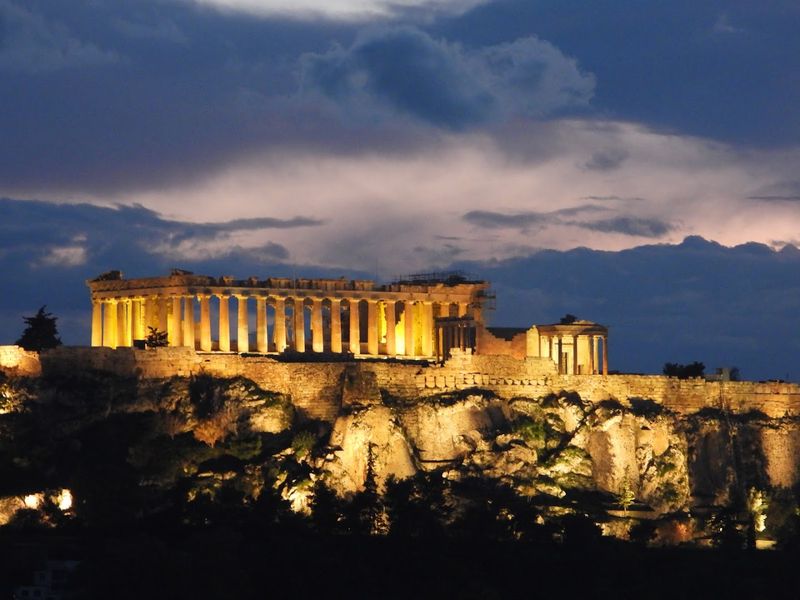
Sitting on a rocky hill above Athens like a crown the city has worn for 2,500 years, the Acropolis is arguably the most influential architectural site in Western history. The Parthenon, its centerpiece, was built between 447 and 432 BC under the leadership of the statesman Pericles during Athens’s golden age.
What looks like a simple rectangular building is actually a marvel of optical trickery — its columns are slightly curved and tilted inward so that to the human eye, everything appears perfectly straight. The ancient Greeks understood visual perception better than most people realize.
The Parthenon was originally dedicated to Athena, the goddess of wisdom and patron of Athens. Over its long life, it has served as a treasury, a Christian church, and an Ottoman mosque.
An explosion in 1687 blew off the roof, and much of the surviving sculpture ended up in the British Museum in London — a fact that continues to spark heated debate between Greece and the UK.
The Acropolis Museum at the base of the hill is a stunning modern building that houses original sculptures and artifacts. Visiting at sunset, when the Parthenon glows golden above the city, connects you to every architect, philosopher, and poet who looked up at it and felt the same quiet awe you do.
Stonehenge — England
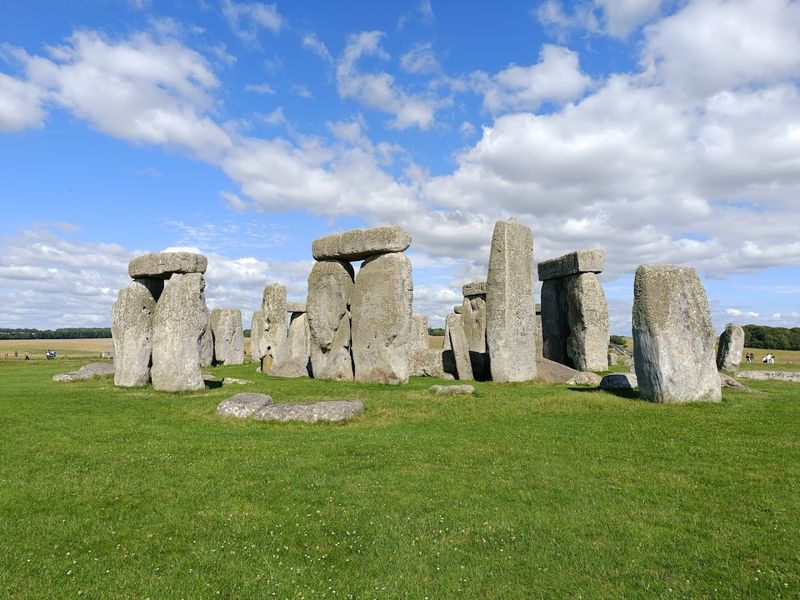
Nobody told the builders of Stonehenge to leave a manual, and honestly, that might be their greatest power move. Standing on the flat Salisbury Plain in southern England, these enormous stone circles have been puzzling scientists, historians, and curious tourists for centuries.
The monument was built in stages over roughly 1,500 years, beginning around 3000 BC. Some of the larger stones, called sarsens, weigh up to 25 tons and were transported from a quarry about 25 miles away — using nothing but human muscle, wooden sledges, and an extraordinary amount of determination.
The smaller bluestones are even more mysterious. They came from the Preseli Hills in Wales, nearly 200 miles away.
How Neolithic people moved them remains genuinely unknown, though theories range from sledges and rafts to, yes, glaciers doing some of the heavy lifting. What is clear is that Stonehenge aligns precisely with the sunrise on the summer solstice and the sunset on the winter solstice, suggesting it was used for astronomical or ceremonial purposes.
Every year, thousands of people gather at Stonehenge to celebrate the solstices, continuing a tradition that stretches back millennia. Standing near those ancient stones as the sun rises between them is one of those rare moments where history stops being abstract and becomes something you feel in your bones.
Tikal — Guatemala
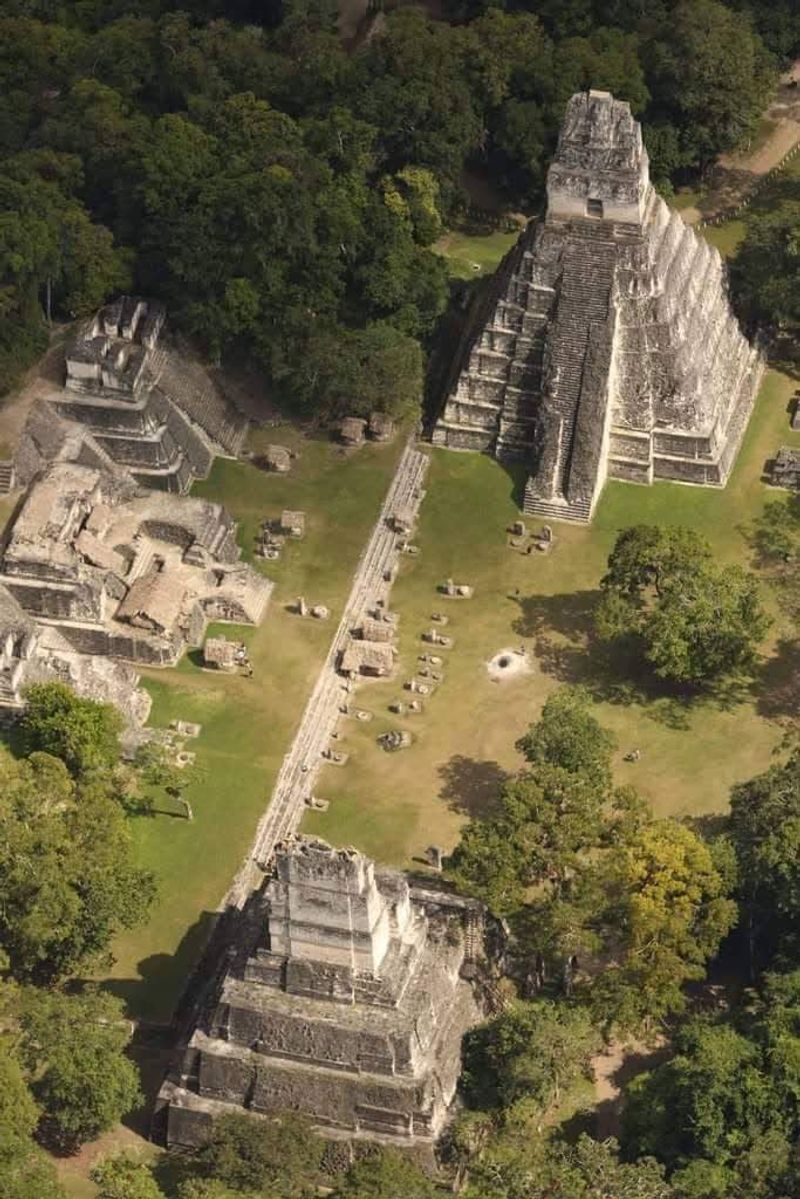
Climb to the top of Temple IV at Tikal just before sunrise, and you will witness something that feels more like a scene from an adventure film than real life — stone pyramid peaks jutting through a sea of green jungle mist while howler monkeys roar in the canopy below. Tikal was one of the most powerful city-states of the ancient Maya world, reaching its peak between 200 and 900 AD.
At its height, the city was home to an estimated 100,000 people and controlled a vast network of trade routes and political alliances across Mesoamerica.
The site covers approximately 222 square miles, though only a fraction has been fully excavated. Beneath the jungle floor, ground-penetrating radar has revealed thousands of additional structures still waiting to be uncovered.
The main ceremonial center includes six massive temple pyramids, palaces, and a large plaza that once served as the social and religious heart of the city.
Tikal was mysteriously abandoned around 900 AD, likely due to a combination of drought, warfare, and political collapse. The jungle reclaimed it for nearly a thousand years before excavations began in the 1950s.
Today it sits within a UNESCO World Heritage Site and a national park, meaning the howler monkeys are protected too — and they are very loud about that fact.
Bagan — Myanmar
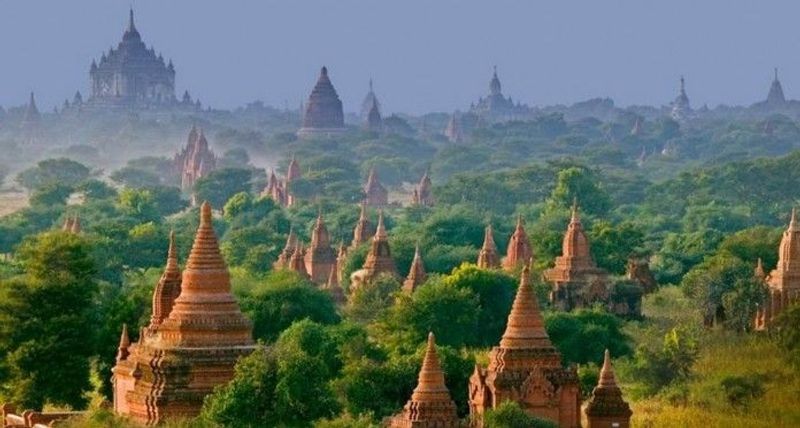
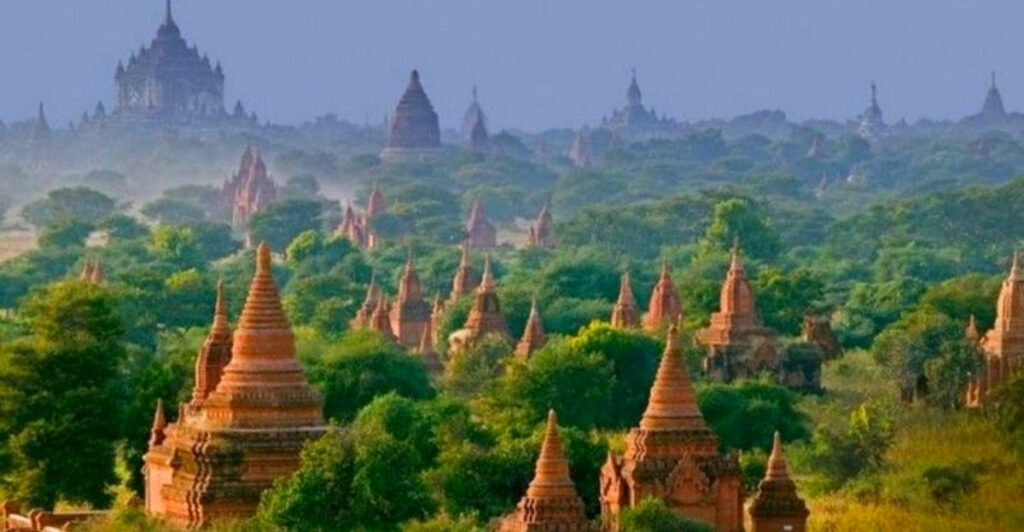
Picture over 2,000 ancient temples and pagodas spread across a dusty plain as far as the eye can see, with hot air balloons drifting silently overhead in the early morning light — that is Bagan, and it looks like it was designed specifically to make people believe in magic. Located in central Myanmar along the Irrawaddy River, Bagan was the capital of the Pagan Kingdom from the 9th to 13th centuries.
During its peak, an estimated 10,000 Buddhist religious structures were built across the plain. Earthquakes, looting, and time have reduced that number significantly, but what remains is still staggering.
The temples range from tiny brick shrines to enormous multi-tiered pagodas decorated with intricate carvings and gilded spires. Ananda Temple, built around 1105 AD, is considered one of the finest surviving examples of early Burmese architecture.
Its whitewashed walls and golden spire gleam from miles away.
Exploring Bagan by bicycle or electric scooter is the most popular way to move between temples, and getting genuinely lost among the ruins is practically guaranteed — and completely wonderful. Watching the sunrise from the top of a crumbling temple while the mist lifts off the plain below is the kind of morning that makes you rethink your entire relationship with alarm clocks.
Pure, unhurried magic.
Persepolis — Iran
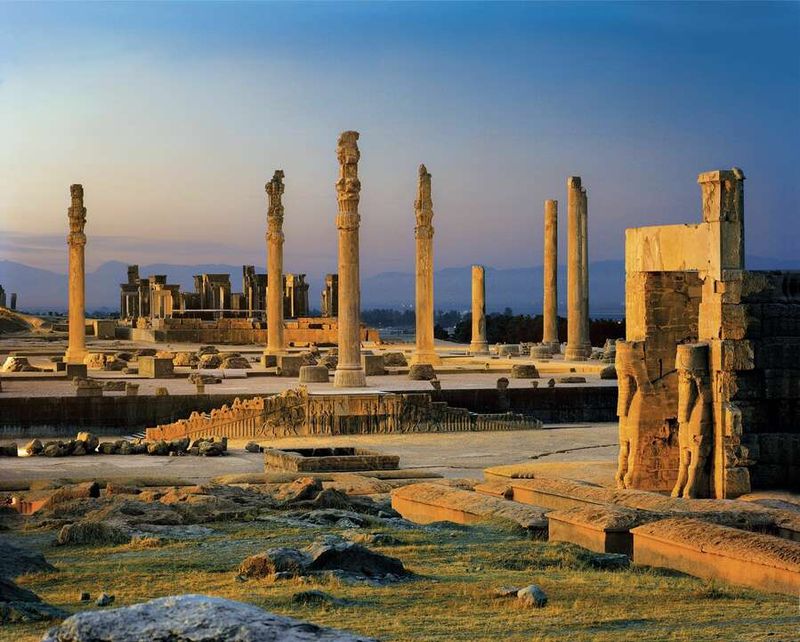
The ancient Persians did not build small — they built Persepolis, a ceremonial capital so grand that even its ruins, thousands of years later, make visitors feel appropriately tiny. Construction began around 518 BC under King Darius I of the Achaemenid Empire and continued for over a century.
Persepolis served as the ceremonial heart of an empire that stretched from Egypt to northern India, and its architecture was deliberately designed to project power, wealth, and divine authority. Delegations from across the empire came here to pay tribute during the Persian New Year festival, Nowruz.
The site includes the Apadana Palace, which once had 72 columns standing over 65 feet tall — only 13 remain standing today, but they are still breathtaking. The famous Apadana Staircase is covered with detailed relief carvings showing delegations from 23 nations bringing gifts to the Persian king, each group dressed in their own traditional clothing.
It is essentially the world’s oldest multicultural parade, carved in stone.
Alexander the Great burned Persepolis in 330 BC, supposedly in revenge for the Persian burning of Athens. Whether it was revenge or just a very bad party decision remains debated by historians.
Despite the destruction, what survives ranks among the most impressive ancient sites in the entire Middle East.
Easter Island (Rapa Nui) — Chile
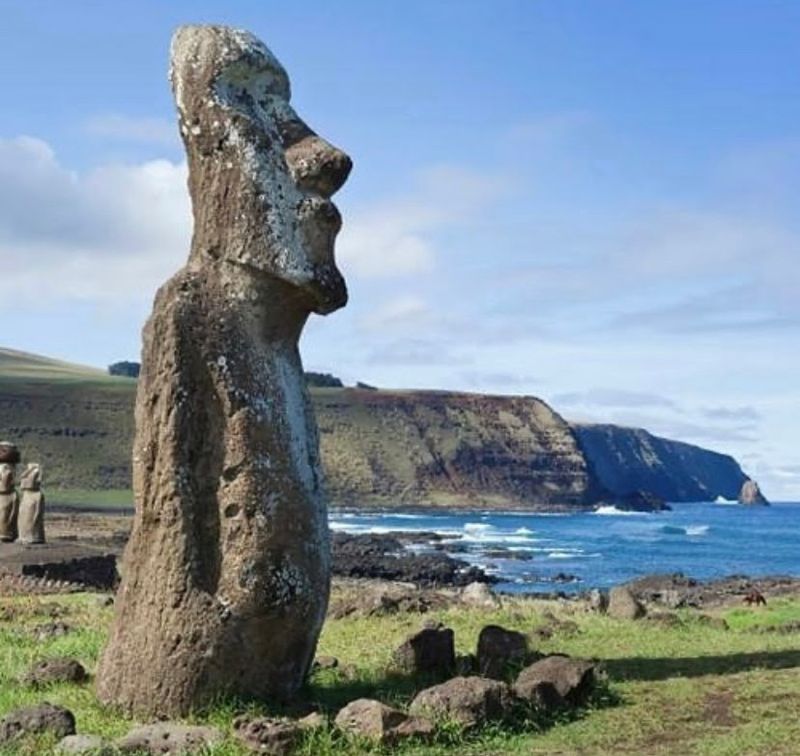
Somewhere in the middle of the Pacific Ocean, over 2,000 miles from the nearest continent, nearly 900 massive stone heads stare silently across a remote volcanic island. Easter Island — or Rapa Nui as its indigenous people call it — is one of the most isolated inhabited places on Earth, which makes the existence of its famous moai statues all the more extraordinary.
These figures, carved from compressed volcanic ash called tuff, range from about 6 to 33 feet tall and weigh anywhere from a few tons to 82 tons. The largest ever attempted was never finished and still lies in the quarry where it was carved.
The Rapa Nui people carved the moai between roughly 1400 and 1650 AD to honor their ancestors and channel spiritual power toward their communities. For decades, scientists puzzled over how islanders moved these enormous figures across the island using only Stone Age tools.
Recent experiments suggest the statues were “walked” upright using ropes and coordinated rocking motions — a method that is as clever as it sounds.
Easter Island also holds a cautionary tale about environmental collapse. Deforestation and resource overuse contributed to a significant population decline before European contact.
Today the island is a Chilean territory and a UNESCO World Heritage Site, and the moai remain as enigmatic and awe-inspiring as ever.
Great Zimbabwe — Zimbabwe
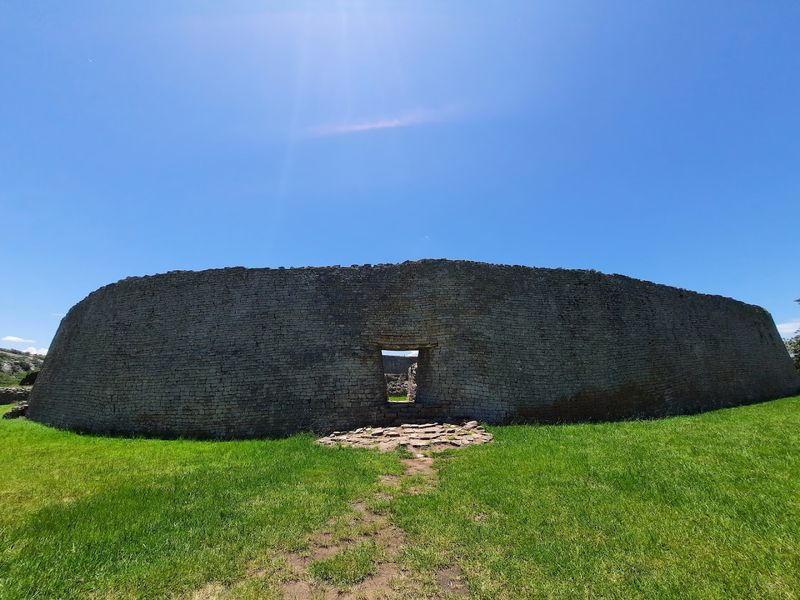
Built without a single drop of mortar, the massive stone walls of Great Zimbabwe have stood for over 700 years — and they are still standing just fine, thank you very much. Located in southern Africa, Great Zimbabwe was the capital of the Kingdom of Zimbabwe and reached its peak between the 11th and 15th centuries.
At its height, the city was home to an estimated 18,000 people and served as a major center for gold trading between the African interior and coastal merchants from as far away as China and Persia. Artifacts including Chinese porcelain and Arab coins have been found within the ruins.
The name Zimbabwe itself comes from a Shona phrase meaning “houses of stone” or “venerated houses,” and the craftsmanship behind those houses is remarkable. The Great Enclosure, the largest ancient structure in sub-Saharan Africa, features walls up to 36 feet high and 20 feet thick, constructed from carefully fitted granite blocks with no binding material whatsoever.
The precision is extraordinary.
During the colonial era, some European scholars refused to believe that Africans could have built such sophisticated structures, inventing absurd alternative theories. Archaeology has firmly and completely proven those theories wrong.
Great Zimbabwe stands as powerful evidence of a sophisticated, thriving African civilization whose story deserves far more attention in world history books.
Hampi — India
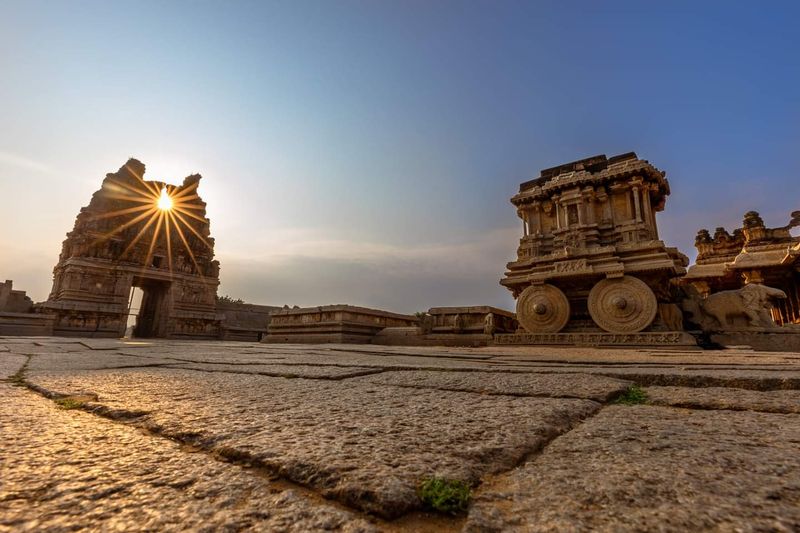
Hampi looks like a landscape that could not quite decide whether it wanted to be a history museum or a surrealist painting — and it ended up being both. Enormous rounded granite boulders are piled across the terrain in ways that seem physically improbable, and rising among them are the carved temples, market halls, and royal pavilions of the Vijayanagara Empire.
At its peak in the 15th and early 16th centuries, Vijayanagara was one of the wealthiest and most powerful kingdoms in the world, with a capital city that reportedly dazzled visiting foreign travelers who compared it favorably to Rome.
The empire was destroyed in 1565 following a devastating military defeat at the Battle of Talikota, after which the city was looted and burned for months. What remained was eventually swallowed by vegetation and time, rediscovered by archaeologists and travelers centuries later.
The ruins spread across 26 square kilometers and include over 1,600 individual monuments.
The Vittala Temple complex is the crown jewel of Hampi, featuring a famous stone chariot and musical pillars that produce different musical notes when tapped. The Virupaksha Temple at the edge of the bazaar has been in continuous use for over a thousand years.
Hampi was designated a UNESCO World Heritage Site in 1986, and wandering through it feels like reading a history book written in stone and boulders.
Teotihuacán — Mexico
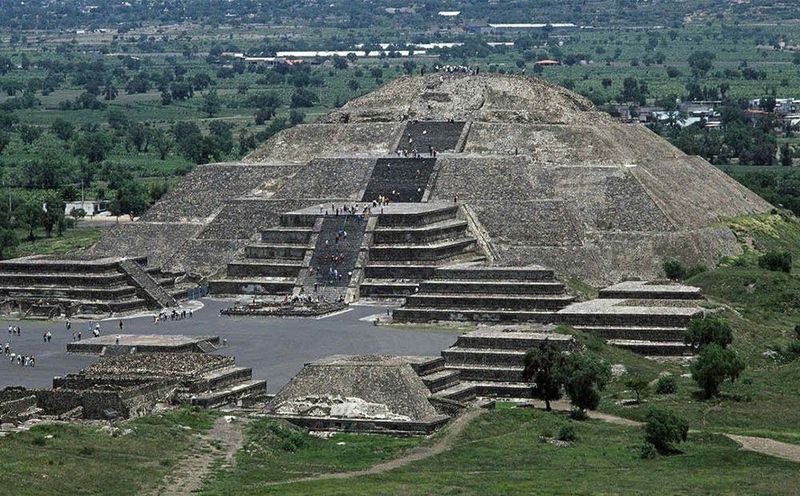
Standing at the base of the Pyramid of the Sun at Teotihuacán and craning your neck upward is a reliable way to feel very, very small. The third largest pyramid in the world, it rises 216 feet above the Valley of Mexico and was built around 100 AD — centuries before the Aztecs arrived and named the city, which translates roughly to “the place where the gods were created.” At its peak around 450 AD, Teotihuacán had a population of roughly 125,000 people, making it one of the largest cities in the entire ancient world, comparable in size to ancient Rome.
The city was laid out along a massive central road called the Avenue of the Dead, flanked by the Pyramid of the Sun, the Pyramid of the Moon, and dozens of smaller temples and palaces. The planning was remarkably precise — the entire layout appears to mirror astronomical alignments, particularly related to the Pleiades star cluster and the movements of the sun.
Mysteriously, Teotihuacán was abandoned around 550 AD, possibly due to internal revolt, climate change, or both. Nobody knows who originally built it, as the civilization left no deciphered written records.
That silence is part of what makes climbing the Pyramid of the Sun feel so profound — you are standing on something ancient, powerful, and still beautifully unexplained.
Share this story