History gets much more interesting when it refuses to stay behind museum glass. Across Africa, Europe, and the Middle East, there are Christian sites where fourth-century routines, medieval building methods, and old pilgrimage patterns still shape what you see right now.
These places are not frozen props from a costume drama – they are working records of belief, architecture, and stubborn continuity. Keep going, and you will get a brisk tour through 1,500 years of stone, ritual, and human persistence that somehow never learned how to become ordinary.
1. Saint Catherine’s Monastery, Sinai, Egypt
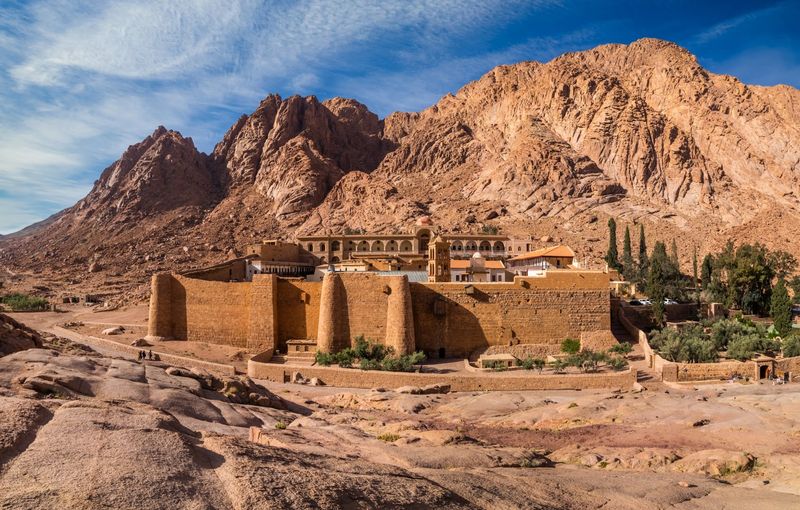
Some places survive by changing constantly, but this one chose consistency and made it work. Founded in the 6th century under Emperor Justinian I, Saint Catherine’s Monastery sits at the foot of Mount Sinai with fortified walls, ancient chapels, and a library that ranks among Christianity’s most important repositories.
Its endurance is not accidental. The remote Sinai setting, continuous monastic life, and long record of negotiated protection helped preserve manuscripts, icons, and routines that connect Late Antiquity to the present with unusual clarity.
The famous Burning Bush tradition draws attention, yet the daily reality is just as compelling. Here, you can trace how Byzantine administration, Orthodox devotion, and desert monastic discipline settled into a durable pattern that still shapes the place more than tourism ever could.
2. Meteora Monasteries, Greece
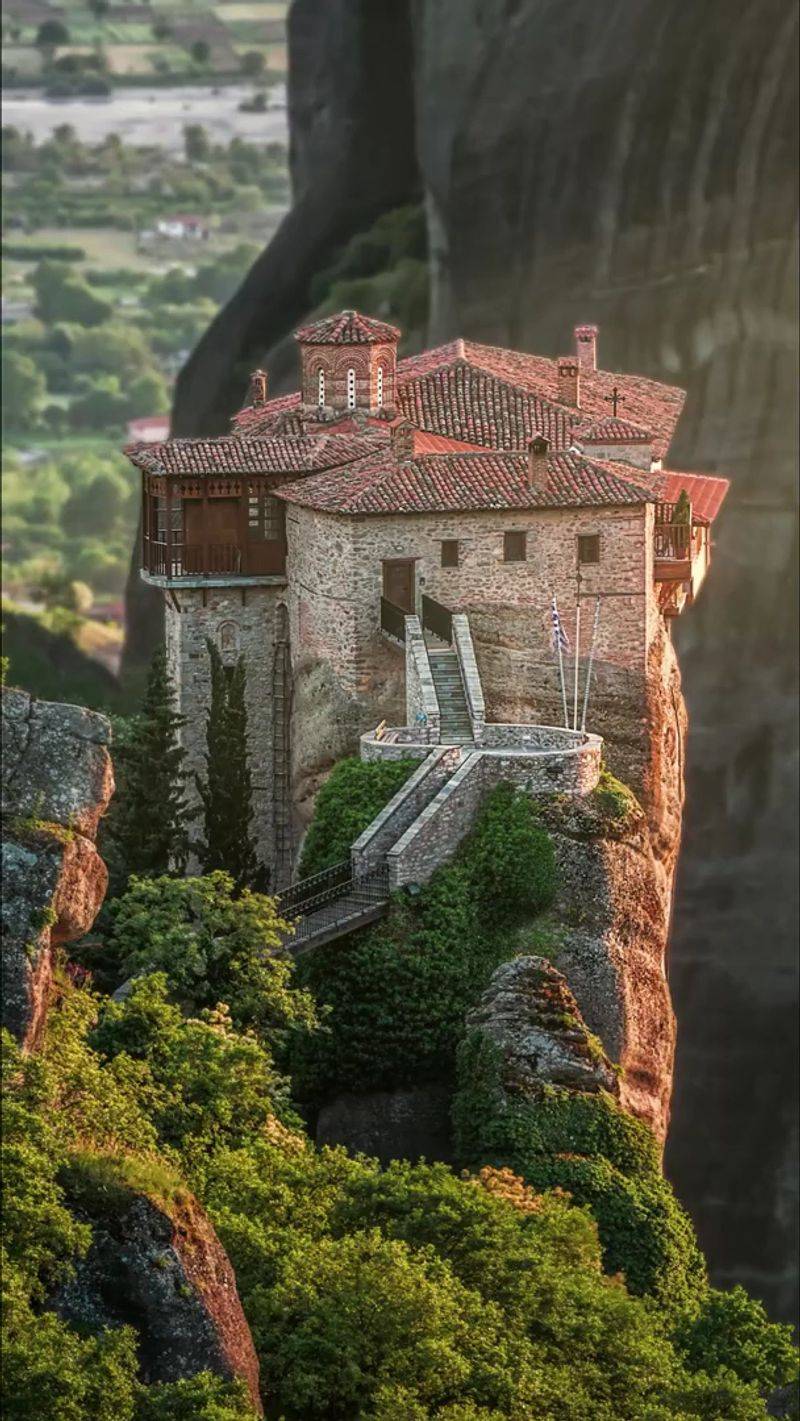
Gravity seems mildly offended by this entire arrangement. The monasteries of Meteora rose from the 14th century onward on sandstone pillars in Thessaly, where height offered safety, seclusion, and a serious test of anyone claiming strong commitment.
For centuries, access depended on ladders, baskets, and removable rope systems, which was efficient if your goal was limiting casual visitors. Today roads and steps make arrival easier, but the architecture still reflects a world shaped by prayer schedules, manuscript work, and strategic isolation.
Only a fraction of the original monasteries remain active, yet the site still carries the logic that created it. Byzantine artistic traditions, Orthodox liturgy, and the practical use of extreme terrain all survive here in a way that feels less like spectacle and more like a long-running institution refusing retirement.
3. Church of the Nativity, Bethlehem, West Bank
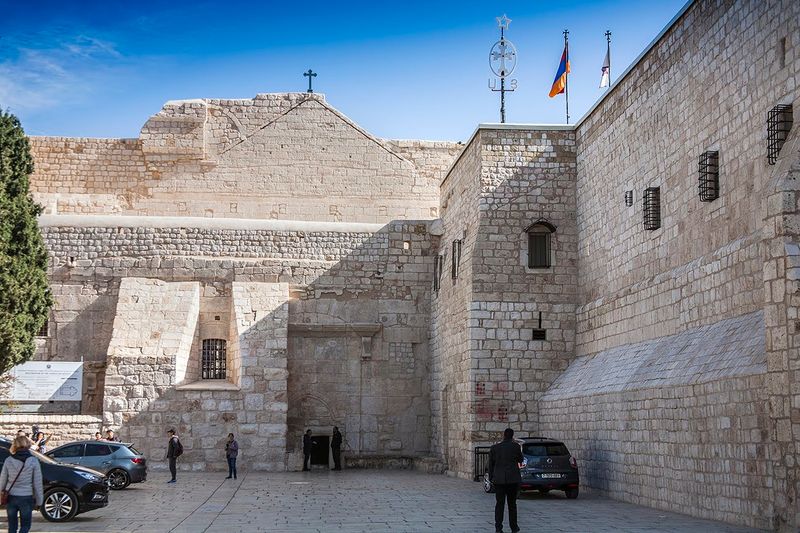
Few buildings have held onto their job description this long. The Church of the Nativity stands over the site traditionally associated with Jesus’ birth, and its present core owes much to the 6th-century rebuilding ordered by Emperor Justinian after an earlier basilica from Constantine’s era.
That layered history matters because the church is not a single moment preserved in stone. Crusader repairs, Armenian and Greek Orthodox influences, Latin connections, and later restorations all left marks, yet the structure still functions as a working pilgrimage center with unusual continuity.
The low Door of Humility gets plenty of attention, but the broader story is better. You are looking at one of Christianity’s oldest continuously used sacred spaces, where theology, imperial patronage, and local custodianship have been negotiating shared space for many centuries without losing the site’s core identity.
4. Monastery of Saint Anthony, Egypt
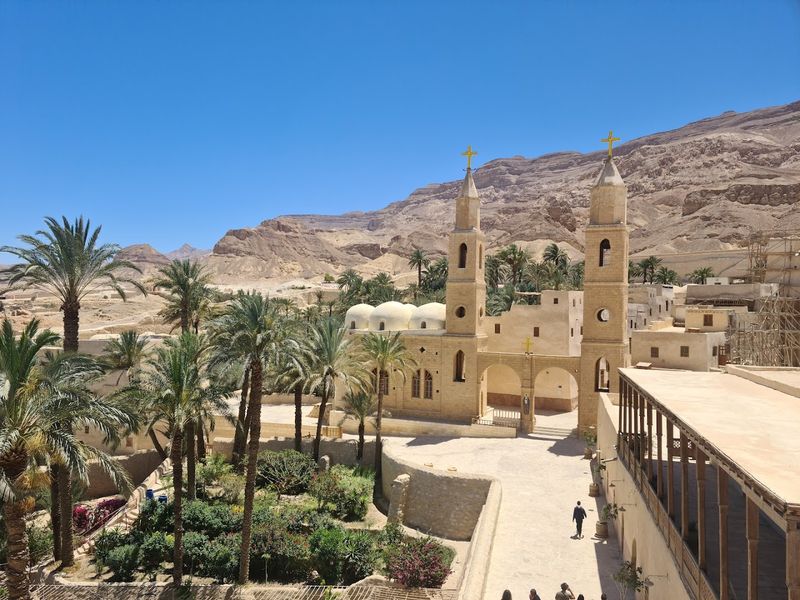
The desert kept the secret, and the monks kept the schedule. The Monastery of Saint Anthony in Egypt’s Eastern Desert grew around the memory of Anthony the Great, the 3rd and 4th-century ascetic often called the father of Christian monasticism.
By the 4th century, followers had gathered near the cave where he lived in retreat, and the community developed into one of the world’s oldest monasteries. Fortified walls, old churches, manuscripts, and a spring-fed settlement show how a remote spiritual experiment became an organized institution with staying power.
What makes the place especially compelling is how clearly it links idea to landscape. Early monastic ideals of withdrawal, discipline, and communal rule were tested here in practical terms, and the monastery still presents that history without smoothing away the demanding conditions that shaped it.
5. Geghard Monastery, Armenia
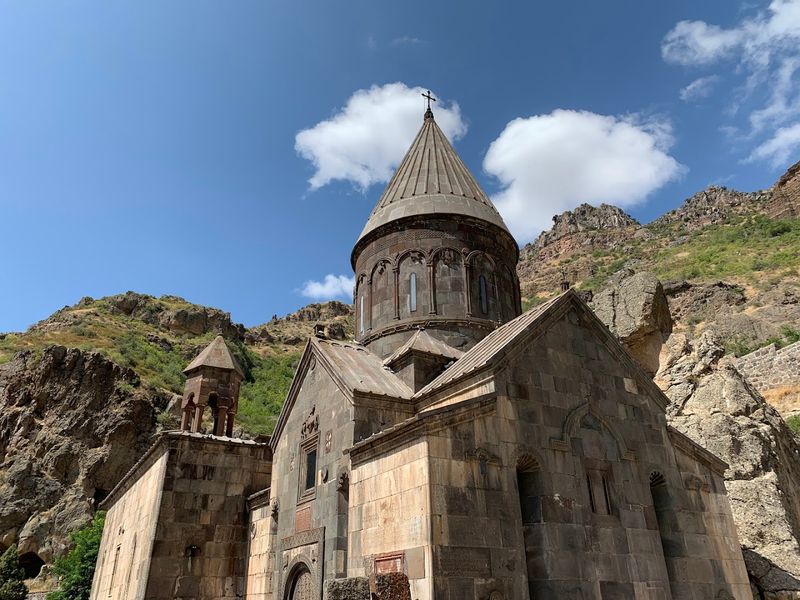
Stone and mountain reach an agreement here, and neither side wastes words. Geghard Monastery, developed mainly in the 12th and 13th centuries, combines built structures with rock-cut churches and tombs, making the Armenian landscape part of the religious architecture rather than mere background.
The name comes from the Holy Lance once associated with the site, but the architecture deserves equal billing. Patronage from noble families, especially the Proshians, expanded the complex during a period when Armenian ecclesiastical art and political ambition were closely intertwined.
You can read that history directly in the carved interiors, gavits, khachkars, and fortress-like exterior forms. Geghard feels unusually intact because it still follows the logic of medieval Armenian Christianity, where monastic life, local geology, dynastic memory, and pilgrimage were all expected to cooperate instead of competing for attention.
6. Mont-Saint-Michel Abbey, France
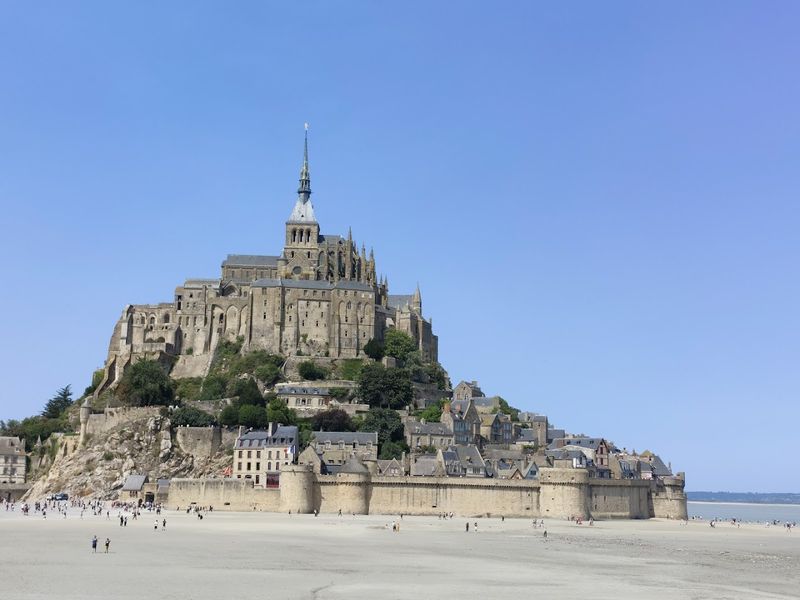
At high tide, geography becomes a persuasive architect. Mont-Saint-Michel Abbey developed over centuries on a rocky island off Normandy, where monastic buildings, defensive works, and a compact medieval settlement climbed upward in layers that still explain themselves at a glance.
The abbey’s history stretches back to the early 8th century, with major Romanesque and Gothic expansions following as pilgrimage traffic increased. Isolation by tides helped preserve its distinct profile, while royal interest, monastic prestige, and later restoration campaigns kept the complex from slipping into mere picturesque ruin.
Yes, it is famous, and yes, it still earns the attention. What keeps it from feeling overpolished is the stubborn medieval logic embedded in every level, from refectory to cloister, where religious life had to negotiate limited space, shifting access, and a coastline that never cared about convenience.
7. Lalibela Rock-Hewn Churches, Ethiopia
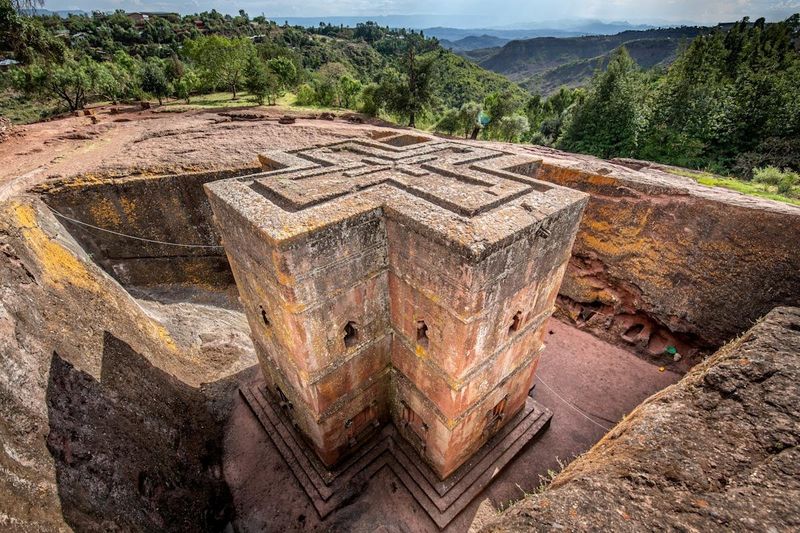
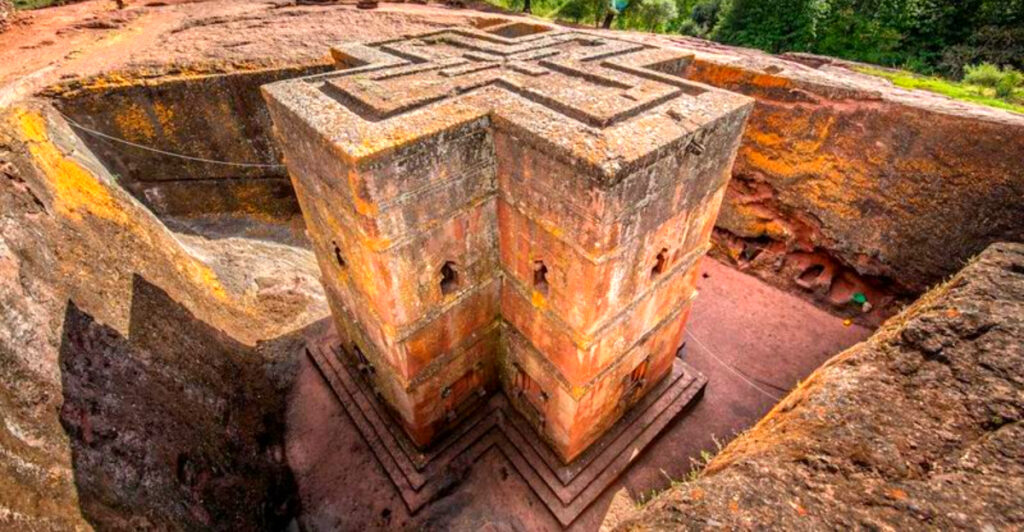
The mountain here was not decorated – it was edited. In the 12th and 13th centuries, Lalibela’s churches were carved downward into volcanic tuff under the Zagwe dynasty, creating whole sanctuaries from one mass of stone rather than assembling walls piece by piece.
That decision still makes the complex feel startlingly direct. You walk through trenches, tunnels, and courtyards that function much as they did centuries ago, while priests, pilgrims, and festival processions keep the site tied to living Ethiopian Orthodox practice instead of distant archaeology.
Bete Giyorgis usually gets the postcards, but the full network matters more because it shows planning, theology, and royal ambition working together. If you want proof that medieval engineering could be both practical and audacious, Lalibela offers it without needing much modern translation.
8. Rila Monastery, Bulgaria
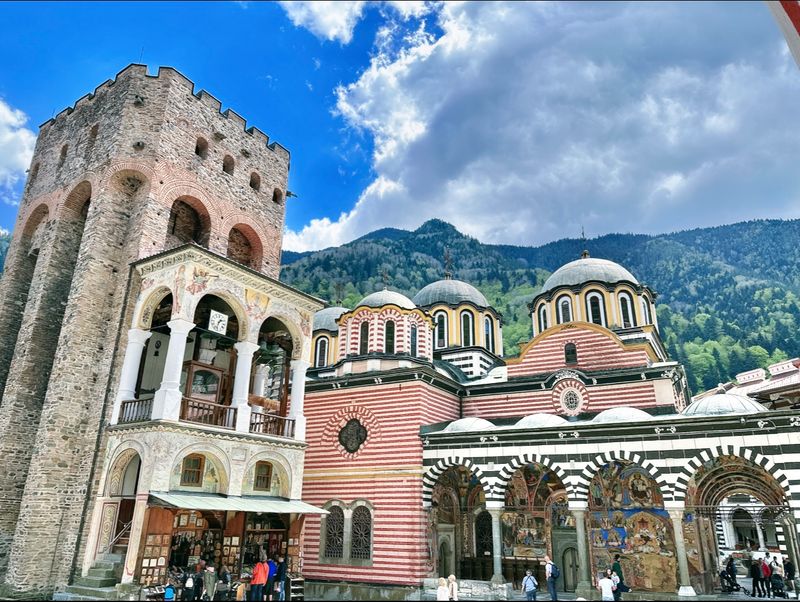
If a monastery could double as a national archive, Rila would make a strong case. Founded in the 10th century by followers of Saint John of Rila, it became Bulgaria’s leading spiritual center and later a key guardian of language, manuscripts, and religious identity during long periods of outside rule.
The present buildings largely reflect 19th-century reconstruction after fire, yet the site’s continuity reaches much further back. That blend of renewal and persistence is exactly why Rila feels so durable: the institution changed materials and details while keeping its religious and cultural role remarkably steady.
Inside the courtyard, the arcades, tower, church, and painted surfaces explain Bulgarian Orthodox history better than many textbooks. You are not just looking at an old complex in the mountains, but at a place that repeatedly absorbed disruption and still managed to keep its original purpose legible.
9. Sumela Monastery, Turkey
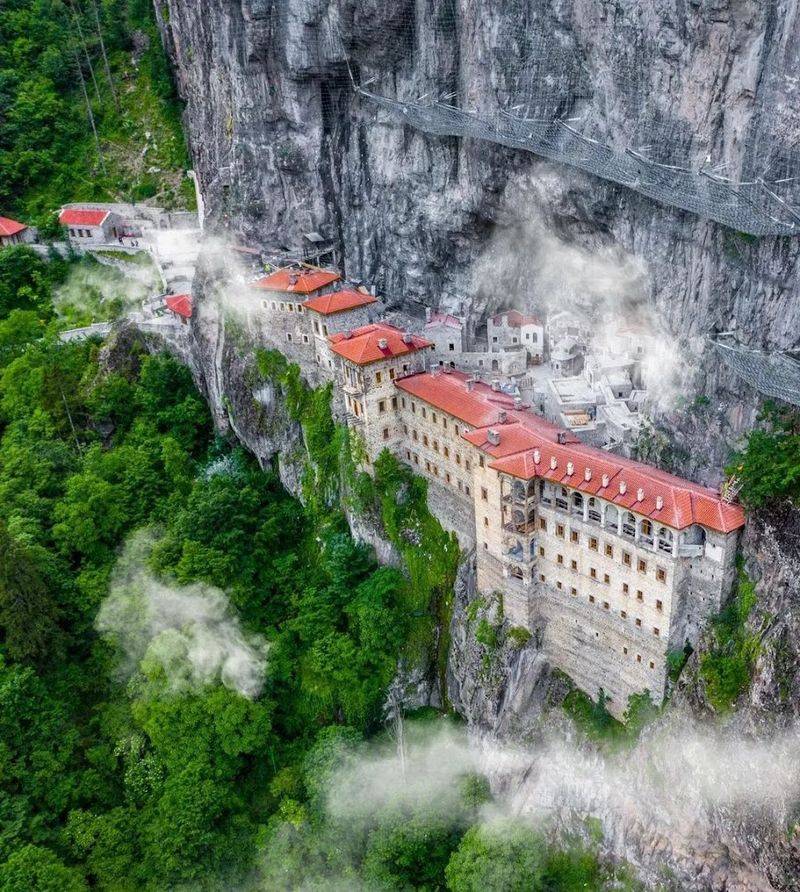
Some builders looked at a cliff and apparently saw a housing opportunity. Sumela Monastery, in Turkey’s Pontic Mountains, traces its origins to the late 4th century and became a major Greek Orthodox center dramatically attached to steep rock above a narrow valley.
Its remote position did more than impress visitors. Isolation supported monastic life, protected treasured icons and manuscripts at different points in its history, and helped preserve a physical relationship between architecture and terrain that modern construction usually avoids completely.
Much of what visitors see today reflects later Byzantine and post-Byzantine development, including chapels, frescoes, and monastic quarters. Recent restoration work and periodic closures have reminded everyone that even resilient places need practical care, but Sumela still conveys the old formula clearly: devotion, strategy, and mountain engineering in one very committed package.
10. Skellig Michael Monastery, Ireland
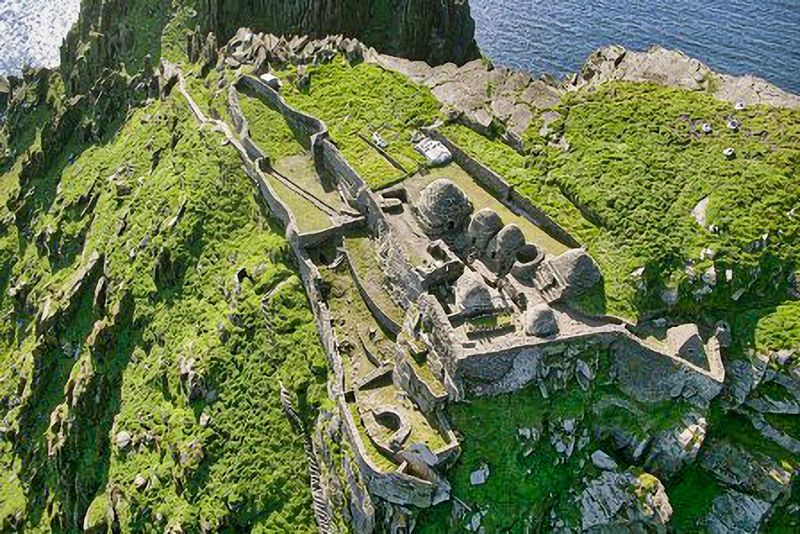
Reaching this monastery still requires enough effort to discourage casual historical curiosity. On Skellig Michael, early Christian monks established a settlement by about the 6th century, building dry-stone beehive huts, terraces, and oratories on a steep Atlantic island off Ireland’s southwest coast.
The setting tells you almost everything about the community’s priorities. Extreme isolation fit the early monastic search for disciplined withdrawal, while the island’s harsh access unintentionally became an excellent preservation policy long before heritage agencies existed.
What remains is modest in scale but enormous in interpretive value. The stone cells, stairways, and liturgical spaces reveal how monks adapted imported Christian practices to an edge-of-the-world environment, and because later rebuilding was limited, the site still reads less like a monument revised for comfort and more like a record left impressively intact.
11. Monastery of Hosios Loukas, Greece
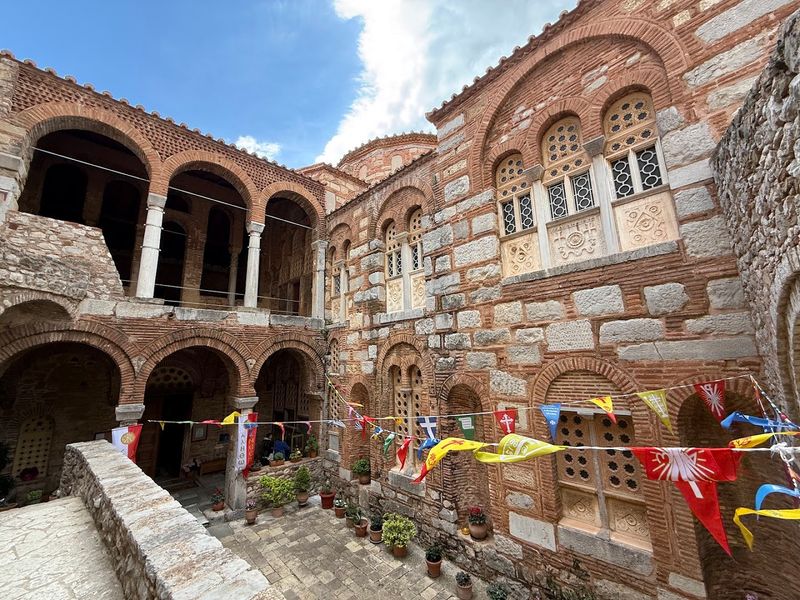
Byzantine architecture rarely bothers with understatement, and Hosios Loukas proves the point elegantly. Built mainly in the 10th and 11th centuries in central Greece, the monastery is associated with Saint Luke the Stiris and preserves one of the most important surviving ensembles of Middle Byzantine art.
The katholikon and older Church of the Theotokos show how architecture, marble revetment, and mosaics worked together in a sophisticated visual program. This was not decorative excess for its own sake, but a theological language meant to instruct, honor, and stabilize communal worship.
What makes Hosios Loukas feel unusually rooted is the consistency of its design logic. Even after later repairs and earthquakes, the complex still communicates the ambitions of Byzantine monastic culture with remarkable clarity, giving you a direct look at a period when liturgy, patronage, and craftsmanship moved in unusually close coordination.
12. Alaverdi Monastery, Georgia
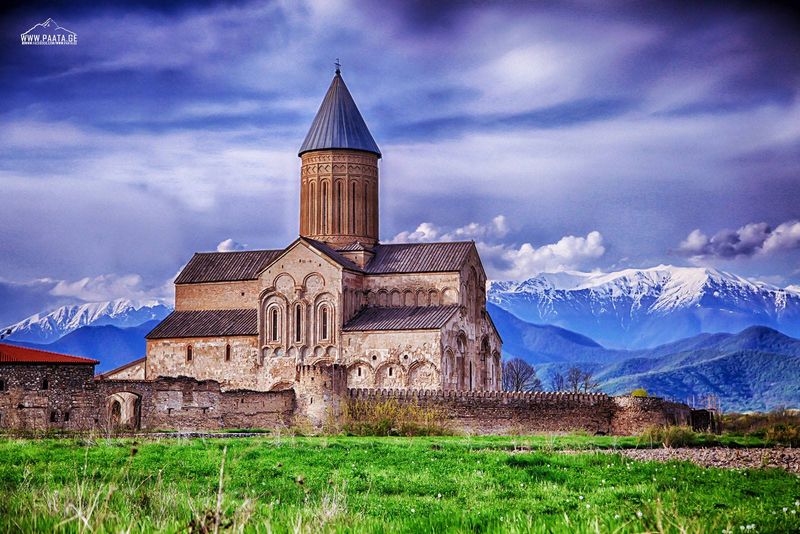
The surrounding vineyards almost distract from the fact that this is one of Georgia’s great medieval statements. Alaverdi Monastery in Kakheti developed from an earlier religious foundation, with the current cathedral largely dating to the early 11th century under King Kvirike of Kakheti.
For centuries, it served not only as a spiritual center but also as a local cultural anchor connected to manuscript production, regional authority, and annual religious festivals. Repeated restorations followed invasions and earthquakes, yet the overall presence of the complex remains notably consistent.
Its tall cathedral still dominates the plain in a way that explains medieval Georgian priorities without much help. Here, Christianity, kingship, and rural economic life intersected directly, and that relationship remains visible today, giving the monastery a continuity that feels earned through use rather than staged for admiration.
13. Debre Damo Monastery, Ethiopia
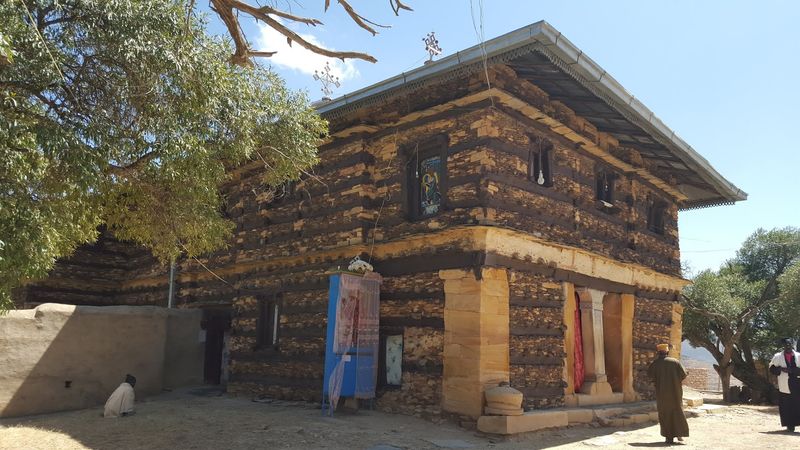
A rope ladder is a memorable way to filter your guest list. Debre Damo Monastery, founded in the 6th century and traditionally linked to Abuna Aregawi, occupies a flat-topped mountain in northern Ethiopia that is still reached by climbing a sheer cliff with assistance.
That dramatic access is more than a travel anecdote. Isolation helped preserve Ge’ez liturgical traditions, manuscript culture, and a monastic routine shaped by Ethiopian Orthodox practice rather than by constant outside traffic or large-scale rebuilding campaigns.
The monastery has long been known for ancient texts, distinctive architecture using wood and stone in alternating bands, and strict communal customs. If you want a site where geography actively protected continuity, Debre Damo is hard to beat, because the cliff itself has spent centuries acting like an uncompromising but very effective archivist.
14. Etchmiadzin Cathedral, Armenia
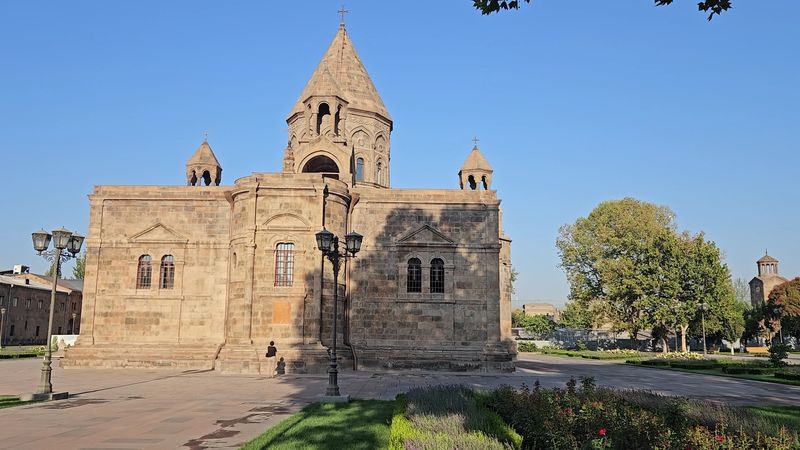
Some buildings carry enough institutional weight to make entire timelines behave. Etchmiadzin Cathedral, traditionally founded in the early 4th century after Armenia adopted Christianity as a state religion, is widely regarded as one of the world’s oldest cathedrals and remains the spiritual center of the Armenian Apostolic Church.
The present structure reflects centuries of rebuilding, especially from the 5th through 17th centuries, but continuity is the real headline. This is a place where doctrine, ceremony, administration, and national identity have kept returning to the same sacred ground through major historical shifts.
The complex includes later additions, museums, and residence buildings, yet the cathedral still anchors everything with unusual authority. You are seeing more than an old church: you are seeing a headquarters of memory, where Armenian Christianity preserved institutional continuity with a level of confidence that very few sites can match.
Share this story