New Jersey is full of surprises, and some of its best-kept secrets are hiding in plain sight, spanning rivers and bays across the state. From century-old steel arches to peaceful pedestrian walkways, the bridges here tell stories of history, engineering, and everyday life.
I grew up crossing a few of these without really thinking about them, and it wasn’t until I started paying attention that I realized how incredible they actually are. Whether you’re a history buff, a casual walker, or just someone who appreciates a good view, these nine bridges are absolutely worth your time.
Tacony-Palmyra Bridge, Palmyra
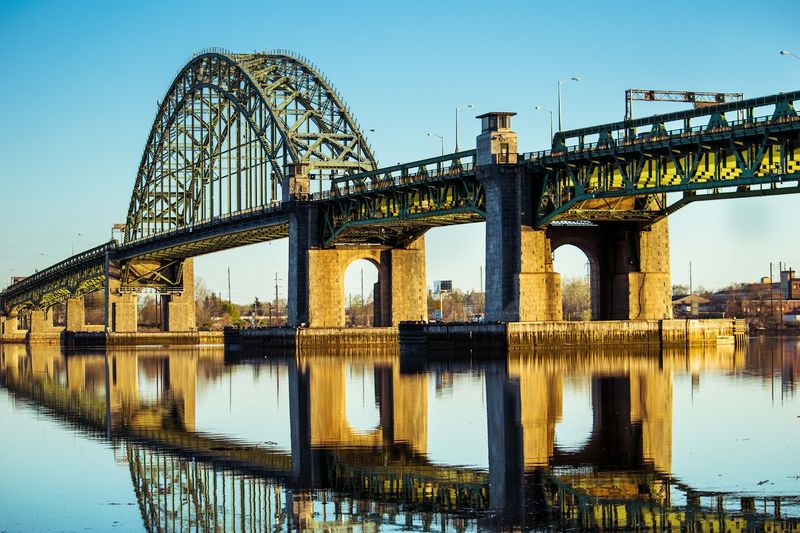
Built in 1929, the Tacony-Palmyra Bridge has been connecting New Jersey to Philadelphia for nearly a century, and it still looks like it means business. Stretching 3,659 feet across the Delaware River, this steel truss bridge is a proper classic.
It links Palmyra, NJ, to the Tacony neighborhood in Philly, making it a daily commuter staple.
What really sets this bridge apart is the pedestrian walkway running alongside the traffic lanes. You can actually walk across the Delaware River here, which is a surprisingly fun thing to do on a weekend.
The river views from the walkway are wide and unobstructed.
I walked this bridge on a crisp October morning, and the combination of open water and vintage steel overhead made for a genuinely memorable outing. It costs a small toll if you’re driving, but walkers cross for free.
History, views, and zero excuses not to go.
Uhlerstown-Frenchtown Bridge, Frenchtown
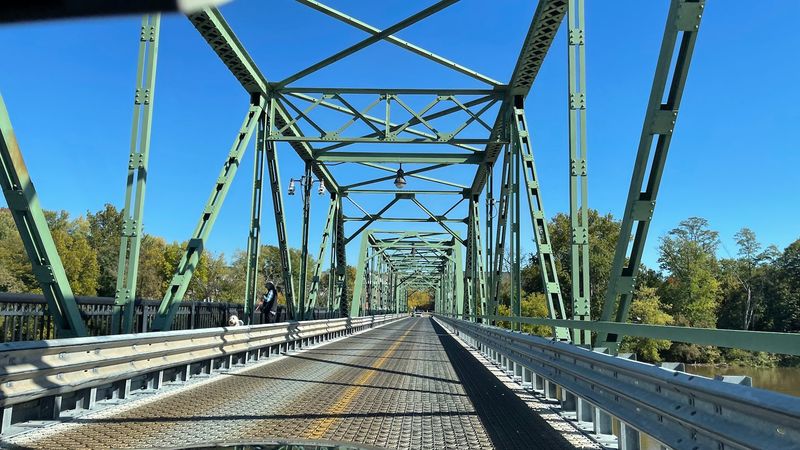
At 15 miles per hour, this is the bridge equivalent of a Sunday drive, and honestly, that is a compliment. The Uhlerstown-Frenchtown Bridge connects Frenchtown, NJ, to Uhlerstown, Pennsylvania, and its relaxed speed limit practically forces you to slow down and enjoy the scenery.
No tolls either, which is a rare treat.
Frenchtown itself is a wonderfully quirky little town full of art galleries and riverside cafes. Crossing this bridge feels like stepping into a postcard.
The Delaware River here is calm and scenic, framed by rolling hills on both sides.
This is the kind of crossing where you might actually pull over after and sit by the river for a while. The bridge is a simple but elegant structure that fits perfectly into its surroundings.
It may not have the dramatic scale of some others on this list, but charm counts for a lot. Sometimes the quieter crossings leave the biggest impression.
Bayonne Bridge, Bayonne
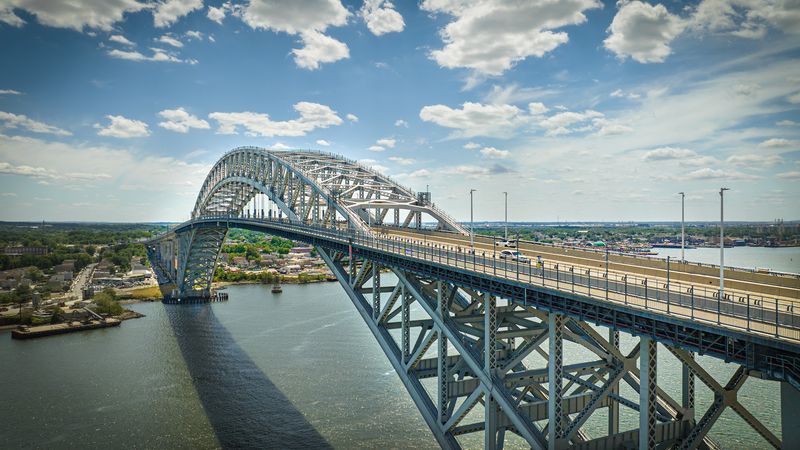
Fun fact: the Bayonne Bridge held the record as the world’s longest steel arch bridge for 46 years after it opened in 1931. It has since been surpassed, but it still ranks as the fifth-longest steel arch bridge on the planet.
That is a seriously impressive resume for a bridge most people outside the region have never heard of.
Connecting Bayonne, NJ, to Staten Island over the Kill Van Kull waterway, this bridge underwent a major deck-raising project completed in 2019. The upgrade allowed larger container ships to pass underneath, which was a big deal for the Port of Newark.
Engineering nerds, this one is for you.
The arch itself is a stunning piece of design, rising dramatically over the water with a confidence that feels almost theatrical. Driving across it gives you a solid view of the surrounding harbor.
It is not just a bridge; it is a statement. New Jersey has a habit of hiding world-class landmarks in plain sight, and Bayonne Bridge is proof of that.
Washington Crossing Bridge, Hopewell
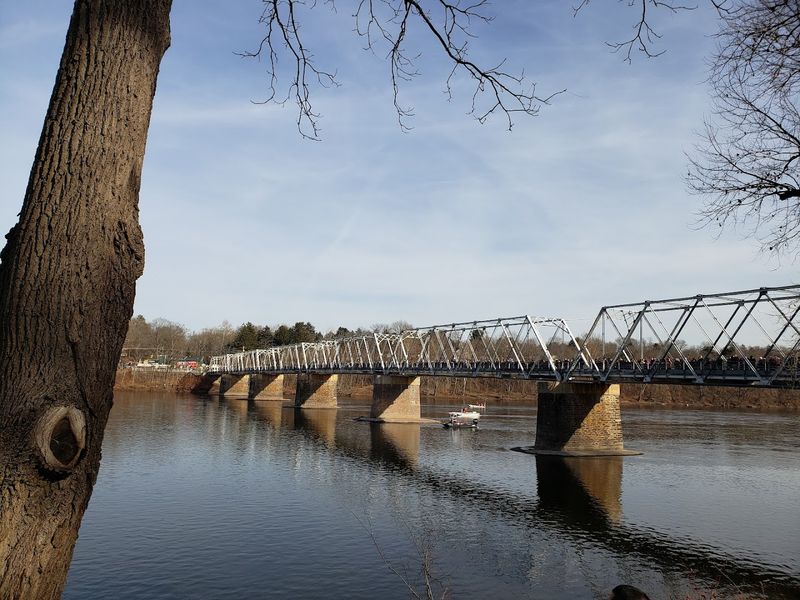
On December 26, 1776, George Washington crossed the Delaware River and changed American history. The Washington Crossing Bridge near Hopewell honors that moment by sitting right in the heart of that legendary landscape.
Crossing it feels less like a commute and more like a small act of patriotism.
The surrounding area is part of Washington Crossing State Park, so the scenery is lush and well-preserved. Trees line both banks, and the river here has a quiet, almost reverent quality.
It is the kind of place that makes you put your phone away for a few minutes.
The bridge itself is a modest but dignified structure, which suits the setting perfectly. It is not trying to compete with the George Washington Bridge or the Bayonne.
It knows exactly what it is, a historic crossing with a great story behind it. History teachers have been dragging students here for decades, and honestly, they are right to do so.
Some bridges move people from place to place; this one moves people through time.
Great Falls Bridge, Paterson
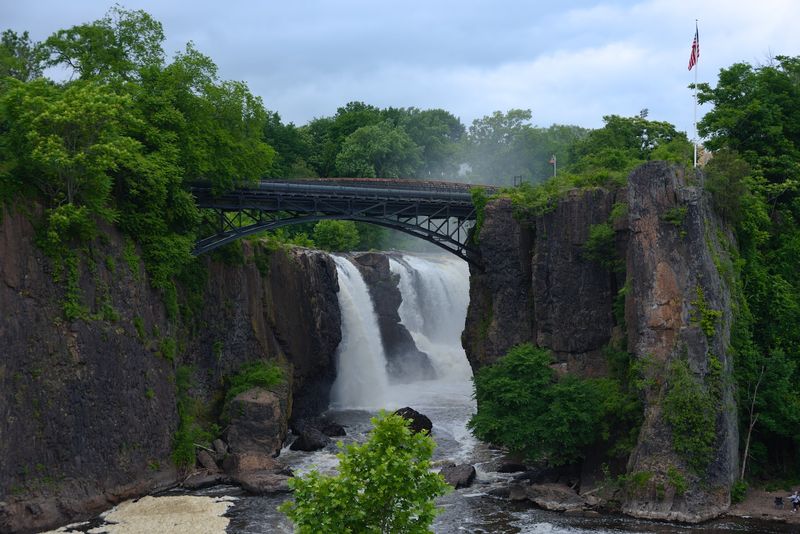
Standing on the Great Falls Bridge and watching the Passaic River drop 77 feet over the falls below is the kind of thing that makes your jaw do a little involuntary drop of its own. The Great Falls of Paterson are the second-largest waterfall by volume east of the Mississippi, and this pedestrian bridge puts you right in the front row.
It is basically a free ticket to one of New Jersey’s most dramatic natural shows.
The bridge is part of Paterson Great Falls National Historical Park, a federally protected site that also tells the story of Alexander Hamilton’s industrial vision for America. History and geology in one spot.
Not bad for a Tuesday afternoon visit.
The mist from the falls occasionally drifts up toward the bridge, which adds a genuinely cinematic quality to the experience. Photographers love this spot, and it is easy to see why.
Every season brings a different look: roaring spring floods, calm summer flows, and icy winter edges. The Great Falls Bridge is not just a crossing; it is a destination all on its own.
Go early on weekends to beat the crowds.
George Washington Bridge, Fort Lee
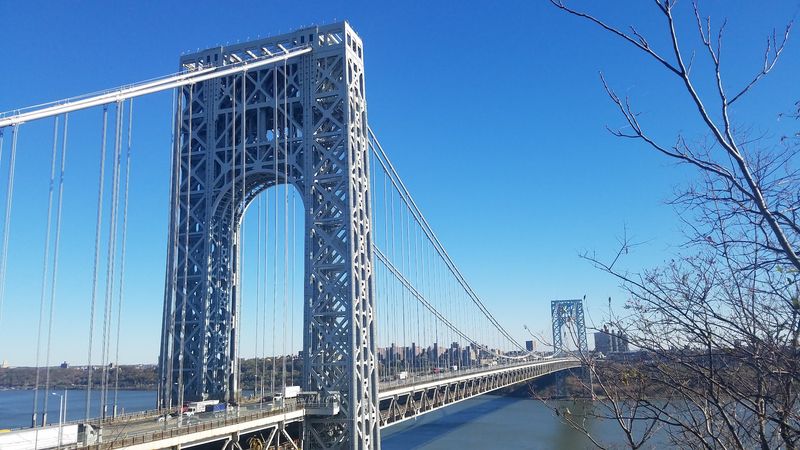
The George Washington Bridge moves more motor vehicles per day than any other bridge in the entire world. Let that sink in for a second.
Over 100 million vehicles cross this double-deck suspension beauty every year, connecting Fort Lee, NJ, to upper Manhattan with two levels of relentless, honking efficiency.
Opened in 1931, the GWB was designed by engineer Othmar Ammann and architect Cass Gilbert. The lower deck was added in 1962 to handle growing traffic demand, because apparently the original deck just was not enough.
The main span stretches 4,760 feet across the Hudson River, making it one of the longest suspension bridges in the world.
Walking or biking across the GWB is a genuinely thrilling experience. The pedestrian path offers sweeping views of the Hudson, the Manhattan skyline, and the New Jersey Palisades cliffs.
I crossed it by bike once and spent the entire time trying not to look too touristy while absolutely being a tourist. The Little Red Lighthouse sits directly underneath the New Jersey tower, which is a charming bonus detail most drivers never notice.
Appalachian Trail Bridge, Vernon
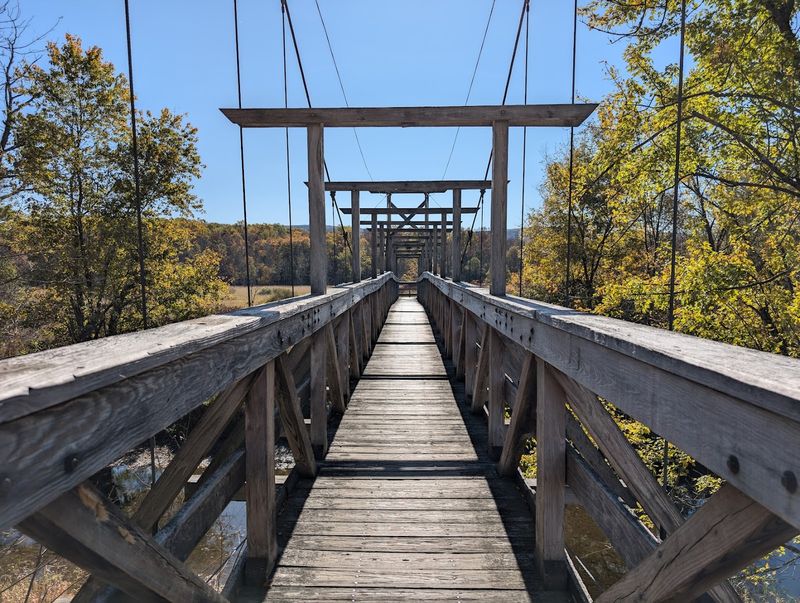
The Appalachian Trail runs 2,190 miles from Springer Mountain in Georgia all the way to Mount Katahdin in Maine, and New Jersey gets a slice of that legendary footpath through Vernon. The trail bridge near Vernon is where serious hikers and casual day-trippers share the same wooden planks over a peaceful stream in the forest.
New Jersey’s section of the AT is honestly underrated. The state’s stretch covers about 72 miles and passes through some genuinely beautiful highland terrain.
Vernon sits in the Kittatinny Mountains region, where the scenery earns its postcard status without trying too hard.
Crossing this bridge as part of a longer hike gives you a real sense of being part of something much bigger than yourself. Thru-hikers with enormous packs and thousand-yard stares share the path with families out for a Sunday walk, and everyone nods at each other like they’re in on the same secret.
The bridge itself is modest, but its context is extraordinary. Few crossings in New Jersey carry the weight of so much trail history beneath their beams.
Bring good shoes and snacks.
Benjamin Franklin Bridge, Camden
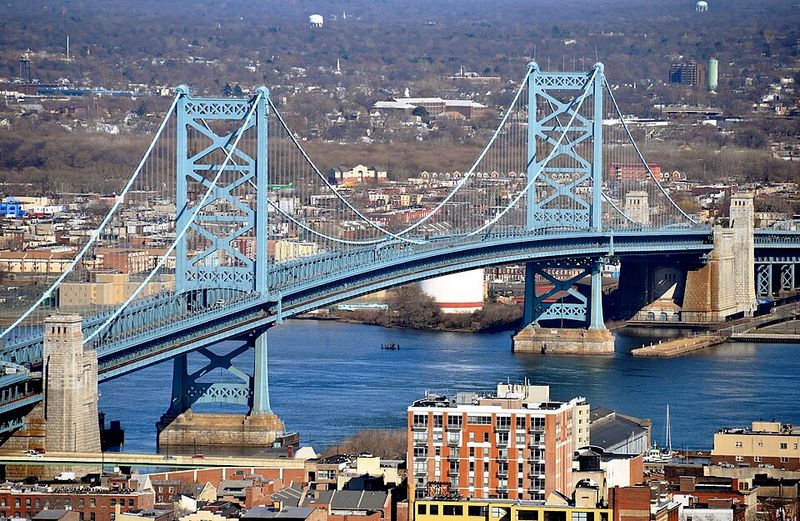
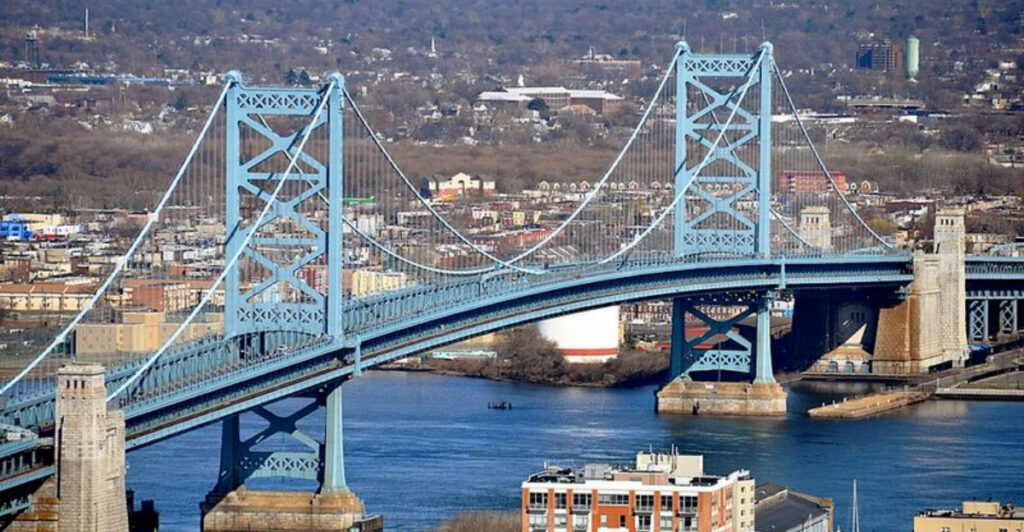
When it opened in 1926, the Benjamin Franklin Bridge was the longest suspension bridge in the world. It held that title briefly, but the record is not really the point anymore.
The point is that this iconic blue bridge connecting Camden, NJ, to Philadelphia is still one of the most versatile and recognizable crossings on the East Coast.
You can cross it by car, by foot, or by PATCO train, which makes it unusually accessible for a major suspension bridge. The pedestrian walkway runs along the side and offers excellent views of the Philadelphia skyline and the Delaware River below.
Weekends bring out cyclists, joggers, and tourists armed with cameras.
The bridge’s famous zipper barrier is a mechanical lane-divider that shifts to redirect traffic flow depending on peak hours. It sounds like a small detail, but watching it work is oddly satisfying.
The bridge is also lit up at night with programmable LED lights, turning it into a glowing landmark visible from miles around. Camden and Philadelphia have had a complicated relationship over the years, but this bridge has always kept them connected.
That counts for something.
Share this story