A sunset can make a skyline look newly invented, but the best city views also carry decades of design, ambition, and local habit. From suspension bridges and waterfront piers to desert boulevards and mountain backdrops, these places reveal how geography and history learned to share the same stage.
You are not just looking for pretty colors here – you are getting the stories behind the silhouettes, the neighborhoods that frame them, and the civic landmarks that turn an ordinary evening into a ritual. Keep going, and you will see how each city built its own version of the American sunset.
1. San Francisco, California
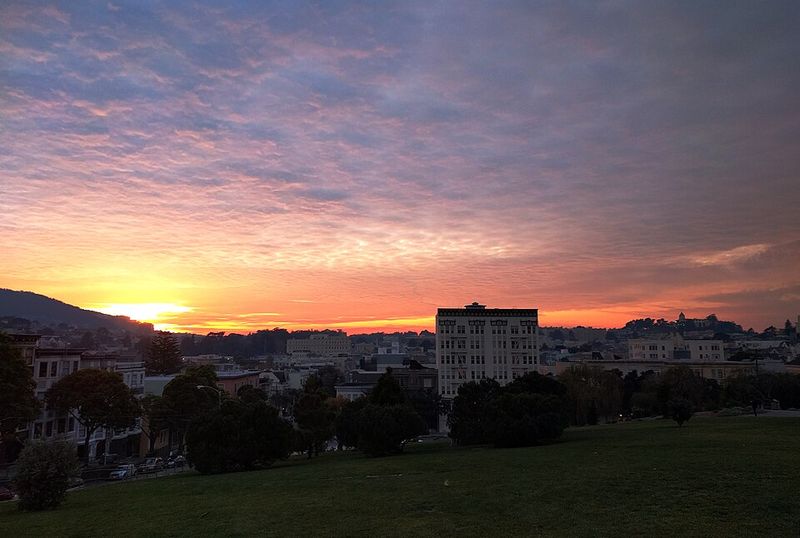
Nothing about this view ever learned how to be modest. San Francisco turns sunset into a civic performance, with the Golden Gate Bridge acting like a veteran headliner that still knows exactly how to hold a crowd.
Opened in 1937, the bridge became more than infrastructure almost immediately, folding engineering swagger into the city’s public identity.
What makes the hour especially memorable is the way several eras line up at once. Victorian neighborhoods, military history around the Presidio, Alcatraz in the bay, and midcentury postcard culture all sit inside the same frame.
Even the famous fog, often treated like a celebrity with its own schedule, helps separate the city from generic waterfront skylines.
You are seeing westward expansion, maritime commerce, and twentieth century design confidence meet the Pacific for one last appointment before night.
2. New York City, New York
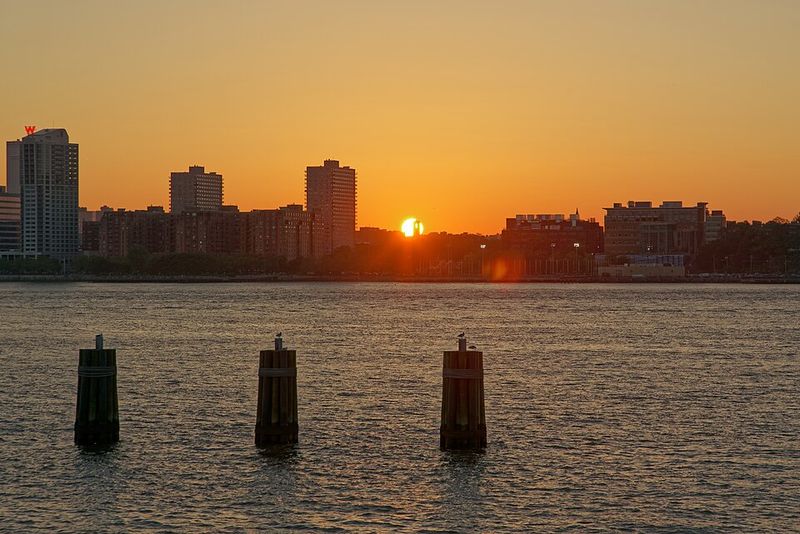
Few cities know how to turn glass and steel into a closing argument the way New York does. At sunset, Manhattan becomes a record of ambition layered by decade, from early twentieth century towers to sleek new supertalls that catch the last light over the Hudson and East River.
The skyline is not just big – it is chronological.
That is part of the fun when you watch evening arrive from Brooklyn Bridge Park, Top of the Rock, or a Staten Island Ferry deck. Art Deco classics, postwar office blocks, and luxury residential spires all take their turn, while the street grid explains why the city has inspired generations of photographers, painters, and film crews.
Even ordinary commuters end up with a front row seat.
You are watching the financial capital, media capital, and architectural scrapbook of the country briefly agree on one thing: this is a very good hour to look up.
3. Los Angeles, California
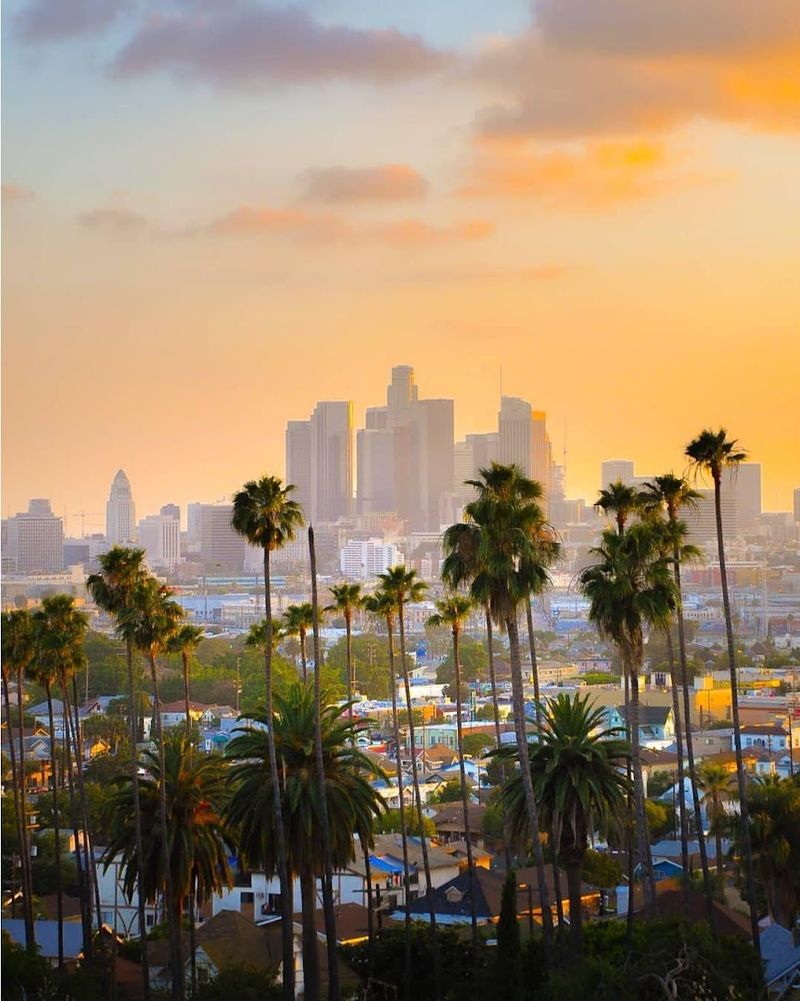
Some cities get famous for monuments, but Los Angeles built an empire out of angles. Sunset here feels tied to the city’s long career in image making, from early Hollywood backlots to postwar beach culture and the palm-lined boulevards that sold Southern California to the world.
The result is familiar even before you arrive.
What you actually see depends on where you stand. Griffith Observatory frames the basin like a giant map, Santa Monica gives you Pacific horizon and pier history, and the hills reveal how freeways, neighborhoods, and studio districts spread across a former patchwork of ranches and small towns.
That sprawl is part of the story, not a flaw in it.
You are looking at a city shaped by cars, film, aerospace money, and relentless reinvention, all suddenly simplified into silhouettes that make the whole place seem surprisingly easy to understand.
4. Chicago, Illinois
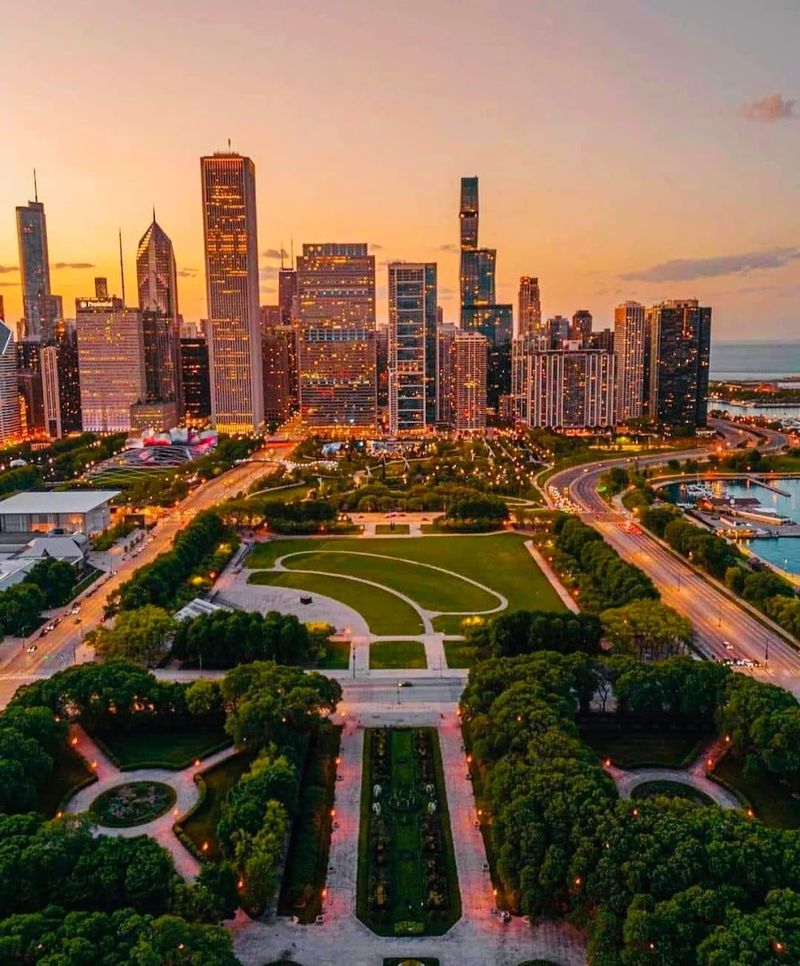
Chicago approaches sunset like a city that trusts its own architecture. Seen from Lake Michigan, the skyline reads as a compact history of American building ambition, from early skyscraper innovation to modernist icons and contemporary towers that continue the argument.
Few places let water and steel cooperate so effectively.
The city’s relationship with the evening sky is also rooted in reinvention. After the nineteenth century fire, planners, architects, and civic boosters treated design as serious public business, which is why the lakefront became a democratic viewing platform instead of a private backyard for the wealthy.
That decision still pays off every evening at places like Navy Pier, Oak Street Beach, and the Museum Campus.
You are not just watching the sun slip behind buildings. You are seeing a city that helped define the American skyline present its résumé in one glance, with the added confidence of a shoreline that refuses to be upstaged.
5. Seattle, Washington
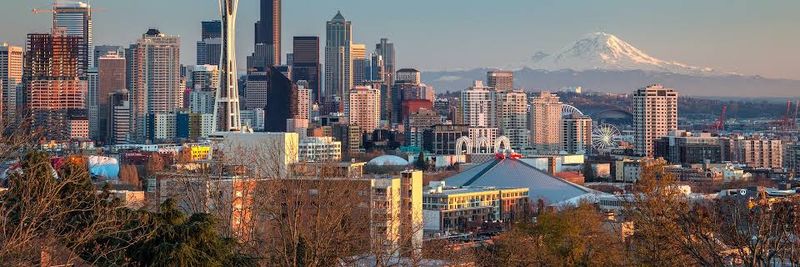
Seattle’s sunset has the unfair advantage of bringing mountains into an already strong city scene. Water, ferries, the Space Needle, and the Olympic range line up in ways that make the city look carefully staged, though its shape came from industry, shipping, and steep terrain rather than some tidy master plan.
Geography did the heavy lifting here.
That bigger backdrop helps explain the city’s layered identity. Seattle grew from a timber and maritime center into a technology hub, but its waterfront habits never disappeared, and evening viewpoints from Kerry Park, Alki Beach, or a Bainbridge ferry still show the old and new in conversation.
The skyline may change, yet the relationship between built city and working water remains recognizable.
You are seeing a place where Boeing history, coffee mythology, grunge-era memory, and contemporary tech wealth all share the same horizon line, which is a very Seattle way to end the day.
6. Miami, Florida
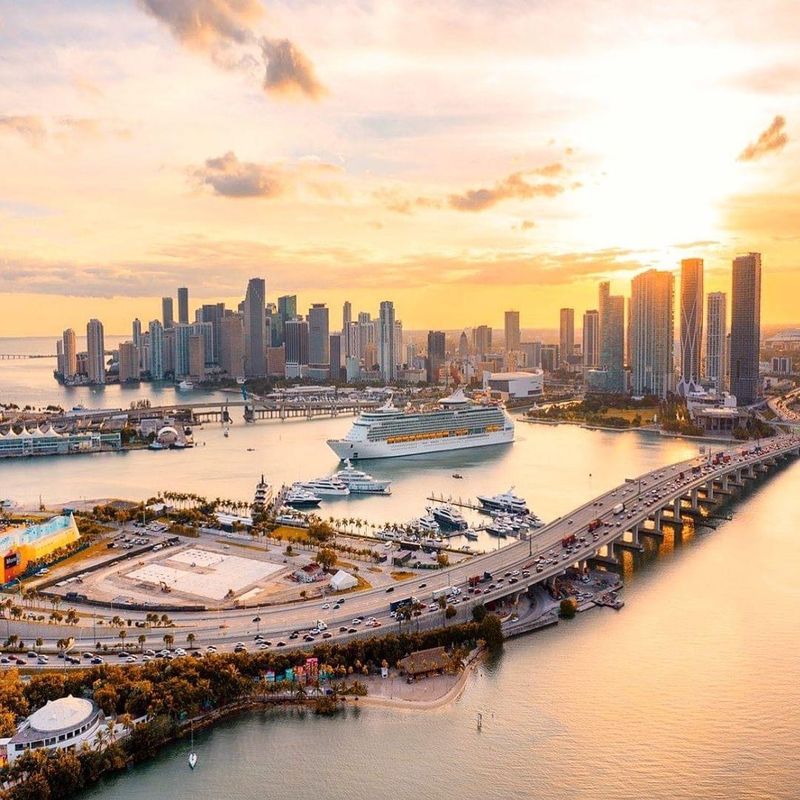
Miami never had much interest in understatement, and sunset rewards that choice. Biscayne Bay reflects a city built in distinct bursts, from early resort branding and Art Deco glamour to late twentieth century condo booms and the international finance energy that reshaped Brickell and downtown.
Even the skyline seems dressed for the occasion.
The visual appeal comes from more than color. Miami’s coastal setting lets you read the city through architecture and migration history, with South Beach recalling preservation battles, Little Havana carrying powerful cultural memory, and the bay linking it all to tourism, trade, and Caribbean influence.
Viewpoints from the Venetian Causeway, South Pointe, or bayfront parks make those layers unusually easy to follow.
You are looking at a place that turned reinvention into local policy, then framed it with water and palms so effectively that even longtime residents can sound a little impressed when evening arrives.
7. Las Vegas, Nevada
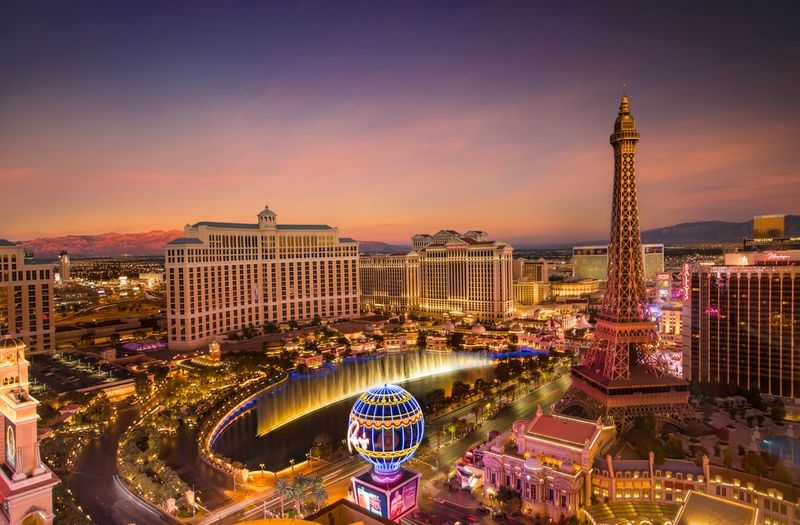
Las Vegas pulls off a neat trick at sunset: it reminds you there was a desert here long before the billboards arrived. That contrast is the whole appeal.
The valley’s open setting lets the sky take over first, then the Strip answers with neon, marquees, and resort architecture that has spent decades trying very hard to be unforgettable.
The city’s history sharpens the view. Railroad beginnings, midcentury motel culture, organized entertainment, and a late twentieth century megaresort boom all stack together in a place that grew fast because it mastered reinvention and spectacle.
From the Stratosphere, Red Rock Canyon, or a rooftop away from the busiest blocks, you can watch the old casino corridor and newer skyline pieces share one long transition into night.
You are seeing a city where atomic-age tourism, highway culture, and contemporary event capital all meet the Mojave, which might be the most Las Vegas sentence possible.
8. Honolulu, Hawaii
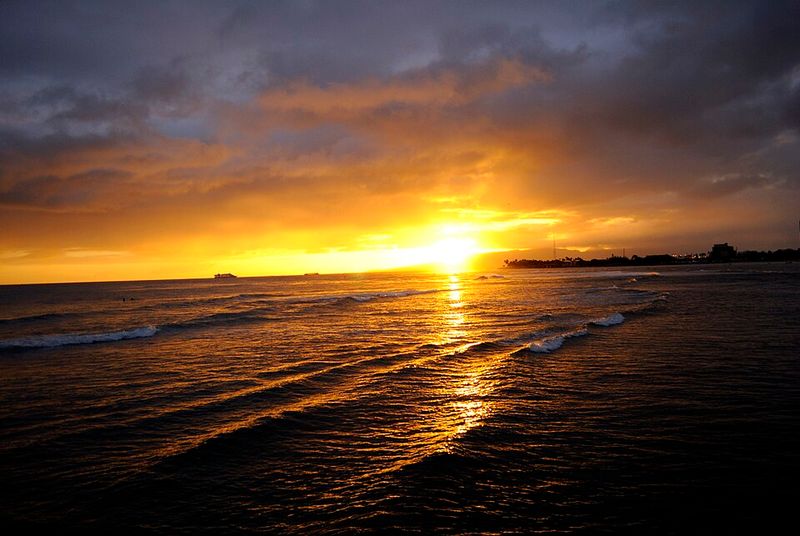
Honolulu makes sunset look effortless, which is slightly unfair to other cities. Waikiki, Diamond Head, and the Pacific form one of the most recognizable urban coastlines in the country, but the setting carries deeper history than a vacation brochure usually admits.
This is a capital city shaped by Indigenous Hawaiian heritage, royal legacy, military presence, and the growth of modern tourism.
That layered past gives the evening view unusual depth. Diamond Head, known as Leahi in Hawaiian tradition, links the skyline to older cultural geography, while Waikiki recalls the transformation of wetlands and royal retreats into an international travel district during the twentieth century.
Spots like Tantalus Lookout or the beach itself show how mountain ridges, hotels, and shoreline all fit together within a relatively compact city.
You are not just seeing a famous beach scene. You are seeing a place where monarchy, surfing history, jet-age travel, and contemporary island urban life all meet the same horizon.
9. San Diego, California
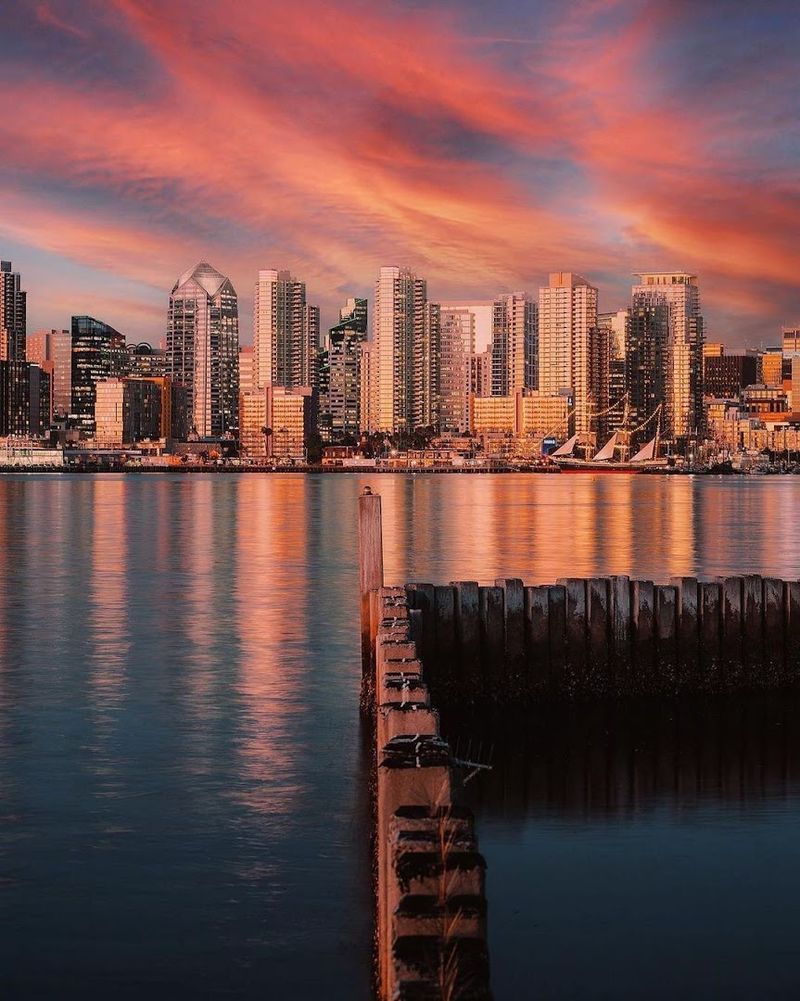
San Diego handles sunset with the confidence of a city that knows the coastline is doing excellent work. Cliffs at La Jolla, broad beaches near Mission Bay, and harbor views downtown give the evening several distinct personalities, yet all of them tie back to the same Pacific setting and a long history shaped by naval presence, borderland culture, and tourism.
The city’s appeal is also historical in a very California way. Spanish colonial roots, early mission history, military installations, and postwar suburban growth helped create a place where old town districts, beach communities, and sleek waterfront redevelopment exist within a short drive.
That means a sunset can include sea caves, surf culture, aircraft carriers, or the Coronado skyline depending on your mood.
You are seeing a city that turned mild weather into infrastructure, then added maritime history, cross-cultural influence, and just enough polish to make evening views feel organized without becoming overly tidy.
10. Austin, Texas
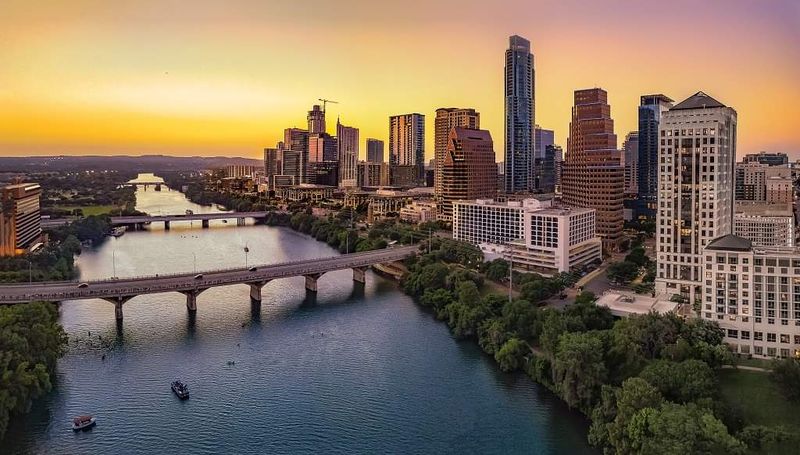
Austin’s sunset works because the city lets water slow the scene down. Lady Bird Lake turns the skyline into a cleaner composition, and the result feels especially revealing in a place that has changed from college town and government center into a technology magnet with cranes that seem to maintain regular business hours.
Evening makes the transitions easier to read.
There is history under that newer profile. The Colorado River shaped settlement patterns, the state capitol fixed Austin’s role in Texas politics, and the University of Texas helped build a civic identity that mixed policy, music, and youthful restlessness.
Add the Congress Avenue Bridge, famous for its bat flights, and the city gets a sunset ritual that is both local and oddly well managed.
You are watching old Austin and expansion-era Austin negotiate politely across the water, with just enough skyline drama to remind you the city is still editing its own image.
11. Denver, Colorado
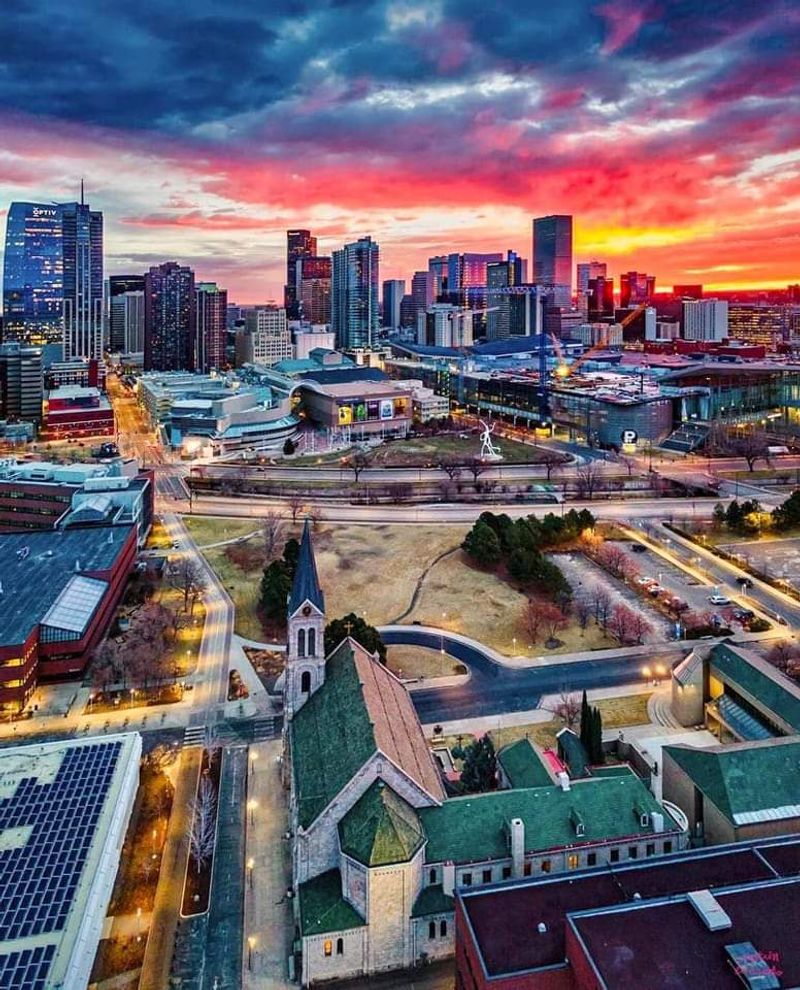
Denver has the kind of sunset that makes eastern cities seem a little boxed in. The skyline rises on the plains with the Rocky Mountains behind it, creating a clear lesson in why the city became a gateway to the American West rather than just another regional capital.
Geography explains the drama, but history gives it shape.
The city grew through rail connections, mining-era wealth, and later waves of suburban expansion that turned Denver into a broader Front Range hub. Evening viewpoints from City Park, Sloan’s Lake, or rooftop decks downtown show how old brick warehouses, glass towers, and mountain silhouettes all fit into the same civic story.
You can also spot how the street grid and open space reflect long planning debates about growth and access.
You are seeing a place where frontier branding evolved into a modern outdoor metropolis, and sunset serves as the daily reminder that Denver’s biggest design feature was there before the first surveyors arrived.
12. Portland, Oregon
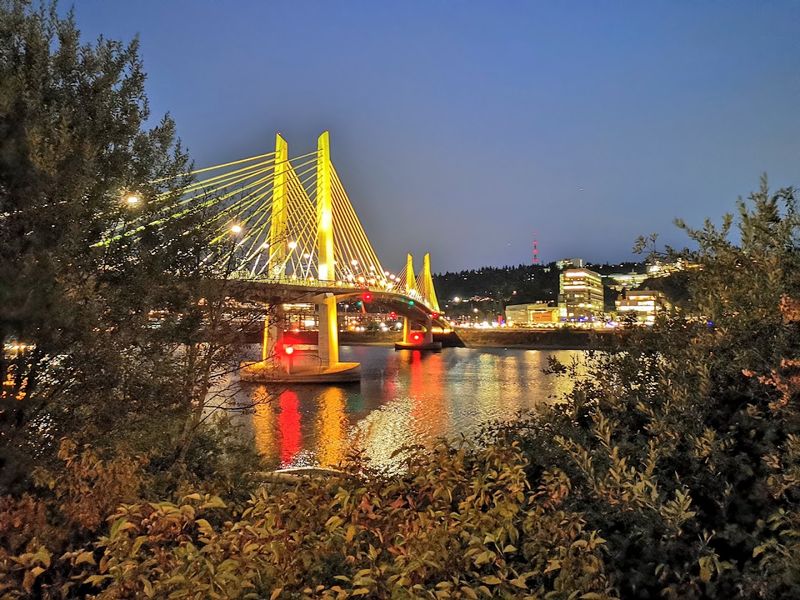
Portland’s sunset earns points for composition before it even reaches for personality. Bridges across the Willamette, a compact downtown, and the occasional appearance of Mount Hood give the city a layered profile that reflects both natural setting and a long local habit of treating public space as something worth arguing about in detail.
Very Portland, in other words.
The city’s evening appeal is tied to development choices. Portland was a nineteenth century river port, later shaped by rail, industry, and neighborhood streetcar patterns, then transformed again by urban planning that prioritized parks, riverfront access, and preserved districts over unchecked downtown expansion.
Viewpoints from the Eastbank Esplanade, Pittock Mansion, or Sellwood reveal how those eras remain visible at once.
You are looking at a city where civic process somehow became part of the scenery, and where bridges do more than connect roads – they organize the story of a place that keeps trying to balance growth with character.
13. New Orleans, Louisiana
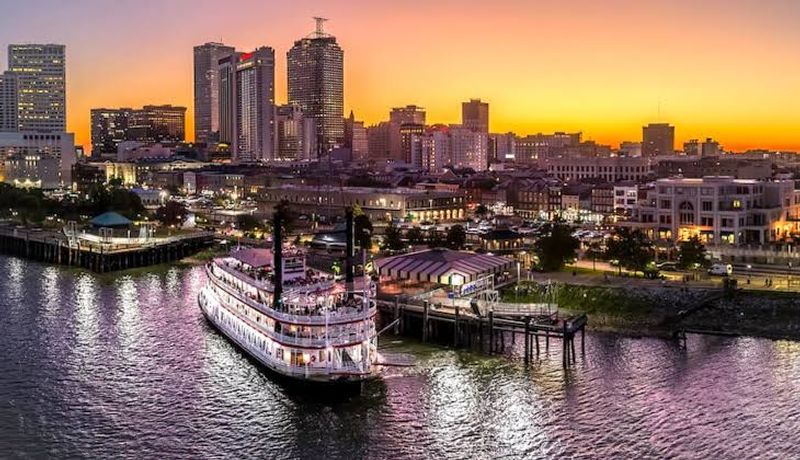
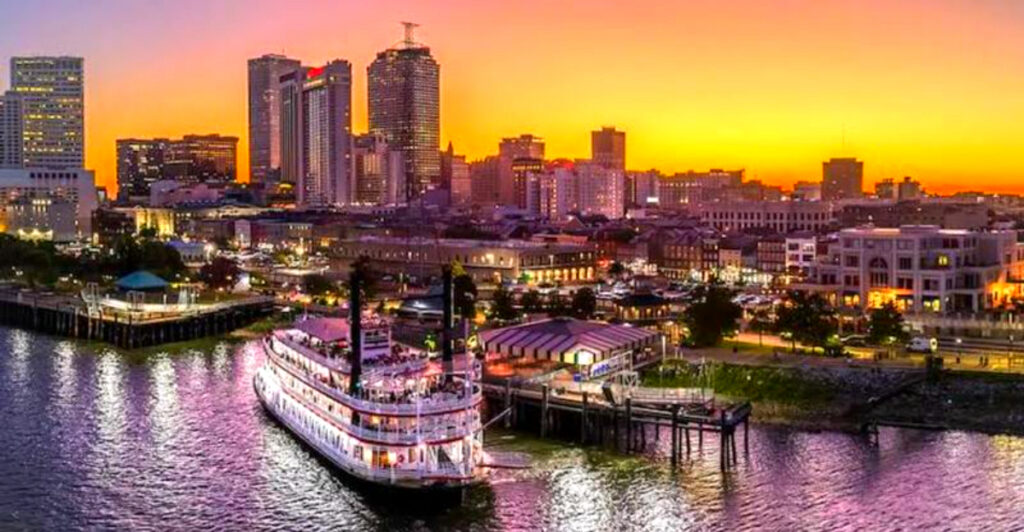
New Orleans has never needed a conventional skyline to make an impression. At sunset, the Mississippi River does much of the work, turning the city’s edge into a history lesson about trade, empire, engineering, and the layered cultures that made this port unlike any other in the United States.
The riverfront still explains the city better than any brochure.
That matters because New Orleans developed through French, Spanish, Caribbean, African, and American influences that remain visible in street plans, balconies, food traditions, and neighborhood identities. Jackson Square, the Moon Walk, and Algiers Point offer views where the river, cathedral spires, warehouses, and steamboat memory all meet in one frame.
Even newer towers downtown feel secondary to the older urban logic shaped by the bend in the river.
You are watching a city whose public identity grew from commerce and cultural exchange, and sunset simply gives those long-running conversations a cleaner outline.
14. Savannah, Georgia
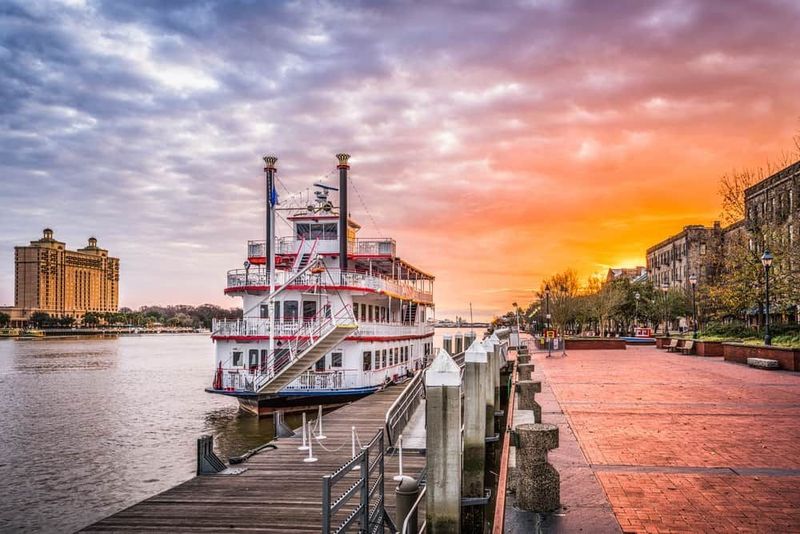
Savannah at sunset feels less like a reveal and more like a well-organized archive. The city’s famous grid of squares, established by James Oglethorpe in the eighteenth century, gives evening a structured setting that many American cities lost during later waves of redevelopment.
That plan is not just charming – it is historically rare and remarkably durable.
The appeal grows as you notice what the city preserved. Brick facades, church steeples, ironwork, port history, and residential streets all remain connected to the original public spaces, while Spanish moss and old oaks supply the visual punctuation most planners can only dream about.
From Forsyth Park to River Street, the view explains why Savannah became central to conversations about historic preservation in the twentieth century.
You are seeing a place where colonial planning, cotton-era commerce, and preservation-era activism still shape the same walkable landscape, which makes sunset feel less like an event and more like a final chapter done properly.
15. Charleston, South Carolina
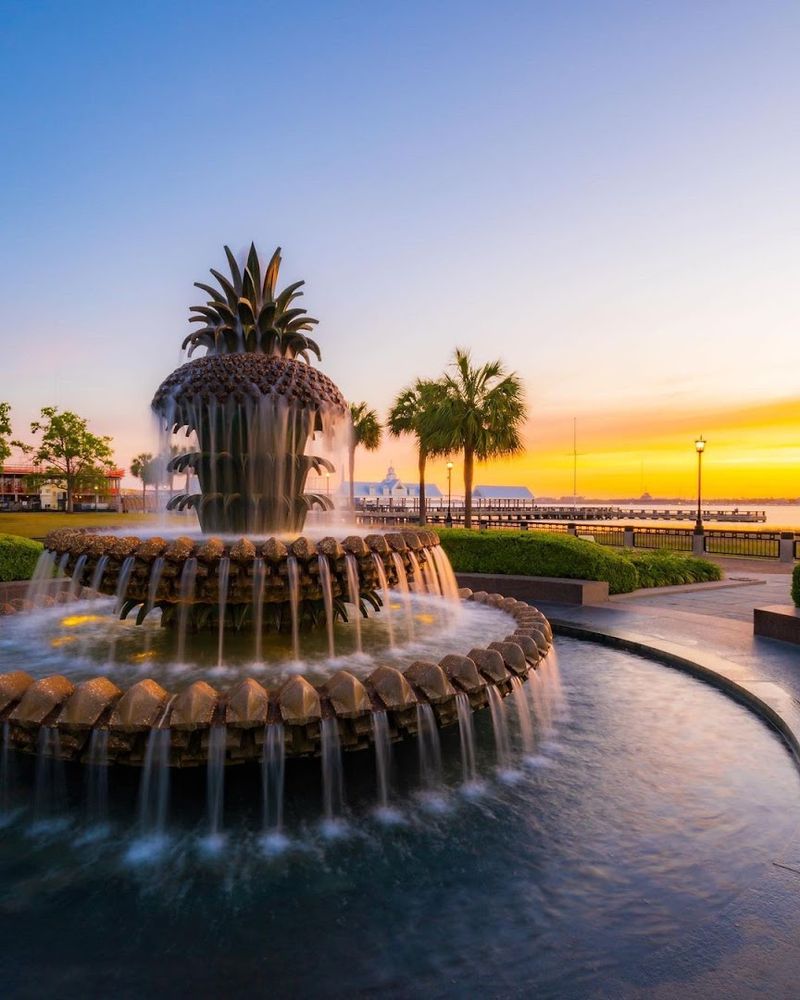
Charleston knows how to make a waterfront carry historical weight. At sunset, the harbor, church steeples, and pastel facades line up in a way that recalls the city’s colonial foundation, maritime commerce, and long role as one of the South’s most discussed urban places.
Beauty arrives quickly here, but context is doing plenty of work beneath it.
The city’s visual identity developed through port trade, eighteenth and nineteenth century architecture, preservation campaigns, and a careful management of scale that kept the historic district from being overwhelmed by modern construction. The Battery, White Point Garden, and the Arthur Ravenel Jr. Bridge each offer a different angle on that story, connecting old houses and harbor views to a broader regional history.
Even the color palette has roots in local building traditions and climate-conscious design.
You are looking at a city where preservation became policy early enough to protect its profile, allowing sunset to highlight continuity rather than disguise what redevelopment erased.
16. Phoenix, Arizona
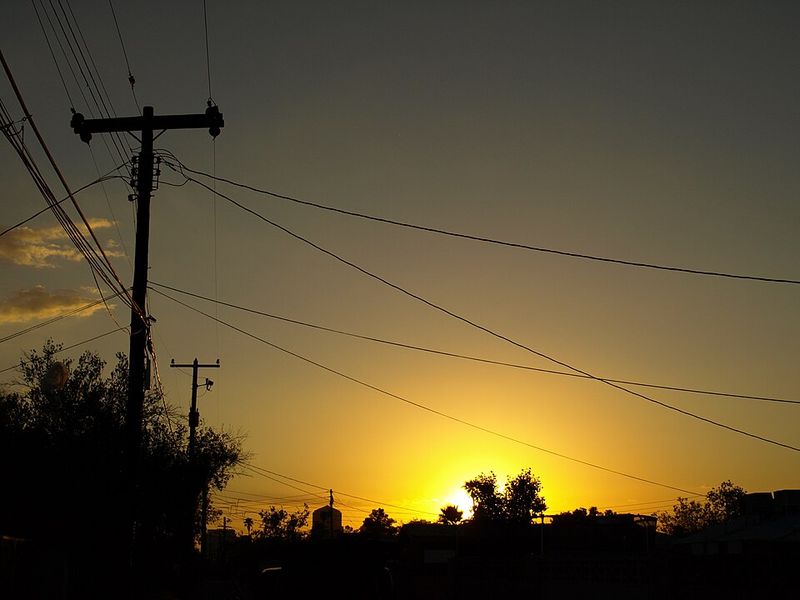
Phoenix makes sunset look like urban planning met geology and decided to cooperate. The city spreads across the Sonoran Desert in a broad grid, framed by mountain preserves that remind you this metropolis grew fast but did not get to choose its backdrop.
That fixed landscape gives evening an unusually clear structure.
The city’s history adds another layer. Phoenix developed from irrigation systems rooted in ancient Hohokam engineering, then expanded through agriculture, air conditioning, defense industries, and postwar migration into one of the nation’s largest cities.
Views from South Mountain, Papago Park, or rooftop decks downtown show how that growth stitched suburbs, freeways, and a newer central skyline into a valley that still reads as desert first and city second.
You are seeing a place where twentieth century expansion happened at remarkable speed, yet sunset quietly restores the longer timeline by putting mountains, canals, and the original logic of settlement back at the center.
17. Nashville, Tennessee
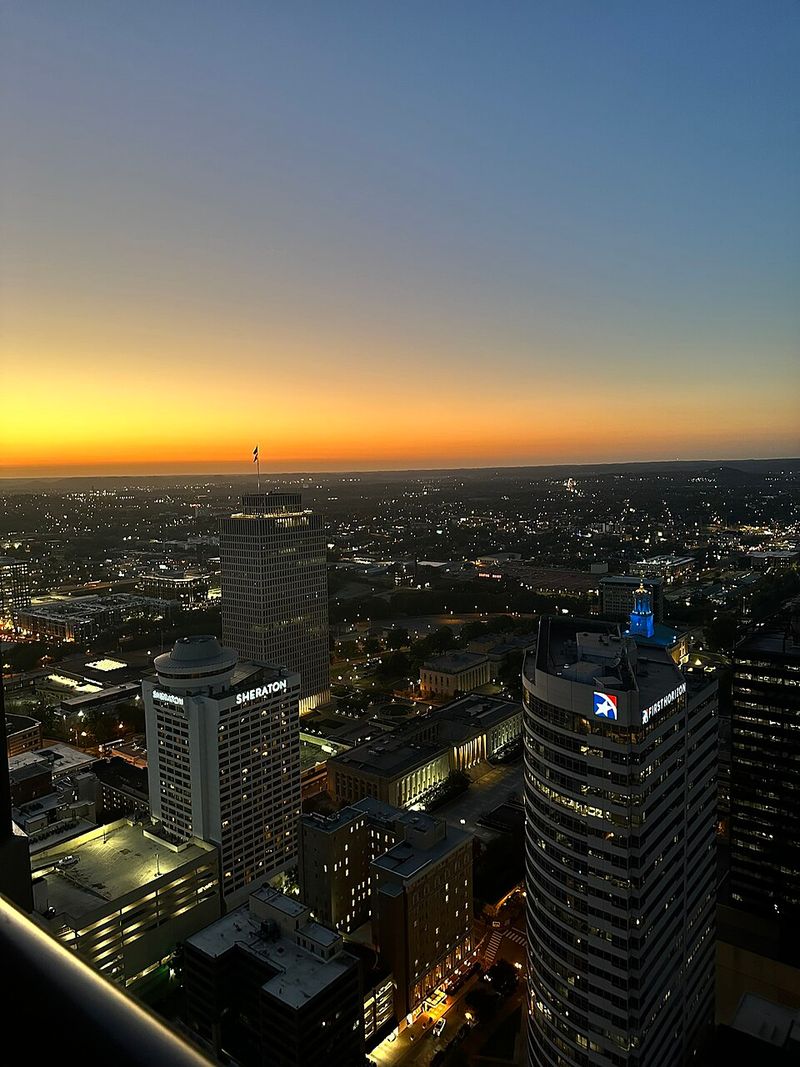
Nashville’s sunset comes with a built-in soundtrack in the public imagination, though the view itself does not need one. The Cumberland River and downtown skyline create a compact scene that reflects the city’s shift from regional river hub and publishing center into a nationally branded capital of entertainment, tourism, and fast urban growth.
You can watch that evolution in a single glance.
The river mattered long before the neon signs. It supported trade and transportation, while institutions like the Ryman Auditorium, Music Row, and the Grand Ole Opry helped turn local performance culture into a national export during the twentieth century.
Sunset from the pedestrian bridge, riverfront parks, or nearby hills frames those histories beside new apartment towers and office blocks that signal the city’s latest chapter.
You are seeing a place where commerce, broadcasting, and songwriting reshaped civic identity, and where evening briefly makes the old river city and the newer boomtown appear perfectly synchronized.
18. Anchorage, Alaska
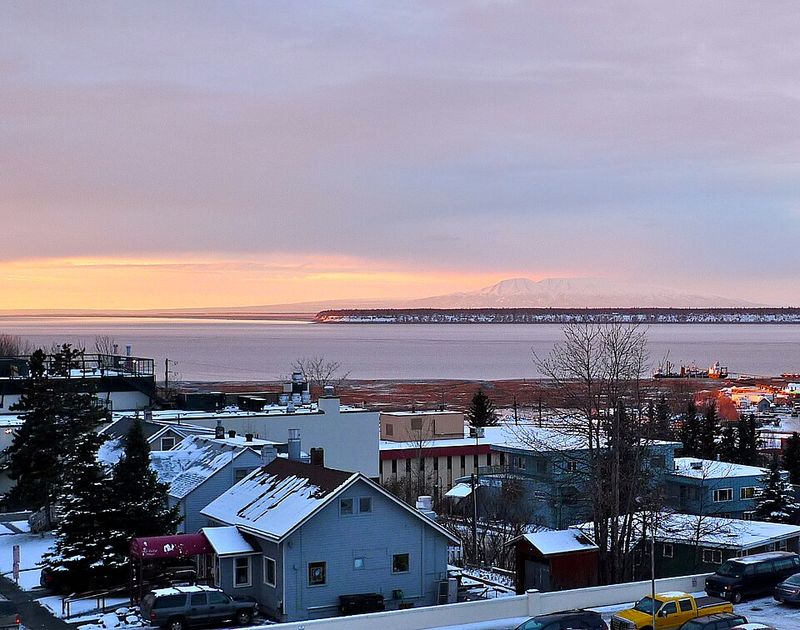
Anchorage plays by different sunset rules, and that is the whole point. The long northern evenings, mountain backdrop, and nearby water create a scene that feels almost oversized, but the city itself remains central because its history is one of rapid twentieth century growth tied to railroads, military investment, aviation, and resource development.
This is not wilderness pretending to be urban.
The setting makes that balance visible. Cook Inlet, the Chugach Mountains, and the broad sky frame a city that became Alaska’s population center while still maintaining unusually direct access to outdoor space.
Viewpoints along the Tony Knowles Coastal Trail or from hillside neighborhoods show how Anchorage developed as a practical hub first, then accumulated the cultural memory of frontier branding, statehood-era ambition, and modern northern life.
You are watching a city that grew from utility into identity, with sunset stretching the schedule long enough for the geography and the history to introduce themselves properly.
Share this story