New Mexico is one of those places that surprises you every single time. From glowing white dunes to ancient cliff dwellings, the Land of Enchantment lives up to its nickname at every turn.
Whether you love history, adventure, or just really good green chile, this state has something incredible waiting for you. Pack your bags and get ready to explore 15 spots that are absolutely worth the drive.
Santa Fe
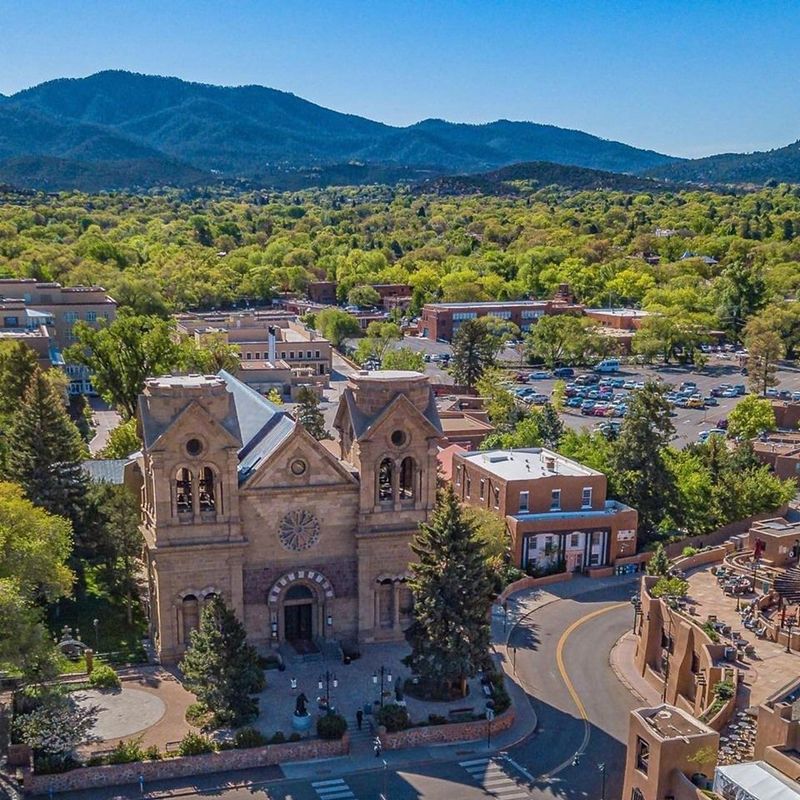
Founded in 1610, Santa Fe is older than the United States itself — and somehow still feels ahead of its time. Adobe buildings painted in earthy tones line every street, and the smell of roasting green chile drifts through the air like a warm invitation.
This city operates on its own creative frequency.
The Plaza sits at the heart of downtown, surrounded by galleries, restaurants, and the Palace of the Governors — the oldest continuously occupied public building in America. Native American artisans sell handmade jewelry and pottery right on the sidewalk outside, keeping centuries of tradition alive.
Art lovers will feel like kids in a candy store here. Santa Fe has more than 300 galleries packed into a walkable area, covering everything from traditional Pueblo pottery to cutting-edge contemporary sculpture.
The food scene is just as impressive — red or green chile sauce appears on almost every menu, and choosing between the two is a delicious dilemma. The Georgia O’Keeffe Museum is a must-see stop that connects the landscape to the legendary artwork it inspired.
Santa Fe rewards slow, curious exploration more than any rushed itinerary ever could.
Carlsbad Caverns National Park
Somewhere beneath the Chihuahuan Desert, an entire underground world is quietly waiting. Carlsbad Caverns National Park protects one of the most spectacular cave systems on Earth, and nothing quite prepares you for your first glimpse inside.
The scale is almost impossible to believe until you are actually standing in it.
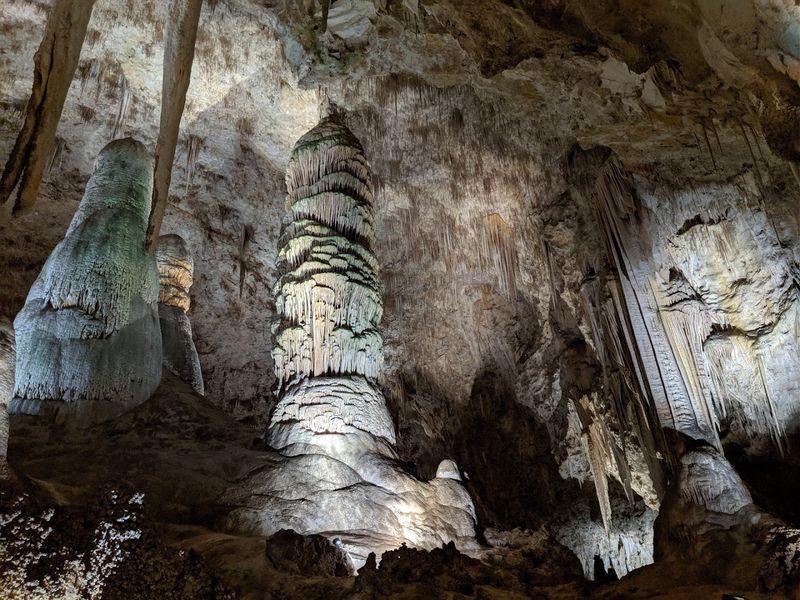
The Big Room is the showstopper — a single cave chamber so enormous it could fit six football fields inside. Stalactites hang from ceilings nearly 255 feet overhead, and stalagmites rise from the floor like ancient stone towers.
The formations took hundreds of thousands of years to build, one tiny drip at a time.
You can enter through the natural cave opening, following a winding trail that descends 750 feet underground, or take an elevator straight to the bottom. Either way, the temperature inside stays a cool 56 degrees Fahrenheit year-round — a welcome relief in summer.
Every evening from late spring through fall, hundreds of thousands of Brazilian free-tailed bats spiral out of the cave entrance at dusk in a spectacle that draws crowds from around the world. Carlsbad Caverns is the kind of place that genuinely changes how you think about the planet beneath your feet.
Taos & Taos Pueblo
There is a particular kind of quiet in Taos that feels intentional — like the mountains themselves decided this place should be special. Nestled in northern New Mexico, Taos is a small town with an outsized reputation for art, culture, and breathtaking scenery.
Artists have been drawn here since the early 1900s, and it is easy to understand why the moment you see the light hit those mountains.
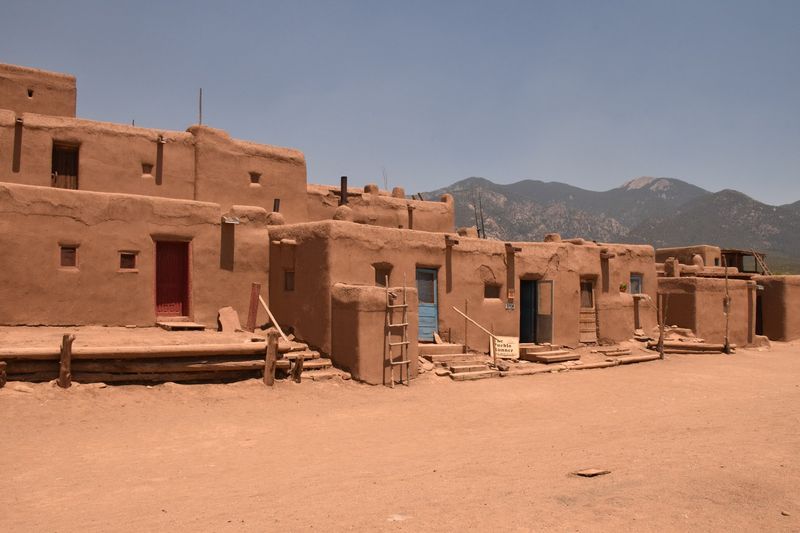
Taos Pueblo is the real crown jewel. This multi-story adobe community has been continuously inhabited for over 1,000 years, making it one of the oldest living communities in North America.
Designated a UNESCO World Heritage Site, the Pueblo is still home to Tiwa-speaking residents who maintain traditions passed down through countless generations.
Guided tours offer respectful, fascinating insight into daily life and history at the Pueblo. The town of Taos itself is loaded with galleries, excellent restaurants, and the historic Kit Carson Home and Museum.
In winter, Taos Ski Valley transforms the surrounding mountains into a world-class skiing destination. Summer brings hiking, river rafting through the Rio Grande Gorge, and open-air art markets.
Taos manages to feel both timeless and completely alive, which is a combination very few places on Earth can pull off.
White Sands National Park
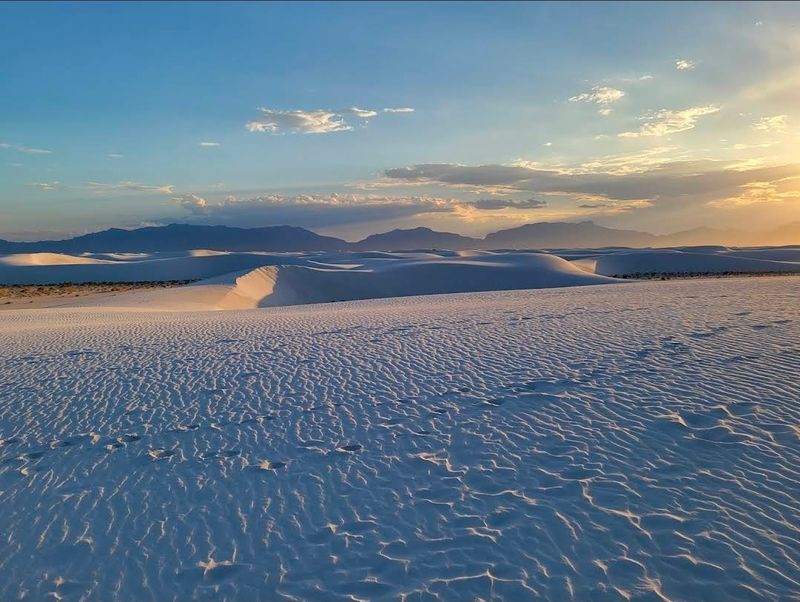
Snow in the desert? Not quite — but White Sands will absolutely fool your eyes.
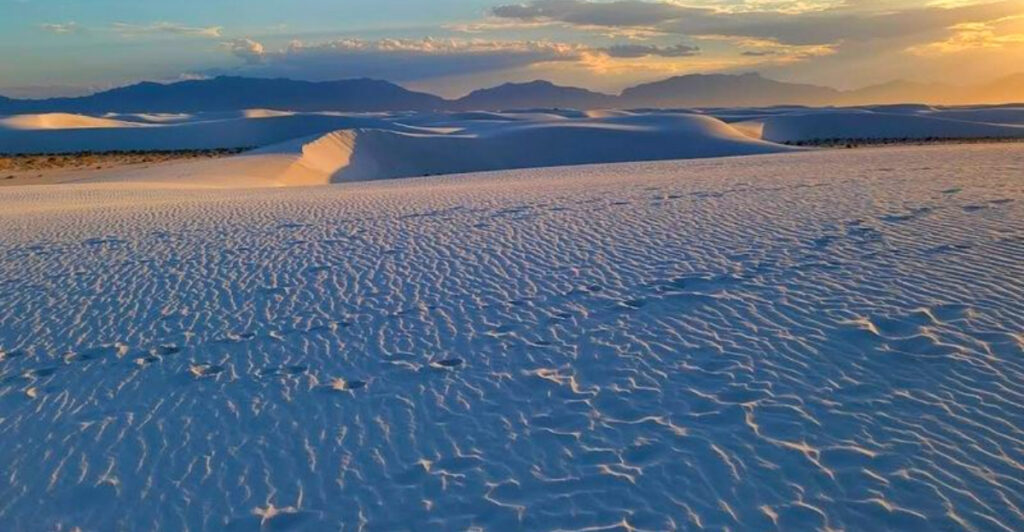
Stretching across 275 square miles of southern New Mexico, this national park is made entirely of glistening white gypsum sand. It looks like someone spilled powdered sugar across the entire landscape.
Hiking here feels like walking on another planet. The dunes shift constantly, creating new shapes and pathways every single day.
Sunset turns everything a soft shade of pink and gold, making it one of the most photographed moments in the state.
Renting a plastic sled from the visitor center gift shop is practically a tradition. Sledding down the steep, powdery slopes is outrageously fun for kids and adults alike.
Arrive early in summer — temperatures climb fast once the sun gets going. Early morning visits reward you with cool air and soft, glowing light that makes every photo look professionally taken.
White Sands is completely free with a National Parks pass, making it one of the best deals in outdoor adventure anywhere in the country.
Bandelier National Monument
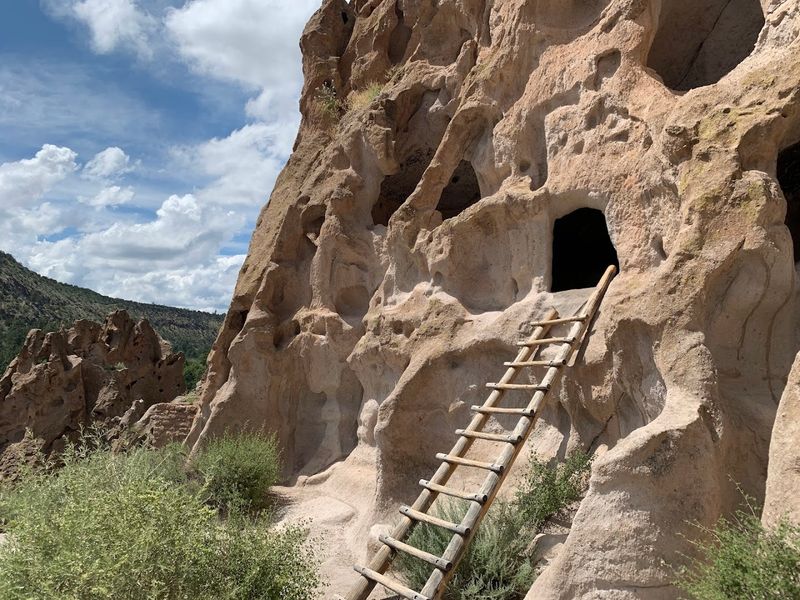
Climbing a wooden ladder into a 700-year-old home carved directly into a cliff face is not something most people get to do on a Tuesday afternoon — but at Bandelier, that is just a regular Tuesday. Located in the Jemez Mountains near Los Alamos, Bandelier National Monument preserves the remarkable homes and ceremonial spaces of the Ancestral Pueblo people who lived here between roughly 1150 and 1600 CE.
The main loop trail winds through Frijoles Canyon past hundreds of small cave rooms, or cavates, hollowed out of the soft volcanic tuff. Stone walls built by ancient hands still stand at the base of the cliffs.
The whole canyon has an incredible energy — quiet, layered, and deeply human.
Families with curious kids absolutely love Bandelier because the trail is interactive in the best possible way. You are encouraged to climb the ladders and peek inside the dwellings rather than just observe from behind a rope.
The Alcove House, reached by climbing four ladders 140 feet up the cliff face, rewards brave visitors with sweeping canyon views. Entry fees are reasonable, and a junior ranger program keeps younger explorers engaged throughout the visit.
Bandelier turns history into a hands-on adventure unlike anything else in the state.
Albuquerque & Sandia Peak Tramway
Albuquerque sits at the crossroads of everything cool about New Mexico. It is the state’s largest city, but it still manages to feel grounded and unpretentious — a place where green chile cheeseburgers are taken very seriously and mountain adventures are just a tram ride away.
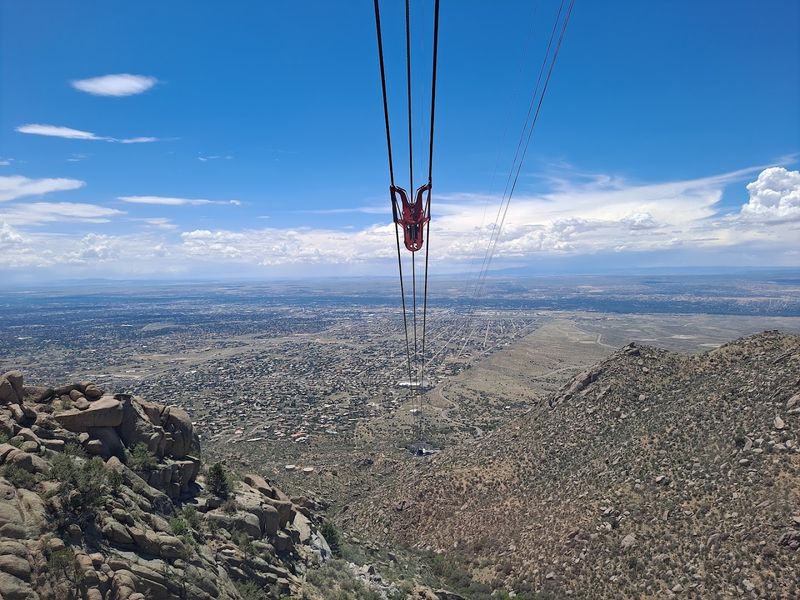
Speaking of which, the Sandia Peak Tramway is one of the most thrilling ways to see a city from above anywhere in the country.
The tram covers nearly three miles of cable, rising from the desert floor to 10,378 feet in just 15 minutes. At the top, the views stretch across 11,000 square miles on a clear day.
The temperature difference between the base and summit can be 30 degrees, so pack a light jacket even in summer.
Every October, Albuquerque hosts the International Balloon Fiesta — the largest hot air balloon event in the world. Hundreds of colorful balloons fill the morning sky in a display that is genuinely hard to describe without sounding like you are exaggerating.
Old Town Albuquerque offers historic adobe buildings, local craft shops, and excellent New Mexican food within easy walking distance. The National Museum of Nuclear Science and History adds an unexpectedly fascinating chapter to the city’s story.
Albuquerque rewards visitors who take their time and wander without a rigid schedule.
Chaco Culture National Historical Park
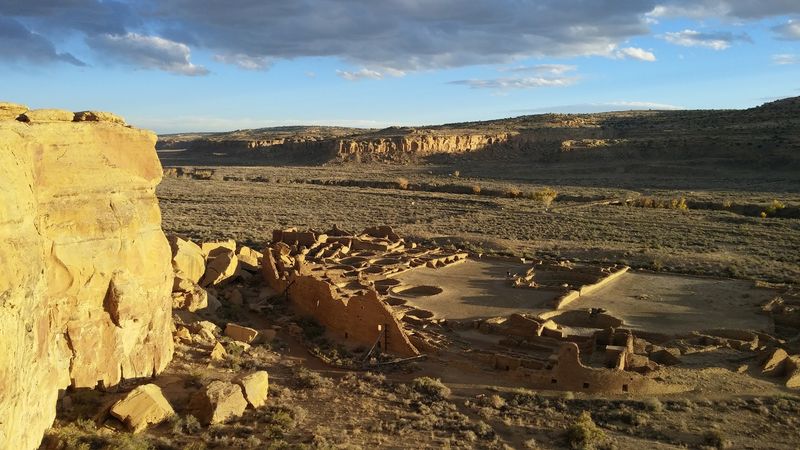
Getting to Chaco Canyon requires bumping down miles of unpaved road — and every single pothole is worth it. Chaco Culture National Historical Park protects one of the most extraordinary archaeological sites in North America, a place where ancient Puebloan people built massive stone structures aligned precisely with the sun, moon, and stars over a thousand years ago.
Modern astronomers still marvel at the accuracy.
Pueblo Bonito, the largest structure in the park, once stood five stories tall and contained over 600 rooms. It served as a hub for trade, ceremony, and community across a vast regional network.
The craftsmanship of the stonework, built without metal tools, is staggering to examine up close.
Chaco is a designated Dark Sky Park, meaning nighttime stargazing here is absolutely world-class. The Milky Way appears so bright and clear that first-time visitors often stand speechless for a full minute.
Rangers lead evening astronomy programs during warmer months that connect the ancient astronomical alignments to the stars above. Because the site sits so far from any city, crowds are refreshingly thin compared to more accessible parks.
Visiting Chaco requires planning and a little adventurous spirit, but the reward is a connection to human history that feels genuinely profound and quietly unforgettable.
Gila Cliff Dwellings National Monument
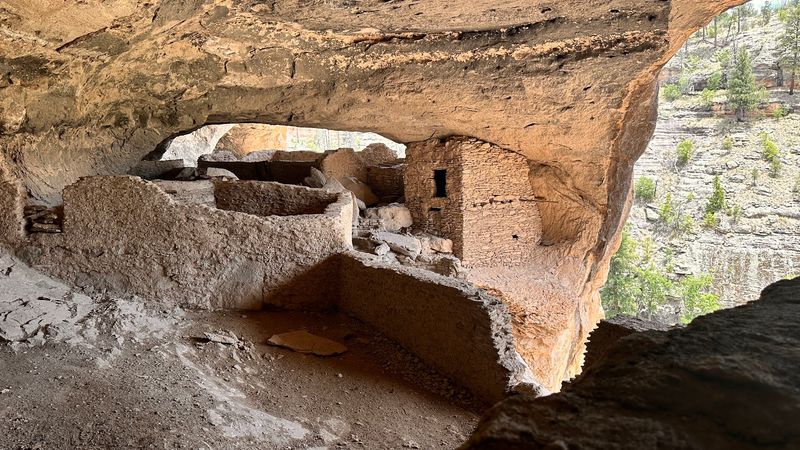
Deep in the rugged Mogollon Mountains of southwestern New Mexico, a small group of cliff dwellings sits tucked inside natural cave openings like a secret the wilderness decided to keep. The Gila Cliff Dwellings are less visited than many other archaeological sites in the Southwest, which makes the experience feel genuinely personal and unhurried.
You can wander through the rooms without feeling like you are part of a theme park queue.
The dwellings were built by the Mogollon people around 1280 CE and were occupied for only a generation or two before being abandoned. About 40 rooms survive across five separate caves, connected by a one-mile loop trail that winds up through a forested canyon.
Wooden ladders and stone steps help visitors reach the cave openings.
The surrounding Gila Wilderness was the first designated wilderness area in the United States, established in 1924. That legacy of protection shows — the landscape feels wild, clean, and refreshingly untouched.
Hot springs bubble up along the Gila River just a short hike from the monument, making a post-exploration soak a very popular reward. Wildlife sightings including black bears, javelinas, and golden eagles are common along the trails.
The Gila region is genuinely one of New Mexico’s most underrated and rewarding outdoor destinations.
Roswell
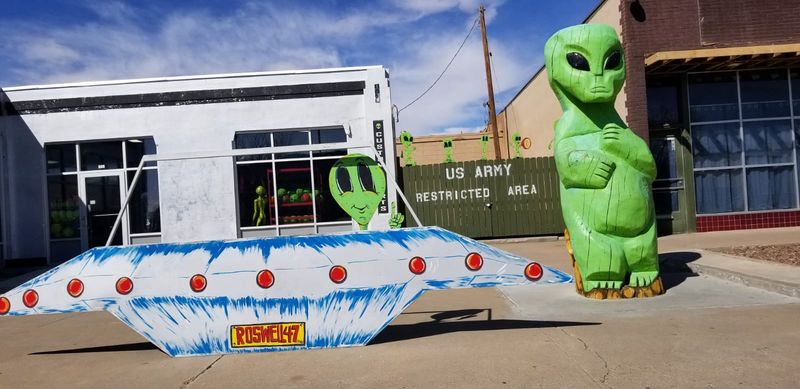
In July 1947, something crashed in the desert near Roswell — and the debate over exactly what that something was has never really stopped. Whether you are a true believer, a healthy skeptic, or just someone who appreciates a spectacularly committed tourist town, Roswell delivers an experience that is impossible to replicate anywhere else on Earth.
Or off it, depending on your perspective.
The International UFO Museum and Research Center is the obvious first stop, packed with crash site replicas, declassified government documents, and enough alien memorabilia to fill a spaceship. The museum takes its subject seriously while still maintaining a sense of fun.
Nearby shops sell everything from alien plush toys to genuine meteorite fragments.
Main Street has fully embraced the extraterrestrial identity — streetlights shaped like alien heads, green-tinted windows on local businesses, and themed restaurants that lean hard into the lore. The annual UFO Festival draws tens of thousands of visitors each summer for costume contests, lectures, and live entertainment.
Beyond the alien angle, Roswell also has a surprisingly excellent art museum and a beautiful historic downtown worth exploring. Even if you leave completely unconvinced about little green men, you will almost certainly leave smiling.
Roswell is unapologetically weird, and that is precisely what makes it wonderful.
Jemez Springs
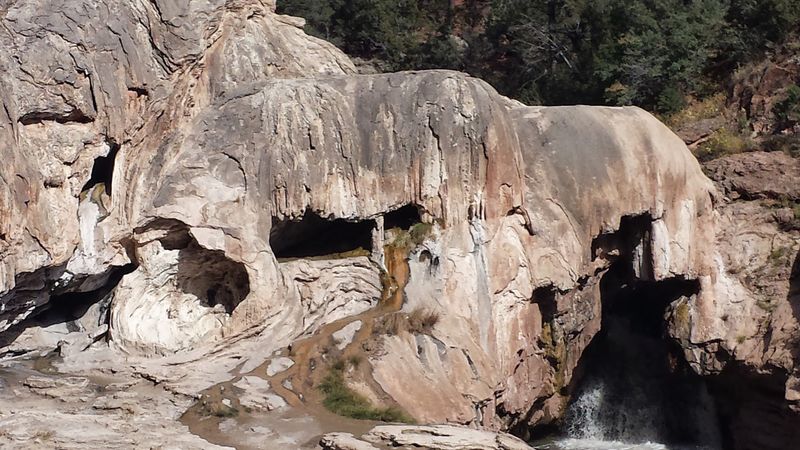
Tucked into a narrow canyon carved by the Jemez River, Jemez Springs is the kind of village that makes you want to turn off your phone and stay for a week. The red and orange canyon walls tower overhead, cottonwood trees turn brilliant gold in autumn, and the whole place hums with a relaxed, almost meditative energy.
It is small — blinking might cause you to miss it — but that is part of the charm.
Natural geothermal pools and hot spring bathhouses attract visitors looking to unwind in mineral-rich waters surrounded by canyon scenery. The historic Jemez State Monument preserves the ruins of a 17th-century Spanish mission alongside an ancient Pueblo village, layering centuries of history into a single compact site.
The Jemez Mountains surrounding the village offer fantastic hiking, including trails through the Valles Caldera National Preserve — a massive ancient volcanic crater that is now a sweeping green meadow roamed by enormous elk herds. Soda Dam, a natural mineral deposit that partially blocks the Jemez River, is a genuinely bizarre geological feature worth stopping to photograph.
The drive along Highway 4 through this area is considered one of New Mexico’s most scenic roads, especially in fall. Jemez Springs rewards anyone willing to slow down and pay attention to quiet, beautiful things.
Bisti/De-Na-Zin Wilderness
No trail markers. No cell signal.
No crowds. Welcome to Bisti/De-Na-Zin Wilderness, the most gloriously strange corner of New Mexico you have probably never heard of.
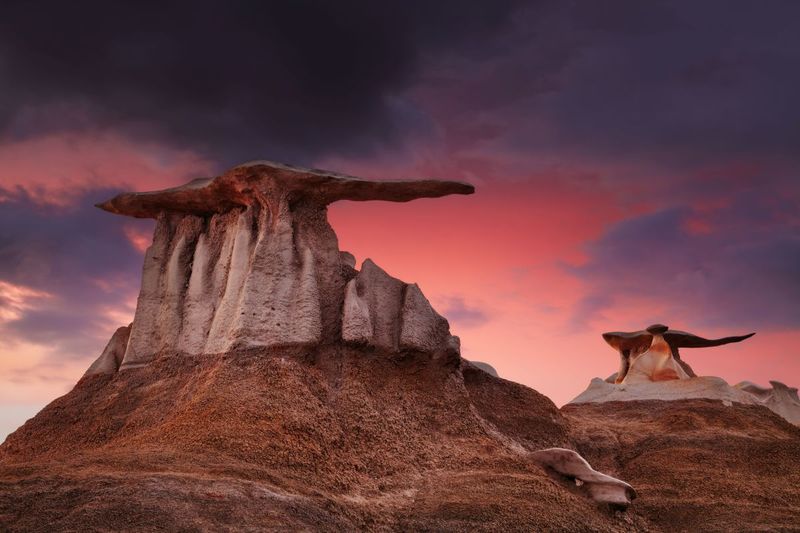
Located in the San Juan Basin of northwestern New Mexico, this remote badlands area looks less like Earth and more like a sci-fi film set that someone forgot to dismantle after filming wrapped.
Millions of years of erosion have sculpted the soft sedimentary layers into a parade of hoodoos, mushroom rocks, and crumbling clay formations in shades of grey, purple, white, and rust. Each formation is unique, and the landscape changes dramatically depending on the light.
Sunrise and sunset turn the whole place into something that feels genuinely magical.
Navigation requires a compass or GPS because the terrain has no marked paths. That challenge is actually part of the appeal for adventurous hikers who enjoy exploration without guardrails.
Fossil hunters have discovered dinosaur bones, petrified wood, and ancient marine fossils here — remnants of a prehistoric seabed that once covered this entire region. Photography enthusiasts travel from across the country specifically to capture Bisti’s otherworldly compositions.
Visiting during cooler months is strongly recommended since summer temperatures can be punishing. Pack extra water, wear sturdy boots, and prepare to feel very small in the best possible way.
Ruidoso
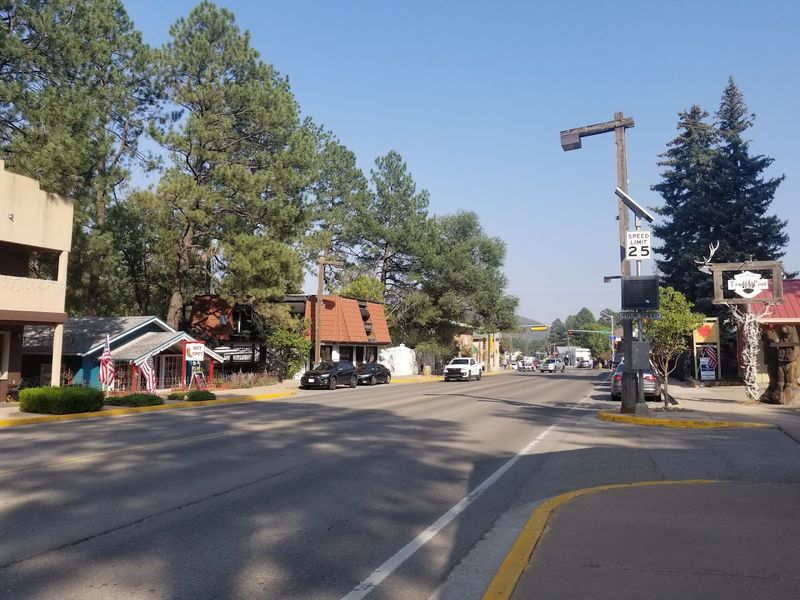
At nearly 7,000 feet above sea level, Ruidoso offers something rare in New Mexico — actual shade. Towering ponderosa pines cover the surrounding mountains, temperatures stay refreshingly cool even in July, and the whole town has the relaxed energy of a place that genuinely loves being outside.
It is a favorite escape for Texans fleeing summer heat, and honestly, they are onto something.
Ski Apache, located on the slopes of Sierra Blanca peak, is one of the southernmost ski resorts in the United States and draws snow enthusiasts from across the region each winter. The mountain is operated by the Mescalero Apache Tribe, and the views from the upper lifts stretch into three states on a clear day.
Summer brings hiking, mountain biking, and horse racing at Ruidoso Downs — one of the premier racetracks in the Southwest, famous for the All American Futurity quarter horse race. The nearby Hubbard Museum of the American West houses an impressive collection of Western art and artifacts.
Alto Lake and other nearby reservoirs offer fishing and kayaking for water lovers. The town’s main street is lined with independent shops, galleries, and restaurants serving everything from green chile burgers to surprisingly sophisticated cuisine.
Ruidoso punches well above its weight for a small mountain town.
Truth or Consequences
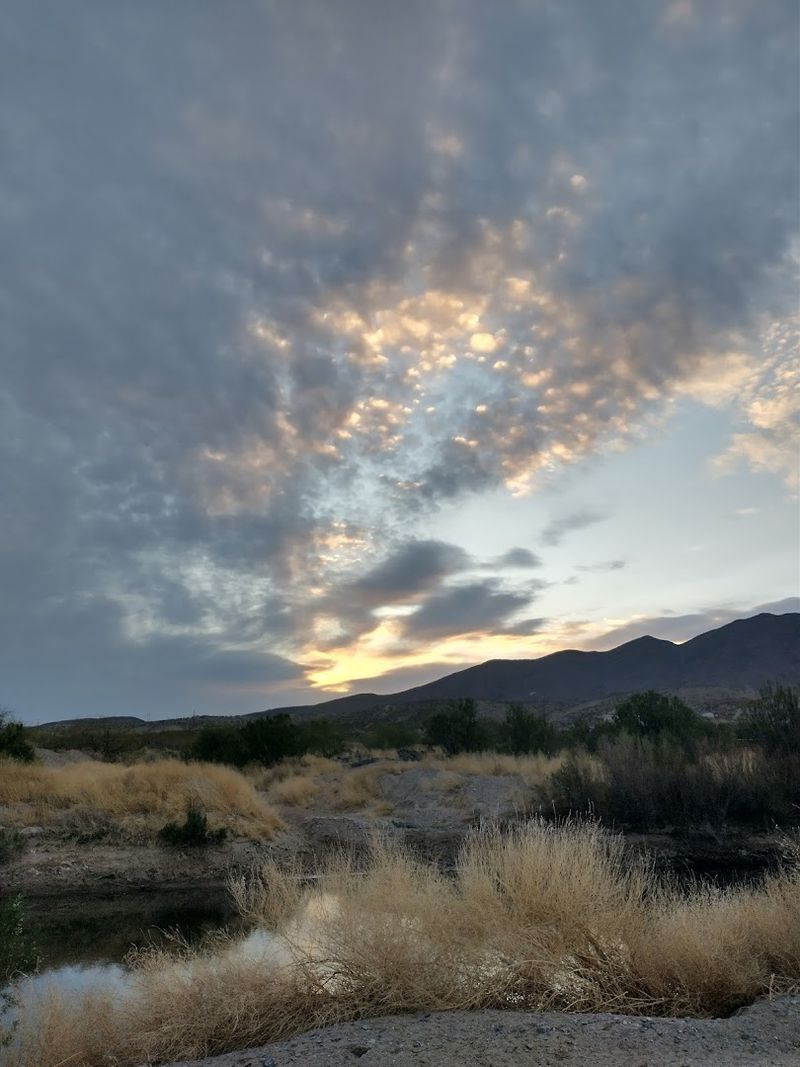
The name alone is enough to make you pull over and investigate. Truth or Consequences — yes, that is its real, legal name — earned its unusual identity in 1950 when the town agreed to rename itself after a popular radio game show in exchange for hosting the program’s 10th anniversary broadcast.
Decades later, the name still does all the marketing work the town could ever need.
Geothermal hot springs bubble up throughout the town, and a string of small bathhouses along the Rio Grande invite visitors to soak in mineral-rich water at temperatures ranging from warm to seriously hot. Many of the bathhouses are attached to affordable motels, making a soak-and-stay combination easy and budget-friendly.
The town has quietly developed a small but genuine arts scene, with galleries and studios filling historic downtown storefronts. Elephant Butte Lake State Park sits just minutes away, offering boating, fishing, and swimming in New Mexico’s largest body of water.
The Geronimo Springs Museum covers the area’s rich Apache, Spanish, and frontier history in an engaging and well-organized space. Sunsets over the Rio Grande from the hot springs are the kind of slow, golden, unhurried moments that remind you why travel exists.
Truth or Consequences is weird, warm, and completely worth the detour.
Villanueva State Park
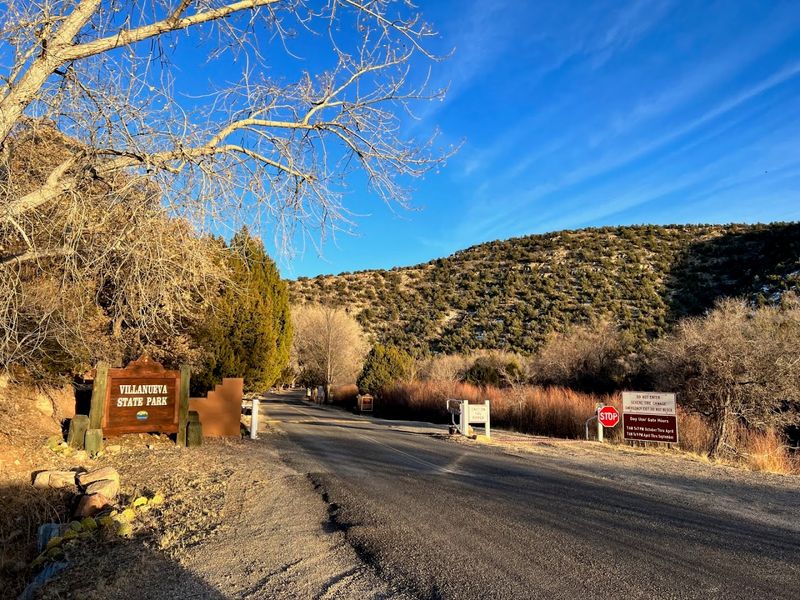
Villanueva State Park is New Mexico’s best-kept secret, and locals who know about it are in absolutely no hurry to spread the word. Tucked along the Pecos River about an hour southeast of Santa Fe, this small park delivers canyon scenery that would be mobbed with visitors if it were located anywhere near a major highway.
Instead, it remains blissfully quiet almost year-round.
Towering sandstone cliffs in shades of amber, red, and gold rise dramatically above the river, especially striking in autumn when the cottonwood trees turn vivid yellow along the banks. The Pecos River here is calm and clear, perfect for fishing, wading, or simply sitting on a rock and listening to the water move.
Two hiking trails wind through the park, offering canyon rim views and river-level perspectives that feel completely different from each other. The longer Canyon Trail climbs to the top of the mesa for sweeping panoramas that stretch for miles across the surrounding landscape.
A small campground with basic facilities sits right along the river, making overnight stays genuinely peaceful. The historic village of Villanueva, just outside the park entrance, features a beautiful 19th-century adobe church worth a quick stop.
For anyone craving natural beauty without the parking lot stress, Villanueva State Park is exactly the answer.
Acoma Pueblo (Sky City)
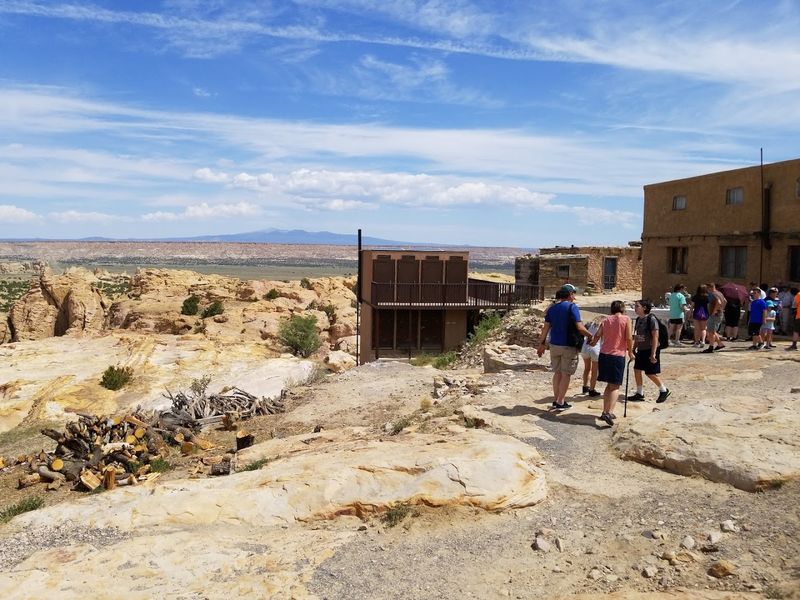
Perched 367 feet above the surrounding desert on a sheer-sided sandstone mesa, Acoma Pueblo has been continuously inhabited for over 2,000 years — making it one of the oldest communities in all of North America. The view from the top is staggering in every direction, and the fact that people have chosen to live up here, hauling water and supplies up steep cliff paths for centuries, is a testament to extraordinary human determination.
Sky City, as it is widely known, can only be visited through guided tours run by the Acoma people themselves. Those tours are some of the most informative and moving cultural experiences available anywhere in the Southwest.
Guides share stories, history, and traditions with a warmth and depth that no museum exhibit could replicate.
The San Estevan del Rey Mission, completed in 1640, stands as one of the most impressive examples of Spanish Colonial architecture in the country. Its massive adobe walls were built by Acoma laborers under colonial pressure, giving the structure a complicated and deeply human history.
Pottery made by Acoma artists — recognized by its thin walls and intricate black-and-white geometric patterns — is considered among the finest in the world. The Sky City Cultural Center at the base of the mesa offers exhibits, a restaurant, and a gallery showcasing contemporary Acoma art.
Visiting Acoma is a privilege that leaves a lasting impression.
Share this story