
Southern rock did not become road music by accident. In the 1970s, FM radio, muscle cars, touring circuits, and regional pride helped turn long guitar workouts and plainspoken lyrics into a driving ritual that still holds up.
These songs are not just crowd favorites – they map the genre’s rise from bar stages and local labels to national radio, all while keeping one eye on the highway. If you want a playlist with history, swagger, and a strong sense of place, this list gives you the tracks that made open-road listening feel like its own American tradition.
1. “Free Bird” – Lynyrd Skynyrd
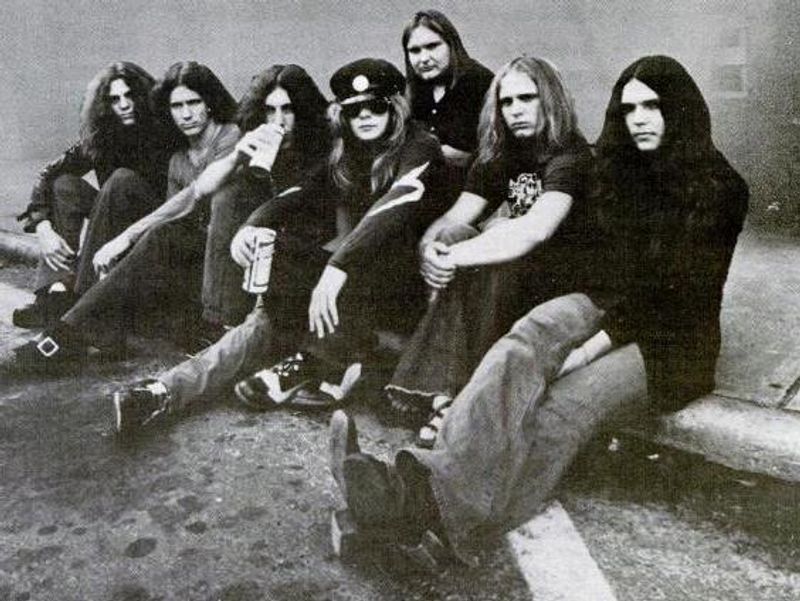
Few songs have done more work for American road-trip mythology than “Free Bird.” Released in 1973 on Lynyrd Skynyrd’s debut album, it began as a ballad before turning into one of rock’s most recognizable extended finales.
That structure matters on a highway playlist because it mirrors the way a drive shifts from steady cruising to total commitment. Ronnie Van Zant’s vocal keeps things direct, then the guitars take over and turn patience into momentum without sounding forced.
The song also helped define Southern rock for listeners far outside the region. Long before streaming playlists did the sorting, FM radio made “Free Bird” a rite of passage, and live audiences kept requesting it with near-comic consistency.
You do not need to be a Skynyrd historian to feel why it belongs here. Put it on during a long stretch of interstate, and the miles suddenly seem more cooperative.
2. “Ramblin’ Man” – The Allman Brothers Band
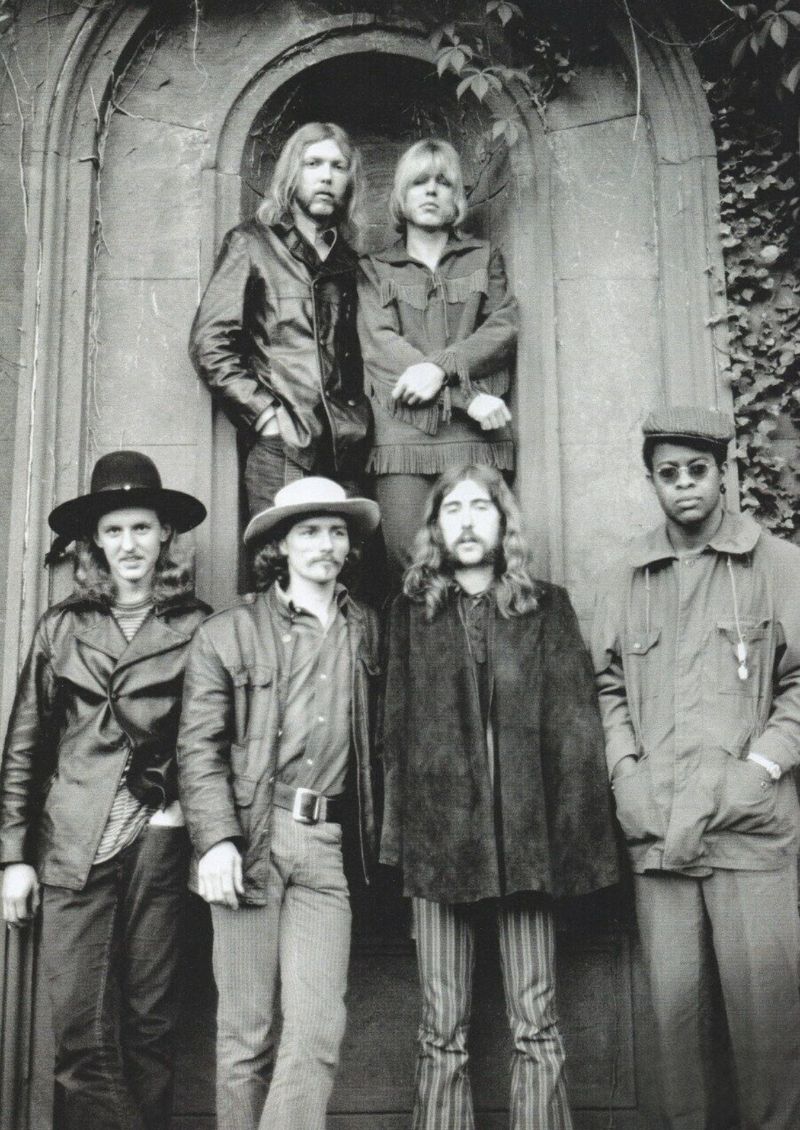
Some songs seem engineered for a moving car, and “Ramblin’ Man” proves the point in under five minutes. Released in 1973, it became the Allman Brothers Band’s biggest chart hit, which is mildly funny for a group better known for sprawling live performances than concise radio success.
Dickey Betts wrote and sang it, bringing a country-leaning ease that widened the band’s audience without flattening its musicianship. The lead lines stay nimble, the rhythm keeps a confident roll, and the lyrics present travel not as fantasy but as habit.
That distinction gives the song staying power. Southern rock often balanced regional identity with national ambition, and “Ramblin’ Man” captures that balance beautifully by sounding rooted and restless at once.
It also marks the genre’s crossover moment, when bands from Macon and Jacksonville stopped being regional secrets. If your playlist needs a song that makes passing your exit feel reasonable, this is one of the most reliable choices ever recorded.
3. “Can’t You See” – The Marshall Tucker Band

Right away, “Can’t You See” reminds you that Southern rock was never only about speed. The Marshall Tucker Band released it in 1973, and Toy Caldwell’s songwriting gave the genre one of its clearest blends of country structure, blues phrasing, and road-ready pacing.
The flute part is a smart twist because it separates the band from heavier peers without softening the track’s backbone. Caldwell’s guitar stays disciplined, the arrangement leaves room to breathe, and the lyric carries just enough movement to fit a long drive.
Historically, the song matters because Marshall Tucker helped push Southern rock beyond the toughest-guy stereotype. Bands from Spartanburg and Macon were drawing from Western swing, jazz, and rural storytelling as much as hard rock, and this track makes that case in plain terms.
It also aged well because it never tries too hard. When you add it to a highway playlist, you get a song that feels expansive without becoming bloated, which is a harder trick than many famous bands managed.
4. “Flirtin’ with Disaster” – Molly Hatchet

No subtle introduction is needed when “Flirtin’ with Disaster” hits the speakers. Molly Hatchet released it in 1979, near the end of Southern rock’s first great commercial run, and the song arrived with a tougher edge than many earlier standards.
The twin-guitar attack gives it immediate force, but the rhythm section is what makes it work on the road. Instead of wandering into jam-band territory, the track stays locked in, pushing forward with a compact intensity that suits fast lanes and stubborn schedules.
It also captures how the genre changed by the late 1970s. After the Allmans and Skynyrd established the blueprint, bands like Molly Hatchet leaned harder into arena-sized hooks and heavier production while keeping regional identity intact.
That evolution matters because Southern rock was never static; it adapted to radio trends and bigger venues without losing its core language. Put this on when the trip needs a jolt, and you get the soundtrack equivalent of deciding that the destination can wait while the drive gets more interesting.
5. “Hold On Loosely” – .38 Special

A road playlist needs at least one song that feels effortless, and “Hold On Loosely” fills that slot with style. Released in 1981, it showed how Southern rock could enter a new decade without sounding stuck in the previous one.
.38 Special trimmed the jam-heavy excess and leaned into sharp hooks, cleaner production, and a chorus built for radio. Don Barnes and the band kept the Southern identity intact, but they packaged it in a way that worked for both car stereos and mainstream charts.
That balance helped the song become one of the genre’s most durable crossover hits. By the early 1980s, rock radio was changing fast, and plenty of regional acts either toughened up awkwardly or faded from view. .38 Special did something smarter: they streamlined the sound while preserving the guitar drive and conversational tone that made Southern rock distinctive.
On the highway, that means you get momentum without clutter. It is catchy, direct, and just polished enough to sit comfortably beside older classics and newer road staples.
6. “Midnight Rider” – The Allman Brothers Band
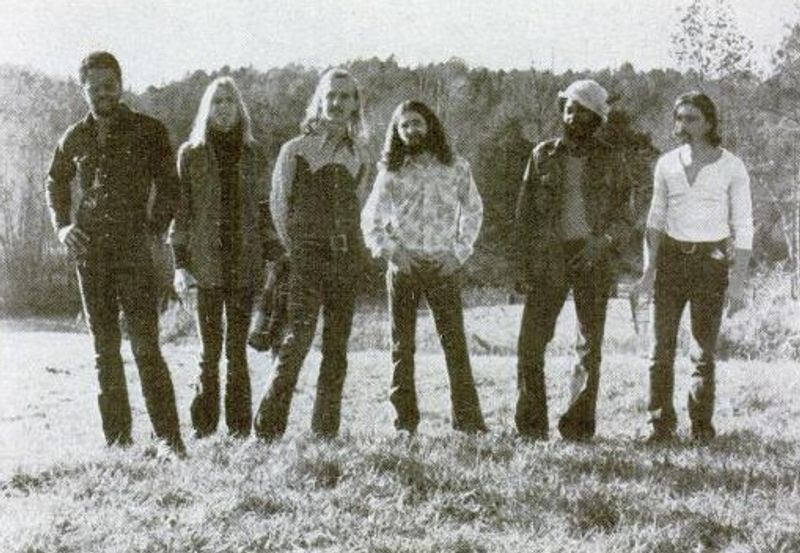
There is a reason “Midnight Rider” remains one of the coolest entries in the Southern rock catalog. First released in 1970 on Idlewild South, it arrived before the genre had fully solidified, which gives it the feel of a foundation stone rather than a late imitation.
Gregg Allman’s writing is spare and effective, and the band avoids clutter at every turn. The groove moves steadily, the lyric suggests motion and resolve, and the whole track sounds like a lesson in how to be memorable without overworking the point.
For highway listening, that restraint is exactly the appeal. Not every road song needs a ten-minute guitar statement or a giant chorus built for a stadium; sometimes the right choice is a measured track that keeps the trip centered.
Historically, “Midnight Rider” also shows how the Allmans fused blues, country, and rock into something more regional and more expansive at once. When you queue it up after louder material, the playlist suddenly has shape, and your drive gets a little smarter.
7. “Simple Man” – Lynyrd Skynyrd
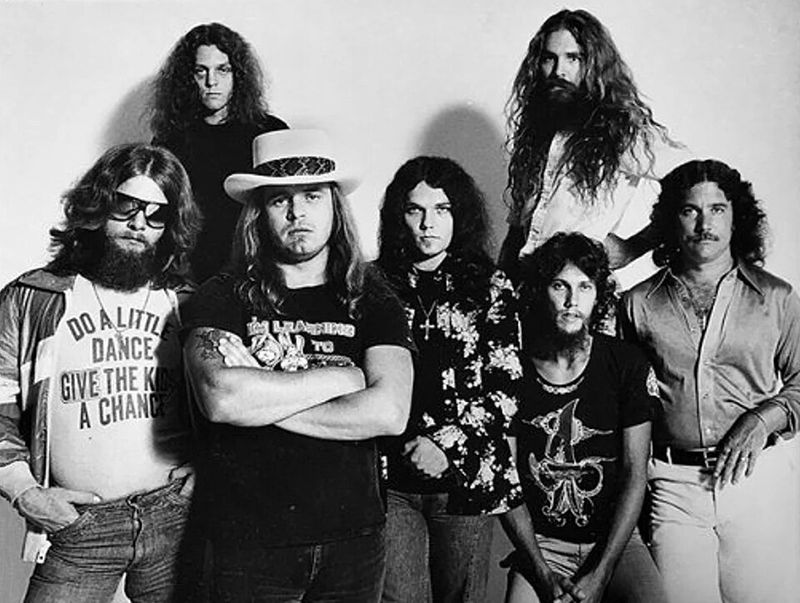
Not every essential highway song needs to chase speed, and “Simple Man” understands that better than most. Released in 1973, it gave Lynyrd Skynyrd a quieter kind of authority, built less on swagger and more on direct advice shaped into song.
Ronnie Van Zant’s vocal keeps the message grounded, while the band lets the arrangement build carefully instead of pushing for instant drama. That patience is a major reason the song lasted beyond its original era and became a cross-generational favorite.
Its historical role is also worth noting. Southern rock often gets reduced to riffs, denim, and regional bravado, but songs like this reveal how much the genre depended on plainspoken values and family language.
In the 1970s, that combination helped Skynyrd connect with audiences far beyond the South, especially listeners who wanted rock music that sounded tough without becoming distant. On a long drive, “Simple Man” works like a reset button.
It slows the playlist just enough, gives the louder songs context, and keeps the whole journey from turning into one long burst of engine-minded enthusiasm.
8. “Heard It in a Love Song” – The Marshall Tucker Band

Some tracks earn their place by making the road feel less rushed, and “Heard It in a Love Song” does exactly that. Released in 1977, it became one of the Marshall Tucker Band’s best-known songs and showed how relaxed Southern rock could still command serious attention.
The arrangement is economical, the melody is easy to carry with you, and the band resists the temptation to oversell the sentiment. That lightness matters because highway playlists need variety, not fifteen songs all trying to overpower the steering wheel.
The song also represents an important branch of the genre’s family tree. Southern rock was never a single fixed formula; it included bands that leaned toward country-pop structures, jazz phrasing, and regional storytelling without giving up guitar credibility.
Marshall Tucker excelled at that middle ground, and this track is one of the clearest examples. It fit late-1970s radio because it felt approachable, but it still sounded unmistakably Southern in its phrasing and pacing.
Add it between heavier numbers, and the playlist suddenly breathes better while keeping its identity fully intact.
9. “Green Grass and High Tides” – The Outlaws
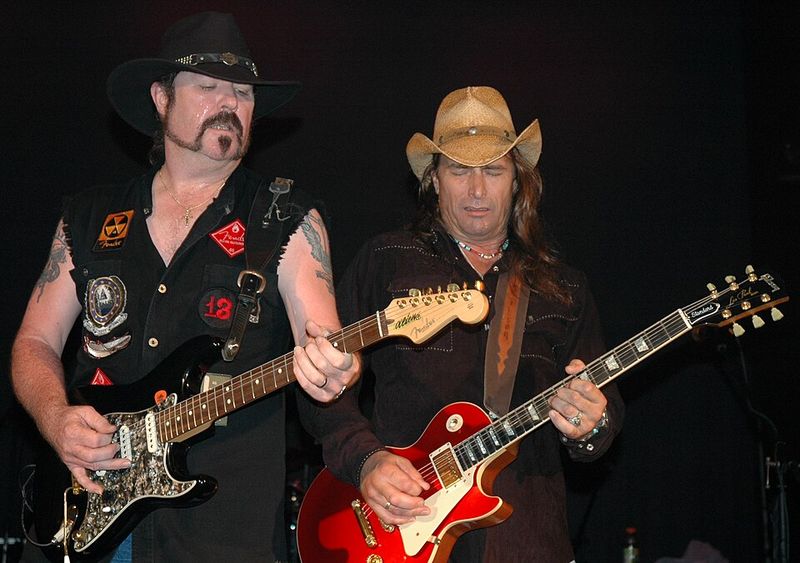
When a song runs long and still feels welcome, you know it has earned its highway credentials. “Green Grass and High Tides,” released by the Outlaws in 1975, is one of Southern rock’s grand statements, famous for its extended guitar passages and steady sense of direction.
Unlike a lot of lengthy rock tracks, it does not drift. The structure keeps unfolding with purpose, and the dual-guitar approach gives the performance enough variation that your attention stays engaged rather than checking the dashboard every thirty seconds.
The Outlaws came out of Florida’s rich rock scene, and this song helped prove that Southern rock was larger than a few headline bands from Georgia or Alabama. It also showed how the genre could handle ambition without becoming self-important.
That is an underrated skill. On a long drive, a track like this can make an ordinary stretch of road feel productively occupied, which is different from mere distraction.
If your playlist needs one song that turns distance into part of the fun, this is a dependable and historically important choice.
10. “Gimme Three Steps” – Lynyrd Skynyrd
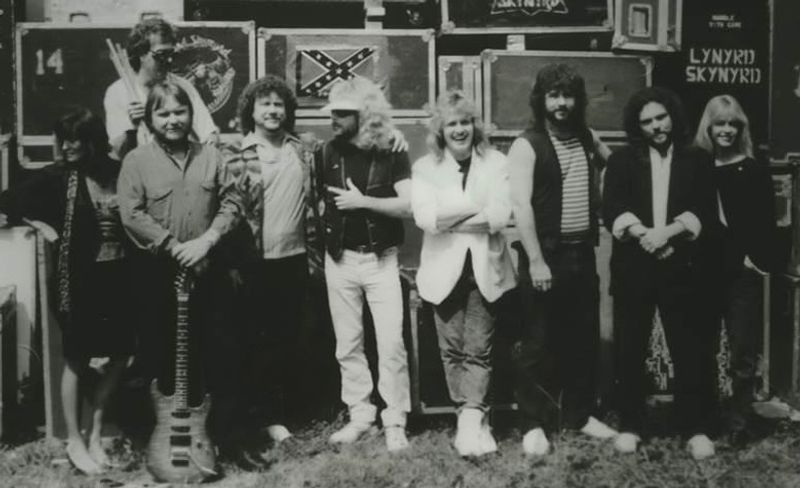
Story songs have a special place in car playlists, and “Gimme Three Steps” is one of the sharpest ever cut. Released in 1973 on Lynyrd Skynyrd’s debut album, it paired a brisk groove with a vivid narrative, proving that Southern rock could be witty as well as forceful.
The band keeps the arrangement moving with remarkable economy. Allen Collins and Gary Rossington’s guitars stay bright and agile, while Ronnie Van Zant delivers the lyric with the timing of someone who understands that detail beats grandstanding every time.
That storytelling tradition links Southern rock to country, blues, and regional barroom culture, where a memorable scene often mattered more than abstract poetry. “Gimme Three Steps” also helped establish Skynyrd’s persona early on: streetwise, funny, and grounded in recognizable Southern settings without becoming cartoonish. For highway use, the song is nearly ideal because it has momentum, character, and no wasted motion.
You can drop it anywhere in a playlist, and it immediately raises the energy while giving your ears a break from songs that rely only on volume and bravado.
11. “Dreams I’ll Never See” – Molly Hatchet

Every strong highway playlist needs one song that lowers the pulse without losing the genre’s backbone. “Dreams I’ll Never See,” released by Molly Hatchet in 1978, does that job beautifully while showing the band’s range beyond hard-driving crowd starters.
It is a cover of a Gregg Allman composition, and that connection matters because it ties one Southern rock generation to another. Molly Hatchet keeps the emotional weight intact but gives the arrangement a firmer late-1970s edge, with more muscle in the guitars and a broader arena-rock frame.
The result works especially well in the middle of a long drive, when nonstop velocity starts to flatten the experience. Historically, the track also reveals how Southern rock circulated its own repertoire, with bands reshaping one another’s material rather than treating songs as fixed museum pieces.
That cross-pollination helped the genre stay alive and adaptable. Add this one when the road gets quieter, and you get reflection without melodrama, plus a useful reminder that even the rowdier Southern bands knew how to handle restraint.
12. “If You Wanna Get to Heaven” – Ozark Mountain Daredevils
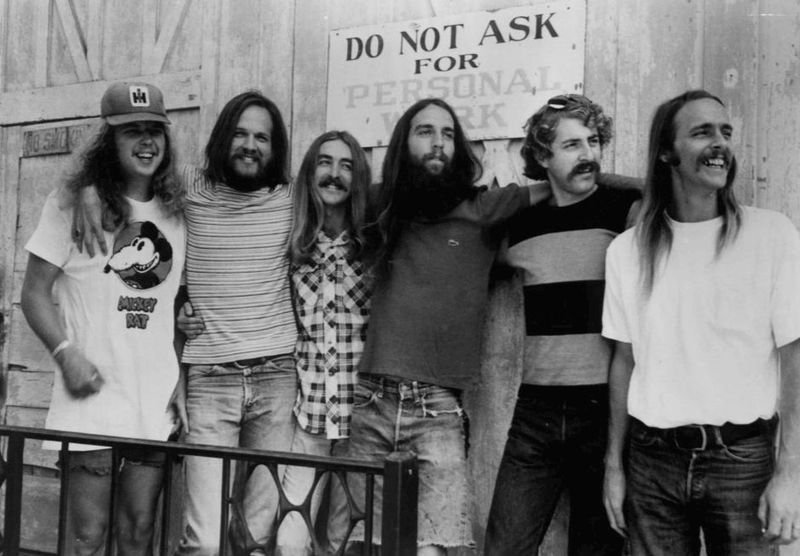
A playlist gets more memorable when one song arrives with a grin, and this one does not waste the opportunity. “If You Wanna Get to Heaven” was released in 1974 by the Ozark Mountain Daredevils, a band that sat just outside the standard Southern rock map while still sharing its rural wit and regional character.
The song mixes country-rock looseness with a clear pop instinct, giving it a springy pace that feels ideal for secondary roads and longer routes alike. It is playful without becoming flimsy, which is harder to pull off than many road-song compilers seem to realize.
Historically, the track helps widen the definition of what belongs in a Southern-flavored highway set. The Ozark Mountain Daredevils came from Missouri rather than the Deep South, yet their music fit the same broader American corridor of regional rock that fed FM radio in the 1970s.
That makes the song a smart inclusion, not a curveball. It keeps the playlist from feeling too predictable and reminds you that road culture has always blurred strict geographic lines.
13. “Statesboro Blues” – The Allman Brothers Band
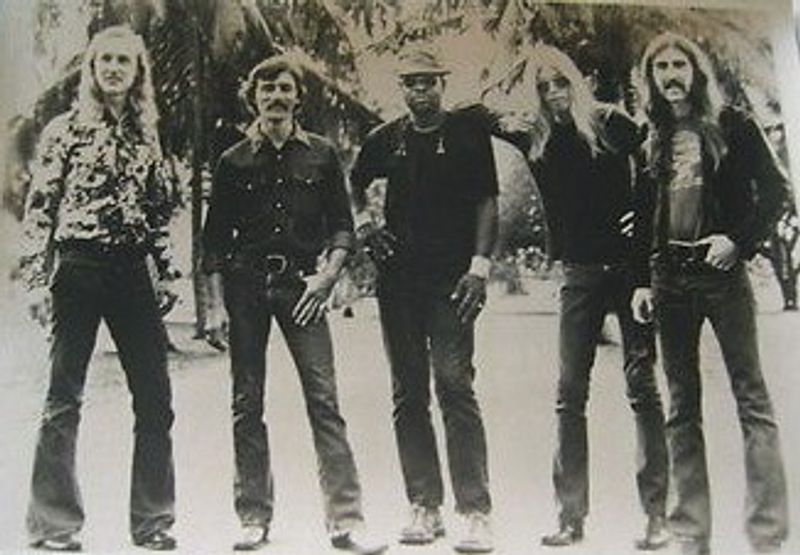
Live recordings rarely become road-trip essentials by accident, and “Statesboro Blues” is the perfect example. The Allman Brothers Band turned Blind Willie McTell’s song into a centerpiece on their 1971 live album At Fillmore East, giving Southern rock one of its defining performances.
Duane Allman’s slide guitar is the obvious headline, but the full band is what makes the track roadworthy. The groove is disciplined, the tempo has real urgency, and the performance shows how deeply the genre depended on blues structure even when it aimed for larger crowds.
That historical connection is important because Southern rock was never just a regional branding exercise. It grew from older Southern musical forms, and “Statesboro Blues” puts that lineage in plain view while still sounding immediate decades later.
The live setting also matters. In the early 1970s, concert albums carried enormous cultural weight, and At Fillmore East helped establish the idea that Southern bands could be both virtuosic and popular without compromise.
On an open highway, this track adds grit, motion, and a useful reminder of where the whole tradition began.
14. “Long Haired Country Boy” – Charlie Daniels Band

Some road songs succeed by sounding politely universal, but “Long Haired Country Boy” takes the opposite route. Released in 1974 by the Charlie Daniels Band, it leans into identity, independence, and regional character with a confidence that helped country-rock and Southern rock overlap in useful ways.
Daniels had already built a reputation as a top-tier musician and session player, so the song carries more craft than its relaxed posture first suggests. The groove is easygoing, the lyric is sharply drawn, and the whole performance presents nonconformity as daily practice rather than grand rebellion.
That makes it a strong closing track for a highway playlist. By the mid-1970s, Southern artists were negotiating national fame while holding onto local accents, habits, and attitudes that major-label packaging often tried to smooth out.
Daniels understood how to turn that tension into a commercial advantage. “Long Haired Country Boy” still lands because it feels specific rather than generic. End a long drive with it, and the playlist signs off with personality, history, and just enough stubbornness to feel earned.
Share this story