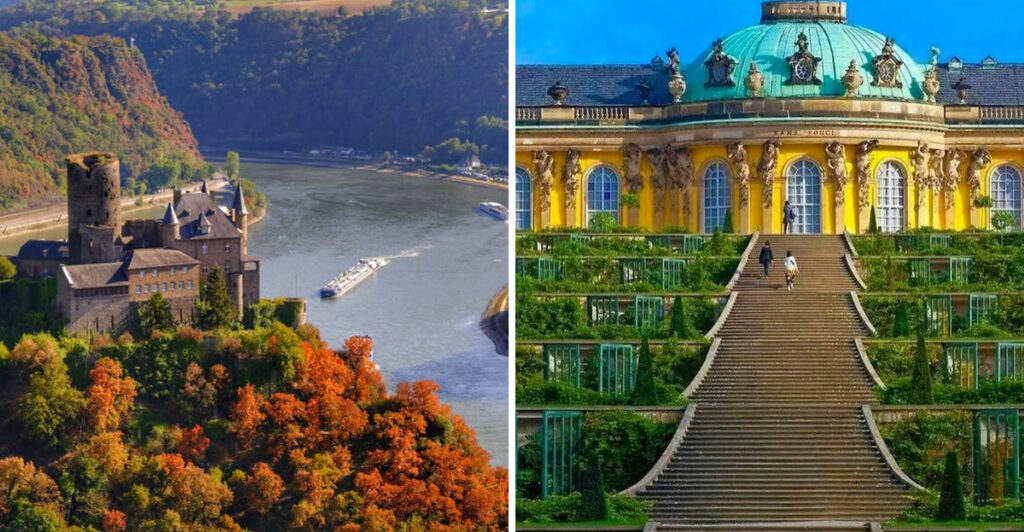
Germany is a country that surprises you at every turn — from fairy-tale castles and ancient cathedrals to buzzing city squares and misty mountain peaks. Whether you’re a history buff, a nature lover, or just someone who enjoys a good adventure, Germany has something unforgettable waiting for you.
With so much packed into one country, knowing where to start can feel overwhelming. That’s why we’ve rounded up 15 iconic places that absolutely belong on your Germany bucket list.
Neuschwanstein Castle — Bavaria
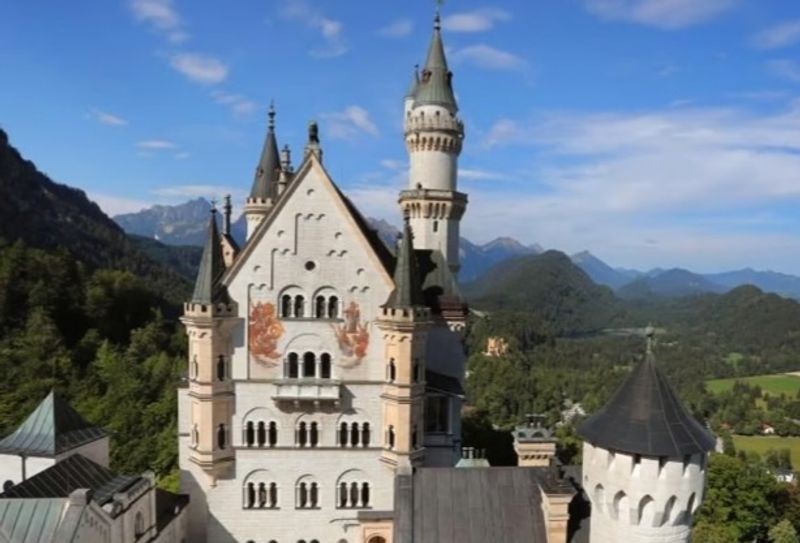
Walt Disney reportedly took one look at this castle and said, “That’s it.” Neuschwanstein Castle, sitting high in the Bavarian Alps, is the real-life inspiration behind Sleeping Beauty’s castle — and it looks every bit as magical in person. Towers rise from a rocky hilltop like something sketched by a dreamy architect with zero sense of budget.
King Ludwig II commissioned the castle in 1869, but he barely got to enjoy it before his mysterious death in 1886. Today, millions of visitors make the trek up the hill each year to tour its ornate rooms and snap photos from the famous Marienbrücke bridge.
That bridge view? Absolutely worth the climb.
Spring and autumn are the best times to visit, when the surrounding forest turns golden or blooms with wildflowers. Tickets sell out fast, so booking online in advance is a smart move.
The nearby town of Füssen offers charming cafes and hotels if you want to stay close. This is one castle that lives up to every expectation — and then some.
Brandenburg Gate — Berlin
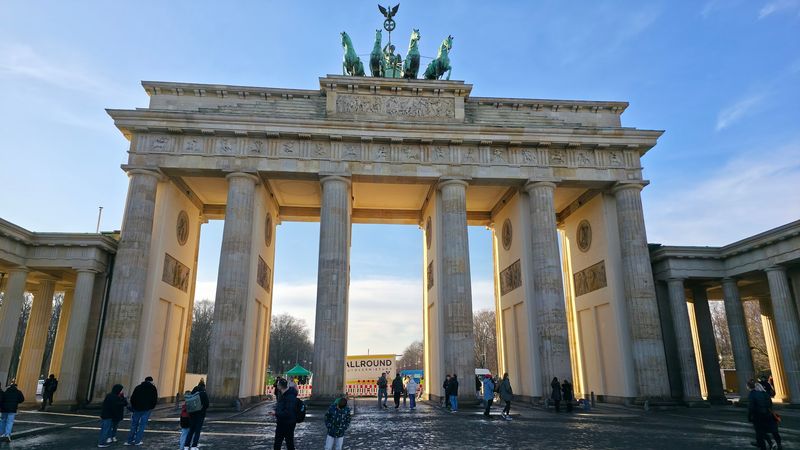
Few structures carry as much weight as the Brandenburg Gate. Built in 1791 as a symbol of peace, it has since witnessed Napoleonic conquest, Nazi marches, Cold War division, and one of history’s most emotional moments — the fall of the Berlin Wall in 1989.
Not bad for a gate that was originally just a fancy city entrance.
Standing 26 meters tall with its iconic Quadriga — a chariot pulled by four horses — perched on top, the gate is impossible to miss and even harder to forget. It sits at the western end of Unter den Linden, one of Berlin’s grandest boulevards, making it easy to combine with a walk through the city center.
At night, the gate is beautifully lit up and feels especially striking. New Year’s Eve celebrations here draw massive crowds, but any time of year works for a visit.
The Holocaust Memorial and Tiergarten park are both within easy walking distance. Brandenburg Gate isn’t just a photo opportunity — it’s a living lesson in European history that no textbook can fully replace.
Cologne Cathedral (Kölner Dom) — Cologne
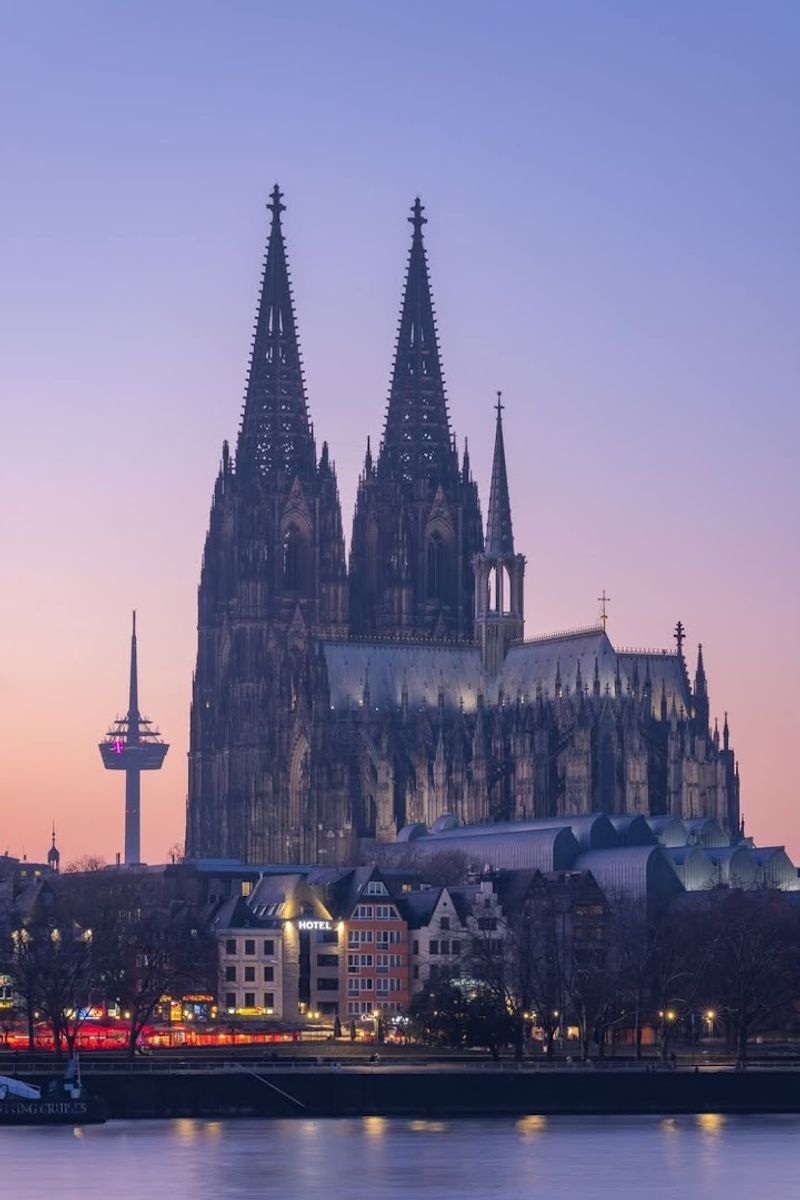
Construction began in 1248. It wrapped up in 1880.
That means the Cologne Cathedral took a casual 632 years to finish — making it one of the longest construction projects in human history. The result?
A Gothic masterpiece so tall and so detailed that your neck will ache just from looking up at it.
Kölner Dom, as the locals call it, rises 157 meters above the city and was the world’s tallest building when it was finally completed. It houses the Shrine of the Three Kings, a golden reliquary said to contain the remains of the Biblical Magi, which made Cologne a major medieval pilgrimage destination.
That golden box alone is worth a visit.
Climbing the 533 steps to the south tower rewards you with sweeping views over Cologne and the Rhine River. Inside, the stained glass windows are stunning — especially the modern one created by artist Gerhard Richter in 2007.
Try to visit on a sunny day when the light filters through the glass in every color imaginable. Entry to the cathedral is free, though the tower climb costs a small fee.
Black Forest (Schwarzwald) — Southwest Germany
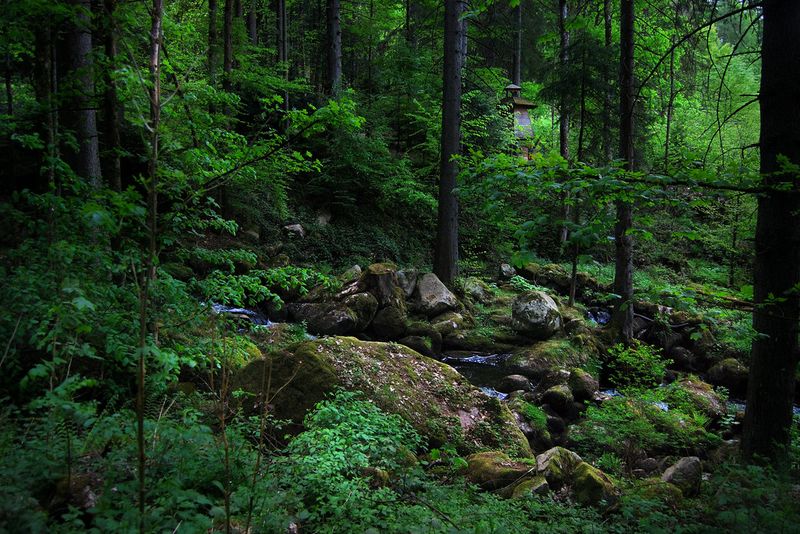
The Brothers Grimm didn’t invent the Black Forest — but they certainly knew what they were working with. This sprawling woodland in southwest Germany is the kind of place that makes your imagination run wild, with dense pine trees, rolling hills, and the occasional gingerbread-style farmhouse tucked into a valley.
It’s genuinely enchanting.
Stretching about 160 kilometers from north to south, the Black Forest is packed with outdoor activities. Hiking trails range from gentle strolls to serious multi-day treks.
The Westweg trail, running nearly 285 kilometers, is a favorite among serious hikers. Cyclists love the area too, and the scenic roads make for memorable road trips through small villages like Triberg and Gengenbach.
Triberg is famous for its waterfalls — the highest in Germany — and for being the cuckoo clock capital of the world. Yes, those charming carved clocks you’ve seen everywhere actually come from here.
The region also produces Black Forest cake, a rich chocolate-and-cherry dessert that tastes even better when enjoyed in the actual Black Forest. Pack your walking shoes, charge your camera, and give yourself at least two or three days to explore properly.
The Berlin Wall & East Side Gallery — Berlin
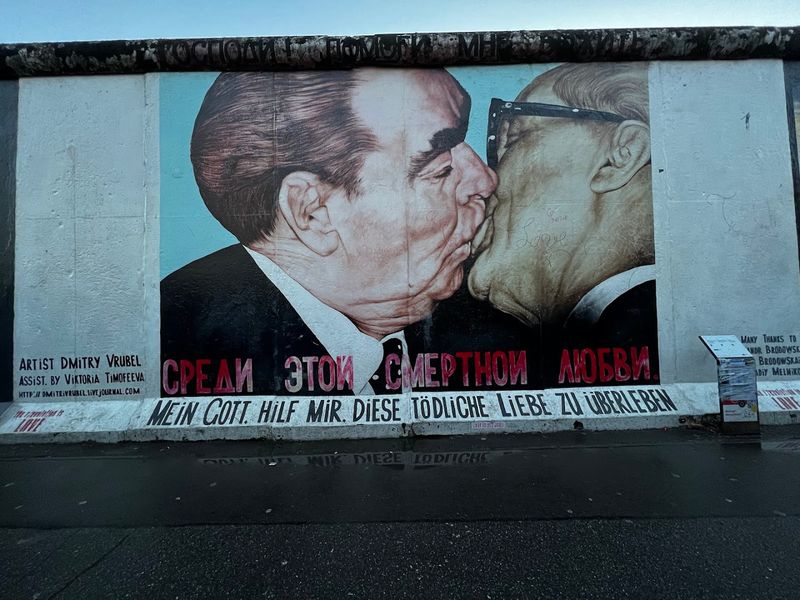
For 28 years, a concrete wall split a city in two — separating families, friends, and an entire way of life. The Berlin Wall stood from 1961 to 1989, and while most of it was torn down after reunification, a 1.3-kilometer stretch was preserved and transformed into the East Side Gallery, the world’s largest open-air art gallery.
It’s a remarkable reinvention of something that once represented oppression.
Over 100 artists from around the world painted murals directly onto the wall’s eastern face in 1990, turning it into a celebration of freedom and creativity. The most iconic image?
Dmitri Vrubel’s painting of Soviet leader Brezhnev and East German leader Honecker sharing a kiss — oddly funny and deeply political at the same time.
Walking the full length of the gallery takes about 20 to 30 minutes, but most visitors linger much longer. The murals are touching, thought-provoking, and sometimes surprisingly humorous.
Nearby Checkpoint Charlie — the famous Cold War border crossing — adds more historical context to the visit. Berlin does history like no other city, and the Wall is the beating heart of that story.
Plan at least a half-day here.
Rhine Valley — Western Germany
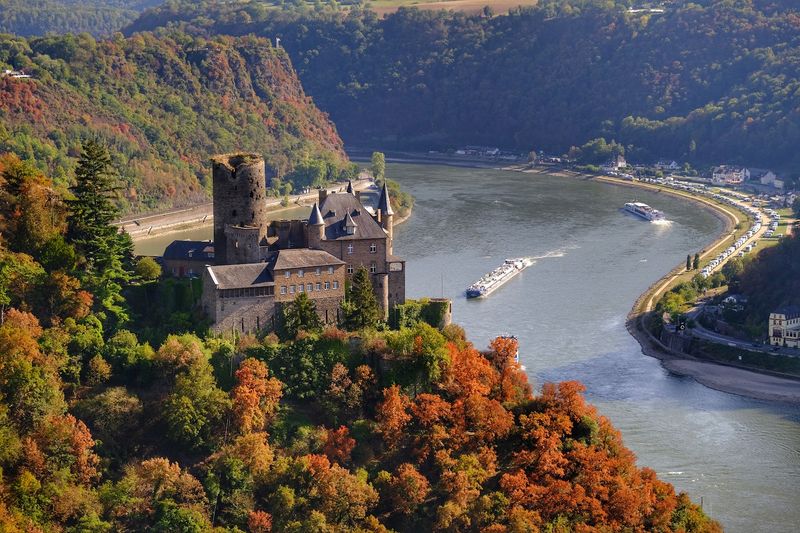
Imagine floating down a river flanked by vineyard-covered hills, crumbling medieval castles, and charming little towns where every building looks like it belongs on a postcard. That’s the Rhine Valley — and it’s even better in real life than it sounds on paper.
The stretch between Bingen and Koblenz is especially dramatic and is protected as a UNESCO World Heritage Site.
A river cruise is the most popular way to experience the valley, and for good reason. Boats glide past over 40 castles and fortresses in a single stretch, including the imposing Marksburg Castle, which is one of the few Rhine castles never destroyed.
The Lorelei rock, a famous 132-meter-high cliff associated with a German legend about a siren luring sailors to their doom, is a highlight of any cruise.
The valley is also serious wine country. Riesling grapes thrive on the steep slate slopes, and local wine taverns — called Weinstuben — are warm, welcoming places to try a glass.
Cycling along the riverbanks is another great option for those who prefer pedaling to floating. Visit in late summer or autumn when the vineyards are golden and harvest festivals fill the towns with food, music, and good cheer.
Heidelberg Castle — Heidelberg
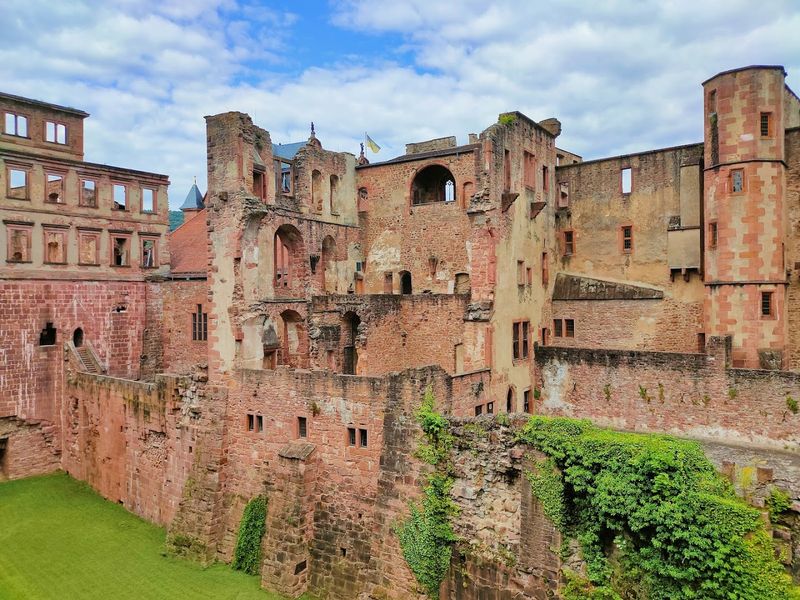
There’s something deeply romantic about a castle that’s been partially destroyed and never fully repaired. Heidelberg Castle wears its age like a badge of honor — crumbling red sandstone walls, ivy-covered towers, and a view over the Neckar River that has made poets and painters swoon for centuries.
It’s been described as one of the most romantic ruins in Europe, and that reputation is well earned.
The castle dates back to the 13th century and was the seat of the Palatinate rulers for hundreds of years. Lightning strikes and wars left parts of it in dramatic ruin, but the remaining sections are beautifully preserved.
Inside, the German Pharmacy Museum is a quirky and fascinating stop, and the world’s largest wine barrel — holding 221,726 liters — sits in the cellar. Yes, it’s a real barrel.
Yes, it’s enormous.
Visitors can reach the castle by funicular railway or by climbing the steep Burgweg path through the old town. Either way, the views from the terrace are spectacular.
The old town below is equally charming, filled with student cafes, bookshops, and centuries-old buildings. Heidelberg is one of those places where the atmosphere alone makes it worth the trip.
Zugspitze — Bavaria
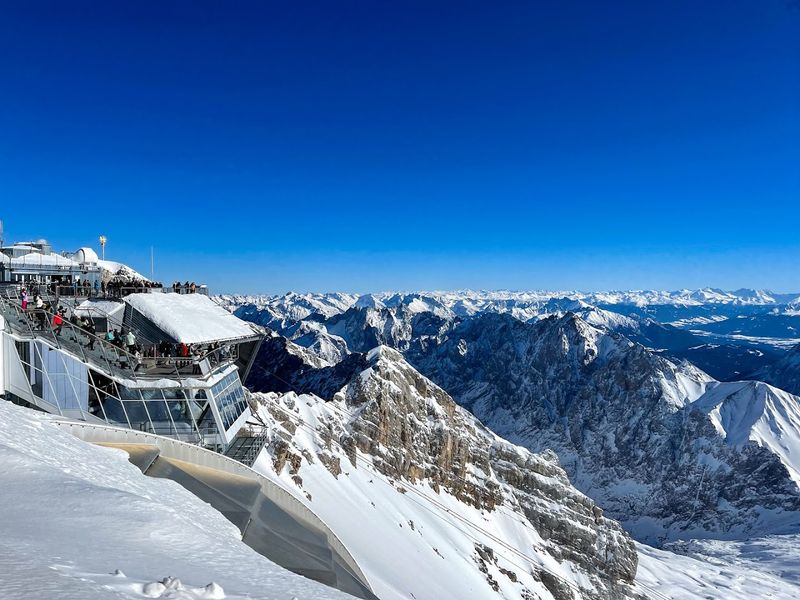
Standing at 2,962 meters above sea level, Zugspitze is Germany’s highest point — and reaching the summit feels like stepping into a different world entirely. The air is crisp, the views stretch across four countries, and the snow sticks around even in summer.
It’s the kind of place that makes you feel genuinely small in the best possible way.
Getting to the top is half the adventure. You can take the Zugspitzbahn mountain railway from Garmisch-Partenkirchen, which tunnels directly through the mountain, or ride the spectacular Eibsee cable car, which lifts you up the mountain’s sheer face in a single breathtaking swing.
Most visitors combine both for the full experience — up one way, down the other.
At the summit, a golden cross marks the peak, and a border stone shows exactly where Germany meets Austria. Two mountain restaurants keep visitors fed and warm, and in winter the area becomes a ski resort with runs suitable for all levels.
The turquoise Eibsee lake at the mountain’s base is equally stunning and perfect for a swim in summer. Zugspitze is one of those experiences that rewards you regardless of when you visit — every season brings something spectacular.
Sanssouci Palace — Potsdam
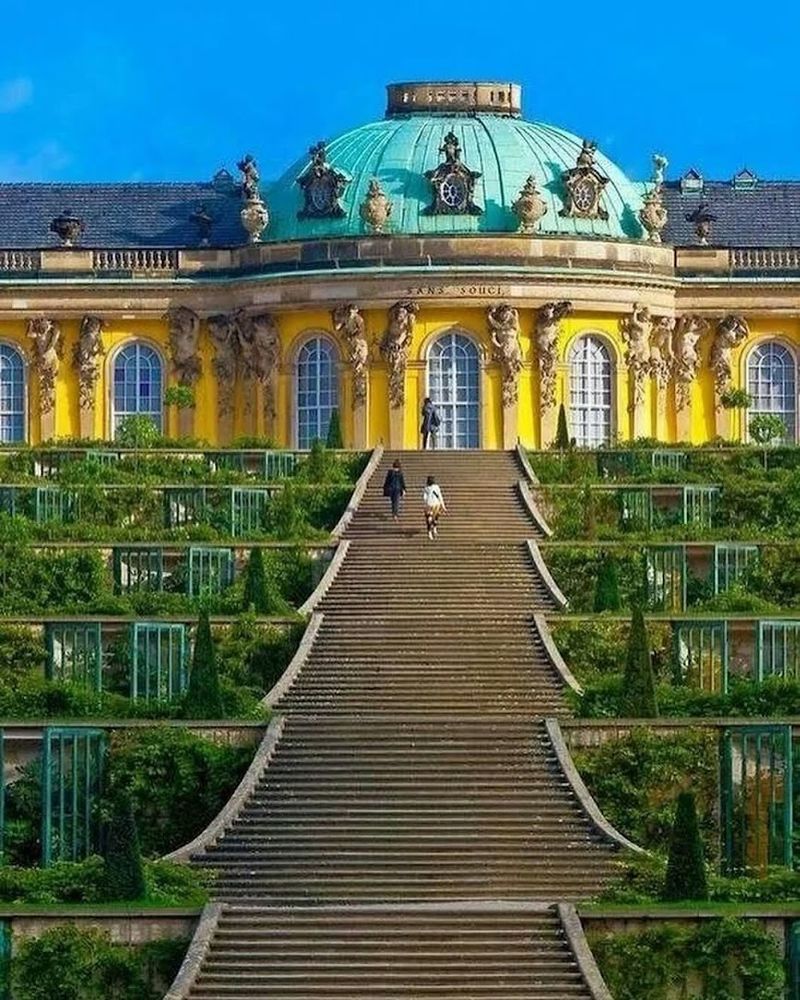
“Sans souci” is French for “without worry” — and that’s exactly the vibe Frederick the Great was going for when he built this palace in 1747. Tucked into the rolling parklands of Potsdam, Sanssouci was his personal retreat from the pressures of ruling Prussia, and every detail of its design reflects a man who took relaxation seriously.
Lucky him.
The palace is a masterpiece of Rococo architecture, with curved terraced vineyards cascading down toward a grand fountain and manicured gardens. Inside, the rooms are lavishly decorated with gilded ceilings, silk wallpapers, and delicate porcelain pieces.
Frederick even had a small library here where he spent hours reading and writing. The man clearly had taste.
Sanssouci is part of a much larger park that includes several other palaces, including the New Palace and the Orangery Palace. A full day isn’t too long to spend exploring the grounds.
Potsdam itself is just 30 minutes from central Berlin by train, making it an easy and very rewarding day trip. The combination of royal architecture, peaceful gardens, and fascinating history makes Sanssouci one of Germany’s most underrated — and most beautiful — destinations.
Miniatur Wunderland — Hamburg
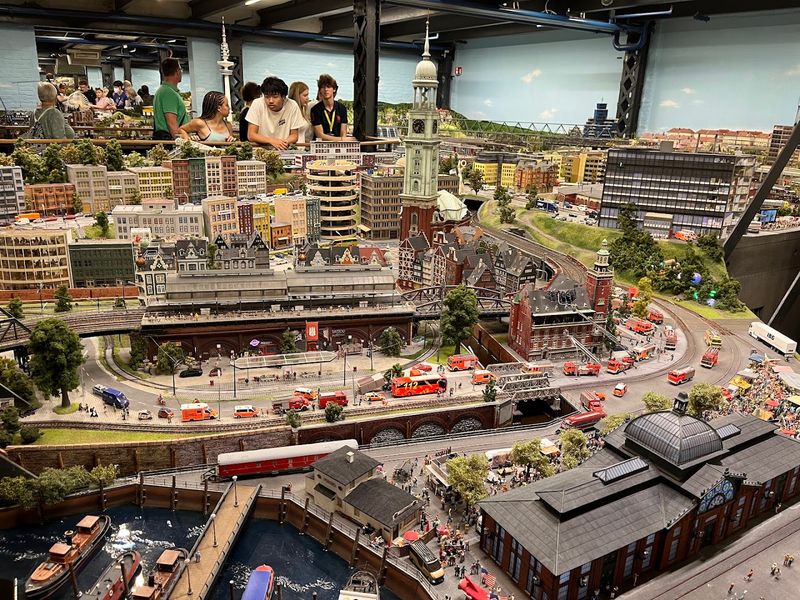
Nobody expects a model train exhibit to be one of the most visited attractions in Germany — but Miniatur Wunderland in Hamburg isn’t just any model train exhibit. It’s an obsessively detailed, jaw-droppingly massive miniature world that covers over 1,500 square meters and features more than 1,000 trains running simultaneously.
Adults stare just as wide-eyed as kids, often wider.
The layout includes miniature versions of Hamburg, the Swiss Alps, Scandinavia, the USA, and even a tiny replica of Knuffingen Airport — complete with planes that actually take off and land. Over 260,000 tiny figurines populate the landscapes, each placed with remarkable care.
Look closely and you’ll spot miniature traffic jams, beach parties, and even a few cheeky scenes hidden for sharp-eyed visitors to discover.
The exhibit is constantly expanding, with new sections added regularly. Builders work in a visible workshop behind glass, so visitors can watch the magic being made in real time.
Tickets often sell out, so booking ahead is strongly recommended. Allow at least three to four hours — most visitors end up staying longer than planned.
Miniatur Wunderland is one of those rare attractions that genuinely lives up to the hype, and then surprises you all over again.
Saxon Switzerland & Bastei Bridge — Saxony
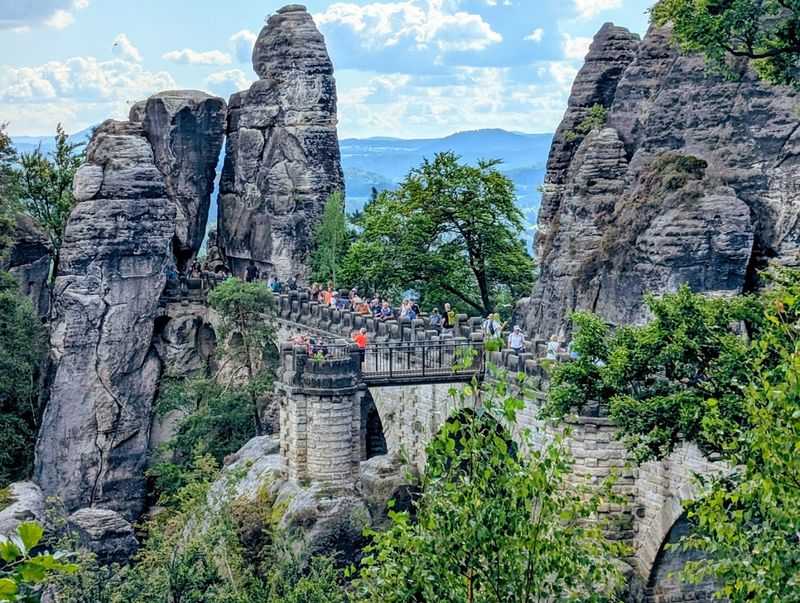
Carved by millions of years of wind and water erosion, the sandstone pillars of Saxon Switzerland look like something out of a fantasy novel. Rising dramatically from dense forest, these rock formations create one of Germany’s most striking natural landscapes — and the Bastei Bridge, arching between the highest peaks, is its most iconic feature.
The view from the bridge is genuinely breathtaking.
The bridge itself was originally built in 1851 and stretches 76 meters across the rock formations at a dizzying height. Below, the Elbe River winds through a forested valley, and on clear days you can see deep into the Czech Republic.
The remains of Neurathen Castle, one of Saxony’s oldest rock fortresses, sit right next to the bridge and are fun to explore.
Saxon Switzerland National Park offers over 400 kilometers of marked hiking trails, from easy riverside walks to challenging cliff climbs. Rock climbing is enormously popular here, with hundreds of established routes for all skill levels.
The nearby town of Pirna makes a great base, and Dresden — one of Germany’s most beautiful cities — is only about 30 kilometers away. This region rewards adventurous travelers with scenery that feels almost impossibly dramatic for central Europe.
Marienplatz — Munich
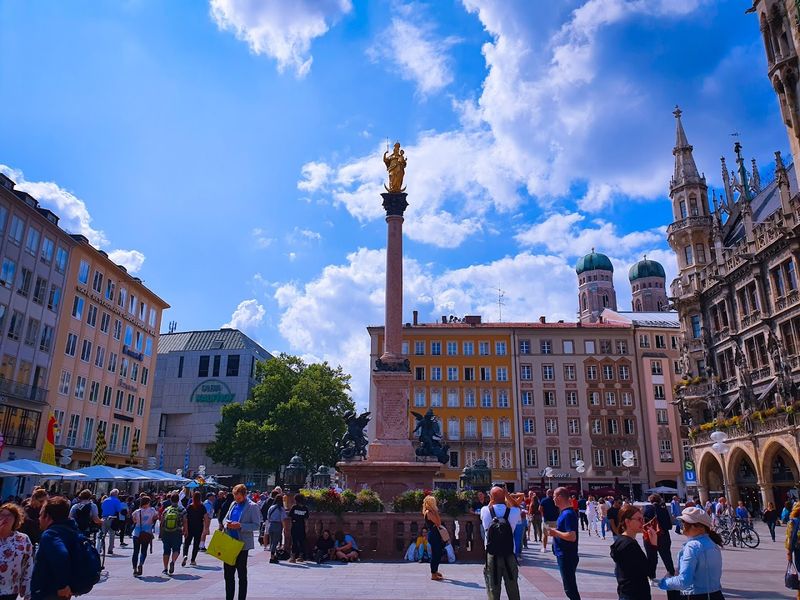
Every city has a heart, and in Munich, that heart beats loudest at Marienplatz. This central square has been the city’s main gathering place since 1158, and it still draws enormous crowds daily — especially when the famous Glockenspiel clock chimes at 11 a.m. and noon, sending 32 life-sized figures spinning through scenes from Munich’s history.
It’s theatrical, charming, and slightly absurd in the best way.
The square is framed by the stunning New Town Hall, a neo-Gothic building that looks ancient but was actually completed in 1909. The older Old Town Hall sits on the opposite end, now housing a toy museum.
Surrounding streets are packed with shops, beer halls, and cafes, making Marienplatz an ideal starting point for exploring the city. The Christmas market here in December is one of the most beautiful in all of Germany.
Just a short walk from Marienplatz you’ll find the Viktualienmarkt, an outdoor food market where locals shop for fresh produce, meats, cheeses, and beer. The English Garden — one of the world’s largest urban parks — is also nearby.
Munich rewards slow exploration, and Marienplatz is always the perfect place to start or end your day with a pretzel and a good view.
Wartburg Castle — Eisenach
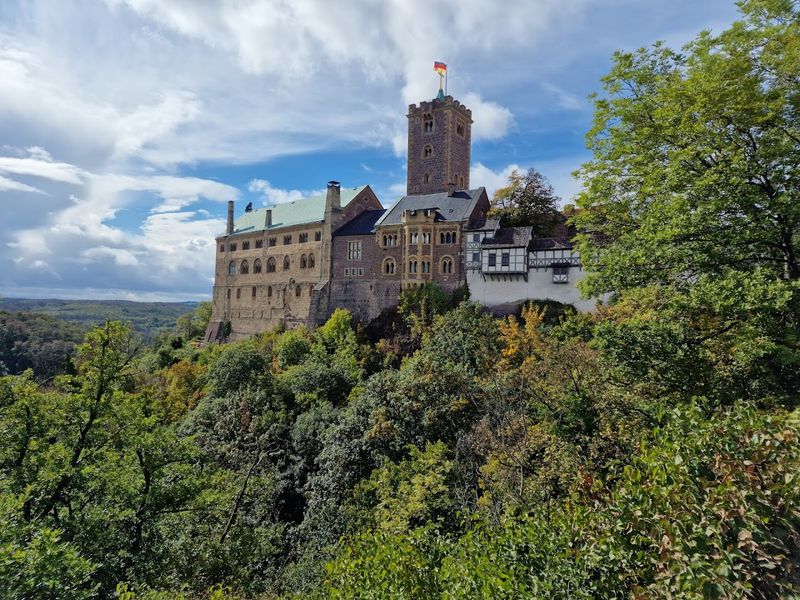
High above the town of Eisenach, Wartburg Castle has been watching over Thuringia since 1067. It’s one of Germany’s best-preserved medieval castles — but what really sets it apart is the remarkable list of historical events that happened within its walls.
This is the place where Martin Luther, hiding under the alias “Junker Jörg,” translated the New Testament from Latin into German in just 10 weeks. That translation changed the German language forever.
Before Luther’s stay, Wartburg was already legendary. It hosted the Minnesänger — medieval troubadours who competed in famous singing contests that later inspired Wagner’s opera Tannhäuser.
The Landgrave’s great hall, with its stunning Romanesque architecture, is one of the finest examples of medieval interior design in Germany. Every stone here has a story.
The castle is a UNESCO World Heritage Site and welcomes visitors year-round. Guided tours take you through the historic apartments, the Luther room, and the Knight’s Hall.
The forested hillside setting adds to the atmosphere, especially in autumn when the trees turn fiery shades of red and orange. Eisenach is also the birthplace of Johann Sebastian Bach, so music lovers have double reason to make the trip to this quietly extraordinary corner of Germany.
Lake Constance (Bodensee) — Southern Germany
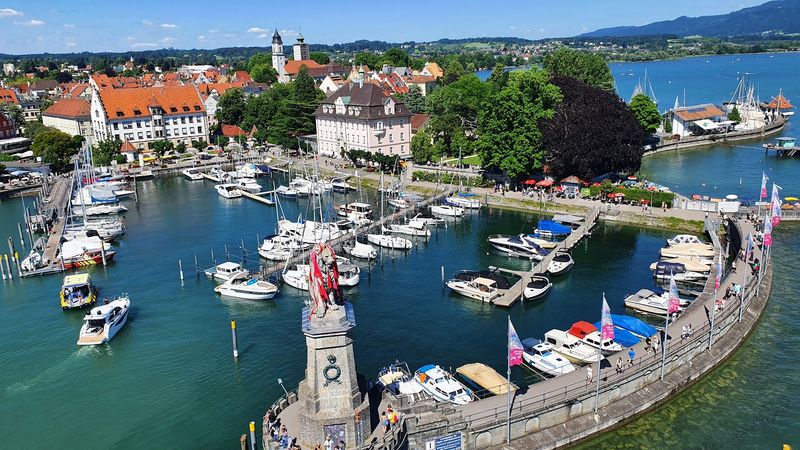
Shared between Germany, Austria, and Switzerland, Lake Constance — or Bodensee in German — is the kind of place that feels effortlessly relaxing the moment you arrive. The lake stretches 63 kilometers from end to end, with the snow-capped Alps shimmering on the horizon and charming towns dotting the shoreline at every turn.
It’s the sort of scenery that makes you want to cancel your return flight.
The island town of Lindau is one of the lake’s most picturesque stops, with a medieval old town connected to the mainland by a bridge and a famous lighthouse guarding the harbor. Konstanz, the largest city on the lake, has a beautifully preserved old town and lively café culture.
The Mainau Island — nicknamed the “Island of Flowers” — is a botanical garden paradise that draws visitors from across Europe.
Summer is peak season for swimming, sailing, and cycling along the well-marked lakeside bike paths. Ferries connect the towns around the lake, making it easy to hop between destinations without a car.
The food scene is excellent too, with fresh fish from the lake featuring on almost every restaurant menu. Lake Constance works beautifully as a standalone destination or as a relaxing final stop after a longer German adventure.
Rothenburg ob der Tauber — Bavaria
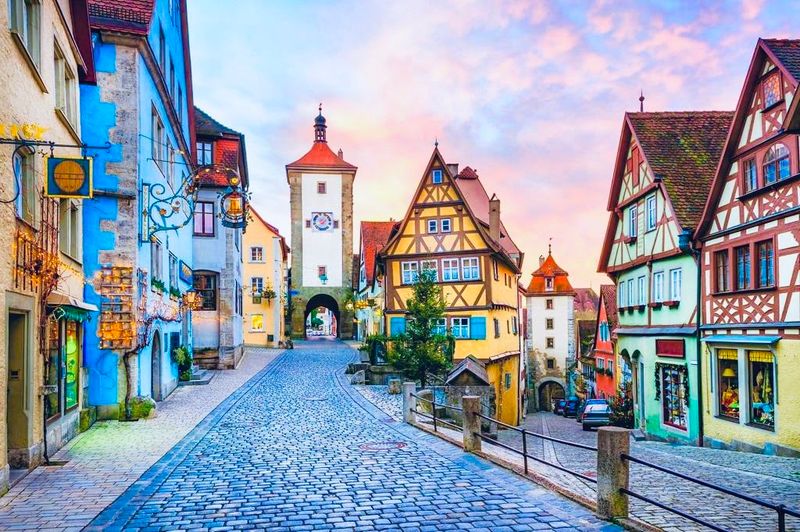
Some towns look old. Rothenburg ob der Tauber actually is old — and it shows in the most wonderful way.
Enclosed by its original medieval city walls, this Bavarian gem has barely changed since the 17th century. Walking through its cobblestone streets past half-timbered houses and flower-draped fountains feels less like tourism and more like time travel.
Honestly, it’s almost unfairly charming.
The town’s preservation is partly thanks to a legend — and partly thanks to luck. During the Thirty Years’ War, the town was spared destruction when the mayor reportedly drank a massive tankard of wine in one go, winning a bet with the conquering general.
Whether true or not, the story is celebrated annually in the Meistertrunk festival. History here comes with great storytelling.
Rothenburg is famous for its Christmas market, considered one of the most atmospheric in Germany, and for the Christmas Village shop — Käthe Wohlfahrt — which sells handcrafted ornaments year-round to the delight of visitors. The town is compact enough to explore on foot in a day, but staying overnight lets you experience the magic after the day-trippers leave and the streets grow quiet.
That evening atmosphere, with lanterns glowing and the old walls lit up softly, is something genuinely special.
Share this story