Some places on Earth are so wild, so thick, and so unforgiving that even experienced explorers think twice before entering. Deep jungles hide dangers that go far beyond getting lost — from venomous creatures and deadly diseases to rivers that swallow you whole.
These 15 jungles are among the most remote and challenging environments on the planet. If you love adventure stories, buckle up — this list will take you somewhere most people will never dare to go.
Bowman’s Beach — Florida
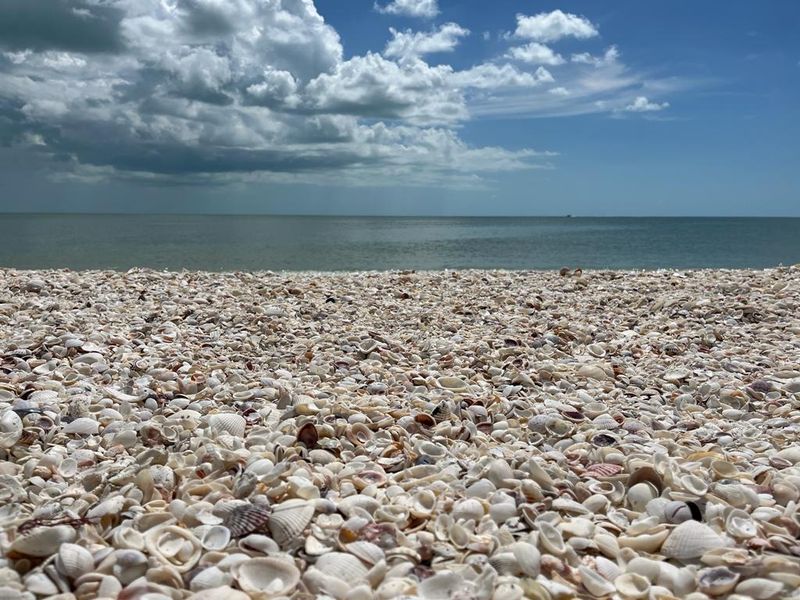
Shells crunch under your feet at Bowman’s Beach like nature laid out its own welcome mat — and honestly, it kind of did. Located on Sanibel Island off the southwest coast of Florida, this beach is famous for its jaw-dropping shell collection.
Sanibel’s east-west orientation acts like a giant net, catching shells from across the Gulf of Mexico.
Unlike most Florida beaches packed with resort hotels and souvenir shops, Bowman’s Beach feels refreshingly untouched. The nearest development is a solid walk away, so you get long stretches of sand with very few people.
Bring sunscreen, water, and a bag for shells — you will absolutely need all three.
Wildlife here is no joke either. Ospreys circle overhead, dolphins occasionally cruise just offshore, and gopher tortoises wander the dunes like they own the place.
Shelling is best right after a storm or during low tide. Serious collectors call Sanibel Island the shelling capital of the United States, and Bowman’s Beach is its crown jewel.
Pack patience and curiosity, and you will leave with pockets full of treasures most beach-goers never find.
Enderts Beach — California
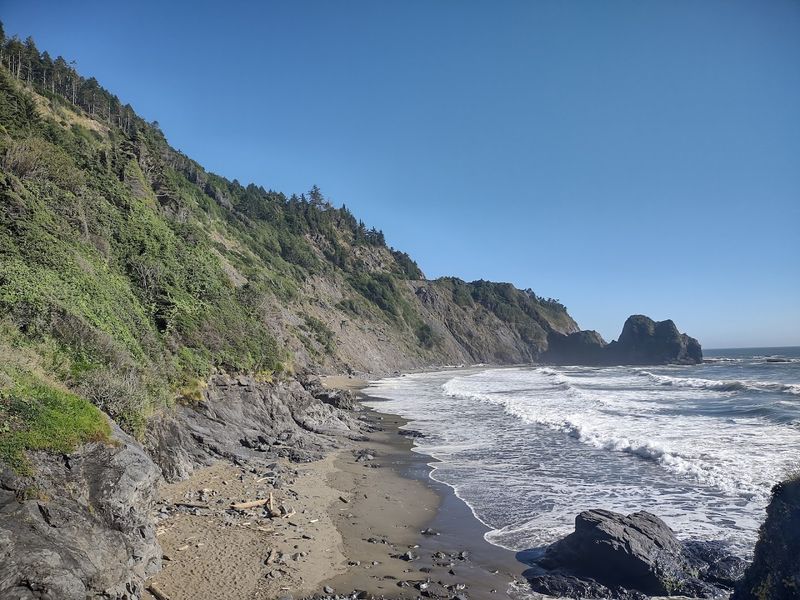
Fog rolls in off the Pacific and wraps around the redwoods like a slow, dramatic entrance — welcome to Enderts Beach. Tucked inside Redwood National Park near Crescent City, California, this beach is one of the most beautifully hidden coastal spots on the West Coast.
You will not stumble across it accidentally; getting here requires a short hike that most casual visitors skip entirely.
That hike is actually a gift. By the time you reach the sand, the crowds have thinned to almost nothing.
The beach itself is rocky and wild, with tide pools teeming with sea stars, anemones, and crabs that go about their business completely unbothered by human drama. Low tide is the absolute best time to explore.
The meeting point of towering redwood forest and raw Pacific coastline creates a scenery combination that feels almost unreal. Camping is available nearby at Nickel Creek Campground, which puts you just minutes from the beach at sunrise — a time when the mist hangs low and everything feels hushed and ancient.
Enderts Beach rewards the curious traveler who does not mind a little effort for a lot of payoff.
Second Beach — Washington
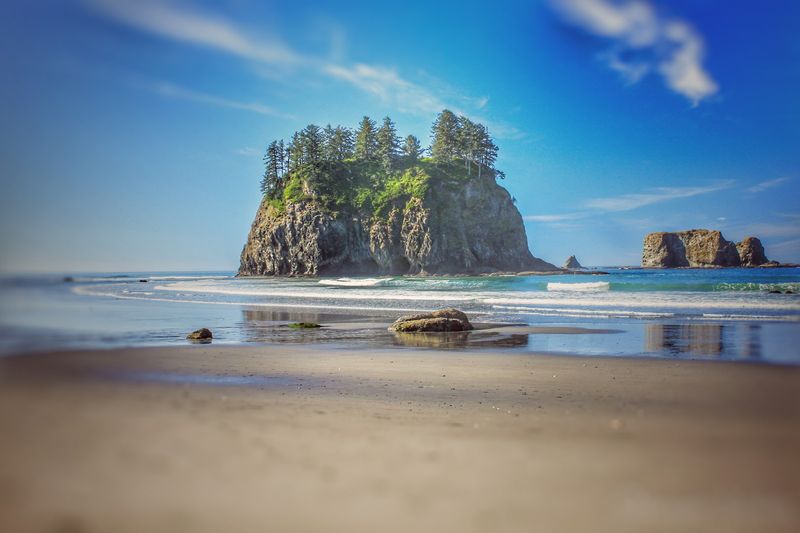
There is something almost mythical about arriving at Second Beach — the forest opens up and suddenly you are standing in front of a scene that looks borrowed from a fantasy novel. Part of Olympic National Park on Washington’s Pacific coast, this beach earns its reputation as one of the most dramatic shorelines in the continental United States.
Giant sea stacks jut out of the ocean like stone giants frozen mid-stride.
Getting here takes a roughly 1.4-mile hike through old-growth temperate rainforest. The trail is well-marked but can get muddy, especially in wetter months — which, in this part of Washington, is most of the year.
Wear waterproof boots and embrace the mud. It is part of the experience.
Once you hit the sand, massive driftwood logs line the upper beach, bleached silver by salt and sun. Tidepools hide purple sea urchins and giant green anemones.
At low tide, you can explore around the base of the sea stacks and find hidden coves tucked between the rocks. Sunsets here, when the clouds cooperate, turn the entire sky into shades of orange and pink that photographers chase for years trying to capture perfectly.
Carova Beach — North Carolina
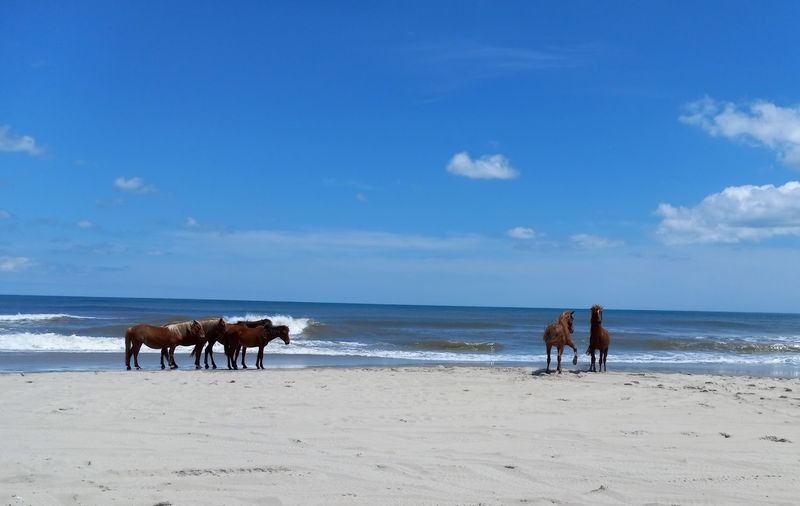
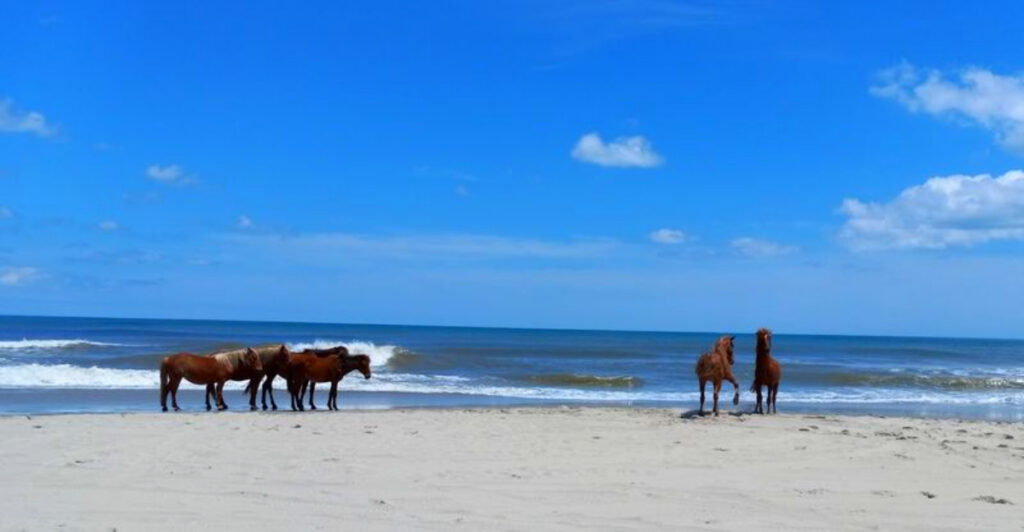
Wild horses wandering the shoreline at sunrise — Carova Beach delivers that image without filters or tourist staging. Located at the far northern tip of the Outer Banks, this beach sits beyond the end of the paved road.
The only way in is by 4-wheel-drive vehicle traveling directly on the sand for several miles. That barrier alone keeps Carova one of the most gloriously undeveloped beaches on the entire East Coast.
The feral horses here are descendants of Spanish mustangs believed to have arrived via shipwreck centuries ago. They roam freely across the dunes, munching on sea grass and occasionally trotting past vacation homes built on stilts.
Watching them is surreal. Rules require visitors to stay at least 50 feet away, which is a good rule for both safety and respect.
Fishing, kayaking, and beachcombing are the main activities here since there are no restaurants or shops within driving distance. Bring everything you need before you arrive because the nearest town is a long, sandy ride away.
Renting a 4WD-accessible cottage is the most popular way to stay. Carova is not for everyone, but for those who crave untouched coastline and genuine solitude, it absolutely delivers.
Cumberland Island — Georgia
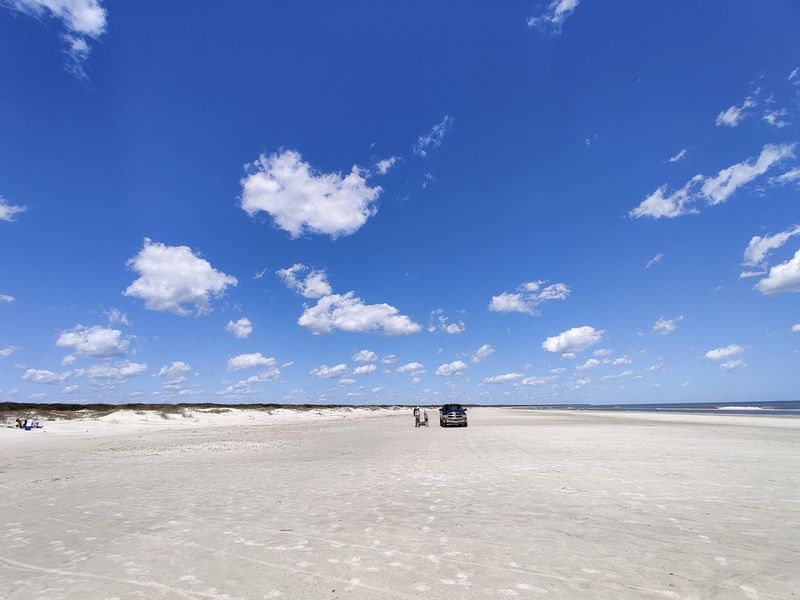
Step off the ferry onto Cumberland Island and the modern world genuinely disappears. Georgia’s largest barrier island is accessible only by a ferry that runs a limited number of trips per day, and the National Park Service caps daily visitors to protect its fragile ecosystems.
That combination of limited access and intentional preservation makes Cumberland feel like a place time forgot — in the best possible way.
Miles of undeveloped beach stretch in both directions with almost no one on them. Wild horses roam the island alongside armadillos, white-tailed deer, and loggerhead sea turtles that nest on the beach each summer.
The maritime forest interior, draped in Spanish moss and tangled with ancient live oaks, adds a layer of moody Southern Gothic atmosphere that photographers absolutely love.
History adds another dimension here. The ruins of Dungeness, a grand Carnegie family mansion, sit quietly crumbling among the trees — a haunting reminder of a more extravagant era.
Camping is available for those who want to spend the night under stars undimmed by city lights. Pack in everything you need because there are no stores on the island.
Cumberland Island is raw, beautiful, and quietly unforgettable in a way that polished resort beaches simply cannot match.
Dry Tortugas — Florida
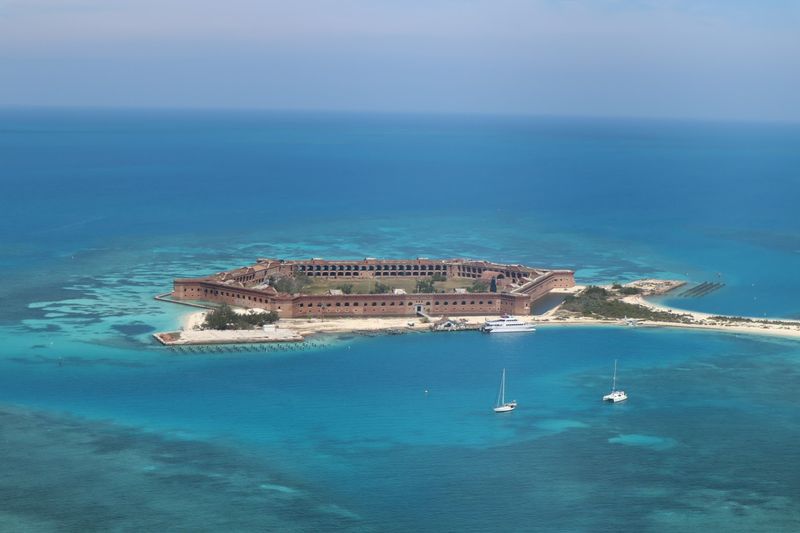
Seventy miles off Key West, floating in the Gulf of Mexico with no road to reach it, the Dry Tortugas is the kind of place that makes you feel genuinely far from everything. The only ways to get here are by ferry, private boat, or seaplane — and that logistical hurdle is exactly what keeps it so spectacularly uncrowded.
Fewer visitors means clearer water, healthier coral, and more wildlife than almost any other spot in Florida.
Snorkeling around the moat wall of Fort Jefferson, a massive 19th-century military fortress built on a tiny island, is absolutely otherworldly. Visibility in the water regularly exceeds 100 feet.
Sea turtles, nurse sharks, and colorful reef fish cruise past in total indifference to human observers. The fort itself is a fascinating relic — construction began in 1847 and was never fully completed.
Primitive camping is available on Garden Key for those who want to wake up surrounded by nothing but ocean and birdsong. The Dry Tortugas sits on a major migratory bird path, so spring visits bring hundreds of species passing through.
Bring every supply you need including fresh water since nothing is sold on the islands. Remote, raw, and ridiculously beautiful — this park earns every bit of its legendary reputation.
Goosewing Beach — Rhode Island
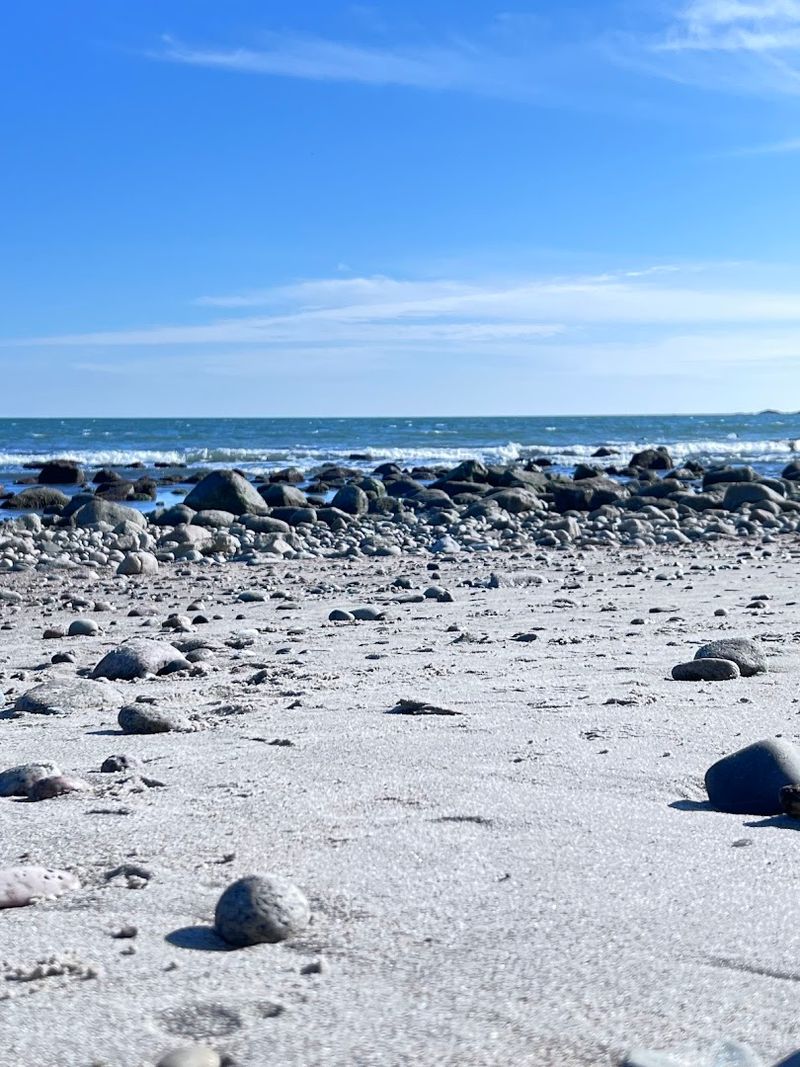
Rhode Island is not exactly the first state that comes to mind for remote beach escapes, but Goosewing Beach is quietly making a strong case. Tucked inside the Little Compton area and managed as part of a protected nature preserve, this beach stays genuinely calm even during the height of summer.
Parking is limited by design, which naturally filters out anyone not willing to walk a bit to reach it.
The dune ecosystem here is carefully protected, and it shows. Beach grass sways in long, undisturbed rows, and piping plovers — a threatened shorebird species — nest in the sand during summer months.
Seasonal closures around nesting areas are enforced, which means part of the beach may be off-limits, but that protection is what keeps the whole place feeling so alive and untamed.
Swimming is calm and pleasant on most days since the beach faces a sheltered stretch of water. Long walks along the shoreline with nothing but ocean on one side and dunes on the other have a way of clearing your head in ways that busy beaches simply cannot.
Goosewing is the kind of place locals guard like a secret and visitors stumble upon like a reward. Quiet, natural, and genuinely restorative.
Harris Beach — Oregon
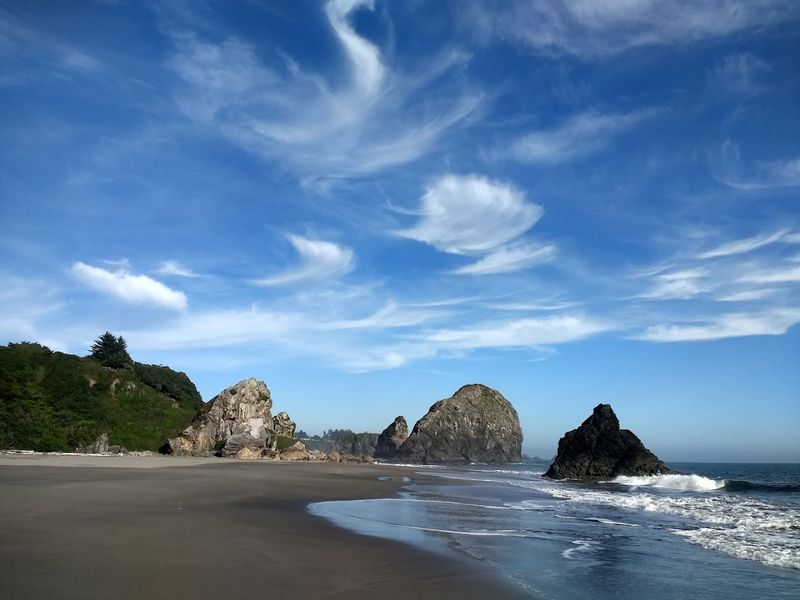
Oregon’s coastline has a reputation for being moody, dramatic, and completely unapologetic about the weather — and Harris Beach delivers all of that in abundance. Located near Brookings in the far southern corner of the state, Harris Beach State Park sits around a collection of rocky sea stacks and offshore islands that create one of the most photogenic coastlines on the Pacific.
Bird Island, the largest offshore rock, is actually Oregon’s biggest island and a protected seabird nesting site.
Tide pools here are rich and active. Ochre sea stars, giant green anemones, hermit crabs, and purple sea urchins pack into every rocky crevice at low tide, creating a living display that beats any aquarium.
Low tide charts are worth checking before your visit so you can time your exploration right.
Sunsets at Harris Beach have a reputation that precedes them. When the light turns golden and hits the sea stacks just right, the whole scene looks like it was painted by someone who wanted to show off.
Camping is available in the adjacent state park campground, and sites fill up fast in summer for good reason. Even on overcast days — which are common here — the drama of the landscape holds its own beautifully.
Kauapea Beach (Secret Beach) — Hawaii
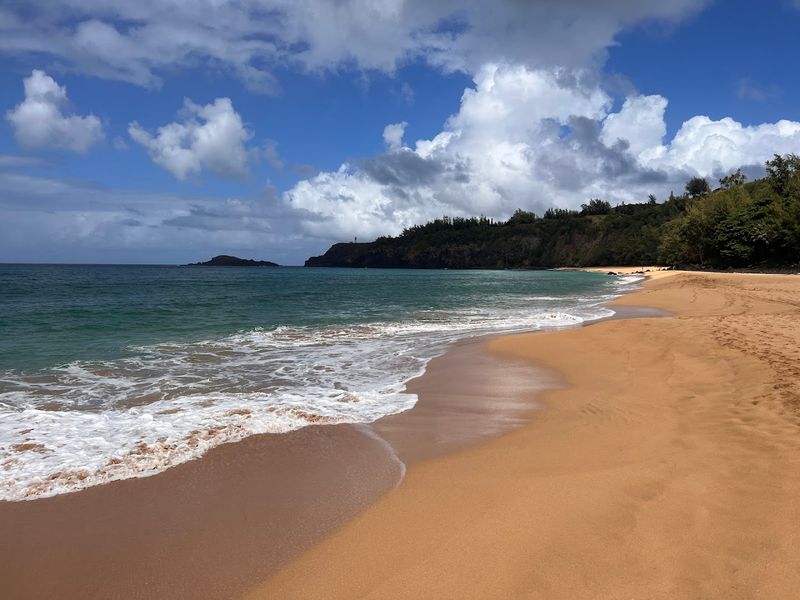
Few beaches in Hawaii live up to a nickname like this one actually does. Kauapea Beach — better known as Secret Beach — sits on the north shore of Kauai and stays hidden from the road behind a steep trail that winds down through dense tropical vegetation.
The descent takes about 10 to 15 minutes and requires decent footing, especially after rain when the path turns slick.
What greets you at the bottom is genuinely stunning. A long sweep of golden sand stretches nearly a mile between dramatic black lava cliffs, with the Kilauea Lighthouse visible in the distance on clear days.
The water is powerful and frequently rough, making swimming risky for most of the year. Experienced ocean swimmers treat it with serious caution, and casual visitors are wise to follow their lead.
The beach rewards those who come for its scenery rather than its surf. Spinner dolphins occasionally appear just offshore, and humpback whales pass through during winter months.
Nudity is common here and has been for decades, which surprises some first-time visitors. The north shore of Kauai gets significant rainfall, so mornings tend to offer the clearest skies.
Arrive early, bring snacks, and spend a few unhurried hours absorbing one of Hawaii’s most spectacular hidden shorelines.
Little Talbot Island — Florida
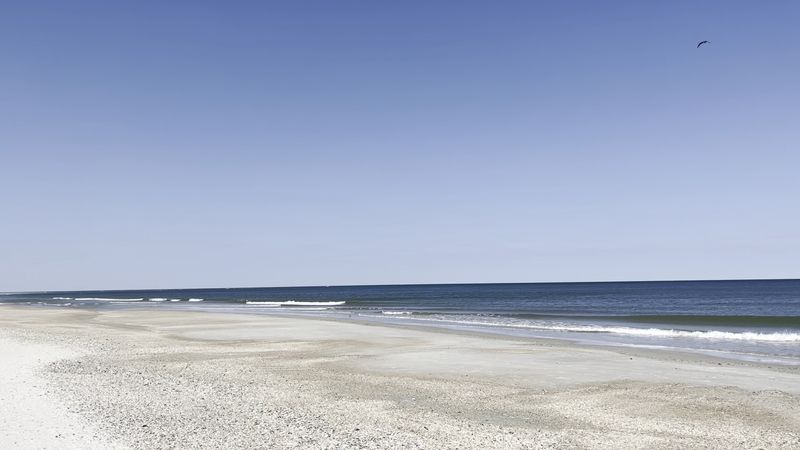
Just north of Jacksonville, Little Talbot Island feels like a completely different Florida — no theme parks, no neon signs, just miles of wild Atlantic shoreline backed by dunes, maritime hammock forest, and salt marshes that stretch as far as you can see. The entire island is a state park, which means development stays out and nature stays in.
That simple fact makes it one of the most underrated coastal escapes on the entire East Coast.
The beach itself spans roughly five miles of uninterrupted shoreline. Dunes here are unusually tall for Florida, sculpted by constant Atlantic wind and held together by sea oats and coastal grasses.
Shelling is excellent after storms, and loggerhead sea turtles nest along the beach during summer months. Rangers lead evening turtle watches for visitors lucky enough to catch the season.
Inland trails wind through the maritime hammock forest where armadillos, river otters, and painted buntings make regular appearances. Kayaking and paddleboarding in the salt marshes on the island’s western side reveal an entirely different ecosystem.
Camping is available with full hookups and tent sites, and the park rarely feels overcrowded even in peak season. Little Talbot Island is one of those places that makes you genuinely grateful Florida still has wild corners left.
Coquina Beach — North Carolina
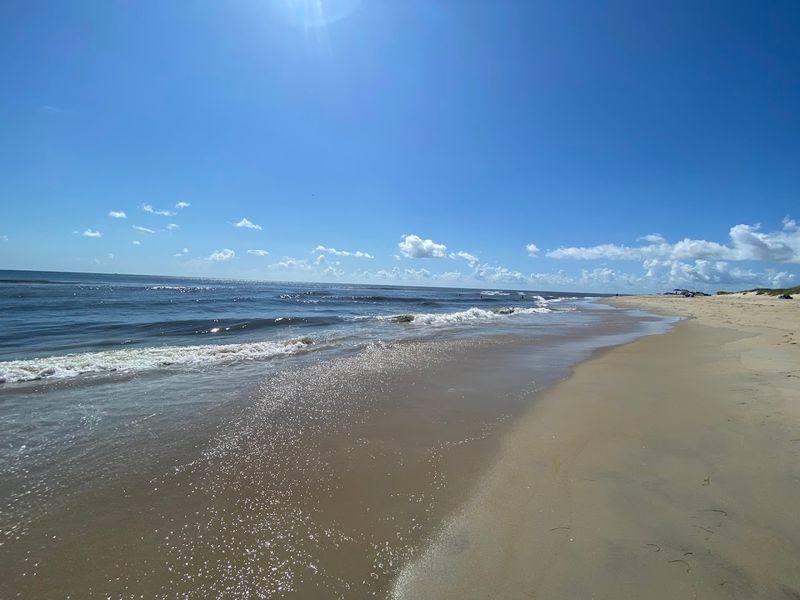
Cape Hatteras National Seashore covers a long, wind-shaped stretch of North Carolina’s Outer Banks, and Coquina Beach sits right in the middle of it like a well-kept secret hiding in plain sight. It offers wide, flat sands that stretch generously in both directions, backed by low dunes and sea oats that sway in the constant coastal breeze.
Even during summer weekends, the sheer size of the beach absorbs visitors without ever feeling crowded.
Surf fishing is enormously popular here, and for good reason. The waters off Cape Hatteras are some of the most productive fishing grounds on the East Coast, where warm Gulf Stream waters and cooler shelf waters collide.
Red drum, bluefish, and flounder are common catches depending on the season. A valid North Carolina fishing license is required, so plan ahead.
Swimming is generally safe at designated areas with lifeguard coverage during summer months, but rip currents are a real hazard along the Outer Banks and should never be underestimated. The nearby Bodie Island Lighthouse is worth a visit for its striking black-and-white spiral pattern and the panoramic views from the top.
Coquina Beach combines natural beauty, outdoor activity, and genuine coastal calm in a package that does not require much effort to enjoy.
Secret Beach — Oregon
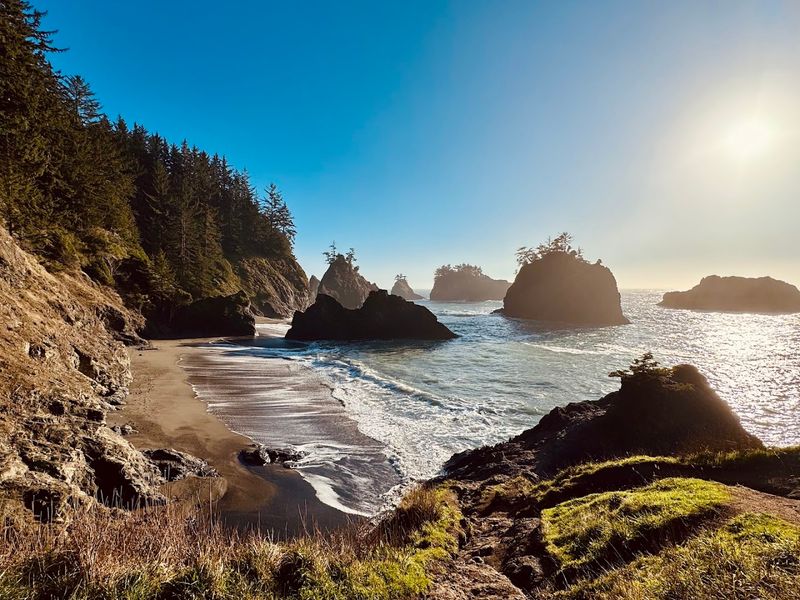
The name is not trying to be clever — this beach genuinely takes some work to find. Tucked along the Samuel H.
Boardman State Scenic Corridor in southern Oregon, Secret Beach sits at the bottom of a steep, root-tangled trail that drops through dense coastal forest before opening onto one of the most dramatic little coves on the Pacific coast. Most drivers pass the small pullout on Highway 101 without a second glance.
That obscurity is exactly what makes it special. The beach is small, rocky, and framed by towering sea stacks draped in sea birds and surf spray.
A small creek trickles across the sand before meeting the ocean, and the whole scene has an atmosphere that feels genuinely wild and undiscovered. Low tide reveals tide pools packed with colorful marine life tucked between the boulders.
The trail down is steep and can be slippery after rain — hiking shoes with grip are a smart choice. The hike back up is short but demanding, especially if you have been lingering on the beach for a while.
Oregon’s south coast gets a lot of precipitation, so clear days feel like a bonus. Secret Beach is at its most dramatic on overcast days when the mist softens everything and the ocean sounds louder than it should.
Pelican State Beach — California
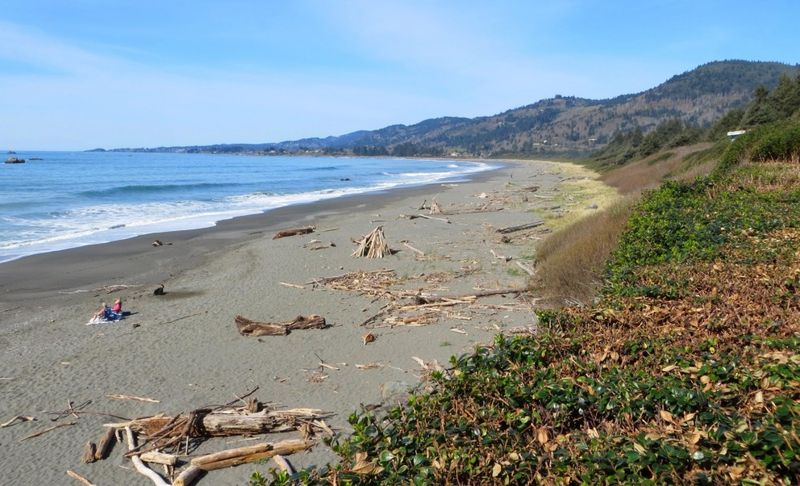
Right at the top of California, just a stone’s throw from the Oregon border, Pelican State Beach sits so far north that most Californians have never heard of it. That geographic obscurity is its greatest asset.
The beach is a narrow strip of dark, windswept sand where the Pacific crashes in with full force and the air tastes like pure salt. There are no facilities, no lifeguards, and no crowds — just raw coastline doing exactly what it has always done.
Swimming here is not recommended due to strong currents and cold water temperatures that hover around 50 to 55 degrees Fahrenheit even in summer. The beach rewards visitors who come for the atmosphere rather than a swim.
Walking the shoreline while waves thunder against driftwood logs has a meditative quality that busy beaches completely lack. Bring a windbreaker — it earns its keep here.
The drive to Pelican State Beach along Highway 101 through the redwood country of Del Norte County is itself worth the trip. Towering trees line the road, and occasional ocean views appear between the forest gaps.
This corner of California feels nothing like the sunny postcards the state is famous for, and that contrast is refreshing. Pelican State Beach is quiet, forgotten, and oddly wonderful for exactly those reasons.
Ruby Beach — Washington
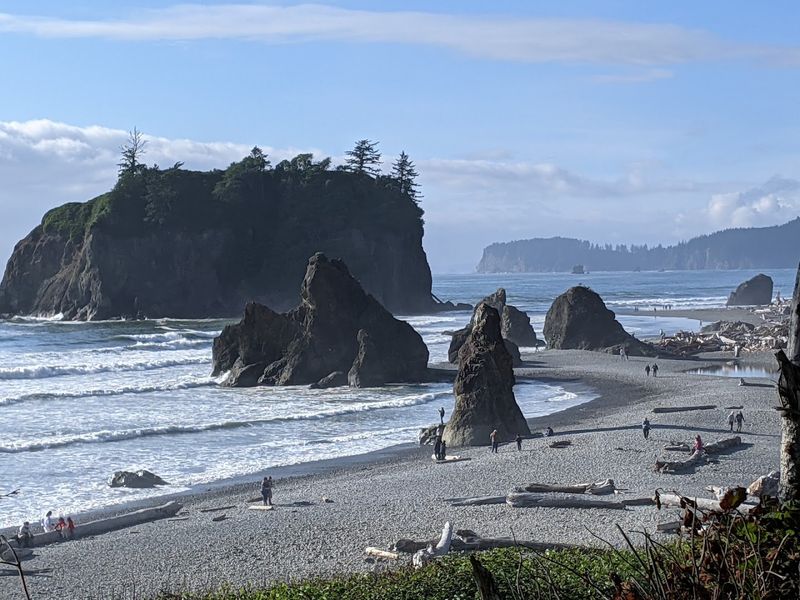
Ruby Beach earns its fame the moment you crest the bluff and see it spread out below you — a dark sand beach absolutely carpeted in massive bleached driftwood logs, with sea stacks rising dramatically from the surf and the Olympic rainforest pressing right up to the shoreline. It is one of those landscapes that makes you stop walking and just stare for a minute before you remember how to move again.
Part of Olympic National Park, Ruby Beach sits along Washington’s wild Pacific coast and is accessible via a short, well-maintained trail from a roadside parking area. Access is easy compared to some of its neighbors, but the scenery feels anything but ordinary.
The name supposedly comes from red garnet crystals found in the sand, though most visitors are too distracted by the overall drama to go looking for tiny gems.
Tide pools around the base of the sea stacks hide purple sea urchins, giant chitons, and ochre sea stars. Bald eagles are commonly spotted perched on driftwood or soaring above the surf line.
Sunrise and fog-heavy mornings create a moody, cinematic atmosphere that photographers travel great distances to capture. Ruby Beach is genuinely one of the most visually striking beaches in the entire country, and it delivers that spectacle with refreshingly manageable crowds.
Holden Beach — North Carolina
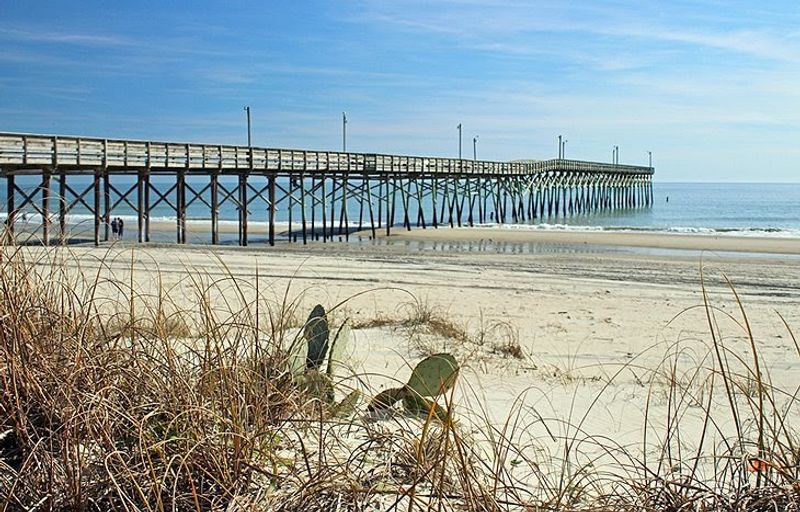
Ask anyone who has spent a week at Holden Beach and you will likely get the same answer delivered with a slightly wistful look — it is the kind of beach town that still feels like the 1980s in the best possible way. Located on the southern end of North Carolina’s Brunswick Islands, Holden Beach is a narrow barrier island where the pace slows down the moment you cross the bridge.
No chain restaurants, no boardwalk arcades, no neon signs competing for attention.
The beach is wide and gently sloped, making it excellent for swimming, boogie boarding, and long barefoot walks that seem to have no natural stopping point. Loggerhead sea turtles nest along the shore from May through August, and the town takes that seriously — beach lighting is managed carefully to avoid disorienting hatchlings making their way to the sea.
Rental cottages line the island in rows, and most visitors return year after year because Holden Beach has a loyal, almost cult-like following among families who value quiet over flash. The water here is noticeably warmer and calmer than beaches further north, thanks to the southward shift of the Gulf Stream influence.
Holden Beach does not try to impress you — it just quietly wins you over, and then you find yourself already planning next summer’s trip before this one ends.
Share this story