Hoboken, New Jersey is a city most people associate with dense streets, waterfront views, and the constant hum of urban life. But tucked into the northwest corner of the city, there is a park doing something far more ambitious than just offering a patch of green space.
This park was built to tackle one of Hoboken’s most persistent problems: flooding. The park functions as both a public green space and a large-scale stormwater management system, holding up to one million gallons of rainwater underground while families play above.
It cost roughly $90 million to build, took years to complete, and still is not fully finished in every detail. Yet despite all of that, the park has quietly become one of the more interesting urban infrastructure projects in the entire state, and most people outside of Hoboken have no idea it exists.
The Flooding Problem That Started It All
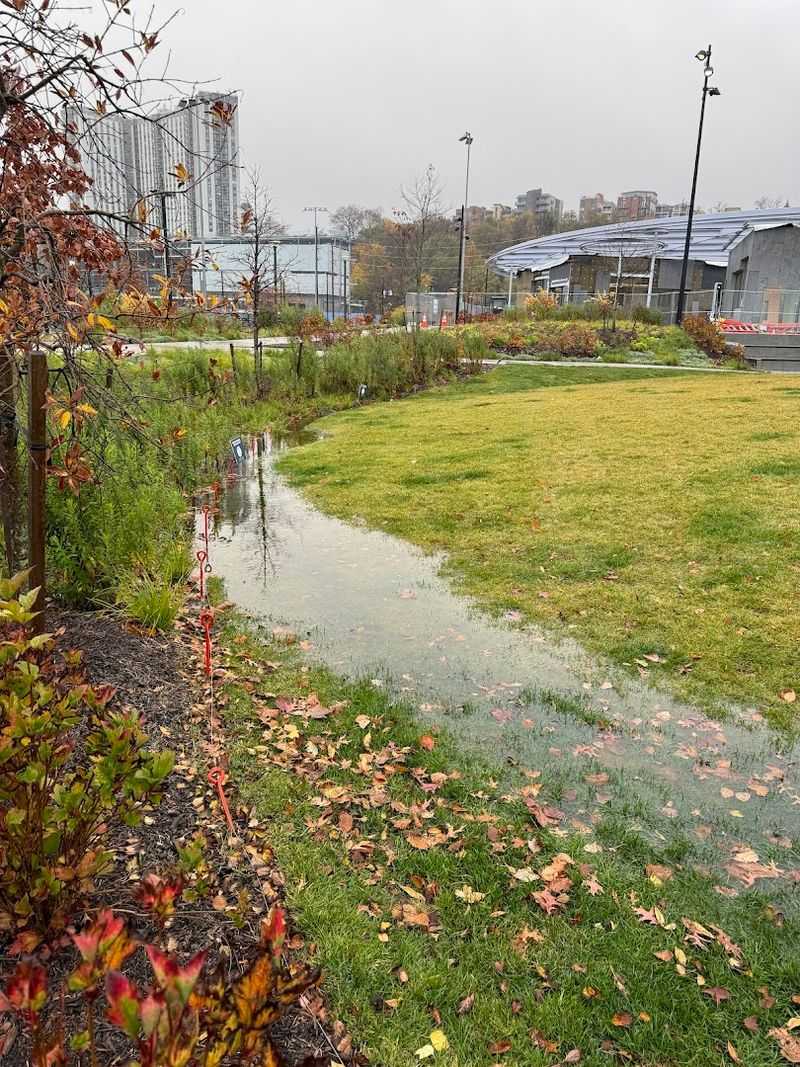
Hoboken has a flooding problem that has plagued the city for decades. The city sits in a low-lying basin surrounded by higher ground, which means rainwater has nowhere to go except into streets, basements, and underpasses.
Hurricane Sandy in 2012 made the situation dramatically worse, leaving large portions of the city underwater for days.
The response to that event eventually led to a broader plan to build green infrastructure across Hoboken, and Northwest Resiliency Park became the centerpiece of that effort. The park was designed not just as a recreational space but as a functional stormwater system, with a massive underground cistern capable of holding approximately one million gallons of water during heavy rain events.
The concept was straightforward: capture the water before it floods the streets, hold it underground, and then slowly release it into the sewer system after the storm passes. Whether that system is fully operational is still a subject of active discussion among residents.
A $90 Million Park With a Long Construction Story
The price tag on Northwest Resiliency Park is not something that goes unnoticed. The project was estimated at around $90 million, making it one of the most expensive park construction projects in New Jersey’s recent history.
Construction began in 2019, and the park was supposed to open within a few years.
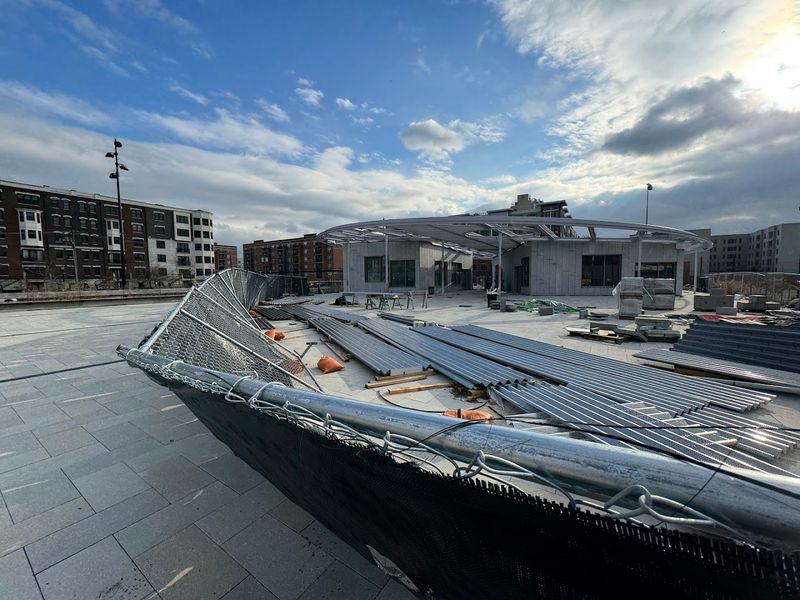
What actually happened was a longer, more complicated process. The park had two separate grand opening events before it was technically complete, and some of its core systems, including the pumps and generators needed to move stored water out of the underground tank, took additional time to become fully functional.
The delays drew criticism from residents who watched the timeline stretch well beyond the original estimates. At the same time, large-scale infrastructure projects of this type rarely follow a clean schedule, especially when they involve both public recreation and underground engineering systems working together.
The final result, even in its imperfect state, represents a serious attempt at solving a serious problem.
Native Plants and a Mini Forest Worth Noticing
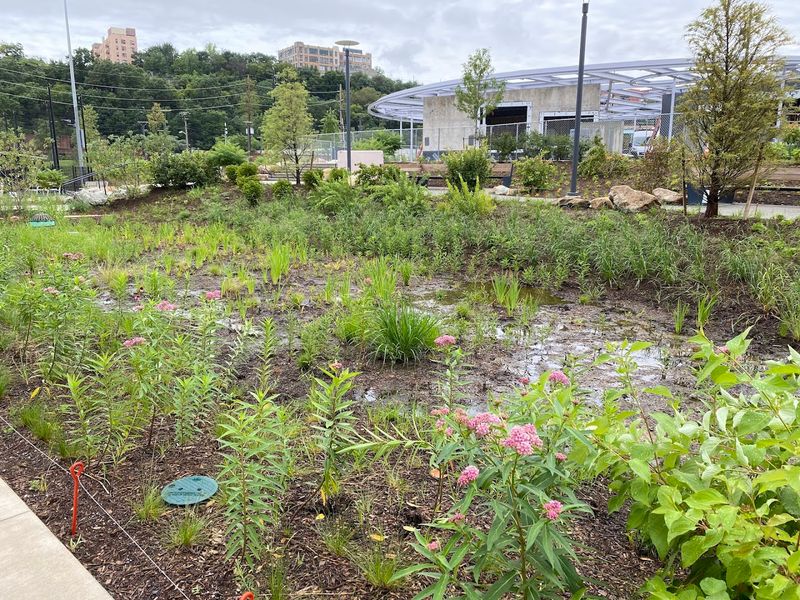
One of the quieter achievements of Northwest Resiliency Park is its plant selection. The landscape was designed using native species, which means the plants growing throughout the park are ones that naturally belong in this region of New Jersey rather than ornamental varieties chosen purely for appearance.
Winterberry shrubs are among the most striking examples. During the colder months, these shrubs hold clusters of bright red berries that stand out vividly against bare branches, making the park look intentional and alive even when most urban green spaces look dormant and dull.
A small wooded section of the park has been described by some as a mini forest, planted through a collaboration with students and faculty from nearby Stevens Institute of Technology. The trees are still young and growing, which means the canopy will continue to develop over the coming years.
Right now, the native plant restoration aspect of the park is one of its most genuinely successful features, and it rewards a slow, unhurried walk through the grounds.
The Playground That Actually Has Something for Everyone
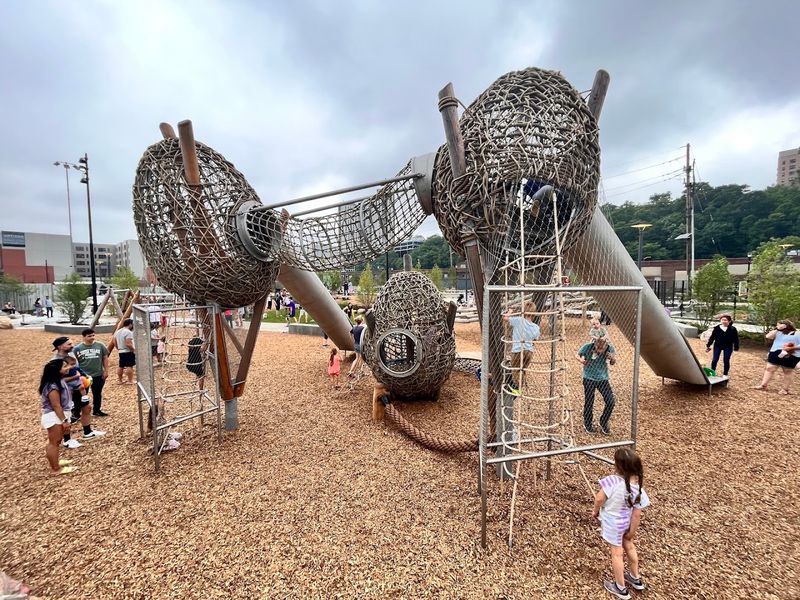
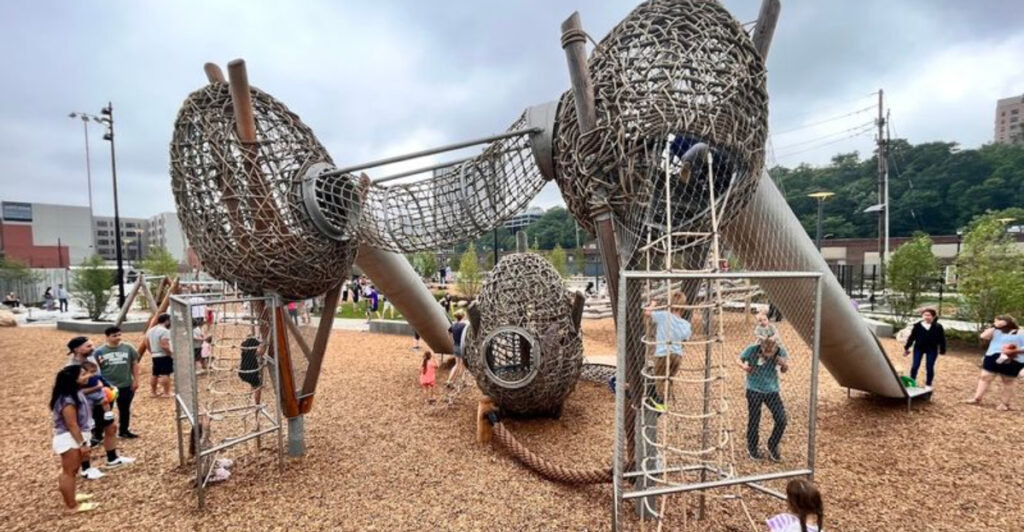
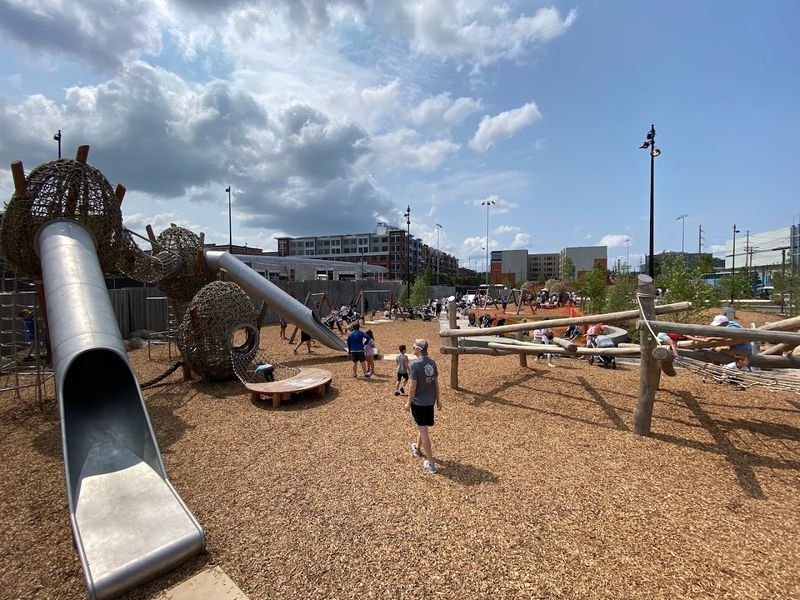
The playground at Northwest Resiliency Park is not a standard set of swings and a slide bolted to a rubber mat. The designers put real thought into creating a space with multiple activity stations, each one targeting a different age group or skill level.
There are climbing walls, a sandbox area, and structures that challenge balance and coordination in ways that keep kids engaged longer than a typical playground layout. Parents have noted that the sightlines throughout the playground are well-designed, making it easy to keep track of children without constantly repositioning.
The playground does come with one honest limitation: the trees planted nearby are still too young to provide meaningful shade. On sunny days, sunscreen is a practical necessity rather than an optional precaution.
The accessibility of some structures has also been noted as an area where the design could be more inclusive, particularly for children who need additional support to participate. Still, for the range of ages and activity types it covers, the playground stands out as one of the park’s strongest features.
Splash Pad, Basketball Court, and Turf Fields
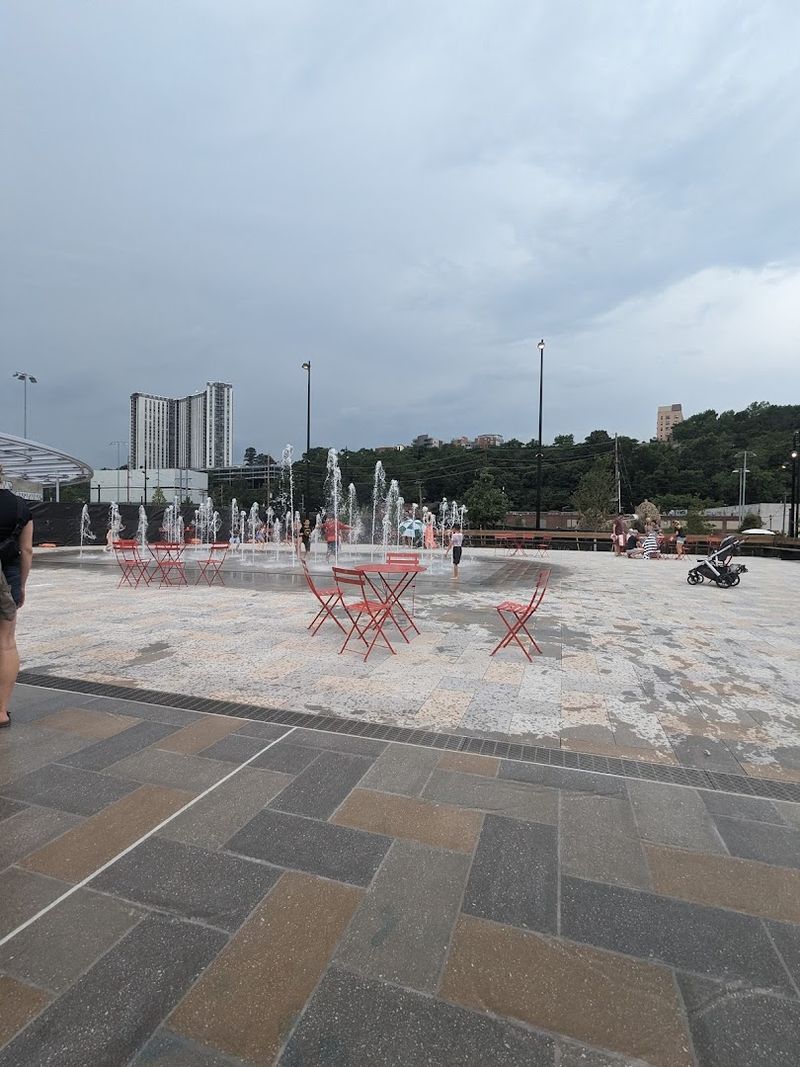
Beyond the playground, Northwest Resiliency Park offers a range of active recreation options that make it genuinely useful for different types of park users. The splash pad is one of the more popular warm-weather features, designed to blend into the surrounding landscape rather than look like a standard municipal water play installation.
A basketball court is also part of the park’s layout, with adjustable hoops that accommodate different ages and heights. The court has gone through some maintenance challenges since the park opened, including resurfacing work and backboard replacements, but it remains an active part of the park’s recreational offerings.
Turf fields round out the active zones, giving kids and adults space for casual sports and open play without the maintenance demands of natural grass. The combination of a splash pad, basketball court, and turf fields in a single urban park of this size is genuinely unusual for Hoboken, and it gives the park a variety that most nearby green spaces cannot match.
The layout encourages people to stay longer than a typical neighborhood park visit.
The Great Lawn and What It Actually Looks Like
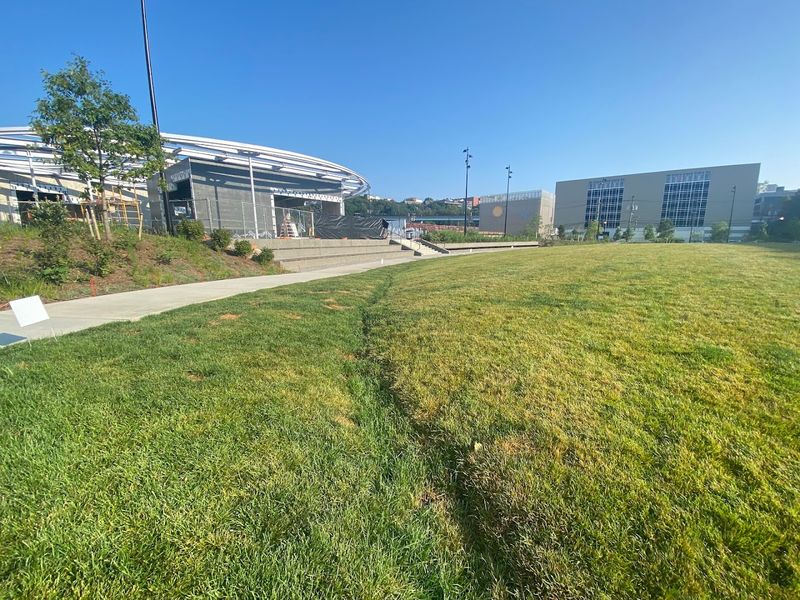
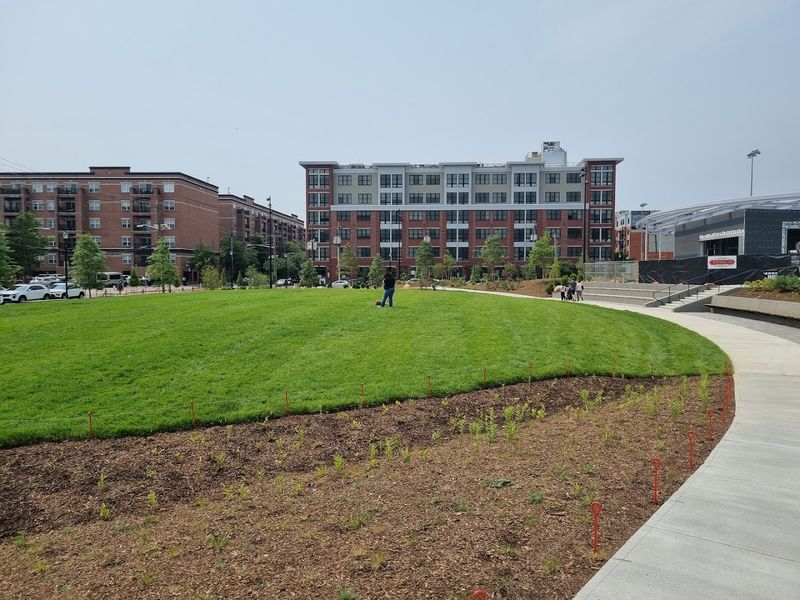
The Great Lawn at Northwest Resiliency Park has been marketed as an expansive open green space, but the actual grass area covers just under half an acre, which works out to roughly 19,000 square feet. For a park with a total footprint of over six acres, that means real grass accounts for only a small fraction of the overall space.
That is not necessarily a problem, since the rest of the park is filled with pavers, planted areas, play structures, and the various infrastructure elements that make the park function as a stormwater system. But it is worth knowing before arriving with expectations of a sprawling meadow-style lawn.
What the lawn does offer is an open, relatively flat area where people can spread out, throw a frisbee, or simply sit without being crowded by structures or pavement. On weekday afternoons, the lawn tends to be quiet enough to feel like a genuine retreat.
The surrounding plantings frame the space in a way that makes it feel more intentional than a simple patch of turf.
How the Park Is Laid Out Across Two Levels
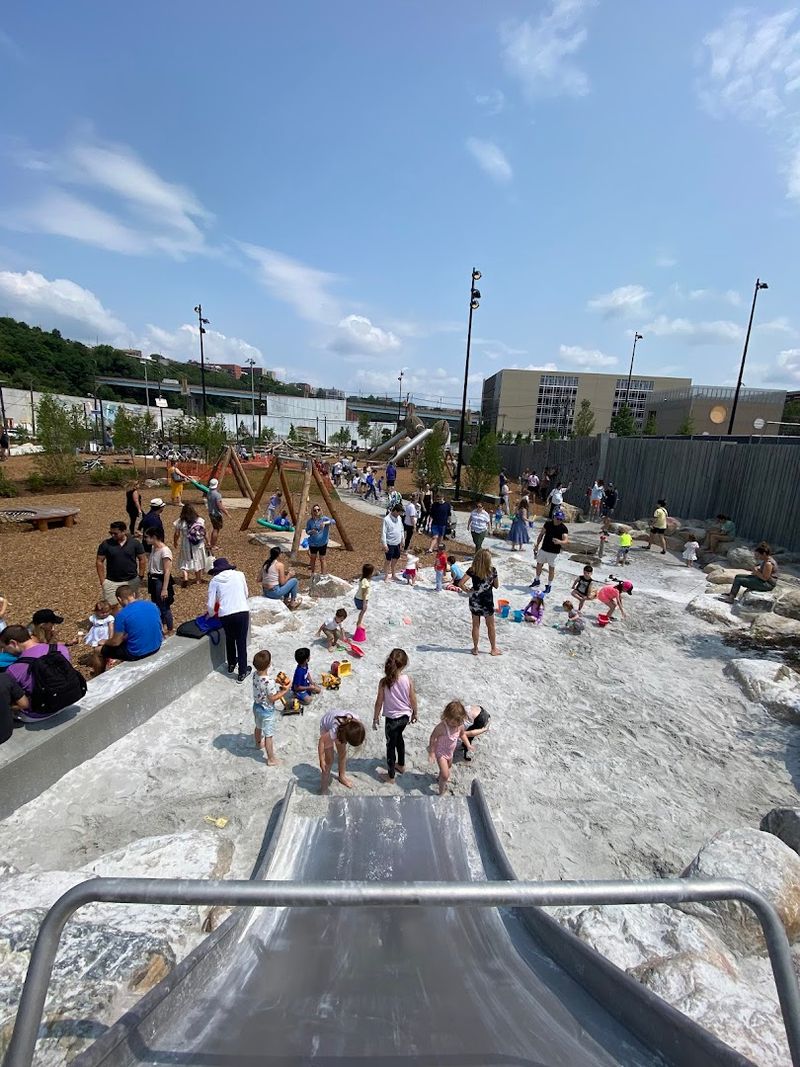
Northwest Resiliency Park has a two-level design that is not immediately obvious from the street. The upper level functions as a more open plaza-style space, with the cafe building, seating areas, and views across the park’s planted sections.
The lower level is where the playground and more active recreation zones are concentrated.
First-time visitors sometimes arrive at the upper level and find it surprisingly quiet, not realizing that most of the activity is happening one level down. The transition between the two levels is handled through ramps and paths that connect the zones without feeling abrupt.
The split-level approach was partly driven by the engineering requirements of the underground cistern, which needed a certain amount of depth and space. The design team turned that constraint into a feature, creating a park that feels larger and more varied than its footprint might suggest.
Exploring both levels on a first visit gives a much more complete picture of what the park actually contains and how the different zones relate to each other.
Sitting Areas, Seating, and the General Atmosphere
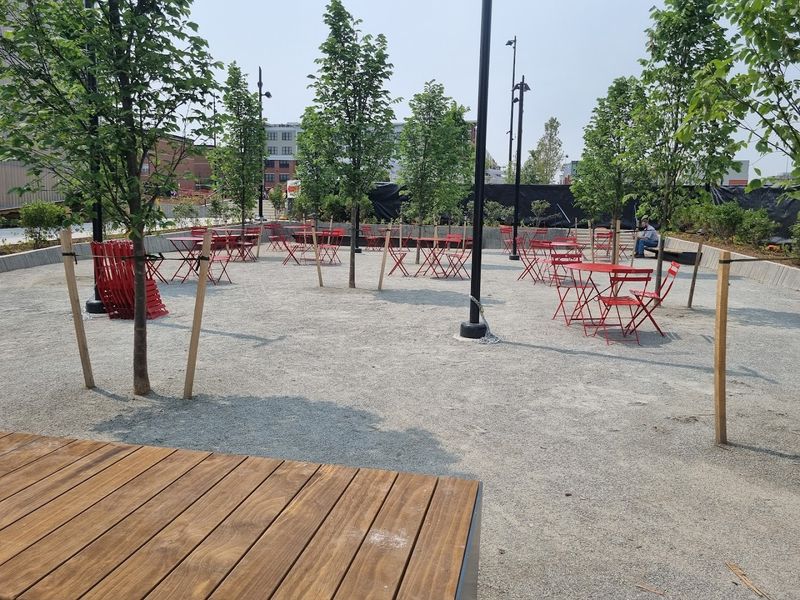
The seating throughout Northwest Resiliency Park was clearly part of the design plan rather than an afterthought. Benches and sitting areas are distributed across the park in spots that feel considered, giving people places to pause without being pushed to the edges of the space.
The overall atmosphere leans calm and unhurried, particularly on weekday mornings and early afternoons when the playground crowd has not yet arrived. The combination of native plantings, open sightlines, and relatively low noise levels makes the park a workable spot for anyone looking for a midday break from the surrounding urban environment.
The industrial character of the nearby streets actually works in the park’s favor in terms of atmosphere. The contrast between the older warehouse buildings and the park’s contemporary design creates a visual tension that feels specific to this part of Hoboken rather than generic.
The sitting areas are well-positioned to take in that contrast, making a simple bench visit more interesting than it might sound on paper.
Why This Park Deserves More Attention Than It Gets
Northwest Resiliency Park is one of the more genuinely ambitious public infrastructure projects in New Jersey, and it has received far less national attention than similar projects in larger cities. The combination of functional stormwater engineering and public recreation in a single urban space is not common, and the scale of what was built here is significant.
The park is not perfect. The timeline stretched, some systems took longer to become operational than planned, and certain design choices have drawn fair criticism.
But the underlying concept, using a park to solve a flooding problem while also giving a neighborhood a genuine recreational resource, is one that other cities are watching closely.
For anyone curious about where urban design and climate infrastructure intersect in practical, everyday spaces, Northwest Resiliency Park is worth the trip to Hoboken. The park is open early and stays open late, the neighborhood is easy to park in, and the combination of things to do and things to think about makes it a destination that rewards more than a single visit.
Where You Will Actually Find This Park
Northwest Resiliency Park sits at 1201 Madison St, Hoboken, NJ 07030, in the northwestern section of the city. The surrounding neighborhood still carries a strong industrial character, with older buildings and warehouses nearby that make the park’s modern design stand out considerably.
The park is open every day of the week, from 5 a.m. to 10 p.m., which gives early risers and evening walkers alike a solid window of time to enjoy it. Parking is generally easier here than in other parts of Hoboken, largely because the industrial surroundings have not yet filled in with the kind of dense residential development found closer to the waterfront.
The address puts the park in a part of Hoboken that many people drive through but rarely stop to explore. That is slowly changing as more locals and curious out-of-towners make the trip to see what all the infrastructure buzz is actually about.
Share this story