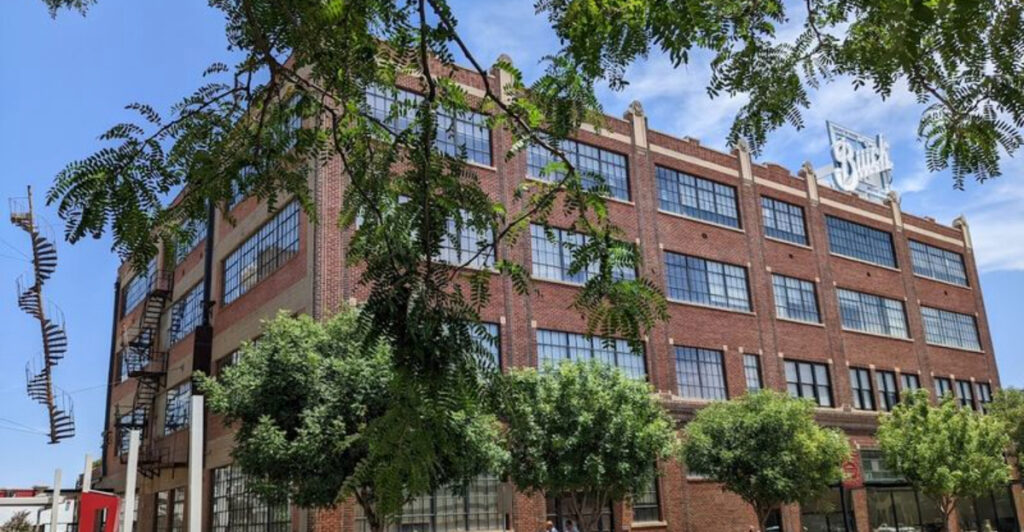
There is a staircase in the heart of Oklahoma City that stops people cold the moment they see it. It twists and spirals in a double-helix shape, looking almost exactly like a strand of human DNA floating between two buildings.
Most people who pass by it for the first time do a double take, wondering if their eyes are playing tricks on them. This is not your average fire escape or decorative railing.
It is a genuine piece of architectural history that has been repurposed into one of the most visually striking public art displays in the entire state of Oklahoma, and once you know the full story behind it, the experience of standing next to it becomes something you will not forget anytime soon.
What and Where Is the Architectural DNA Staircase
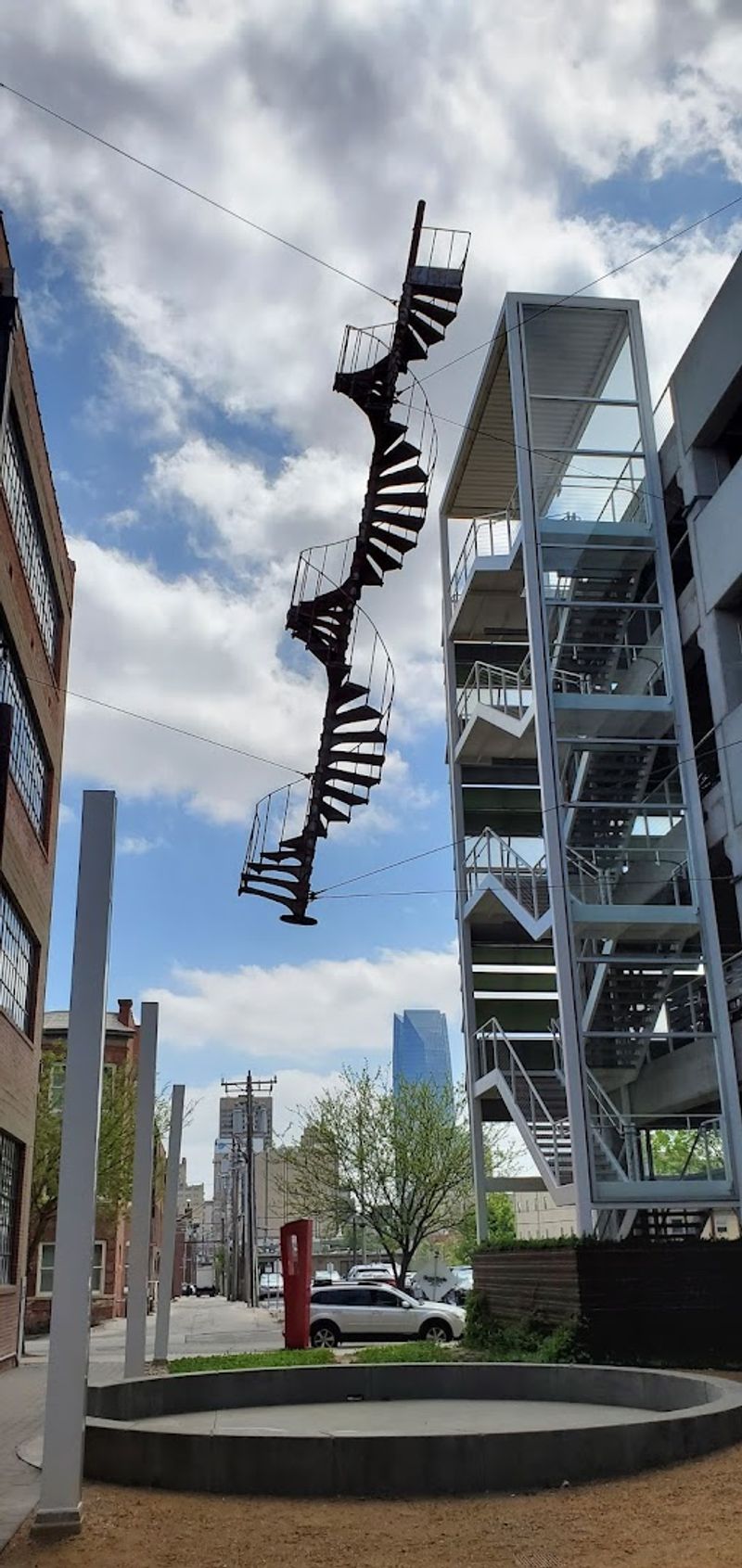
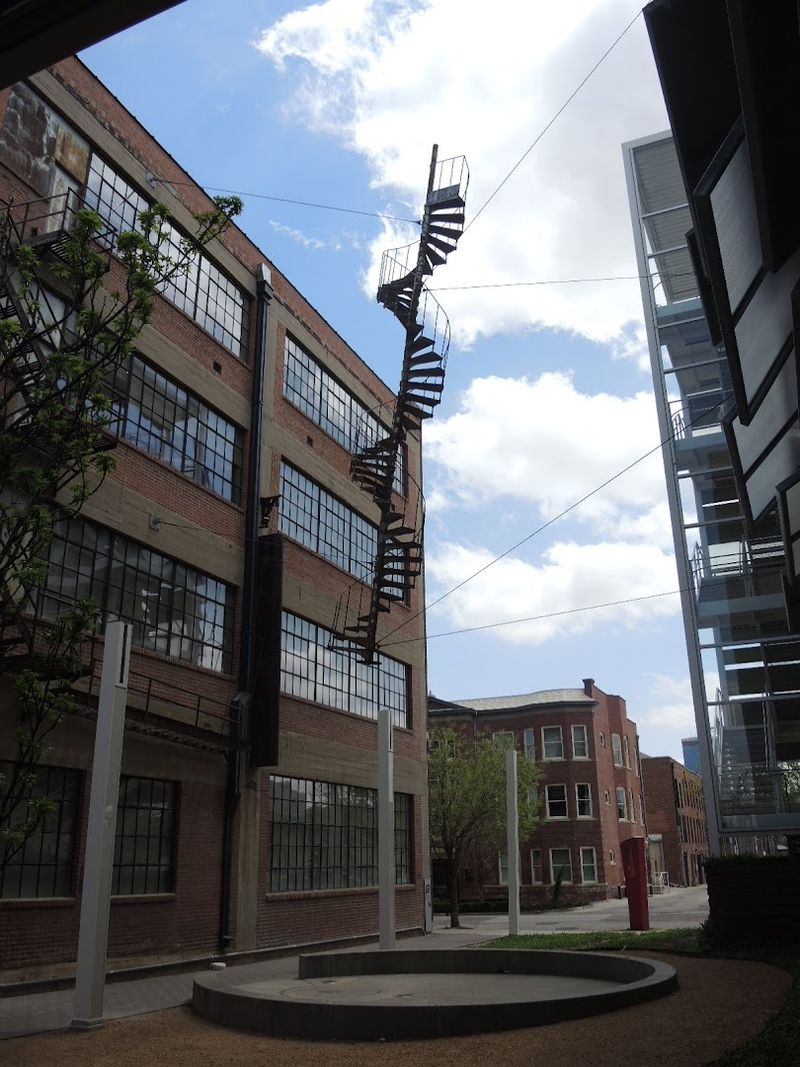
Right in the Midtown neighborhood of Oklahoma City, at 123 NW 10th St, Oklahoma City, OK 73103, there is a structure that most people would walk past without realizing what they are looking at. The Architectural DNA staircase is a historic spiral fire escape that once served an old hotel and has since been transformed into a suspended public art installation between a brick building and a parking garage.
The double-helix shape of the staircase is what earned it the nickname “Architectural DNA,” and the name fits perfectly. From certain angles, the spiral looks almost identical to the molecular structure of human DNA, which makes it feel more like a science museum exhibit than a piece of city infrastructure.
The surrounding area is clean and well-maintained, with a small courtyard-style space between the buildings that gives visitors a comfortable spot to stand and take it all in. Street parking can be a little tricky during business hours, so arriving in the evening or on a weekend tends to make the experience much more relaxed and enjoyable.
The Surprising History Behind the Spiral Structure
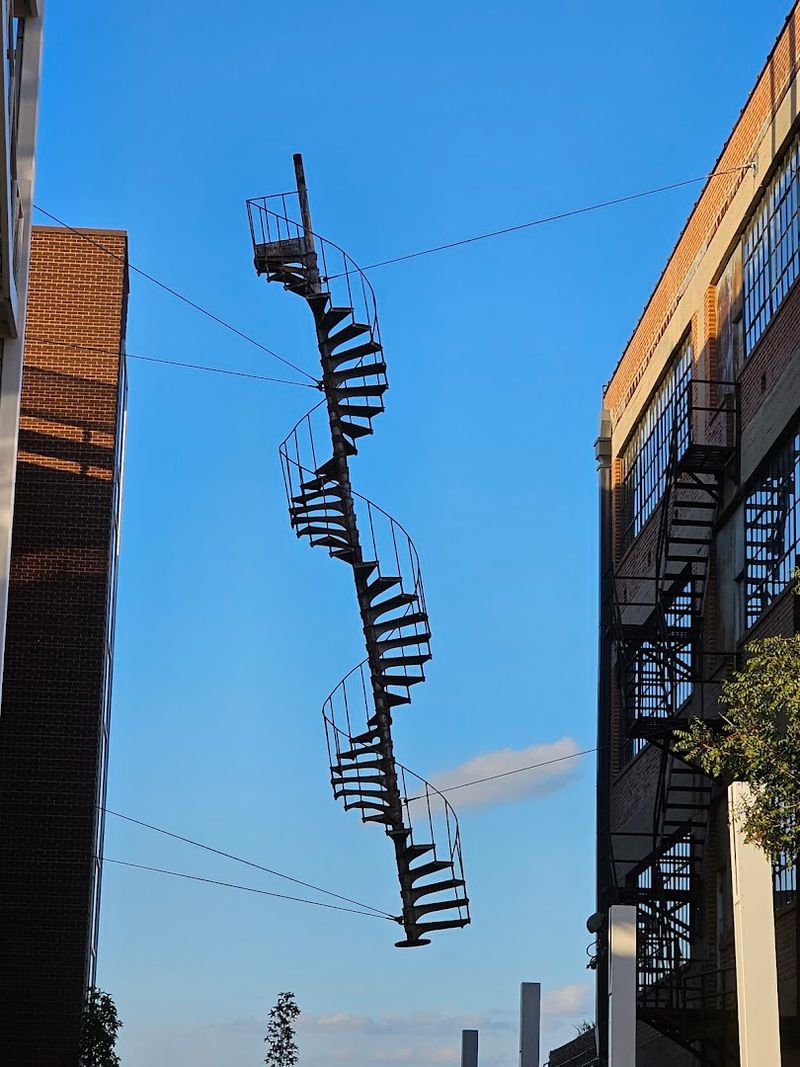
The staircase dates back to 1904, which means it has been standing in one form or another for well over a century. That alone makes it worth pausing to appreciate, because most structures from that era have long since been torn down or replaced with something modern and forgettable.
Originally, the spiral staircase served as a fire escape for a hotel that once operated in the area. Hotels of that period frequently used ornate cast-iron spiral staircases, which were both functional and visually appealing compared to the flat metal fire escapes that became common later in the twentieth century.
When the original building was redeveloped, someone made the inspired decision to preserve the staircase rather than scrap it. Instead of letting it disappear into a salvage yard, it was repositioned and suspended between the two existing structures, giving it a second life as a piece of public art that honors the architectural history of Oklahoma City while sparking curiosity in everyone who encounters it.
Why the DNA Comparison Actually Makes Sense
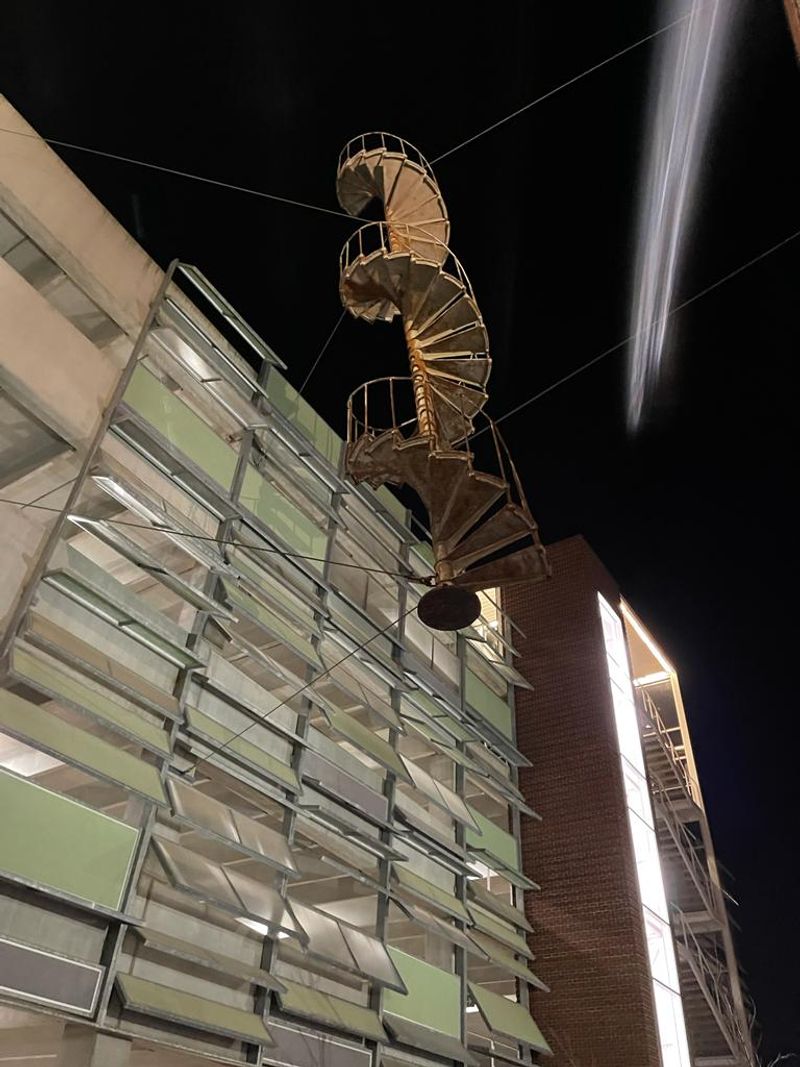
The nickname is not just clever marketing. When you see the staircase from the right angle, the comparison to human DNA is genuinely hard to shake.
The spiral winds upward in a tight double-helix formation, with the connecting steps acting almost like the rungs on a DNA ladder, making the whole thing feel like a three-dimensional biology lesson hanging in mid-air.
The structure has two intertwining helical rails that loop around each other as they climb, which is exactly the shape that scientists use to describe the double helix of a DNA strand. Most people who study biology in school see that shape in textbooks and diagrams, but very few expect to encounter it as a full-scale architectural feature in the middle of a city block.
The fact that this resemblance happened by design rather than by accident makes it even more interesting. The person who chose to preserve and display this particular staircase clearly had a sharp eye for the kind of visual poetry that turns an old fire escape into a conversation piece that people drive across Oklahoma to photograph.
The Setting That Makes the Photo So Dramatic
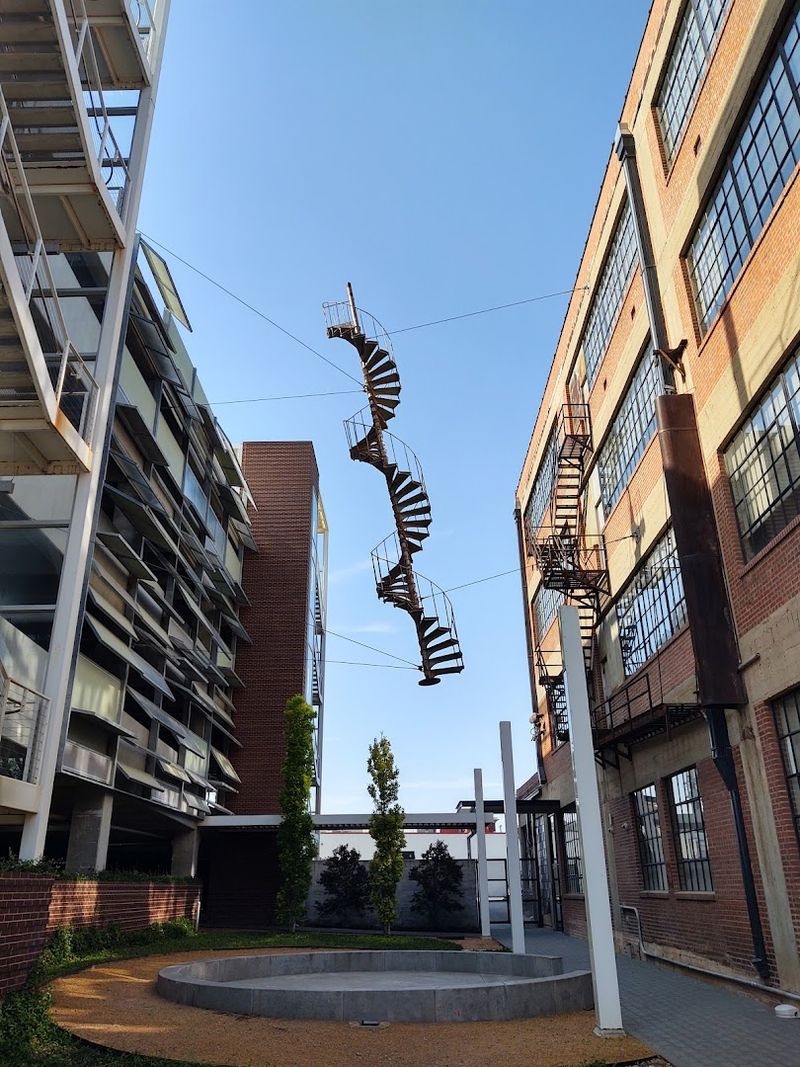
Part of what makes this spot so visually compelling is the contrast between the staircase itself and the buildings on either side of it. On one side, there is an older red brick building with the kind of texture and warmth that signals genuine age.
On the other side, there is a more utilitarian parking structure with clean, flat surfaces.
The staircase hangs between these two very different architectural personalities, and that contrast actually works in its favor. The organic, curving form of the spiral pops visually against the hard geometry of both structures, making it easy to frame a striking photograph no matter what kind of camera you are using.
The small courtyard area at the base of the staircase adds to the drama by giving visitors a clear line of sight straight up through the spiral. Looking up from directly beneath the structure reveals the full helical pattern in a way that photographs do not fully prepare you for.
The experience of that upward view is genuinely one of those moments where the real thing outperforms every picture you have seen of it beforehand.
How the Staircase Moves in the Wind
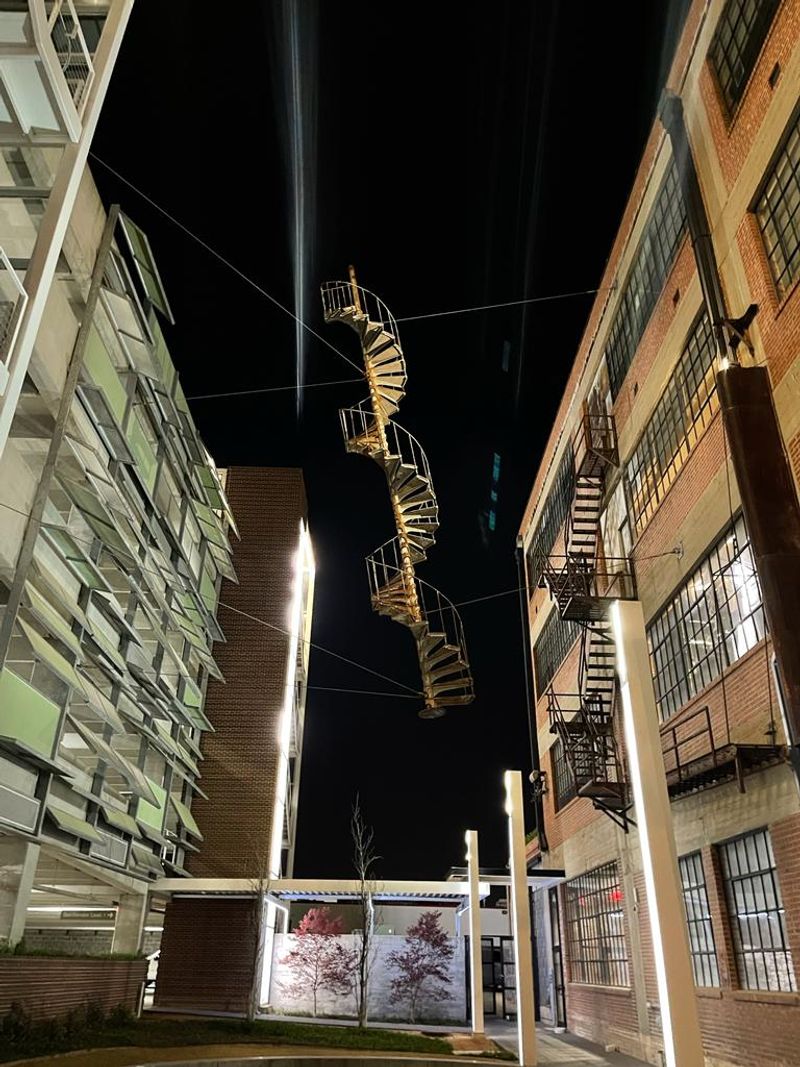
One detail that most visitors do not expect before they arrive is that the staircase actually moves. During strong wind gusts, the structure wiggles noticeably, which is both slightly unnerving and completely fascinating at the same time.
Oklahoma is no stranger to strong winds, so this is not an uncommon experience for visitors who time their trip on a breezy day.
The movement is not dangerous. The staircase is securely anchored at both ends, and the flex is intentional, built into the engineering of how the structure is suspended.
That said, watching a century-old cast-iron spiral sway gently in the breeze does create a surreal visual effect that makes the whole installation feel almost alive.
Photographers who visit on windy days sometimes capture long-exposure shots that show the staircase with a subtle blur, which adds an unexpected layer of artistry to the image. For visitors who prefer their architecture completely stationary, a calm day is the better bet, but for anyone who wants the full sensory experience of this unusual landmark, a good Oklahoma wind gust is actually part of the charm.
The Midtown Oklahoma City Neighborhood Around It
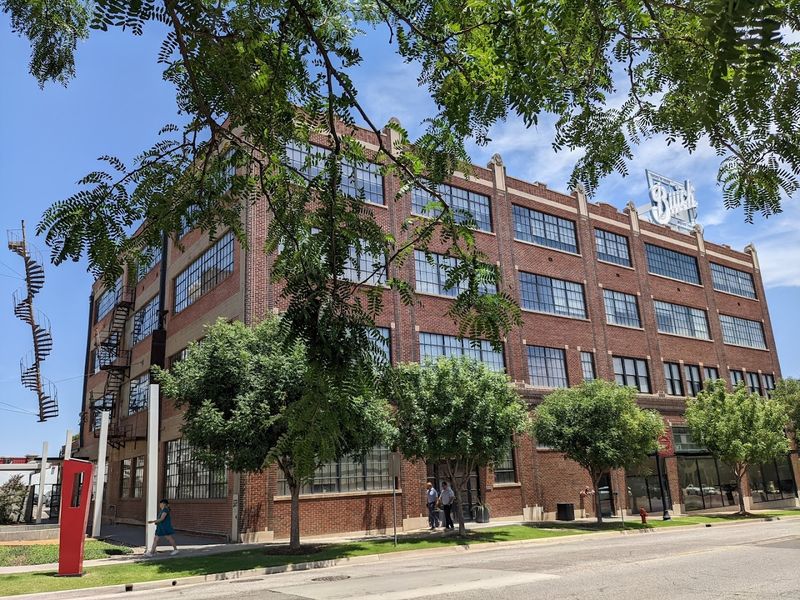
The staircase does not exist in isolation. The Midtown neighborhood of Oklahoma City surrounding it is one of the more lively and walkable parts of the city, packed with independent restaurants, coffee shops, boutique stores, and creative businesses that give the area a distinct personality.
A visit to the Architectural DNA staircase pairs naturally with a longer exploration of the neighborhood. There are plenty of spots within easy walking distance to grab a meal before or after your visit, and the general energy of the area makes it a pleasant place to spend an afternoon rather than just a quick drive-by stop.
The mix of historic brick buildings and newer developments in Midtown creates an architectural backdrop that complements the staircase perfectly. The whole neighborhood has a creative, slightly eclectic character that makes the presence of a DNA-shaped fire escape feel completely at home rather than out of place.
It is the kind of area where unexpected art installations feel like a natural part of the landscape, and the Architectural DNA staircase is very much the crown jewel of that spirit in this corner of Oklahoma.
Tips for Getting the Best Photographs
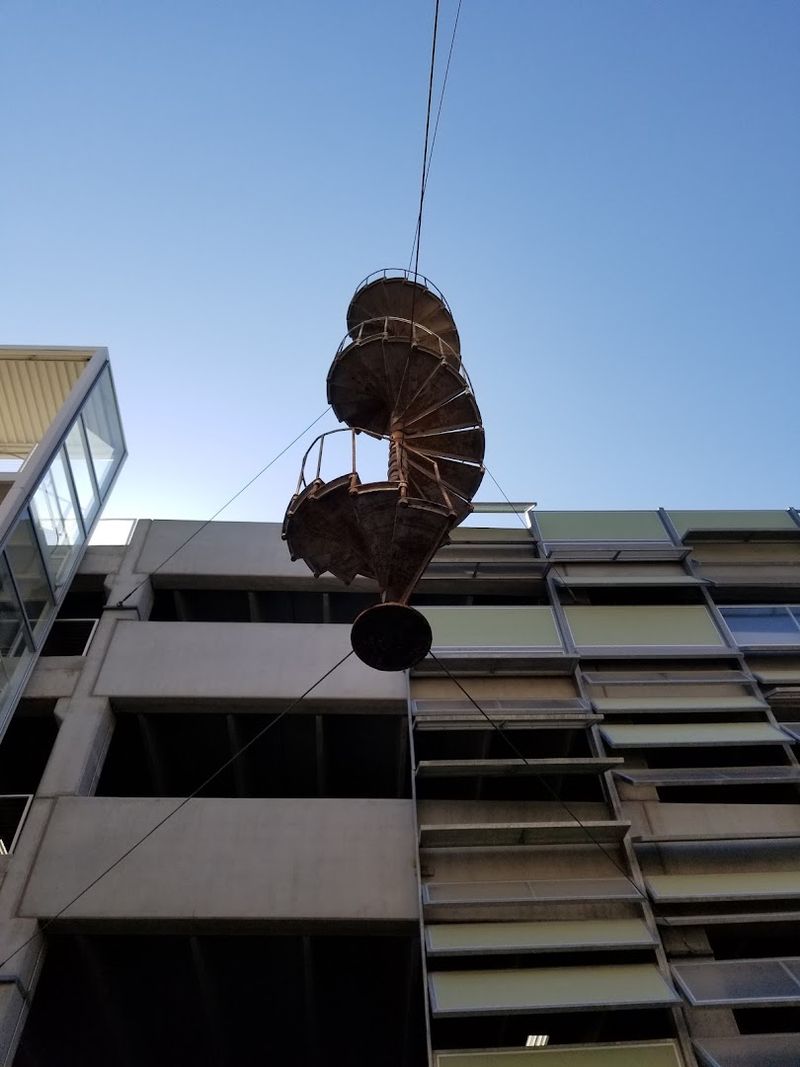
The staircase is genuinely photogenic from multiple angles, but a little preparation goes a long way toward getting a shot you will actually want to share. The most dramatic perspective is from directly below, where you can point your camera straight up through the center of the spiral and capture the full helical pattern with the sky as a backdrop.
Morning light works particularly well here because the sun hits the metal structure at a low angle and creates strong shadows that emphasize the twist of the helix. The space between the buildings can get shadowy later in the day depending on the season, so arriving earlier tends to reward you with warmer, more flattering light on the structure.
A wide-angle lens helps capture the full height of the staircase in a single frame, while a zoom lens lets you isolate specific sections of the spiral for more abstract compositions. The courtyard is usually uncrowded, which means you rarely have to compete with other visitors for the perfect shot.
That kind of unhurried access to a photogenic landmark is genuinely rare and worth appreciating.
Visiting Hours and Practical Information
The Architectural DNA staircase is accessible Monday through Friday from 8 AM to 5 PM. The site is closed on Saturdays and Sundays, which is worth knowing before you plan a weekend road trip specifically around this stop.
Checking the schedule ahead of time will save you the frustration of arriving on a Sunday morning to find the area inaccessible.
Parking in the immediate area can be competitive during weekday business hours since the surrounding Midtown blocks are active with workers and shoppers. Arriving closer to the end of the business day, when the nearby office lots start to open up, tends to make finding a spot significantly easier.
Street parking is available on NW 10th Street and surrounding blocks, but availability varies.
There is no admission fee to view the staircase, which makes it one of those rare attractions that costs nothing beyond the time it takes to get there. The visit itself is relatively brief for most people, typically 15 to 30 minutes, though photographers and architecture enthusiasts often linger considerably longer once they start exploring the different angles and details the structure offers.
Share this story