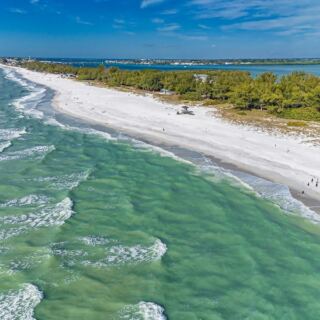
There is a stretch of the Jersey Shore that most beachgoers never find, and that is exactly the point. While the boardwalks buzz and the parking lots fill up fast just a mile or two away, this tucked-away corner of Ocean City stays calm, wide open, and refreshingly unhurried.
Sandy trails wind through shrubby maritime forest, shorebirds nest in protected dunes, and the Atlantic stretches out at the end of a path that feels like a reward. No lifeguards, no admission fee, no crowds fighting over the same patch of sand.
What makes this place worth knowing about is not just what it has, but what it does not have, and that is exactly the kind of escape that is harder and harder to find along the New Jersey coast. Keep reading to find out what makes this park a true standout.
Where Exactly This Park Sits on the Map
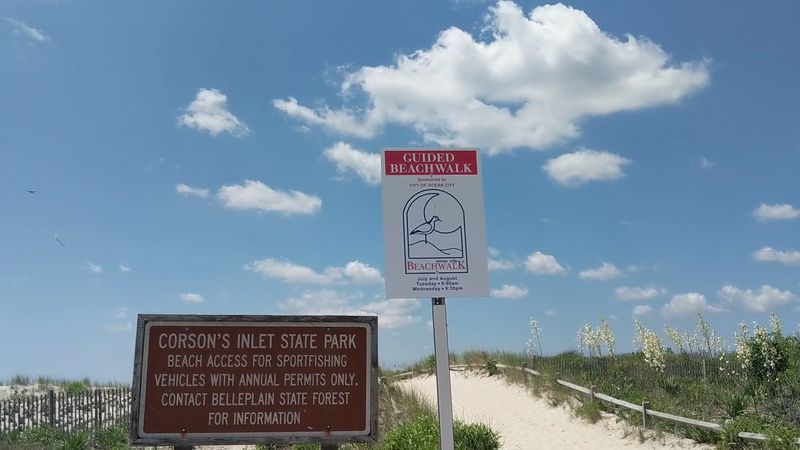
At the southern tip of Ocean City, New Jersey, a quiet stretch of protected coastline marks the beginning of something worth knowing about. Corson’s Inlet State Park is located at County Highway 619, Ocean City, NJ 08214, sitting right where the barrier island tapers toward the inlet that gives the park its name.
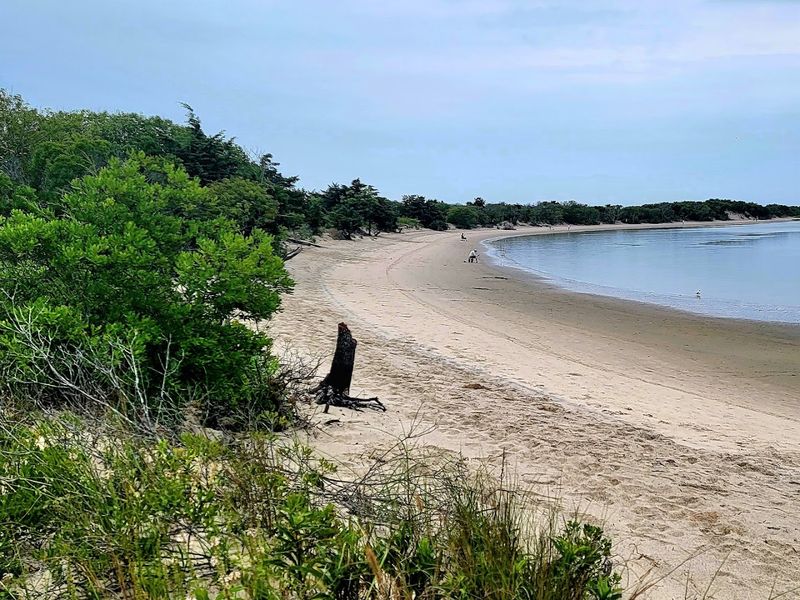
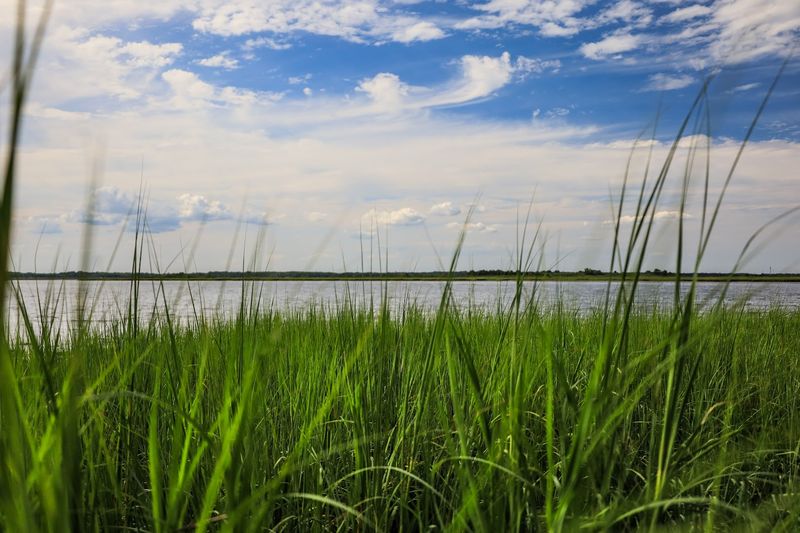
The park borders the Atlantic Ocean on one side and the back bay on the other, which means the landscape shifts depending on which direction you walk. There are no towering dunes built up by development, and no concession stands competing for your attention.
Getting here is straightforward. From the main stretch of Ocean City, head south on West Avenue until it ends, and the park entrance appears naturally.
Two parking areas serve the site, one near 59th Street and another off Ocean Drive, and neither charges a fee to park.
A Park With a Purpose Beyond Recreation
Corson’s Inlet State Park was not just set aside for hikers and fishermen. The land itself carries significant ecological weight as part of a protected natural area along the New Jersey coast, where barrier island ecosystems are under constant pressure from development.
The park preserves a rare stretch of undisturbed maritime habitat, including tidal flats, dune fields, and coastal shrubland. Several species of shorebirds use the area as a nesting ground, and roped-off sections throughout the park mark where those nesting sites are located.
Those barriers are there for good reason, and respecting them helps keep the breeding cycles intact.
New Jersey has lost a significant portion of its natural coastline to development over the past century, which makes places like this one more valuable with each passing decade. The park is part of a broader conservation effort to hold the line on what remains of the state’s barrier island ecology.
The Trail System That Keeps Things Interesting
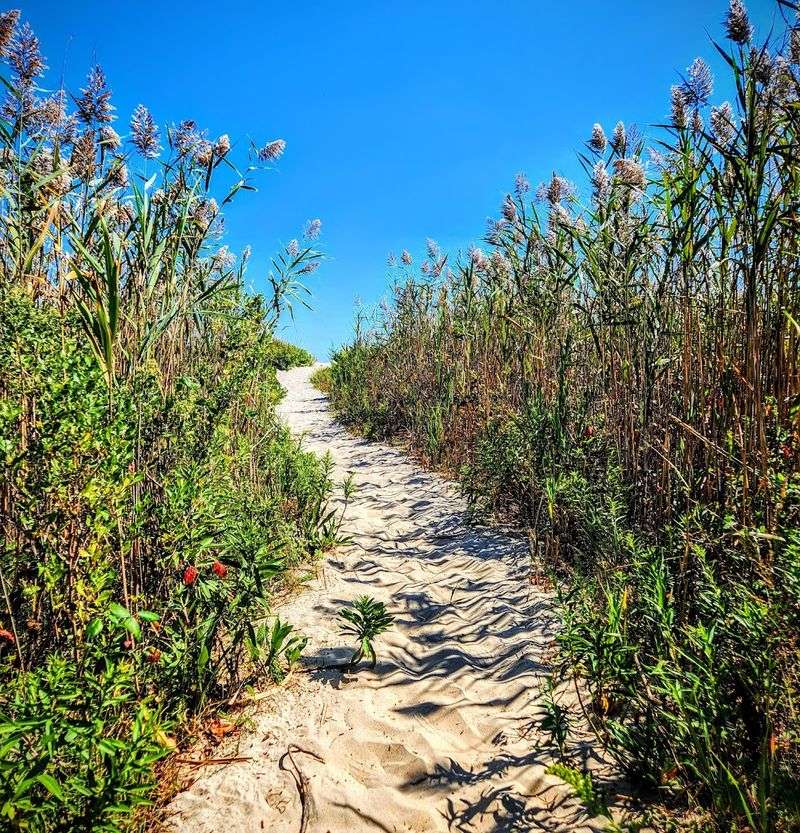
Three main trails run through the park, and none of them require any serious athletic ability to complete. The terrain is flat throughout, which makes the routes accessible to a wide range of people, from young kids to older adults who want a relaxed outing without any elevation to manage.
The Red Trail starts near the 59th Street parking area and runs for about a mile before connecting with the Yellow Trail. From that junction, hikers can head toward the beach or loop back toward the back bay side of the park.
The paths are sandy underfoot, and the shrubby vegetation on either side grows tall enough in places to create a natural corridor that feels surprisingly enclosed given how flat the land is.
Trail markers exist but are not always obvious, so taking a moment to check the map posted at the entrance before heading in saves some confusion later on the trail.
What the Wildlife Situation Actually Looks Like
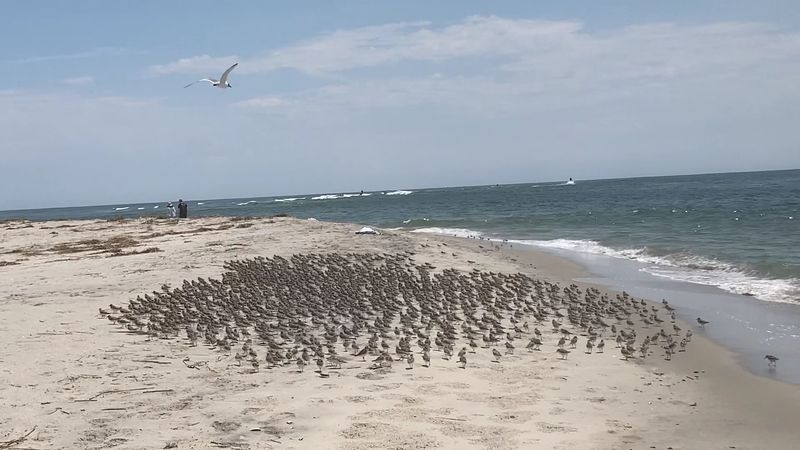
Wildlife at Corson’s Inlet is not something you have to search hard to find. Nesting birds are a regular presence in the warmer months, and the roped-off sections of beach and dune protect active breeding areas for several species that depend on undisturbed ground.
Along the shoreline at low tide, hermit crabs cluster in the shallows, and shorebirds pick their way along the waterline. The back bay side of the park draws different species than the ocean-facing beach, so walking both sides of the park on the same visit gives a more complete picture of the habitat.
Snakes are occasionally spotted on the trails, particularly in warmer weather. They are generally small and not aggressive, but staying on the marked path and watching where you step is good practice.
The park also has a notable tick population, including the Lone Star tick, which makes long pants and bug spray essential gear for any trail walk.
Fishing and Boating at the Inlet
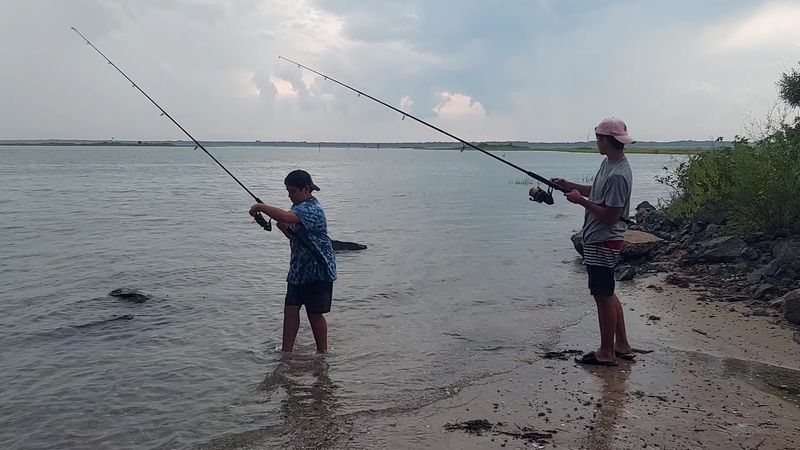
Fishing has long been one of the main draws at this park, and the inlet itself provides solid access to the kind of water that serious anglers prefer. The park includes a boat ramp that launches directly into the inlet, making it a practical put-in point for small boats and kayaks heading toward the back bay or open water.
The fishing reputation here is well established along the Jersey Shore. Anglers work the inlet edges and the back bay shallows throughout the season, and the lack of crowds compared to more popular fishing spots nearby makes the experience a noticeably quieter one.
There are no bait shops or rental operations on site, so anyone planning to fish or launch a boat should arrive fully prepared with their own gear and a valid New Jersey fishing license. The boat ramp is functional and free to use, which is a genuine advantage compared to many other access points along this stretch of coast.
The Beach at the End of the Trail
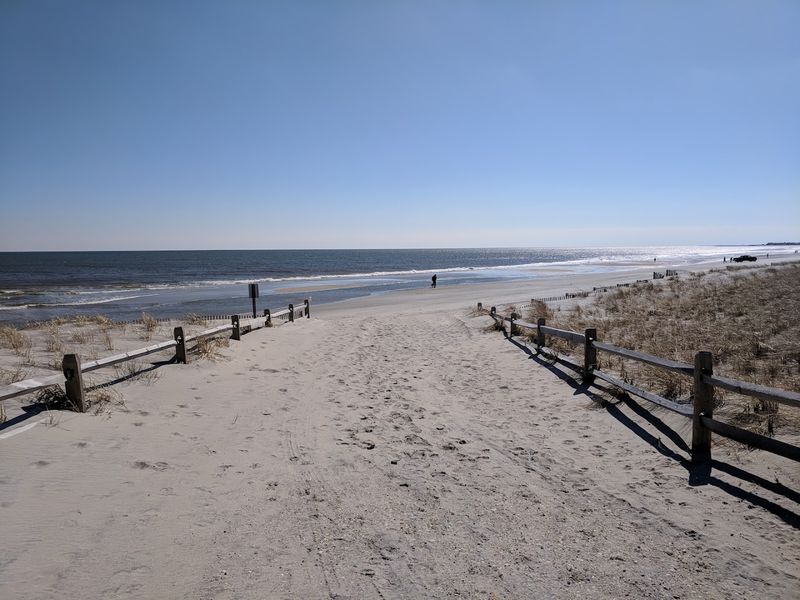
The trail does not just wander through the shrubland and stop. It delivers hikers to the edge of the Atlantic Ocean, and the contrast between the enclosed trail and the open beach is striking in the best possible way.
The beach here is wide, uncrowded, and extends in both directions with very few people on it even during peak summer weeks.
There are no lifeguards stationed on this beach, which means swimming is at your own risk. The water near the inlet has a drop-off that makes wading unpredictable, but further along the beach to the left, the conditions are calmer and more suitable for getting in the water.
Shell collecting is popular here, and the shoreline tends to hold more shells than the heavily trafficked beaches nearby simply because fewer people are picking through it.
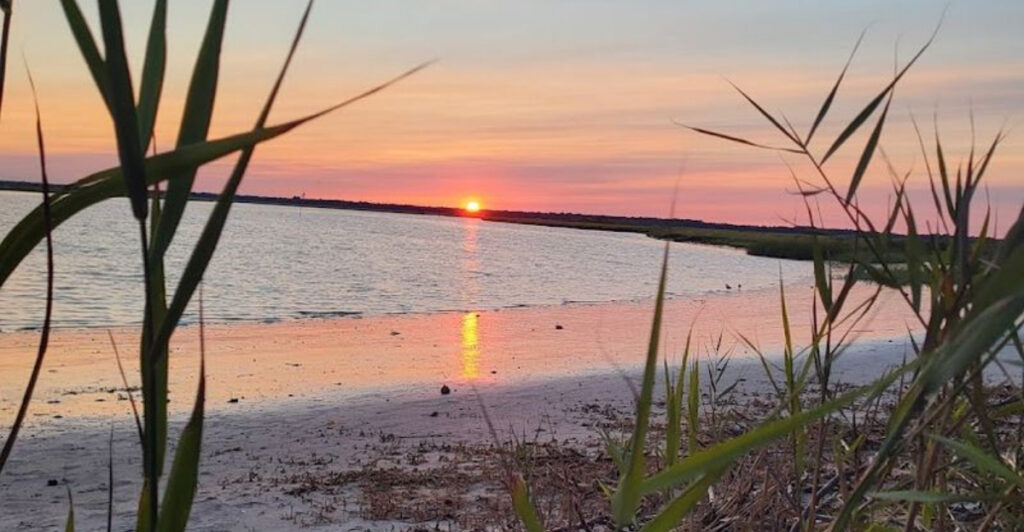
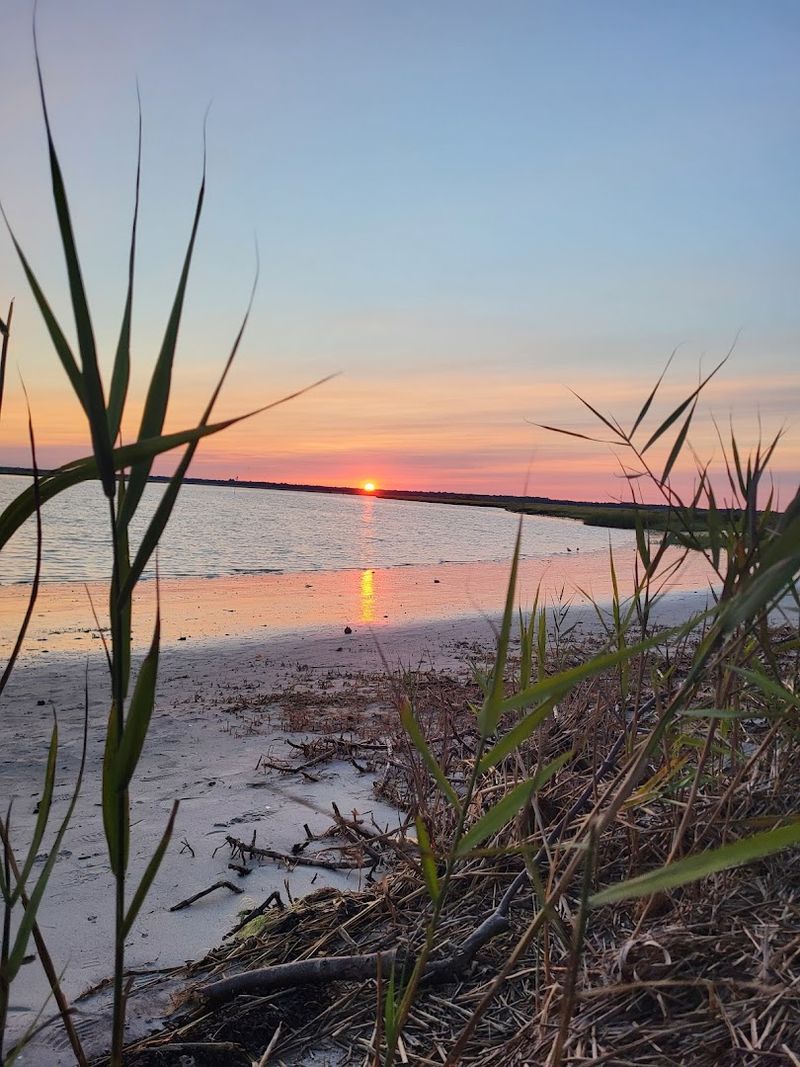
Sunsets viewed from this beach are particularly worth the trip, especially in the fall when the crowds thin and the light shifts earlier in the evening.
What to Know About Bugs and Poison Plants
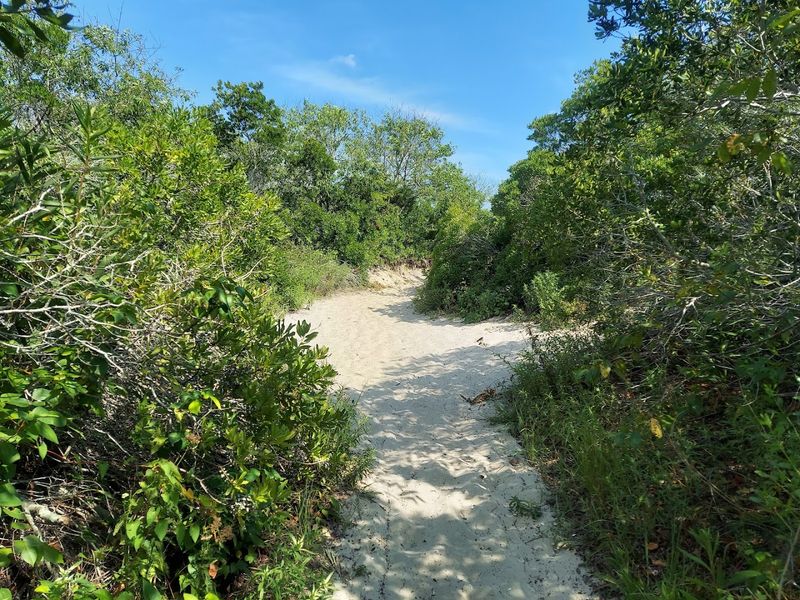
Honesty is the best policy when it comes to trail conditions at this park, and the honest truth is that the vegetation along the paths includes a substantial amount of poison ivy. It lines both sides of several sections of trail and grows thick enough that brushing against it accidentally is a real possibility if you are not paying attention.
Wearing long pants, closed-toe shoes, and high socks is the most effective way to avoid contact. Flip flops and shorts are a poor choice for the interior trails, even though the terrain itself is flat and easy.
Poison oak has also been reported in parts of the park, so the same precautions apply throughout.
Biting insects are another consistent presence, particularly deer flies, mosquitoes, and gnats during the warmer months. Bug spray with DEET is the most reliable defense.
Ticks are active from spring through fall, so checking yourself thoroughly after any trail walk is a necessary habit rather than an optional one.
Parking, Fees, and Practical Logistics
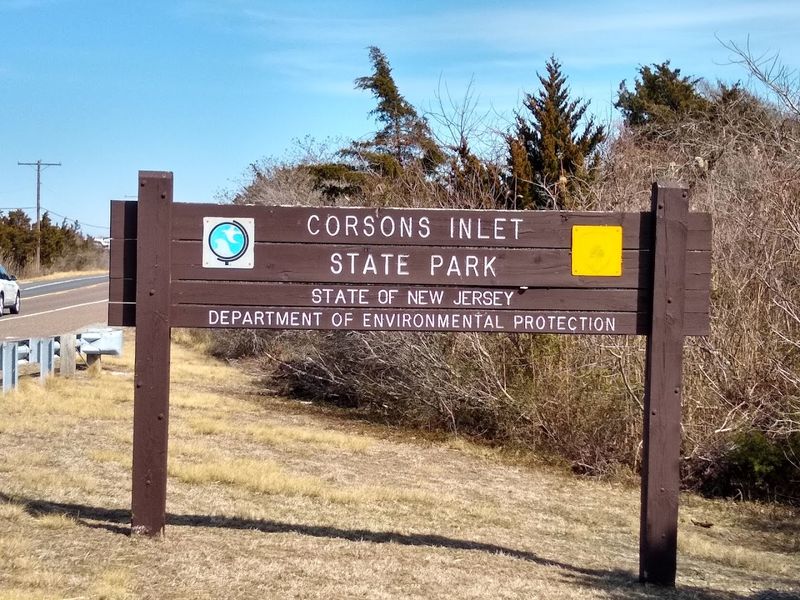
One of the most appealing practical details about this park is that it costs nothing to visit. There is no entrance fee, no parking meter in most spots, and no reservation system to navigate before showing up.
The two parking areas, one near 59th Street and one off Ocean Drive, are both free and generally manageable even on busy summer weekends.
The 59th Street lot is the more popular of the two and fills up faster on holiday weekends, but street parking nearby is usually available within a short walk. Bathrooms are located near the 59th Street entrance, which makes that side of the park the more convenient starting point for families with young children.
The park has no staffed entrance booth, so there is no one to ask questions of when you arrive. Checking the New Jersey State Park Service website before visiting is a good way to confirm hours and any seasonal closures, particularly for the boat ramp area.
How the Park Compares to Ocean City’s Main Beaches
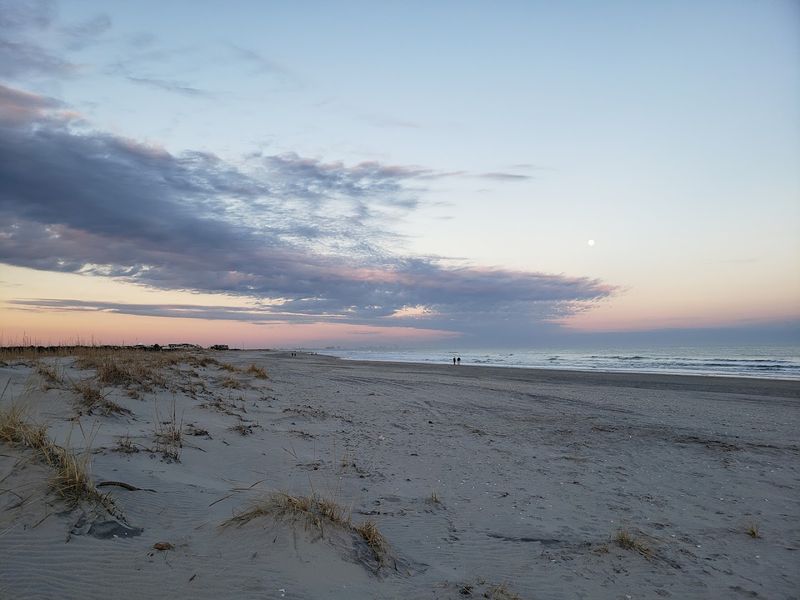
Ocean City, New Jersey is a well-known beach destination with a boardwalk, metered parking, lifeguards, and crowds that peak hard in July and August. The state park sits at the southern end of the same barrier island, and the difference in atmosphere between the two is significant even though the distance is short.
The main Ocean City beaches are managed, groomed, and staffed. Corson’s Inlet is none of those things.
The shoreline shifts naturally with the tides and storms, the dunes are not rebuilt by machines, and the only people you are likely to encounter are those who came specifically looking for a quieter stretch of coast.
The transition between the two is subtle enough that it is sometimes hard to tell exactly where the managed beach ends and the state park begins. But the shift in energy is noticeable almost immediately, and for many people who make the short walk south, that shift is the whole point of coming here.
Guided Nature Walks and Seasonal Programming
The park has historically offered guided nature walks on select days during the summer season, typically on Tuesday mornings and Wednesday evenings. These walks are led by naturalists and cover the ecology of the barrier island, including the plant communities, bird species, and coastal processes that shape the landscape.
The programming is worth looking into before a visit, but confirming availability in advance is strongly recommended. Groups have shown up on scheduled days only to find that no guide appeared, which is a frustrating outcome when you have planned your visit around it.
Calling the park or checking the state park website for current schedules is the most reliable approach.
Outside of organized programming, the park is self-guided, and the interpretive signs along the trails provide enough context to make a solo walk genuinely informative. The guided walks are a bonus when available, but the park holds its own as an educational experience even without them.
The Best Times of Year to Visit
Summer is the most popular time to visit, but it is not necessarily the best time depending on what you are looking for. July and August bring the most visitors, the most bugs, and the most heat.
The trails are still walkable and the beach is still beautiful, but the experience is noticeably different from a fall or early spring visit.
Fall is widely considered the sweet spot. The bugs thin out significantly after the first cool nights, the vegetation turns golden and rust-colored along the trail edges, and the sunsets arrive earlier in the evening when the light is at its most dramatic.
Parking is never an issue, and the beach is almost always empty.
Winter visits are possible and genuinely peaceful, though the wind off the water can be sharp and the trails feel more exposed without the full leaf cover. Spring brings migratory birds through the area and is an excellent time for birdwatching before the nesting season restrictions are fully in place.
Dogs, Families, and Who the Park Works Best For
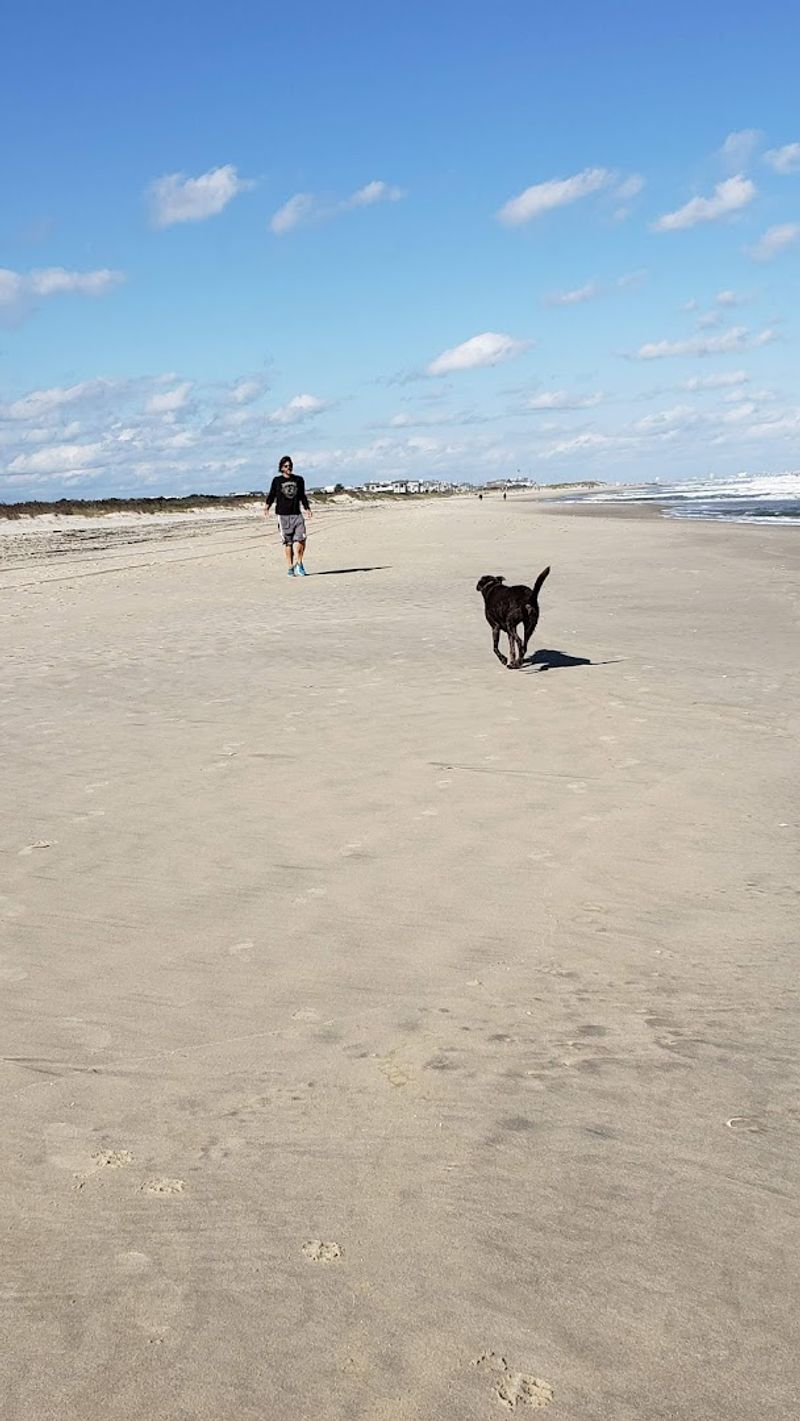
Dogs are welcome at Corson’s Inlet, and the open layout of the park gives them plenty of room to move around without the tight leash rules that apply on the main Ocean City beaches. Leashes are still required, but the overall experience is relaxed and well-suited to a dog walk, especially in the off-season when the park is nearly empty.
Families with young children find the flat terrain manageable, though the trail length and the poison ivy situation are worth factoring into plans. The beach at the end of the trail is a natural payoff for kids who make the walk, and the shell collecting and hermit crab spotting tend to keep younger visitors entertained longer than expected.
The park also works well for solo visitors, photographers, and anyone who simply wants a few hours away from noise and movement. It is not a destination built for crowds, and that is precisely what makes it work so well for the people who find it.
Sunset Watching as a Standalone Reason to Come
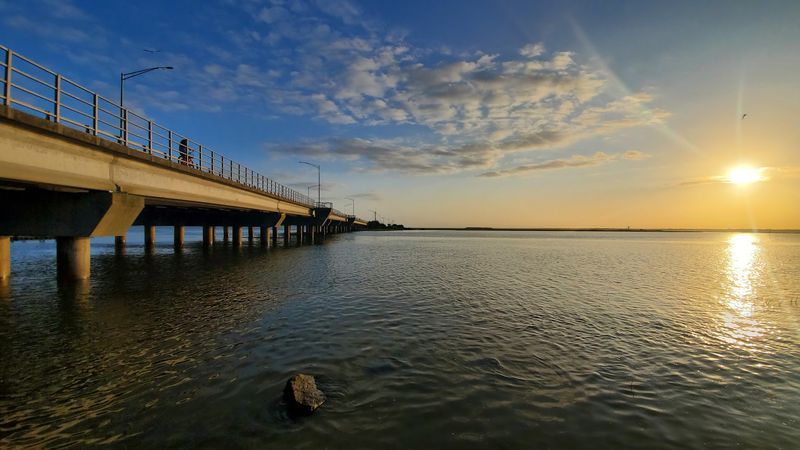
Sunsets at Corson’s Inlet have a reputation that extends well beyond the hiking and fishing crowd. The park sits at the edge of the inlet where the water opens up toward the bay, and the western sky at dusk has an unobstructed view that is hard to match anywhere else along this stretch of the Jersey Shore.
The best viewing spots are along the back bay side of the park and from the beach itself in the evening hours. Fall and winter sunsets tend to be the most vivid, with the lower sun angle producing longer-lasting color across the sky and water.
Summer sunsets are later and often hazy, but still worth the visit if you time your arrival right.
No equipment or preparation is needed beyond showing up before the sun drops. The park stays open through dusk, and the parking areas remain accessible in the evening, making a sunset trip a genuinely easy and low-effort way to end a day at the shore.
Why This Park Keeps Pulling People Back
There is a particular kind of place that does not try to compete with anything around it, and Corson’s Inlet is exactly that. It does not have the amenities of a developed beach park, the programming of a nature center, or the infrastructure of a major recreation destination.
What it has instead is space, quiet, and a coastline that still looks roughly the way it did before most of the shore was built up.
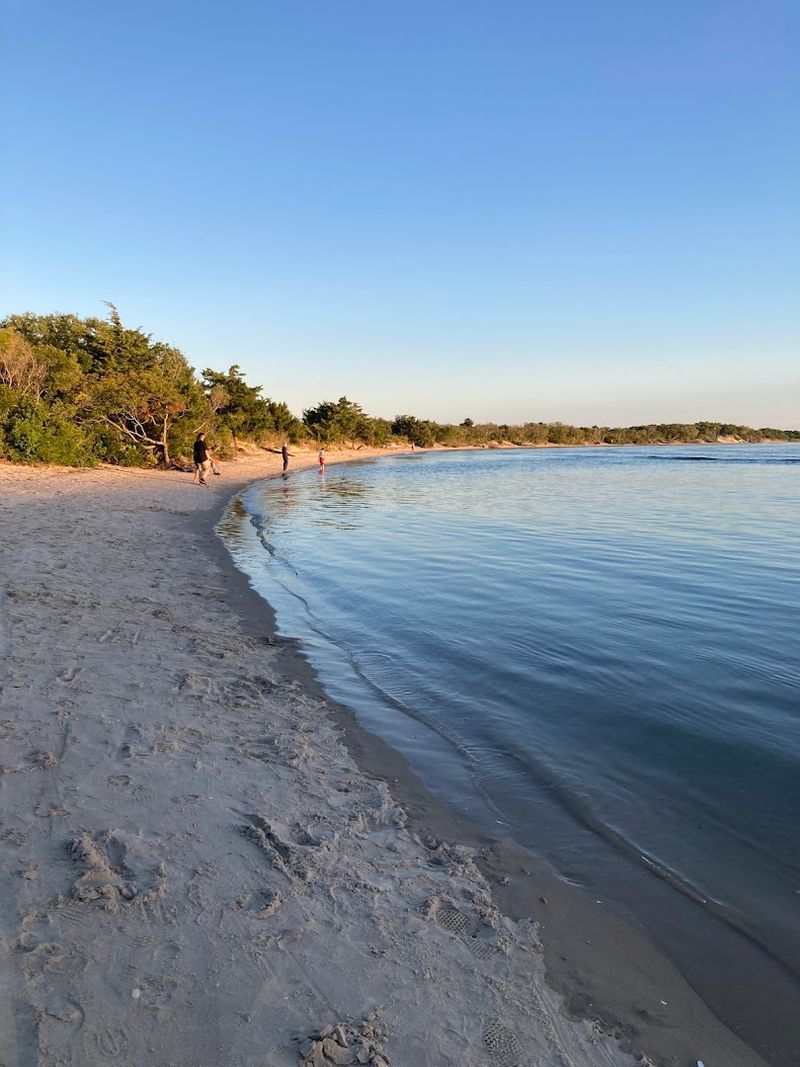
People come back here year after year not because the park has changed but because it has not. The trails are the same, the beach is still wide and empty, the birds are still nesting in the dunes, and the sunset still shows up reliably over the western water.
For anyone who has spent a summer afternoon fighting for parking on the main Ocean City strip, the short drive to the southern end of the island and the walk into the park feels less like a detour and more like the whole point of coming to the shore in the first place.
Share this story