Most people planning a big trip automatically think of Paris, Tokyo, or Rome. But some of the most jaw-dropping scenery on the planet is sitting right here in the United States, quietly waiting to be discovered.
From volcanic moonscapes in Idaho to sea caves in Wisconsin, America has landscapes that genuinely rival anything abroad. These 15 places prove that the most underrated destination in the world might just be your own backyard.
North Cascades National Park, Washington
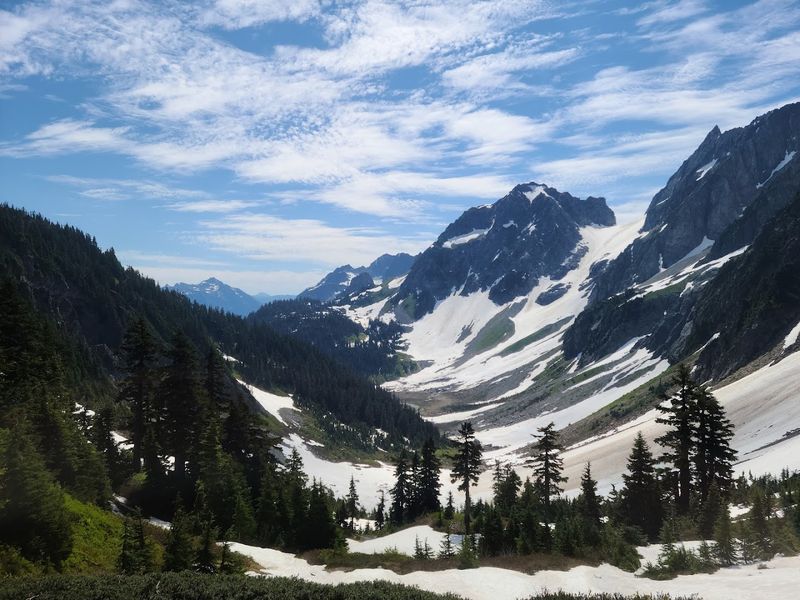
Fewer than three hours from Seattle, North Cascades National Park is the kind of place that makes you wonder why you ever bought a plane ticket. With over 300 glaciers packed into one park, it holds more glacial ice than any other area in the contiguous U.S. outside Alaska.
That alone should have people lining up.
The jagged peaks here look like they were designed by someone who had never heard the word “subtle.” Forested valleys stretch between ridgelines, and the trails range from easy lakeside strolls to serious alpine climbs. I once drove the North Cascades Highway in fall and nearly pulled over every five minutes just to stare.
Because the park lacks the fame of Yellowstone or the Grand Canyon, crowds stay thin and the wilderness feels genuinely wild. Go in late summer for the best trail access, and bring layers because mountain weather changes fast up here.
Dry Tortugas National Park, Florida
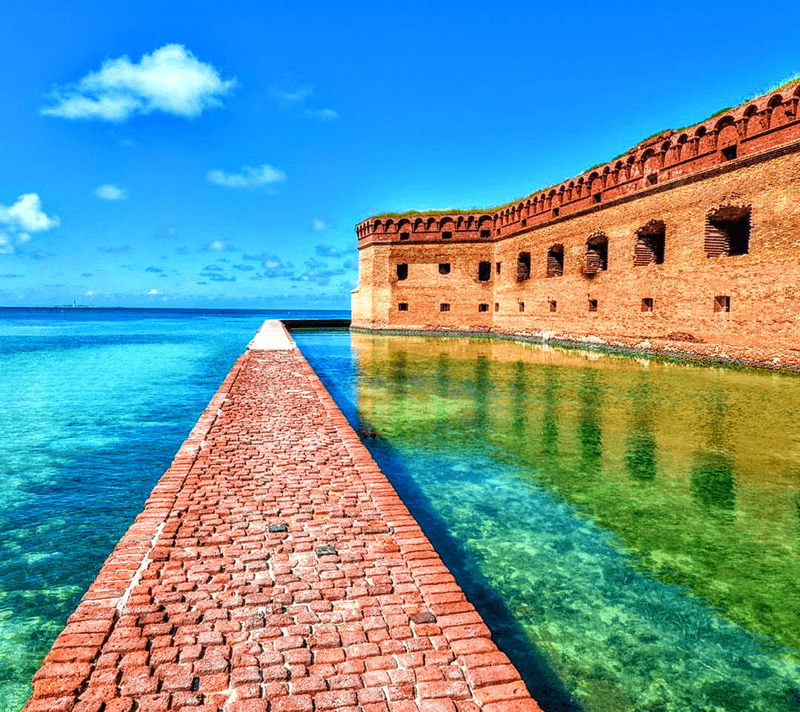
Getting to Dry Tortugas requires a boat or seaplane, which means most tourists never bother. That is their loss and your gain.
About 70 miles west of Key West sits one of the most surreal places in the entire national park system, and it rewards the effort spectacularly.
Fort Jefferson is the centerpiece, a massive 19th-century brick fortress rising straight out of the Gulf of Mexico like a fever dream. The water surrounding it is so clear you can watch fish swim beneath the ferry.
Snorkeling around the coral reefs here is genuinely world-class, no passport required.
Bird watchers should know this area sits along major migratory routes, so the spring season brings an almost ridiculous number of species through. Book the ferry from Key West early because spots fill up quickly.
Overnight camping on the island is also possible and absolutely worth the extra planning.
Baxter State Park and Mount Katahdin, Maine
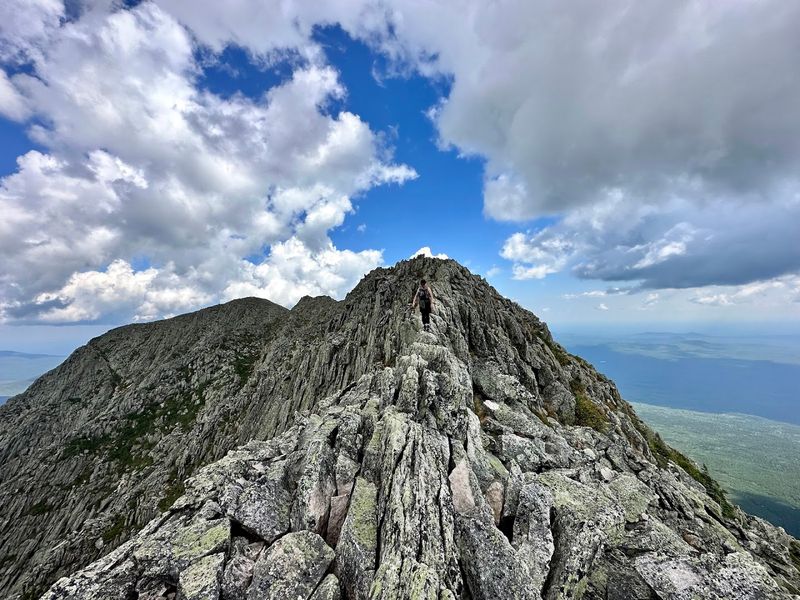
Mount Katahdin is famous among Appalachian Trail hikers as the northern terminus of the entire 2,190-mile route. But here is the thing most people do not realize: you do not have to walk from Georgia to appreciate it.
Baxter State Park surrounds Katahdin and protects some of the most beautifully raw wilderness in the entire Northeast.
The park operates under strict rules, including daily visitor caps and no cell service, which keeps it feeling genuinely remote. Trails up Katahdin are challenging and not for casual walkers, but the summit views over the surrounding forest are worth every single switchback.
Autumn here turns the whole park into a painter’s palette.
Unlike most national parks, Baxter is actually state-owned and was donated entirely by former Maine Governor Percival Baxter. That backstory gives the place a personal, almost sacred quality.
Reserve your parking permit well in advance because spots disappear fast, especially on weekends.
Great Sand Dunes National Park and Preserve, Colorado
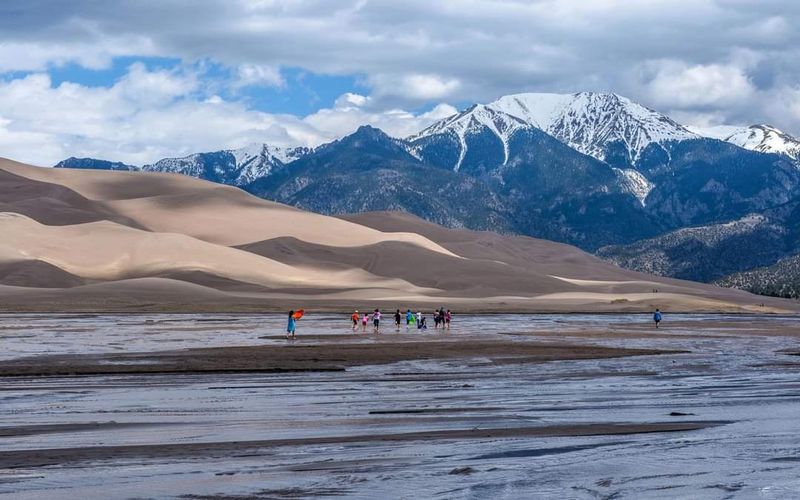
North America’s tallest sand dunes sitting at the base of a snow-capped mountain range is not something your brain expects to process. Yet here they are in southern Colorado, completely real and completely spectacular.
The dunes reach up to 750 feet high, and watching people sled down them on rented boards is genuinely entertaining.
What makes Great Sand Dunes even more remarkable is everything else packed into one park. Grasslands, wetlands, alpine lakes, tundra, and ancient forests all exist within the same boundaries.
The park also holds International Dark Sky Park status, meaning the night sky here is something special.
I visited on a weeknight in September and had entire dune fields nearly to myself. The Medano Creek that flows along the dune base in spring creates a wading spot unlike anything else in Colorado.
Bring sandboarding gear if you can, but honestly just walking barefoot up the dunes at sunset is its own reward.
Apostle Islands National Lakeshore, Wisconsin
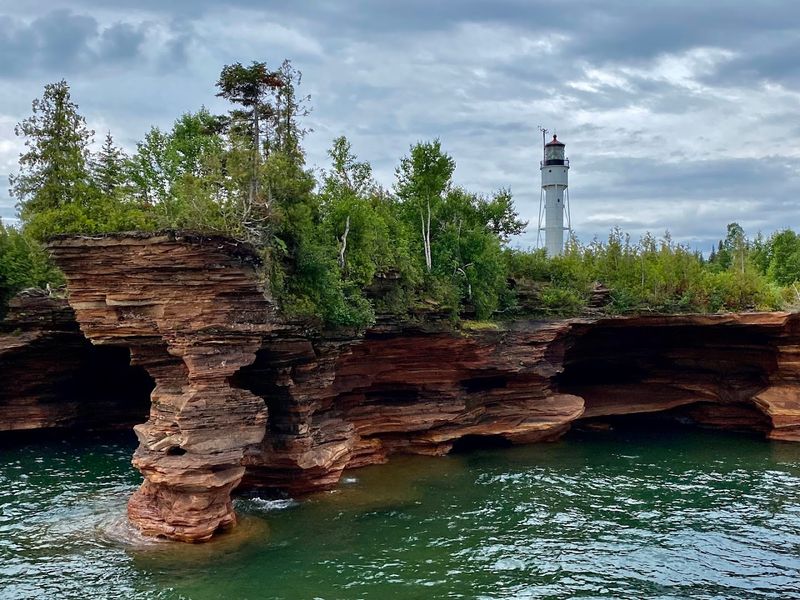
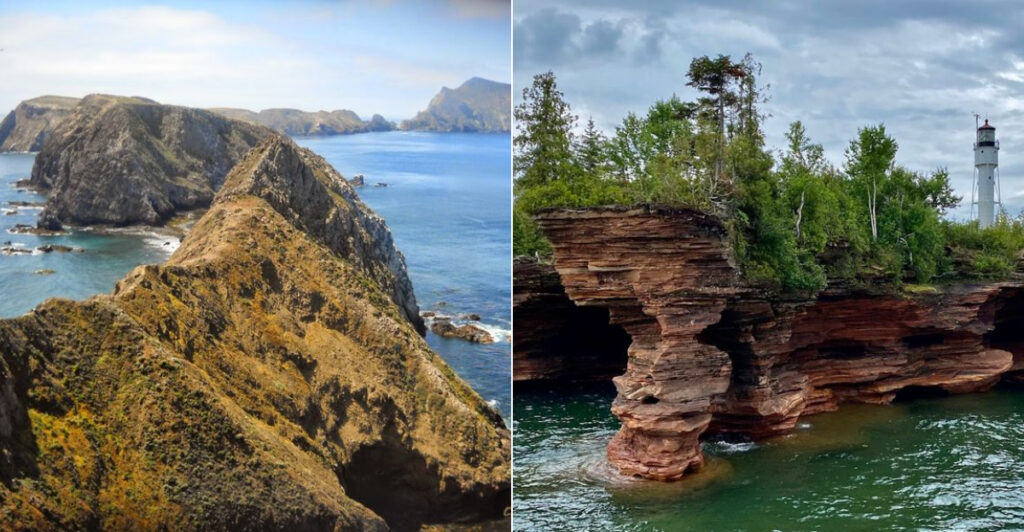
Wisconsin is not typically the first place people think of for coastal grandeur, but Apostle Islands will change that opinion fast. Stretching across 21 islands and a mainland shoreline along Lake Superior, this place has the kind of dramatic scenery usually reserved for somewhere with a much more glamorous reputation.
The sea caves are the main attraction, carved into red sandstone cliffs by centuries of wave action. In winter, when Lake Superior freezes, the caves fill with ice formations that look genuinely otherworldly.
Kayaking through the caves in summer is one of the best paddling experiences in the Midwest, full stop.
The area also has the highest concentration of lighthouses in the national park system, which gives it a nautical charm that feels straight out of a storybook. The town of Bayfield nearby is worth a visit too, especially during apple harvest season in fall.
This one consistently surprises people who show up expecting flat, boring Midwest scenery.
Chiricahua National Monument, Arizona
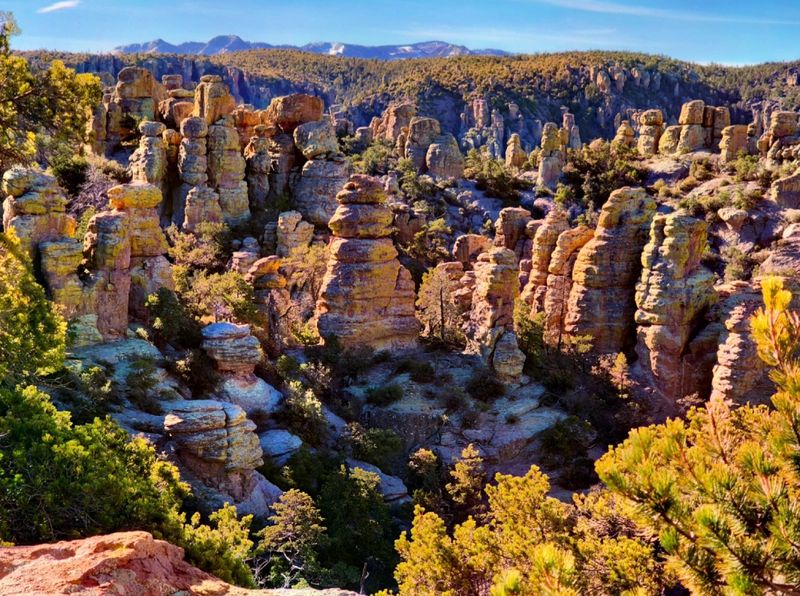
Called the “Wonderland of Rocks” by the National Park Service, Chiricahua is one of those places that makes you feel like you wandered onto a movie set. Rhyolite pinnacles, balanced boulders, and stacked rock columns fill the landscape in every direction.
It looks like someone left a giant game of Jenga unfinished millions of years ago.
The monument sits in the Chiricahua Mountains, a sky island range that bridges two deserts and creates a unique ecological mix. Wildlife here includes species you would not expect to find together, from coatimundis to white-tailed deer to rare bird species that draw serious birders from across the country.
The dark skies at Chiricahua are also exceptional, and the remoteness of the location keeps light pollution minimal. Most visitors drive straight to Kartchner Caverns or Tucson and skip this entirely, which means the trails here stay wonderfully quiet.
The Echo Canyon Loop is the must-do hike for first-timers visiting this underappreciated gem.
Black Canyon of the Gunnison National Park, Colorado
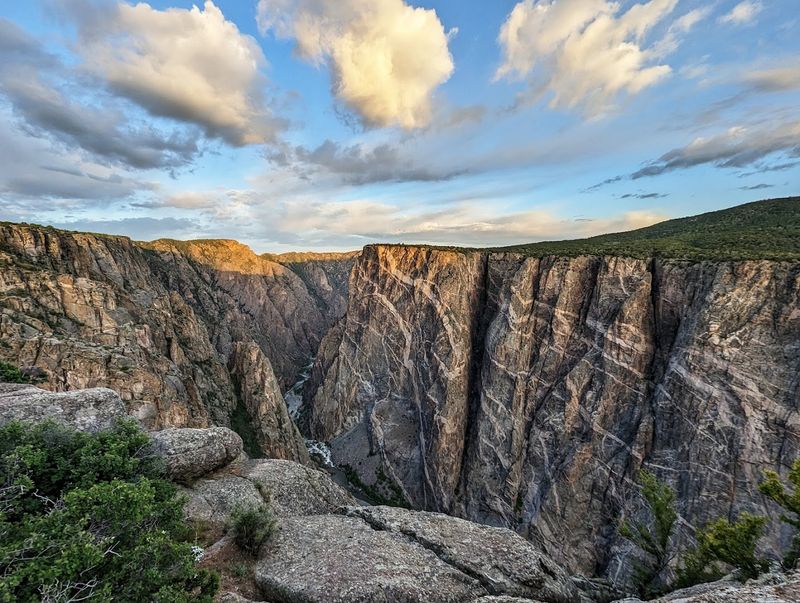
Black Canyon of the Gunnison is so deep and narrow that some sections receive less than 33 minutes of sunlight per day. That is not a typo.
The canyon walls plunge up to 2,722 feet and are made from some of the oldest rock in North America, Precambrian gneiss and schist that formed nearly two billion years ago.
The National Park Service describes it plainly as “deep, steep, and narrow,” which might be the most accurate understatement in the entire park system. The south rim drive offers overlooks that make your stomach drop in the best possible way.
Unlike the Grand Canyon, you can walk right up to the edge without a crowd pressing behind you.
Fishing in the Gunnison River below is world-class for those willing to hike the inner canyon routes, which are steep, unmarked, and absolutely not for everyone. But even just driving the rim road at sunset makes this park worth the detour from Montrose.
Colorado has two underrated canyon parks and this is the more dramatic one.
Great Basin National Park, Nevada
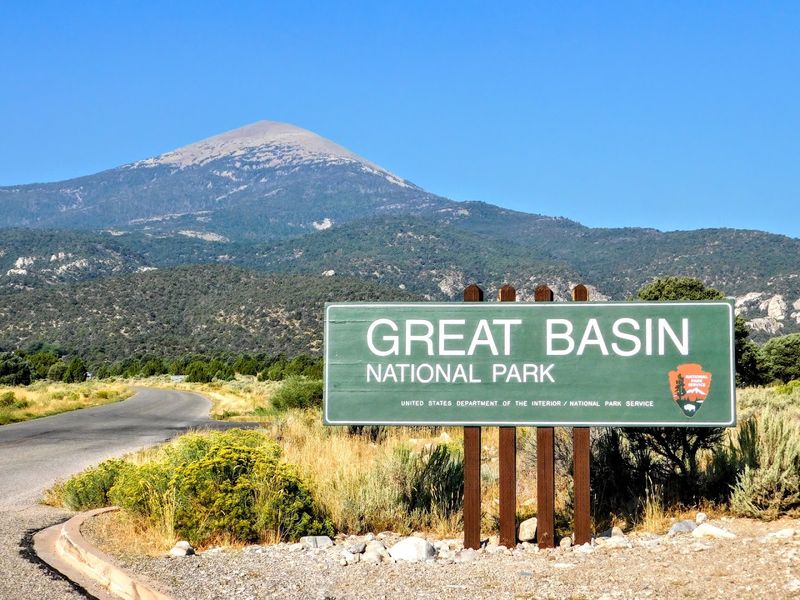
Nevada gets credit for Las Vegas and not much else, which is a genuine shame when Great Basin National Park exists in the same state. This park is a layered surprise: ancient bristlecone pines on the high ridges, Lehman Caves threading through the limestone below, and Wheeler Peak rising to nearly 13,000 feet above the desert floor.
The bristlecone pines here are among the oldest living organisms on Earth, with some individuals exceeding 4,000 years in age. Walking among them feels strangely humbling, like being in the presence of something that witnessed the entire history of human civilization.
The cave tours through Lehman Caves are genuinely impressive and run year-round.
Great Basin also ranks among the darkest skies in the lower 48 states, making it a serious destination for stargazers and astrophotographers. The park sits far from any major city, which means solitude is nearly guaranteed.
Visitor numbers here are a fraction of comparable national parks, and that is the best-kept secret in Nevada.
Voyageurs National Park, Minnesota
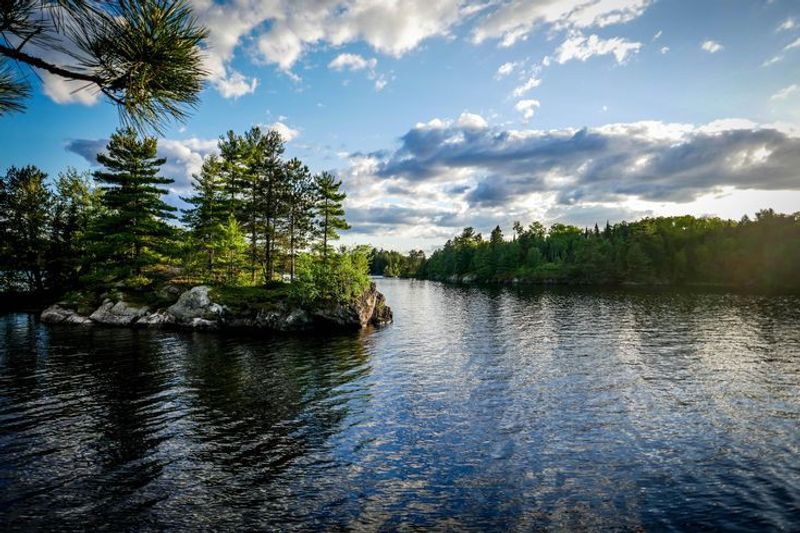
Voyageurs National Park is so water-dominated that you actually need a boat to reach most of it. Roads barely exist here, and that is the whole point.
The park spans four large interconnected lakes along the Canadian border in northern Minnesota, and exploring it by houseboat or kayak is unlike anything else in the national park system.
The aurora borealis is visible here on clear nights, which the National Park Service highlights as one of the park’s genuine draws. Sitting on a quiet lake at midnight watching the northern lights reflect off the water is the kind of experience that stays with you for years.
No Wi-Fi required, or available.
Fishing in Voyageurs is exceptional, with walleye, northern pike, and smallmouth bass all common catches. Bald eagles nest throughout the park and are almost impossible to miss on a full-day boat trip.
Winter transforms the frozen lakes into snowmobile and ice-fishing territory, making this a genuinely year-round destination most Americans have never considered.
Guadalupe Mountains National Park, Texas
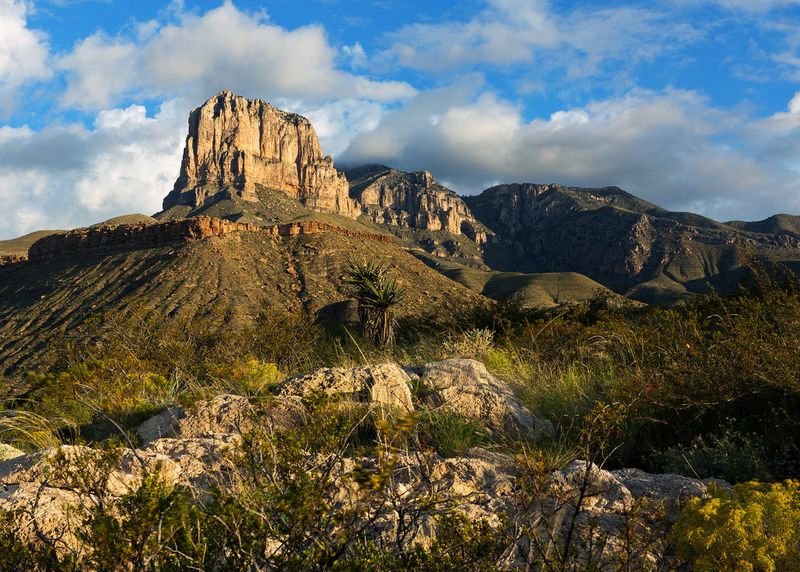
Texas has a reputation for being flat and featureless, and Guadalupe Mountains National Park exists entirely to disprove that. This park protects the world’s most extensive Permian fossil reef, a 265-million-year-old marine ecosystem now exposed as a mountain range rising 8,000 feet above the Chihuahuan Desert.
Geology does not get more dramatic than that.
The four highest peaks in Texas are all located within the park, which surprises most people who assumed that title belonged somewhere else. Guadalupe Peak itself is a solid day hike with panoramic views stretching into New Mexico.
The fall foliage in McKittrick Canyon rivals anything in New England and gets a fraction of the attention.
Visitor numbers here are remarkably low for a national park with this much to offer. On my visit, I counted more mule deer than people on the trail.
The lack of crowds makes every hike feel like a private discovery. Pack water, pack extra water, and then pack a little more because the desert elevation combination is deceptively demanding.
Caddo Lake, Texas
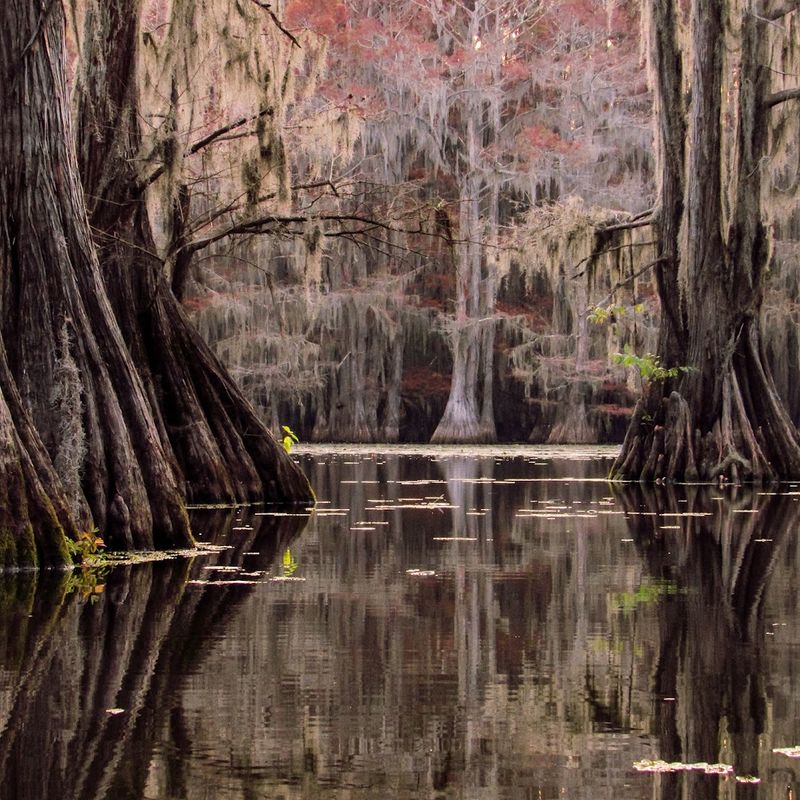
Caddo Lake does not look like Texas. It looks like Louisiana got lost and ended up in the wrong state, which is entirely a compliment.
Bald cypress trees draped in Spanish moss line the bayou channels of Big Cypress Bayou, creating a green, moody atmosphere that feels more like a Southern Gothic novel than a state park.
It is actually the only naturally formed lake in Texas, and it has a rich history tied to the Caddo Nation who inhabited the region for centuries. Paddling through the narrow channels by canoe is the best way to experience the place, especially in early morning when the mist sits low over the water.
Alligators are residents here, which Texas Parks and Wildlife cheerfully mentions alongside the fishing and cabin rental options. Spotting one sunning on a log adds a certain thrill to the paddle.
The park also attracts birders, photographers, and anyone who wants to feel genuinely far from civilization without actually driving very far at all.
Craters of the Moon National Monument and Preserve, Idaho
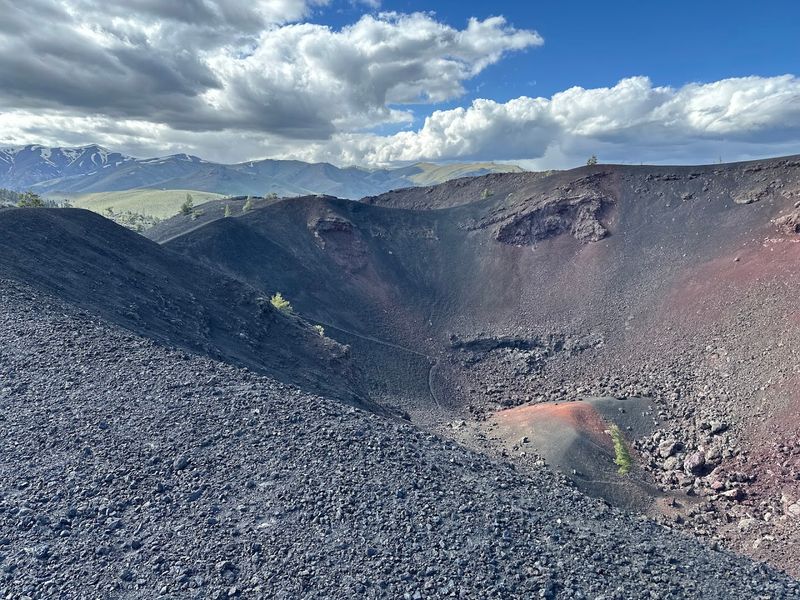
Craters of the Moon looks exactly like its name, and that is not an exaggeration. NASA actually used this landscape in central Idaho to train Apollo astronauts, which tells you everything you need to know about how alien it feels.
The monument covers a massive ocean of hardened lava flows, cinder cones, and volcanic formations stretching across nearly 750,000 acres.
The Great Rift beneath the monument is a 52-mile crack in the Earth’s crust, one of the longest exposed rifts in the contiguous United States. Lava tubes within the park are open for exploration, and crawling through a cave carved entirely by moving lava is exactly as cool as it sounds.
The sagebrush and wildflowers that push up through the black rock add a strange, stubborn beauty to the whole scene. Spring brings surprising bursts of color against the dark lava.
It is one of the most visually memorable landscapes in the country, and it sits right off a major highway in Idaho, waiting for people to stop and actually look.
Lassen Volcanic National Park, California
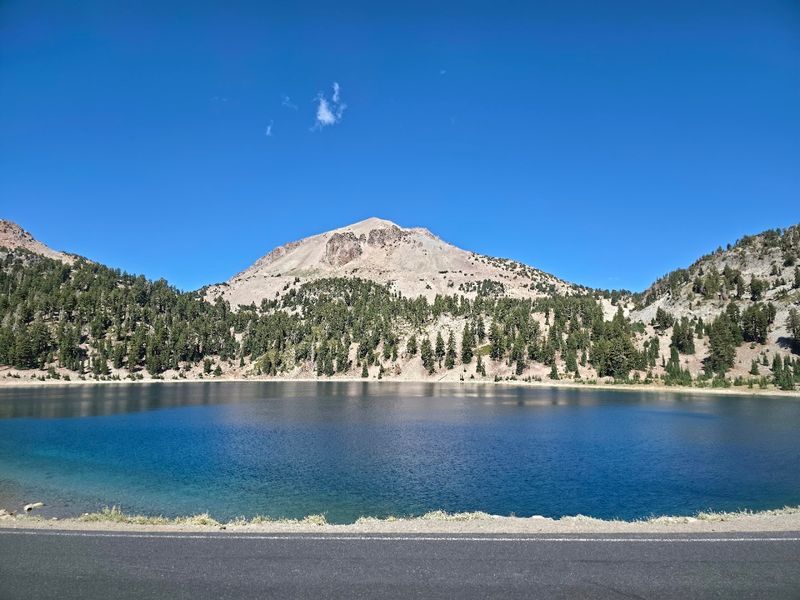
California has Yosemite, so Lassen Volcanic gets overlooked. That is a mistake.
While everyone else is jostling for a parking spot in the Valley, Lassen offers roaring fumaroles, bubbling mud pots, boiling pools, and steaming ground with a fraction of the crowds. The hydrothermal features here rival Yellowstone in visual drama.
USGS confirms that all four major volcano types found on Earth are represented within Lassen’s boundaries, which is a geological achievement no other park in the country can claim. Lassen Peak itself erupted as recently as 1915, making this an active volcanic landscape, not just a scenic one.
The Bumpass Hell hydrothermal area is the most accessible and most spectacular stop.
Hiking here feels genuinely varied because the terrain changes so dramatically from one trail to the next. Alpine lakes, volcanic peaks, wildflower meadows, and steaming vents all coexist within the same park.
Visit in late summer when the snow has cleared the higher trails but the summer crowds have already thinned. Northern California rarely gets this interesting this fast.
Theodore Roosevelt National Park, North Dakota
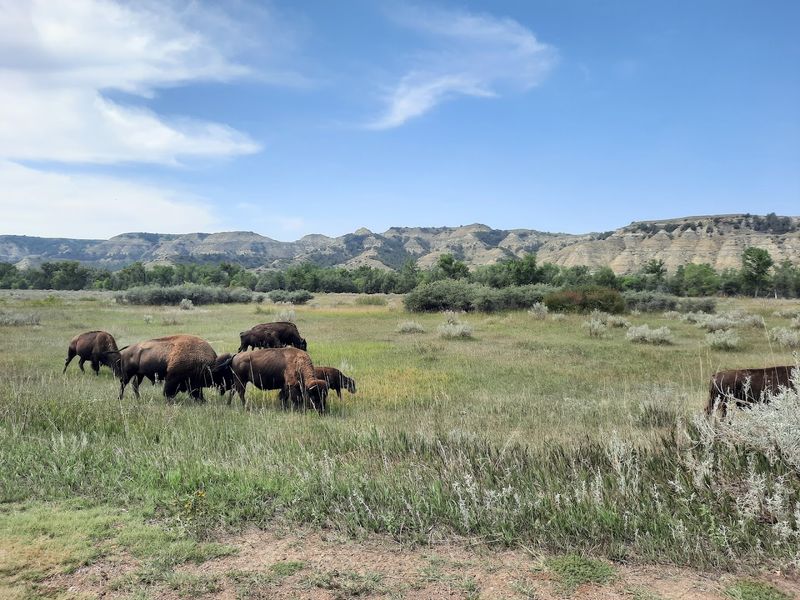
Theodore Roosevelt National Park is named after a president who once said the North Dakota badlands were the romance of his life, and after visiting, it is easy to understand why. The landscape here is sculpted and strange, with colorful eroded buttes, twisted juniper trees, and open grasslands that stretch to every horizon.
It looks like the American West as it was meant to be seen.
Bison roam freely throughout the park, and encounters on the road are common and unhurried. Prairie dog towns dot the valley floors, and wild horses run through the southern unit with a casual freedom that feels almost cinematic.
The scenic drives through both the north and south units are among the best in any national park.
North Dakota does not exactly top travel bucket lists, but that works entirely in this park’s favor. Campgrounds here rarely fill to capacity, trails stay quiet, and the big-sky silence is something genuinely hard to find elsewhere.
Roosevelt himself described the badlands as “so fantastically broken in form and so bizarre in coloring” that he could not stop returning.
Channel Islands National Park, California
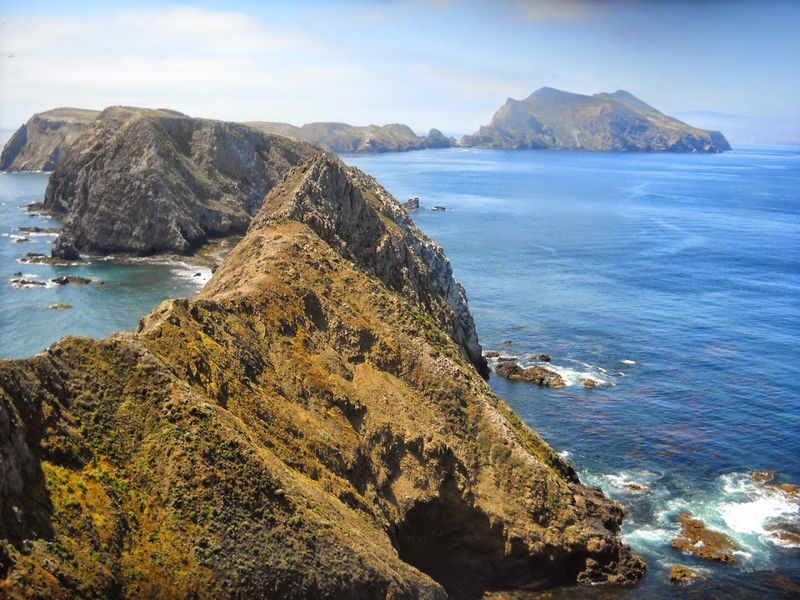
Just off the Southern California coast, Channel Islands National Park is so close to Los Angeles that you can see the skyline from the ferry, yet it feels like a completely different world. Five islands make up the park, and their long isolation from the mainland created ecosystems found nowhere else on Earth.
The island fox, a species that exists only here, is one of the most charming wildlife encounters in any American park.
The kelp forests surrounding the islands are among the most productive marine environments on the Pacific Coast, making this a top destination for snorkeling, diving, and kayaking. Sea caves on Santa Cruz Island are accessible by kayak and genuinely spectacular.
The wildlife viewing above water is equally impressive, with seals, sea lions, and migrating whales all common sightings.
Most Southern California residents have never made the trip, which keeps the islands refreshingly uncrowded. The ferry runs from Ventura and Oxnard year-round.
Pack everything you need because there are no stores, no restaurants, and absolutely no cell signal, which is honestly the best part of the whole experience.
Share this story