Some places are famous for a reason, and no amount of tourist traffic can change that. Sure, you might have to elbow past a few selfie sticks or wait in a line that snakes around the block, but the payoff is almost always worth it.
I’ve stood in crowds at some of the world’s most visited spots and walked away speechless every single time. These 20 destinations prove that popularity isn’t just hype.
The Louvre (Paris, France)
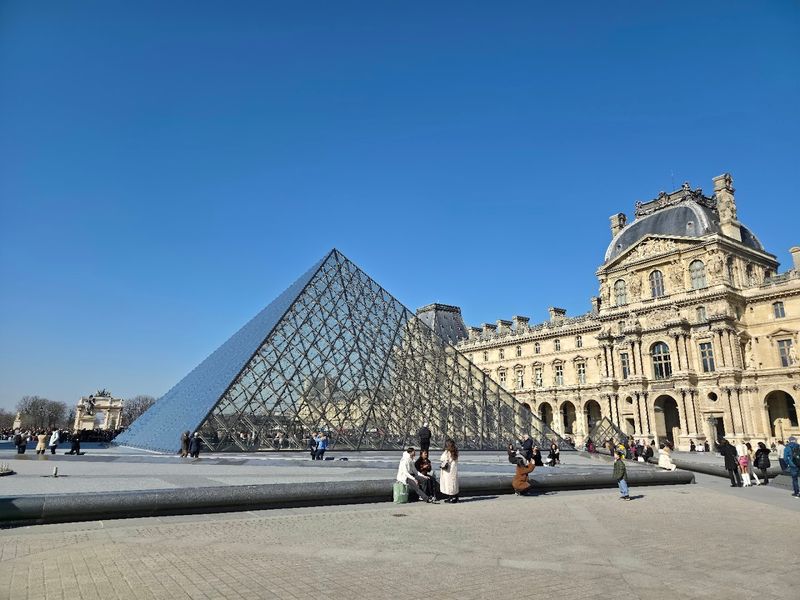
The Louvre is the world’s largest art museum, and yes, it will humble you. With over 35,000 works on display across a historic royal palace, one visit barely scratches the surface.
Most people sprint straight to the Mona Lisa and call it a day.
Here’s a better plan: see the Mona Lisa first thing when doors open, then wander wherever your feet take you. The Egyptian antiquities wing and the Galerie d’Apollon are staggeringly beautiful and far less crowded.
Some rooms feel like you have the whole Renaissance to yourself.
Book tickets online in advance to skip the outdoor queue. The museum is so large that even on a packed day, you can find quiet corners that feel like a private viewing.
Wear comfortable shoes because the marble floors are gorgeous but completely unforgiving after three hours of walking.
Vatican City (Vatican City)
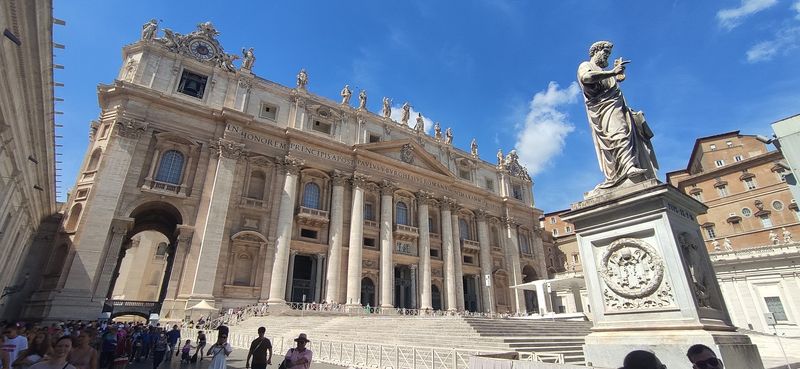
Vatican City is the world’s smallest country at just 44 hectares, yet it somehow contains some of the most jaw-dropping art and architecture ever created. The Sistine Chapel ceiling alone could keep you staring for hours.
Michelangelo painted it lying on scaffolding for four years, which makes your sore neck feel a little less dramatic.
St. Peter’s Basilica is free to enter, and climbing the dome gives you one of Rome’s best panoramic views. The Vatican Museums require a ticket, and booking online well in advance is non-negotiable during peak season.
Lines without pre-booking can stretch to three hours in summer.
Dress code is strictly enforced, so cover your shoulders and knees before arriving. Early morning entry to the museums is the quietest time.
The Gallery of Maps corridor, often overlooked by visitors rushing to the Sistine Chapel, is stunningly detailed and worth every slow step through it.
Venice and Its Lagoon (Venice, Italy)
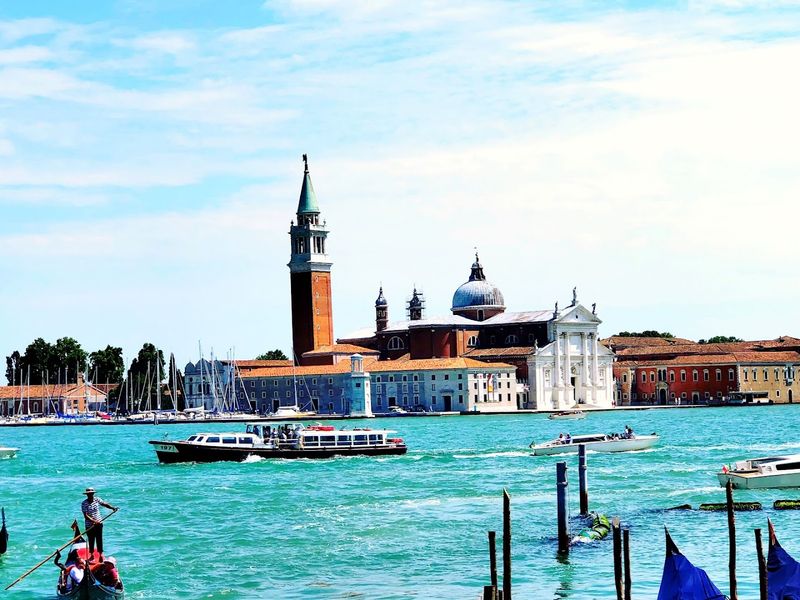
Venice is built across 118 small islands connected by over 400 bridges, and somehow it all stays afloat. Literally.
The city sits on wooden piles driven into the lagoon floor, which is an engineering decision that has worked out surprisingly well for 1,500 years.
The crowds in peak summer are genuinely intense around San Marco Square and the Rialto Bridge. But step two streets back from the main tourist drag and you’ll find quiet canals, local bakeries, and cats napping in doorways.
That Venice is worth hunting for.
Early morning is the move. Before 8am, the alleys are nearly empty and the light on the water is stunning.
A water bus pass is far more affordable than gondola rides for getting around. If you can visit in November or February, the atmosphere is moody, the crowds are thin, and the prices drop dramatically compared to summer.
Eiffel Tower (Paris, France)
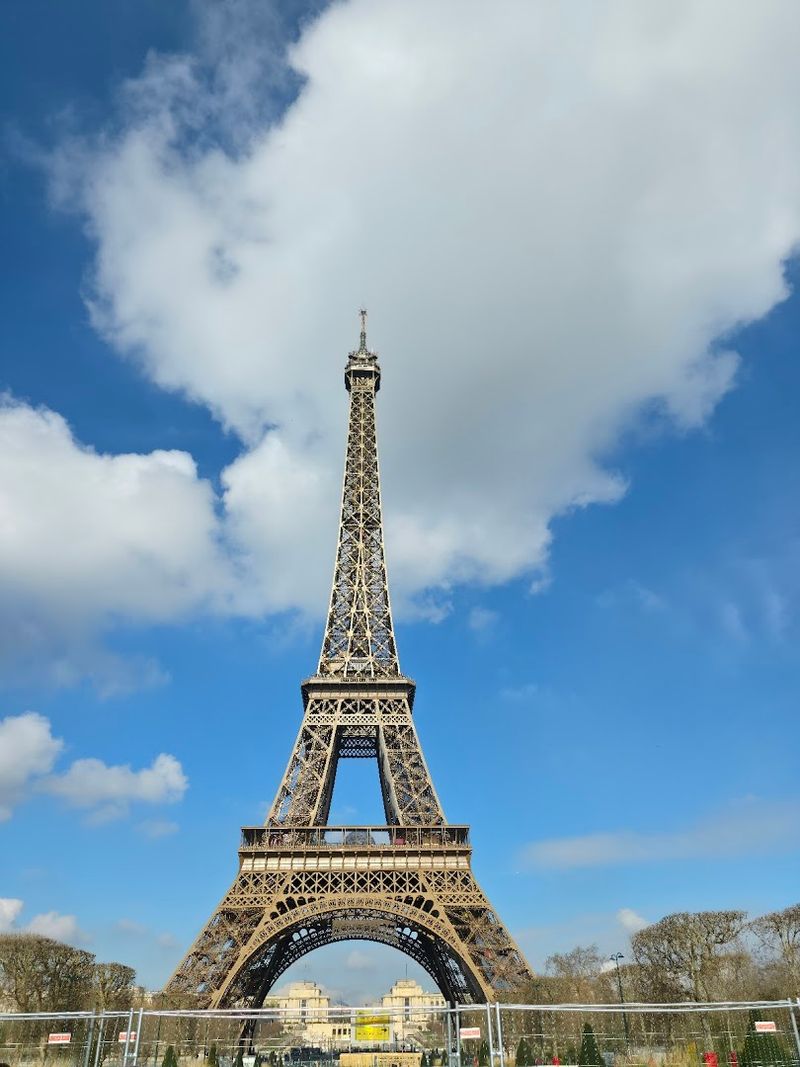
Built for the 1889 World’s Fair, the Eiffel Tower was actually meant to be torn down after 20 years. Lucky for us, someone changed their mind.
Up close, the sheer scale of this iron giant hits differently than any photo can prepare you for.
I remember craning my neck upward and genuinely laughing at how massive it was. The top-floor view over Paris is the kind of payoff that makes every step of the queue worthwhile.
Go at dusk when the city turns golden below you.
Skip the elevator if you’re feeling bold and take the stairs to the second floor. It costs less, and you’ll feel weirdly accomplished.
The light show after dark, when the tower sparkles for five minutes every hour, is pure magic and completely free to watch from the Champ de Mars below.
The Colosseum (Rome, Italy)
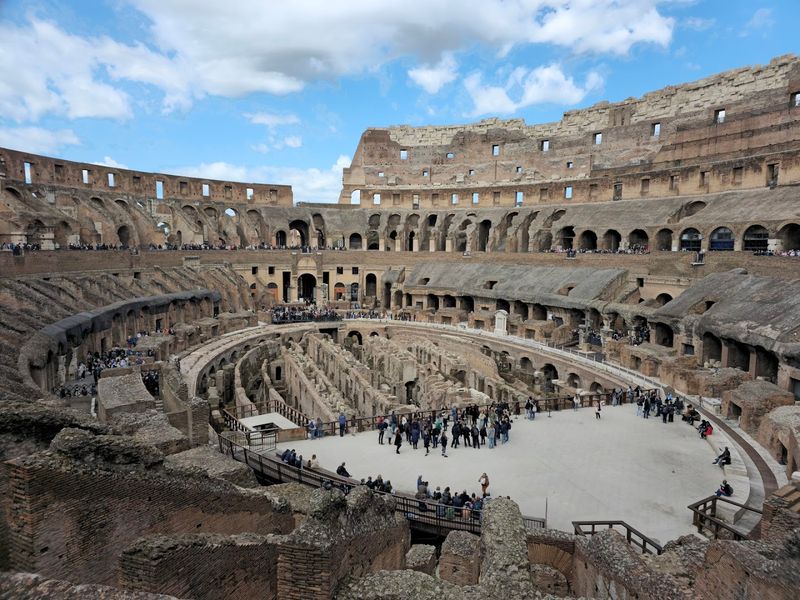
Standing outside the Colosseum for the first time, I genuinely stopped walking mid-sentence. Nothing prepares you for seeing 2,000-year-old architecture just sitting there in the middle of a modern city.
It’s the ultimate “how is this still standing” moment.
Inside, the scale becomes even more staggering. The arena floor, the underground passages, the tiered seating that once held 50,000 Romans roaring at gladiators, it all adds up to a full-body history lesson.
Combine your ticket with the Roman Forum and Palatine Hill next door for maximum ancient-Rome overload.
Book timed entry tickets well ahead, especially in summer. Early morning slots are the sweet spot for smaller crowds and better light for photos.
A guided tour is genuinely worth the extra cost here because the stories behind the stones turn the whole experience from impressive to absolutely unforgettable.
Acropolis of Athens (Athens, Greece)
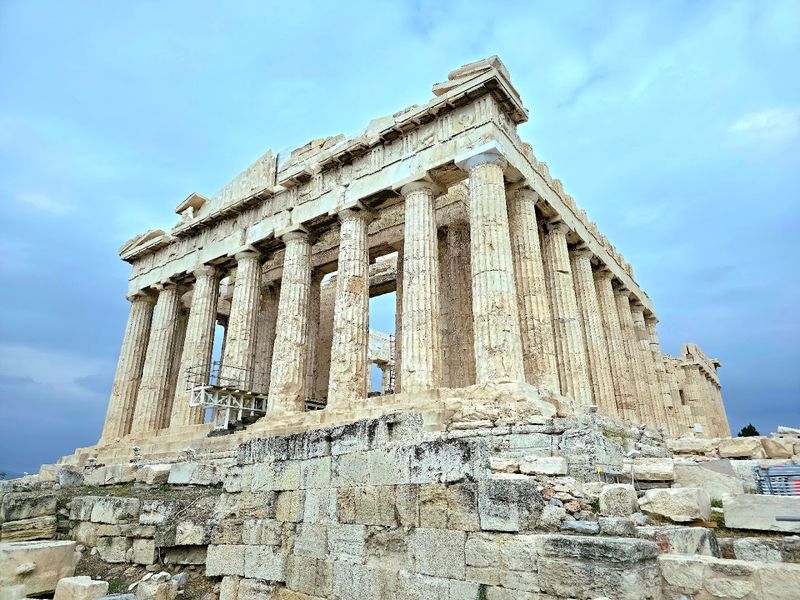
The Acropolis has been sitting on its limestone hill above Athens for over 2,500 years, and it still manages to look cooler than most things built last Tuesday. The Parthenon, dedicated to Athena, is the centrepiece, but the whole hilltop complex rewards a slow walk around its edges.
The views over Athens from the top are spectacular, especially at sunset when the city lights begin to flicker below. The climb takes about 15 minutes and involves uneven ancient stone, so proper shoes are a must.
Flip-flops on those marble paths are a one-way ticket to a twisted ankle.
Buy a combined ticket that covers multiple Athenian archaeological sites for serious value. Visit in the early morning to beat both the crowds and the summer heat, which gets brutal by midday.
The Acropolis Museum at the base of the hill is world-class and pairs perfectly with the hilltop visit.
Sagrada Familia (Barcelona, Spain)
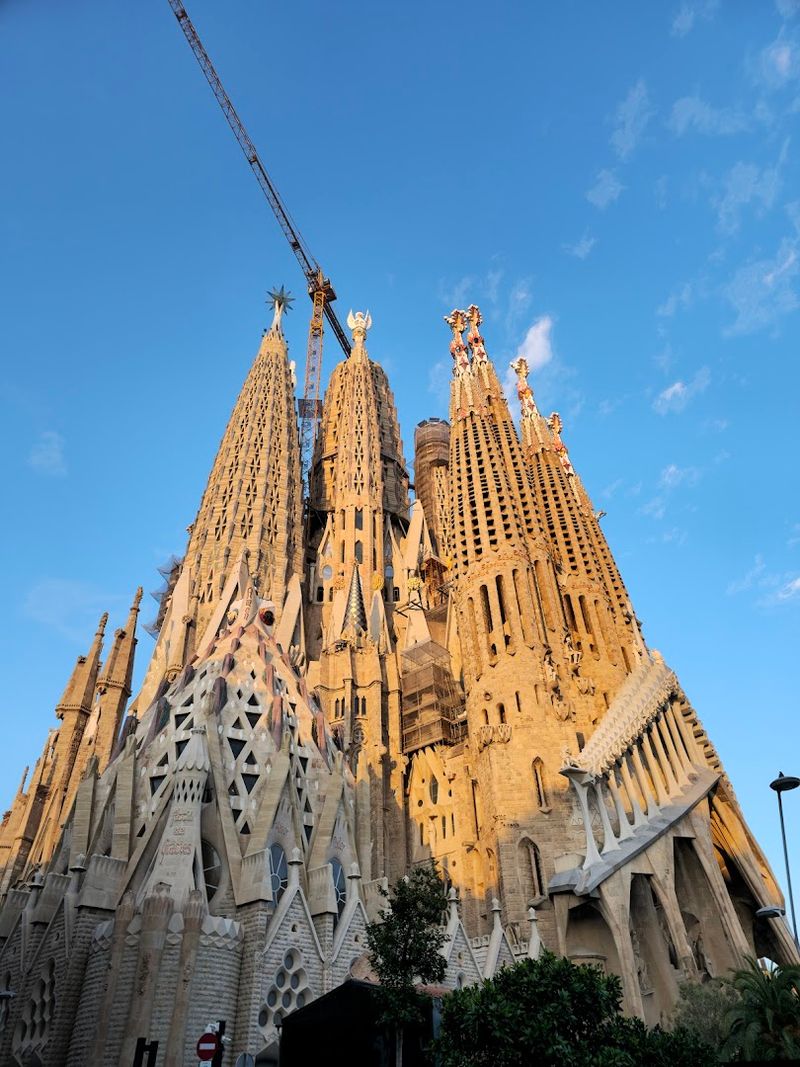
Antoni Gaudi started designing the Sagrada Familia in 1883 and it still isn’t finished. That’s not a complaint, that’s a fact that makes the whole project even more fascinating.
The ongoing construction is part of the experience, watching the world’s most ambitious cathedral slowly become itself.
The interior is unlike any church you’ve ever been in. Stone columns branch upward like a forest canopy, and the stained glass floods everything in shifting color.
It genuinely looks like a living thing. UNESCO recognized the Works of Antoni Gaudi, and you’ll understand exactly why the second you step inside.
Book tickets weeks in advance during summer because they sell out fast. Tower access costs extra but is absolutely worth it for the views over Barcelona’s rooftops.
The Nativity facade and the Passion facade tell completely different visual stories, so take time to study both before heading inside the main building.
Santorini Caldera Views (Santorini, Greece)
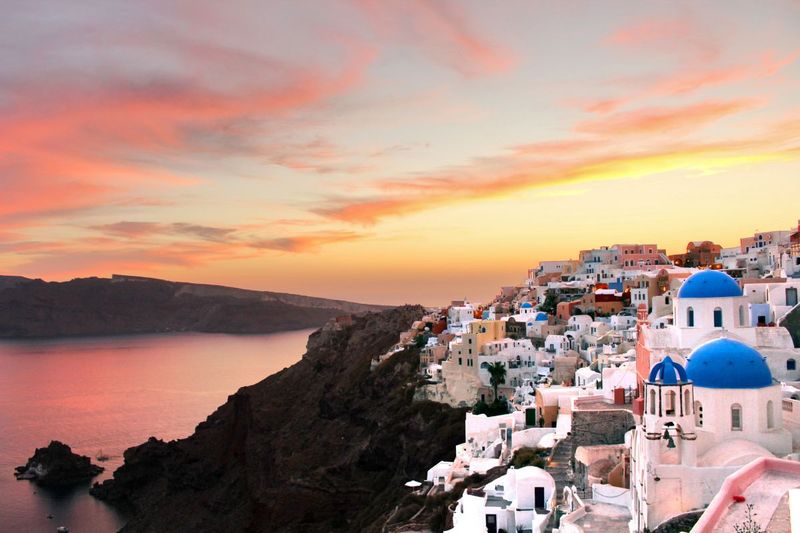
Those famous cliffside white buildings aren’t just pretty for Instagram. They’re perched on the rim of one of the largest volcanic calderas in the world, shaped by the Minoan eruption roughly 3,600 years ago.
The drama you feel looking out at that water is geological, not just aesthetic.
Oia village gets the most attention for its sunsets, and the crowds there in the evening are genuinely intense. My tip: watch the sunset from Imerovigli instead, which sits higher on the caldera and draws far fewer people for equally stunning views.
You’ll actually be able to enjoy the moment.
Fira, the island’s capital, has a cable car down to the old port for easy access to boat tours of the caldera. Visiting in May or October means warm weather, calmer seas, and noticeably smaller crowds than peak July and August.
The volcanic beach at Perissa, with its black sand, is a genuinely cool bonus stop.
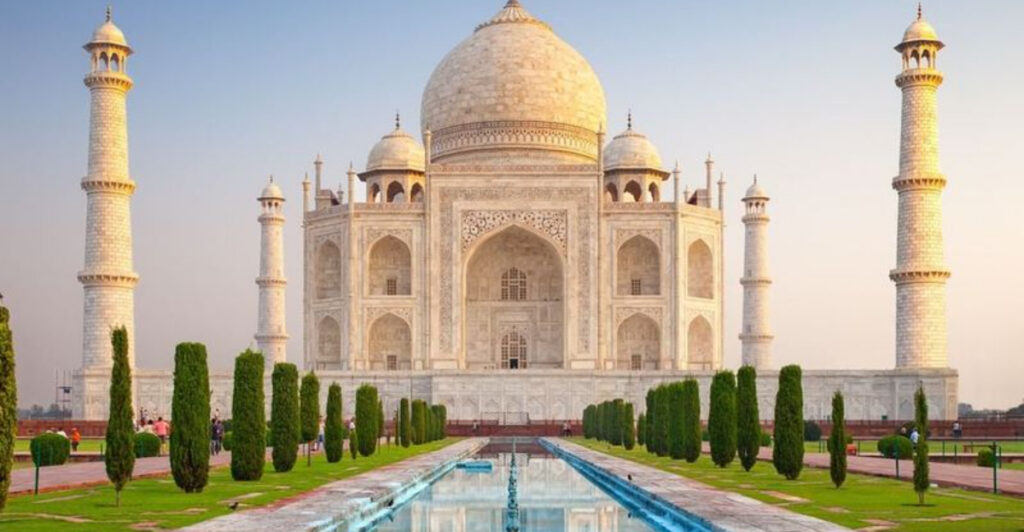
Taj Mahal (Agra, India)
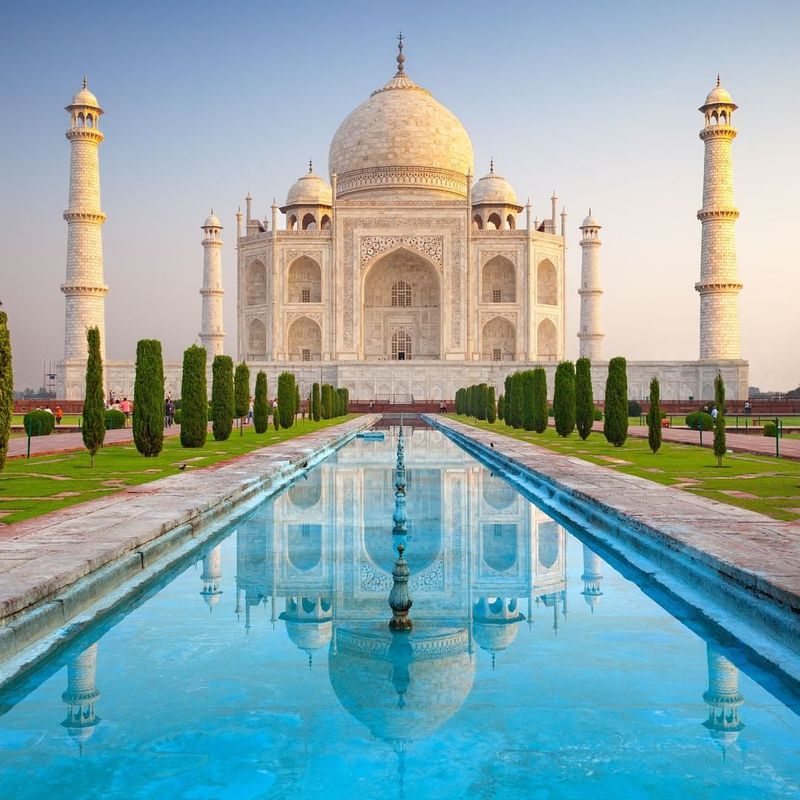
Shah Jahan built the Taj Mahal in the 17th century as a memorial to his wife Mumtaz Mahal, who died during childbirth. Over 20,000 workers spent more than 20 years constructing it.
That backstory hits harder once you’re standing in front of it.
Sunrise is the undisputed best time to visit. The marble shifts from pale pink to gold to brilliant white as the light changes, and the crowds are thinner than later in the day.
I arrived before the gates opened and it was the single best travel decision I’ve made.
Photography is allowed in the gardens and from the reflecting pool, but shoes must be removed or covered before entering the mausoleum itself. Hire a licensed guide at the entrance for context that transforms the visit from visually stunning to genuinely moving.
The symmetry of the entire complex, gardens, gates, and all, is worth stepping back to appreciate fully.
Petra (Jordan)
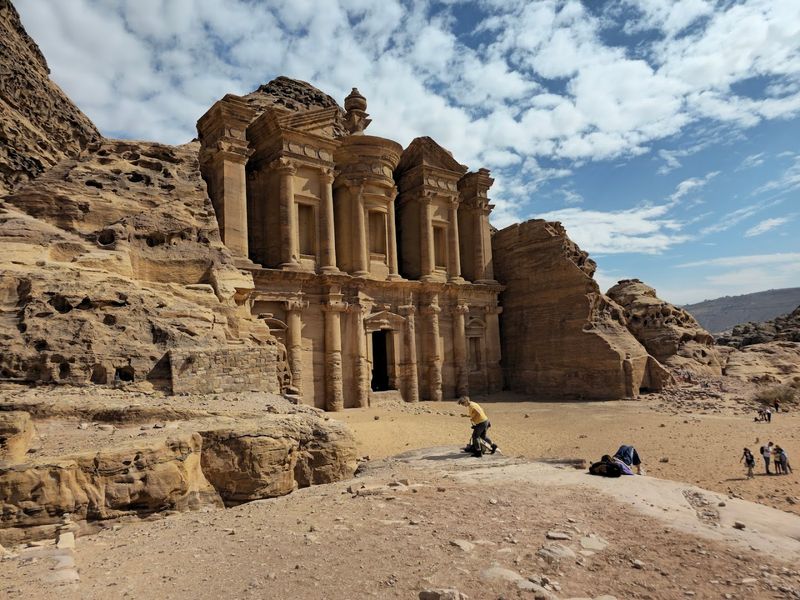
Walking through the Siq, a narrow canyon with walls towering 80 meters above you, and then suddenly seeing the Treasury carved into the cliff face ahead is one of travel’s great theatrical reveals. Petra doesn’t ease you in gently.
It just hits you all at once.
The rose-red city was carved by the Nabataean people over 2,000 years ago and served as a major trade hub. The Treasury is the most photographed structure, but Petra stretches much further than most visitors realize.
The Monastery, a longer hike up hundreds of steps, is equally stunning and far less crowded.
Start early to beat the heat and the tour groups. Petra by Night, a candlelit walk through the Siq offered three times a week, is atmospheric and worth adding to your itinerary.
Comfortable walking shoes are essential because the site covers a huge area and the terrain is rocky and uneven throughout.
Machu Picchu (Peru)
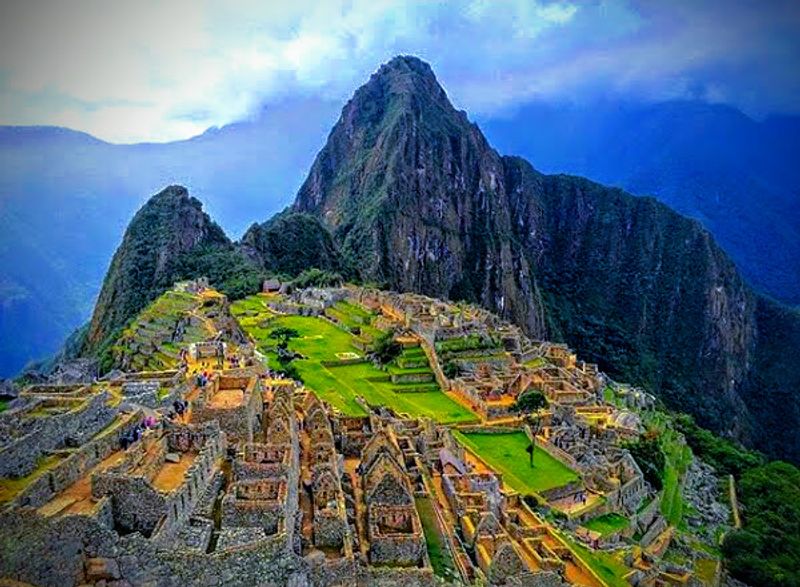
Machu Picchu sits at 2,430 meters above sea level, tucked into a mountain ridge above the Sacred Valley, and looks like something a fantasy novelist invented. The fact that the Inca built it in the 15th century without wheels or iron tools makes it even more mind-bending.
UNESCO recognizes it as the Historic Sanctuary of Machu Picchu for both its cultural and natural value. The combination of stone ruins, terraced agriculture, and cloud-forest peaks makes it genuinely unlike anywhere else on Earth.
Morning mist rolling over the terraces is the iconic visual and it delivers almost every day.
Entry is timed and capped, so book permits well in advance, especially for the Inca Trail. Altitude sickness is real at this elevation, so spend a day or two acclimatizing in Cusco first.
Aguas Calientes, the town at the base, is the jumping-off point and has plenty of decent accommodation options for every budget.
Angkor (Siem Reap, Cambodia)
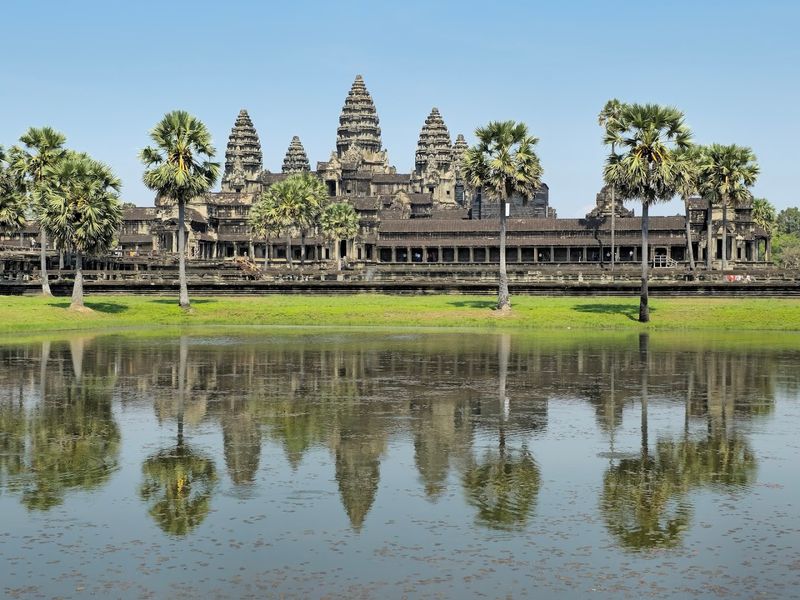
Angkor isn’t just Angkor Wat, though that temple alone is worth the flight to Cambodia. The archaeological park stretches across roughly 400 square kilometers and contains hundreds of temples, ancient waterways, and carved stone roads.
It’s a whole lost civilization preserved in the jungle.
Angkor Wat itself is the world’s largest religious monument, and watching sunrise over its towers reflected in the moat is a genuinely special experience. Get there before dawn, grab a spot near the reflecting pool, and just wait.
The light show nature puts on is completely free.
A three-day pass is the minimum recommended to cover the main sites without rushing. Rent a tuk-tuk driver for the day since they know the routes well and can take you to smaller temples that most tourists skip entirely.
Ta Prohm, where massive tree roots swallow the stone walls, is every bit as dramatic as the photos suggest and worth the detour.
Great Wall of China (China)
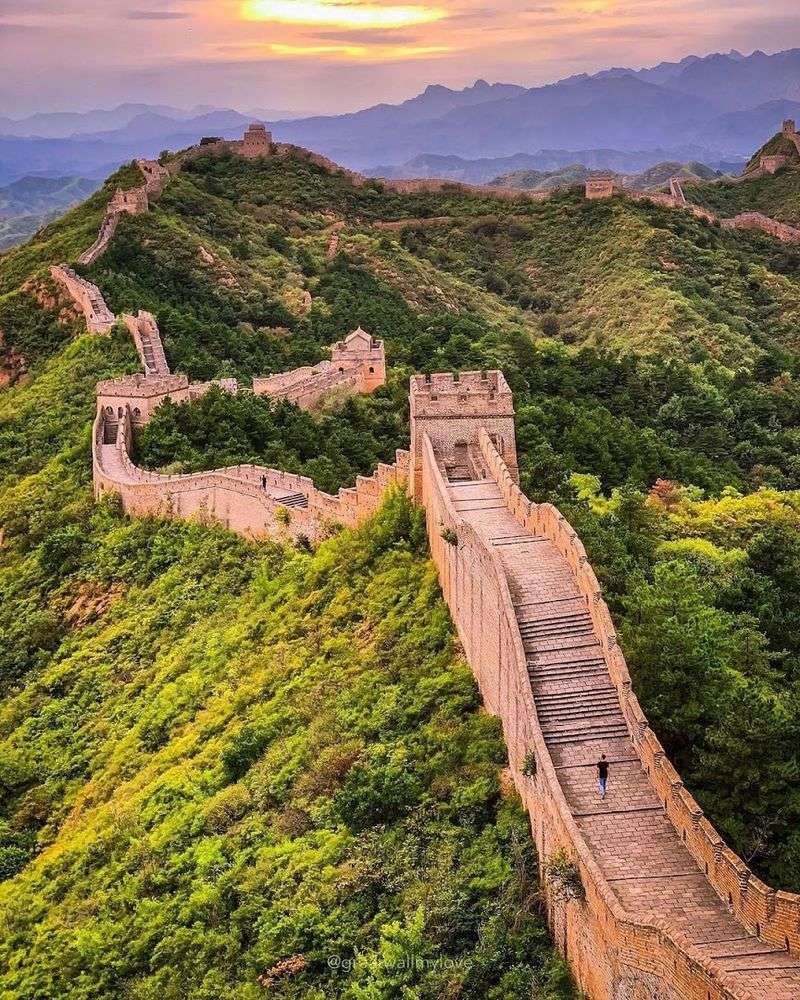
The Great Wall stretches over 21,000 kilometers across northern China, which means calling it a “wall” is a bit like calling the Pacific a “puddle.” UNESCO recognizes it as significant evidence of ancient China’s military architecture and strategic ingenuity, and standing on it, you start to understand the scale of that ambition.
Mutianyu is the most popular restored section near Beijing, and for good reason. The scenery is dramatic, the wall is well-preserved, and there’s a cable car option for those who’d rather save their legs for the actual wall walk.
Jinshanling is less crowded and offers a wilder, more rugged experience.
Avoid the Badaling section on Chinese national holidays unless queuing for two hours sounds appealing. Autumn is the best season to visit, when the hillsides turn red and gold and the air is clear.
The watchtowers spaced along the wall are perfect rest stops and offer brilliant views in every direction.
Fujisan (Mount Fuji, Japan)
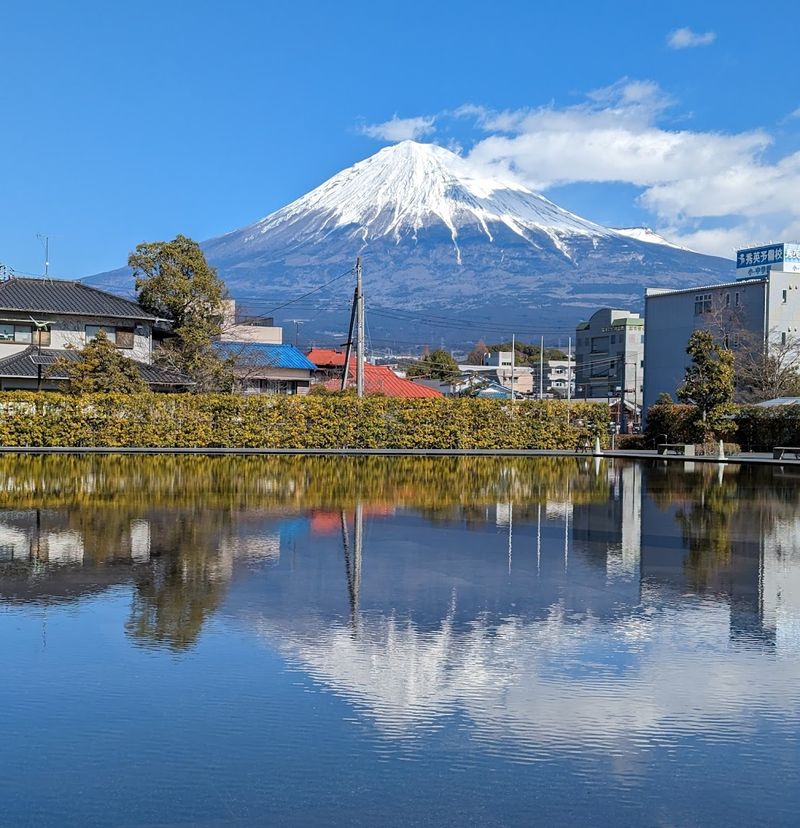
Mount Fuji’s perfect cone shape is so symmetrical it looks like someone drew it with a compass. At 3,776 meters, it’s Japan’s tallest mountain and a sacred site that has inspired poets, painters, and pilgrims for centuries.
UNESCO recognizes Fujisan as a place of artistic and spiritual significance.
Climbing season runs from early July to mid-September, and the most popular route is the Yoshida Trail on the north side. Most climbers do an overnight ascent to reach the summit for sunrise, which is spectacular but also genuinely cold and physically demanding.
Altitude sickness is a real concern above 3,000 meters.
If climbing isn’t your plan, the Fuji Five Lakes area offers the most iconic views, especially from Kawaguchiko. Clear days are more common in autumn and winter when the snow cap returns.
The Chureito Pagoda viewpoint with cherry blossoms in spring and Fuji in the background is one of Japan’s most photographed spots.
Great Barrier Reef (Queensland, Australia)
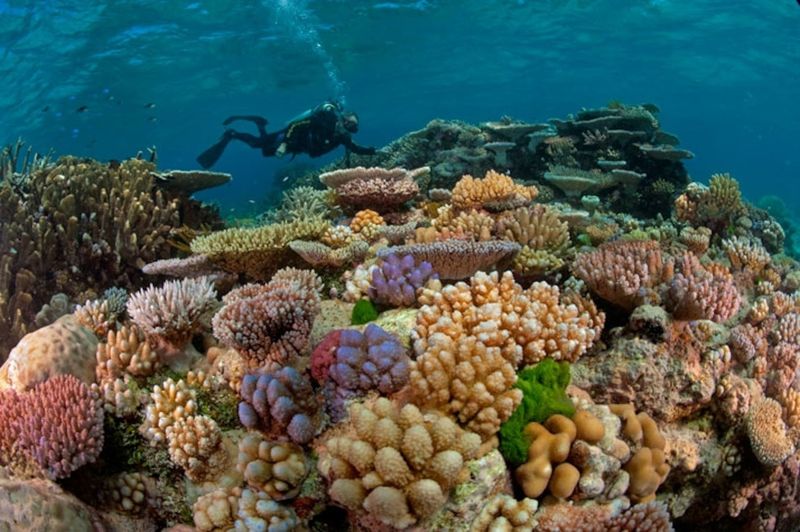
The Great Barrier Reef is the world’s largest coral reef system, stretching over 2,300 kilometers along the Queensland coast. UNESCO describes it as one of the most remarkable natural ecosystems on Earth, celebrated for its extraordinary variety and beauty.
No aquarium or documentary fully prepares you for the real thing.
Snorkeling is accessible to almost everyone and gives you a brilliant look at the reef without needing dive certification. Cairns and Port Douglas are the main gateway towns, with day trips running daily to outer reef pontoons.
The colors and fish variety are genuinely staggering even from the surface.
The reef faces real threats from climate change and coral bleaching, so visiting responsibly matters. Choose reef-safe sunscreen, never touch the coral, and book with tour operators that follow sustainable practices.
An introductory dive lesson on the boat is worth doing if you’ve never dived before since the underwater world beyond snorkeling depth is on another level entirely.
Serengeti National Park (Tanzania)
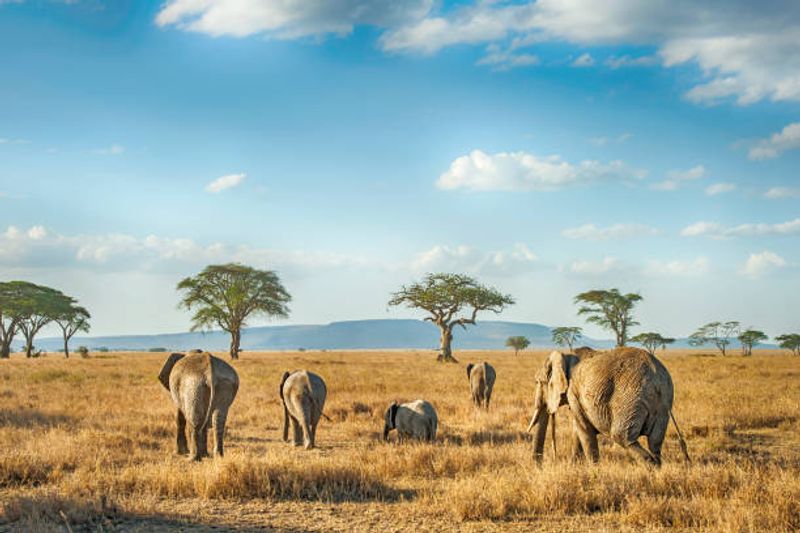
Every year, over 1.5 million wildebeest plus hundreds of thousands of zebras and gazelles move in a massive circular migration across the Serengeti and into the Masai Mara in Kenya. UNESCO calls it one of the most impressive natural events on the planet, and that description is not an exaggeration.
The river crossings, where herds plunge into crocodile-filled waters, are the dramatic highlight of the migration. These happen mainly between July and October at the Mara River crossings.
Timing your visit around this window is worth every bit of extra planning it requires.
Even outside migration season, the Serengeti delivers. Resident lions, elephants, cheetahs, and giraffes are present year-round, and the landscape itself is breathtaking in every direction.
Stay in a tented camp inside the park for the full experience. Waking up to lions calling in the darkness is the kind of thing that rewires your sense of what travel can actually be.
Galapagos Islands (Ecuador)

UNESCO calls the Galapagos Islands a “living museum and showcase of evolution,” and that’s not just marketing copy. The wildlife here evolved in near-total isolation, which means the animals have essentially no fear of humans.
A blue-footed booby will stare at you from two feet away like you’re mildly interesting furniture.
The islands sit about 1,000 kilometers off Ecuador’s coast in the Pacific and are tightly managed to protect the ecosystem. Visitor numbers are controlled, trails are designated, and guides are mandatory in many areas.
That structure is exactly why the wildlife experience here remains so extraordinary.
Giant tortoises, marine iguanas, sea lions, and Darwin’s finches are among the iconic residents. Snorkeling with sea lions and penguins in the same water is a genuinely surreal experience.
Book through a reputable licensed operator and choose a boat tour that covers multiple islands, since each one has its own distinct ecosystem and wildlife lineup worth exploring.
Grand Canyon National Park (Arizona, USA)
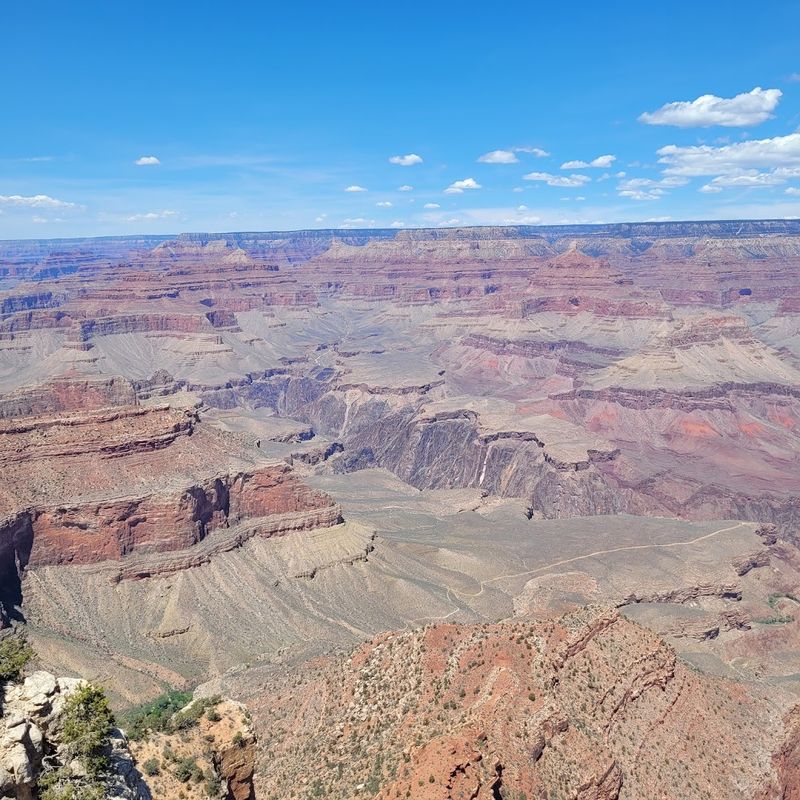
The Grand Canyon is one mile deep, up to 18 miles wide, and 277 miles long. Those numbers don’t mean much until you’re standing on the South Rim looking down and your brain quietly refuses to process the scale.
The National Park Service calls it one of the most spectacular examples of erosion on Earth, and that’s putting it modestly.
The South Rim is open year-round and has the most visitor infrastructure, while the North Rim is only accessible from May to mid-October. Sunrise and sunset are when the canyon truly earns its reputation, with the layered rock walls shifting through every shade of red, orange, and purple.
Hiking below the rim requires preparation. Bright Angel Trail is the most popular descent, but heat, elevation, and distance make it more challenging than it looks from the top.
Carry more water than you think you’ll need. The park also offers mule rides and white-water rafting on the Colorado River for different ways to experience the canyon’s depth.
Niagara Falls (Canada/USA)
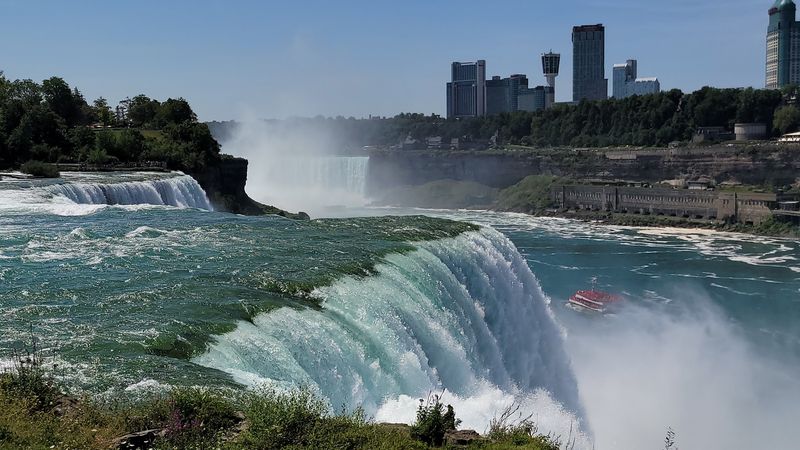
Niagara Falls is actually three waterfalls in one. Horseshoe Falls on the Canadian side, American Falls, and the smaller Bridal Veil Falls together move about 168,000 cubic meters of water per minute at peak flow.
The roar is something you feel in your chest before you even see the water.
The Canadian side in Ontario offers the best overall views and the famous Maid of the Mist boat tour, which takes you right into the spray at the base of Horseshoe Falls. Wearing the provided poncho is mandatory, not optional.
You will get wet regardless.
The falls are dramatically lit at night with colored lights, making an evening visit a completely different experience from daytime. Niagara Falls City on the Canadian side has plenty of accommodation options at various price points.
Visit in spring or early summer when the water flow is at its highest and the surrounding parks are green and in full bloom.
Burj Khalifa (Dubai, UAE)
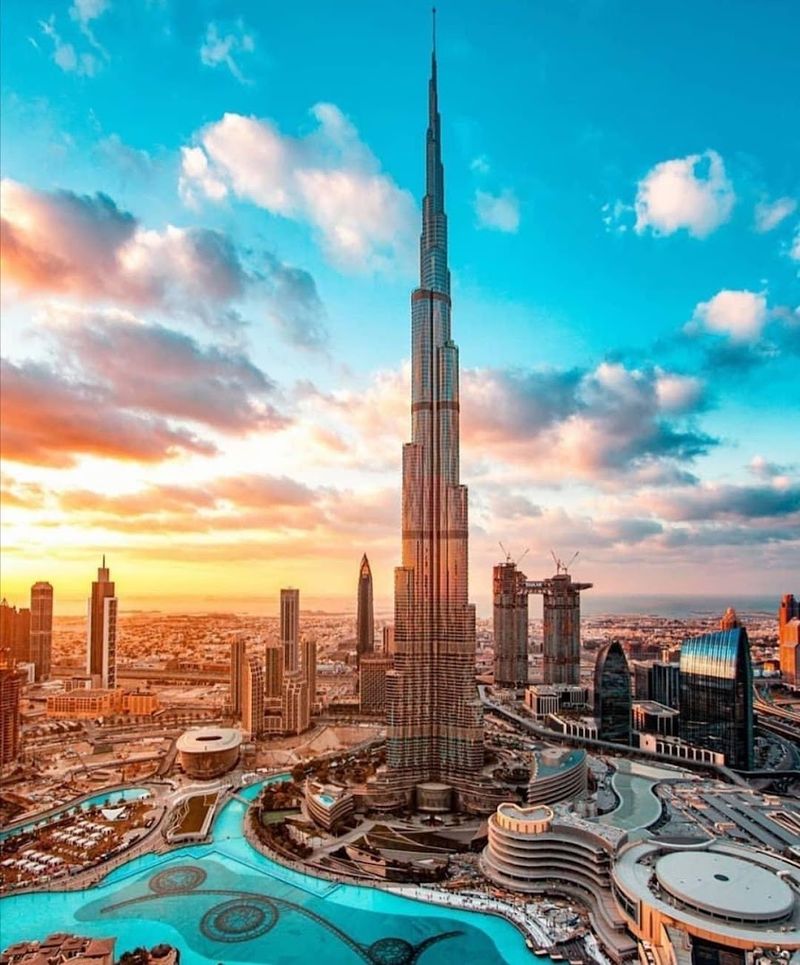
At 828 meters tall with 163 floors, the Burj Khalifa held the record for world’s tallest building when it opened in 2010 and still holds it today. Britannica describes it as a defining landmark of modern engineering.
Standing at its base and looking straight up is a genuinely disorienting experience.
The observation decks on floors 124 and 148 offer views that stretch to the horizon in every direction. On a clear day you can see the desert, the Gulf, and the city grid spreading below like a map.
Floor 148, called The Pinnacle, is the highest outdoor observation deck in the world.
Book tickets in advance and choose a late afternoon slot to experience both daylight views and the city lighting up after dark. The Dubai Fountain show at the base of the tower runs every evening and is completely free to watch from the waterfront promenade.
Combining the two in one evening is the most efficient way to experience downtown Dubai at its most spectacular.
Share this story