There is a place in central Florida where one of the greatest architects in American history left behind an entire campus of buildings, and most people driving through Lakeland have no idea it exists. Frank Lloyd Wright designed more than a dozen structures here, all on a single college campus, making it the largest collection of his work in the world.
The buildings are still standing, still in use, and still turning heads nearly a century after they were first sketched out. From covered walkways to a chapel with soaring geometric windows, this place rewards every curious visitor who takes the time to show up.
Where the Wright Story Begins: The Visitor Center at Florida Southern College
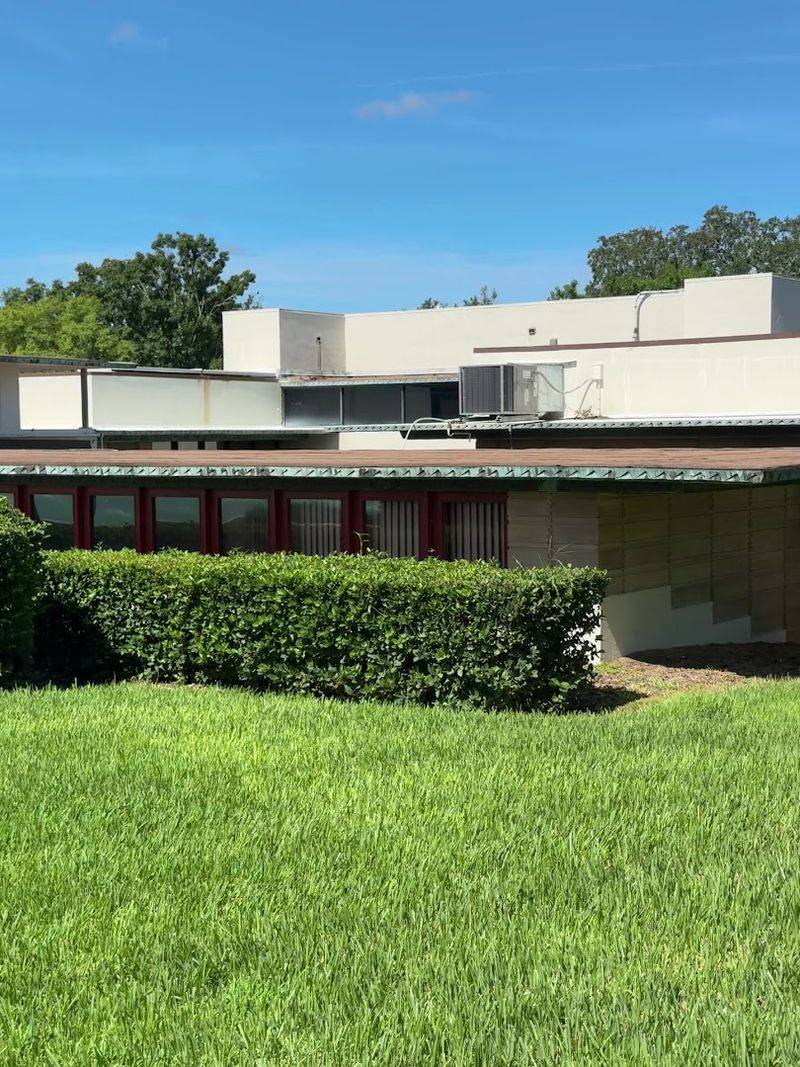
At 840 Johnson Ave, Lakeland, the Frank Lloyd Wright Visitor Center at Florida Southern College is the natural starting point for anyone exploring this remarkable campus.
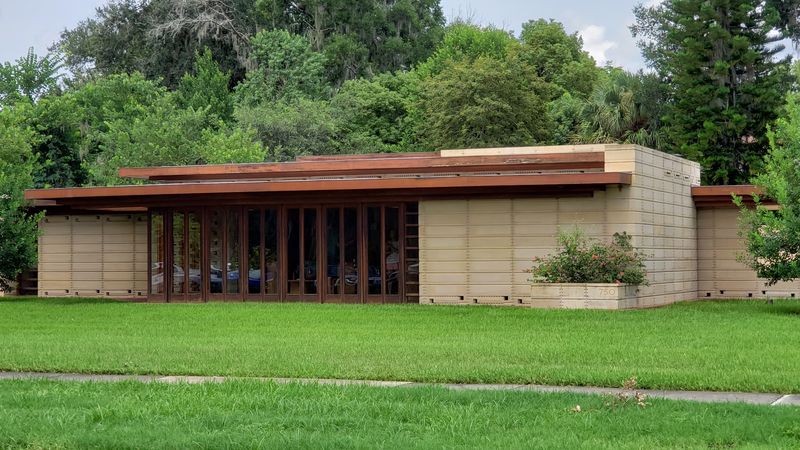
The visitor center sits right next to the Usonian house, and the staff there are genuinely helpful, ready to hand you a campus map, explain your tour options, and point you in the right direction.
The center is open daily from 9:30 AM to 4:30 PM, which gives you a solid window to plan your visit without rushing.
This is also where you pick up a self-guided tour map for just five dollars, a small price for access to one of the most architecturally significant campuses in the United States. Starting here sets the right tone for everything that follows.
The ‘Child of the Sun’ Vision: How This Campus Came to Be
Frank Lloyd Wright first accepted the commission from Florida Southern College president Ludd Spivey in 1938, calling his master plan for the campus the “Child of the Sun.”
Wright believed that buildings should grow naturally from their surroundings, and the Florida landscape, with its flat terrain, citrus groves, and strong sunlight, gave him plenty to work with. His goal was to create structures that felt rooted in the land rather than dropped onto it.
Between 1938 and 1959, Wright designed eighteen structures for the campus, thirteen of which were actually built. The project became one of the longest collaborations of his career and the most concentrated collection of his architecture anywhere on the planet.
What makes this story even more interesting is that some of the buildings were constructed partly by student volunteers during World War II, when materials were scarce and labor was limited. Wright called them “amiable amateurs.”
The Annie Pfeiffer Chapel: A Geometric Masterpiece in the Heart of Campus
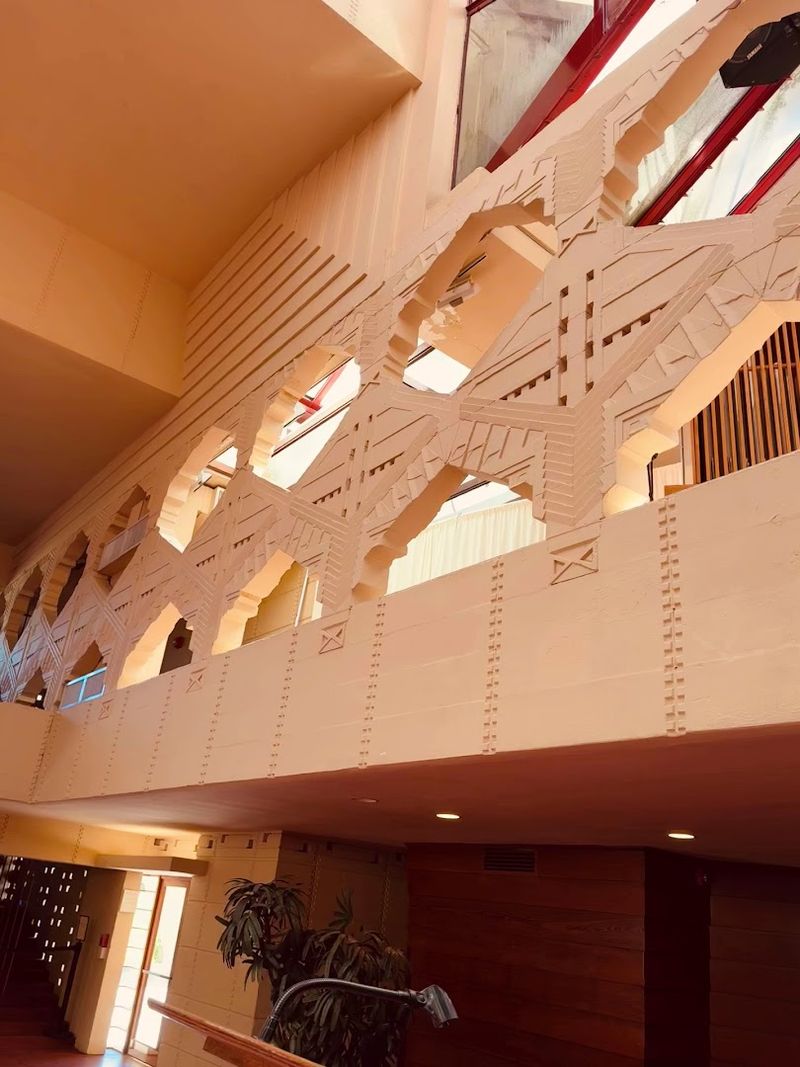
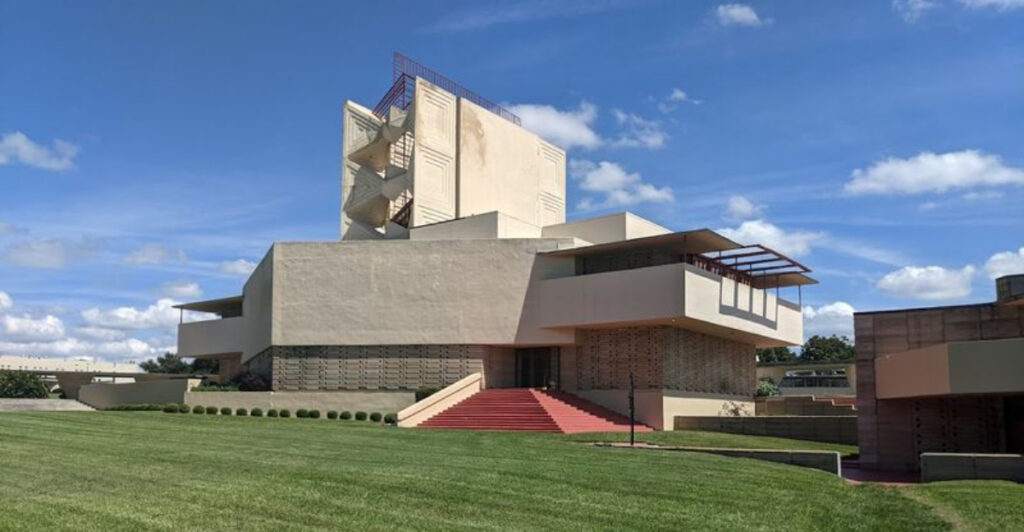
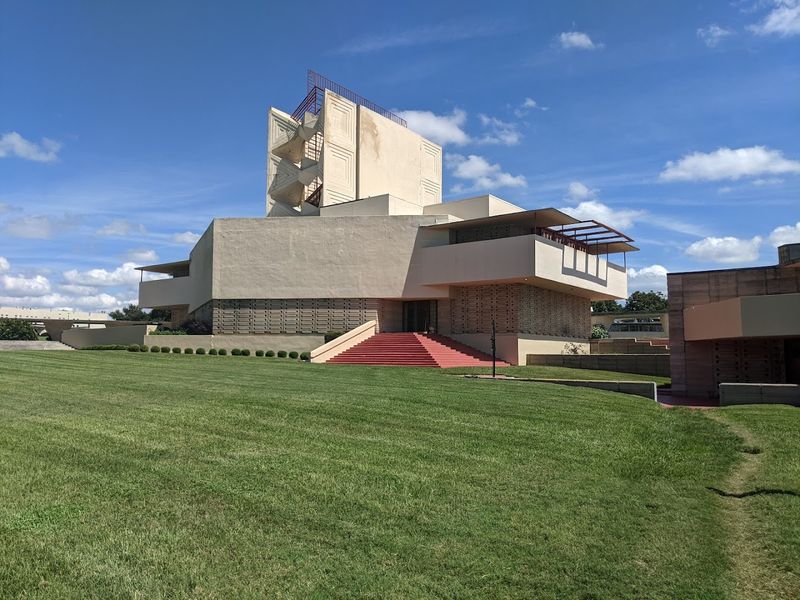
The Annie Pfeiffer Chapel is the crown of the Florida Southern campus, and the first time you see its angular tower rising against the Florida sky, it genuinely stops you in your tracks.
Wright designed the chapel with a dramatic geometric tower built from textile blocks, a construction method he developed using patterned concrete blocks cast on site. The tower is open and latticed, allowing light to filter through in ways that change throughout the day.
The stained glass windows inside are not traditional church windows. Wright designed them with abstract geometric shapes in warm amber, red, and gold tones that flood the interior with color during morning services.
The chapel remains an active place of worship for the college community, so visitors get to experience a building that is both a work of art and a functioning space. Few buildings anywhere in Florida carry that kind of dual weight so gracefully.
The Esplanades: Wright’s Shaded Walkways That Connect Everything
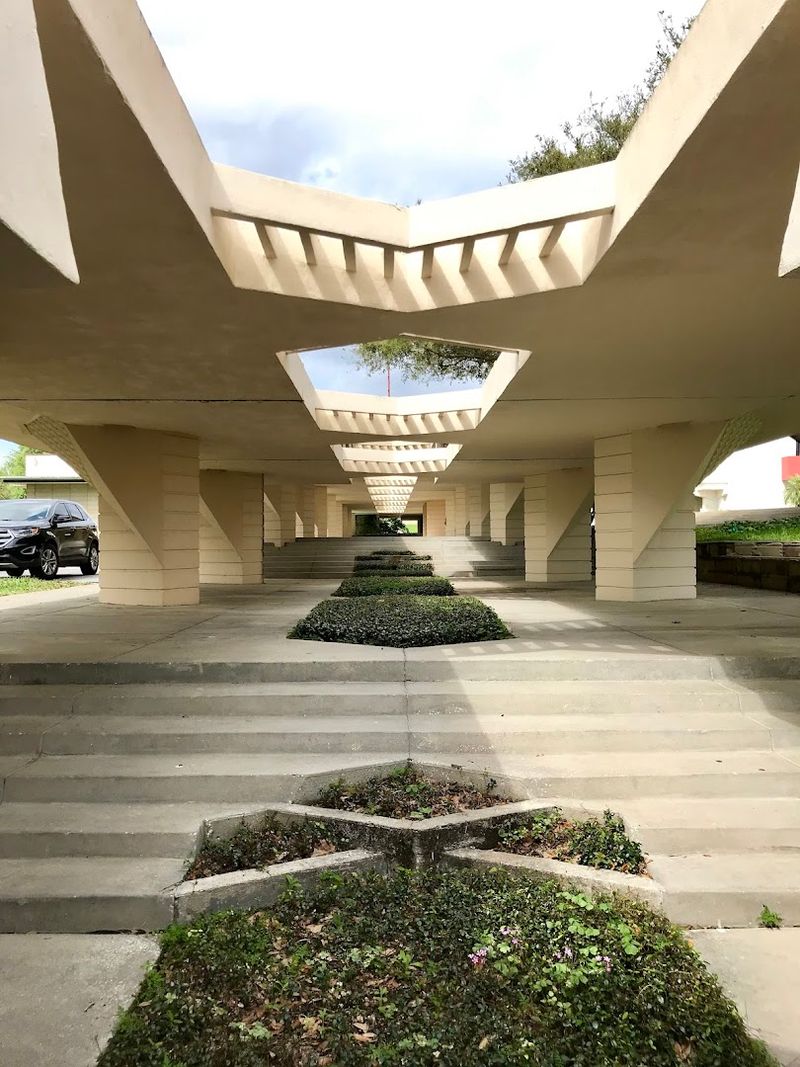
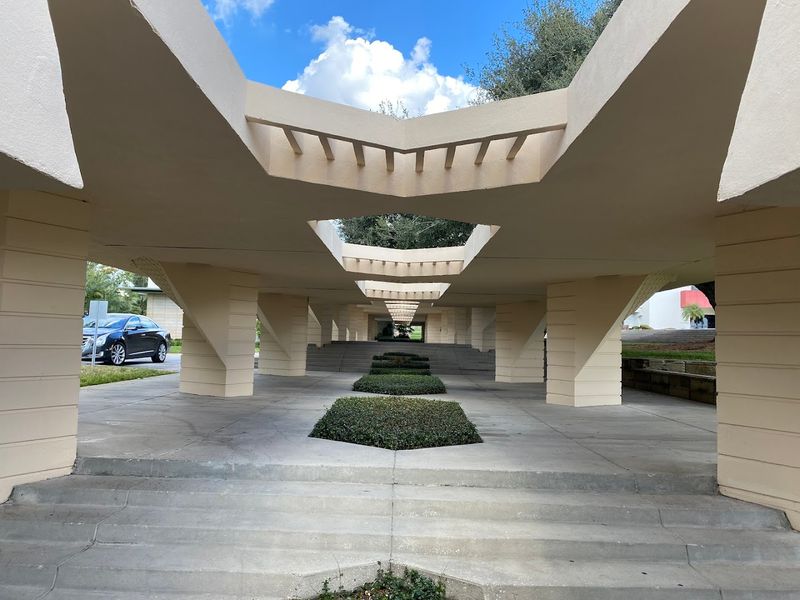
One of the first things you notice while walking the campus is the network of low, covered walkways that wind between the buildings like a maze of shaded corridors.
Wright called these the Esplanades, and he designed them specifically with the Florida climate in mind. The overhanging concrete canopies block direct sunlight while still allowing breezes to pass through, making outdoor movement on campus far more comfortable during the hot months.
The Esplanades stretch for about a mile in total and connect nearly all of the major buildings on the original campus. Walking through them gives you the feeling of moving through a continuous piece of architecture rather than a collection of separate structures.
On a summer afternoon in Lakeland, where temperatures regularly push past 90 degrees, those covered walkways shift from a design feature to a genuine act of hospitality. Wright clearly understood the Florida sun, and he planned accordingly.
The Water Dome: A Fountain Fully Restored to Wright’s Original Vision
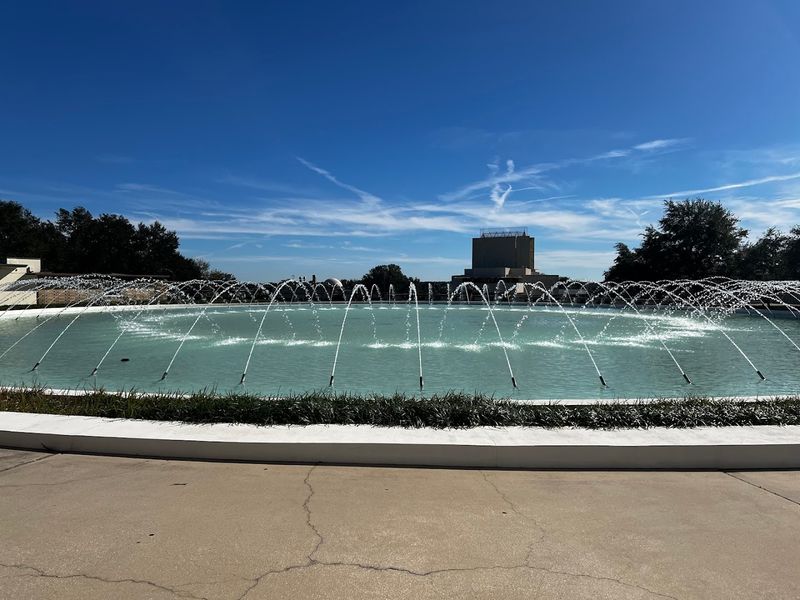
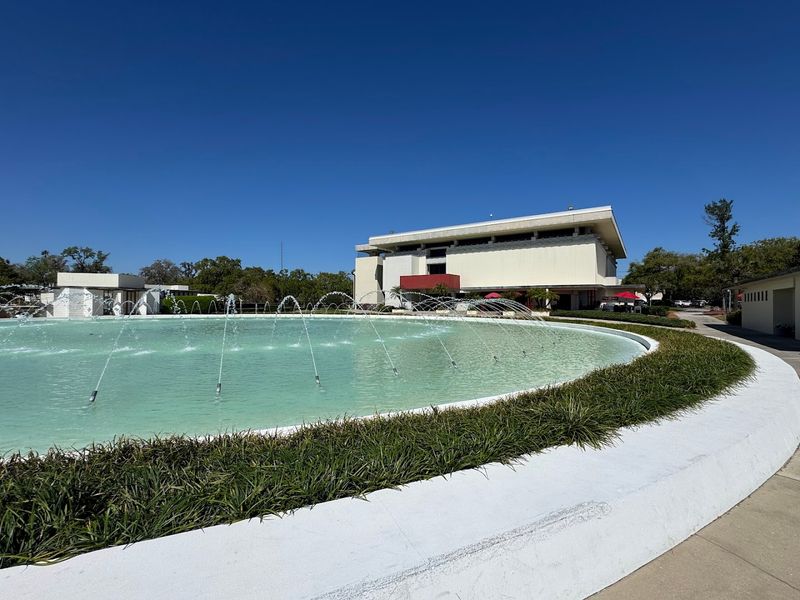
The Water Dome on the Florida Southern campus is one of those features that makes visitors stop mid-step and pull out their cameras.
Wright designed this massive circular fountain as a central gathering point on campus, but the original structure fell into disrepair over the decades. A full restoration project brought it back to exactly what Wright had envisioned, with water jets that arc outward from a central raised platform in a wide, symmetrical spray.
The fountain operates on a schedule, so if you are timing your visit for photography or just want to catch it in action, arriving a few minutes early pays off. The self-guided tour map from the visitor center includes helpful timing notes.
Seeing the Water Dome fully restored and functioning is a reminder of how much care Florida Southern College puts into preserving this collection. It is not a museum piece behind glass; it is a living part of a working campus.
The Usonian House: A Rare Residential Design You Can Actually Walk Through
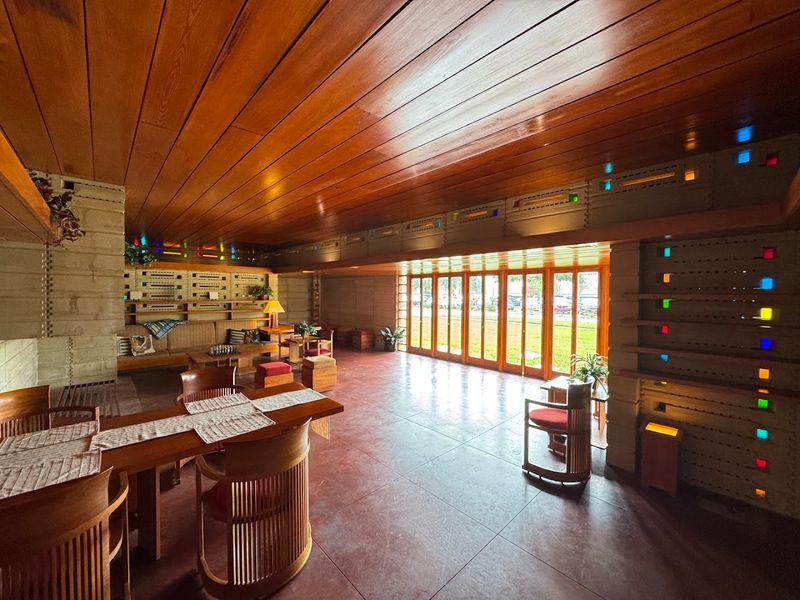
Most Frank Lloyd Wright buildings you read about are either private homes or public landmarks that you can only admire from a distance. The Usonian faculty house on the Florida Southern campus is different.
Wright developed the Usonian concept in the 1930s as his vision for affordable, practical American housing. The design emphasizes horizontal lines, natural materials, flat roofs, and a seamless connection between indoor and outdoor living spaces.
The house at Florida Southern was built as a faculty residence, and guided tours take small groups inside to see how Wright translated his residential philosophy into an actual livable home. The low ceilings, which sit at about six and a half feet, feel surprisingly cozy rather than cramped once you are inside.
Tour guides explain the specific design choices Wright made for each room, from the placement of windows to the built-in furniture. It is a genuinely rare chance to stand inside a Wright-designed home and understand how he thought about everyday life.
The Roux Library: Where Books Live Inside a Wright Original
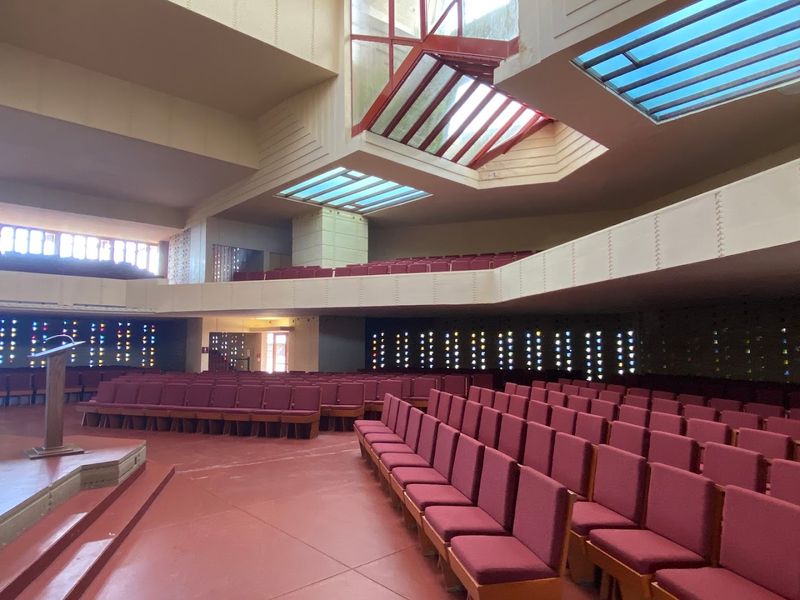
Not many college students can say they study inside a building designed by one of the most celebrated architects in American history, but Florida Southern students do exactly that at the Roux Library.
Wright designed the library as part of his original campus master plan, and it shares the same textile block construction and horizontal emphasis that defines the rest of his work here. The building feels both serious and warm, which is exactly the right combination for a place where people come to think.
Guided tours include a stop inside the library, giving visitors a chance to see how Wright balanced functional needs with his design principles. The reading spaces have the kind of natural light that makes you want to actually sit down and open a book.
The fact that this building is still being used as an active library decades after it was built is one of the strongest arguments for Wright’s practical genius. Beautiful and functional rarely coexist this well.
Guided Tours: What to Expect and Why They Are Worth Every Minute
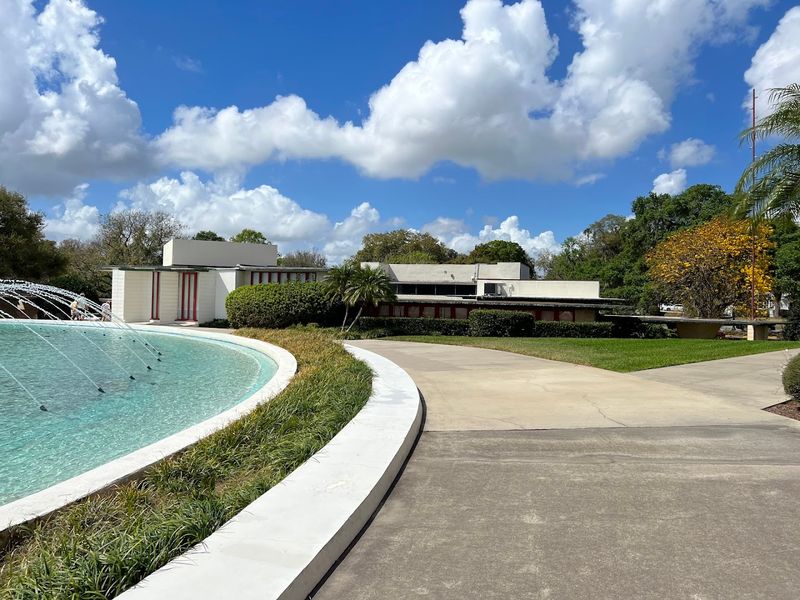
The guided tours at the Frank Lloyd Wright Visitor Center run at 11 AM and 2 PM, six days a week, and reservations are recommended at least 24 hours in advance.
A standard guided tour lasts about 90 minutes and takes you inside three of the thirteen Wright-designed structures, including the Usonian house, the Roux Library, and the Annie Pfeiffer Chapel. Extended tours run around two and a half hours and go deeper into the history and design details.
The guides here are genuinely knowledgeable. Several have been leading tours for years and bring a level of enthusiasm that keeps the group engaged from start to finish.
They answer questions thoroughly and share stories about Wright’s working relationship with the college that you will not find in any brochure.
For the full guided experience, the cost runs around fifty dollars per person, and the consensus among visitors is that it is well worth the price. The self-guided option with a map costs just five dollars.
Textile Block Construction: The Building Technique That Defines This Campus
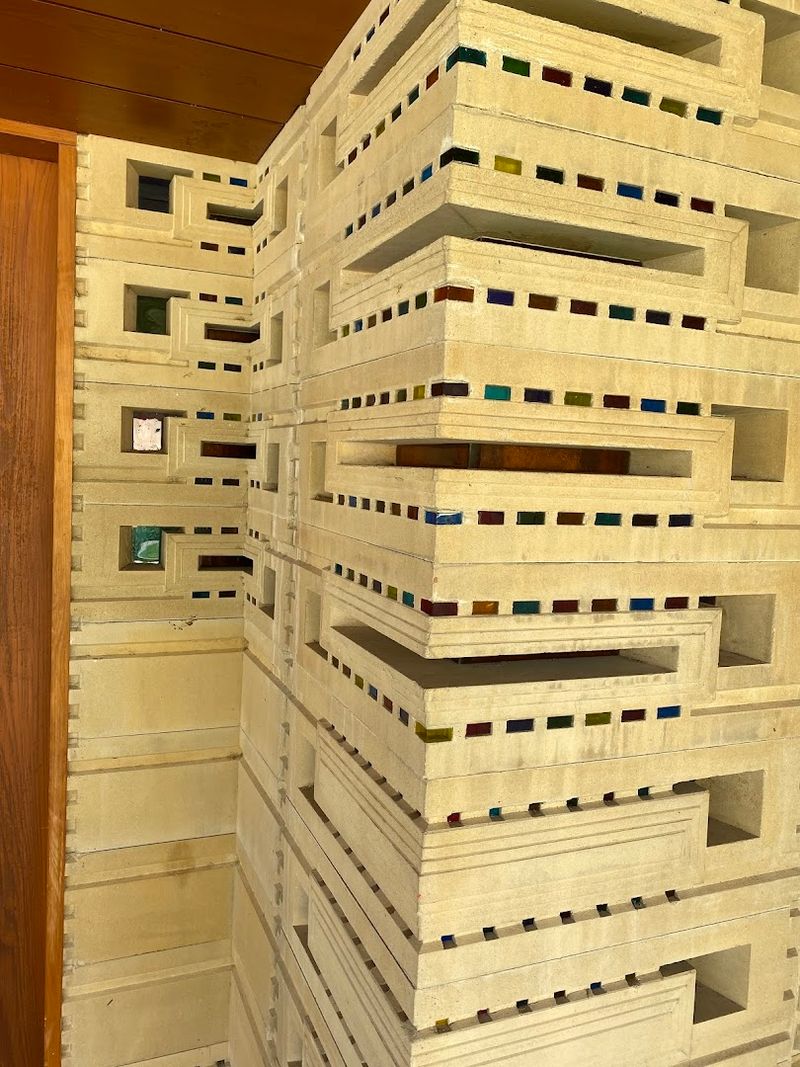
One of the most distinctive features of the Florida Southern campus is the construction material used throughout: textile blocks, a system Wright invented and refined over decades.
Textile blocks are precast concrete units with geometric patterns pressed into their faces. Wright designed them to be cast on site using local sand, which meant the buildings would literally be made from the ground they stood on.
The idea was both practical and philosophical.
At Florida Southern, the blocks were cast using sand from the nearby shores of Lake Hollingsworth, giving the campus buildings a warm, golden tone that shifts subtly depending on the time of day and angle of the light.
The blocks are also structural, meaning the pattern on the outside is not just decoration; it is part of how the building holds together. Understanding this detail changes the way you look at every surface on campus, and the tour guides do a great job of explaining it.
The Gift Shop: Small Space, Thoughtful Finds
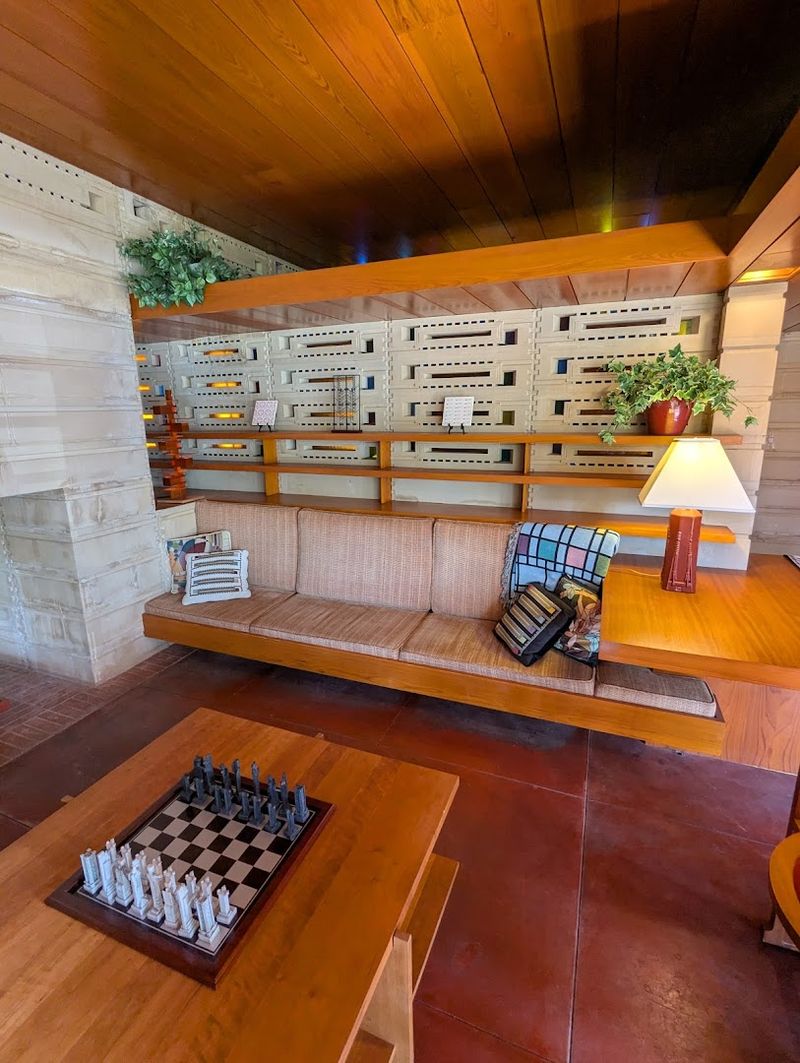
Right next to the Usonian house, the gift shop inside the visitor center is a pleasant surprise for anyone who appreciates well-chosen merchandise.
The selection leans toward architecture books, Wright-inspired design objects, prints, and campus-specific keepsakes. Nothing here feels like generic tourist merchandise.
The items are thoughtfully curated to reflect the spirit of Wright’s work, which makes browsing feel like a natural extension of the tour itself.
Books covering Wright’s complete body of work, his design philosophy, and his personal history sit alongside smaller items like notecards, mugs, and architectural models. It is the kind of shop where you go in for a postcard and come out with three books you did not know you needed.
Staff in the gift shop are friendly and happy to answer questions about both the products and the campus. If you are looking for a meaningful souvenir from your visit, this is the right place to find one.
Self-Guided vs. Guided: Choosing the Right Way to Explore
The visitor center gives you two clear ways to experience the campus, and choosing between them depends mostly on how much time you have and how deeply you want to go.
The self-guided tour costs five dollars for a detailed campus map and lets you move at your own pace through the Esplanades, past the Water Dome, and around the exterior of all thirteen Wright-designed buildings. It is a good option for photographers, casual walkers, or anyone with limited time.
The guided tour is the better choice if you want to go inside the buildings and hear the stories behind the designs. The guides provide context that genuinely changes how you see the structures, and getting inside the Usonian house or the chapel is not possible on a self-guided visit.
Both options are worth doing if you have the time. Many visitors do the guided tour first and then spend extra time wandering the campus on their own afterward.
Best Time to Visit: Planning Around Florida’s Unpredictable Weather
Lakeland sits in central Florida, which means summers are hot, humid, and prone to afternoon thunderstorms. Visiting between October and March gives you noticeably more comfortable conditions for walking the campus.
The Esplanades provide shade along the main pathways, but large portions of the campus are open to the sun, and the heat in July or August can make a two-hour walking tour genuinely exhausting. Morning tours, which start at 11 AM, are cooler than the 2 PM option during warmer months.
Spring break season brings more visitors, so booking tours in advance becomes especially important from March through April. Weekday mornings in the fall tend to be the quietest and most pleasant times to visit.
The campus looks particularly beautiful in the softer light of late autumn, when the angle of the Florida sun highlights the texture of the textile blocks and the shadows along the Esplanades shift in ways that feel almost cinematic.
A National Historic Landmark: Why This Campus Matters Beyond Architecture
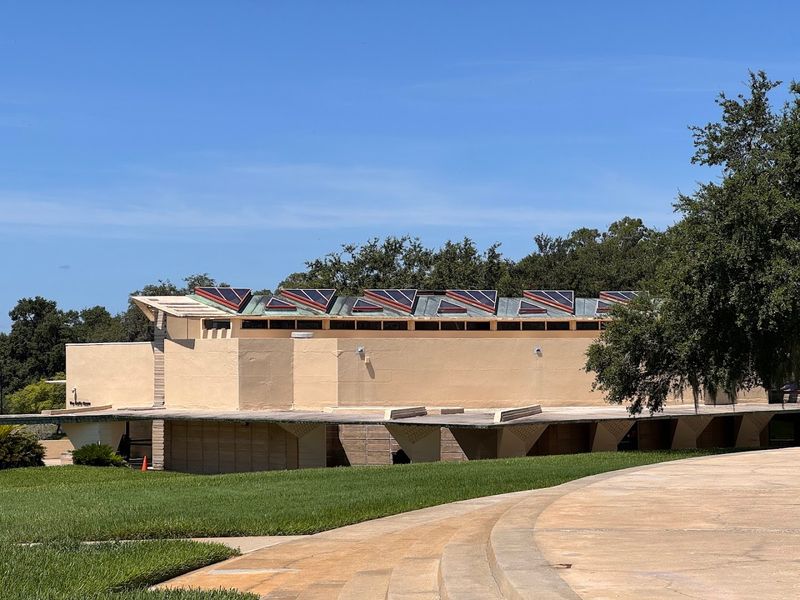
Florida Southern College’s Frank Lloyd Wright campus holds the designation of a National Historic Landmark, a recognition that places it alongside some of the most significant cultural and historical sites in the country.
The designation reflects not just the architectural quality of the buildings but also their historical importance as a record of Wright’s ideas during a specific and productive period of his career. The campus spans designs from 1938 to 1959, covering more than two decades of his evolving thinking.
Preservation efforts at Florida Southern are ongoing and serious. The college maintains the original structures with careful attention to Wright’s specifications, and restoration projects like the Water Dome demonstrate a commitment to keeping the campus true to its original vision rather than modernizing it for convenience.
For anyone interested in American architectural history, this campus is not a side trip. It is a primary destination, and the landmark status only confirms what visitors already sense the moment they walk through it.
Practical Tips: Parking, Accessibility, and Making the Most of Your Visit
Getting to the Frank Lloyd Wright Visitor Center is straightforward. Parking is available on campus and is described by visitors as plentiful, which is a genuine relief for anyone who has navigated crowded tourist sites before.
The campus is compact and walkable, with most of the Wright-designed buildings within a reasonable distance of each other. The Esplanades help connect the main structures, though some sections of the campus involve open walkways that are not covered.
Comfortable, closed-toe shoes are a practical choice, especially if you plan to take a longer tour. The textile block surfaces and outdoor pathways are uneven in places, and sandals or heels make navigating them more difficult than they need to be.
Bringing water is smart, particularly from late spring through early fall. The visitor center staff are accommodating and happy to answer logistical questions before your tour begins.
Calling ahead at 863-680-4597 to confirm tour availability is always a good idea.
Share this story