There is a stretch of rural highway in northeastern Oklahoma where drivers occasionally do a double take, slow down, and pull over to squint at something sitting in a roadside ditch. At first glance, it genuinely looks like a spacecraft that made an unscheduled landing in the middle of farm country.
The object has fins, a rounded shape, and enough painted detail to make your brain stall for a second before logic kicks back in. What you are actually looking at is one of the most creative and endearing roadside curiosities in the entire state, and the backstory behind it is even better than the object itself.
Where Exactly This Thing Is Sitting
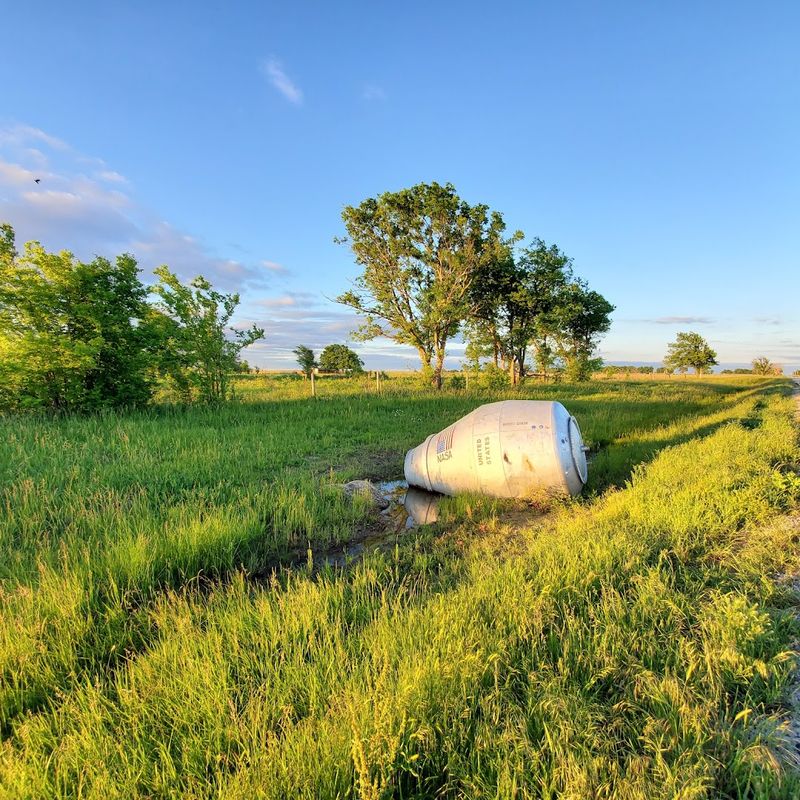
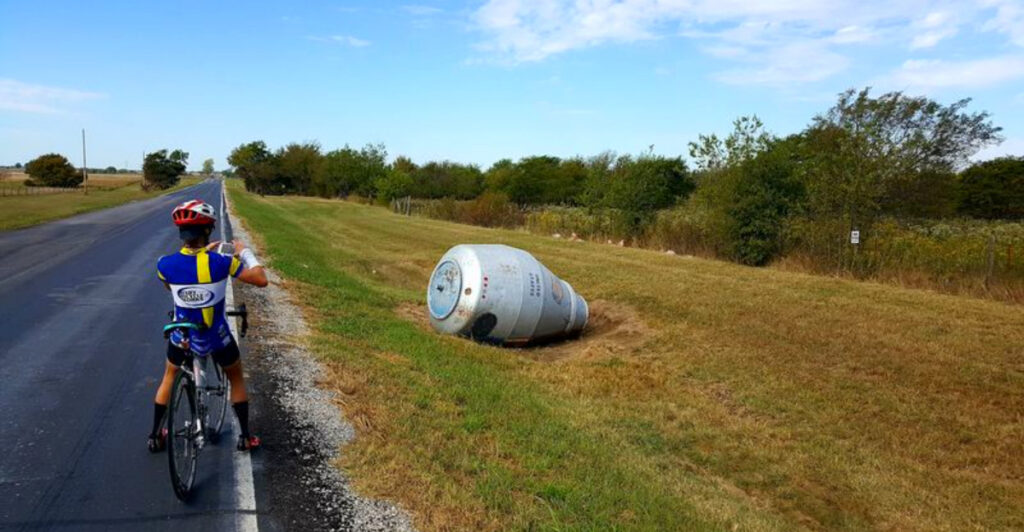
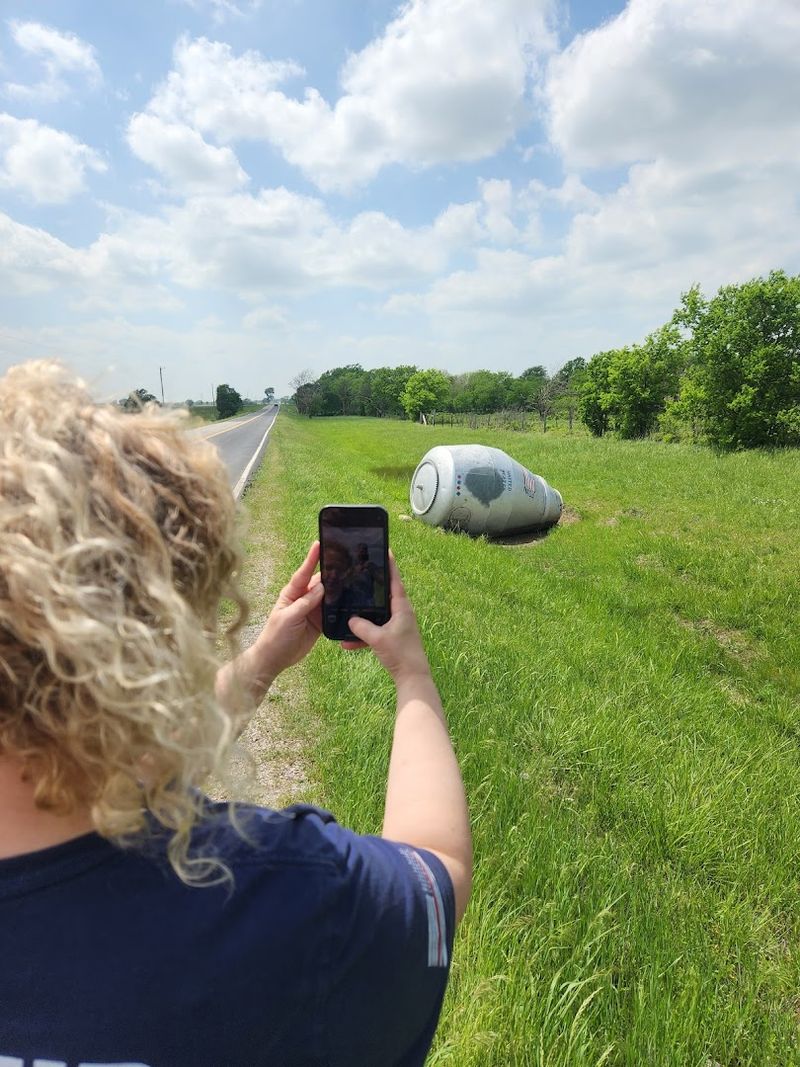
The Winganon Concrete Mixer Space Capsule sits along E 300 Rd near Talala, Oklahoma 74080, in Rogers County, tucked right into a grassy ditch beside a quiet two-lane rural highway.
There are no grand entrance signs, no parking lot, and no gift shop waiting for you on the other side of the road. The capsule simply rests there, out in the open, as if it has always belonged on that patch of Oklahoma farmland and always will.
The coordinates place it at roughly 36.58 north latitude, which puts you well into the rolling green hills of northeastern Oklahoma, not far from the small communities of Talala and Winganon.
The best way to park is to pull into the entrance of a nearby farm road, about 50 yards from the capsule itself. That little gravel gap is your unofficial visitor parking area, and it works just fine for a quick stop.
The attraction is open 24 hours a day, every day of the week, because a concrete drum in a ditch does not really have closing hours. That alone makes it one of the most accessible roadside stops in the state.
The Crash That Started It All
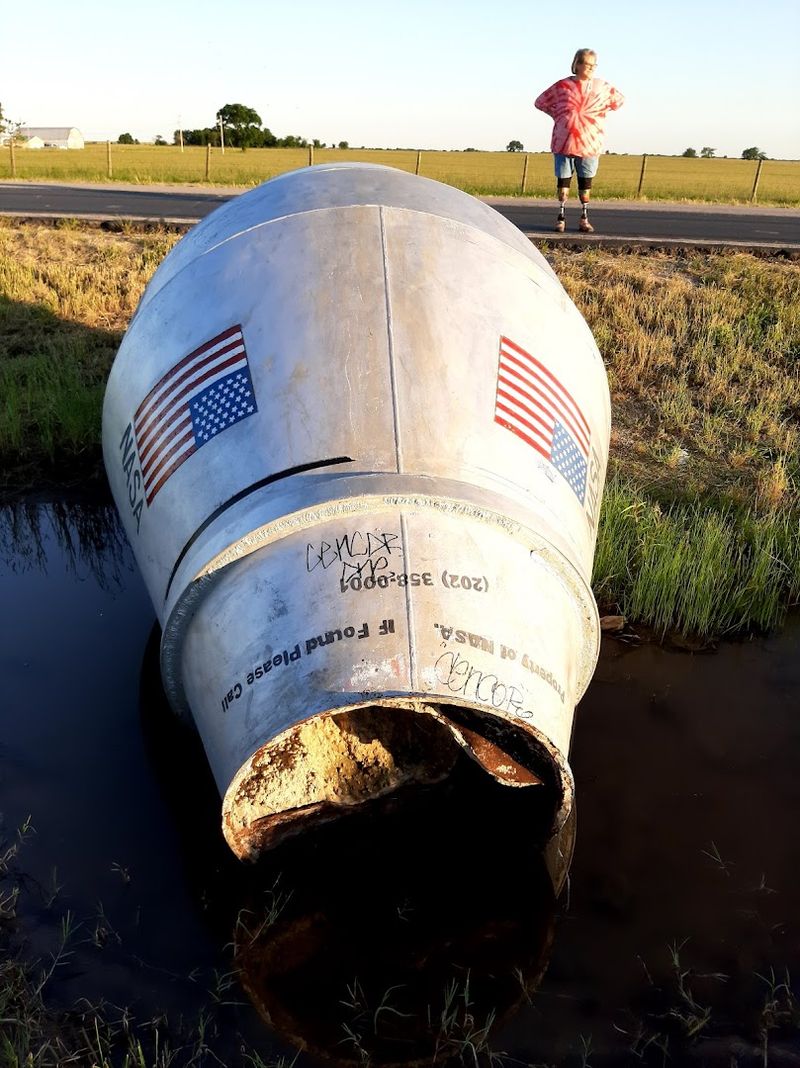
The whole story begins with a concrete mixer truck that had a very bad day on a rural Oklahoma road, sometime around 1959 or 1971, depending on which account you read.
The truck was involved in a traffic accident, and the heavy rotating drum detached from the vehicle and rolled into the ditch beside the highway. Moving a massive steel drum is no small task, and apparently nobody ever got around to hauling it away.
So it just stayed there, sitting in that ditch year after year, gathering rust and roadside dust while the rest of the world drove past without giving it much thought.
Then came the creative minds who looked at that abandoned drum and saw something entirely different. Someone grabbed paint, got to work, and transformed a piece of forgotten industrial equipment into what is now one of the most photographed roadside oddities in northeastern Oklahoma.
The painted fins, the capsule shape, and the space-age details turned a mundane accident remnant into a local landmark that has been drawing curious travelers ever since. Sometimes the best art starts with an accident.
What the Capsule Actually Looks Like Up Close
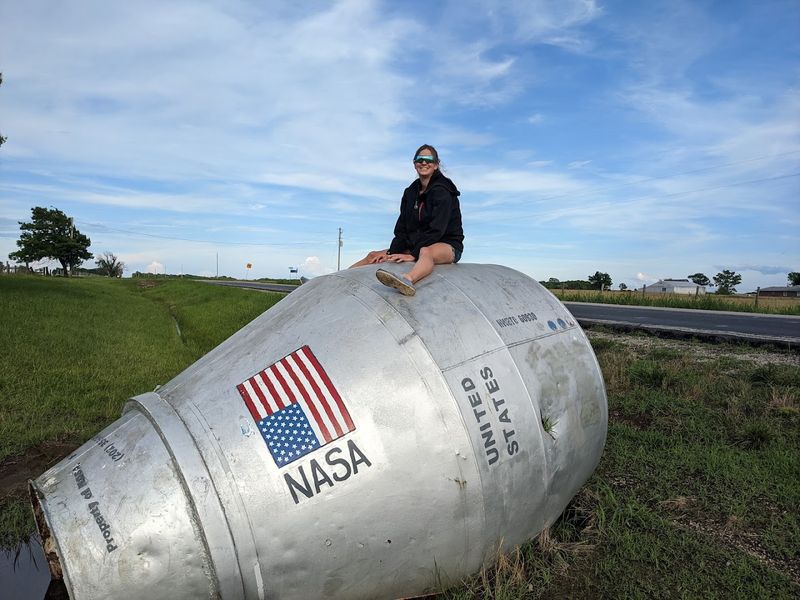
The first thing that grabs your attention is the shape. The drum of a concrete mixer is already rounded and cylindrical, which happens to be a pretty convincing starting point for a spacecraft design.
Whoever handled the painting did a genuinely impressive job. The capsule features painted fins near the base, color details along the body, and enough visual texture to make your brain register it as a real piece of space hardware for at least a full second before reason catches up.
The overall effect is surprisingly convincing from a distance. Drivers passing at highway speed have been known to hit the brakes and reverse just to get a second look, which is the highest compliment a roadside attraction can receive.
Up close, the concrete mixer origins become obvious, but that does not reduce the charm at all. The seams, the ribs along the drum, and the industrial hardware underneath the paint are all still visible, giving the piece an honest, handmade quality that a polished museum exhibit could never replicate.
The capsule lays at a slight angle in the ditch, which actually adds to the illusion that something crash-landed there in a hurry and never quite got back upright.
The Atmosphere of the Surrounding Area
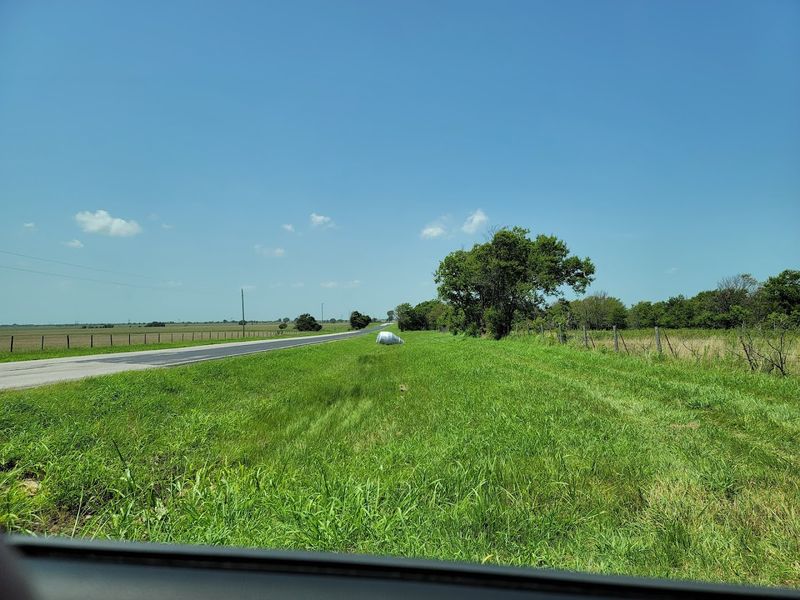
The landscape around this spot is classic northeastern Oklahoma: rolling green hills, open pastureland, scattered trees, and that particular kind of quiet that only exists far from city traffic.
The highway itself is narrow, just two lanes, and traffic is light enough that you can stand on the shoulder for a few minutes without feeling rushed. That said, cars do come through, and the road has no dedicated pull-off lane, so staying alert is genuinely important.
The surrounding fields stretch out in every direction, and on a clear day the sky above is wide and uninterrupted. That big open sky actually plays into the space theme rather well, whether intentionally or not.
There is a certain peaceful strangeness to standing in the middle of farm country, staring at something that your eyes keep insisting is a spacecraft. The contrast between the rural setting and the sci-fi object creates a visual tension that photographs extremely well.
Morning light hits the capsule from the east and gives the painted surface a warm metallic glow that afternoon light cannot quite match. Early risers who make the trip before noon tend to get the best photos, and the road is at its quietest during those hours too.
Why People Keep Coming Back to See It
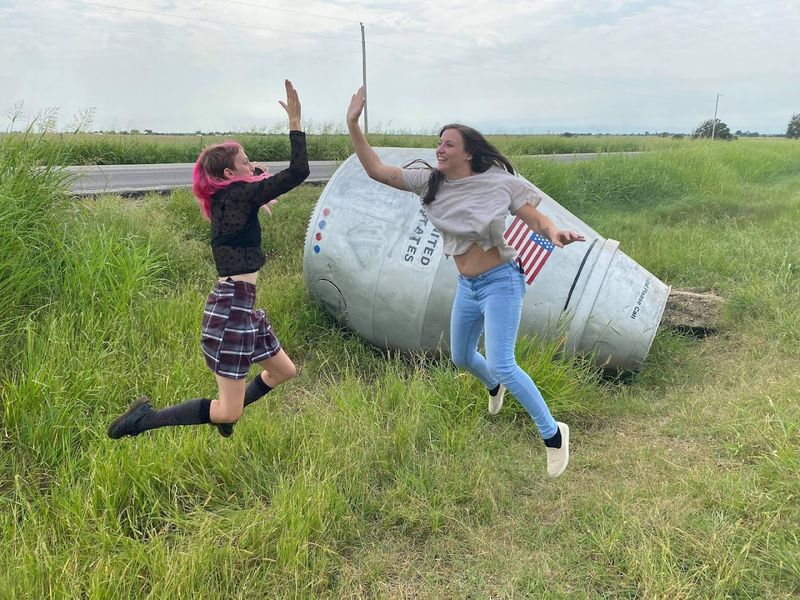
For a piece of painted industrial equipment sitting in a ditch with no parking lot and no amenities, that score reflects genuine affection from the people who have made the trip.
The appeal is hard to explain in purely logical terms, but it has something to do with surprise. Most roadside stops in America are predictable: a historical marker, a scenic overlook, a chain restaurant.
This is none of those things.
The capsule rewards the kind of traveler who enjoys the hunt as much as the destination. Finding it requires a deliberate detour, a specific road, and a sharp eye, and that small effort makes the payoff feel earned.
People also love the humor of it. The idea that someone looked at a crashed concrete drum and thought, I should paint that to look like a spacecraft, is inherently funny and also kind of brilliant.
That creative leap is what keeps the story interesting long after the visit ends.
Travelers who pair this stop with nearby attractions like the Galloway Totem Park or the historic buildings of Chelsea tend to rate the overall day much higher than the capsule alone, making it a great anchor for a themed road trip through the region.
Practical Tips for Your Visit
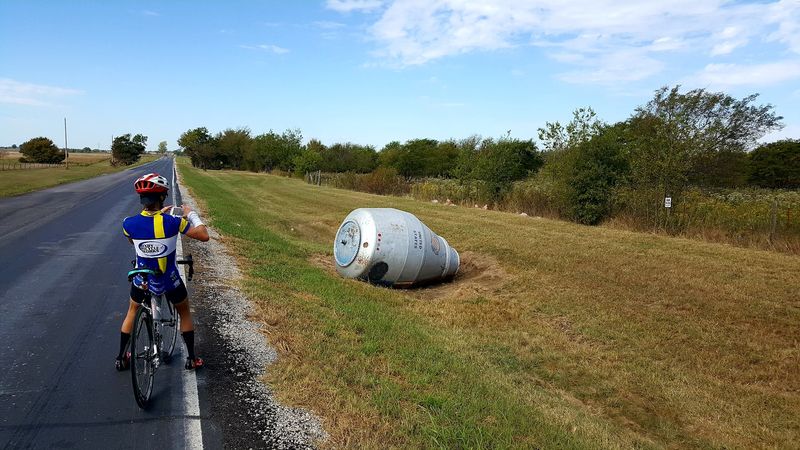
The capsule is open every single day, all 24 hours, and there is no fee to visit. Free, always accessible, and genuinely interesting, which is a rare combination in the roadside attraction world.
Parking is the main logistical challenge. There is no designated lot, and the highway shoulder is narrow.
The practical solution is to use the entrance of the farm road located about 50 yards from the capsule, which gives you enough space to pull fully off the pavement.
Keep a close eye on traffic both ways before crossing the road or walking along the shoulder. The highway is quiet but not empty, and the two-lane setup leaves little room for error.
The site has no ADA-compliant access, no restrooms, and no visitor facilities of any kind. Plan accordingly, especially if you are traveling with anyone who needs accessible terrain, as the ditch area is uneven and can be muddy after rain.
Road construction activity has periodically affected access in recent years, so checking recent visitor reports before making a long drive is a smart move. A quick look at the Facebook page or recent Google reviews will tell you whether the road and the capsule are currently accessible before you commit to the detour.
The Photography Potential Here
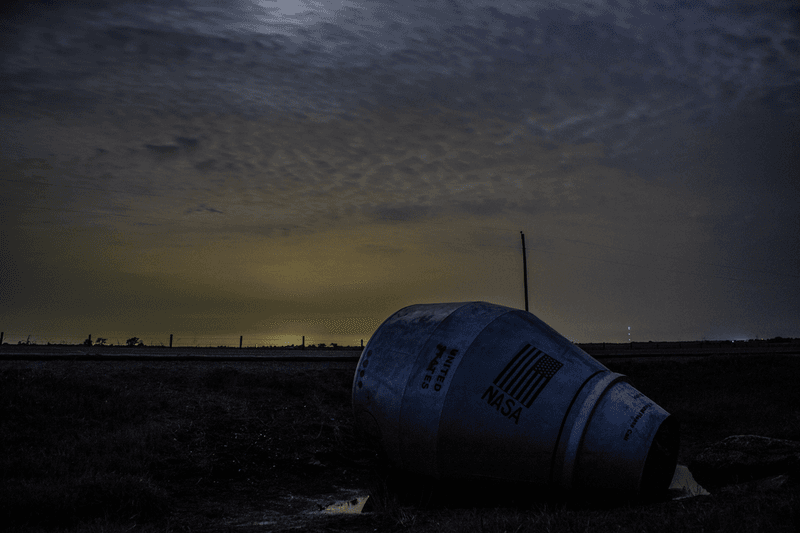
From a photography standpoint, this spot delivers something genuinely unique: an industrial object that looks completely out of place in its surroundings, which is exactly the kind of visual tension that makes for a memorable shot.
The low angle is your best friend here. Crouching down near ditch level and shooting upward against the sky makes the capsule look enormous and dramatically convincing.
From that angle, the painted fins and rounded body fill the frame in a way that erases the farm context entirely.
Wide-angle shots that include the surrounding countryside tell a different story, one that leans into the absurdity of the location. That contrast between the rural road and the spacecraft in the ditch is the real visual joke, and it lands every time.
Golden hour light, both in the early morning and late afternoon, gives the painted surface a warm metallic quality that flat midday light cannot replicate. If you have flexibility in your schedule, timing your visit around sunrise or the hour before sunset will noticeably improve your results.
The capsule also works well as a prop for playful portrait shots. Plenty of visitors have posed as astronauts, alien survivors, or confused bystanders, and those human-scale photos help communicate just how large the drum actually is when you are standing next to it.
The Uncertain Future of the Capsule
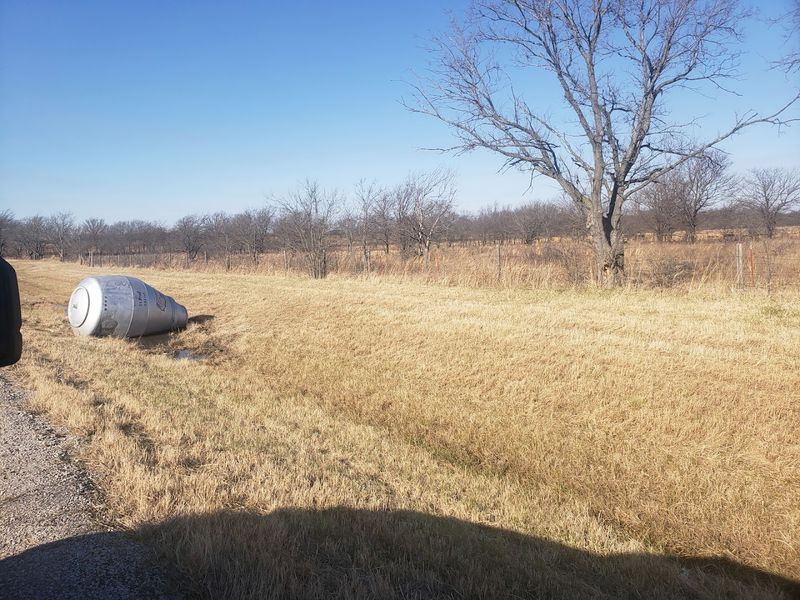
Not every roadside attraction gets to stick around forever, and this one has been living on borrowed time for a while now. Road construction projects in the area have raised real questions about how much longer the capsule will stay in its current location.
As of mid-2025, nearby road resurfacing and widening work was actively underway, and several visitors noted that the construction had left the capsule coated in road dust and the surrounding ditch filled with mud. The physical condition of the object had noticeably declined.
The widening of the road is the main concern. If the highway footprint expands into the ditch area where the capsule sits, removal becomes a practical necessity rather than a choice.
That possibility has added a sense of urgency to visits from travelers who have been meaning to stop for years.
The Facebook page dedicated to the capsule has served as an informal monitoring station for its condition and accessibility, with locals and visitors posting updates about construction progress and current site conditions.
The honest advice is to not postpone this visit indefinitely. The capsule has survived decades of Oklahoma weather and highway traffic, but its future is genuinely uncertain right now, and seeing it in person while it is still there is worth the detour.
Pairing This Stop With Other Nearby Attractions
The capsule is at its best when it anchors a larger road trip through this corner of northeastern Oklahoma rather than serving as a solo destination. The surrounding region has enough quirky and historic stops to fill a full day of driving.
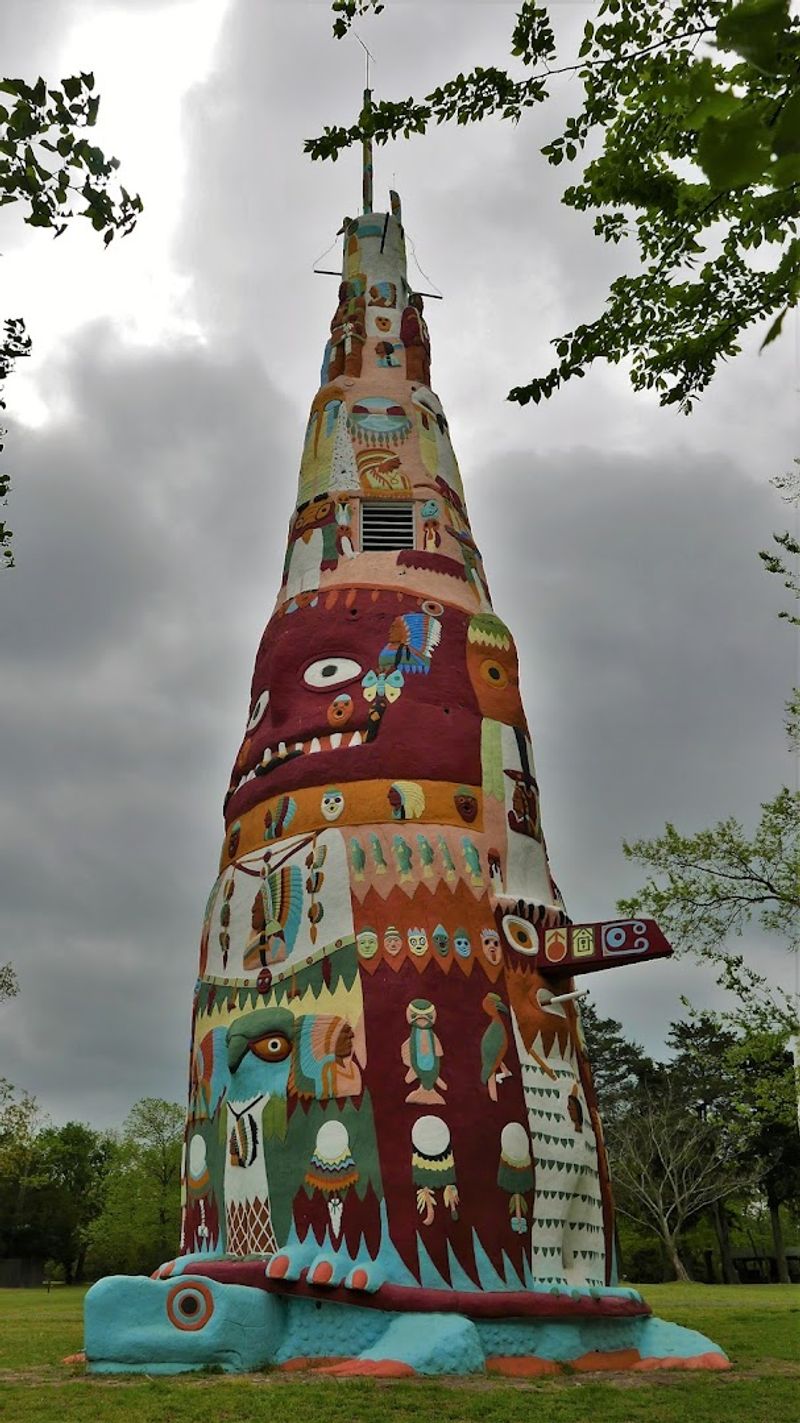
Galloway Totem Park is one of the most frequently mentioned companion stops among travelers who have done this route. The park features hand-carved totem poles in a rural setting, and the artistic spirit of the place pairs naturally with the capsule’s creative energy.
The old church and schoolhouse off Highway 28 is another stop that fits the theme of forgotten and overlooked Oklahoma history. The building has that specific kind of weathered dignity that rural structures acquire after decades of standing quietly in the landscape.
The historic buildings of Chelsea, a small town nearby, round out the itinerary nicely. Chelsea has some genuinely well-preserved older commercial architecture that rewards a slow walk through the main street.
Stringing these stops together into a single day creates an experience that feels like a genuine exploration of rural Oklahoma character rather than a checklist of oddities. The capsule alone earns two or three stars; the full route earns five, and that math is worth keeping in mind when you are planning your drive.
What This Spot Says About Oklahoma Creativity
There is something quietly wonderful about the fact that this capsule exists at all. Nobody commissioned it, no government program funded it, and no tourism board dreamed it up in a conference room.
Someone just saw an abandoned drum and decided to do something delightful with it.
That kind of unsanctioned creativity has a long and proud tradition in rural America, and Oklahoma has more than its share of it. From giant sculptures to painted water towers to roadside folk art, the state has a habit of turning ordinary objects into conversation pieces.
The capsule fits that tradition perfectly. It asks nothing of its visitors except a willingness to slow down, look twice, and appreciate a small act of imagination that has somehow outlasted the people who probably created it.
The 4.5-star community rating reflects something beyond novelty. Travelers are not just rating the object itself; they are rating the feeling of discovering that the world still has corners where someone painted a concrete drum silver and called it a spacecraft, and that is enough.
Oklahoma keeps producing these little surprises for the people willing to leave the interstate and take the slow roads, and the Winganon Space Capsule is one of the best arguments for doing exactly that every single time you get the chance.
Share this story