There is a place in northern Michigan where the trees are so tall and so old that standing beneath them feels genuinely humbling. Some of these white pines have been growing for over 360 years, which means they were already ancient when the United States was founded.
Most of Michigan’s original forest was wiped out during the great logging era of the 1800s, yet this park somehow survived, and today it stands as one of the most remarkable natural sites in the entire Midwest. I had heard about it for years before finally making the trip, and nothing quite prepared me for what I found.
The sheer scale of the canopy, the quietness of the trails, the unexpectedly fascinating logging museum, and the tiny chapel tucked inside the forest all left a strong impression. Read on, because this place has far more layers to it than most people expect.
Where the Ancient Forest Begins: Address and Location
The address for Hartwick Pines State Park is 3612 State Park Dr, Grayling, MI 49738, tucked into Michigan’s Lower Peninsula about four miles northeast of the town of Grayling.
Getting there is straightforward from Interstate 75, and the drive through the surrounding pine and aspen forest gives you a preview of what is waiting inside. The park is rated 4.8 stars from over 2,100 reviews, which tells you something about how consistently it delivers.
Hours run from 8 AM to 10 PM daily, and a Recreation Passport is required for vehicle entry into Michigan state parks. You can call ahead at +1 989-348-7068 or check the official DNR website for the latest updates, especially since the visitor center is currently being renovated and is expected to reopen around May 2026.
Arriving early on weekends is a smart move, as the parking area near the Old Growth Forest Trail fills up quickly during peak season.
The 49-Acre Old-Growth Forest That Defied the Loggers
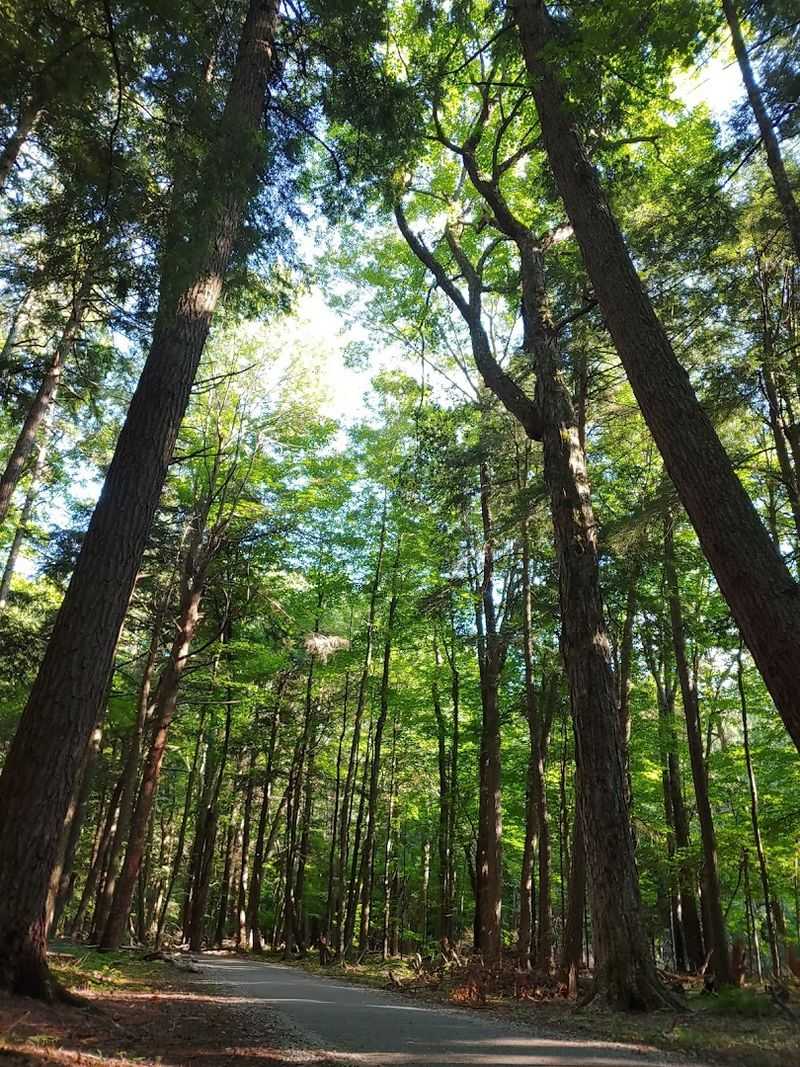
Most of Michigan’s original forest was gone by the early 1900s, cleared in one of the most intensive logging operations in American history. Somehow, this 49-acre tract of old-growth forest was never cut, and today it holds some of the oldest living trees in the state.
The white pines here reach heights exceeding 150 feet, and their trunks are so wide that you cannot wrap your arms around them. Eastern hemlocks and sugar maples fill in around the giants, creating a layered canopy that blocks much of the sky overhead.
The feeling of walking through this forest is genuinely different from any ordinary woodland hike. The scale of everything around you shifts your perspective in a way that is hard to describe until you experience it yourself.
On a warm day, the shade is deep and cool, and the light that does filter through arrives in long, golden beams.
This surviving patch of original forest is what makes the park truly one of a kind in the Midwest.
The Old Growth Forest Trail: A Walk Through Living History
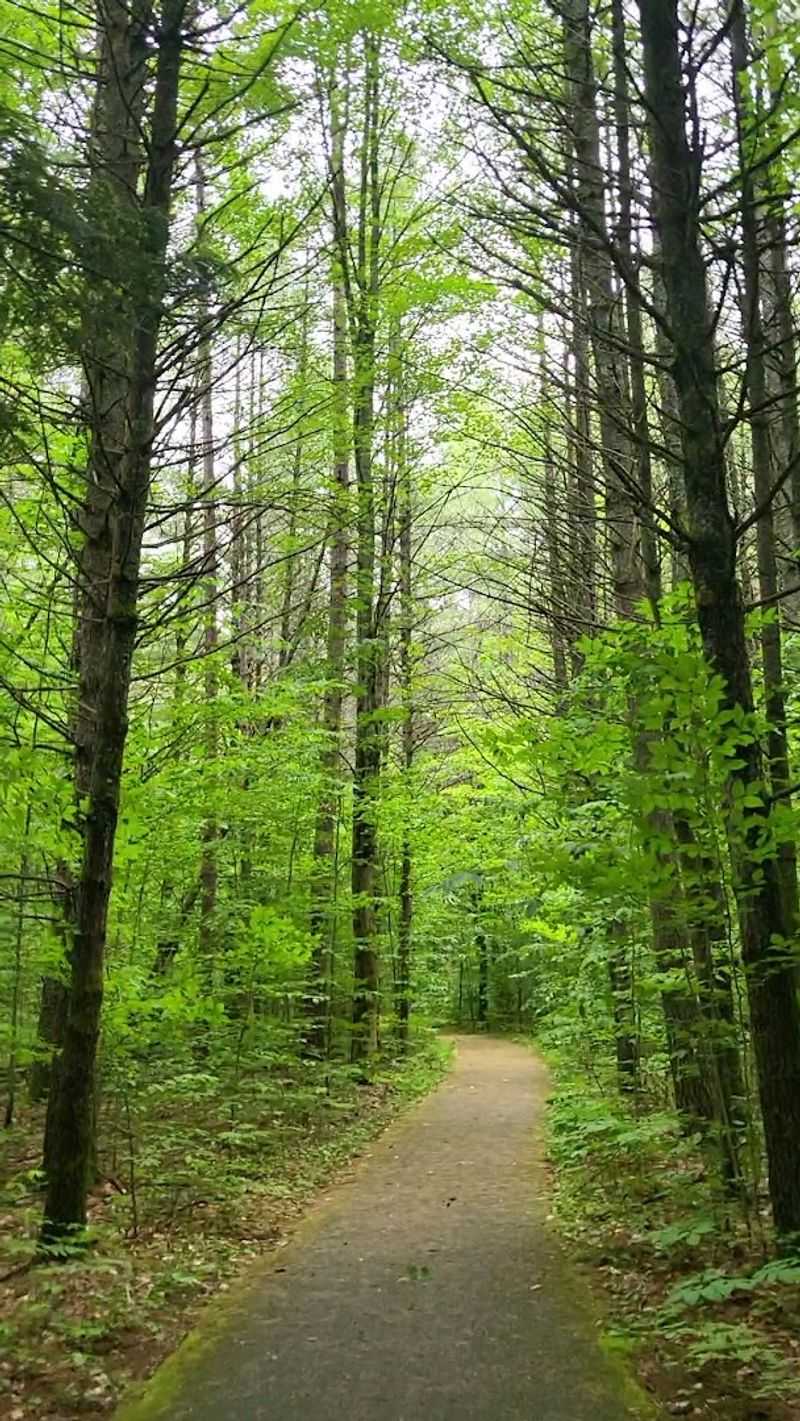
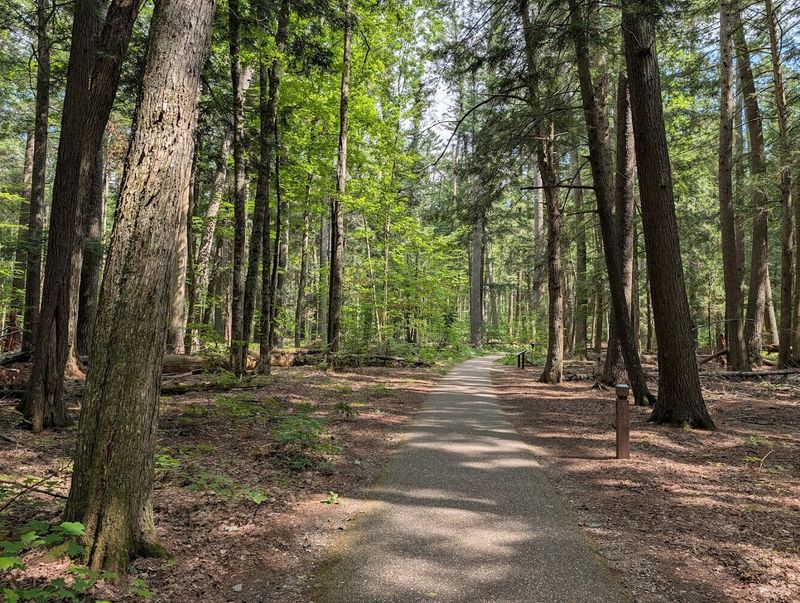
The Old Growth Forest Trail is a 1.25-mile paved loop that takes you directly through the ancient forest, and it is one of the most accessible nature trails you will find anywhere in Michigan.
The smooth surface means visitors using wheelchairs, strollers, or mobility aids can experience the same towering trees as everyone else, which is a genuinely thoughtful feature. Interpretive signs are placed at regular intervals along the route, explaining the ecology of the forest, the age of specific trees, and the history of how this patch survived the logging era.
The trail is short enough to complete comfortably in under an hour at a relaxed pace, but most people slow down considerably once they are surrounded by the old pines. There is a natural tendency to stop, look up, and just take it all in.
Hot summer days are actually a great time to visit this particular trail, as the dense canopy provides remarkable shade that keeps the temperature noticeably cooler than the surrounding landscape.
The Logging Museum That Tells Michigan’s Most Complicated Story
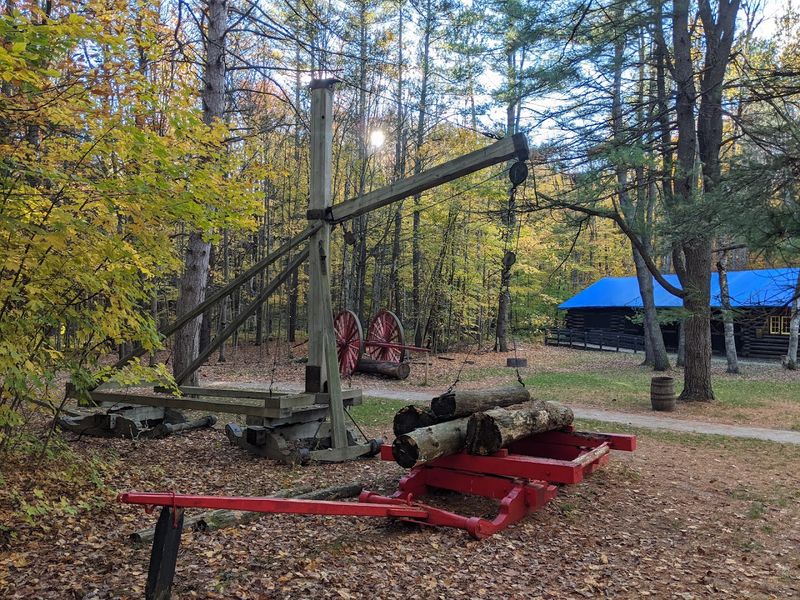
Before visiting, I expected the Logging Museum to be a quick stop with a few old photographs and maybe some dusty tools behind glass. What I found was genuinely surprising and far more engaging than anticipated.
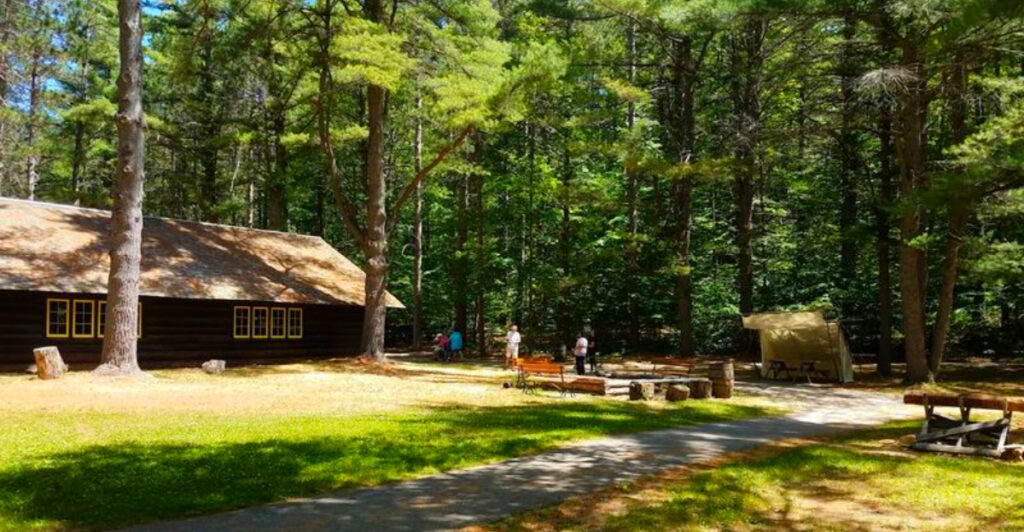
The museum is housed in two replica logging camp buildings and tells the story of Michigan’s lumber boom era with real artifacts, detailed exhibits, and outdoor displays of heavy equipment that once tore through forests across the state. A working steam-powered sawmill operates during summer events, and watching it run is something that holds the attention of both kids and adults.
Volunteers bring the sawmill demonstrations to life with a level of enthusiasm that makes the history feel immediate rather than distant. The exhibits inside explain not just how logging worked, but what it meant for Michigan’s economy, its communities, and its landscape.
Understanding what was lost makes standing in the surviving old-growth forest feel even more significant, and that contrast is something the museum handles with care and honesty.
The Chapel of the Pines: A Quiet Surprise in the Woods
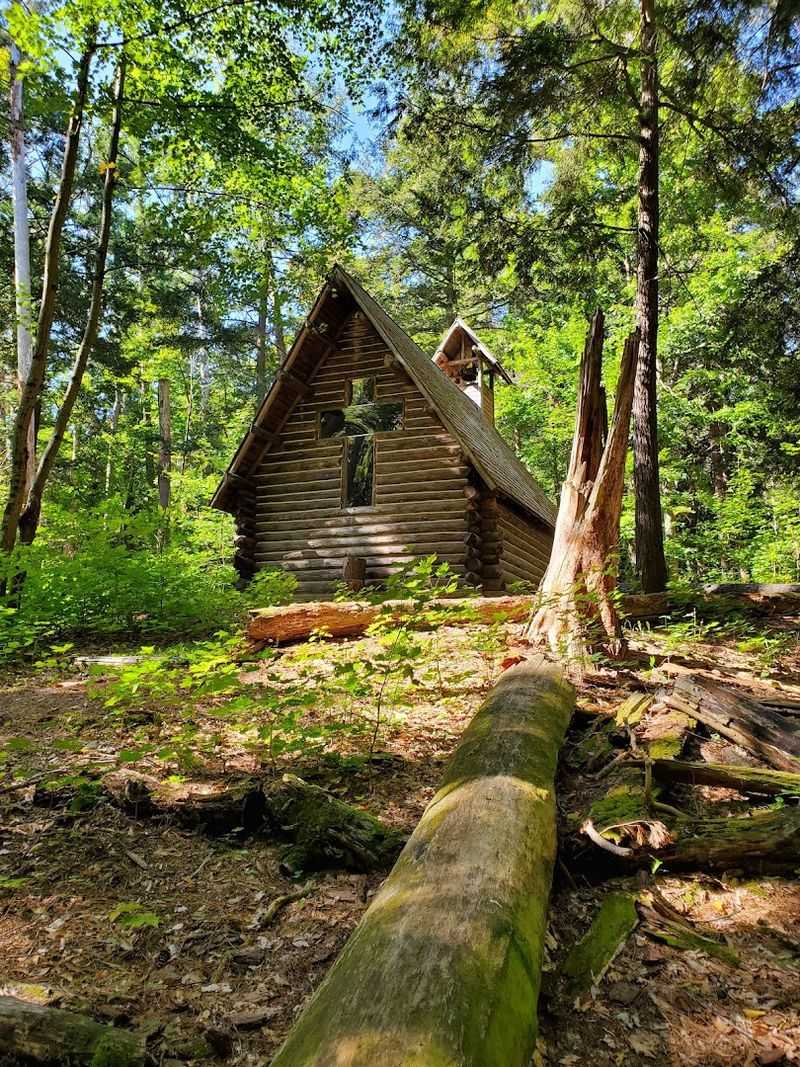
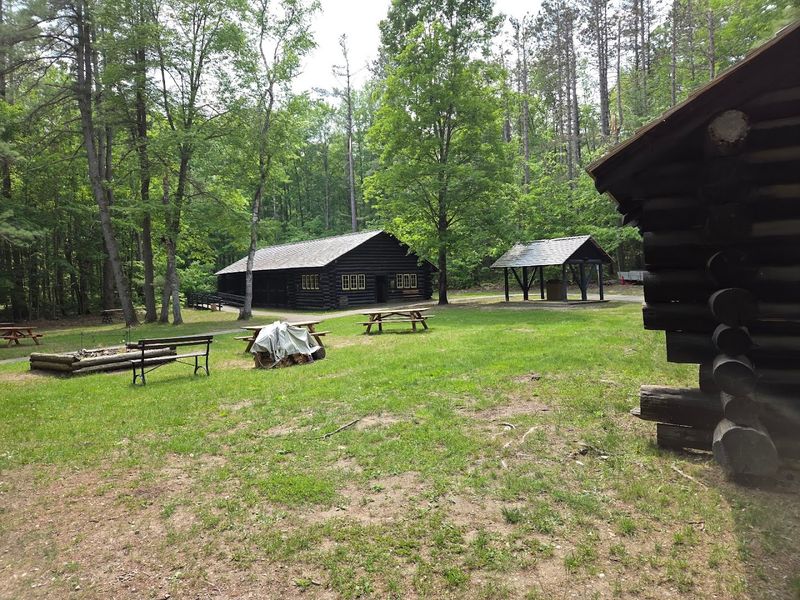
One of the most unexpected things about this park is finding a small chapel tucked quietly among the old-growth pines. The Chapel of the Pines sits along the Old Growth Forest Trail and has a simplicity that feels completely at home in the forest around it.
The structure is modest, made of wood, and open to visitors regardless of faith or background. People stop here to sit quietly, take photographs, or simply absorb the unusual combination of ancient trees and a human-built place of reflection.
It is the kind of detail that does not show up prominently in most travel guides but consistently ends up being one of the things visitors remember most. The chapel was donated to the park and has been a feature of the landscape for decades, adding a layer of human history to a place already rich in natural history.
Whether you pause inside for two minutes or twenty, the chapel has a way of making the surrounding forest feel even more serene than it already does.
Camping Under the Pines: From Primitive to Full Hookup
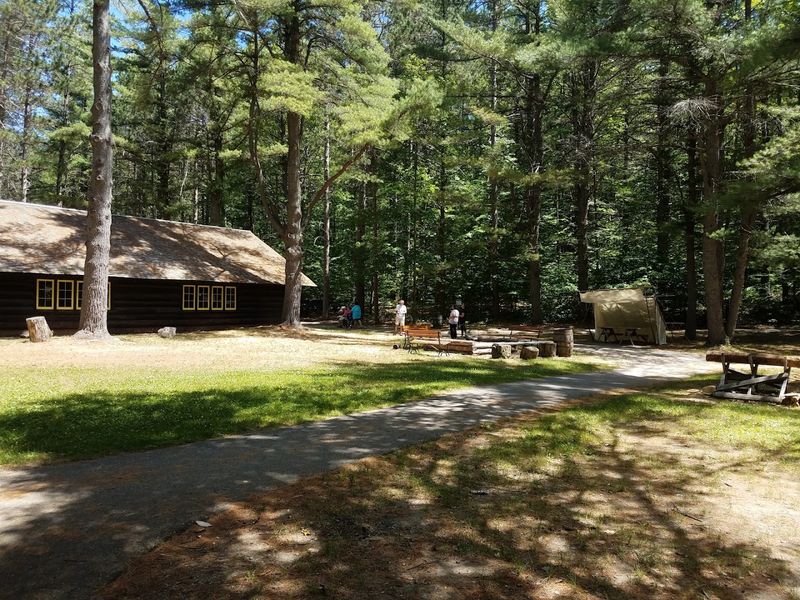
Hartwick Pines offers a camping experience that covers just about every preference, from primitive tent sites to electric-only spots to full hookup sites for RVs and campers.
The electric-only sites tend to get the highest praise from visitors, and it is easy to see why. Each one is surrounded by trees on multiple sides, giving a sense of privacy that the full hookup section does not quite match.
The bathhouses are clean and well-maintained, the showers work reliably, and the overall atmosphere of the campground leans quiet rather than rowdy.
There is even a small library shed stocked by the camp host with books, movies, and craft supplies for kids, which is exactly the kind of thoughtful touch that turns a good campground into a memorable one. The dump station has a single sewer spot, so timing matters if you are there during peak season.
Fall camping here is especially rewarding, with the aspens turning gold and the pine scent hanging heavy in the cool air.
Beyond the Old Growth: Miles of Trails for Every Type of Hiker
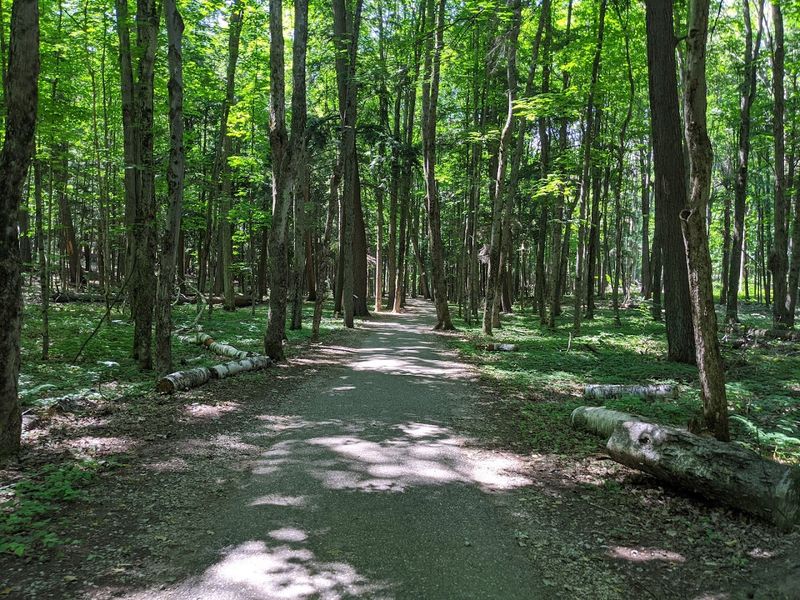
The old-growth loop gets most of the attention, but the park’s trail network extends far beyond that single path. Hartwick Pines has miles of trails that range from flat, easy walks to longer routes with genuine variety in terrain and scenery.
The Au Sable Foot Trail is one of the standouts, covering roughly three miles through a forest that shifts in character as you walk. Moss-covered ground, small elevation changes, ancient pines, and two crossings of the Au Sable River make it a hike worth the extra time.
Other trails lead to Glory Lake and Bright Lake, passing through wetland areas on raised boardwalks and bridges that keep your feet dry while delivering some of the park’s best scenery. Fishing from the dock at one of the lakes is a popular option for visitors who want to slow the pace even further.
With trails suitable for cross-country skiing in winter and hiking in every other season, the park manages to stay relevant and rewarding across the entire year.
The Au Sable River: A Rolling Backdrop to the Whole Experience
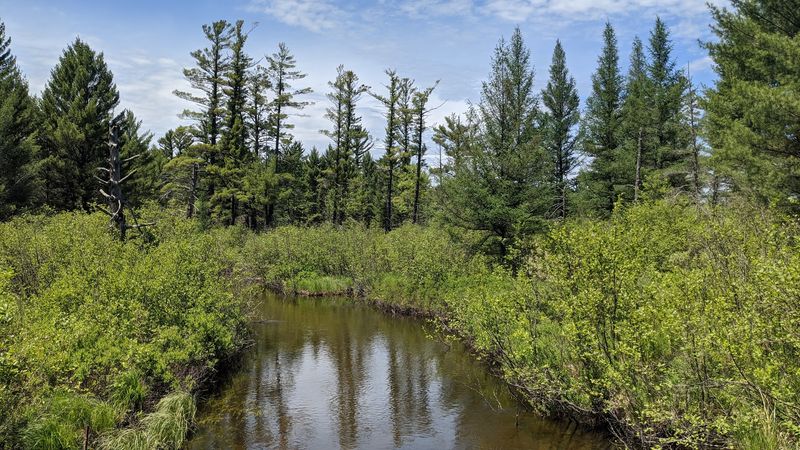
The Au Sable River runs through and around the park, and it adds a dimension to the visit that goes well beyond background scenery. This river has a long history in Michigan as one of the premier trout streams in the Midwest, and its clear, cold water is visible from several points along the trail network.
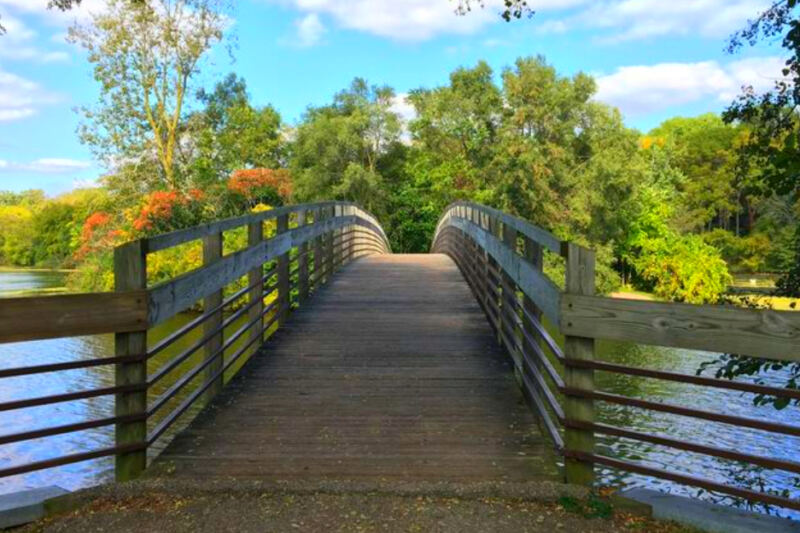
The Au Sable Foot Trail crosses the river twice, and both crossings offer a chance to stop on the bridge and watch the water move through the forested corridor below. The river’s banks are lined with pines, cedars, and ferns, and the whole scene has a timeless quality that fits perfectly with the park’s overall character.
Rolling hills overlook the river in certain sections, giving a slightly elevated view of the surrounding landscape that is worth the modest climb. The park’s official description specifically calls out these river views as one of its defining features.
For anyone who has not yet explored the Au Sable Trail, that route alone is reason enough to plan a second visit.
Wildlife and Nature: What to Watch for on the Trails
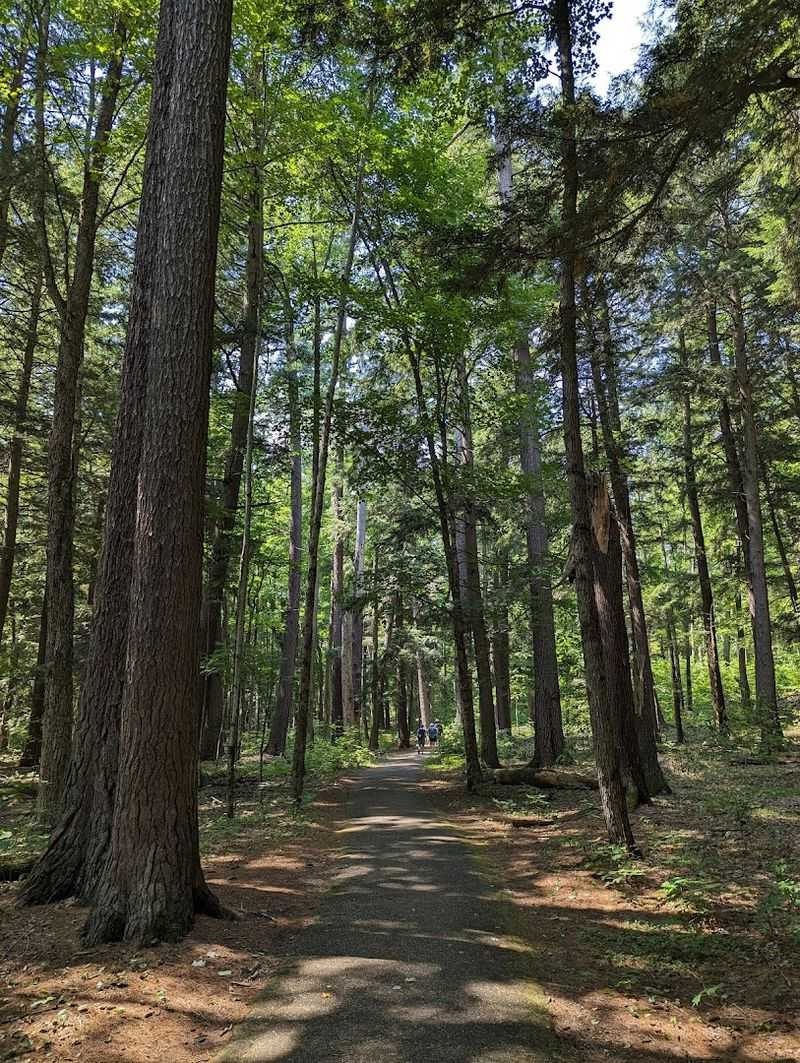
The park’s wildlife is one of those pleasant surprises that shows up without much fanfare. Black squirrels are a genuine curiosity here, and spotting one feels like a small reward for paying attention to what is happening off the trail.
White-tailed deer move through the campground and forest edges at dawn and dusk, and various bird species are active throughout the tree canopy, particularly in spring and early summer. The mix of old-growth pines, wetlands, lakes, and river habitat creates a diverse environment that supports more wildlife than a single forest type would on its own.
Bringing binoculars is worth the extra weight in your pack, especially for the longer trails where the forest opens up near the water. The park is also dog-friendly, provided pets are kept on a leash, so four-legged trail companions are a common sight on the paved loop and beyond.
The natural variety here rewards slow, observant visitors far more than those who rush through to check the trail off a list.
Visiting in Every Season: How the Park Changes Through the Year
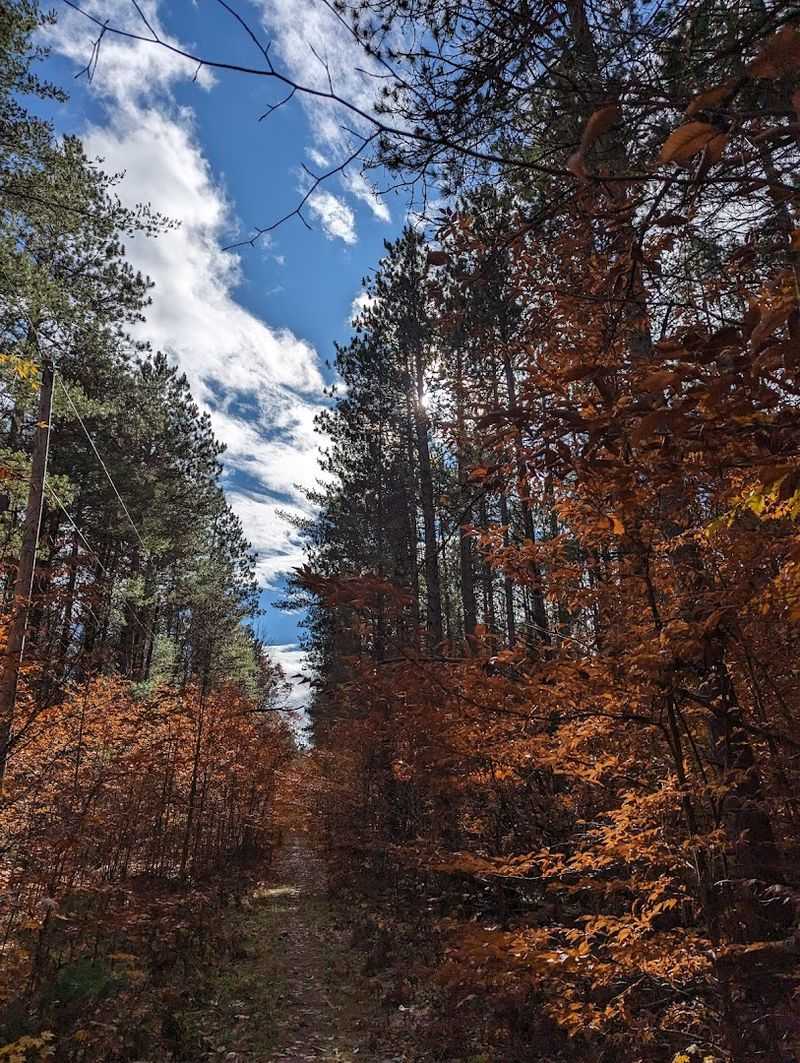
Summer draws the biggest crowds, but the park shifts into something equally compelling as the seasons change. Fall brings golden aspens that contrast sharply with the dark green of the pines, and the cooler temperatures make hiking feel effortless compared to July.
Winter transforms the trail network into a cross-country skiing destination, with groomed conditions that have earned the park a loyal following among skiers from across northern Michigan. The old-growth forest looks genuinely dramatic under a layer of snow, with the massive trunks rising out of a white landscape in a way that photographs cannot fully capture.
Spring arrivals get the forest at its freshest, with ferns pushing up through the leaf litter and the river running at its fullest. One practical note for winter visitors: the visitor center and restrooms may not be open on weekdays, so checking ahead before making a long drive is strongly recommended.
Each season offers a reason to return, and repeat visitors consistently describe the park as a place that never feels the same twice.
Why This Park Stays With You Long After You Leave
There are state parks that you visit once, enjoy, and then move on from without much lingering thought. Hartwick Pines is not one of those parks.
The combination of genuinely ancient trees, a well-told history of logging, accessible trails, excellent camping, and quiet natural beauty creates an experience that holds its weight long after the drive home.
The fact that this forest survived when nearly everything around it was cut down gives the place a significance that goes beyond aesthetics. Visiting here feels like witnessing something that was almost lost, and that awareness adds real meaning to even a short walk through the old pines.
The park’s 4.8-star rating across thousands of reviews is not an accident. It reflects a place that consistently delivers on its promise, whether you are a first-time visitor or someone returning for the tenth time.
Michigan has many beautiful natural spaces, but few of them carry the combination of ecological rarity, human history, and quiet grandeur that makes this particular park feel like something worth protecting, visiting, and sharing with everyone you know.
Share this story