Some buildings take a few months to finish. Others take centuries.
The world’s most breathtaking sacred structures were not built in a hurry — they were passed down from one generation to the next like a sacred promise, each era adding its own chapter to a story carved in stone. From cathedrals with unfinished facades to basilicas still under construction today, these buildings remind us that great things rarely come quickly.
Sagrada Família, Barcelona (Spain)
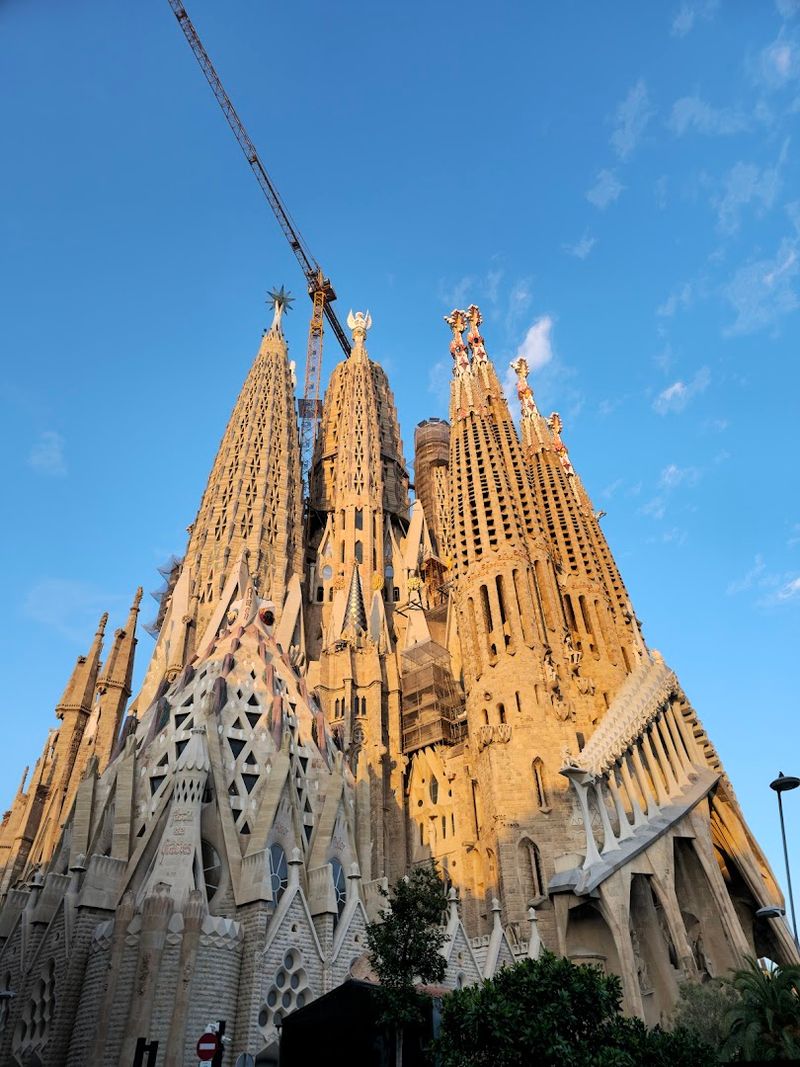
Still under construction after more than 140 years, the Sagrada Família is arguably the most ambitious building project on Earth. Antoni Gaudí took over as lead architect in 1883 and dedicated the rest of his life to the project — he was so committed that he actually moved into the construction site during his final years.
Gaudí designed every inch with deep Catholic symbolism. The facades tell Bible stories through sculpture, the towers represent apostles and saints, and the interior columns branch like a stone forest reaching toward heaven.
When Gaudí died in 1926, less than a quarter of the basilica was finished.
The Spanish Civil War destroyed many of his original plans, forcing architects to reconstruct them from models and photographs. Modern technology, including 3D printing and computer modeling, has dramatically sped up progress.
Completion is now expected around 2026 — the centennial of Gaudí’s death. Few buildings in history have carried so much artistic, spiritual, and generational weight all at once.
Cologne Cathedral, Germany
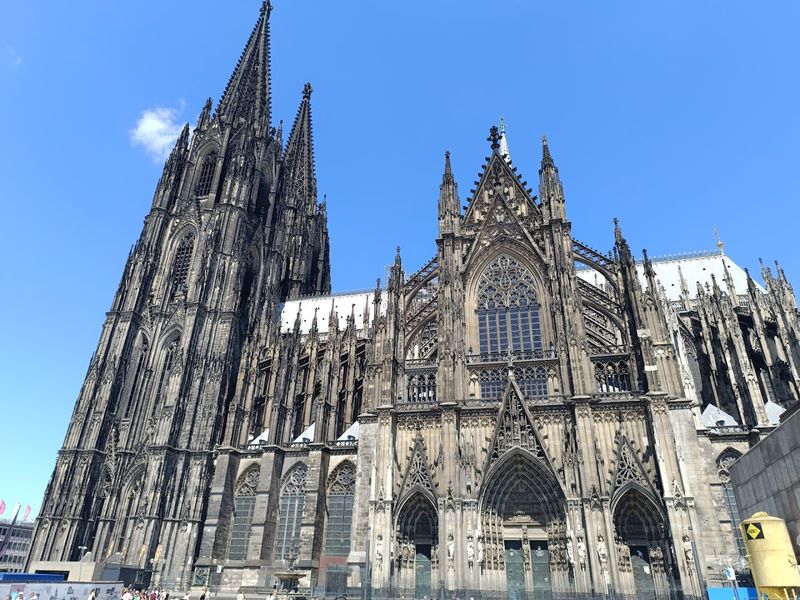
For nearly 300 years, a giant wooden crane sat perched atop Cologne Cathedral’s unfinished south tower — so long that it became a local landmark. Construction began in 1248, stalled in the 1500s due to money troubles, and did not resume until the 1800s.
The final stone was laid in 1880, making it a 632-year project.
When it was completed, the cathedral briefly held the title of the tallest building in the world. Its twin spires stretch 157 meters into the sky, and every surface is covered in Gothic detailing so fine it looks almost like lacework carved from stone.
The 19th-century builders used the original medieval blueprints to ensure stylistic consistency across centuries.
Cologne Cathedral became a national symbol for Germany during a period when the country was working toward unification. Finishing it felt like a statement of strength and identity.
Today, it attracts roughly six million visitors each year and is a UNESCO World Heritage Site. Remarkably, the building survived World War II bombing raids largely intact — perhaps the most miraculous part of its very long story.
Notre-Dame Cathedral, Paris (France)
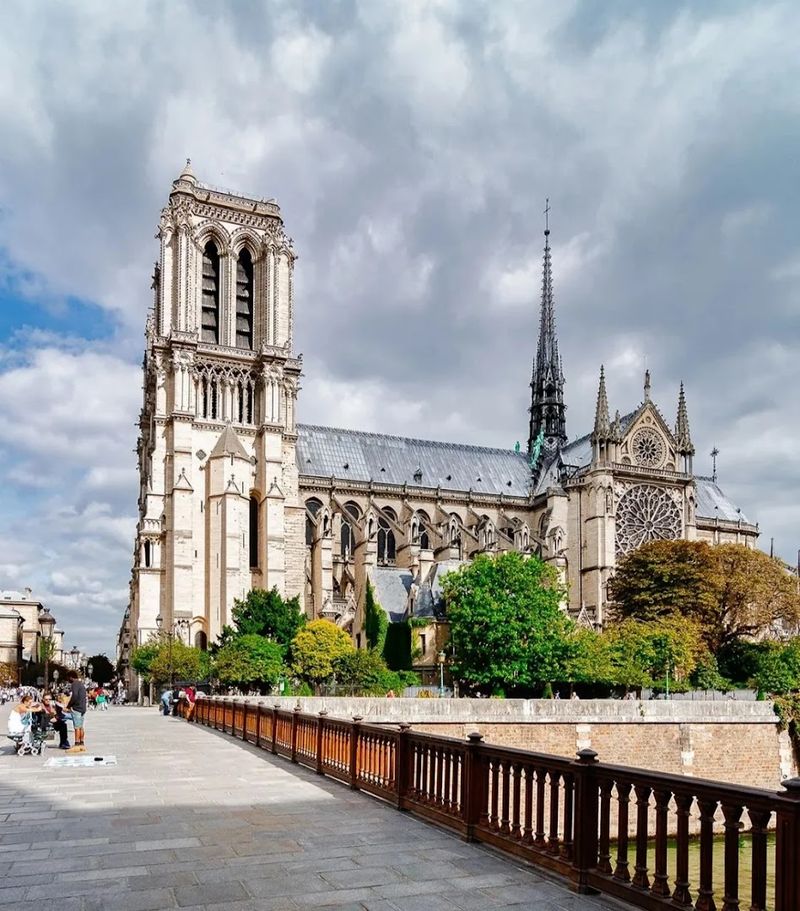
When construction on Notre-Dame began in 1163, the builders knew they would never see it finished. That was simply the reality of cathedral-building in the Middle Ages — you started something magnificent and trusted future generations to carry it forward.
The main structure was largely complete by the early 14th century, nearly 200 years later.
Over the centuries, various architects left their fingerprints on the building. The famous spire was actually a 19th-century addition by architect Eugène Viollet-le-Duc, who led a massive restoration effort that reshaped much of how Notre-Dame looks today.
Flying buttresses, gargoyles, and rose windows all evolved across different eras of construction.
The devastating fire of April 2019 shocked the world, but it also reignited global interest in the cathedral’s history. Reconstruction efforts have drawn on medieval techniques alongside cutting-edge technology.
Notre-Dame is expected to reopen in late 2024, adding yet another chapter to its 860-year story. It is a building that has been burning, rebuilding, and inspiring awe for so long that resilience seems baked right into its ancient stones.
Milan Cathedral (Duomo di Milano), Italy
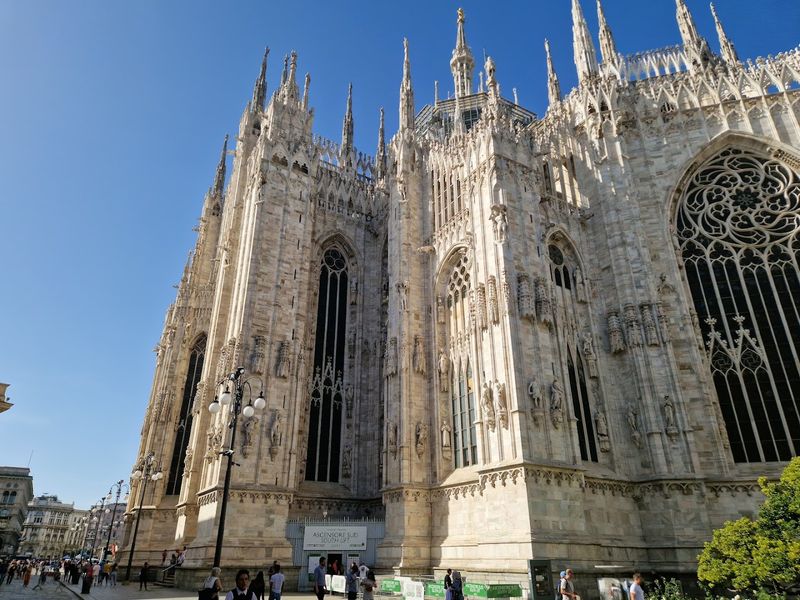
More than 3,400 statues decorate the Duomo di Milano — and every single one of them took time, skill, and money that the city of Milan had to find across six centuries. Construction kicked off in 1386 under Duke Gian Galeazzo Visconti, who wanted a cathedral so grand it would make the rest of Europe jealous.
Spoiler: he succeeded, but it took until 1965 to officially finish the last details.
The project employed hundreds of architects, sculptors, and craftsmen over its lifetime. Napoleon Bonaparte even got involved, ordering the facade to be completed in 1805 for his coronation as King of Italy.
That royal nudge helped move things along after decades of slow progress.
The cathedral is built almost entirely from Candoglia marble, a pink-white stone quarried specially for the project. Workers even created a dedicated canal system to transport the heavy marble blocks directly to the construction site.
Standing on the rooftop terrace today, surrounded by a forest of marble pinnacles, you get a real sense of how obsessively detailed the whole project is. Few buildings reward close inspection quite like the Duomo.
St. Peter’s Basilica, Vatican City
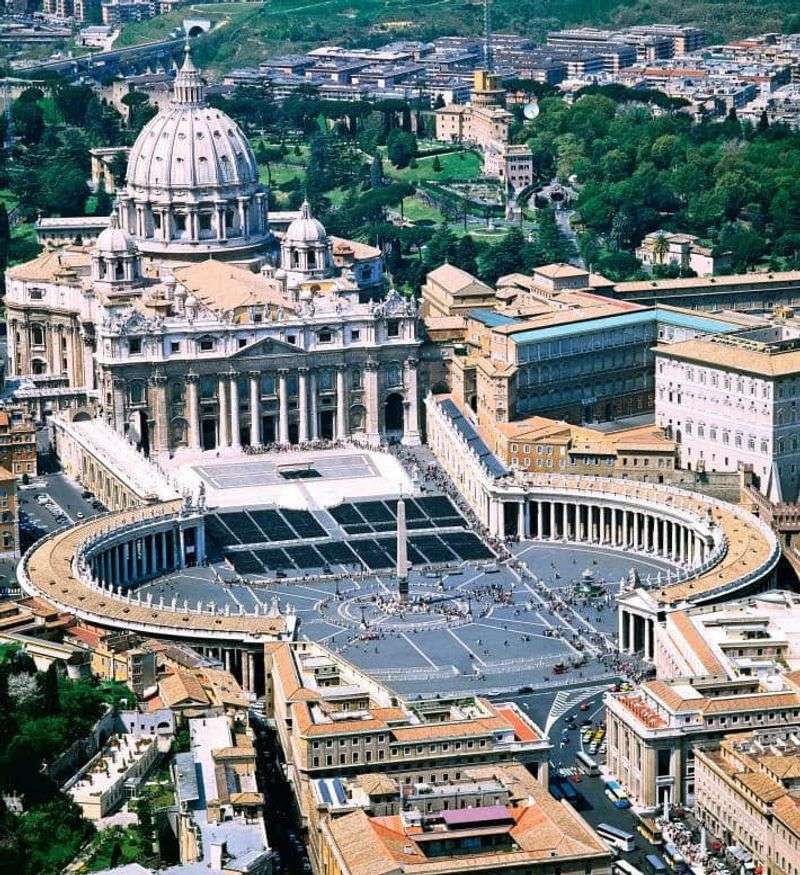
Sixteen popes oversaw the construction of St. Peter’s Basilica — which tells you everything you need to know about how long and complicated the project was. Building began in 1506 when Pope Julius II ordered the old 4th-century basilica demolished to make way for something far grander.
What followed was 120 years of construction, argument, and genius.
The list of architects who worked on it reads like a Renaissance hall of fame: Bramante, Raphael, Michelangelo, and Bernini all left major marks on the building. Michelangelo, appointed chief architect at age 71, redesigned the iconic dome and worked on it until his death in 1564.
The dome was completed 26 years later, following his original plans.
Bernini added the sweeping colonnaded piazza in the 17th century, giving the basilica its dramatic theatrical entrance. The completed building can hold up to 60,000 people and remains one of the largest churches in the world.
Inside, every mosaic, sculpture, and gilded ceiling detail was crafted to inspire awe and communicate the Church’s power. It absolutely still works, centuries later.
Westminster Abbey, London (England)
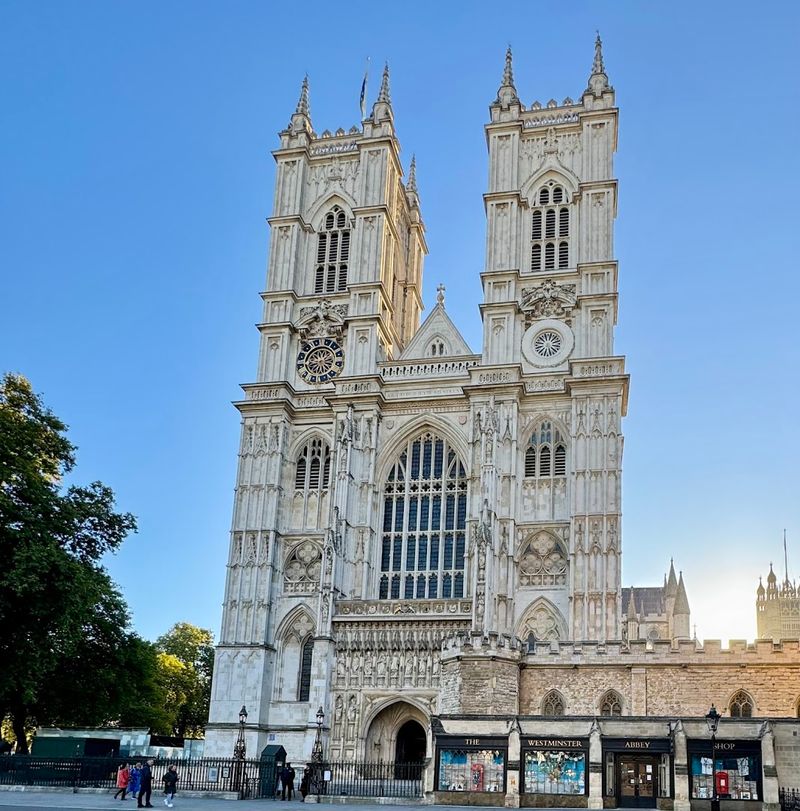
Thirty-nine monarchs have been crowned inside Westminster Abbey since 1066 — and the building itself has been quietly evolving the entire time. The current Gothic structure was begun in 1245 by King Henry III, who wanted a church worthy of England’s patron saint, Edward the Confessor, whose tomb was already on the site.
Work continued in phases for the next several centuries.
The famous western towers, which define the Abbey’s recognizable skyline silhouette, were not added until the 18th century, designed by Nicholas Hawksmoor. That means the building most people picture today includes elements spanning nearly 500 years of construction.
Chapels, cloisters, and the famous Poet’s Corner were all added at different times by different hands.
Westminster Abbey is not just a church — it is a layered national archive in stone and stained glass. Over 3,000 people are buried there, including Charles Darwin, Isaac Newton, and Geoffrey Chaucer.
Each addition to the building was made with the weight of history in mind, which gives the whole place an almost overwhelmingly dense atmosphere. Walking through it feels less like visiting a church and more like stepping inside British history itself.
Chartres Cathedral, France
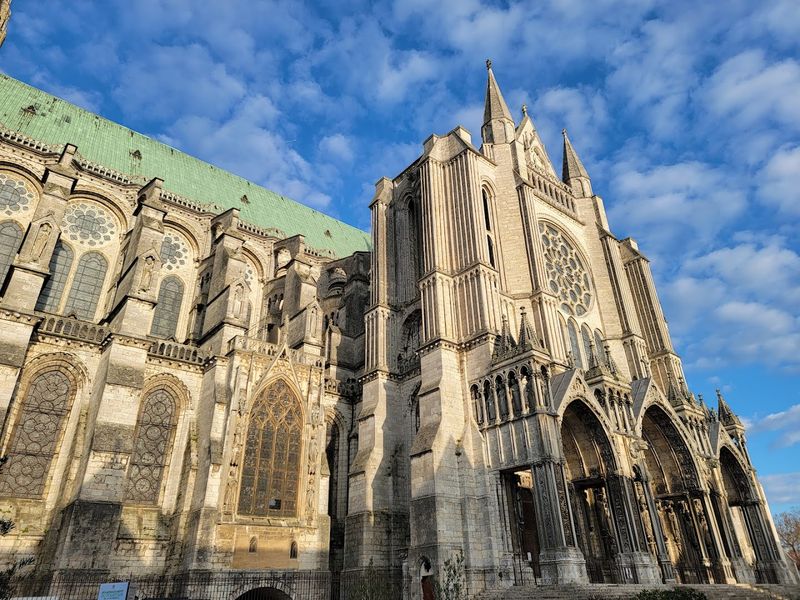
Chartres Cathedral has two towers that do not match, and that quirky detail is actually a perfect summary of its history. The older south tower is Romanesque, built in the 12th century.
The taller north tower was added in the 16th century in a completely different Gothic style. Nobody seemed to mind the mismatch — the cathedral was too important to fuss over symmetry.
Most of the current structure was built with remarkable speed after a fire in 1194 destroyed the earlier church. Construction took only about 26 years for the main body, which is almost unheard of for a medieval cathedral of this scale.
That speed gave Chartres an unusual stylistic unity that many longer-built cathedrals lack.
The real glory of Chartres is its stained glass — 176 windows covering nearly 2,600 square meters of glass, most of it original from the 12th and 13th centuries. The deep cobalt blue known as Chartres Blue is famous among art historians worldwide.
Ongoing restoration and preservation work has extended the cathedral’s active building timeline well into the modern era. Every generation since 1194 has had some role in keeping this extraordinary place alive and brilliant.
Hagia Sophia, Istanbul (Turkey)
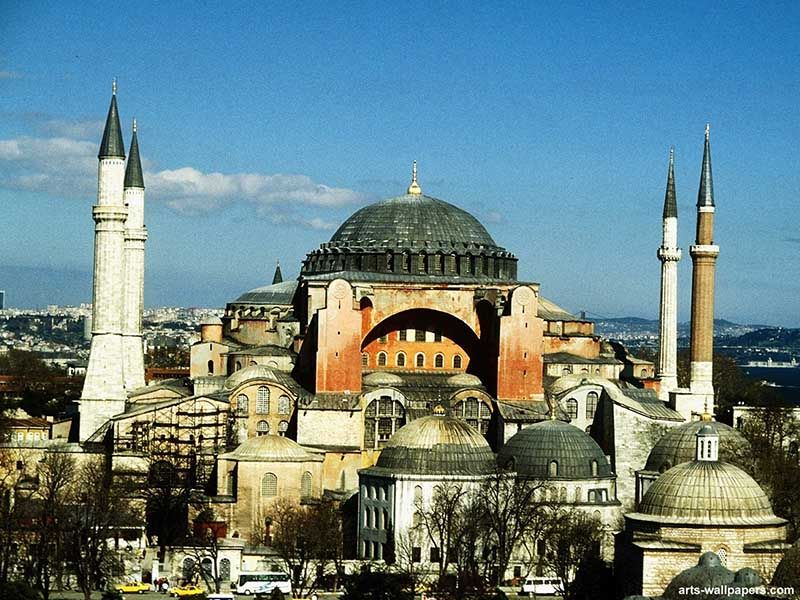
Emperor Justinian reportedly walked into the completed Hagia Sophia in 537 AD and declared, “Solomon, I have surpassed you” — a bold claim, but honestly not an unreasonable one. The original structure went up in just five years, which was extraordinary for its time and size.
But that was only the beginning of its very long, very complicated life.
For nearly a thousand years it served as the grandest cathedral in Christendom. After the Ottoman conquest of Constantinople in 1453, Sultan Mehmed II converted it into a mosque, and four minarets were added to its exterior over the following centuries.
Each new ruler added layers — calligraphy, marble panels, chandeliers — transforming the interior while leaving the Byzantine bones intact.
In 1934, Turkey’s first president Mustafa Kemal Atatürk converted it into a museum. In 2020, it was reconverted into an active mosque.
Each transition brought new modifications and restorations, meaning Hagia Sophia has been continuously adapted across nearly 1,500 years. Its massive dome, which pioneered new engineering techniques when it was built, still stands as one of the most breathtaking architectural achievements in human history.
Basilica of San Petronio, Bologna (Italy)
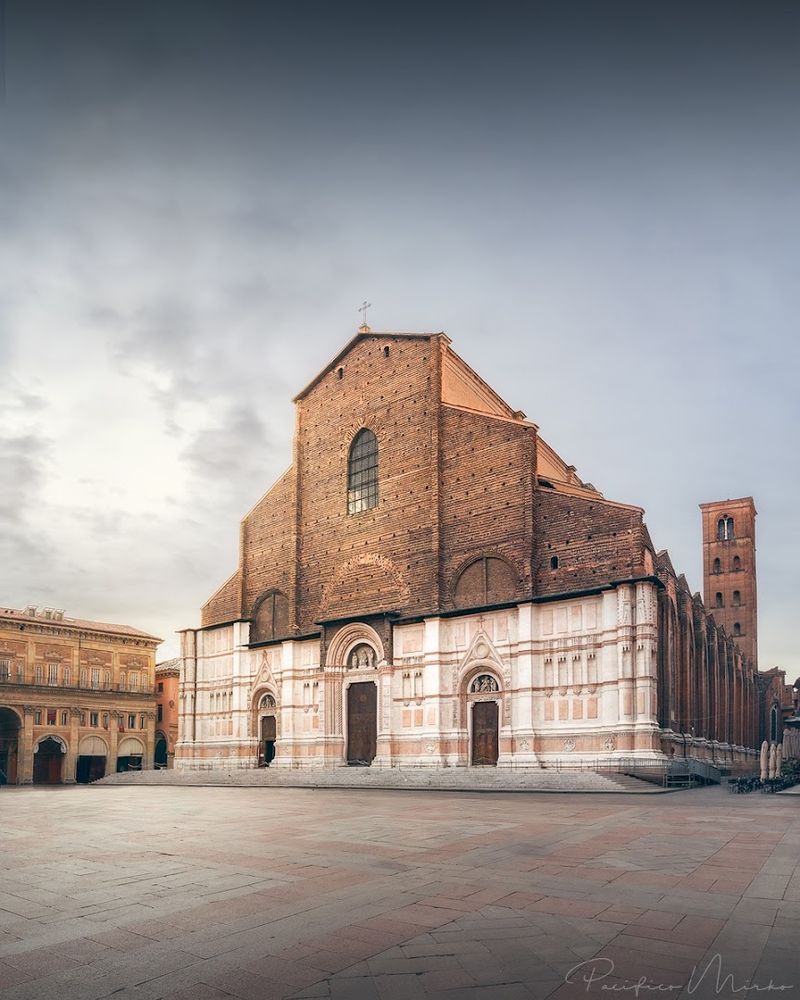
The unfinished facade of the Basilica of San Petronio is one of the most honest things in architecture. The bottom half is clad in elegant pink and white marble.
The top half is bare red brick. Construction started in 1390, and the facade has looked this way for over 600 years — a permanent reminder that ambition does not always come with a completion date.
Originally, the plan was to build the largest church in Christendom, surpassing even St. Peter’s Basilica in Rome. Pope Nicholas V reportedly had the plans scaled down because he was not thrilled about a rival church outgrowing his own.
Political interference from the Vatican is one reason the project never reached its full intended scope.
Despite being unfinished, San Petronio is still one of the largest Gothic churches in the world, stretching 132 meters long and 60 meters wide. It houses a fascinating astronomical instrument — a meridian line inlaid in the floor, used to track the sun’s position.
The church remains an active place of worship in Bologna today. Its incompleteness is not a failure; it is a living document of interrupted dreams and shifting political winds across centuries.
Speyer Cathedral, Germany
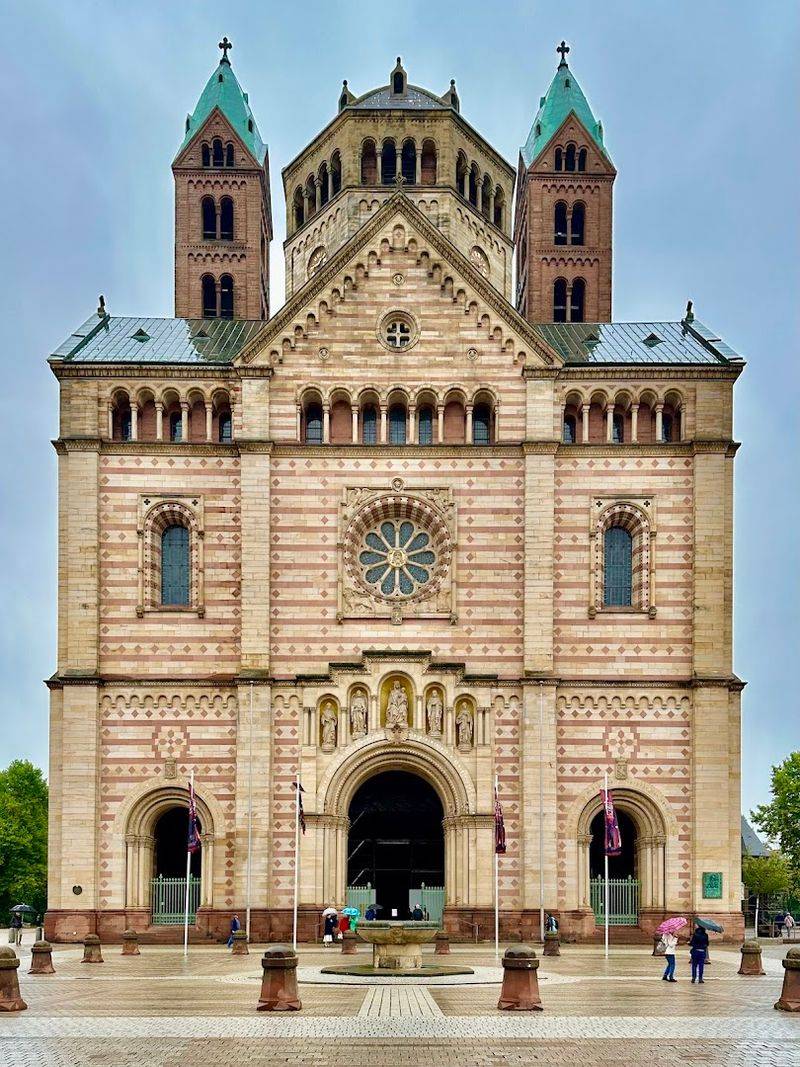
Speyer Cathedral is old enough to have witnessed the rise and fall of the Holy Roman Empire — and its walls still carry the scars. Originally completed in the 1060s under Emperor Henry III, the cathedral underwent a massive expansion under Henry IV that doubled its size and redefined its architectural character.
Those two building phases alone spanned more than 50 years.
Over the following centuries, wars and fires repeatedly damaged the structure, triggering reconstruction efforts that each added new layers to its history. French troops burned significant portions of it in 1689, and rebuilding efforts continued well into the 18th century.
Each round of reconstruction brought new craftsmen, new techniques, and subtle changes to the building’s form.
Today, Speyer Cathedral is considered the finest surviving example of Romanesque architecture in the world and is a UNESCO World Heritage Site. Its crypt, which holds the tombs of eight Holy Roman Emperors and German kings, is one of the most significant royal burial sites in Europe.
The building’s sheer age and layered history make it feel less like a single construction project and more like a geological formation — built up slowly, patiently, over a very long time.
Prague Castle Cathedral (St. Vitus), Czech Republic
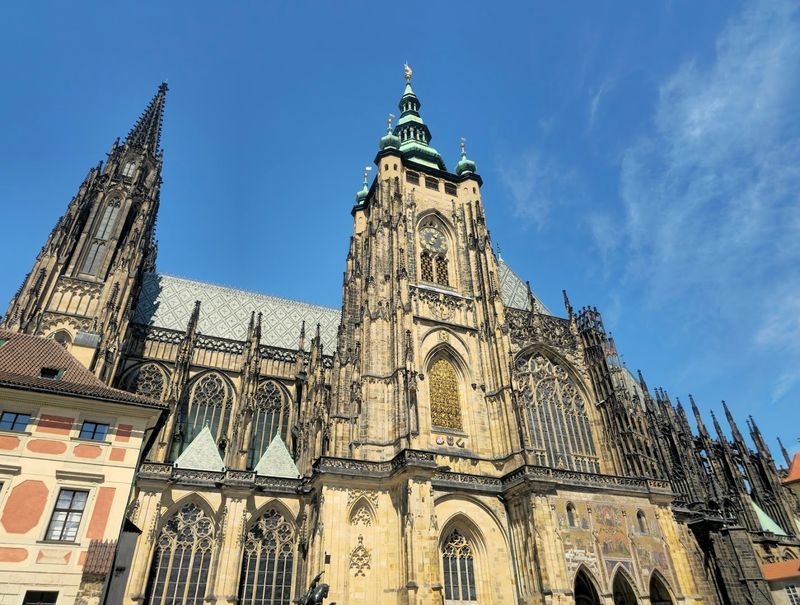
St. Vitus Cathedral holds a record that most buildings would rather not have: it took 585 years to finish. Construction began in 1344 under Charles IV, Holy Roman Emperor and King of Bohemia, who wanted a cathedral that would anchor Czech identity for centuries.
He got exactly that — just not on any reasonable timeline.
Hussite wars in the 15th century brought construction to a near-complete halt. Then came more political upheaval, funding crises, and shifting priorities.
Different architects across different centuries each picked up the project and added their own interpretation of Gothic design. The result is a building where you can almost trace Czech history just by walking from one end to the other.
The final stone was laid in 1929, marking the completion of a project that had outlasted empires, survived wars, and witnessed the birth of a new nation. The cathedral houses the Crown Jewels of Bohemia and the tombs of many Bohemian kings and Holy Roman Emperors.
Its stained glass windows include one designed by Art Nouveau master Alfons Mucha — a modern touch inside a medieval frame that perfectly captures the cathedral’s cross-generational spirit.
Lincoln Cathedral, England
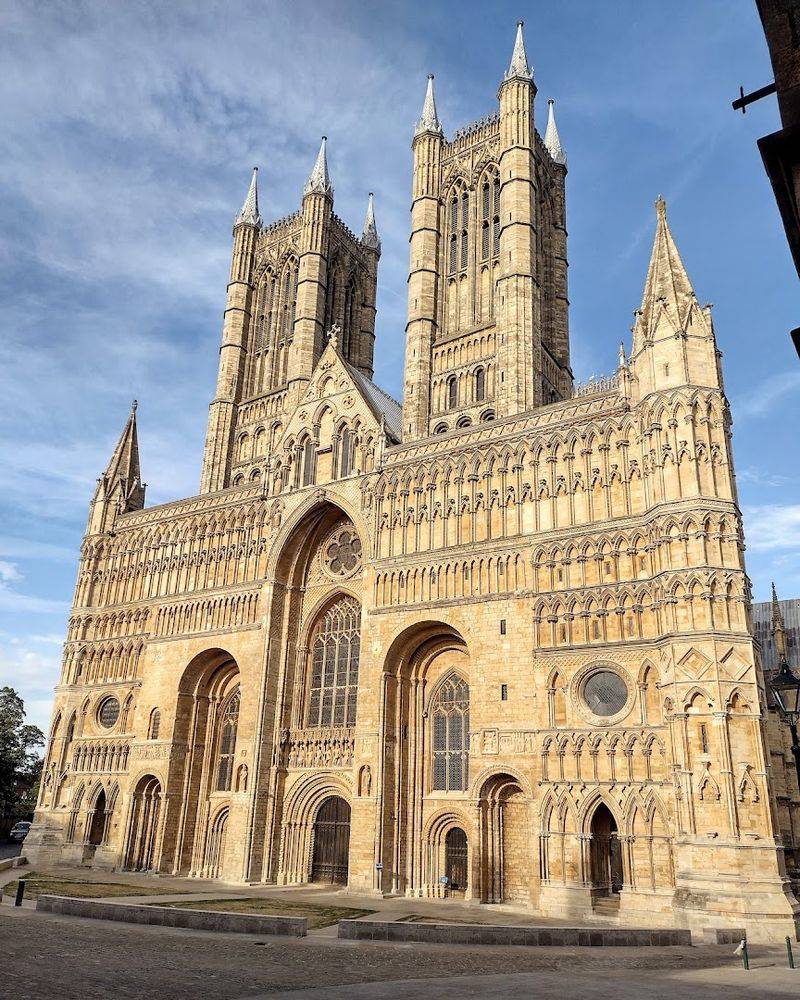
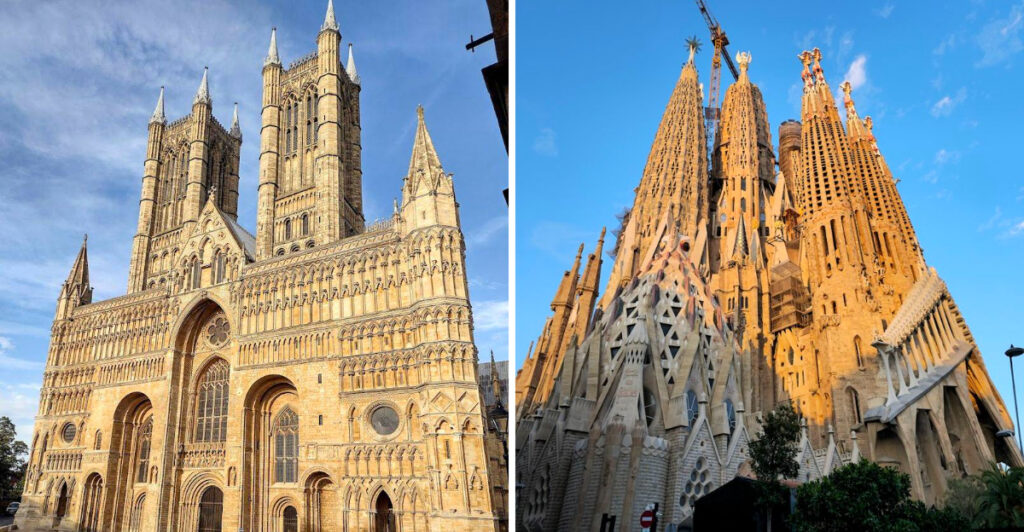
For over 200 years, Lincoln Cathedral was the tallest building in the entire world — taller than the Great Pyramid of Giza. Its central spire reached 160 meters until it collapsed in a storm in 1549.
That is a detail worth sitting with for a moment: a medieval English cathedral holding the world height record for two centuries.
Construction began in 1072 after William the Conqueror ordered a cathedral built on the hill overlooking Lincoln. An earthquake in 1185 severely damaged the original structure, prompting a major rebuild that transformed it into the stunning Gothic building we see today.
Expansions and additions continued through the 13th and 14th centuries, each phase more ambitious than the last.
The famous Lincoln Imp — a carved stone figure of a small horned creature perched high in the Angel Choir — has become the cathedral’s unofficial mascot and inspired countless local legends. Lincoln Cathedral also houses one of only four surviving original copies of the Magna Carta.
Centuries of repairs, restorations, and ongoing conservation work mean the cathedral has never truly stopped being a construction project. It remains one of Britain’s most spectacular and historically rich buildings.
Salisbury Cathedral, England
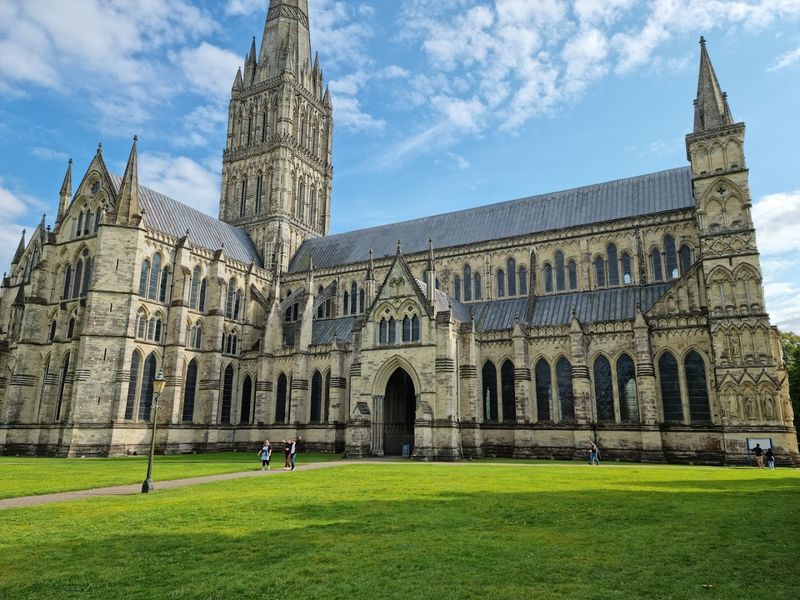
Salisbury Cathedral was built at a speed that would make modern contractors nervous — the main body went up in just 38 years, between 1220 and 1258, which is breathtakingly fast for a medieval structure of its scale. But fast does not mean finished.
The cathedral’s famous spire, which at 123 meters is still the tallest in Britain, was added between 1310 and 1330, decades after the main building was complete.
That spire created serious problems almost immediately. The ground beneath Salisbury is soft and waterlogged, and the added weight caused the four central pillars to visibly bow inward.
Medieval engineers improvised brilliantly, adding stone strainer arches and iron tie rods to stabilize the structure — solutions that are still holding the spire up today, 700 years later.
Salisbury also holds the world’s oldest working mechanical clock, dating to around 1386, which ticks away quietly in the nave. The cathedral houses the best-preserved of the four original Magna Carta copies, displayed in its own dedicated chapter house.
Ongoing structural monitoring and conservation work continue to this day, meaning Salisbury’s story of careful, attentive building has never really ended — it has just gotten more precise.
Antwerp Cathedral (Belgium)
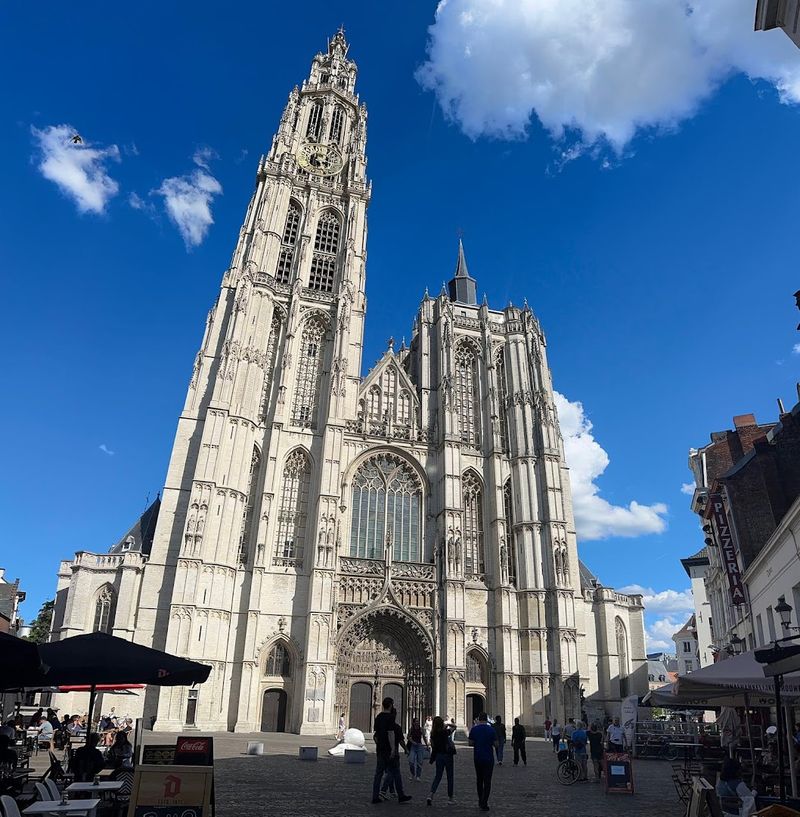
Look closely at Antwerp’s Cathedral of Our Lady and you will notice something slightly lopsided: one tower soars to 123 meters in full Gothic splendor, while the other sits stubbornly unfinished at a much shorter height. Construction began in 1352, and the grand plan called for two matching spires.
Only one was ever completed, finished around 1521 after nearly 170 years of work.
Funding the project was a constant struggle. The city of Antwerp was wealthy from its booming trade port, but religious politics, wars, and economic downturns repeatedly interrupted progress.
Different master builders came and went, each leaving their own stylistic signature somewhere in the stonework. The result is a building that quietly documents the turbulent history of a major European city.
Inside, the cathedral houses four masterpiece paintings by Peter Paul Rubens, including The Raising of the Cross and The Descent from the Cross. Rubens was a local hero, and his works were specifically commissioned for this space.
The cathedral is a UNESCO World Heritage Site and remains one of the finest examples of Brabantine Gothic architecture in the world. Its unfinished second tower is no longer seen as a flaw — it is simply part of the story.
Magdeburg Cathedral, Germany
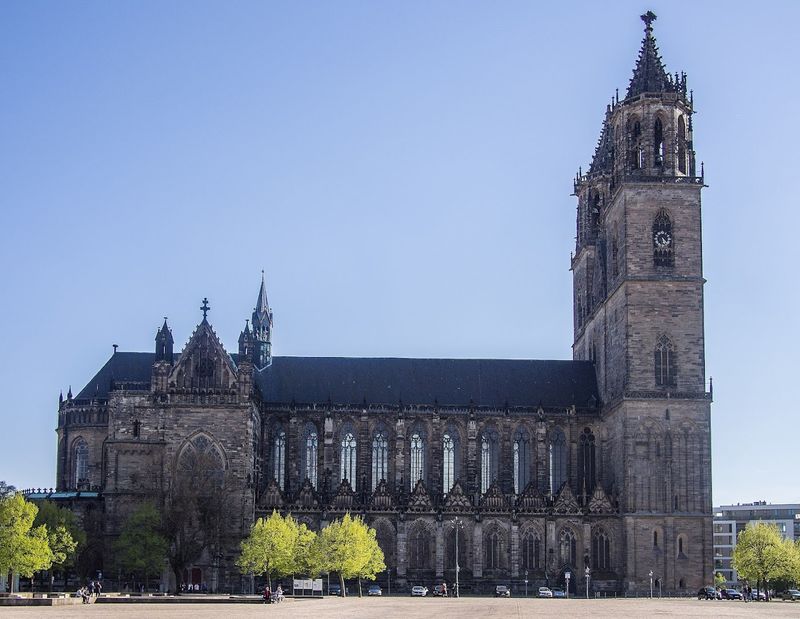
Magdeburg Cathedral holds a quietly impressive distinction: it was the very first Gothic cathedral built on German soil. Construction began in 1209, but Gothic architecture had only recently arrived in Germany from France, meaning the builders were essentially learning a new style on the job.
You can actually see their learning curve in the architecture — earlier sections look more tentative, while later sections grow more confident and refined.
The project stretched across roughly 300 years, with the cathedral finally completed in 1520. Multiple architects, changing political leadership, and the slow spread of Gothic techniques all contributed to the long timeline.
Wars and fires damaged the structure at various points, each time requiring repairs that added new material and subtle stylistic shifts to the building.
Magdeburg Cathedral sits on the banks of the Elbe River and served as the burial place of Emperor Otto I, the first Holy Roman Emperor. His tomb remains inside, making the cathedral one of Germany’s most historically significant sacred sites.
The building’s 300-year construction period is not a story of delay — it is a story of a city and a nation slowly mastering something new, one carefully carved stone at a time. That kind of patience deserves serious respect.
Share this story