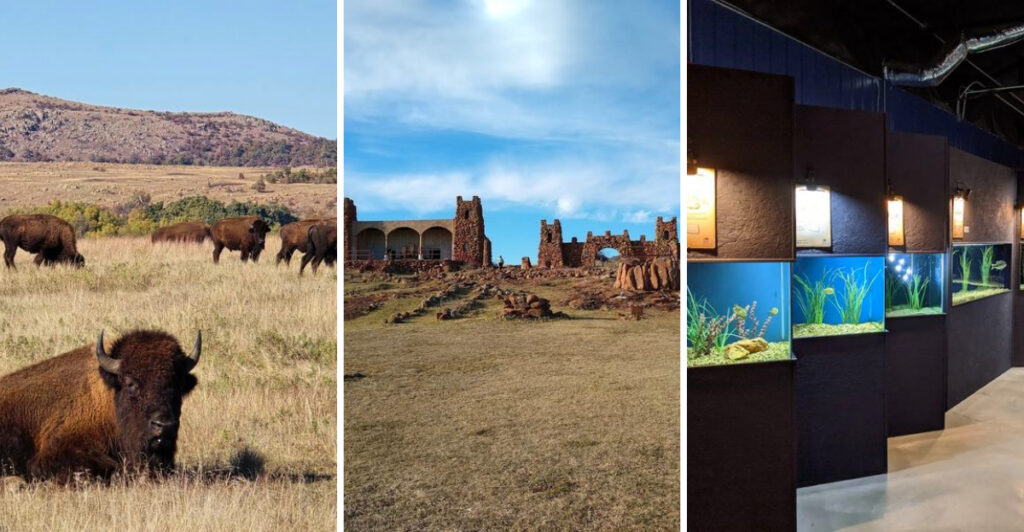
There is a corner of southwestern Oklahoma where the modern world seems to lose signal entirely. Red granite peaks rise above open prairie, bison roam without fences, and a tiny cobblestone town sits quietly beside a creek that has been drawing visitors for over a century.
The place feels almost too good to be real, like someone took the best parts of a national park and tucked them next to a storybook village. If you have been craving a getaway that trades screens and noise for something slower and more grounded, this is the kind of trip that actually delivers on that promise.
Wichita Mountains Wildlife Refuge: A Wild Landscape Full of Life
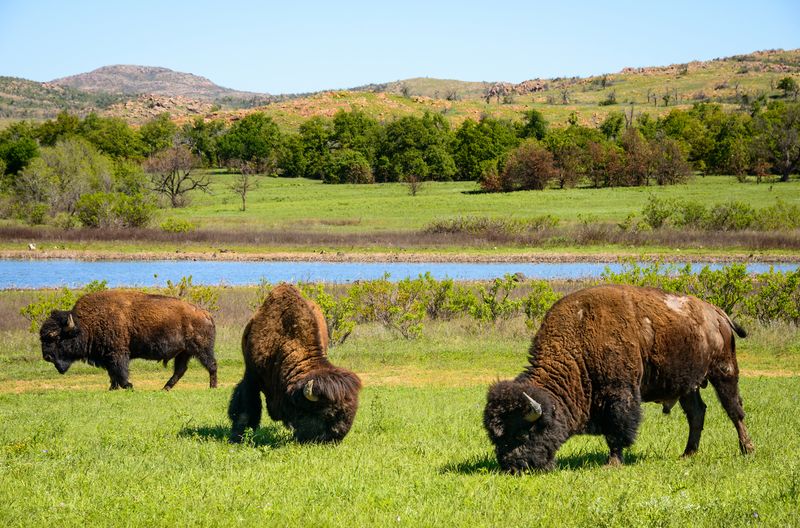
Nearly 60,000 acres of open land sit just outside the small town of Medicine Park, Oklahoma, and the Wichita Mountains Wildlife Refuge fills every one of them with something worth seeing. The refuge, managed by the U.S.
Fish and Wildlife Service and located near Indiahoma, OK 73552, is one of the oldest federal wildlife refuges in the country, established back in 1901.
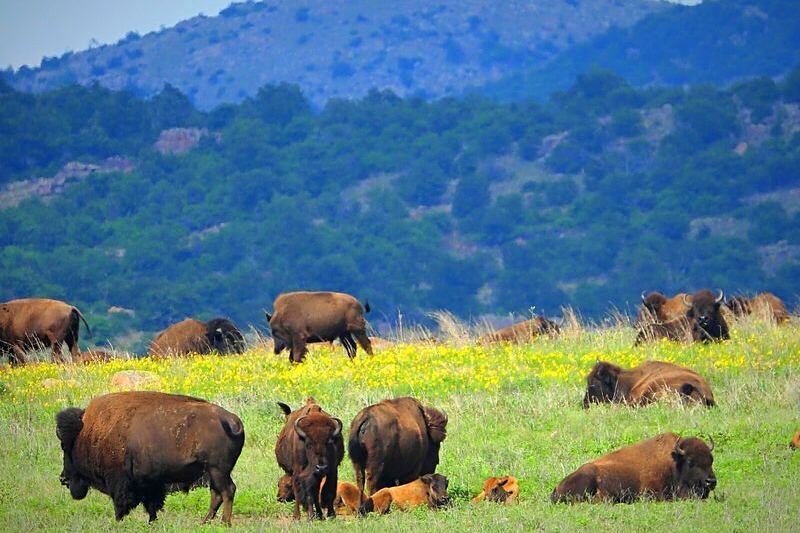
Free-roaming bison herds, Texas longhorn cattle, white-tailed deer, and elk share the landscape without any sense of hurry. Hundreds of bird species pass through or nest here, making it a favorite among birding enthusiasts who arrive with binoculars and long lists.
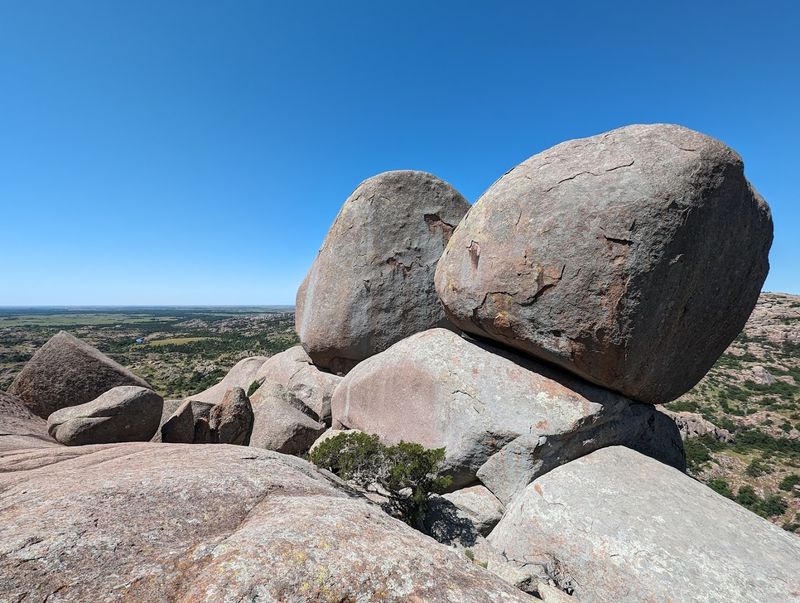
Driving the scenic loop road through the refuge is one of those experiences that quietly resets your perspective. Animals cross the road at their own pace, granite boulders catch the afternoon light, and the sky stretches out in a way that feels rare and generous.
Hiking trails range from easy lakeside walks to more challenging scrambles up rocky ridgelines. The whole place operates on nature’s schedule, not yours, and that is exactly the point.
The Holy City of the Wichitas: A Surprising Spiritual Landmark
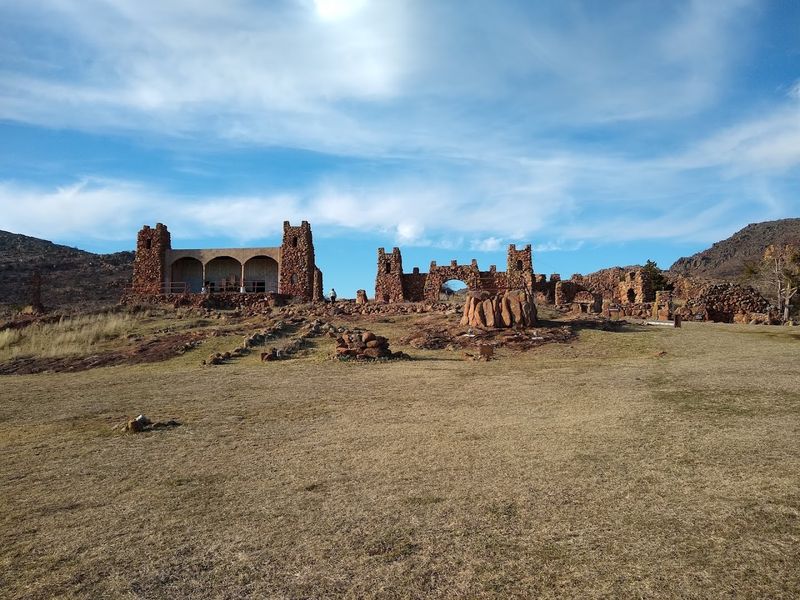
Hidden inside the refuge is one of the most unexpected places you will find in all of Oklahoma. The Holy City of the Wichitas is a 66-acre outdoor site built from native granite stone, designed to replicate the look and feel of ancient Jerusalem, complete with shrines, watchtowers, a chapel, and winding stone paths.
Construction began in the 1920s, and the site has hosted an annual Easter Pageant that has run for nearly a century, drawing large crowds each spring to watch an outdoor dramatic production performed against the backdrop of the Wichita Mountains.
Outside of the pageant season, the grounds are peaceful and open to visitors who want to walk through at their own pace. The stone architecture blends naturally into the surrounding landscape, and the silence of the place gives it a contemplative quality that is hard to shake.
The setting alone makes it worth a stop, as rugged peaks frame the stone structures in a way that feels genuinely cinematic. It is one of those places that stays with you long after you have left.
Medicine Park Aquarium and Natural Sciences Center: Learning Meets Adventure

Not every great attraction needs to be massive to leave an impression. The Medicine Park Aquarium and Natural Sciences Center is a compact but genuinely engaging stop that focuses on the native ecosystems of southwestern Oklahoma, giving visitors a closer look at the wildlife that thrives in and around the refuge.
Touch tanks let younger visitors get hands-on with aquatic life, while feeding demonstrations add a lively, interactive element to the experience. The exhibits highlight regional fish species and local habitats in a way that feels educational without being dry or overly technical.
Outdoor garden spaces extend the experience beyond the building itself, connecting the indoor exhibits to the natural landscape just outside. Families with kids tend to spend more time here than they expect, which is always a good sign.
For adults, the center offers a solid foundation for understanding what makes this ecosystem so distinctive. Before heading out to the refuge or along the creek trails, a visit here gives context that makes everything else feel richer and more connected to the land around you.
Medicine Creek and Bath Lake: The Soul of the Town
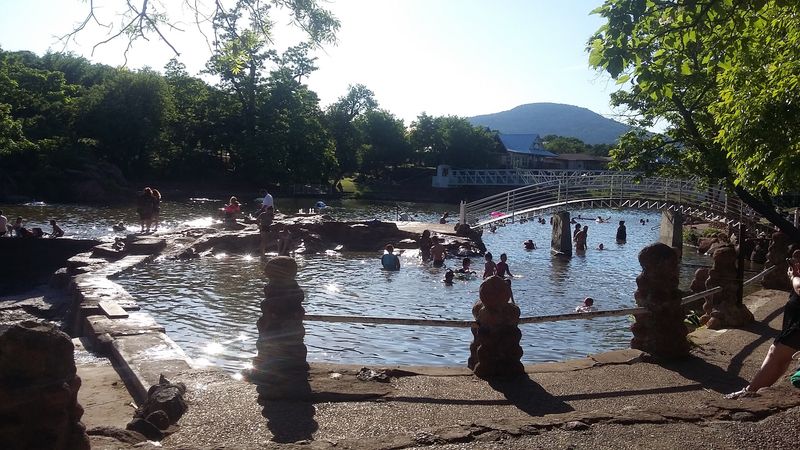
Medicine Creek does not just run through Medicine Park, it defines the town’s entire personality. The creek moves at a gentle, steady pace through the center of town, flanked by cobblestone walkways, small stone bridges, and natural waterfalls that give the whole area a rhythm that slows you down almost immediately upon arrival.
Bath Lake sits at the heart of this scene, a historic swimming hole that has been welcoming visitors since the early 1900s. The water is clear and cool, fed by the creek, and the natural stone edges make it feel like a place that belongs to the landscape rather than one imposed upon it.
On warm weekends, locals and out-of-town visitors share the space with an easy, relaxed energy. Children wade near the shallows while others stretch out on the surrounding rocks to dry off in the sun.
Even if you skip the swim, sitting beside the water and listening to the creek move past is one of the most genuinely restorative things this town has to offer. The sound alone is worth the drive.
Cobblestone Streets and Red Granite Architecture: Built to Last
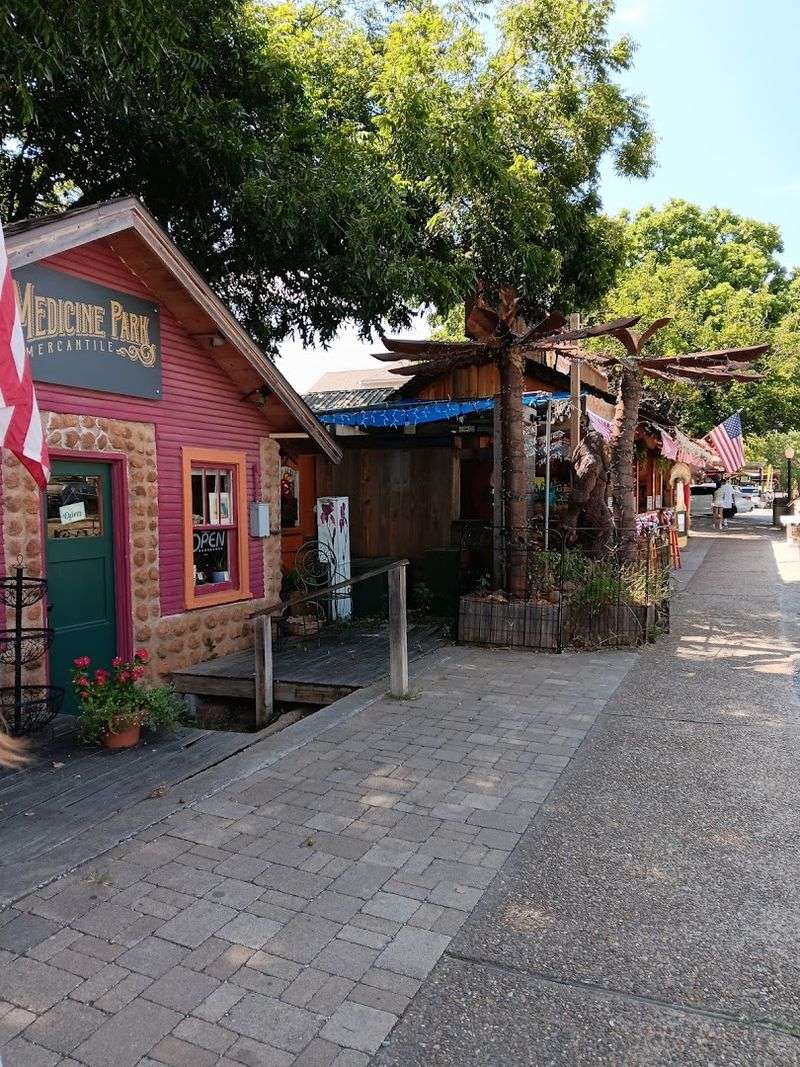
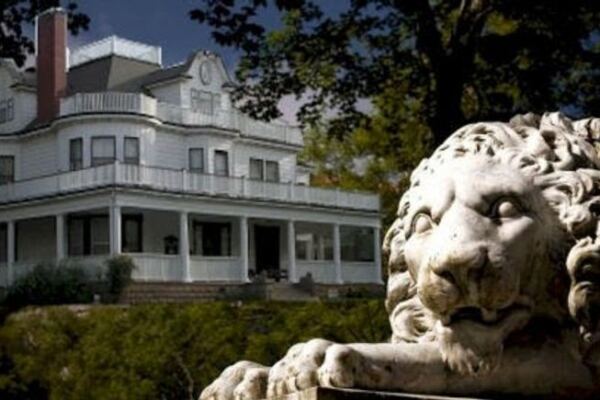
Medicine Park carries the unofficial title of America’s first cobblestone community, and the streets make that reputation easy to believe. The buildings lining the main stretch of town are constructed from locally sourced red granite pulled directly from the Wichita Mountains, giving the architecture a texture and color that feels rooted in the land itself.
The town was developed in the early 1900s as a resort destination, designed to blend with the rugged natural setting rather than contrast it. That original vision has held remarkably well, and the streetscape today looks like a place that has been quietly, carefully kept.
Small shops, galleries, and historic cabins line the roads in a way that invites slow walking rather than quick browsing. There are no chain stores or franchise signs interrupting the view, which makes wandering through town feel like a genuine step back in time.
The architecture is not just charming for its own sake. It tells a story about how the town was built with intention, and that sense of purpose is still visible in every stone-faced wall and hand-laid road.
Lake Lawtonka: A Quiet Escape Just Beyond the Town Limits
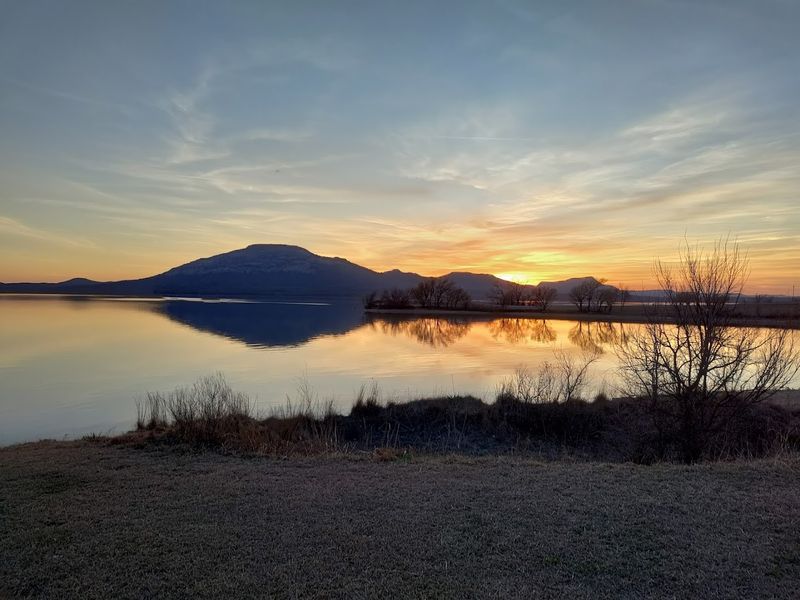
Just a short drive from the cobblestone streets of town, Lake Lawtonka stretches out across a wide, quiet landscape that feels like a natural extension of everything Medicine Park already offers. The lake covers roughly 2,800 acres and sits within view of the Wichita Mountains, giving it a backdrop that photographers and casual visitors both appreciate.
Fishing is a major draw here, with bass, catfish, and crappie drawing anglers out early on weekend mornings. Kayaking and paddleboarding are popular options for those who prefer to move across the water rather than wait beside it.
Picnic areas along the shoreline offer easy access to the water without requiring any special gear or planning. Sunrise and sunset visits are particularly rewarding, as the light catches the surface of the lake in ways that make even a simple lakeside lunch feel like a proper occasion.
Nearby campgrounds allow visitors to extend their stay well beyond a single afternoon. Spending a night beside the lake, with the outline of the mountains visible at dusk, turns a day trip into something that feels much more complete.
Local Art, Shops, and the Creative Side of a Small Town
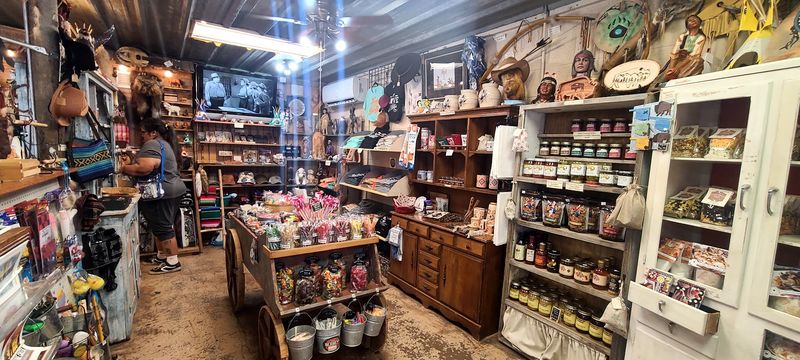
Small towns sometimes feel like they are coasting on scenery alone, but Medicine Park has developed a creative energy that adds real personality to the place. Local art galleries, handmade goods shops, and small cafes occupy the stone buildings along the main street, each one reflecting the tastes and talents of the people who run them.
The art here tends to draw from the surrounding landscape, with paintings, photography, and crafts that echo the colors and textures of the Wichita Mountains and the refuge. Shopping in these spaces feels less like a transaction and more like a conversation with the community.
Seasonal events and live music gatherings bring residents and visitors together without turning the town into something louder than it wants to be. The energy stays warm and approachable, the kind that makes you want to linger over a coffee rather than rush to the next stop.
For travelers who appreciate places with a genuine local character rather than a manufactured tourist identity, Medicine Park consistently delivers something that feels earned and authentic rather than packaged for outside consumption.
Wildlife Spotting and Photography: Getting Up Close With Nature
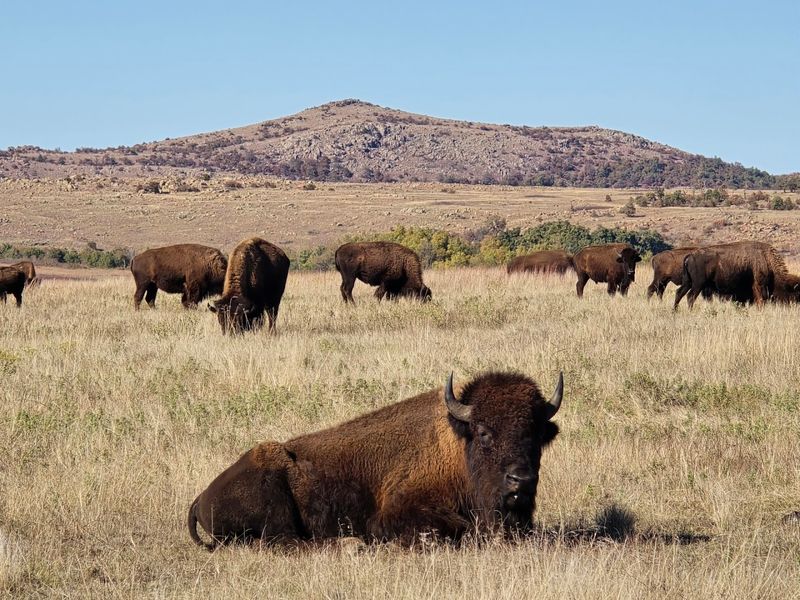
Few places in Oklahoma offer the kind of wildlife access that the Wichita Mountains Wildlife Refuge provides on an ordinary Tuesday afternoon. Bison herds graze close to the road with an indifference to human observers that never stops being impressive.
Longhorn cattle wander the same open spaces with their wide, sweeping horns catching the light like something out of a history painting.
For photographers, the refuge is a serious destination. Early morning light on the granite peaks, combined with active wildlife near the water sources, creates conditions that reward patience and early wake-up calls.
Elk are more elusive but present, particularly during the fall rutting season when their calls carry across the hills at dawn. White-tailed deer appear more reliably near wooded areas and along the edges of the park’s several lakes.
Even visitors without cameras tend to find the wildlife encounters unexpectedly moving. There is something about watching a bison cross the road at its own pace, completely unbothered by the line of cars waiting behind it, that puts the whole pace of modern life into a very useful and clarifying perspective.
Planning Your Visit: Practical Tips for Getting the Most Out of the Trip
Medicine Park sits in southwestern Oklahoma, roughly 90 miles from Oklahoma City and about 10 miles north of Lawton, making it an easy weekend destination from much of the state and surrounding region. The drive itself is straightforward, and the town is small enough that you can orient yourself within minutes of arriving.
Spring and fall are the most comfortable seasons to visit, with mild temperatures that make hiking and outdoor exploration genuinely enjoyable. Summer brings heat that can be intense, so early morning starts are the smart move if you plan to spend time on the trails.
The refuge does not charge an entry fee for general visitors, which makes it one of the better-value natural attractions in the region. Some camping areas and specific facilities may require permits or small fees, so checking the U.S.
Fish and Wildlife Service website before your trip saves time.
Bringing water, sunscreen, and sturdy footwear is non-negotiable for anyone heading into the refuge. Cell service can be limited in certain areas, so downloading offline maps ahead of time is a practical step that will keep your trip running smoothly from start to finish.
Share this story