There is a trail in southwest Oklahoma that most people have never heard of, and that is exactly what makes it so worth talking about. Tucked inside a federal wildlife refuge, it leads hikers through rocky terrain, past a stunning gorge, and down to a series of small waterfalls that feel like a genuine reward for the effort.
The trail is only about 2.4 miles round trip, but what it packs into that distance is hard to believe until you see it yourself. This is the kind of place that makes you wonder how it stayed off your radar for so long.
Where to Find This Hidden Trail
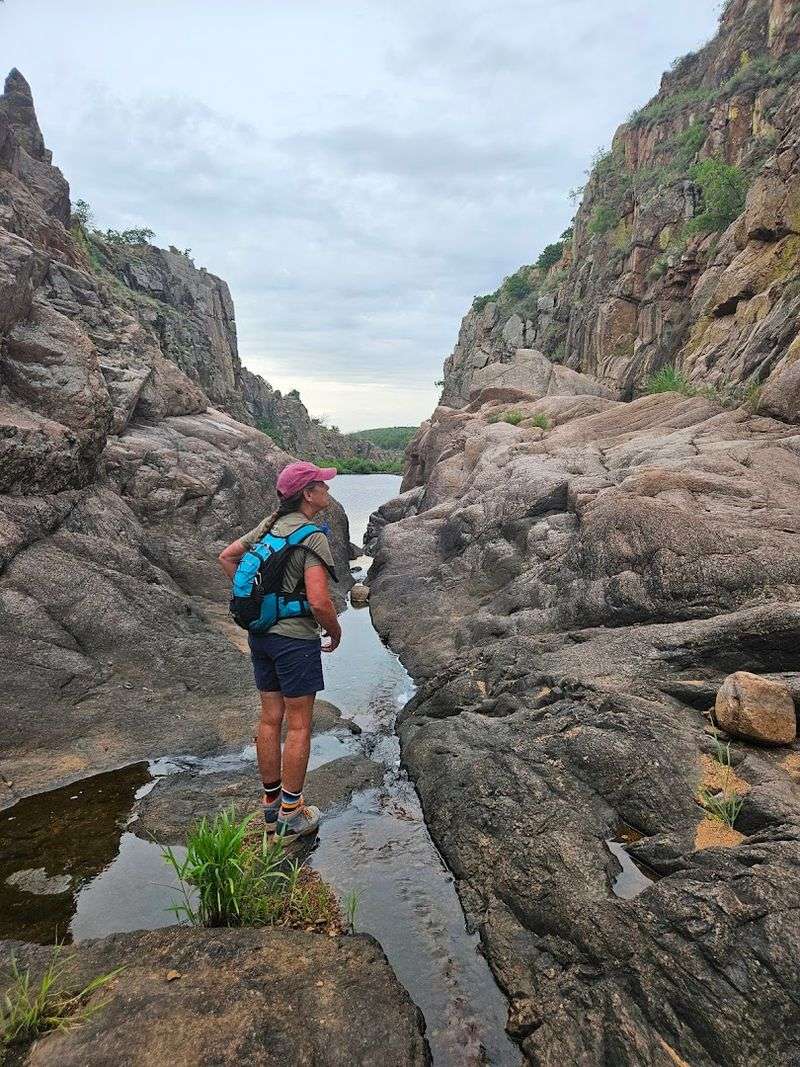
The Kite Trail sits at Kite Trail, Indiahoma, OK 73552, inside the Wichita Mountains Wildlife Refuge, one of the oldest federal wildlife refuges in the United States. The refuge itself covers more than 59,000 acres of rugged Oklahoma landscape, and the Kite Trail is one of its best-kept secrets.
Getting there requires a short drive through the refuge roads, which are well-maintained and easy to navigate. The trailhead does not have a flashy entrance or a big parking lot, but it is clearly accessible and the surrounding scenery starts impressing you before you even lace up your boots.
The refuge phone number is +1 580-429-3222 if you need to call ahead for conditions or hours. You can also visit the official trail page at fws.gov for updated maps and information before making the trip.
First-timers should plan to arrive early, especially on weekends, since this trail draws more visitors than its low profile might suggest.
The Gorge That Stops You in Your Tracks
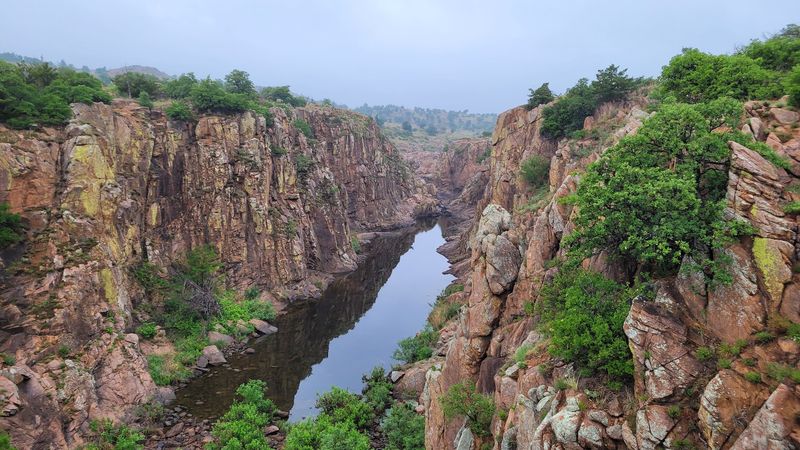
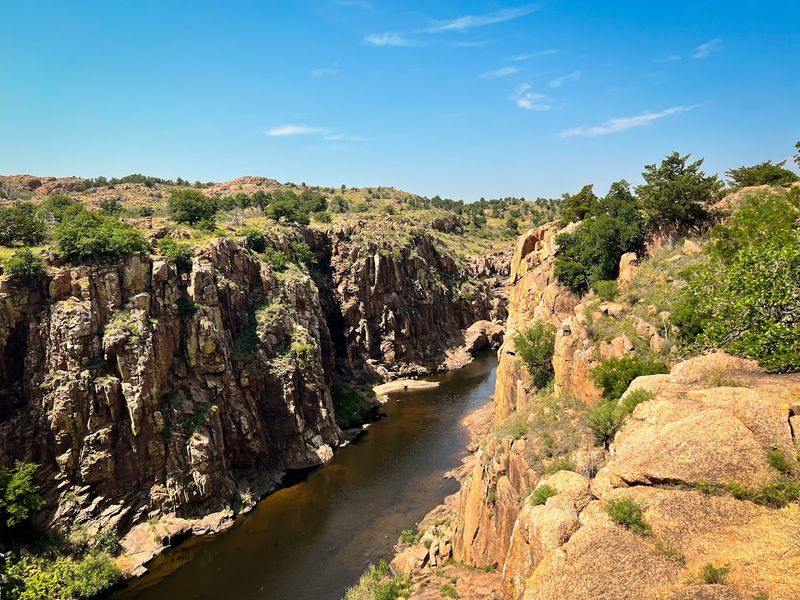
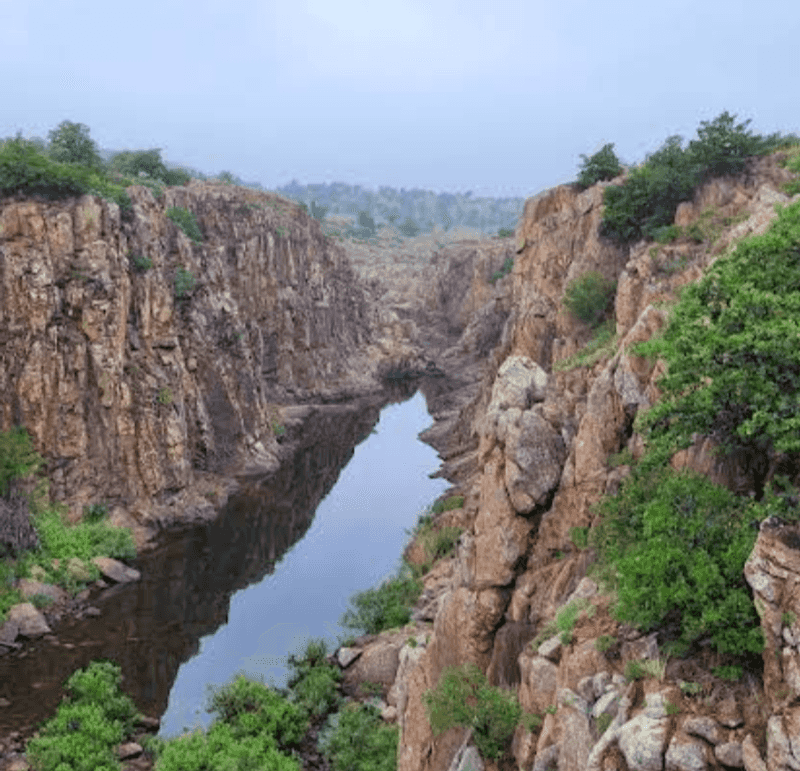
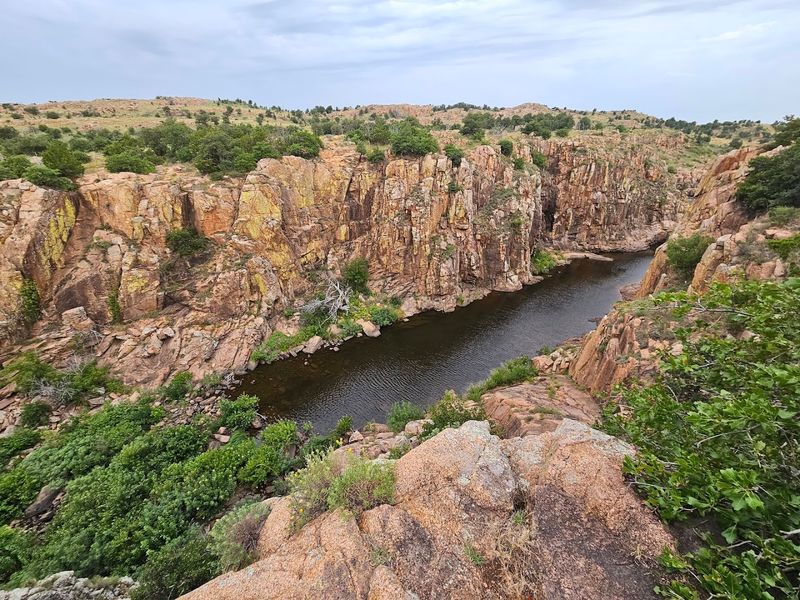
The gorge section of the Kite Trail is the moment the hike shifts from pleasant to genuinely jaw-dropping. As the path descends through boulders and scrub brush, the landscape tightens and the walls of rock rise on either side, creating a narrow corridor that feels nothing like the flat plains Oklahoma is usually associated with.
The geology here is ancient granite, some of the oldest exposed rock in North America, and the way it has been carved by centuries of water movement gives the gorge a texture and depth that is hard to capture in photos. The colors shift from rust red to soft gray depending on the light, and in the late afternoon, the whole place glows.
Hikers who take their time through this section tend to notice small details that speed-walkers miss, like the way moss clings to shaded overhangs and the sound of water growing louder as you move deeper in. The gorge alone is reason enough to make the drive out to this corner of Oklahoma.
The Waterfalls Hidden at the Bottom
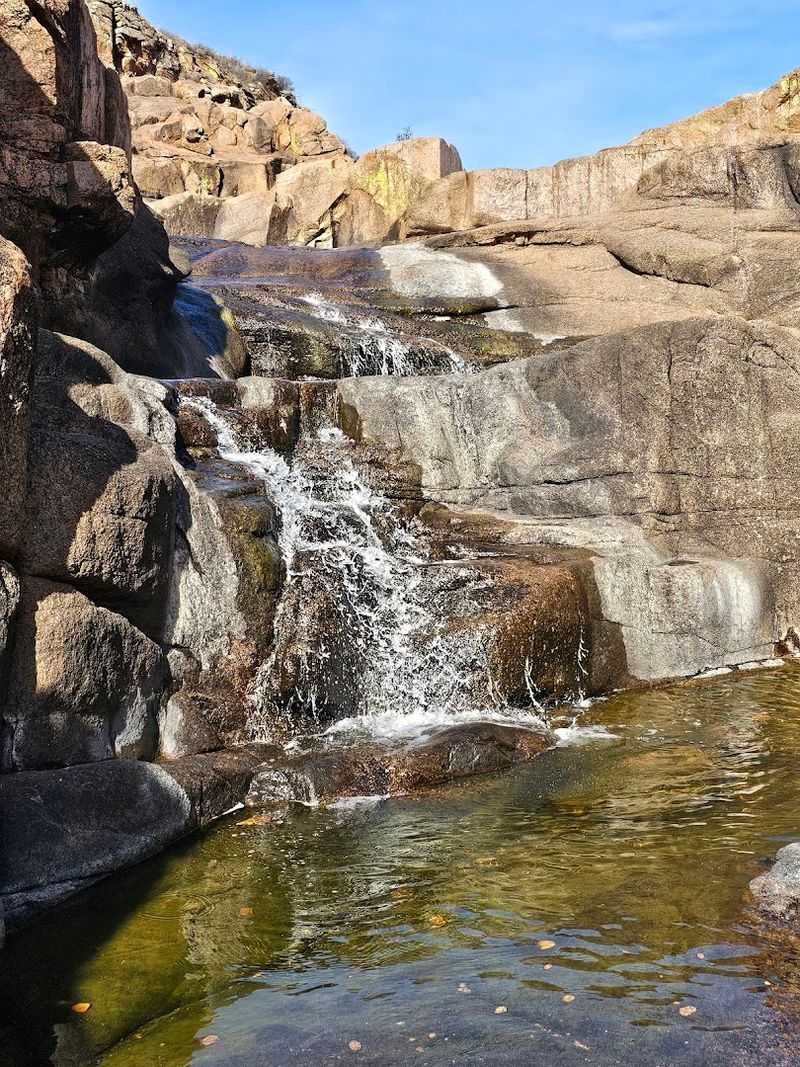
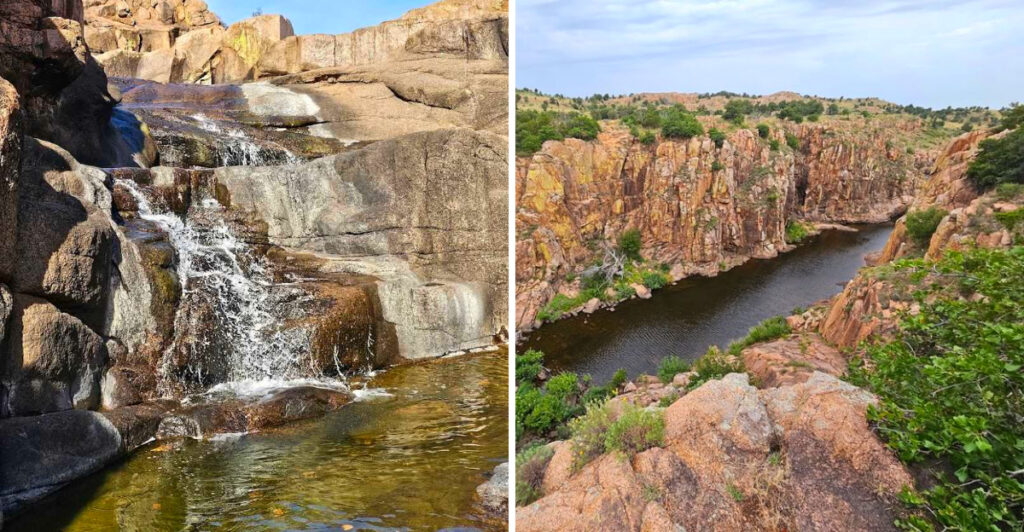
At the heart of the gorge sits a feature that hikers consistently describe as the highlight of the entire trip: a roughly 40-foot deep natural hole surrounded by small, cascading waterfalls. The water trickles and drops over layered granite shelves, creating a cool, misty atmosphere that feels dramatically different from the dry heat above.
The waterfalls are not roaring giants, but that is part of their appeal. They are delicate and quiet, the kind that make you want to sit nearby for a while instead of snapping a photo and moving on.
The sound they produce bounces off the rock walls in a way that fills the whole space.
Climbing down to reach this area requires some careful footing over rocks, but it is manageable for most fitness levels, including families with older kids. Once you are down there, the temperature drops noticeably and the light filters through in soft, dappled patterns.
It is the kind of spot that rewards the curious hiker who does not mind getting a little scramble in before the payoff.
Trail Length and What to Expect
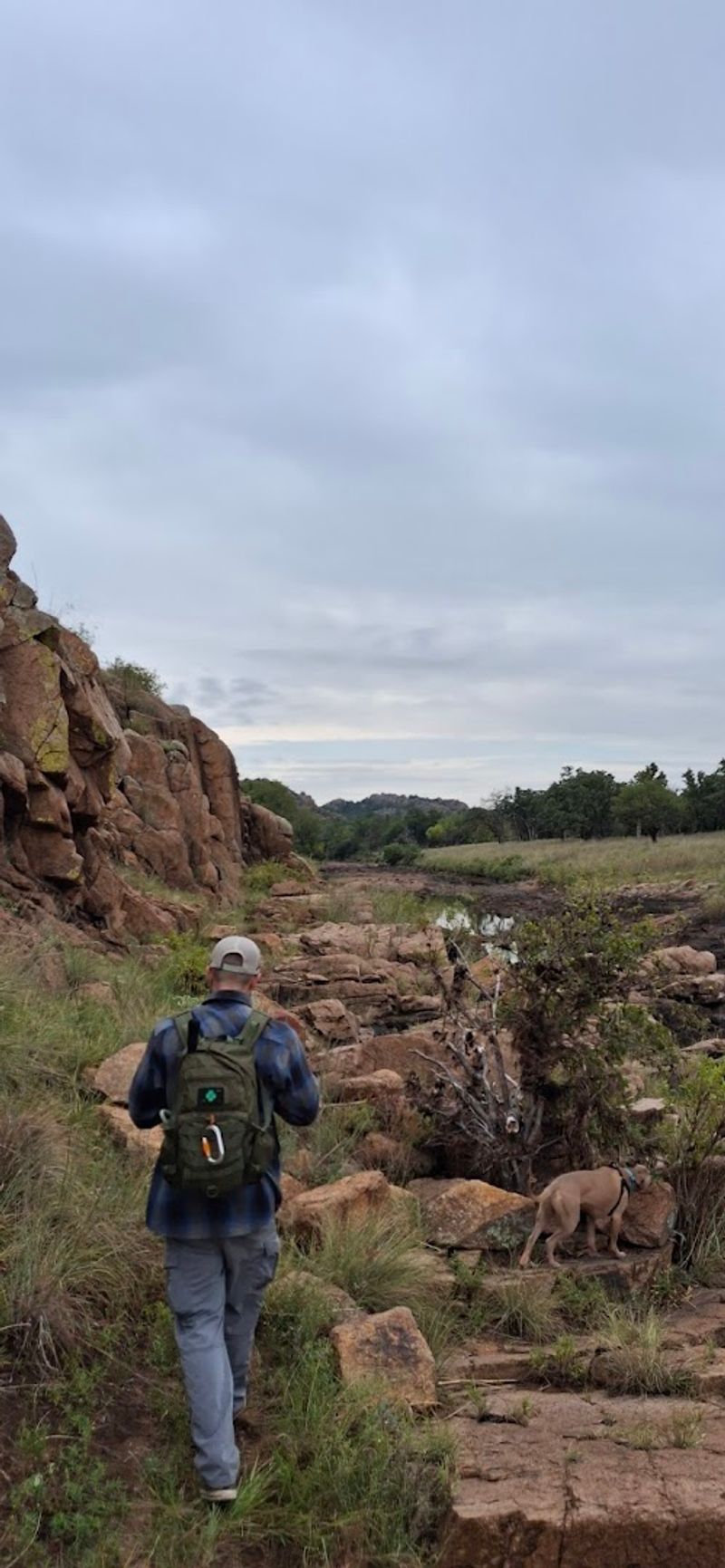
The Kite Trail runs 2.4 miles total as an out-and-back route, meaning you cover about 1.1 miles to reach the far end and then return the same way. That distance might sound short, but the terrain adds enough challenge to make the hike feel satisfying rather than easy.
The first part of the trail is relatively flat and straightforward, which lures some hikers into a false sense of what is coming. As you push further in, the path climbs over rocks and gains elevation in sections that require real attention to footing.
It is rated as moderate to moderately challenging by most who have done it.
One thing worth knowing before you go: the trail has limited signage and no posted maps at the trailhead, so the path can feel a little unclear at certain forks. Most hikers figure it out without too much trouble, but downloading an offline map or checking the refuge website in advance is a smart move.
Budget about one to two hours depending on how much time you spend exploring the gorge.
The Wildlife You Might Encounter
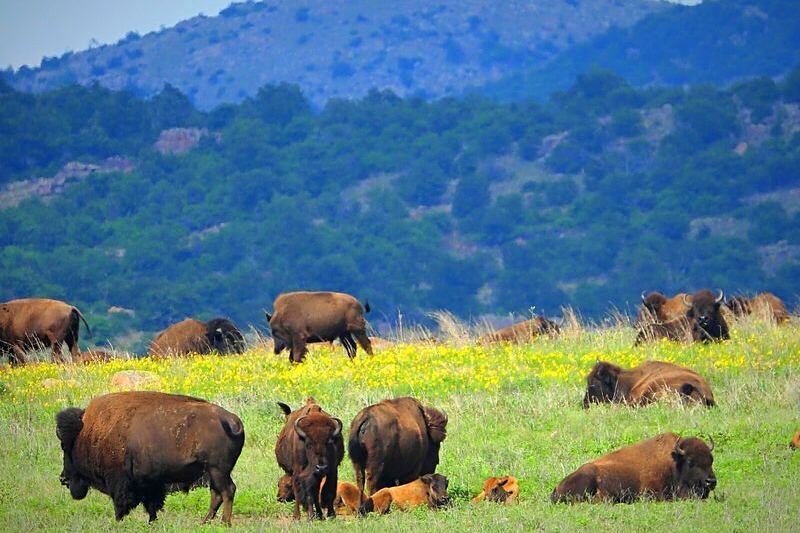
One of the most exciting parts of hiking in the Wichita Mountains Wildlife Refuge is the genuine possibility of seeing large wildlife. American bison roam freely through the refuge, and it is not unusual to spot one near the trail or along the refuge roads on the drive in.
Seeing a bison up close for the first time is a memorable experience.
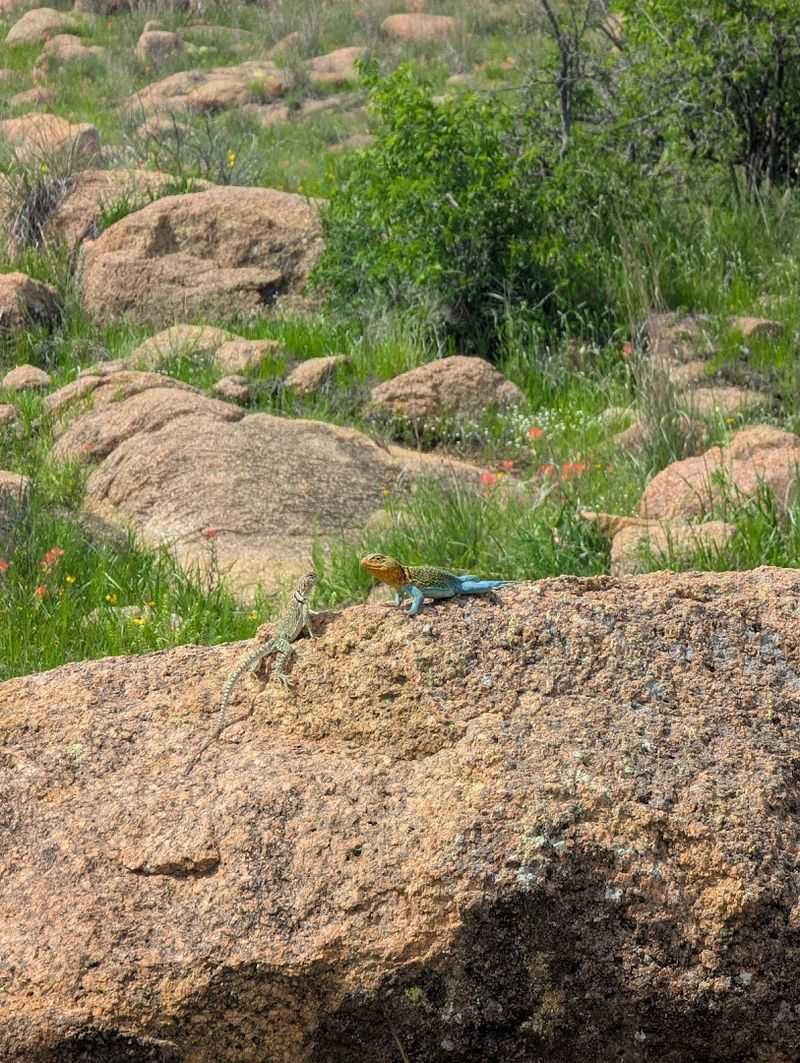
Beyond bison, the refuge supports populations of longhorn cattle, white-tailed deer, wild turkey, and a variety of reptiles. Brightly colored collared lizards are a particular favorite among hikers on the Kite Trail, darting across sun-warmed rocks and showing off their vivid orange and green patterns.
The refuge is a federally protected area, which means the animals here behave more naturally and are often less skittish than wildlife in heavily trafficked parks. That said, maintaining a respectful distance from all animals is essential, especially bison, which are much faster than they look.
The wildlife watching alone makes this trail worth visiting more than once throughout the year.
The Creek Path Alternative
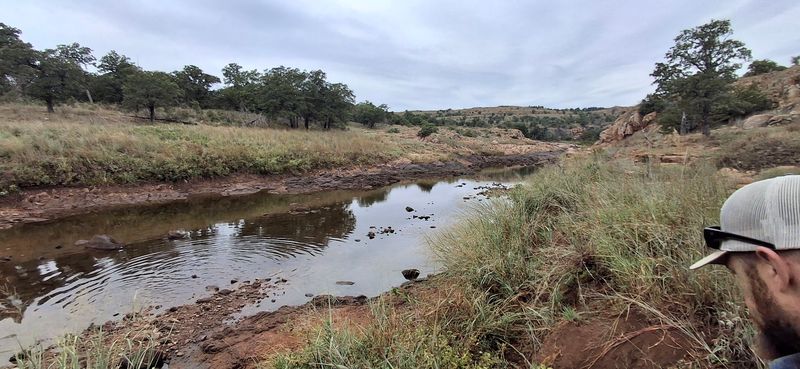
One of the best-kept secrets within an already underrated trail is the alternative creek-side route that runs parallel to the main path in certain sections. Rather than taking the higher main trail, hikers can drop down and follow the creek bed directly, which offers a completely different perspective on the landscape.
The creek path keeps you close to the water for much of its length, with small pools, smooth stones, and the constant gentle sound of moving water as your backdrop. The vegetation along the creek is noticeably denser and greener than on the upper trail, and the shade it provides is a welcome break during warmer months.
This lower route does require more careful footing since the rocks near the water can be slippery, and the path is less defined. But hikers who take it tend to come away feeling like they discovered something extra, a bonus layer to a trail that already has plenty to offer.
If you are on your second visit to the Kite Trail, the creek route is the obvious next step for a fresh experience.
Combining Kite Trail With the Bison Trail
For hikers who want a longer day out, the Kite Trail connects to the Bison Trail via a crossing over a small dam, creating a combined route of roughly 7.5 miles. This combo turns a short morning hike into a full-day adventure through some of the most varied terrain in the refuge.
The dam crossing is an interesting feature on its own, offering views of the water on both sides and a brief flat stretch before the Bison Trail picks up its own rhythm. The Bison Trail covers more open grassland terrain compared to the gorge-heavy Kite section, so the two complement each other well in terms of scenery.
Anyone planning the full combo should come prepared with enough water, food, and time, since 7.5 miles with elevation changes and rocky terrain is a genuine commitment. Starting early in the morning is highly recommended, both to beat the heat and to maximize your chances of spotting wildlife during the cooler hours.
This longer loop is one of the most rewarding ways to spend a day in southwest Oklahoma.
Best Time of Year to Visit
The Kite Trail is technically open year-round, which gives it a flexibility that not every trail in the region can claim. Each season brings its own version of the experience, and none of them are bad, though some are clearly better suited to different types of visitors.
Spring is the most popular time to go, and for good reason. Wildflowers bloom across the refuge, the creek runs with more water, and the waterfalls in the gorge are at their most impressive.
Temperatures are mild and the landscape feels alive in a way that is hard to match at other times of year.
Fall brings cooler air and a shift in the color of the grasses and brush, giving the rocky terrain a warm amber and gold backdrop that makes for great photography. Summer works fine if you start early and bring plenty of water, but the Oklahoma heat can be intense by midday.
Winter visits are quiet and peaceful, with far fewer people on the trail, which has its own appeal for those who prefer solitude over social hikes.
Practical Tips Before You Go
A few practical details can make the difference between a smooth hike and a frustrating one on the Kite Trail. Water is the top priority: bring more than you think you need, especially in warmer months, since there are no water sources or facilities along the trail itself.
Footwear matters here more than on smoother trails. The rocky terrain, especially near the gorge and the creek, calls for sturdy hiking shoes or boots with good grip.
Sandals and casual sneakers are not the right tool for the job when you are climbing over granite boulders.
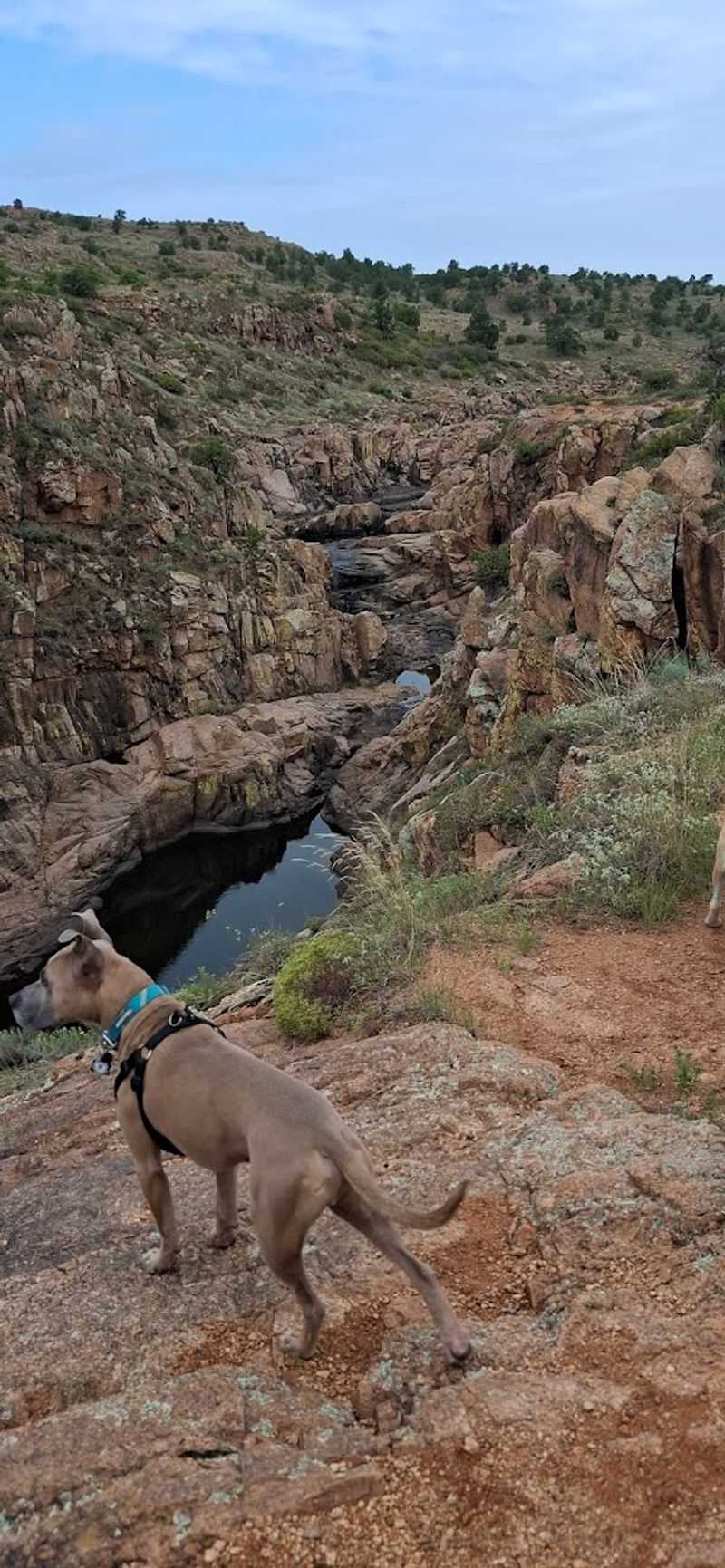
Dogs are welcome on the trail but must remain on a leash at all times, which is a refuge-wide rule. The pack-it-in, pack-it-out policy applies here, so every wrapper, food scrap, and piece of trash leaves with you.
Cell service in the area can be spotty, so downloading the trail map or a GPS app before you arrive is a genuinely useful precaution rather than just a suggestion. A little preparation goes a long way on a trail this remote.
Why This Trail Deserves More Attention
The Kite Trail holds a 4.9-star rating across its reviews, which is a strong signal for any trail, let alone one this far off the mainstream hiking radar. The combination of a gorge, multiple waterfalls, ancient rock formations, and abundant wildlife in a single 2.4-mile route is genuinely rare.
Most people associate Oklahoma with flat land and wide-open skies, and that reputation is not entirely wrong. But the Wichita Mountains region of southwest Oklahoma tells a different story, one full of dramatic geology, surprising biodiversity, and trails that hold their own against more famous destinations in neighboring states.
The Kite Trail captures all of that in a compact, accessible package that works for solo hikers, couples, families, and groups. It does not demand elite fitness or expensive gear, just a willingness to show up and pay attention.
Trails like this one are the reason it is worth exploring the quieter corners of a state before dismissing it as flyover country, because sometimes the best surprises are the ones you almost missed.
Share this story