Some places on Earth are so extraordinary that they make you question why you ever stayed home. From ancient ruins to natural wonders, the world is packed with legendary attractions that genuinely deserve their fame.
I still remember the first time I stood before one of these iconic sites and thought, ‘No photo ever did this justice.’ Whether you are planning your first big trip or adding to a growing bucket list, these 16 destinations are the real deal.
The Great Wall of China
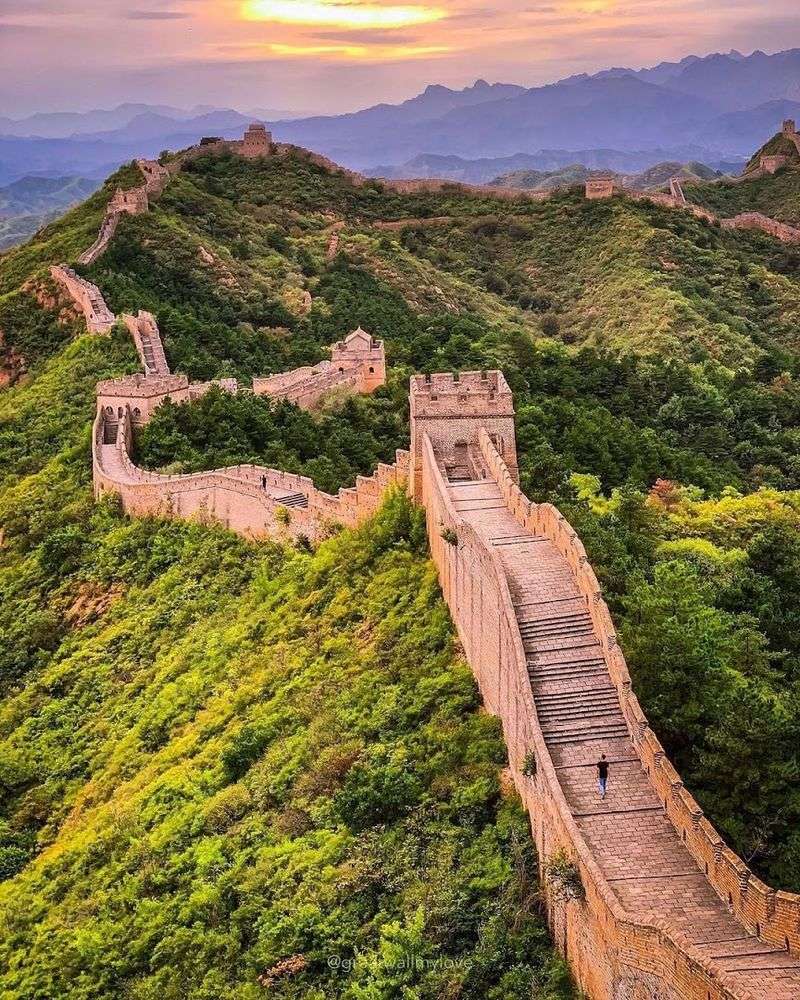
Built over centuries by millions of workers, the Great Wall of China stretches more than 13,000 miles across northern China. That is longer than the entire width of the United States, times five.
No engineering class prepares you for how massive this thing actually is.
Most visitors head to Mutianyu or Badaling, which are the most restored and accessible sections. Badaling gets crowded fast, so arriving early is a smart move.
Mutianyu tends to attract fewer tourists and offers stunning views over forested hills.
What surprises most first-timers is how steep the wall actually gets. Some sections feel less like a walk and more like a stair-climbing competition you did not sign up for.
Wear comfortable shoes, bring water, and pace yourself. The wall has been standing for over 2,000 years.
It will wait for you to catch your breath.
Machu Picchu, Peru
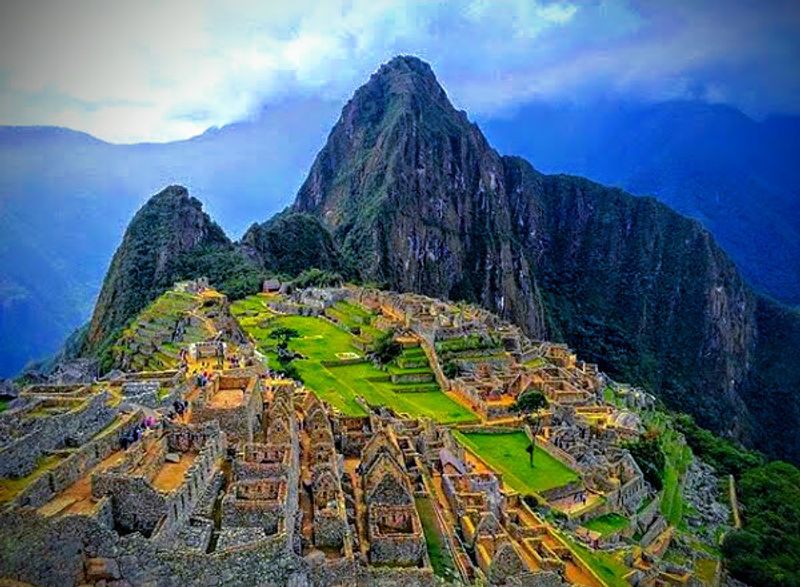
Machu Picchu sits at roughly 7,970 feet above sea level, which means altitude sickness is a real guest that nobody invited. Spending a day or two in Cusco before heading up gives your body time to adjust.
Trust the process on this one.
The Inca built this city without wheels, iron tools, or mortar. The stones fit together so precisely that not even a credit card can slide between them.
That fact alone makes you question what the rest of us have been doing with our time.
Most travelers arrive by train to Aguas Calientes and then take a bus up the switchback road to the entrance. Booking timed entry tickets well in advance is essential since daily visitor numbers are strictly capped.
Sunrise visits are worth every early alarm. The clouds roll in by midday, so morning light gives the best experience and the clearest views of the ruins.
The Taj Mahal, India
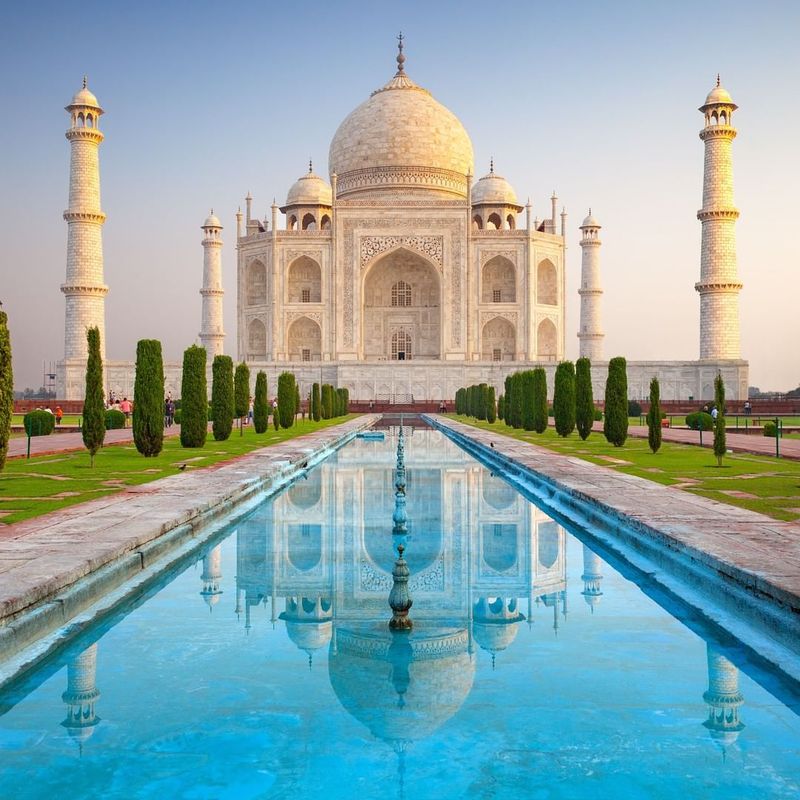
Shah Jahan built the Taj Mahal as a tribute to his late wife Mumtaz Mahal, and honestly, the bar he set for grand romantic gestures has never been matched. Twenty thousand workers and 22 years went into its construction.
Your partner’s birthday card suddenly feels inadequate.
The white marble shifts color depending on the time of day. At sunrise it glows pinkish-gold, at noon it turns brilliant white, and at dusk it takes on a warm amber tone.
Visiting at dawn gives you the most beautiful light and the smallest crowds before tour groups arrive.
The site is located in Agra, about three hours from Delhi by fast train. Shoes must be removed or covered before entering the main mausoleum platform.
The entry fee for foreign visitors includes shoe covers and a water bottle. Fridays are closed to general tourists since prayers are held at the mosque on site.
Petra, Jordan
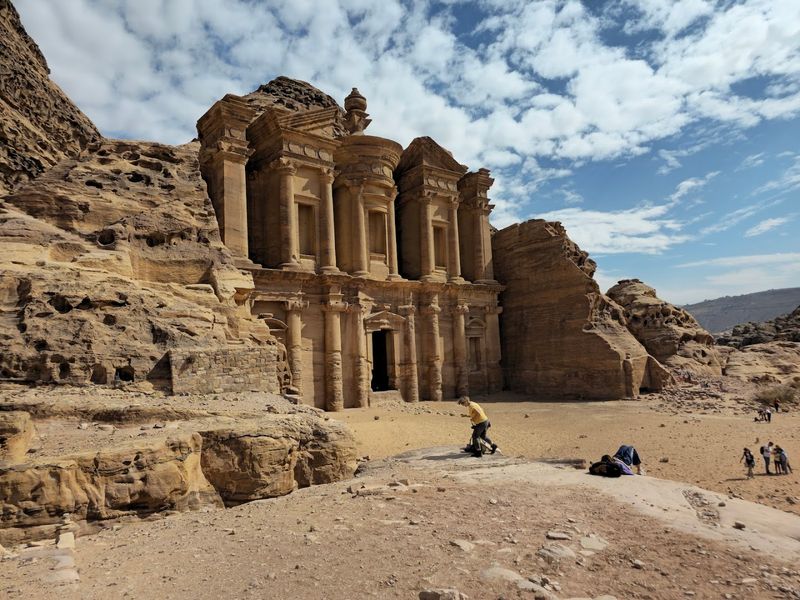
Walking through the Siq, a narrow canyon that stretches nearly a mile before opening up to reveal the Treasury, is one of travel’s great slow-burn reveals. You hear other visitors gasp before you even see it yourself.
Then you turn the corner and completely understand why.
Petra was the capital of the Nabataean Kingdom around 300 BCE. These traders carved an entire city straight into rose-red sandstone cliffs, complete with tombs, temples, and an elaborate water system.
The engineering is jaw-dropping by any era’s standards.
Most visitors only see the Treasury and call it a day, but that barely scratches the surface. The Monastery, reached by climbing 800 steps, is even larger and far less crowded.
Petra By Night is a popular evening experience where candles light the Siq path to the Treasury. Jordan also offers excellent food, warm hospitality, and reasonable costs compared to many Middle Eastern destinations.
Angkor, Cambodia
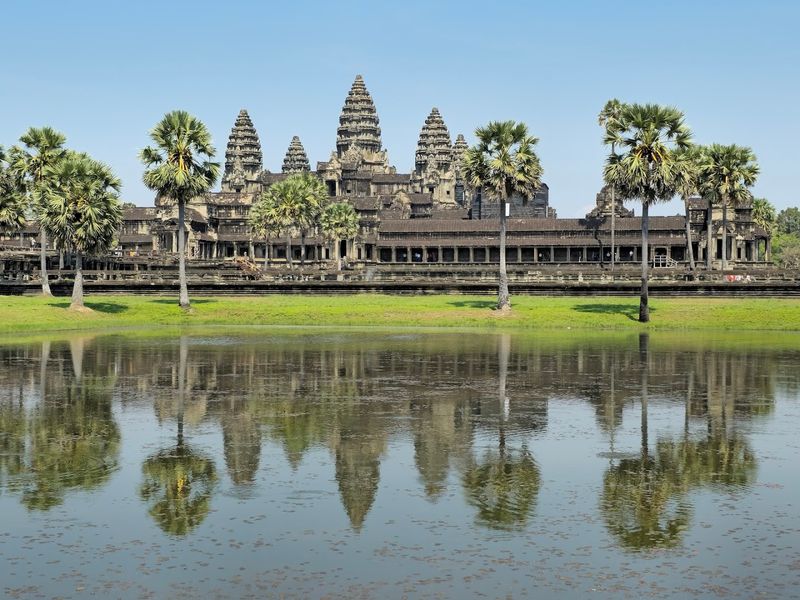
Angkor Wat is the world’s largest religious monument, covering about 400 acres. The entire archaeological park surrounding it spans roughly 400 square kilometers.
Saying it is big is like saying the ocean is damp.
Built in the early 12th century under King Suryavarman II, Angkor Wat was originally dedicated to the Hindu god Vishnu before gradually becoming a Buddhist temple. The bas-relief carvings along its galleries stretch for nearly half a mile and depict mythological stories in extraordinary detail.
Spending time studying them is genuinely rewarding.
The park contains dozens of temples beyond Angkor Wat itself. Ta Prohm, where massive tree roots have grown through the stone walls, looks like a set from an adventure film.
Bayon temple features nearly 200 carved stone faces smiling serenely in every direction. Hiring a knowledgeable local guide transforms the experience from impressive ruins into a living history lesson worth every penny spent.
The Pyramids of Giza, Egypt
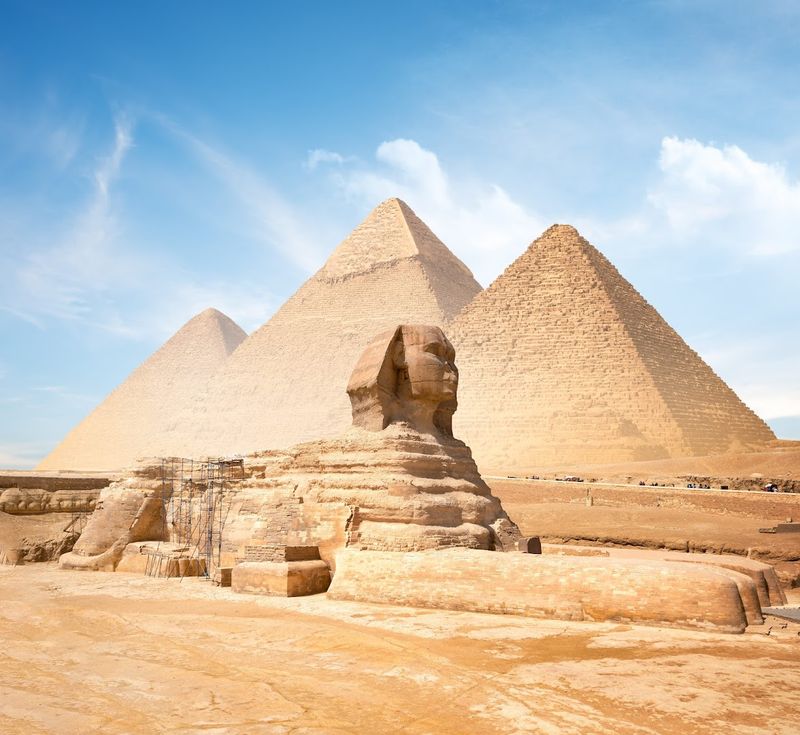
The Great Pyramid of Giza was the tallest structure on Earth for nearly 3,800 years. Let that sink in.
No building surpassed it until Lincoln Cathedral in England was completed around 1311 CE. Ancient Egyptians were clearly not messing around.
Standing at the base of the Great Pyramid is a genuinely humbling experience. Each stone block weighs between 2.5 and 15 tons, and there are roughly 2.3 million of them.
Archaeologists still debate exactly how they were moved and placed with such precision. The mystery is part of the appeal.
The Giza plateau sits just outside Cairo, making it easy to combine with a city visit. Camel rides around the complex are touristy but undeniably fun.
The Solar Boat Museum next to the Great Pyramid houses a 4,600-year-old cedar boat discovered buried in a sealed pit. Visiting early morning avoids the worst heat and the largest tour groups that typically arrive after 10 a.m.
The Colosseum, Italy
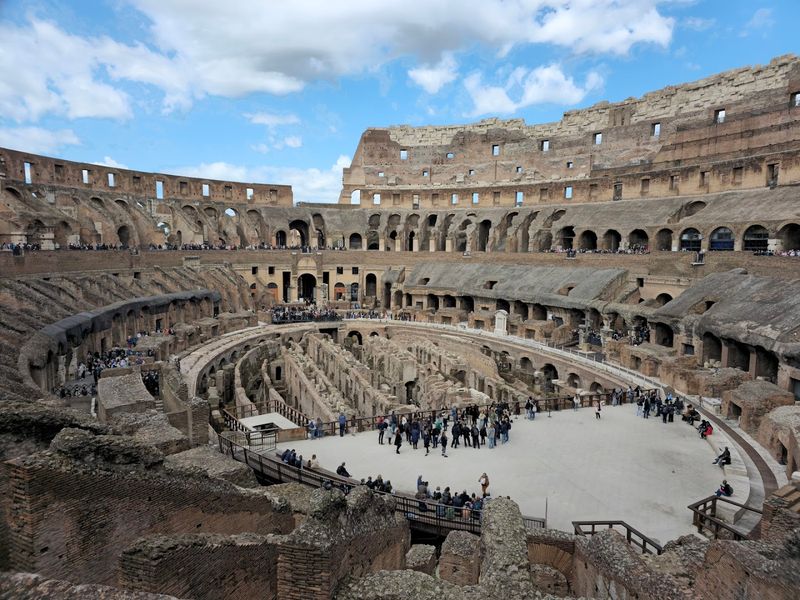
The Colosseum held up to 80,000 spectators and featured a retractable awning system called the velarium to shade the crowd from the Roman sun. Ancient Rome basically invented the stadium experience, including the part where everyone fights for a decent seat.
Construction finished in 80 CE, and the arena hosted gladiatorial contests, animal hunts, public executions, and even mock naval battles when it was flooded with water. Over 400,000 people and one million animals are estimated to have died within its walls.
It is a sobering place beneath the grandeur.
Booking skip-the-line tickets online is absolutely essential since queues can stretch for hours during peak season. The underground hypogeum, where gladiators and animals were held before entering the arena, can be visited on special tours.
Combining the Colosseum with the nearby Roman Forum and Palatine Hill on the same ticket offers exceptional value and fills an entire fascinating day in Rome.
The Acropolis of Athens, Greece
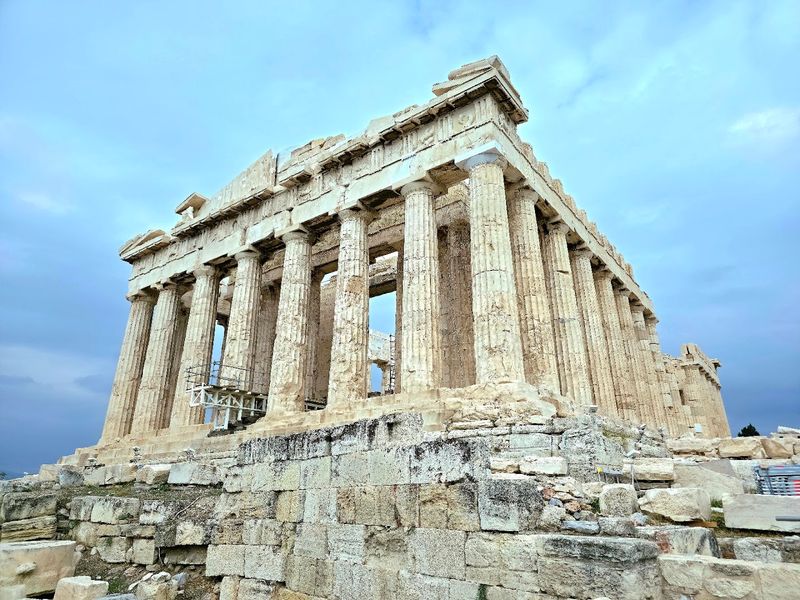
The Parthenon has been a temple, a treasury, a church, and a mosque over its 2,500-year history. It has survived wars, explosions, and centuries of looting.
At this point, it has outlasted most of the civilizations that tried to claim it.
Built between 447 and 432 BCE under the leadership of Athenian statesman Pericles, the Parthenon was dedicated to the goddess Athena. Its columns appear perfectly straight but are actually subtly curved.
Greek architects used optical illusions to make the building look more perfect to the human eye. That level of detail is extraordinary.
The Acropolis Museum at the base of the hill is equally worth visiting and houses original sculptures and artifacts from the site. Climbing the hill in summer heat requires water and decent footwear since the marble surfaces get slippery.
Sunset from the top, looking out over Athens with the city glowing below, is a moment that stays with you long after the trip ends.
Chichen Itza, Mexico
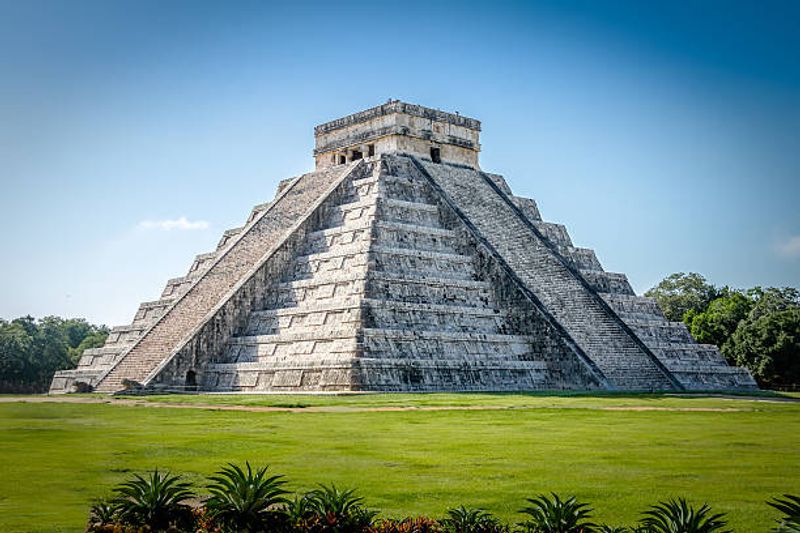
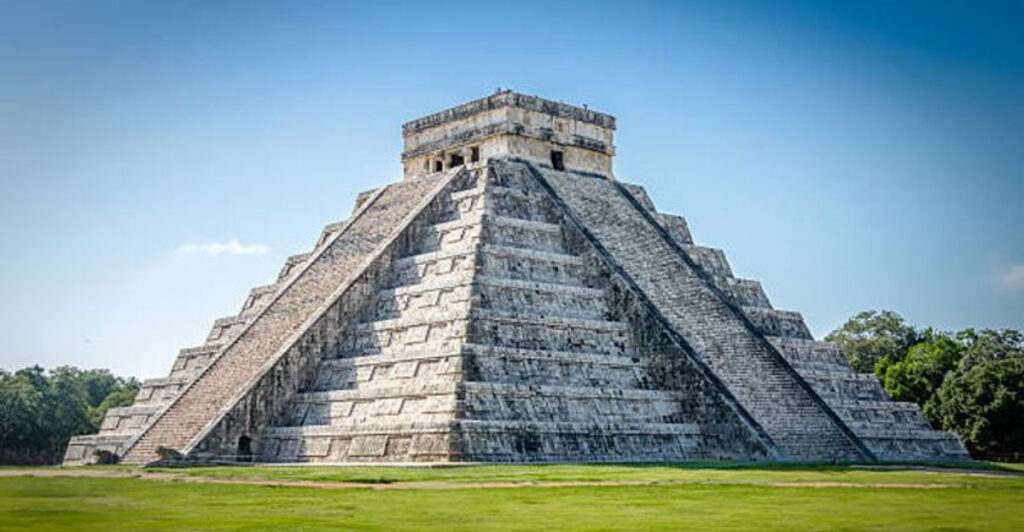
Twice a year, during the spring and autumn equinoxes, a shadow shaped like a serpent appears to slither down the steps of El Castillo pyramid at Chichen Itza. The Maya engineered this effect deliberately over a thousand years ago.
That is either brilliant astronomy or the greatest light show ever planned without electricity.
El Castillo has 365 steps in total, one for each day of the solar year. The Maya calendar was so accurate that it only required adjustment once every 380,000 years.
Modern GPS systems are not that precise over the same period. The numbers are genuinely staggering.
Chichen Itza is about two hours from Cancun by bus, making it a very popular day trip. Arriving when the gates open at 8 a.m. is strongly recommended since crowds build rapidly by midmorning.
The nearby cenote Sagrado, a sacred sinkhole used for offerings, is fascinating to see up close. Bring sunscreen and water since shade is limited throughout the site.
Venice, Italy
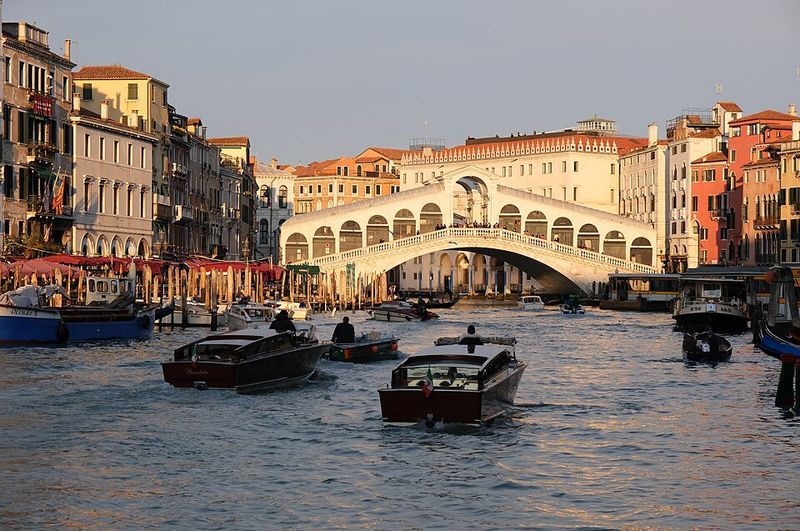
Venice was built on 118 islands connected by over 400 bridges and has no roads for cars whatsoever. Getting around means walking or taking a boat.
The city essentially said no to cars before it was cool.
Founded over 1,500 years ago by refugees fleeing mainland invasions, Venice grew into one of the most powerful trading empires in the medieval world. Its merchants controlled trade routes between Europe and Asia for centuries.
The wealth they accumulated is still visible in the elaborate palaces lining the Grand Canal.
Visiting outside July and August makes a significant difference in both crowd levels and hotel prices. The Doge’s Palace, St. Mark’s Basilica, and a gondola ride along smaller canals are non-negotiable highlights.
Getting deliberately lost in the back streets away from tourist crowds reveals a quieter, more genuine Venice. The city does flood periodically during high tide events called acqua alta, so packing waterproof shoes is genuinely useful advice.
Statue of Liberty, USA
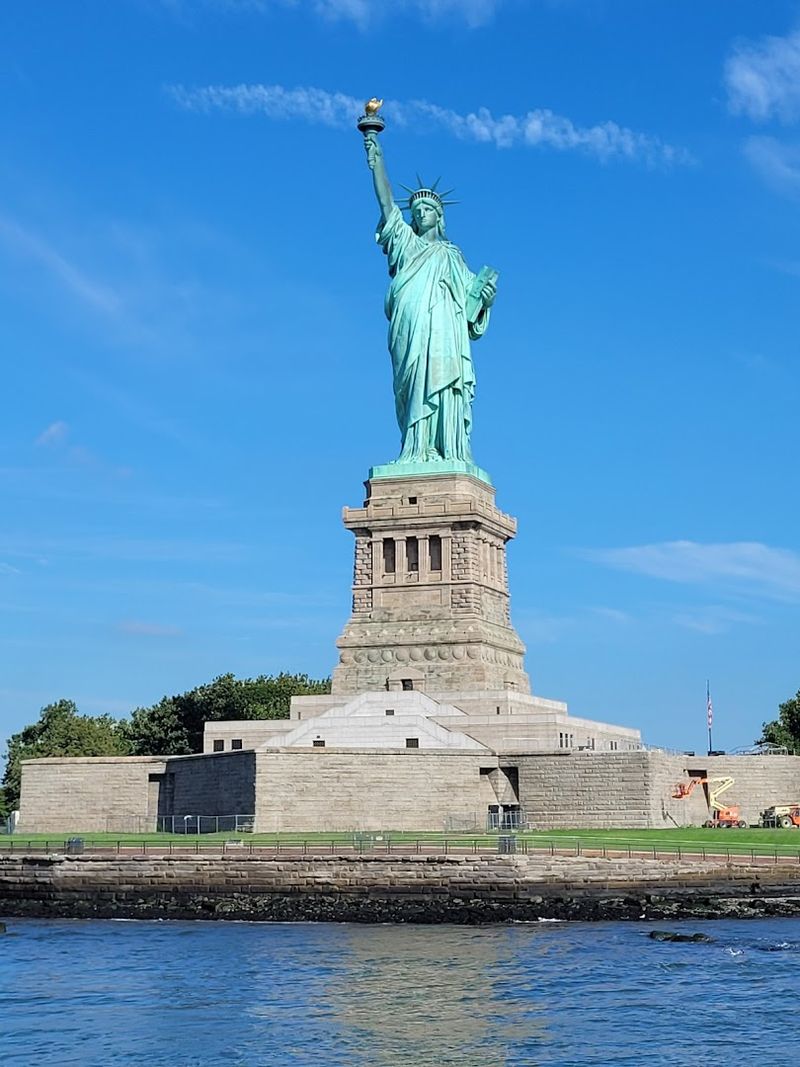
France gave the United States the Statue of Liberty as a friendship gift, and America responded by eventually putting her face on a coin. The statue was a collaborative project between French sculptor Frederic Bartholdi and engineer Gustave Eiffel, yes, the same person behind the famous Paris tower.
Lady Liberty stands 305 feet tall from the ground to the tip of her torch. Her crown holds seven rays representing the seven continents and seven seas.
Over four million rivets hold the copper shell together. She is essentially a very patriotic puzzle.
Ferry tickets from Battery Park in Manhattan or Liberty State Park in New Jersey are required to visit the island. Crown access is the most sought-after ticket and sells out months in advance, so booking early is essential.
The pedestal level offers excellent views of New York Harbor and is easier to secure. Ellis Island, included in the same ferry ticket, tells the remarkable story of American immigration history.
Sydney Opera House, Australia
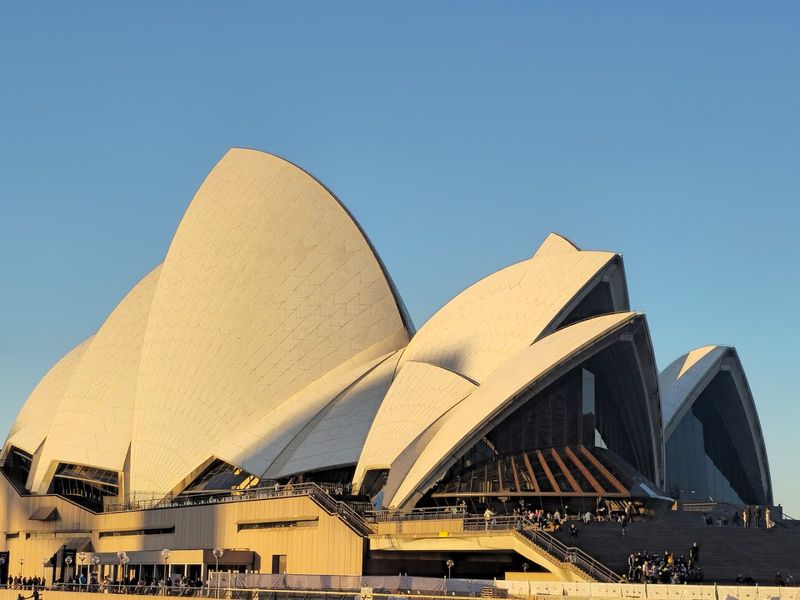
Danish architect Jorn Utzon designed the Sydney Opera House after his entry won an international competition in 1957. He resigned before it was finished due to disputes with the government and never returned to see the completed building.
It became a UNESCO World Heritage Site in 2007 anyway. Architecture drama at its finest.
The roof shells are covered in over one million ceramic tiles that were engineered to be self-cleaning in the rain. From certain angles, the structure looks like billowing sails on the harbor.
From others, it resembles something you could not quite replicate even with the best building blocks set.
Guided tours run daily and give access to performance halls, rehearsal spaces, and backstage areas most visitors never see. Catching an actual performance inside the building takes the experience to a completely different level.
The outdoor forecourt hosts free events and festivals throughout the year. Sitting on the steps with a coffee and watching ferries cross the harbor is one of Sydney’s most satisfying free activities.
Grand Canyon, USA
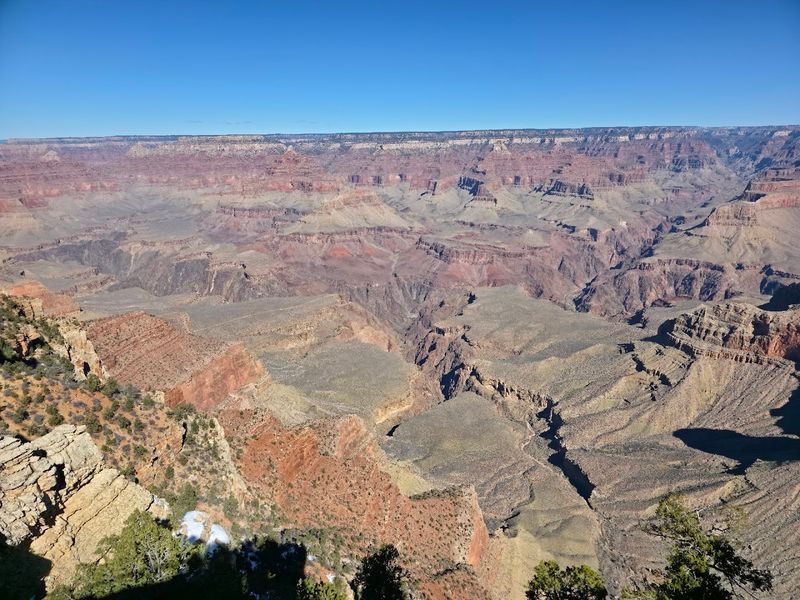
The Grand Canyon is 277 miles long, up to 18 miles wide, and over a mile deep. The Colorado River carved it over roughly five to six million years by slowly cutting through layers of rock.
Patience, apparently, produces spectacular results.
The canyon walls expose nearly two billion years of Earth’s geological history in their colorful layers. Geologists consider it one of the most complete natural records of the planet’s past available anywhere on Earth.
Walking along the rim while reading those rock layers is like flipping through a very old and very dramatic book.
The South Rim is open year-round and is the most visited section. The North Rim is open only from mid-May to mid-October and sees far fewer tourists.
Hiking down into the canyon is significantly harder than it looks from the top. Rangers warn that many visitors underestimate the effort required.
Starting any hike early, carrying plenty of water, and turning back before exhaustion sets in are the three rules worth following.
Great Barrier Reef, Australia
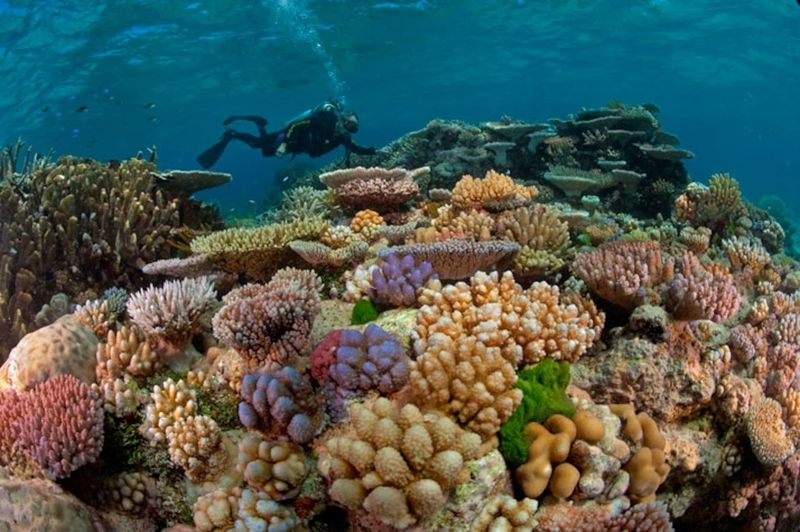
The Great Barrier Reef is so large it can be seen from space. Stretching over 1,400 miles along the Queensland coast, it is the world’s largest living structure and home to over 1,500 species of fish.
It is basically the world’s most biodiverse underwater neighborhood.
Coral bleaching caused by rising ocean temperatures is a serious ongoing threat to the reef. Scientists and conservation organizations are working on restoration projects, including coral gardening programs where damaged sections are actively regrown.
Choosing reef-safe sunscreen and responsible tour operators makes a genuine difference when visiting.
Cairns and the Whitsundays are the most popular gateways for reef trips. Snorkeling is accessible to almost everyone regardless of experience level, while certified divers can explore deeper sections with extraordinary visibility.
Glass-bottom boat tours work well for those who prefer to stay dry. The reef looks most vibrant in the morning before afternoon winds stir up the water.
Booking tours through operators with Great Barrier Reef Marine Park Authority certification is always a smart choice.
Galapagos Islands, Ecuador
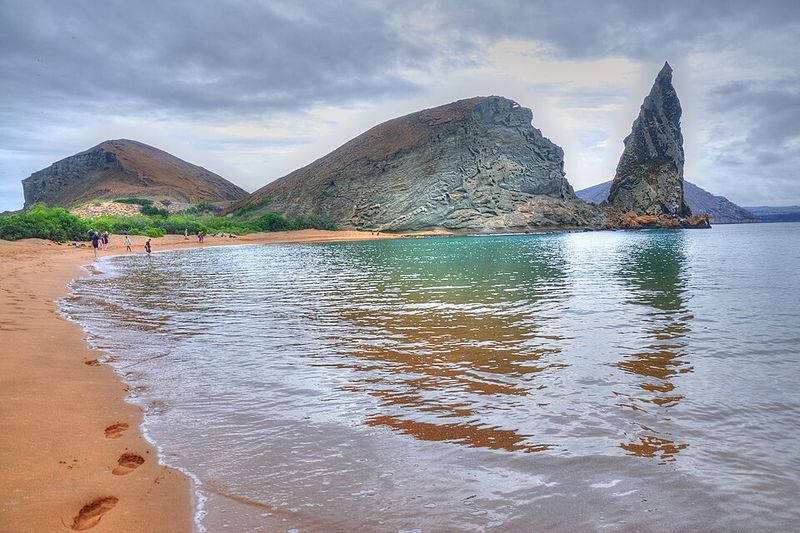
Charles Darwin visited the Galapagos Islands in 1835 and left with enough observations to eventually write one of the most influential books in scientific history. The wildlife here evolved in isolation for so long that many species simply have no fear of humans.
You can walk within feet of sea lions, iguanas, and blue-footed boobies without them flinching.
The islands sit about 600 miles off the coast of Ecuador in the Pacific Ocean. Each island has its own distinct wildlife and landscape, from volcanic lava fields to white sand beaches to dense highland forests.
No two islands feel quite the same.
Visiting requires booking through licensed tour operators, and most trips involve a live-aboard boat that moves between islands overnight. This format maximizes time at each site and minimizes the ecological footprint of tourism.
Entry fees go directly to conservation efforts. The giant tortoises at the Charles Darwin Research Station on Santa Cruz Island are a highlight that genuinely delivers on its reputation.
Snorkeling with sea lions is completely unforgettable.
Iguazu Falls, Argentina and Brazil
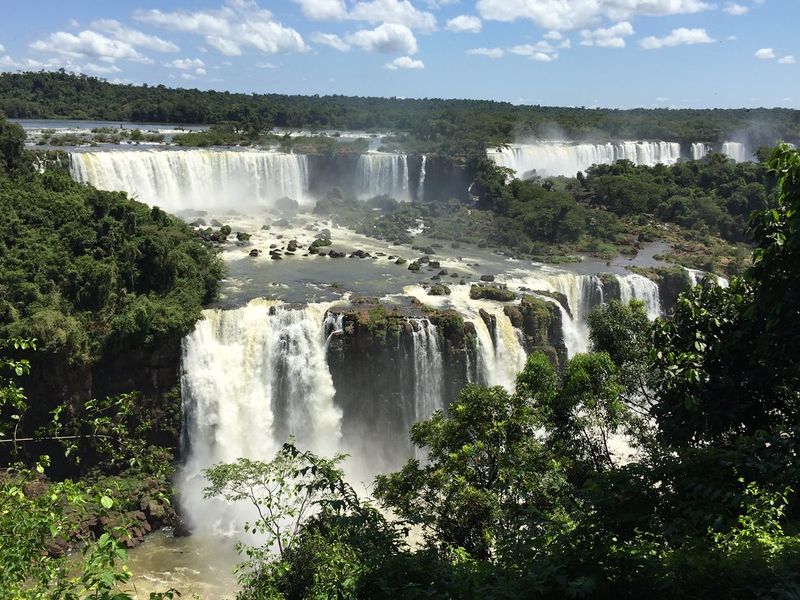
When Eleanor Roosevelt first saw Iguazu Falls, she reportedly said, ‘Poor Niagara.’ That comparison is not unfair. Iguazu is nearly three times wider than Niagara Falls and features up to 275 individual cascades spread across nearly two miles of the Iguazu River.
It is not just a waterfall. It is a collection of waterfalls having a competition.
The falls sit on the border between Argentina and Brazil, and both countries have national parks offering completely different perspectives. The Argentine side puts you right on top of the action via walkways that extend over the water.
The Brazilian side offers sweeping panoramic views of the full horseshoe shape.
Most travelers visit both sides on consecutive days, which is highly recommended. Coatis, raccoon-like animals with zero personal boundaries, roam the Argentine park and will steal snacks without hesitation.
Keep food in bags and bags zipped. The Devil’s Throat, the most powerful single drop in the system, creates so much spray that a light rain jacket becomes immediately necessary.
Boat rides under the falls are soaking wet and completely worth it.
Share this story