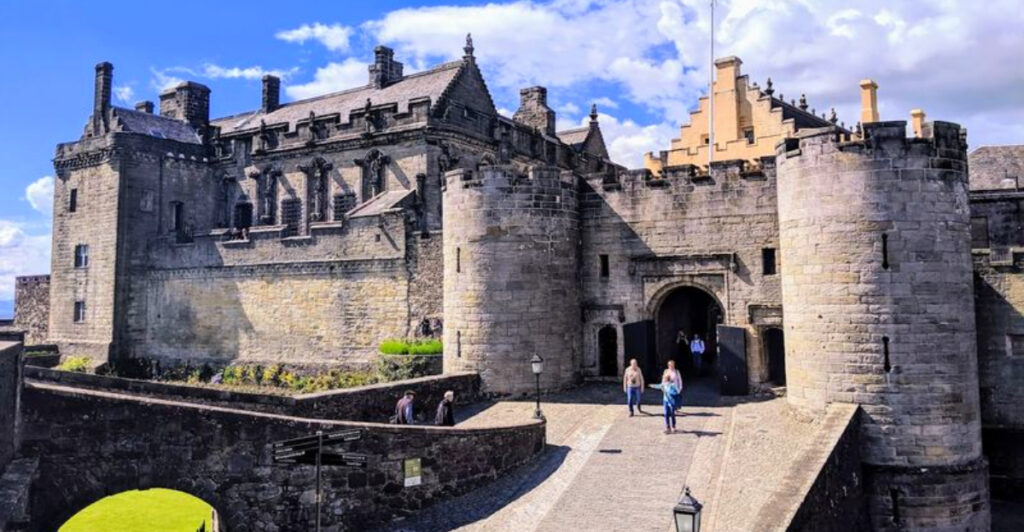
Scotland is home to some of the most stunning castles in the world, each with its own fascinating story to tell. From dramatic clifftop ruins to fairy-tale towers surrounded by misty lochs, these ancient fortresses are scattered across the country like chapters of a living history book.
Whether you are a history lover, a photography enthusiast, or simply someone who enjoys a good adventure, Scotland’s castles have something truly special to offer. Pack your bags and get ready to explore fifteen of the most breathtaking castles this incredible country has to offer.
Edinburgh Castle – Edinburgh
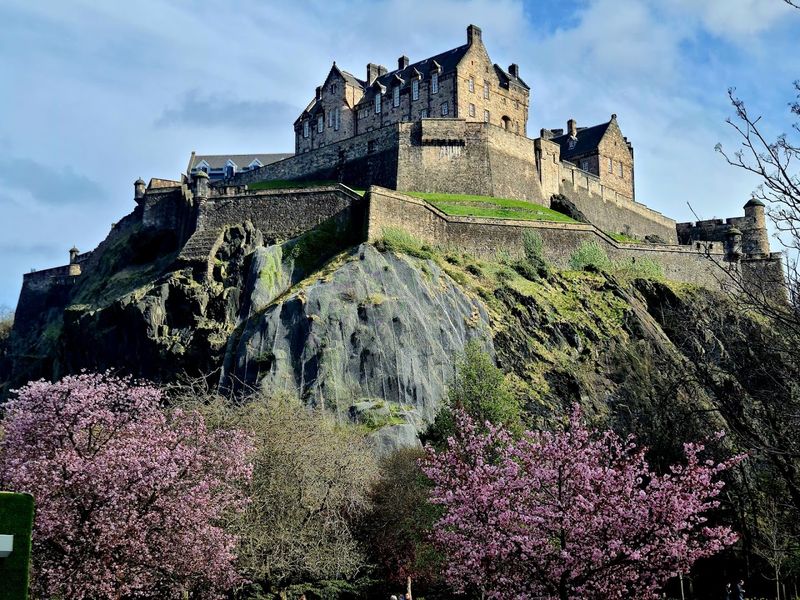
Standing on a volcanic rock that rises sharply above the city, Edinburgh Castle has been watching over Scotland’s capital for nearly a thousand years. Few places in the world carry this much history in a single location.
The moment you step through its gates, the weight of centuries is almost tangible.
Inside, the Crown Jewels of Scotland and the legendary Stone of Destiny are on full display — two of the most significant artifacts in Scottish history. The Great Hall, the war memorial, and the royal apartments each tell a different part of Scotland’s long and complex story.
You could spend an entire afternoon here and still feel like you missed something.
The panoramic views from the castle walls are genuinely jaw-dropping, stretching across the city to the Firth of Forth on a clear day. Every year, the famous Royal Edinburgh Military Tattoo transforms the castle esplanade into a world-class performance stage.
Whether you visit in golden summer light or under moody winter skies, Edinburgh Castle never disappoints.
Eilean Donan Castle – Highlands
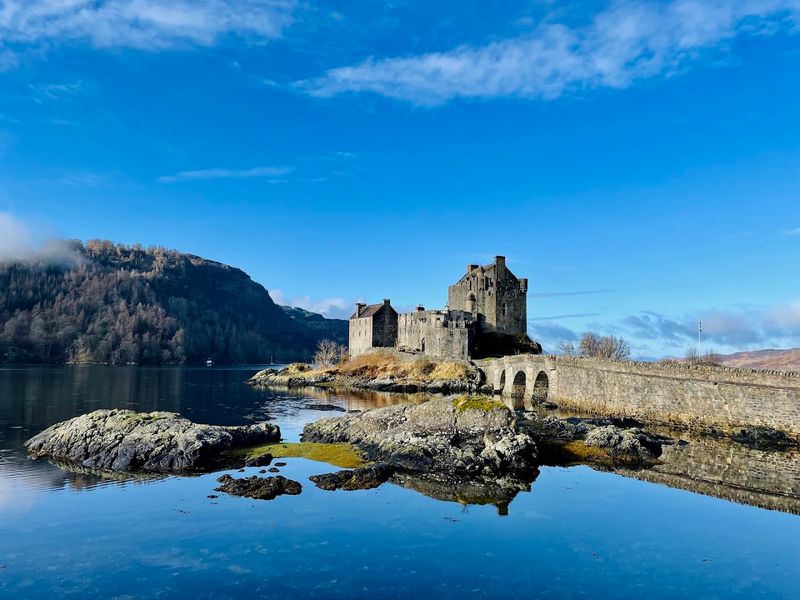
Few sights in Scotland stop people dead in their tracks quite like Eilean Donan Castle. Sitting on a tiny island where three sea lochs converge, it looks less like a real place and more like a painting brought to life.
The stone bridge connecting it to the mainland only adds to its storybook charm.
Originally constructed in the 13th century as a defensive stronghold, the castle was largely destroyed in 1719 during a Jacobite uprising and left in ruins for nearly 200 years. A painstaking restoration completed in 1932 brought it back to life, and today it stands as one of Scotland’s most beloved landmarks.
Its turbulent past gives it a romantic, layered quality that photographs simply cannot fully capture.
Sunrise and sunset visits are absolutely magical here, when the still waters of the loch mirror the castle’s silhouette in perfect symmetry. It has also appeared in several films, including the James Bond movie The World Is Not Enough.
Plan to arrive early to beat the crowds and soak up the atmosphere at its quietest and most beautiful.
Stirling Castle – Stirling
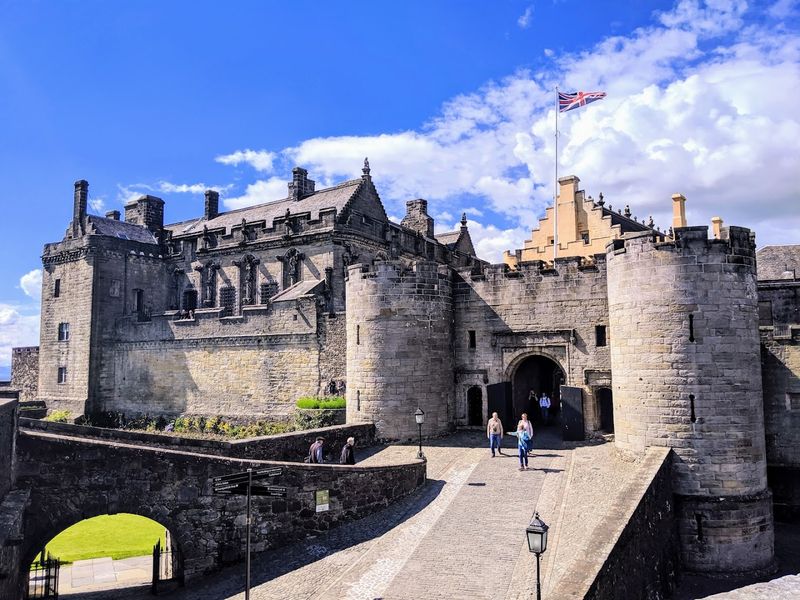
Crowning a steep volcanic hill at the very heart of Scotland, Stirling Castle was once the powerhouse of an entire kingdom. Kings and queens made life-changing decisions within these walls, and the battles fought to control this hilltop stronghold shaped Scottish history forever.
Mary, Queen of Scots was crowned here as an infant in 1543 — a detail that gives the place an almost surreal historical weight.
The castle’s Renaissance Great Hall and the Royal Palace are among the finest examples of their kind in all of Europe. Intricate carvings, richly decorated interiors, and carefully restored tapestries bring the royal court of the 16th century vividly back to life.
History teachers would have a field day here — and honestly, so would anyone with even a passing interest in the past.
The views from the castle ramparts are sweeping and spectacular, taking in the Wallace Monument, the Ochil Hills, and the winding River Forth below. Stirling is also a compact, walkable city, making it easy to combine a castle visit with exploring the charming old town nearby.
This is one Scottish destination that absolutely earns its reputation.
Dunnottar Castle – Aberdeenshire
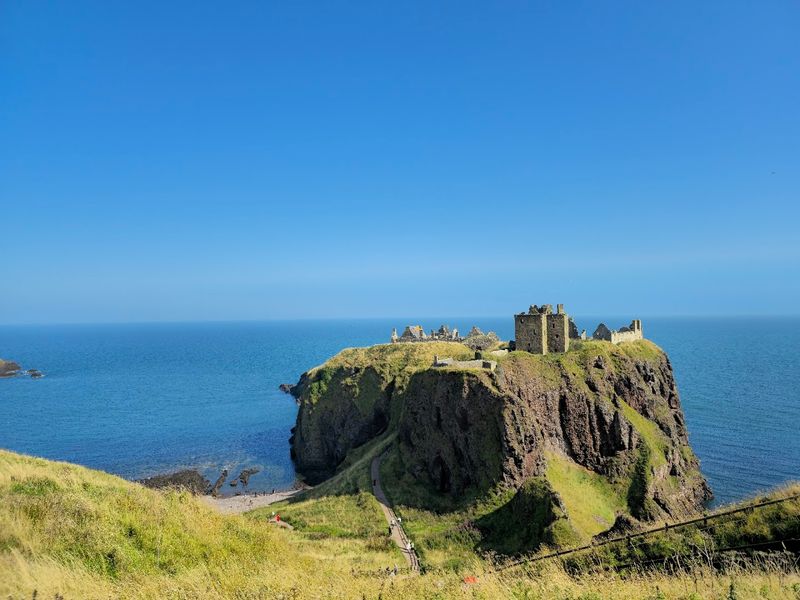
Clinging to a sheer cliff edge above the crashing North Sea, Dunnottar Castle looks like it was designed by someone with a flair for the theatrical. The ruins rise from a rocky headland that juts dramatically into the ocean, completely cut off on three sides by sheer drops.
Getting there requires a steep walk along a narrow coastal path — and every step of it is worth it.
The castle’s history is as dramatic as its setting. It once sheltered Scotland’s Crown Jewels from Oliver Cromwell’s advancing army, and its dungeon held over 160 Covenanters in horrifying conditions during the 1680s.
These stories linger in the air as you wander through the crumbling towers and roofless halls, making the ruins feel genuinely haunting.
Photographers absolutely love Dunnottar, especially on overcast days when brooding clouds roll in from the sea and the light turns moody and cinematic. The castle has also appeared in Franco Zeffirelli’s film adaptation of Hamlet, starring Mel Gibson.
Even if castle ruins are not usually your thing, the sheer spectacle of this location will leave a lasting impression that stays with you long after you leave.
Urquhart Castle – Loch Ness
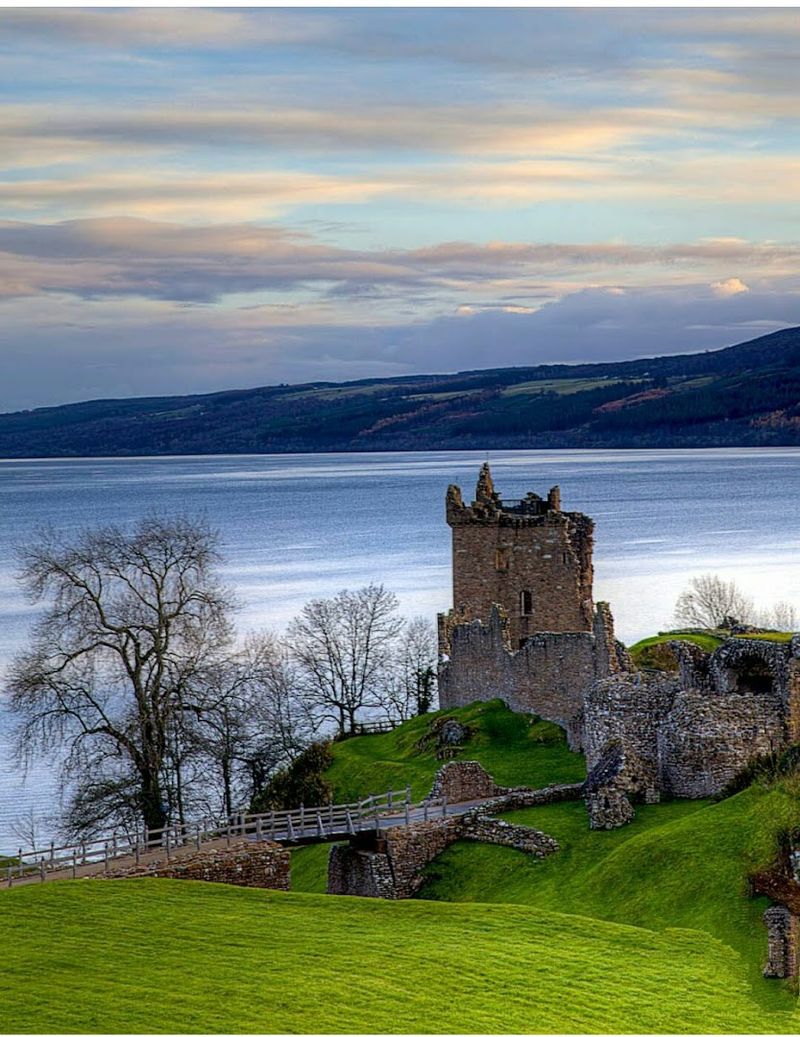
Perched on the banks of the world’s most famous loch, Urquhart Castle comes with a legendary bonus attraction — the chance, however slim, of spotting Nessie lurking in the deep. The castle itself has stood in various forms since the 6th century, making it one of the oldest fortified sites in Scotland.
Its ruined towers reflected in Loch Ness create one of the most iconic views in the entire country.
The history here is rich and turbulent. Urquhart changed hands repeatedly between Scottish and English forces throughout the Wars of Independence, and its walls have witnessed sieges, betrayals, and royal visits across the centuries.
The visitor center does an excellent job of laying out this complicated past in an accessible and engaging way.
Standing on the Grant Tower — the castle’s best-preserved section — and gazing out over Loch Ness is an experience that is hard to put into words. The loch stretches for over 23 miles, its dark waters hiding more mystery than most places on Earth.
Even on a rainy day, the atmosphere here is electric. Bring a good camera, keep your eyes on the water, and enjoy every atmospheric moment this remarkable site has to offer.
Balmoral Castle – Aberdeenshire
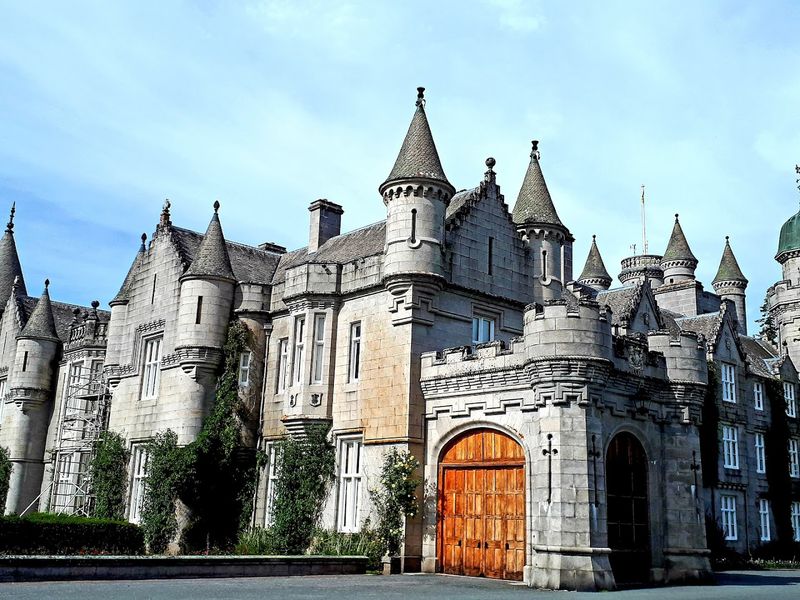
Queen Victoria fell so deeply in love with the Scottish Highlands that she and Prince Albert purchased Balmoral Estate in 1852 and built an entirely new castle on it. That royal obsession with this corner of Aberdeenshire has never faded — the British royal family has used it as a private summer retreat ever since.
Walking through these grounds, it is easy to understand why royalty keeps coming back.
Unlike the ancient ruins and medieval fortresses that dominate Scotland’s castle scene, Balmoral is a living, breathing estate. The castle itself is a striking example of Scottish Baronial architecture, all turrets and white granite gleaming against the Highland backdrop.
The formal gardens and estate grounds are open to visitors during summer months, offering a refined and peaceful experience.
The surrounding landscape is extraordinary — rolling heather moorland, ancient pine forests, and the sparkling River Dee running through the valley below. Guided tours of select rooms and the ballroom give visitors a rare glimpse into royal domestic life.
The estate also operates as a working farm and deer forest. Balmoral is not just a royal retreat; it is proof that Scotland’s countryside can inspire devotion in even the most well-traveled people on the planet.
Dunrobin Castle – Sutherland
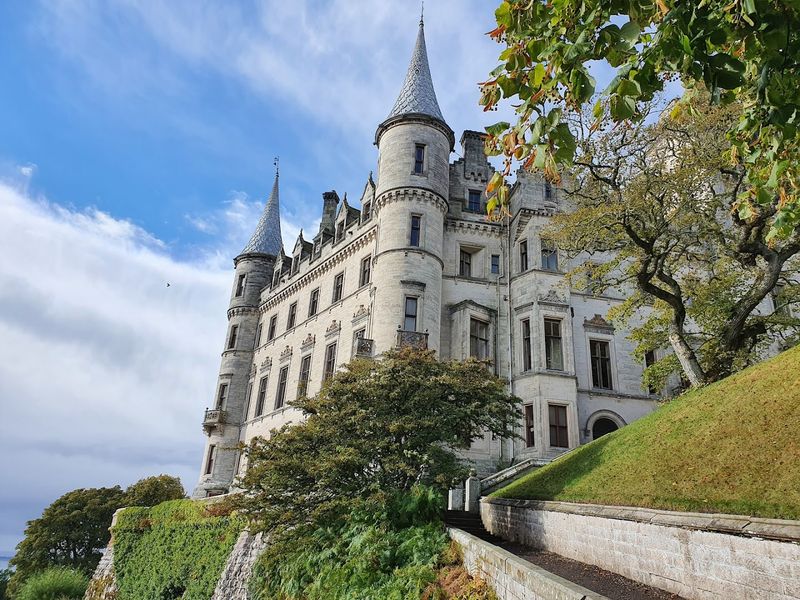
Honestly, Dunrobin Castle looks like it was teleported straight from the Loire Valley in France and dropped onto the Scottish coast — in the absolute best way possible. Its pale stone towers and pointed turrets rise above immaculate formal gardens, creating a scene of surprising elegance in the rugged north of Scotland.
This is the kind of castle that makes children gasp and adults reach for their cameras simultaneously.
As the largest house in the northern Highlands, Dunrobin has been the seat of the Earls and Dukes of Sutherland for centuries. The oldest parts of the castle date back to the 13th century, though much of what you see today reflects extensive 19th-century remodeling by the architect Sir Charles Barry — the same man who designed the Houses of Parliament in London.
That pedigree shows in every elegant detail.
Inside, over 180 rooms contain an impressive collection of paintings, furniture, and historical artifacts. The falconry displays held on the grounds are a crowd favorite, adding an unexpected layer of entertainment to the visit.
With the North Sea glittering beyond the gardens and mountains rising behind the castle, Dunrobin delivers a combination of grandeur and natural beauty that is genuinely hard to match anywhere in Scotland.
Craigievar Castle – Aberdeenshire
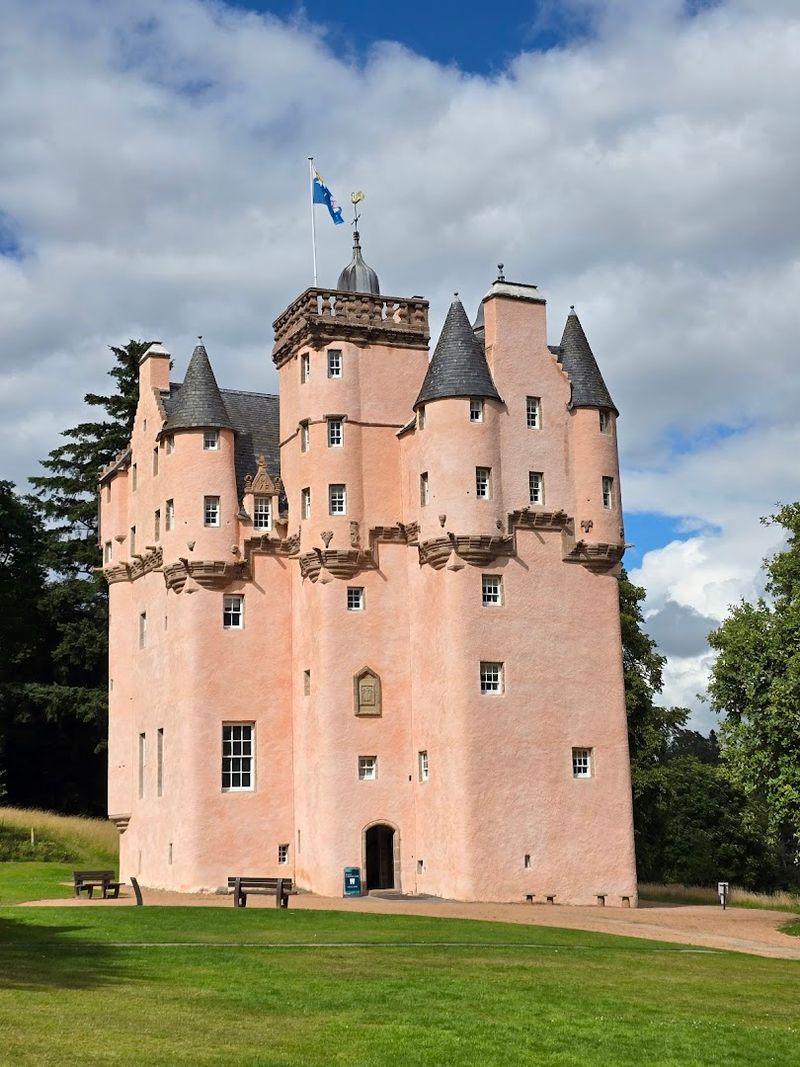
There is a persistent rumor that Craigievar Castle inspired the design of Disney’s Cinderella castle — and honestly, one look at this rosy-pink tower house rising from the trees and the story becomes entirely believable. Built in the early 17th century, its strikingly vertical design and soft salmon-pink harling make it one of the most visually distinctive buildings in all of Scotland.
No filter needed for these photos.
What makes Craigievar genuinely special is how untouched it feels. Unlike many castles that have been heavily altered over the centuries, Craigievar has remained remarkably close to its original form.
The interior features elaborate plasterwork ceilings that are considered among the finest examples of their period in Europe. The National Trust for Scotland now cares for the property, ensuring it stays in excellent condition for future visitors.
The woodland setting surrounding the castle adds to its fairy-tale atmosphere, especially in autumn when the trees turn gold and copper. Visitor numbers are carefully managed to protect the interiors, so booking in advance is strongly recommended.
Craigievar sits in a quiet corner of Aberdeenshire, away from the main tourist trails, which makes discovering it feel like stumbling upon a well-kept secret worth sharing with everyone you know.
Glamis Castle – Angus
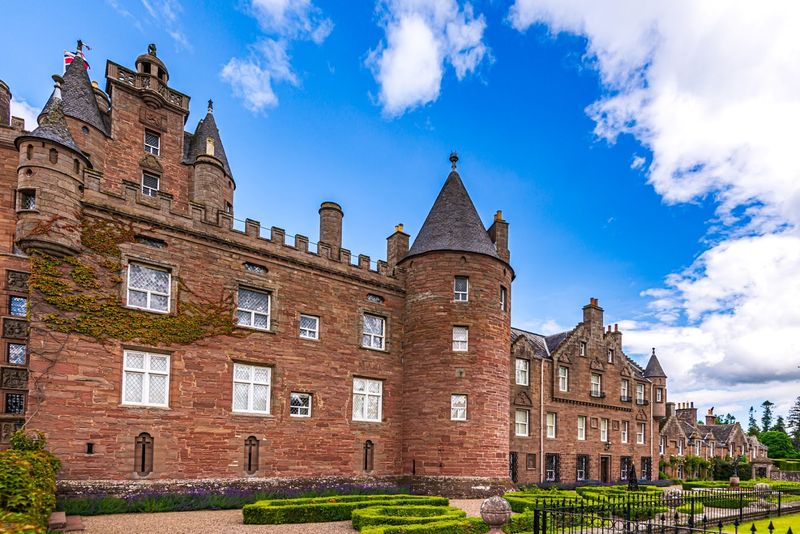
Shakespeare set his bloodiest tragedy here — or at least used it as inspiration — and Glamis Castle has been trading on that dark literary connection ever since. The castle is the legendary setting for Macbeth, though the real history of this place is arguably just as dramatic as anything the Bard invented.
It is also the childhood home of Queen Elizabeth The Queen Mother, giving it an unmistakable royal dimension.
Dating back to the 14th century, Glamis is one of Scotland’s oldest continuously inhabited castles. Its soaring towers and battlements are visible from miles away as you approach along the long, tree-lined avenue that leads to the front entrance.
The interior is packed with royal portraits, ancient armor, and rooms that carry centuries of stories within their stone walls.
Ghost stories are practically part of the tour here — Glamis is considered one of Scotland’s most haunted castles, with tales of secret rooms and mysterious figures that have been circulating for generations. The expansive grounds include beautiful Italian and walled gardens that are well worth exploring on their own.
Whether you come for the history, the royal connections, or the shivers, Glamis Castle delivers an experience that is layered, memorable, and genuinely unlike anywhere else in Scotland.
Doune Castle – Stirling
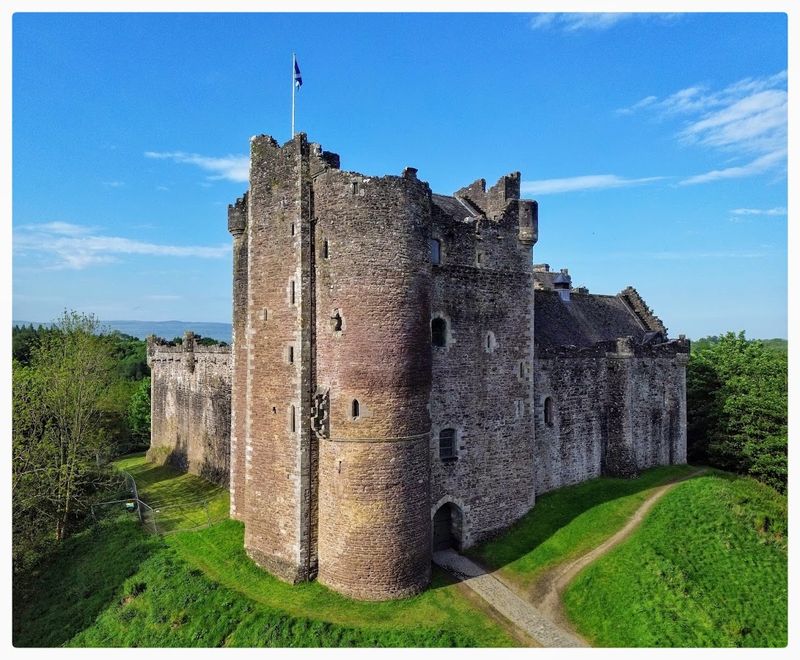
If Doune Castle looks familiar, that is probably because you have already seen it on screen without realizing it. This remarkably well-preserved medieval fortress has stood in for Castle Leoch in Outlander, Winterfell in Game of Thrones, and — most memorably — the ridiculous French castle in Monty Python and the Holy Grail.
Few buildings in Britain have had such an impressive acting career.
Built in the late 14th century for Robert Stewart, Duke of Albany, Doune is considered one of the finest examples of a Scottish medieval castle in existence. Unlike many historic sites that have crumbled or been heavily altered, Doune retains much of its original structure, including a soaring gatehouse tower and a massive great hall that still impresses visitors today.
Walking through it feels genuinely authentic in a way that carefully curated museum reconstructions rarely achieve.
The audio guide — narrated by Terry Jones of Monty Python fame — is an unexpected delight and adds a layer of humor that makes the visit even more enjoyable. Located just a short drive from Stirling, Doune is easy to include in a broader Highland itinerary.
History fans and film buffs alike will find plenty to love here, making it one of Scotland’s most rewarding and entertaining castle visits.
Castle Stalker – Argyll
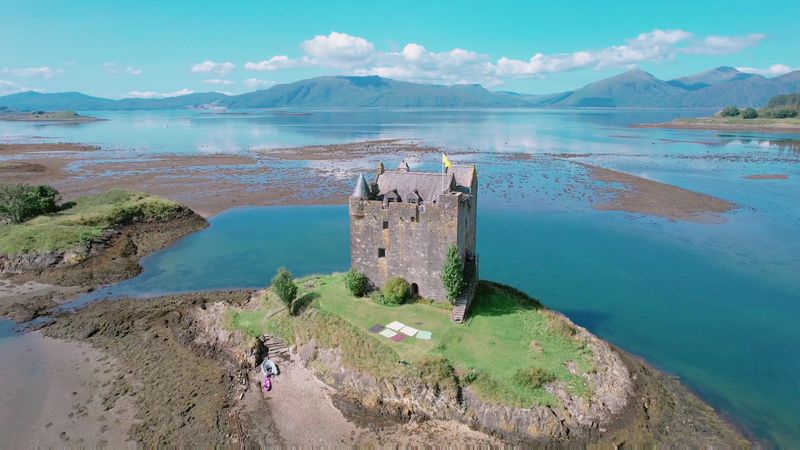
Sitting alone on a tiny tidal island in Loch Laich, Castle Stalker has a quality of stillness that most places simply cannot manufacture. There are no crowds here, no gift shops, no queues — just a lone medieval tower rising from the water with mountains rolling away in every direction.
It is the kind of scene that makes you stop talking mid-sentence and just stare.
The castle dates back to the early 15th century and was originally built as a hunting lodge for King James IV of Scotland. It passed through various hands over the centuries, fell into ruin, and was eventually restored in the 1960s and 70s by a private owner whose family still lives there today.
Public access is limited and typically requires booking a boat tour, which only adds to the sense of occasion.
Monty Python fans will also recognize Castle Stalker as the Castle of Aaarrgh from the Holy Grail — a fun bonus for those who appreciate cinematic history alongside the real kind. Even from the shore, the view across the water to the castle is one of the most serene and photogenic in all of Scotland.
Visit at low tide when the island is accessible and the reflections in the water are at their most dramatic and beautiful.
Kilchurn Castle – Loch Awe
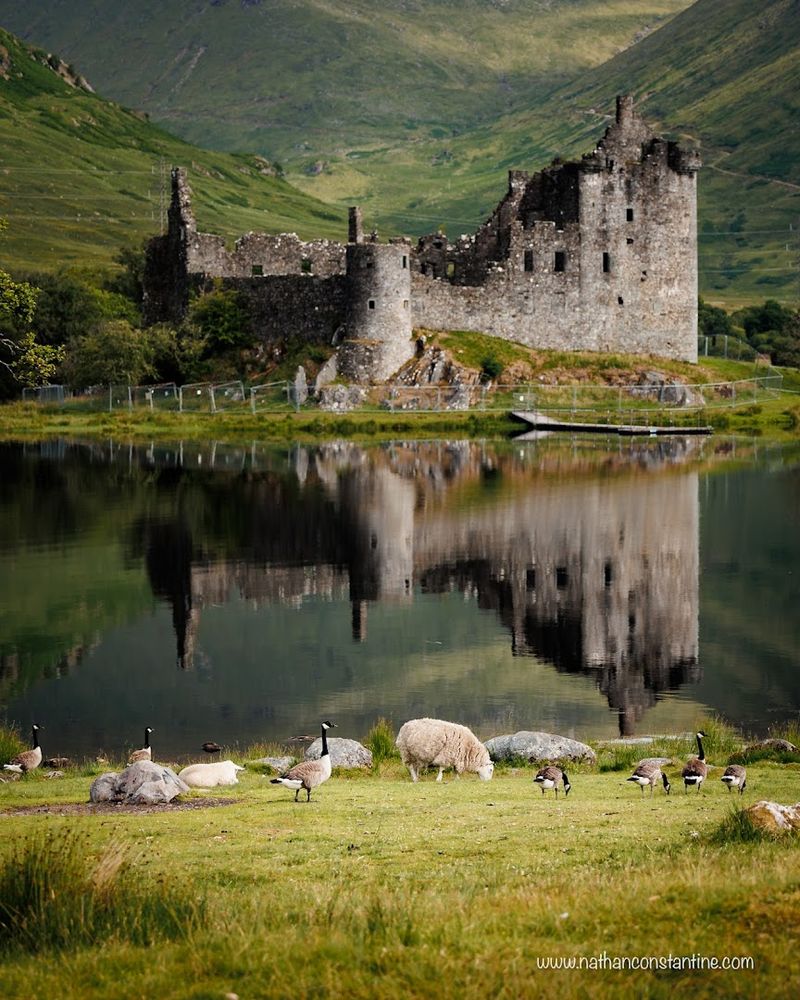
Early morning mist rising off Loch Awe with Kilchurn Castle emerging from the haze is the kind of sight that turns ordinary travelers into devoted photographers. The ruined 15th-century castle sits at the northeastern tip of the loch, backed by the imposing bulk of Ben Cruachan, Scotland’s fifth highest mountain.
The combination of water, ruin, and mountain creates a composition that feels almost impossibly perfect.
Built by Sir Colin Campbell of Glenorchy around 1450, Kilchurn served as both a military garrison and a clan stronghold for over two centuries. It was eventually abandoned in the early 18th century after a lightning strike damaged one of its towers, and time has done the rest.
Today it stands as a picturesque ruin managed by Historic Environment Scotland, accessible by a short walk or, seasonally, by a small ferry from Loch Awe village.
The castle sits on a former island that is now connected to the loch shore by a narrow strip of land, which means flooding still occurs during wet periods — adding yet another dramatic visual element for photographers. Autumn is arguably the finest time to visit, when the surrounding hillsides blaze with color and low sunlight catches the water beautifully.
Kilchurn is quieter than many Scottish castles, which makes it feel like a genuine discovery rather than a tourist obligation.
Cawdor Castle – Highlands
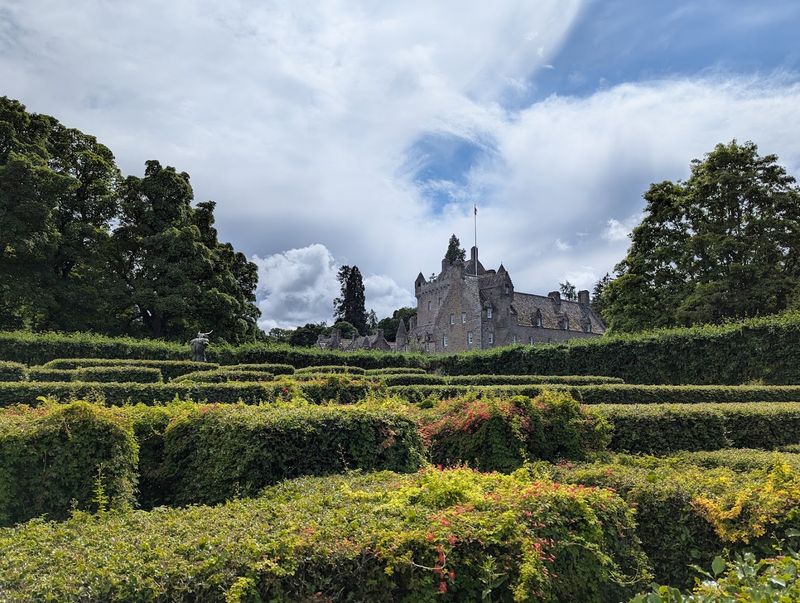
Legend has it that the original Thane of Cawdor built his castle wherever his donkey chose to rest — and the donkey, apparently, had excellent taste. Cawdor Castle sits amid some of the most beautiful gardens and ancient woodland in the Scottish Highlands, combining medieval architecture with a horticultural splendor that makes it feel more like a country estate than a fortress.
Shakespeare’s Macbeth famously carries the title Thane of Cawdor, and visiting the real place gives that story a whole new dimension.
Unlike many Scottish castles that are either ruined or turned into sterile museums, Cawdor still feels like a lived-in home. The interiors are filled with tapestries, family portraits, and personal collections that reflect centuries of continuous occupation by the Cawdor family.
That human warmth is something that purpose-built tourist attractions simply cannot replicate.
Three distinct gardens — the walled garden, the wild garden, and the flower garden — surround the castle and are worth visiting in their own right. The ancient woodland trails offer peaceful walks through towering old-growth trees that have stood here for hundreds of years.
Cawdor is located near Nairn, making it a convenient stop on any Highland road trip. It rewards slow, unhurried exploration, and those who take their time here rarely regret a single lingering minute.
Inverness Castle – Inverness
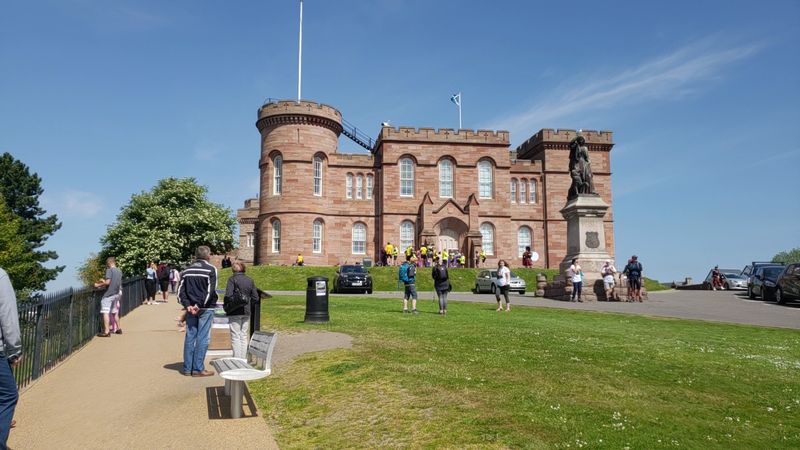
Perched on a sandstone bluff above the River Ness, Inverness Castle commands one of the most central and accessible vantage points in the Scottish Highlands. Its distinctive red sandstone walls glow warmly in afternoon sunlight, making it a striking landmark that anchors the city’s skyline with quiet confidence.
This is not a crumbling ruin or a remote wilderness fortress — it is right in the heart of a vibrant, welcoming city.
The current structure dates primarily from the 19th century, built on a site with a much older fortified history stretching back to the 11th century. After years of serving as a working courthouse, Inverness Castle has recently undergone a major transformation into a new visitor experience called Castle Inverness, showcasing Highland history and culture in a thoroughly modern way.
The renovation has breathed fresh life into a building that was long underappreciated by visitors rushing past on their way to the Highlands.
The rooftop viewing platform offers spectacular 360-degree views across the city, the River Ness, and the surrounding hills — well worth the climb on a clear day. The statue of Flora MacDonald standing outside the castle gates is a beloved landmark in its own right, honoring the woman who helped Bonnie Prince Charlie escape after Culloden.
Inverness Castle is proof that a castle does not need to be in ruins to be compelling.
Castle Tioram – Highlands
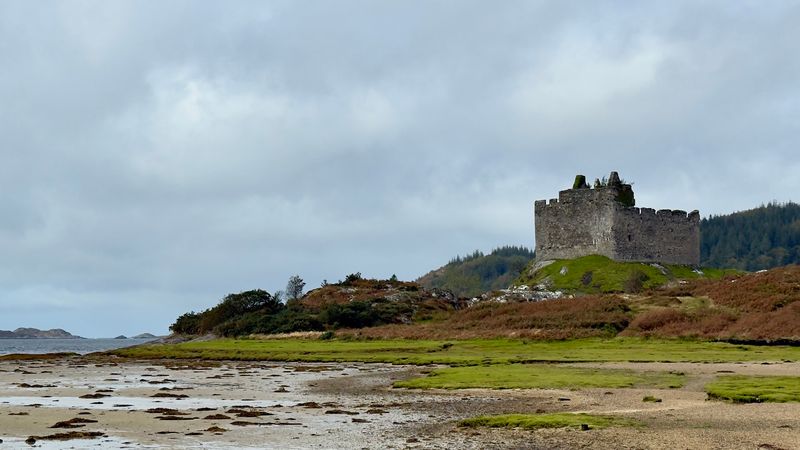
Getting to Castle Tioram requires a bit of effort, and that is precisely part of its appeal. Located on a tidal island at the end of a single-track road winding through some of the wildest scenery in the western Highlands, this ancient ruin rewards those willing to make the journey with an atmosphere that is genuinely unlike anywhere else in Scotland.
The name itself — pronounced Cherram — means dry castle in Scottish Gaelic, referring to the tidal causeway that connects it to the shore at low tide.
Built in the 13th century by the MacDonalds of Clanranald, Castle Tioram served as a clan stronghold for over 400 years. It was deliberately set on fire by its own chief in 1715 to prevent it falling into enemy hands — an act of defiant loyalty that still feels poignant three centuries later.
The ruins that remain are substantial, with thick curtain walls and a central tower that speak to the castle’s former strength.
The surrounding landscape is breathtaking in the truest sense — Loch Moidart stretches away to the west, oak woodland clings to the hillsides, and on clear days the views toward the islands of Eigg and Rum are extraordinary. Visitors should always check tide times before crossing the causeway.
Castle Tioram is raw, remote, and unforgettable — a perfect final chapter in any Scottish castle adventure.
Share this story