There is a rusted gate off a quiet road in central Oklahoma, and behind it, the woods have been slowly swallowing up something truly strange. Old circus trailers, decaying cages, a broken pavilion, and colorful graffiti on weathered metal tell the story of a place that once buzzed with performers and crowds.
Most people in the area have never even heard of it, which makes stumbling upon it feel like cracking open a forgotten chapter of history. This site has attracted photographers, urban explorers, and history buffs from across the state, all drawn in by the same question: what exactly happened here?
Finding the Site: Location and Access
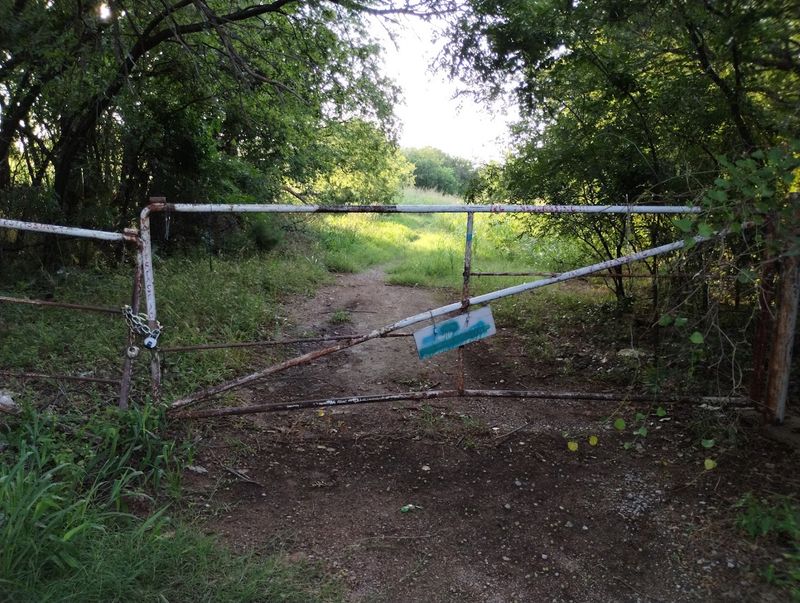
The ruins sit just off Kelly Street in Edmond, Oklahoma, at coordinates that place them surprisingly close to everyday suburban life. The full address associated with the site is in the Edmond, OK 73003 area, and while it appears unremarkable on a map, the reality on the ground is anything but ordinary.
A cement pull-off along the road marks the spot, and a rusted metal gate serves as the unofficial entrance to the property. For years, that gate stayed open, welcoming curious visitors who parked and wandered in on foot.
More recent reports suggest the gate is now locked, and the property has been listed for sale, so access is no longer guaranteed. Before planning a visit, it is worth checking current conditions online, particularly through the Atlas Obscura listing at atlasobscura.com/places/gandinis-circus, which has tracked this site for years.
The surrounding area of Edmond, Oklahoma is otherwise known for its parks and quiet neighborhoods, making this forgotten circus corner feel even more out of place.
A Circus That Left No Clean Goodbye
Nobody seems to know exactly when Gandini’s Circus packed up for the last time, and that mystery is a big part of what draws people here. There are no newspaper headlines pinpointing a closing date, no official announcement, and very little documented history about the operation itself.
What visitors find instead are clues left behind in the form of rusting metal, overgrown trailers, and equipment that nature has spent decades reclaiming. Some of the old circus gear has been absorbed so thoroughly into the surrounding trees that you can barely tell where the machinery ends and the forest begins.
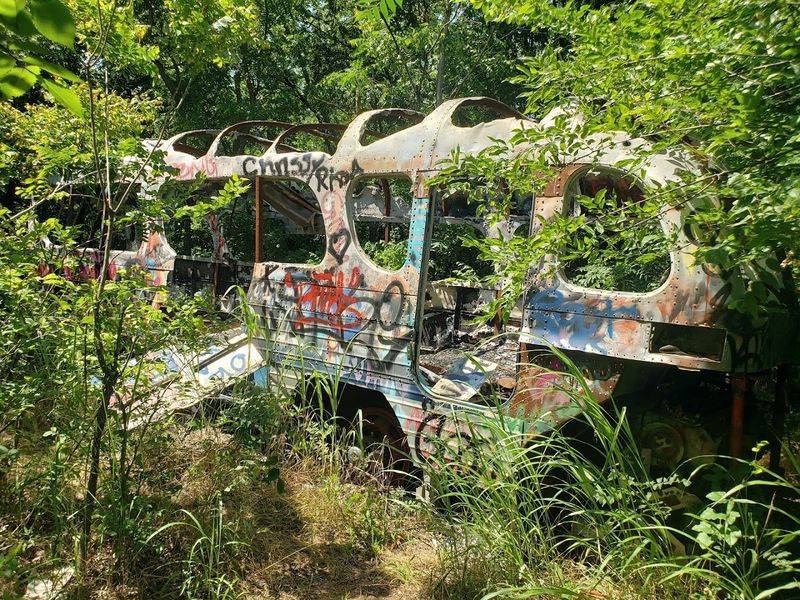
The circus trailers are large, roughly the size of train cars, and several still bear traces of the bold colors that once made them eye-catching. Old cages sit under a corrugated metal shelter, and a broken-down pavilion hints at where audiences may have once gathered.
The site raises more questions than it answers, and that unresolved quality is exactly what keeps people coming back to search for more clues about its past.
The Atmosphere of the Place
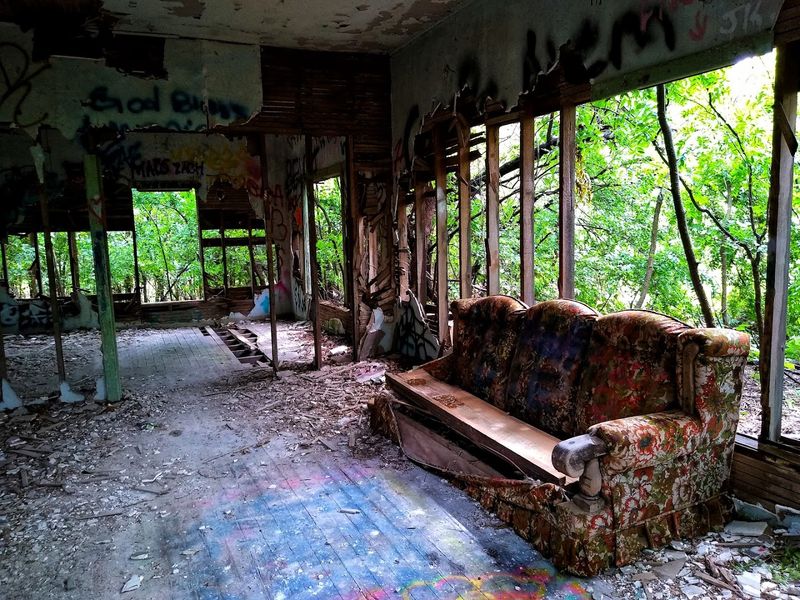
There is something genuinely unsettling about walking through a place that was built for joy and noise but has been silent for so long. The air at Gandini’s feels thick with that contrast, especially on overcast days when the tree canopy filters the light into something dim and greenish.
The high grass brushes against your legs as you move through the property, and the dense woods press in close on all sides. Every rusted hinge and cracked panel feels like it has a story attached, even if that story has no ending you can find.
Visitors who have gone at night describe the experience as genuinely creepy, with the shapes of the old trailers looming in the dark and the sounds of the woods filling in where the circus music once played. That said, daytime visits offer their own mood, one that feels more melancholy than frightening.
The combination of natural beauty and slow decay creates an atmosphere that is hard to replicate anywhere else in Oklahoma, and photographers especially seem to respond to it with real enthusiasm.
What You Can Still See on the Property
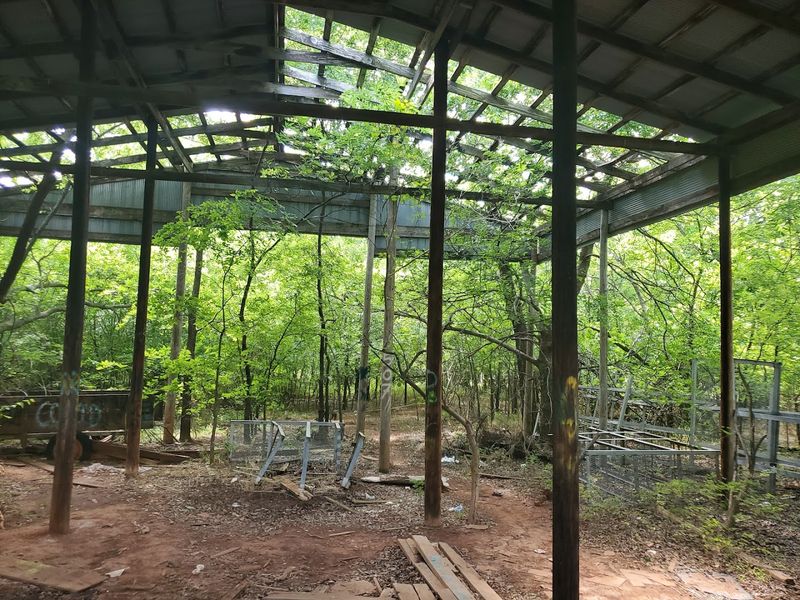
Even as the site continues to deteriorate, the inventory of what remains is still surprisingly varied. Past visitors have reported finding large circus trailers, a broken carousel, old animal cages housed under a corrugated metal shelter, and even a Volkswagen bus sitting in the weeds.
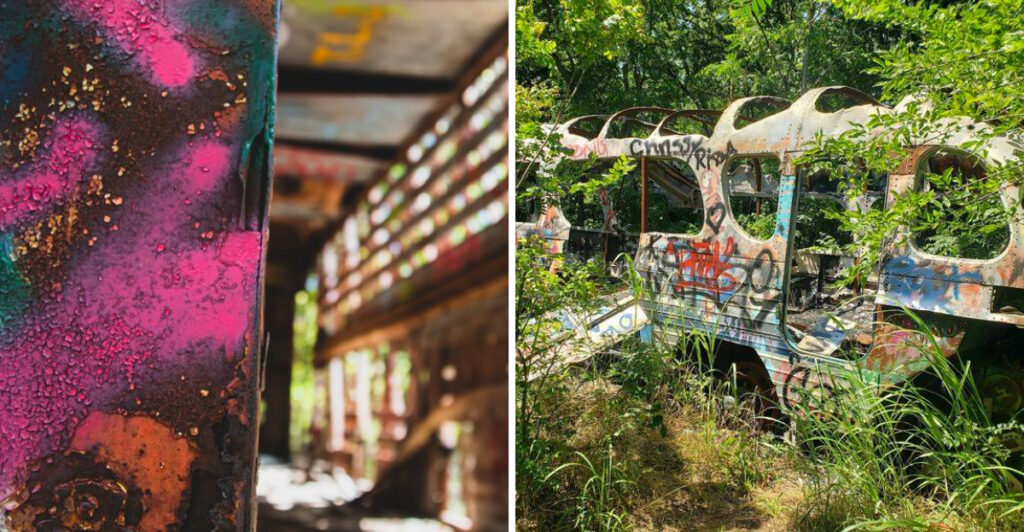
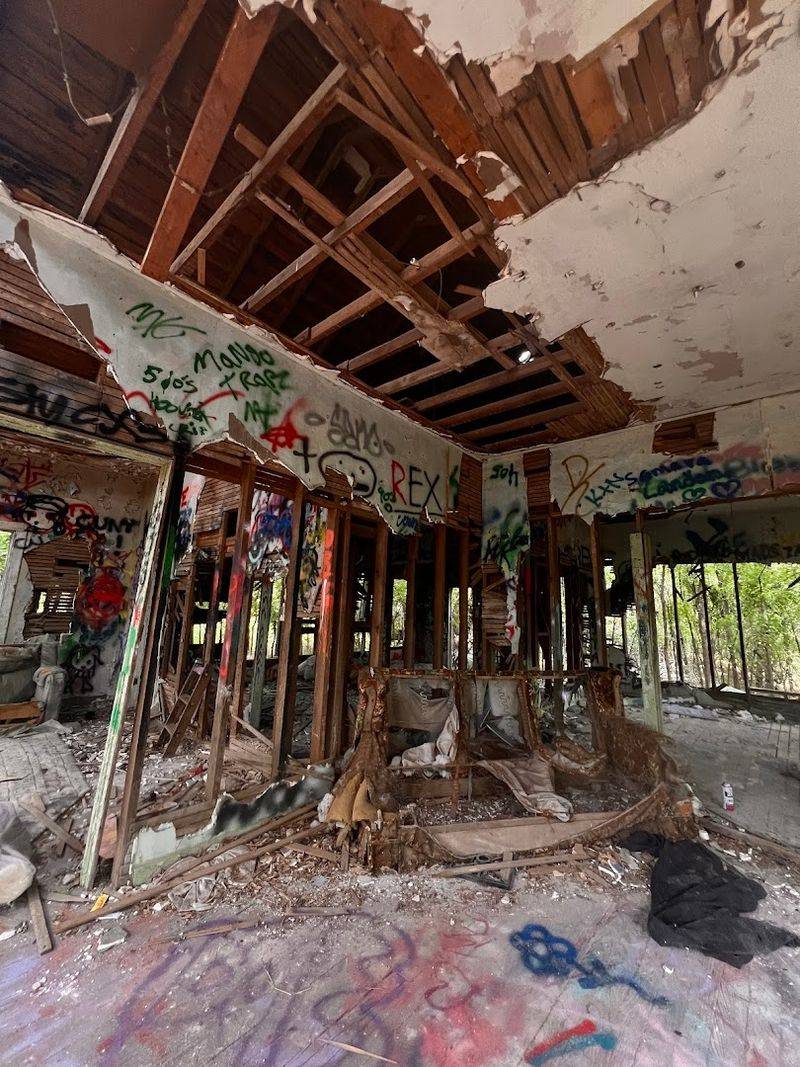
The trailers are perhaps the most striking feature, painted in what were once bright circus colors and now covered in layers of graffiti added by visitors over the years. Some of the artwork is genuinely impressive, turning the old metal surfaces into an unplanned outdoor gallery.
A structure that may have served as a performance pavilion still stands in partial form, its roof sagging and its walls leaning, but its general shape still readable. Hedge apple trees grow nearby, and some visitors have picked up the fruit as a small souvenir of the trip.
More recent accounts suggest that some items have been removed or demolished, so what you find may depend heavily on when you visit. The site is in a constant state of change, and each trip offers a slightly different version of the same strange scene.
Photography Opportunities at the Ruins
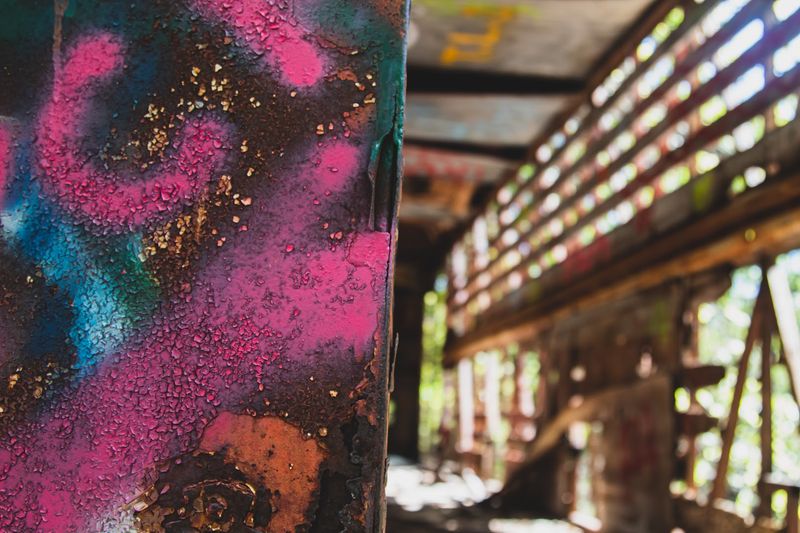
Few abandoned sites in central Oklahoma offer the same range of photographic subjects as this one. The combination of rusted metal, vivid graffiti, encroaching forest, and open sky creates a layered visual environment that rewards both phone cameras and professional equipment.
The graffiti alone provides hours of material. Artists have covered the old trailers with everything from bold lettering to detailed murals, and the contrast between the colorful paint and the surrounding decay makes for striking compositions.
Natural framing opportunities are everywhere, with tree branches arching over old structures and vines threading through broken windows. The light changes dramatically depending on the time of day, with early morning and late afternoon offering the warmest tones and the most interesting shadows.
Several photographers who have visited expressed regret at only bringing a phone camera, which suggests the site rewards those who come prepared with better gear. The property sits in a visually rich environment, and even a short visit can yield a strong collection of images that capture something genuinely hard to find elsewhere in the state.
Safety and Practical Tips for Visitors
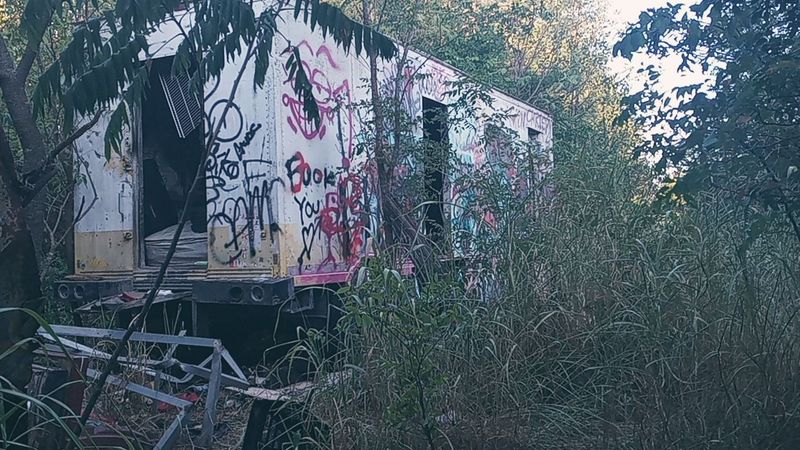
A visit to this kind of site comes with a few things worth knowing before you go. The grass grows very high on the property, and the woods are dense, which means ticks are a real concern, particularly during spring and summer months in Oklahoma.
Wearing long pants, closed-toe shoes, and applying bug spray before entering are simple steps that make the experience much more comfortable. Doing a tick check after leaving is equally important and takes only a minute.
The terrain is uneven in places, with debris, broken concrete, and overgrown roots creating trip hazards that are easy to miss when you are focused on looking at the ruins. Sturdy footwear is genuinely helpful here, not just a suggestion.
Some visitors have noted the presence of people living in the back trailers on the property, which is worth keeping in mind as you explore. Staying aware of your surroundings and not venturing too far into the rear sections of the property is a sensible approach that lets you enjoy the experience without unnecessary complications.
The Graffiti Culture That Grew Around the Ruins
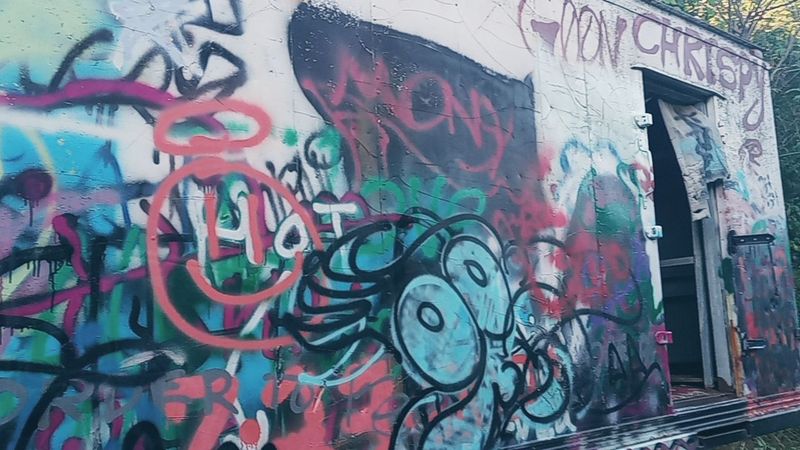
Over the years, the ruins of Gandini’s Circus became an unofficial canvas for graffiti artists from the Edmond area and beyond. What started as tags and simple markings has grown into something far more elaborate, with full murals covering entire trailer panels.
The artwork ranges widely in style and quality, from quick throw-ups in bright spray paint to carefully rendered pieces that clearly took significant time and planning. The variety makes walking through the site feel like browsing a gallery that nobody officially curated.
This kind of organic art accumulation is common at long-abandoned sites, but the scale of the trailers here gives artists more surface area to work with than most spots offer. The result is an unusually rich visual environment that layers decades of creative output onto the original circus structures.
Some visitors come specifically for the graffiti rather than the history, and there is no question that the two elements enhance each other. The art gives the ruins a living quality, a sense that people are still responding to this place even as the original structures continue their slow return to the earth.
The Current Status and Future of the Site
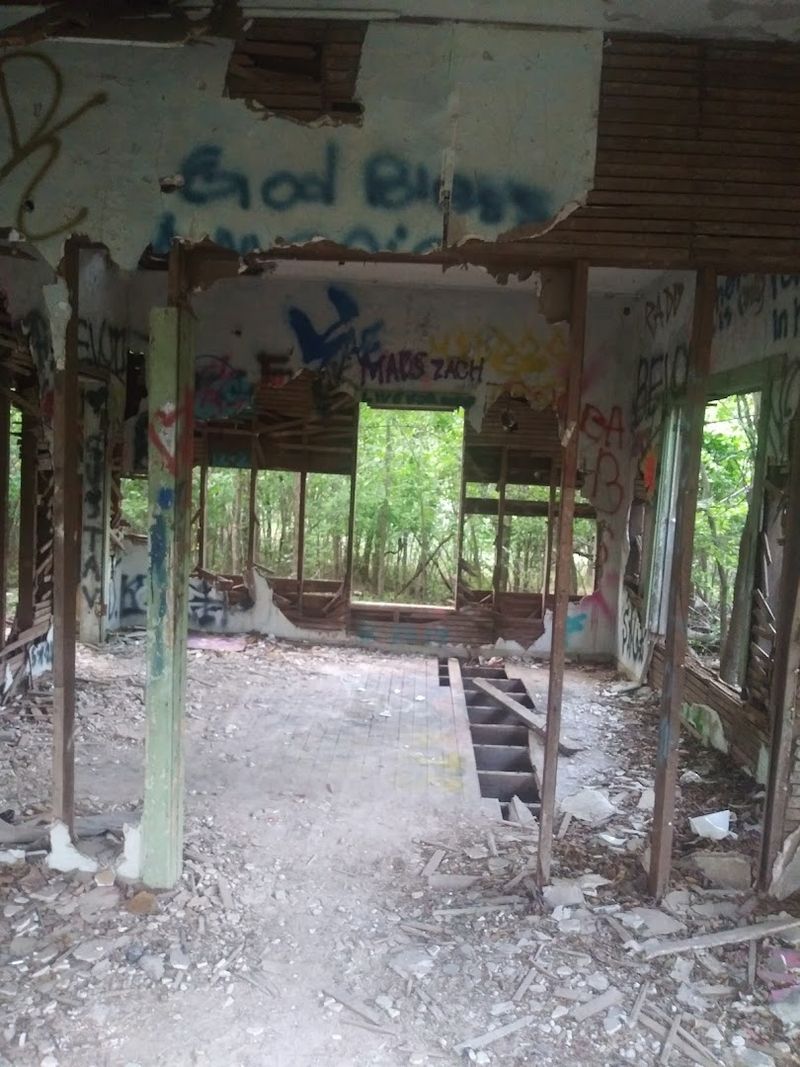
The most recent visitor reports paint a picture of a site in transition, and not necessarily in a direction that fans of the ruins will welcome. A large cattle-style gate now blocks the entrance, and the property has been listed for sale, suggesting that development or demolition may be on the horizon.
Some visitors who tried to enter recently found that most of the accessible structures had already been removed or significantly damaged, leaving far less to see than earlier accounts described. The window for experiencing this place in its fuller form appears to have largely closed.
This kind of ending is not unusual for sites like this one. Once a property attracts enough attention and the land becomes valuable, the economics of preservation rarely win out against the economics of development.
For those who visited in earlier years, the memories and photographs they brought home represent something genuinely irreplaceable. The ruins of Gandini’s Circus in Oklahoma may soon exist only in those records, which makes the documentation that explorers and photographers produced over the years feel more meaningful than it might have at the time.
Why This Place Still Captures the Imagination
There is something about a forgotten circus that hits differently than other kinds of abandoned places. A factory or warehouse carries the weight of industry and labor, but a circus carries the weight of spectacle, of wonder deliberately manufactured for an audience that no longer shows up.
Gandini’s taps into that feeling with unusual directness. The cages that once held animals, the trailers that once carried performers, and the pavilion that once sheltered crowds all point toward a kind of entertainment that felt magical in its time and feels melancholy in its absence.
Urban explorers, history enthusiasts, and casual adventurers have all found their own version of meaning in this place. Some come for the thrill of discovery, others for the photography, and some simply because they want to stand in a space that time has treated so honestly.
Oklahoma has plenty of history worth preserving, and not all of it comes in the form of museums or monuments. Sometimes it shows up as a rusted gate in the woods off a quiet road, asking you to slow down, look carefully, and wonder about the people who were here before the trees took over.
Share this story