Some parks give you a trail map and a nice view, then call it a day. This one hands you a lighthouse, a rocky Lake Huron shoreline, a preserved schoolhouse, and the kind of quiet that makes you forget your phone exists for a while.
I came for the scenery and stayed because every corner seemed to reveal another small surprise, from museum artifacts to waves flashing blue against pale stone. Keep reading and I will show you exactly what makes this Harrisville stop feel richer than a quick roadside detour, including when to go, what to notice, and why the climb up the tower is worth every step.
Where the shoreline story begins
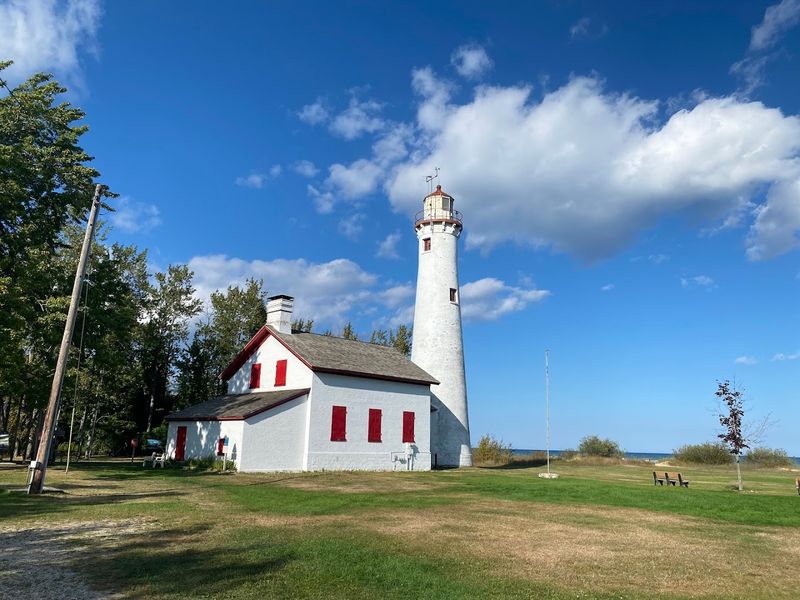
I first got my bearings at Sturgeon Point State Park, 6036 Point Rd, Harrisville, MI 48740, on Michigan’s Lake Huron shoreline, and the setting immediately felt more layered than a simple beach stop. The lighthouse rises above open grass and stone-strewn shore, so history and scenery share the same stage without competing.
What struck me most was how easy the place is to read at a glance. You can spot the tower, the old buildings, the picnic-friendly lawn, and the water all at once, which means the park rewards both quick visits and slow wandering.
I liked that balance because it never felt fussy or overbuilt.
Even before I climbed anything or studied any exhibits, the atmosphere did the heavy lifting. The breeze carried that clean lake smell, the grounds looked carefully kept, and the horizon seemed determined to show off.
That first impression matters here, because everything else in the park grows naturally from it.
Quiet that actually feels rare
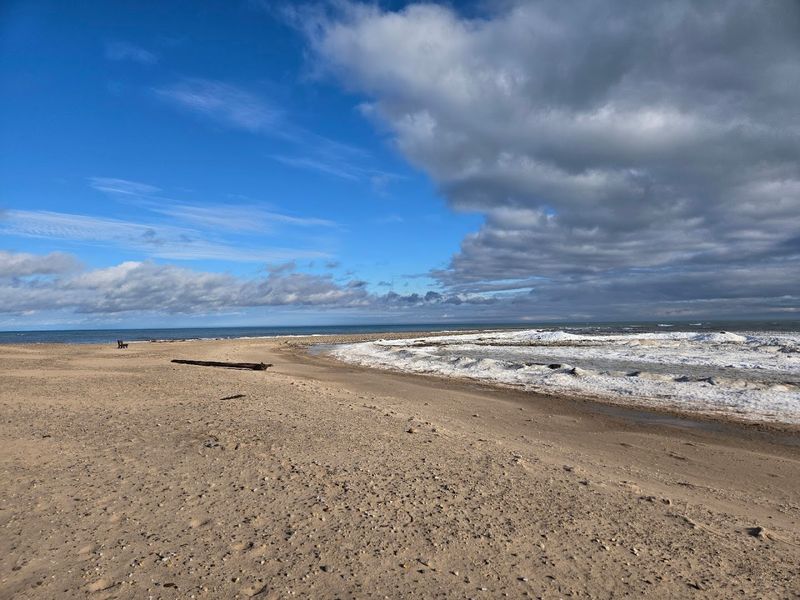
Some parks advertise peace and then hand you a parking lot soundtrack. This one really does feel calm.
Even with other visitors around, I found plenty of room to hear the waves, notice the wind in the grass, and let the whole place breathe without interruption.
The open layout helps enormously. There is space to stand back from the lighthouse, space to sit near the water, and space to wander between the historic buildings without feeling herded.
I appreciated that sense of ease because it let the park reveal itself at a natural pace. Nothing demanded urgency, and nothing felt overprogrammed.
That quiet also sharpens the visual experience. Colors look cleaner, the water seems brighter, and even ordinary motions like clouds shifting over the lake become part of the entertainment.
I found myself lingering longer than planned simply because the atmosphere kept rewarding attention. It is a gentle place, but not a boring one, and that difference becomes especially clear when sunrise or evening light starts working its magic.
The lighthouse that steals the scene
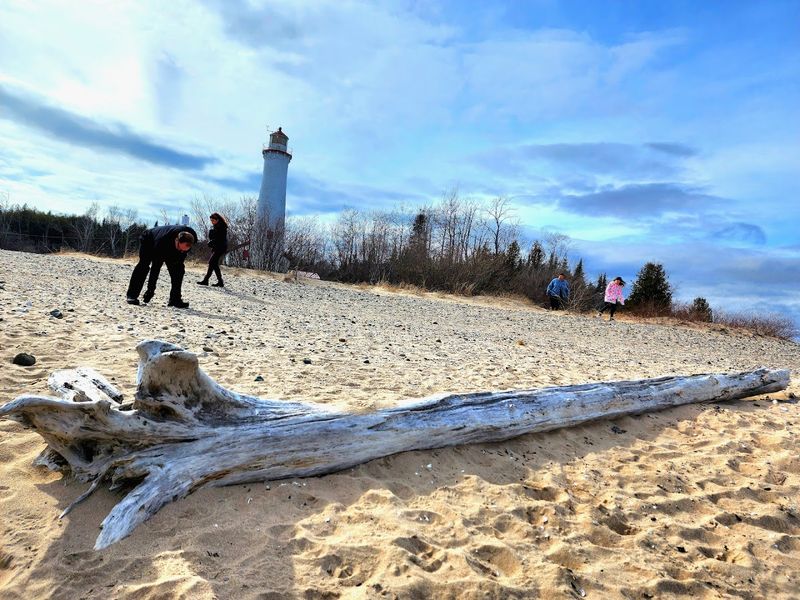
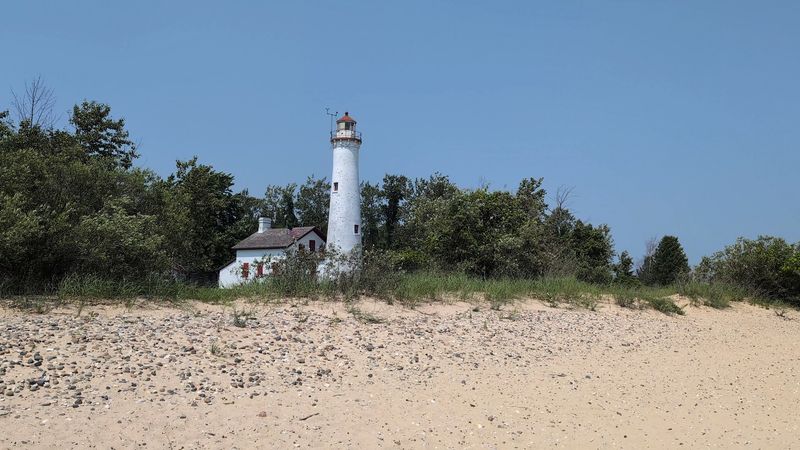
The lighthouse is the undeniable star, and honestly, it knows it. I could have spent half my visit just circling the grounds and watching how the white tower changes character as clouds move over Lake Huron.
One minute it looks crisp and formal, and the next it feels almost playful against the wide blue sky.
Up close, the structure has that satisfying sense of purpose you only get from historic working landmarks. It is handsome without being flashy, and the attached keeper’s quarters give the whole site a lived-in feeling that keeps it from becoming just another photo stop.
I appreciated that the park lets the building speak for itself.
There is also a pleasure in seeing a place that still feels tied to navigation, weather, and daily care. Nothing about it seems staged for tourists alone.
The tower anchors the entire park visually, but it also sets up the deeper story that starts to unfold once you step inside the museum spaces.
Inside the keeper’s world
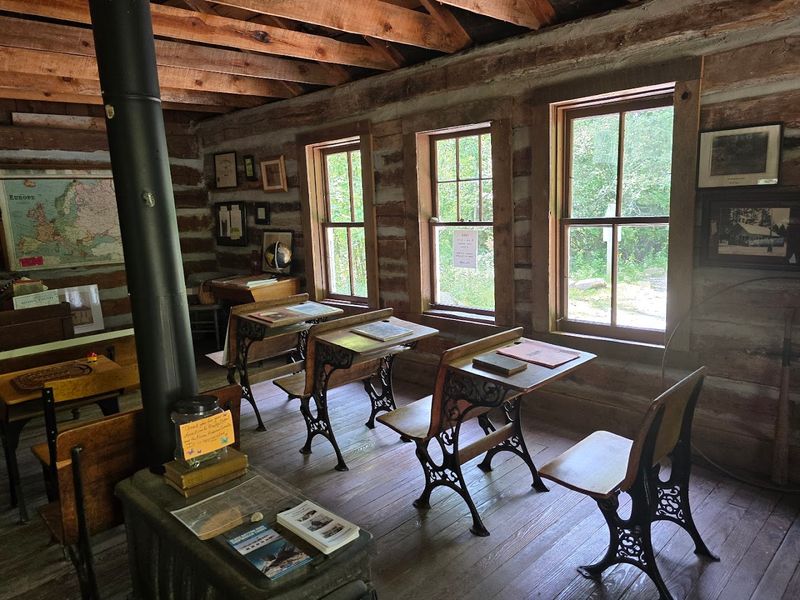
Once I moved indoors, the park shifted from scenic to deeply personal. The museum spaces add texture to the visit, filling the lighthouse grounds with stories about navigation, daily routines, and the practical work behind keeping a shoreline beacon running.
I never felt like I was reading dusty labels for the sake of being polite.
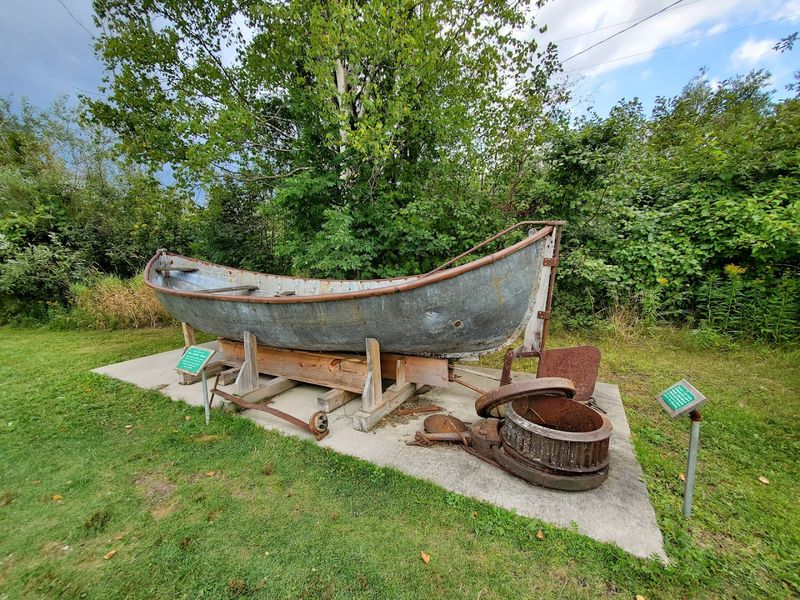
The artifacts and displays make the place human-sized. Instead of treating the lighthouse as a pretty object, the exhibits remind you that real people cleaned, maintained, organized, and watched this corner of the lake with serious attention.
That kind of context changed the way I looked at the tower when I stepped back outside.
I also liked that the collection feels rooted in place rather than padded with random curiosities. Photos, objects, and period details connect directly to this stretch of coast, which keeps the experience focused and believable.
By then, I was not just admiring a building anymore. I was starting to understand the rhythm that shaped it.
A climb with a payoff
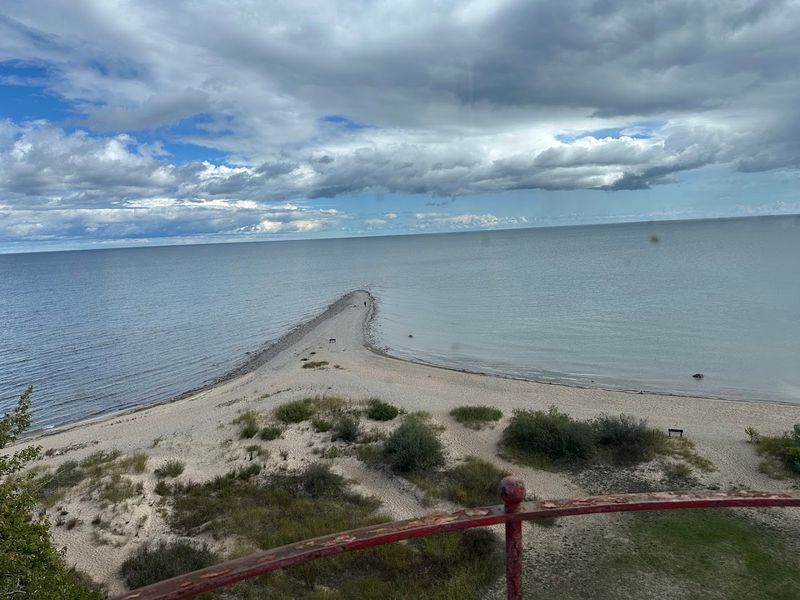
The tower climb adds just enough effort to make the reward sweeter. The stairs are steep enough to remind your legs they exist, but the view at the top quickly settles any complaints.
I reached the upper level and felt that satisfying hush that comes when a landscape finally opens in every direction.
From above, the park makes complete sense. You can trace the shoreline, study the contrast between lawn and stone, and watch Lake Huron stretch out with that cool, steady confidence only a Great Lake can manage.
The perspective turns small details into a pattern, and suddenly the whole point feels beautifully organized by water and light.
I especially enjoyed seeing how quiet the area remains even when the site is open and active. Nothing looked crowded or chaotic from that height.
It felt spacious, calm, and wonderfully unbothered by modern noise. The view is the kind that resets your mood, and it also prepares you for the shoreline itself, which deserves time on its own.
The beach has its own personality
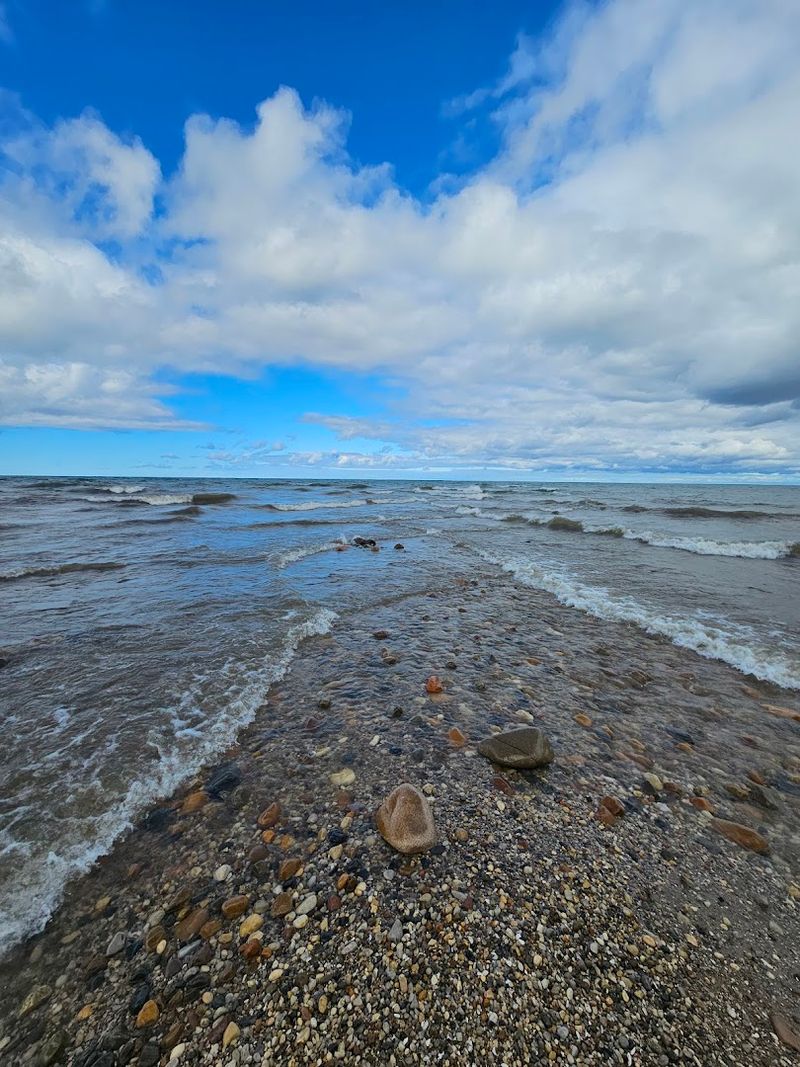
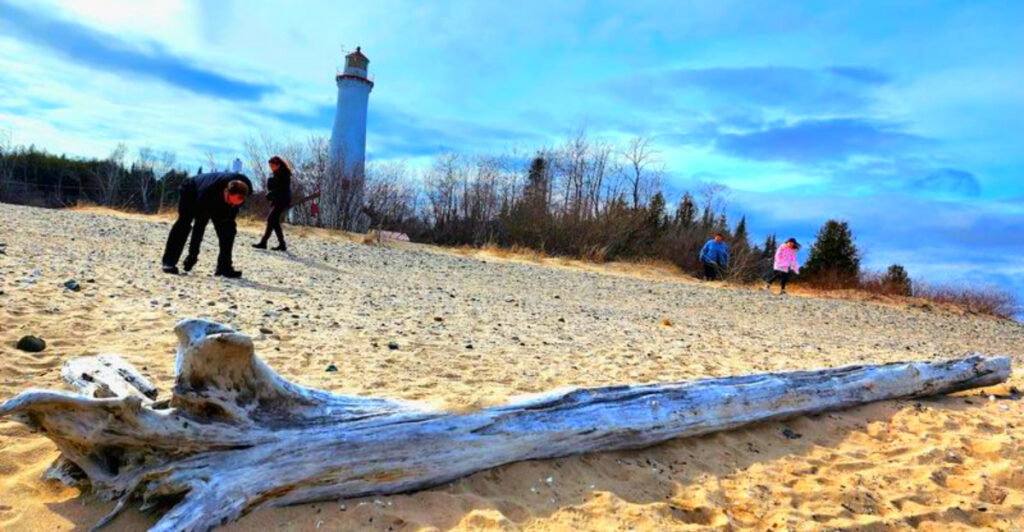
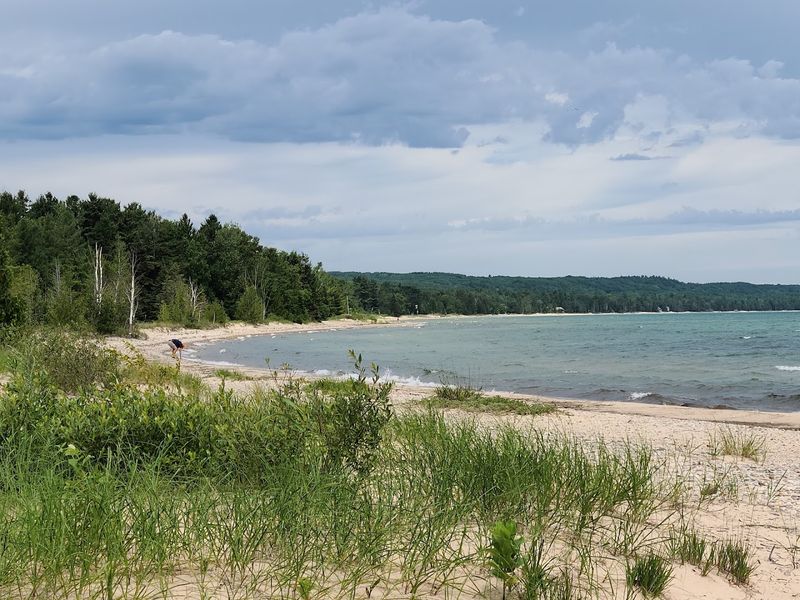
The shoreline here does not try to be a soft, lazy swimming beach, and I respected it more for that. Sturgeon Point’s edge is a mix of rock, sand, and clear water, with enough texture underfoot to keep you paying attention.
It feels rugged in a friendly way, like the park is asking you to notice details instead of rushing past them.
I spent a while scanning the stones and watching the light move through the shallows. The water had that clean blue-green clarity that makes even a short lakeside walk feel restorative, and the beach stayed pleasantly uncluttered.
Kids were happily tossing rocks, while adults were doing that serious beachcomber stare that deserves its own official badge.
This part of the park invites a slower pace than people often expect. You are not racing from attraction to attraction.
You are listening to waves, bending down for interesting stones, and letting the horizon empty out your head a little. It sounds simple, but the simplicity is exactly what gives the next historic stop more impact.
That old schoolhouse surprise
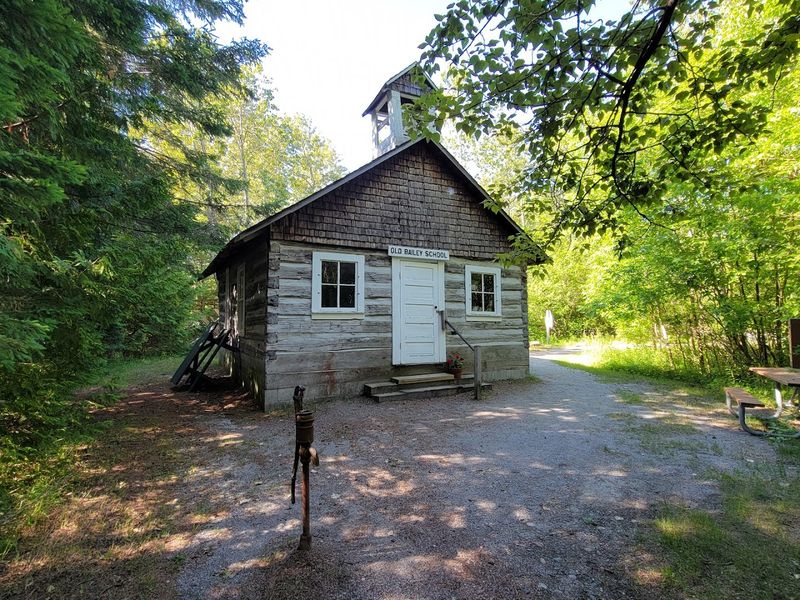
Just when I thought the park had already shown all its cards, the old schoolhouse added another layer. The preserved Bailey Schoolhouse gives the grounds a wider sense of community history, and it keeps the visit from becoming only a lighthouse story.
I liked that shift because it makes the point feel lived in rather than isolated.
The building itself is modest, which is part of its charm. It encourages you to think about ordinary routines, local education, and the way daily life once unfolded beside this dramatic shoreline.
That contrast works beautifully. Big lake, big lighthouse, small schoolhouse, and somehow the smallest structure deepens the whole experience.
What stayed with me was how naturally the schoolhouse fits into the park’s rhythm. It is not a random extra attraction dropped in for variety.
It belongs here, and you can feel that almost immediately. By this stage of my visit, I realized the grounds are best enjoyed as a connected story, not a checklist, and the people who interpret it help make that possible.
Why the volunteers matter so much
Plenty of historic sites have attractive buildings, but not all of them feel alive. Here, the welcoming guides and helpers make a noticeable difference, because their enthusiasm turns facts into conversation rather than recitation.
I felt invited instead of processed, which is a rare and underrated travel luxury.
Questions were met with real warmth, not the kind of answer that sounds like it has been dragged through a thousand rehearsals. That tone matters in a place like this, where much of the charm comes from understanding what you are seeing.
The grounds are beautiful on their own, but informed interpretation gives those views a backbone.
I left each interaction feeling more connected to the park instead of just better informed. That may sound like a small distinction, yet it changes the pace of a visit in all the best ways.
The site becomes less about checking out an old lighthouse and more about joining a continuing local effort to care for it. That spirit carries beautifully into the quiet spaces outside.
Morning light and late-day color
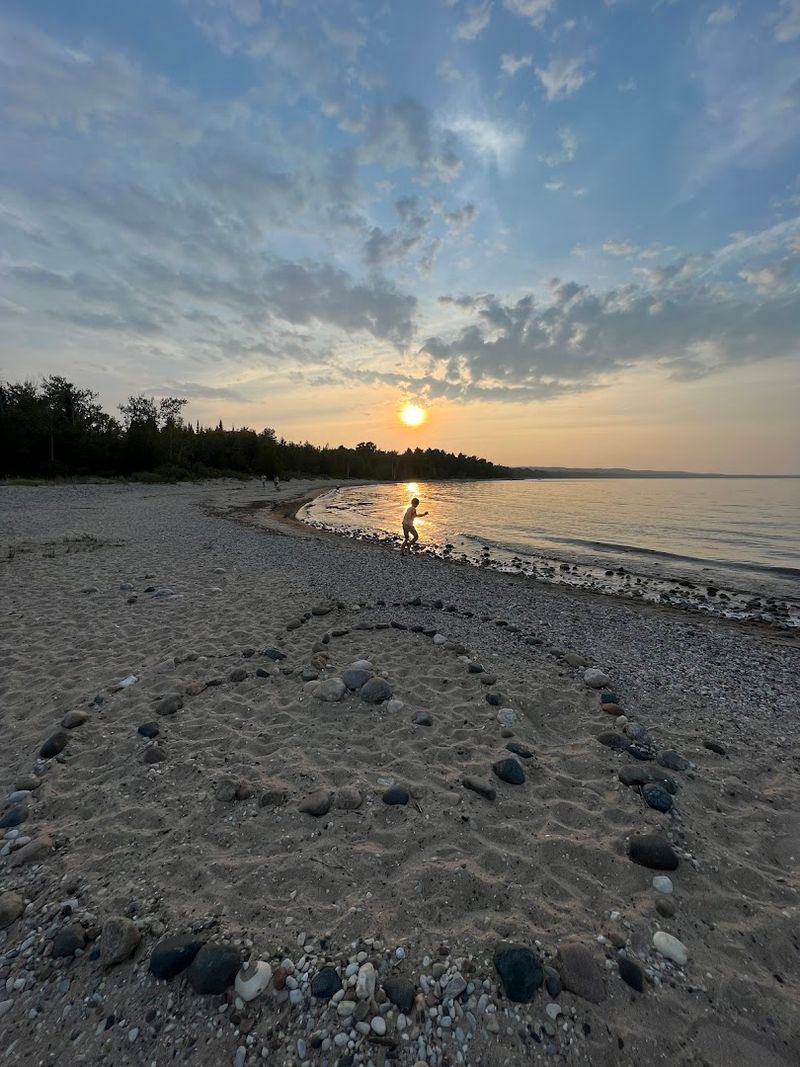
Light is one of the park’s best attractions, and it never charges admission. Because the site sits right on Lake Huron, the changing sky becomes part of the visit in a very direct way, especially in the morning.
I have a soft spot for places that make me want to look up as often as I look around, and this is one of them.
Sunrise feels especially right here. The water catches color quickly, the lighthouse stands out with extra clarity, and the shoreline seems to wake up in stages instead of all at once.
Even later in the day, the scene keeps shifting, with bright blues, silver ripples, and soft shadows moving across the grounds like they are following their own schedule.
On the right evening, this stretch of shore can deliver an atmosphere that feels almost secret without becoming dramatic about it. That is part of the park’s appeal.
It does not oversell itself. It simply keeps offering beautiful moments to anyone willing to pause.
And if you are the kind of visitor who likes searching the beach, the ground itself gives you another reason to linger.
A good place to scan the stones
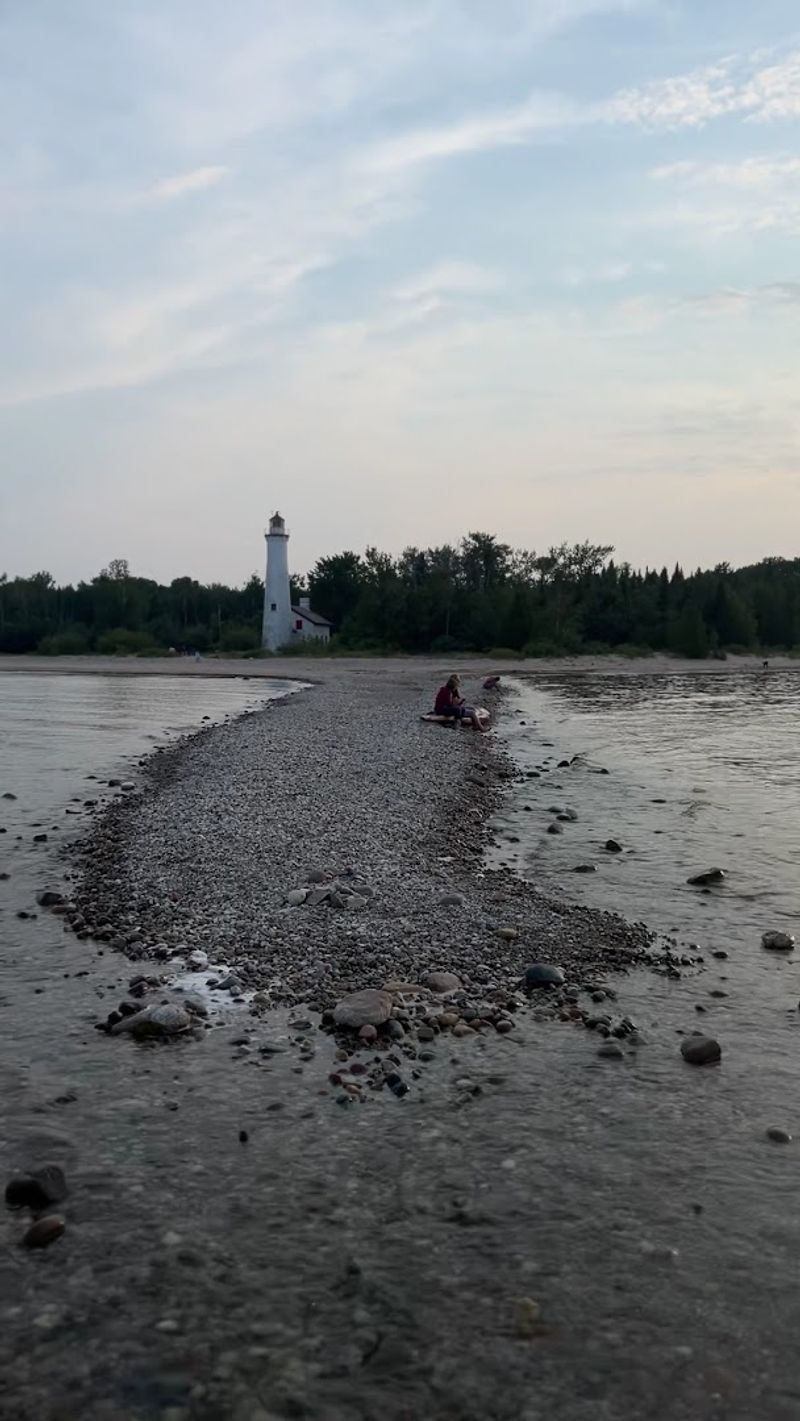
I quickly learned that the beach invites a certain kind of treasure hunting, and no metal detector is required. The rocky shoreline is a natural place to scan for interesting stones and fossil pieces, so I found myself looking down almost as much as out toward the horizon.
It is the sort of low-stakes adventure that makes time disappear.
What I liked most was that the search never felt competitive or frantic. People wandered slowly, crouched for a closer look, then straightened up and kept moving with pockets a little heavier and spirits a little lighter.
Even when a find was modest, the act of noticing made the shoreline more engaging. The park turns patience into entertainment very efficiently.
The clear water helps, too, since it lets you spot shapes and textures near the edge. I would still wear practical shoes, because the stones are part of the experience, not a decorative afterthought.
Come prepared for a beach that asks you to pay attention. Do that, and even the practical planning side of a visit starts to feel pleasantly simple.
Timing your visit the smart way
A little planning goes a long way here, because the park’s operating schedule is more limited than an all-day sprawl of a state park. I checked hours before going, and that simple move saved me from the classic travel mistake of admiring a locked historic site through hopeful squinting.
Nobody wants their vacation memory to be a parking lot shrug.
The posted museum and tower hours matter if you want the full experience, especially since the interior access is a major part of what makes this stop memorable. I would also bring bug spray in warm weather, sturdy shoes for the rocky shore, and enough time to slow down.
The site works best when you leave room for both browsing and lingering.
More than a quick stop
By the end of my time here, the biggest surprise was how complete the experience felt. Sturgeon Point State Park combines lighthouse history, shoreline wandering, museum detail, and real quiet in a way that never feels forced.
Plenty of places do one of those things well. Very few handle all of them with this much ease.
I came away thinking this is the kind of destination that improves when you stop trying to rush it. Stay long enough to climb the tower, study the exhibits, inspect the stones, and sit by the water for a few extra minutes.
That slower approach lets the park reveal its personality, which is calm, practical, welcoming, and quietly memorable.
Share this story