Movies often borrow their magic from places that were already telling stories long before a camera arrived. Across the United States, small towns have shaped fictional worlds, hosted major productions, and quietly influenced how generations picture community life, adolescence, ambition, and American myth.
What makes this especially fun is that the real history is usually stranger, richer, and more specific than the screenplay version. Keep reading and you will see how courthouse squares, fishing harbors, mountain valleys, and planned beach streets helped turn local identity into pop culture that still sticks in your head decades later.
1. Seneca Falls – New York (It’s a Wonderful Life)
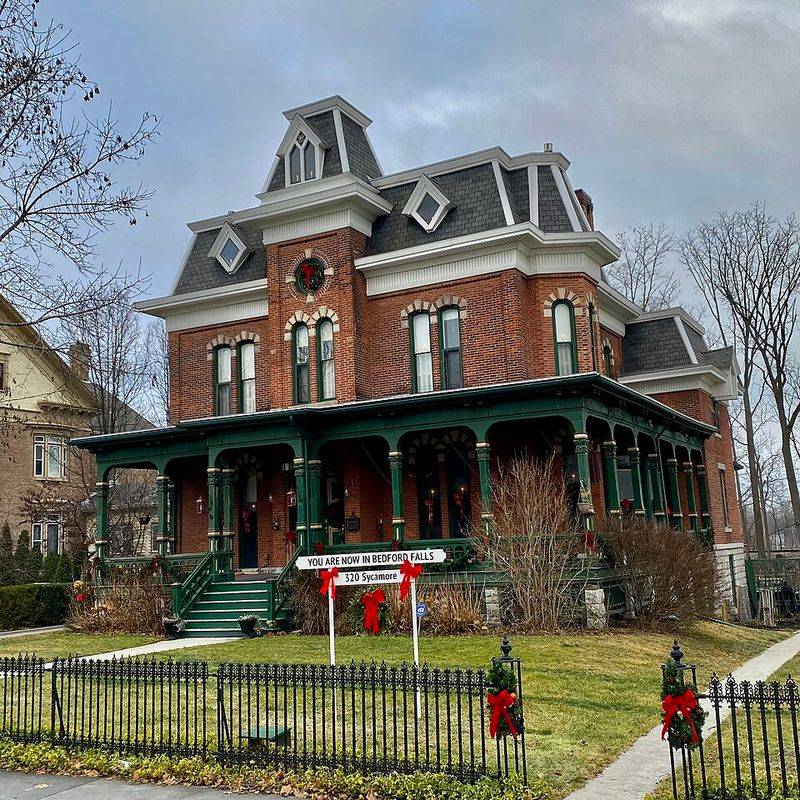
One bridge, one canal town, and suddenly movie history gets personal. Seneca Falls has long been linked to the fictional Bedford Falls, and the connection gained strength after reports that Frank Capra visited the area in 1945 while developing It’s a Wonderful Life.
The town already had strong symbolic weight before Hollywood came calling. It was a major center of reform, best known for the 1848 Women’s Rights Convention, and its compact downtown offered the kind of civic layout that made American small town life easy to recognize on screen.
Today, that movie connection is part local identity and part ongoing debate, which honestly makes it more interesting. Visitors find museums, bridge views, and annual celebrations that treat the film less like fantasy and more like a conversation between real streets, postwar values, and the idea that ordinary places can carry enormous cultural power.
2. Forks – Washington (Twilight)
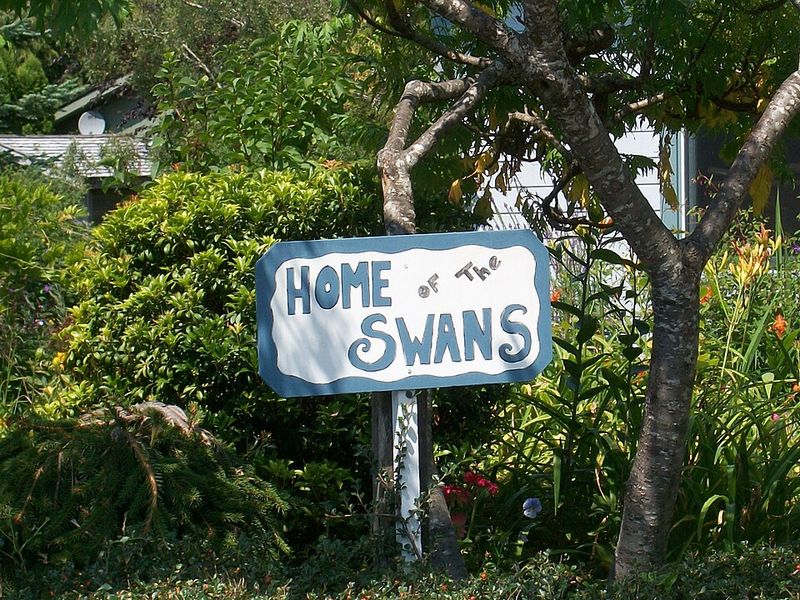
Few towns were drafted into twenty first century fandom as quickly as Forks. Before Twilight, this remote community on Washington’s Olympic Peninsula was known mostly for logging, rain statistics, and its practical role as a service hub for nearby rural residents.
Stephenie Meyer chose Forks partly because it was real, small, and geographically tucked away enough to support her premise. That decision transformed the town into an international destination almost overnight, bringing themed tours, visitor centers, and a sharp rise in tourism tied to books and films rather than traditional regional industries.
The contrast is what keeps Forks fascinating. You can still trace the working town beneath the pop culture overlay, with local schools, businesses, and civic routines continuing alongside souvenirs and fan pilgrimages.
It is a useful reminder that movie connected fame does not erase a town’s history, even when a fictional romance becomes the first thing many people think of when they hear its name.
3. Astoria – Oregon (The Goonies)
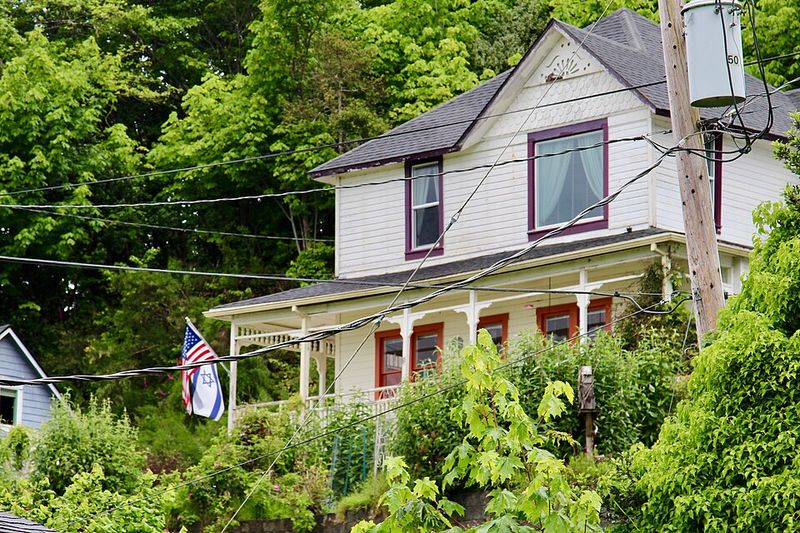
Adventure got a zip code when The Goonies turned Astoria into a permanent item on pop culture maps. This port city at the mouth of the Columbia River had already built a layered identity through fishing, shipping, Scandinavian immigration, and a dense collection of hillside homes and working waterfront views.
By the time the 1985 film arrived, Astoria looked distinct without trying too hard. Its steep streets, older neighborhoods, and practical maritime character gave the movie a believable hometown base, which mattered because the story depends on kids defending a place that feels specific rather than generic.
Astoria has leaned into the connection while keeping its wider history visible. Visitors come for the Walsh house, filming sites, and annual celebrations, but they also encounter the Columbia River Maritime Museum, preserved architecture, and a town shaped by industry as much as imagination.
That balance explains why Astoria still feels lived in, not frozen as a souvenir from the Reagan era.
4. Monroeville – Alabama (To Kill a Mockingbird)
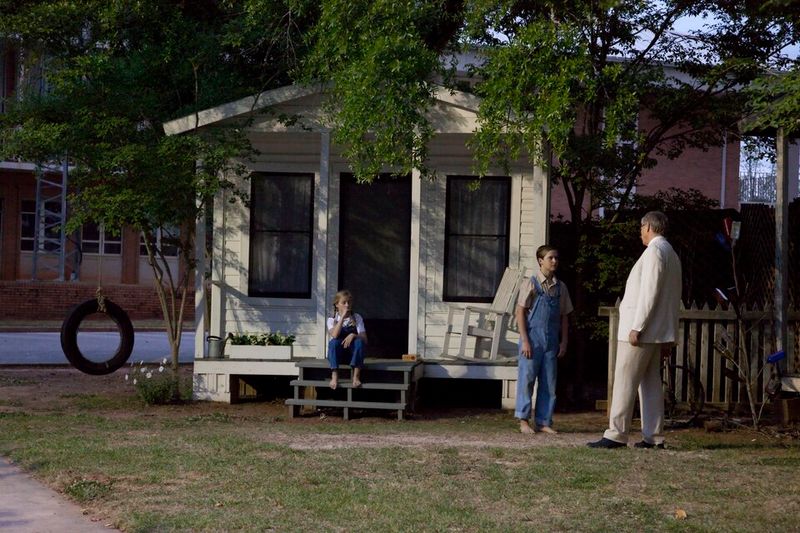
Some towns become famous because a camera arrives, but Monroeville had literature working in its favor first. The Alabama town is inseparable from Harper Lee, whose 1960 novel To Kill a Mockingbird drew heavily on the region’s social structure, courthouse culture, and remembered routines of Depression era life.
The 1962 film carried that world to a broader audience, and Monroeville’s courthouse square became central to its identity. The old Monroe County Courthouse, now a museum, anchors the connection, giving visitors a direct link to the civic setting that shaped both the book’s moral framework and the film’s visual memory.
What stands out is how carefully the town presents this legacy. Rather than reducing everything to one title, Monroeville also acknowledges Truman Capote, local history, and the complicated realities behind the story’s legal and social backdrop.
That makes the visit more than a literary pilgrimage. It becomes a study in how one small Southern town entered national culture through words first and film second.
5. Dyersville – Iowa (Field of Dreams)
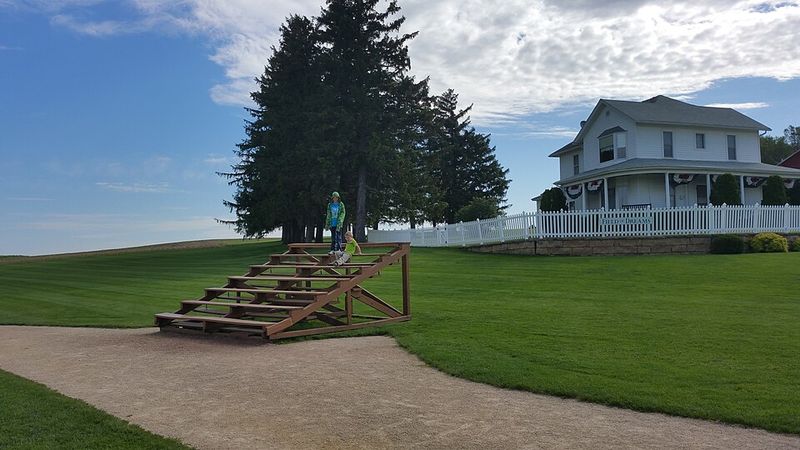
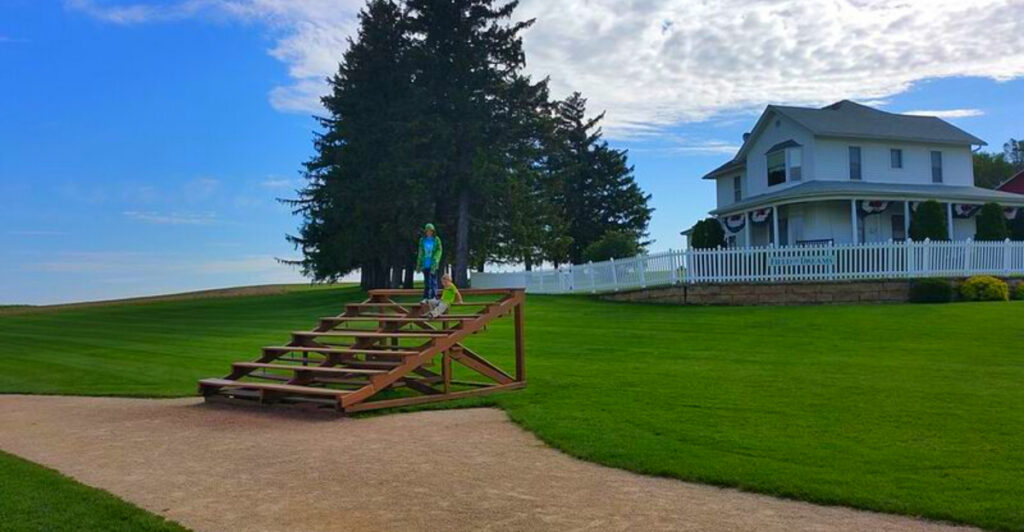
A baseball diamond in a cornfield is doing very serious cultural work in Dyersville. Field of Dreams used a farm outside town for its 1989 story, and the location became one of the clearest examples of a movie site turning into a national destination without losing its rural context.
Dyersville itself was not invented for the film’s sentiment. Founded in the nineteenth century and shaped by agriculture, small manufacturing, and German Catholic heritage, the town already reflected a Midwestern pattern of family farming, parish life, and local business that the movie could tap into with very little adjustment.
The site’s endurance says a lot about how Americans treat baseball as memory storage. Fans visit not just because of Kevin Costner or one famous line, but because the setting distills ideas about land, family, and recreation into something easy to grasp.
Recent professional games there expanded the myth, yet the appeal still begins with a quiet Iowa town that happened to fit the script perfectly.
6. Bodega Bay – California (The Birds)
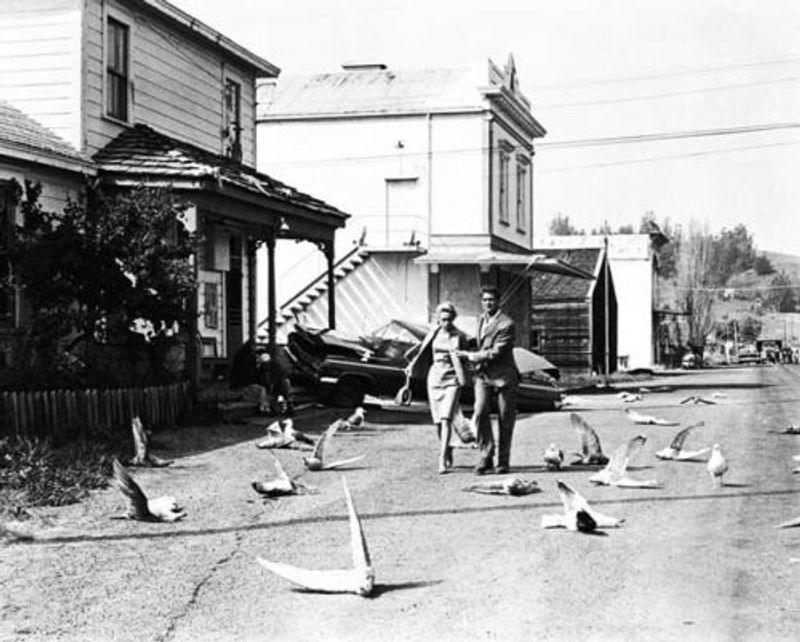
Coastal California rarely looks more deceptively ordinary than it does in Bodega Bay. Alfred Hitchcock used the town and nearby Bodega for The Birds in 1963, drawing on their schoolhouse, church, harbor, and road network to build suspense from places that looked fully recognizable before anything strange happened.
That choice mattered because the film works best when the setting feels grounded in everyday routines. Bodega Bay was a working fishing community with tourism already developing, and its compact geography let Hitchcock connect domestic spaces, public roads, and open shoreline into a believable small town system rather than a decorative backdrop.
Today, visitors still track the filming sites, including the schoolhouse in nearby Bodega, but the town’s own history stays visible. Fishing, coastal access, and weekend travel have continued shaping local identity long after the movie entered classic status.
It is one of those places where cinema did not invent the setting’s appeal. It simply sharpened public attention on a town that already knew how to hold the screen.
7. Winterset – Iowa (The Bridges of Madison County)
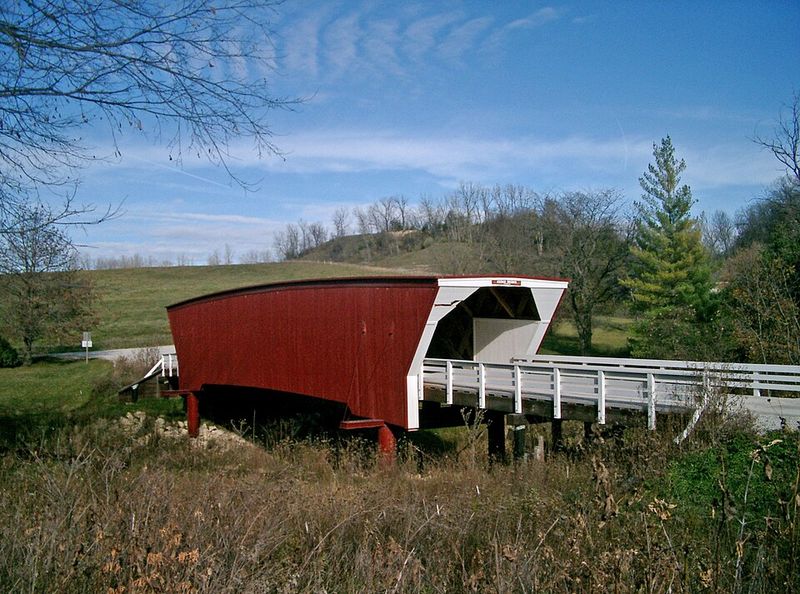
Covered bridges gave Winterset a marketing advantage long before Hollywood noticed. Madison County had preserved several nineteenth century bridge spans, and Robert James Waller’s 1992 novel turned them into a publishing phenomenon before the 1995 film adaptation carried the county’s name into global popular culture.
Winterset benefited because it serves as the county seat and practical gateway to the bridges. The town already had a courthouse square, regional businesses, and a well established historic identity that included another notable claim to fame: it is the birthplace of John Wayne, which is not exactly a weak backup credential.
The movie connection changed tourism patterns by giving people a specific route through the landscape. Visitors arrive for Roseman Bridge and the romance attached to it, yet they also encounter preservation work, local museums, and an agricultural county balancing image with everyday life.
Winterset’s success comes from how neatly it packages multiple strands of American memory: rural infrastructure, bestseller era celebrity, and a town center that understands the value of a good story.
8. Seaside – Florida (The Truman Show)
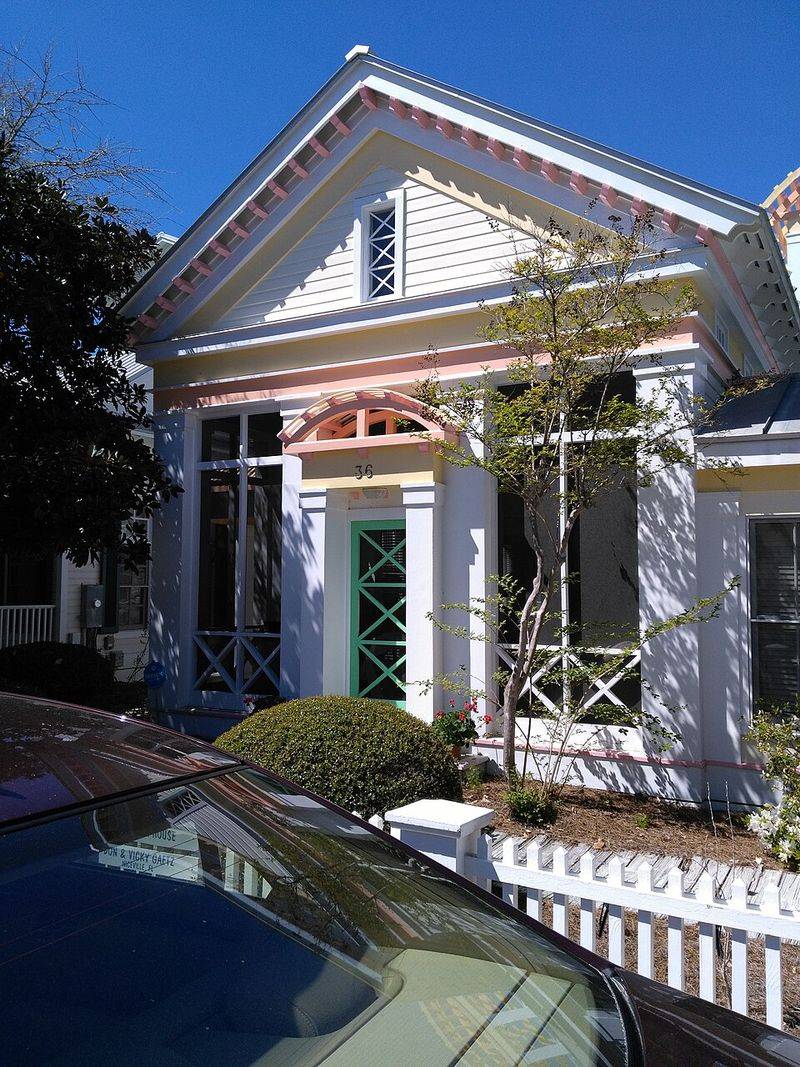
Planned perfection became a punchline in Seaside, and that was exactly the point. The Truman Show used this Florida Panhandle community in 1998 because its tidy streets, pastel houses, front porches, and strict design codes created a town that looked almost too coherent to be accidental.
Seaside was already famous in architecture circles before the film. Developed in the 1980s as a landmark of New Urbanism, it emphasized walkability, mixed use planning, and traditional town design at a time when many American beach communities were expanding through more car centered models.
The movie gave that design philosophy a wider audience, though not always in the way planners might have expected. For many viewers, Seaside became shorthand for curated normalcy, yet that interpretation only added to its fame.
Visitors now arrive with both film references and urban design curiosity, which is a fairly rare combination for a vacation town. It remains one of the clearest cases where a movie location also serves as a lesson in late twentieth century planning, image management, and lifestyle branding.
9. Edgartown – Massachusetts (Jaws)
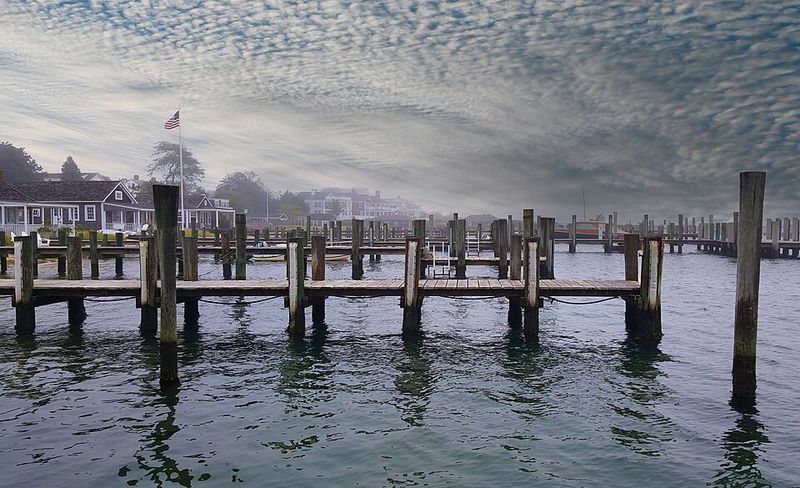
Summer tourism got a permanent movie footnote when Jaws turned Martha’s Vineyard into Amity Island. Edgartown, with its whaling era architecture, harbor setting, and polished village center, helped define the film’s public face even though multiple parts of the island contributed to the final result.
The town brought real history to the screen. Once a major nineteenth century whaling port, Edgartown had the captain’s houses, civic order, and maritime infrastructure that could suggest an old New England community balancing local tradition with seasonal commerce, which is central to the movie’s social tension.
That historical foundation is why the location still matters beyond fandom. Visitors can identify sites tied to filming, but they also encounter a place shaped by shipping, island governance, preservation, and a long transition into an upscale vacation economy.
Jaws gave Edgartown a durable place in American entertainment, yet the town’s appeal was never just about one blockbuster. It came from the fact that the built environment already carried generations of coastal history in plain view.
10. Jackson – Wyoming (Shane)
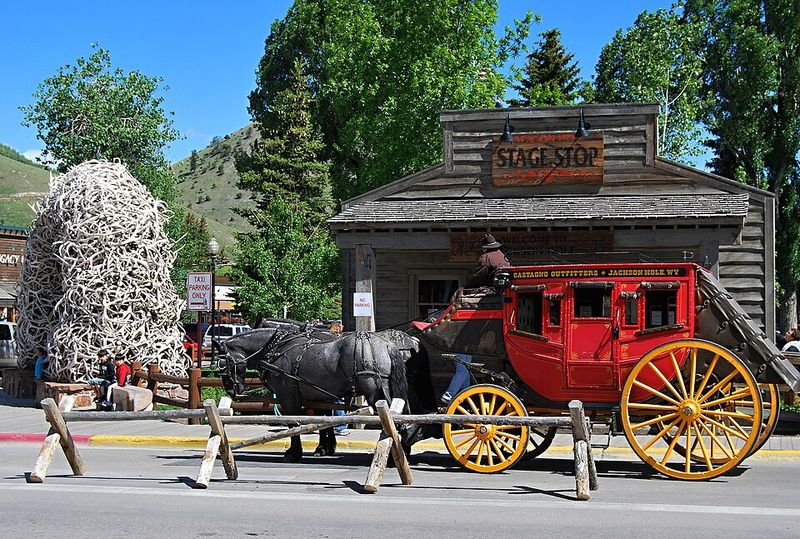
Western mythology likes a big horizon, but Jackson proves a town square can matter just as much. The 1953 film Shane was shot largely in Jackson Hole, using the valley and nearby ranch country to frame a story about settlement, land use, and the fading image of the wandering gunfighter.
Jackson had already developed as a regional center for ranching and travel by the mid twentieth century. Its location near Grand Teton National Park and Yellowstone gave it growing tourist visibility, while the surrounding landscape still supported the open range imagery filmmakers wanted for a classic postwar Western.
The connection endures because Shane arrived at a turning point for the genre. It looked back at frontier myths while quietly questioning them, and Jackson’s real evolution mirrored that shift.
The area was moving from primarily agricultural identity toward recreation, conservation, and destination branding. Today, visitors who know the film find a town that still trades on Western imagery, but with a modern economy built as much on tourism and real estate as on saddle era legend.
11. Deadwood – South Dakota (Deadwood)
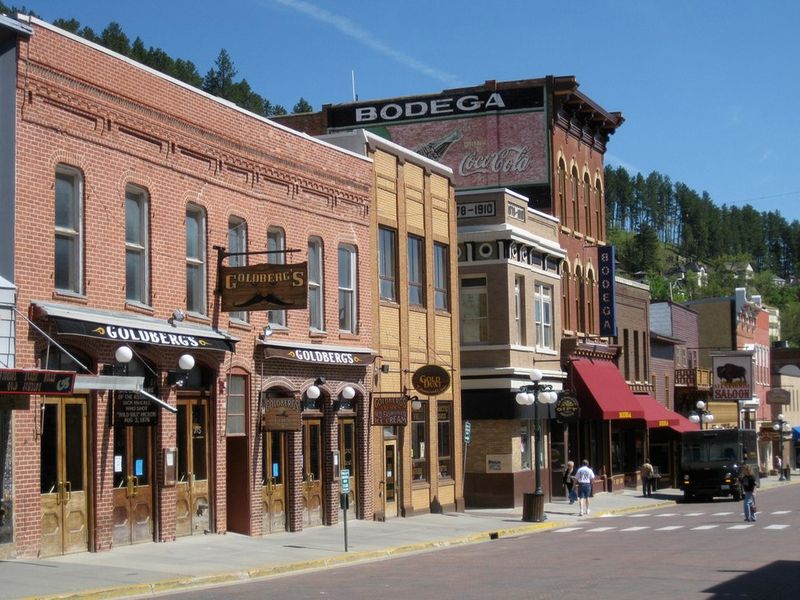
History already had a flair for dialogue before television borrowed Deadwood’s name. The South Dakota town began as a Black Hills gold rush settlement in the 1870s, expanding quickly with hotels, gambling halls, newspapers, freight routes, and a reputation that made it famous far beyond the region.
HBO’s Deadwood drew on that reputation while reshaping it for modern audiences in the 2000s. Although the series was not filmed there, the town remains deeply tied to the show because its real past supplied the characters, institutions, and rough civic formation that gave the drama its backbone.
That interplay between actual history and television storytelling is what makes Deadwood such a strong example. You can walk streets lined with preserved buildings, visit museums, and track how a mining camp became a heritage destination with carefully managed public memory.
The town’s appeal is not nostalgia in a vague sense. It is the chance to see how American frontier narratives get edited, packaged, and revived across generations, with Main Street serving as the archive and the advertisement at once.
12. Madison – Indiana (A League of Their Own)
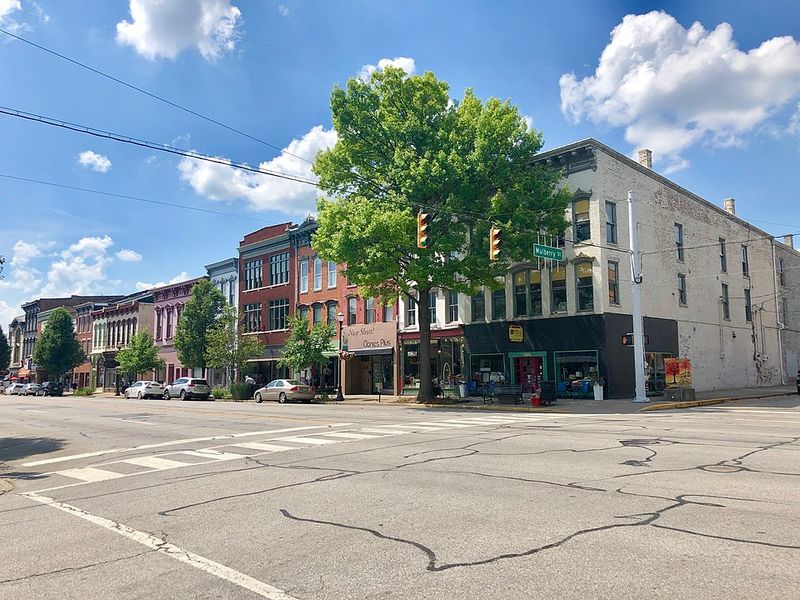
Baseball and brick storefronts make a very effective partnership in Madison. The Indiana river town served as a filming location for A League of Their Own in 1992, and its preserved nineteenth century downtown helped recreate wartime Midwestern America without requiring a digital cleanup crew.
Madison had the right bones for the job. Once a busy Ohio River port, it accumulated Federal, Greek Revival, and Italianate buildings that survived later redevelopment waves, leaving behind a downtown district substantial enough to stand in for the 1940s with convincing accuracy.
The film used that authenticity to support a story about women’s baseball during World War II, when labor patterns and public expectations shifted in ways Hollywood had often overlooked. Madison’s connection therefore goes beyond pretty streets.
It links architecture, transportation history, and gender history in one accessible place. Visitors can appreciate the movie sites, but they also get a town that preserves the commercial landscape of an earlier era remarkably well.
In this case, the setting does not merely host the story. It strengthens the argument.
Share this story