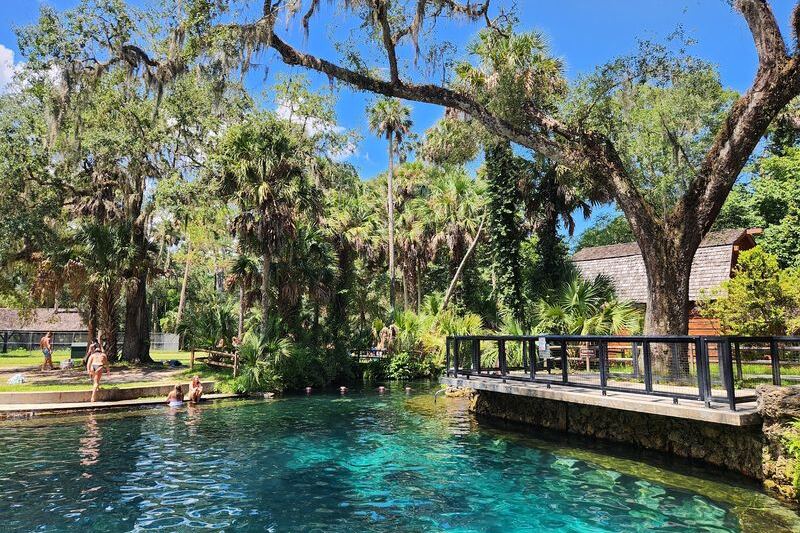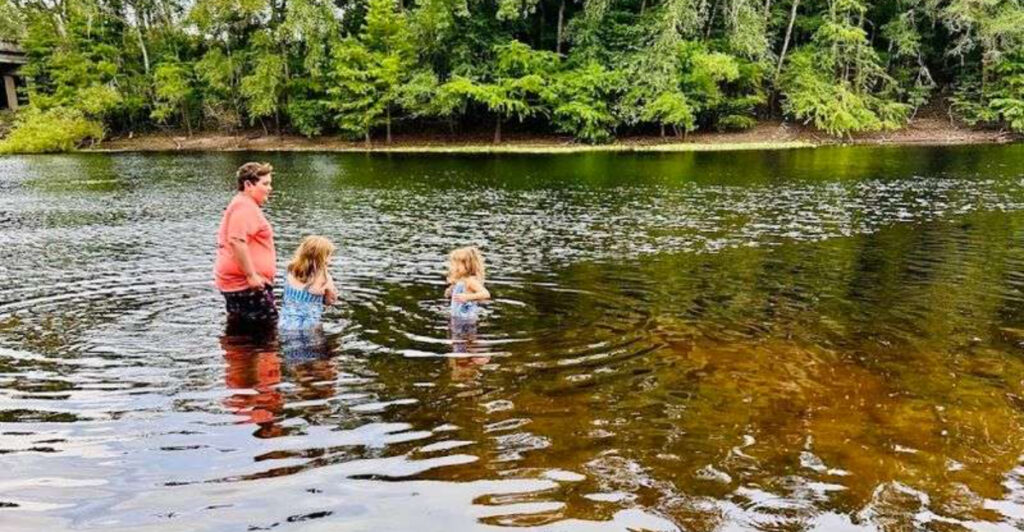
There is a place in north-central Florida where a river simply vanishes into the earth, swallowed whole by the ground beneath your feet, only to reappear miles away as if nothing happened. The forest around it drips with Spanish moss, the trails wind through ancient trees, and a historic suspension bridge sways gently above dark, tea-colored water.
This is not a movie set or a made-up legend. O’Leno State Park in High Springs has been quietly astonishing visitors for decades, and once you walk its trails, you will understand exactly why people keep coming back.
Whether you are a first-time hiker, a camping enthusiast, or just someone who wants to feel genuinely small in the best possible way, this park delivers something rare: a sense of wonder that feels completely real.
Where the River Pulls a Disappearing Act
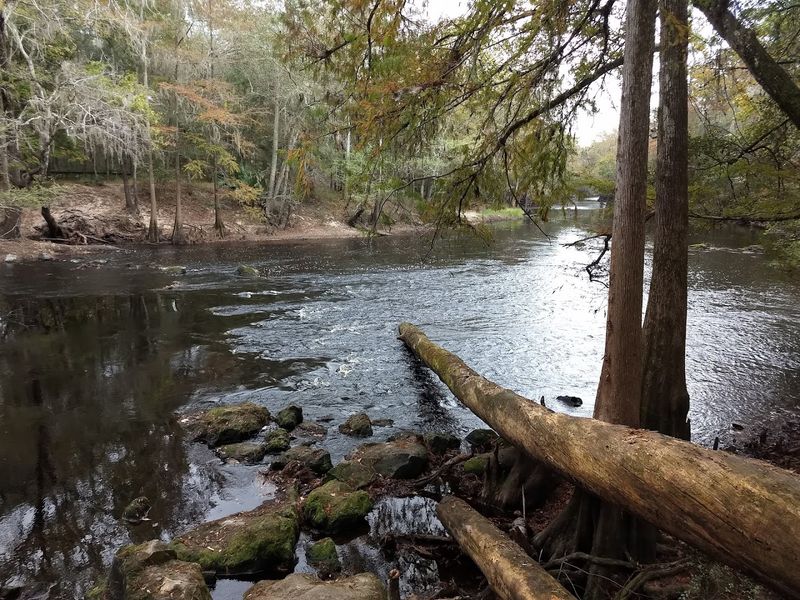
Most rivers flow where you expect them to. Not the Santa Fe River at O’Leno State Park, located at 410 SE Oleno Park Rd, High Springs.
Here, the river literally sinks underground, disappearing into the Florida aquifer and traveling roughly three miles beneath the surface before resurfacing at nearby River Rise Preserve.
Standing at the sink point feels genuinely surreal. The water moves toward a limestone opening, gets swallowed, and then the riverbed goes quiet.
No rushing current. No ripples.
Just stillness where a river used to be.
This geological phenomenon, called a river sink, is the park’s most talked-about feature, and rightfully so. Florida’s porous limestone geology, known as karst topography, makes this kind of underground plumbing possible.
For anyone curious about how the natural world can break its own rules in spectacular fashion, this spot alone is worth the drive.
The Suspension Bridge That Started the Stories
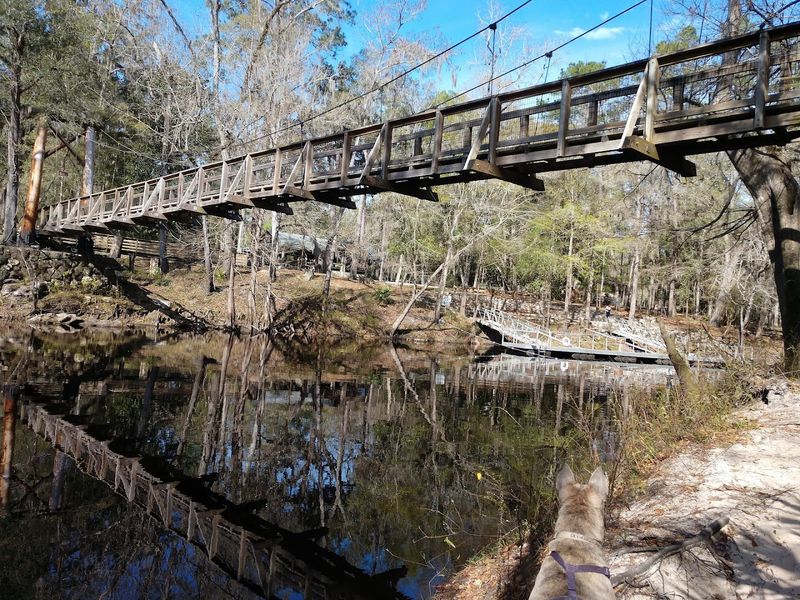
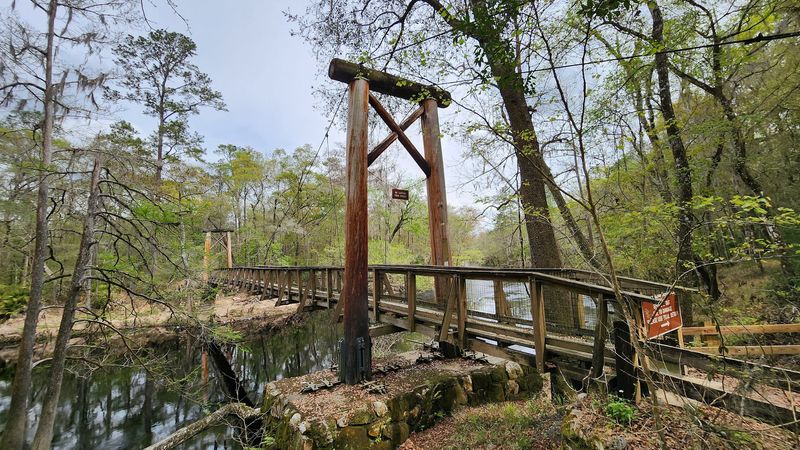
Long before the trails were mapped and the campgrounds were built, there was a bridge. The historic suspension bridge at O’Leno State Park is one of those structures that looks like it belongs in a storybook, and it has a habit of making visitors stop mid-step just to take it all in.
Constructed by the Civilian Conservation Corps in the 1930s, the bridge stretches across the Santa Fe River and sways just enough to remind you that you are standing above moving water. The CCC built it with craftsmanship that has outlasted generations of visitors, storms, and the occasional Florida hurricane.
The bridge has been closed and reopened over the years due to maintenance needs, so it is always worth checking current conditions before visiting. When it is open, crossing it is one of those quiet, memorable moments that photographs never quite do justice.
Go anyway, and feel it for yourself.
A Ghost Town Buried Beneath the Trees
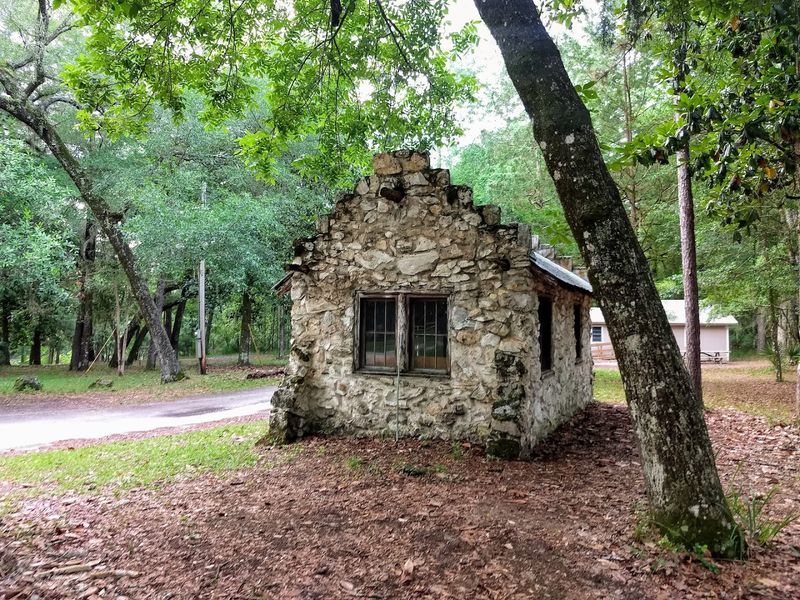
Not many state parks sit on top of a former ghost town, but O’Leno is not most state parks. The land was once home to a small settlement called Leno, later renamed O’Leno, which grew up around a ferry crossing on the Santa Fe River in the late 1800s.
At its peak, the town had a post office, a hotel, a cotton gin, and a community that believed it had a future. Then the railroad bypassed it entirely, and the town slowly faded.
By the early 1900s, the residents had moved on, leaving behind only foundations, memories, and a name that stuck.
The state acquired the land in the 1930s, and the CCC transformed it into a park. Today, traces of the old settlement are still visible if you know where to look.
Walking through these woods carries a quiet, layered feeling, like the forest is keeping secrets it has held for over a century.
The CCC Museum Hidden in Plain Sight
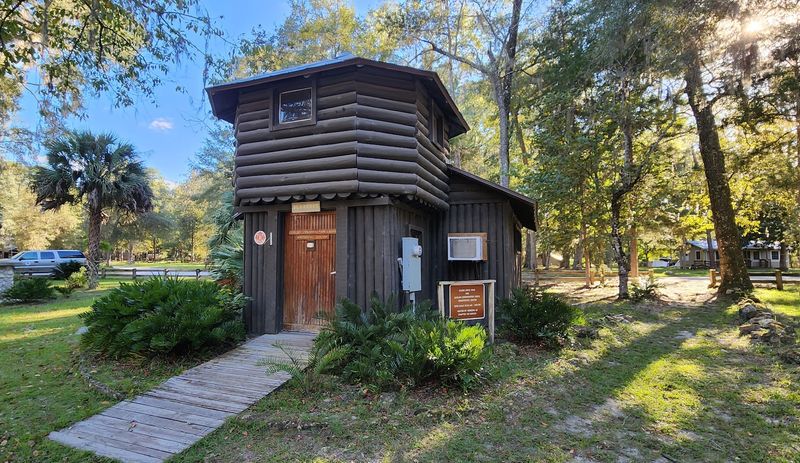
Tucked near the main park area is a small museum dedicated to the Civilian Conservation Corps, the Depression-era federal program that essentially built much of America’s state and national park infrastructure. At O’Leno, the CCC left behind not just the suspension bridge but also cabins, roads, and other structures that still stand today.
The museum is modest in size but genuinely interesting. Inside, you will find old photographs, tools, and artifacts that tell the story of young men who came to north Florida and built something lasting out of difficult circumstances.
One particularly memorable display features wartime rationing books, a small but powerful reminder of the era.
Best of all, the museum has air conditioning, which on a warm Florida afternoon feels like a gift from the universe. Do not skip it just because it looks small from the outside.
Some of the most interesting stories come in compact packages, and this one is no exception.
Trails That Take You Somewhere Unexpected
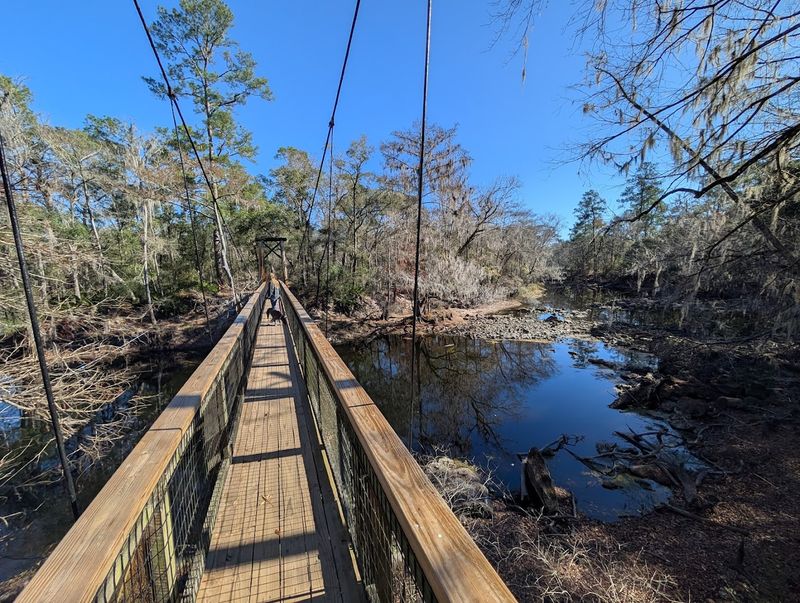
The trail system at O’Leno is more extensive than most first-time visitors expect. Multiple loop trails wind through the park, ranging from easy riverside walks to longer routes that connect with River Rise Preserve, offering hikers the chance to cover several miles of genuinely varied terrain.
The River Trail follows the Santa Fe River closely, passing through sections of dense forest, open floodplain, and areas where the ground gets noticeably boggy. At certain points, the trail dips into what can only be described as a natural trench, a low-lying corridor carved by water and time that feels completely different from the rest of the park.
Sturdy shoes are a must, and bug spray is non-negotiable, especially in warmer months. Ticks have been reported by multiple visitors, so tucking pants into socks and checking yourself afterward is just smart trail etiquette here.
The trails reward the prepared hiker generously.
The Santa Fe River and Its Moody Beauty
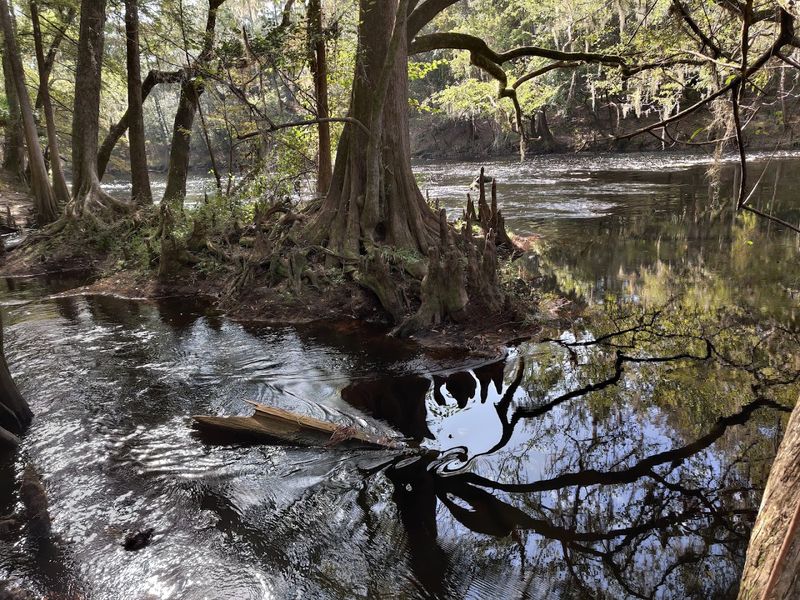
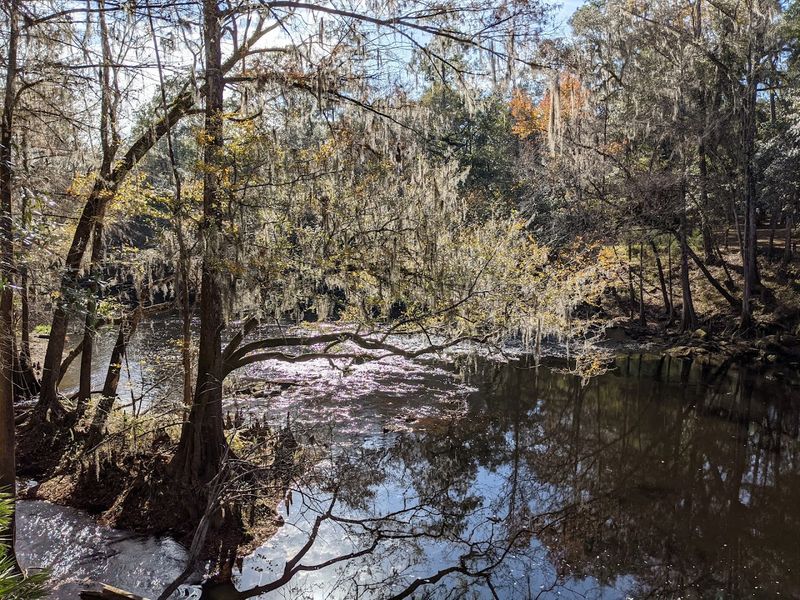
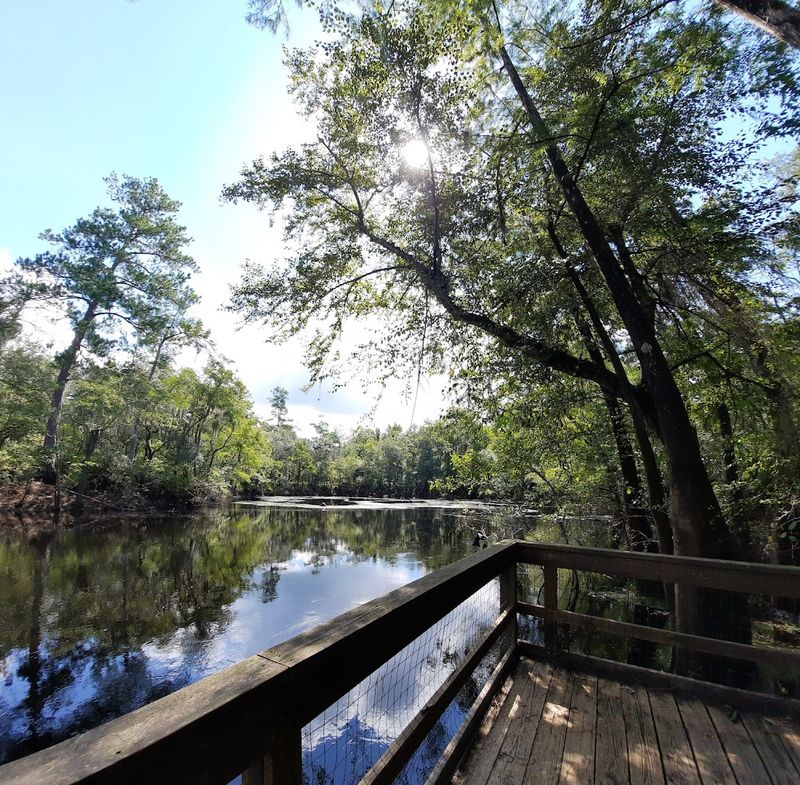
The Santa Fe River is not turquoise or crystal-clear the way many Florida springs are. It runs dark and tannin-stained, colored by the decomposed plant matter that leaches in from the surrounding forest.
The result is a river that looks like strong tea poured between walls of ancient trees, and it is absolutely striking in its own moody way.
Overhanging branches drag their tips across the water’s surface. Spanish moss drapes from cypress and oak trees in long, silvery curtains.
On a calm morning, the reflections are almost perfectly mirrored, and the whole scene has a hushed, timeless quality that makes conversation feel unnecessary.
Water levels vary significantly depending on rainfall and drought conditions, which affects both the swimming area and the visual character of the river. During dry periods, the river runs low and the swamp vegetation becomes more visible.
Either way, the Santa Fe has a personality all its own, and it does not disappoint.
Camping Under a Canopy of Stars
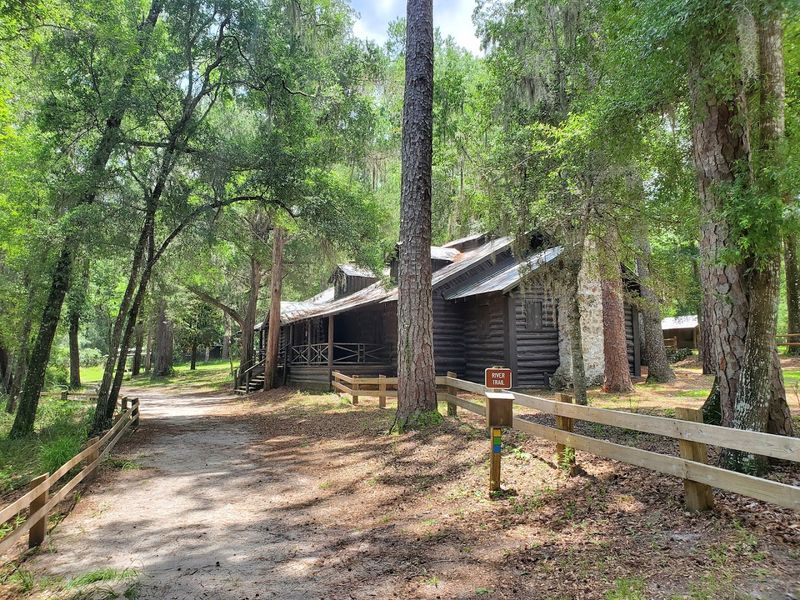
Spending the night at O’Leno is a genuinely different experience from most Florida campgrounds. The sites are set deep in the forest, shaded by tall trees that block out a surprising amount of the Florida sun during the day and frame a remarkable sky at night.
The Magnolia Loop campsites are especially popular for their privacy. Sites are well-spaced, and the tree cover creates a natural buffer between neighbors.
Campsites come with water and electric hookups, and the bathhouses are kept clean and well-maintained, which is not something every state park can reliably claim.
The nightly fee runs around $24, including hookups and the reservation fee, which is reasonable for a park with this much to offer. Rangers occasionally host informal events and programs, adding an educational layer to the overnight experience.
Booking in advance is smart, especially for holiday weekends when the park fills up quickly and the forest comes alive with families.
Wildlife That Watches You Back
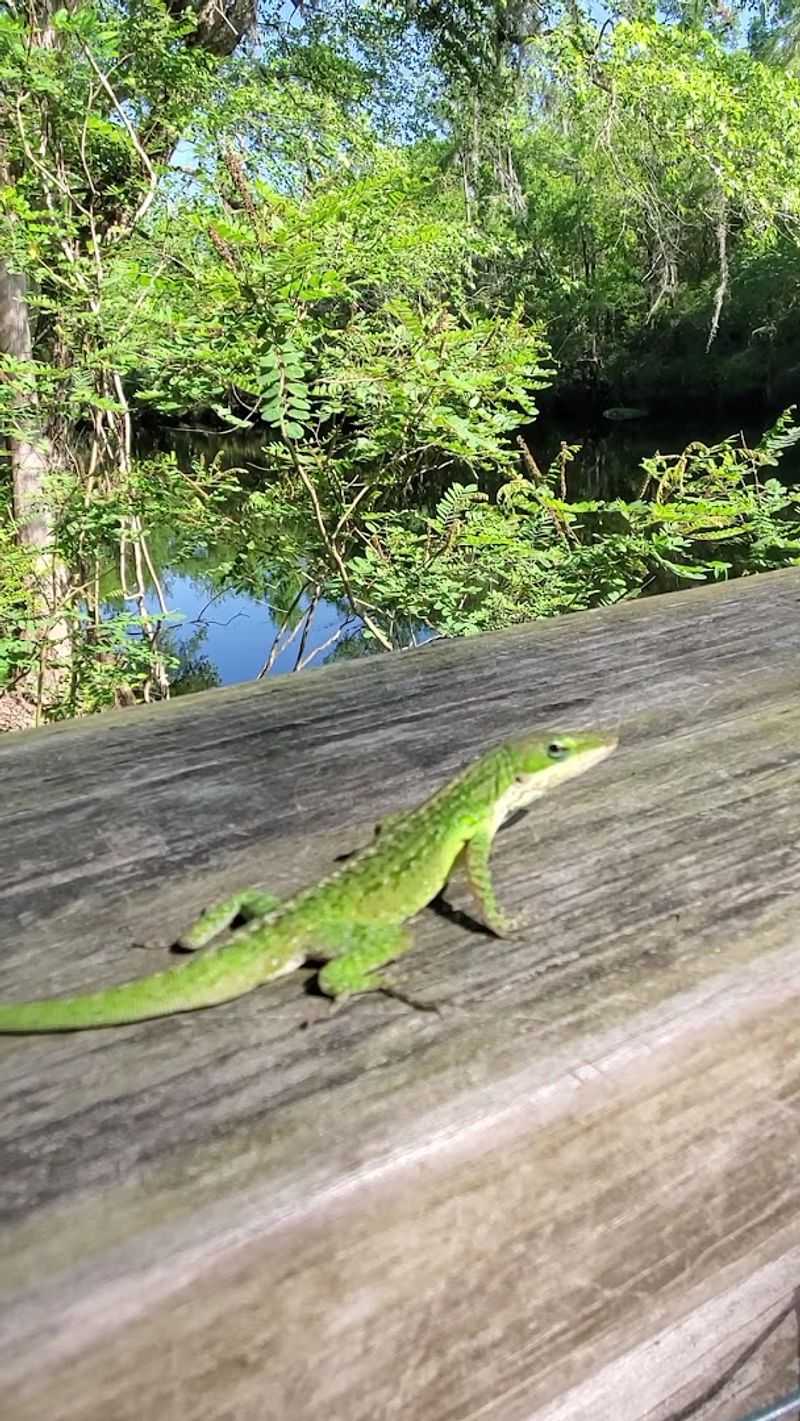
The wildlife at O’Leno does not hide. Deer wander through the campground in the early morning with a casualness that suggests they consider the humans the guests, not the other way around.
Squirrels and birds are constant companions on the trails, and turtles are a reliable sight along the river’s edge.
Alligators live in the park, as they do in virtually every Florida waterway, though sightings are not always guaranteed. The possibility of spotting one adds a certain alertness to a riverside walk that keeps things interesting.
Staying on designated trails and keeping a respectful distance from the water’s edge is standard Florida outdoor wisdom.
The park’s thick forest and undisturbed habitat make it a genuinely good place for birdwatching as well. The variety of tree species, from cypress to live oak to longleaf pine, supports a diverse ecosystem.
Every visit tends to turn up something new, which is part of what keeps regulars returning month after month.
Swimming in the River, If the Water Cooperates
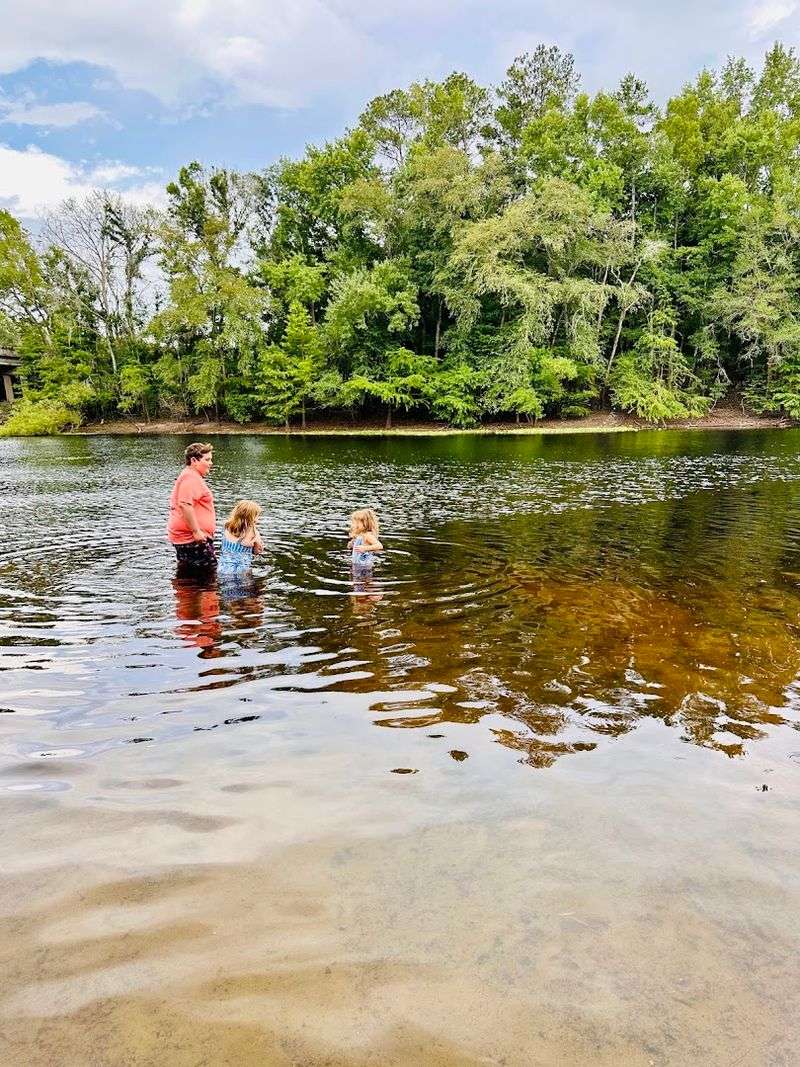
There is a designated swimming area in the Santa Fe River at O’Leno, and on a hot Florida afternoon, the idea of slipping into cool, dark water under a canopy of trees sounds exactly right. The water runs notably chilly, which is a welcome contrast to the summer heat that blankets north-central Florida for months at a time.
The catch is that the swimming area depends heavily on water levels, which fluctuate with rainfall and seasonal drought. During dry periods, the river can run quite low, making swimming less practical or even unavailable.
Checking conditions before a dedicated swimming trip is genuinely useful advice, not just a formality.
When the water is up and the conditions are right, the swimming hole has a wonderfully old-fashioned feel. No slides, no ropes, no lifeguards.
Just a river, some shade, and the kind of low-key outdoor fun that reminds you why Florida’s natural spaces are worth protecting in the first place.
The Connection to River Rise Preserve
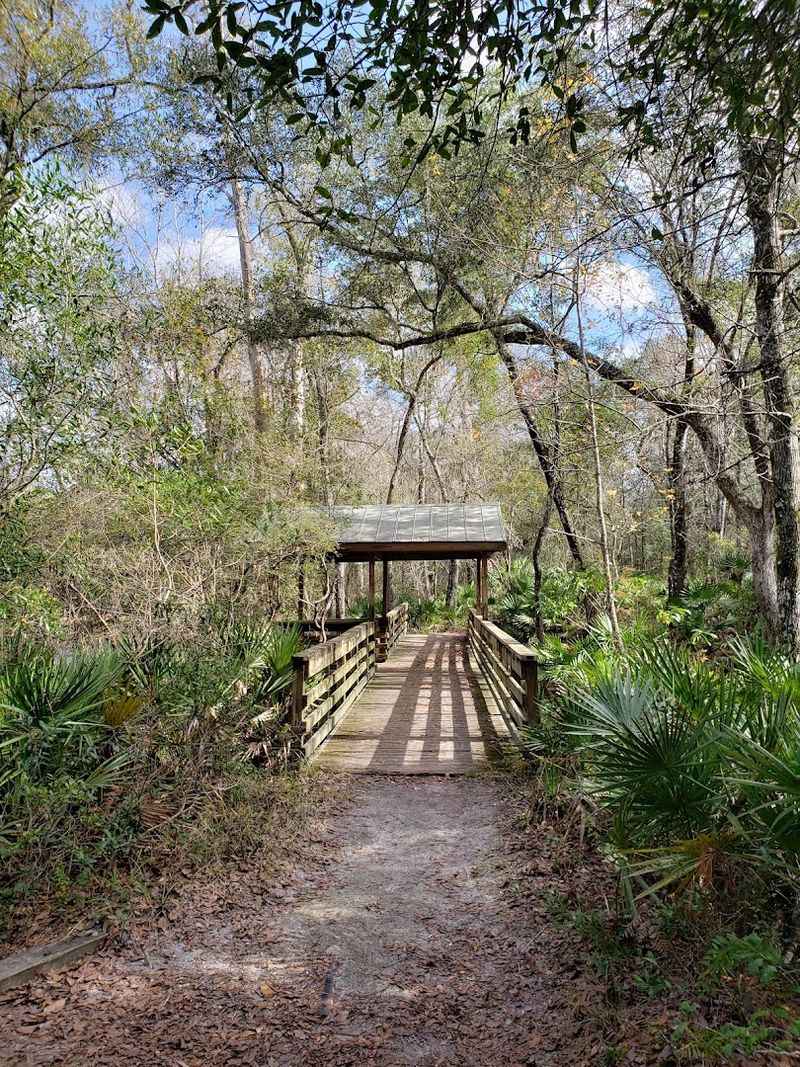
One of the most fascinating aspects of visiting O’Leno is the physical connection it has to River Rise Preserve, a separate park located several miles away. The same Santa Fe River that sinks underground at O’Leno reappears at River Rise, making the two parks literally part of the same geological story.
Hiking trails connect the two parks, and the full route covers a substantial distance that appeals to more serious hikers and trail runners. The trail passes through a variety of Florida ecosystems, from dense hardwood forest to open pine flatwoods, giving a solid cross-section of what north Florida’s natural landscape looks like when it is left largely undisturbed.
Biking and horseback riding are also permitted on certain trail sections, making the corridor genuinely multi-use. The combined experience of watching a river vanish at one end and reappear at the other is the kind of thing that sticks with you long after you have driven home and unpacked your gear.
What the Landscape Looks Like After a Hurricane
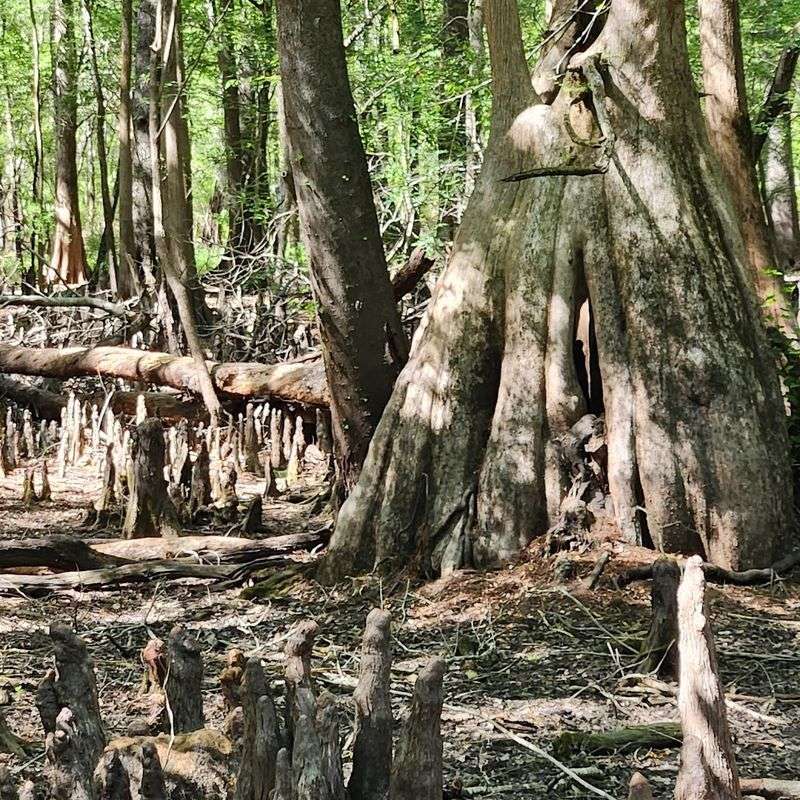
Florida’s state parks carry the scars of the storms that pass through them, and O’Leno is no different. In late 2024, Hurricane Helene swept through the region, leaving a significant number of trees down across the park.
During visits in the months that followed, the damage was still visible in several areas.
What is striking, though, is how quickly the forest begins to recover. New growth pushes up through the debris, and the fallen trunks become habitat for insects, fungi, and small animals almost immediately.
The cycle of destruction and renewal in a Florida forest is genuinely worth observing, not just as a curiosity but as a reminder of how resilient these ecosystems are.
Park staff have worked steadily to clear major trail obstructions, and the experience remains fully accessible. The downed trees add an unexpected texture to the landscape, and walking past them gives the forest an even wilder, more untamed character than usual.
Practical Tips That Will Save Your Visit
A few practical notes can make the difference between a great visit and a frustrating one at O’Leno. The park opens at 8 AM every day and closes at 7:30 PM, so planning your arrival accordingly gives you the most time on the trails.
The entrance fee is $5 per vehicle, which is one of the better deals in Florida’s state park system.
Ticks are a real presence here, especially along the river trail and in areas with dense undergrowth. Wearing long pants, tucking them into your socks, and doing a thorough tick check before getting back in your car is standard practice for regular visitors.
Bug spray covering exposed skin is equally important, particularly from spring through fall.
Bring more water than you think you need. The trails are not especially strenuous, but the Florida humidity adds up quickly.
The park’s phone number is 386-454-1853 if you need to check on trail or bridge conditions before making the trip out.
The Atmosphere That Sets This Park Apart
There are state parks that feel like well-maintained green spaces, and then there are parks that feel like somewhere the modern world simply forgot to follow you. O’Leno belongs firmly in the second category.
The forest here is dense and layered, the moss hangs thick from every branch, and the light filters through the canopy in ways that make even midday feel atmospheric and slightly otherworldly.
On a quiet weekday morning, the park can feel almost completely private. The sounds are bird calls, wind in the trees, and water moving somewhere nearby.
The absence of traffic noise and the presence of genuinely old-growth vegetation creates a sensory contrast to everyday life that is hard to replicate anywhere else in north Florida.
Regular visitors describe coming back monthly, drawn by the consistency of the peace rather than novelty. That kind of loyalty says something meaningful about a place, and O’Leno earns it without trying particularly hard.
Rock Formations and Natural Curiosities Along the Way
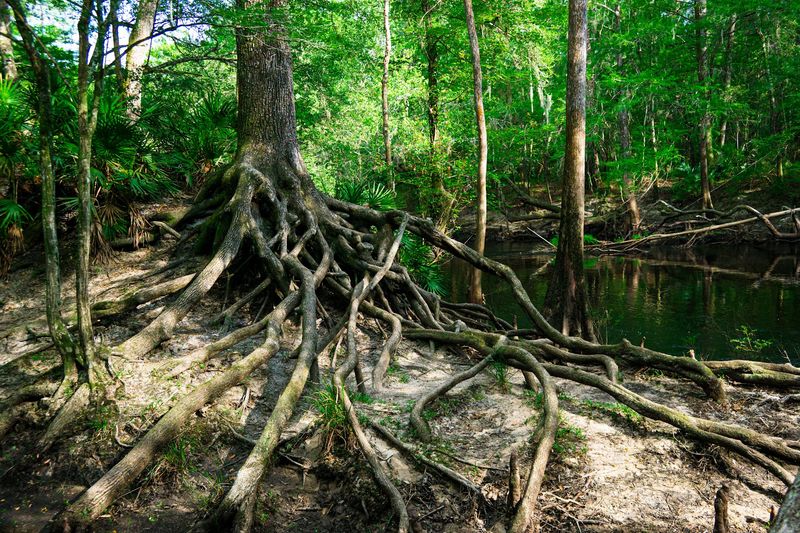
Beyond the river and the bridge, O’Leno offers a quieter kind of geological interest along its trails. Limestone outcroppings appear at various points, particularly near the river sink area, where the karst topography is most visible.
These formations are the same porous rock that underlies much of Florida and gives the state its extraordinary network of springs and aquifers.
The exposed rock surfaces are often covered in moss and lichen, and tree roots wrap around them in ways that look deliberate, almost architectural. The combination of organic and mineral textures gives certain trail sections a look that feels more like the Pacific Northwest than the Florida most people picture when they think of the state.
Visitors with an eye for natural detail will find plenty to photograph here beyond the obvious landmarks. The small moments, a root curling over a limestone edge, a fern growing from a crack in the rock, add up to a trail experience that rewards curiosity at every turn.
A Place Worth Returning To, Again and Again
Some places reveal themselves fully on a first visit. O’Leno is not one of them.
The park changes with the seasons, the water levels, the weather, and the time of day in ways that make each return trip feel genuinely different from the last. Regular visitors who come monthly are not being sentimental.
They are just paying attention.
The combination of geological wonder, human history, accessible trails, solid camping infrastructure, and an atmosphere that feels genuinely removed from the noise of everyday life makes O’Leno one of north Florida’s most quietly compelling destinations. It does not shout for attention, and it does not need to.
For a park that sits just off US-441 north of High Springs, it manages to feel remarkably far from everything. That contrast, between how easy it is to get to and how completely different it feels once you are there, is ultimately what makes O’Leno worth every single visit.
Share this story