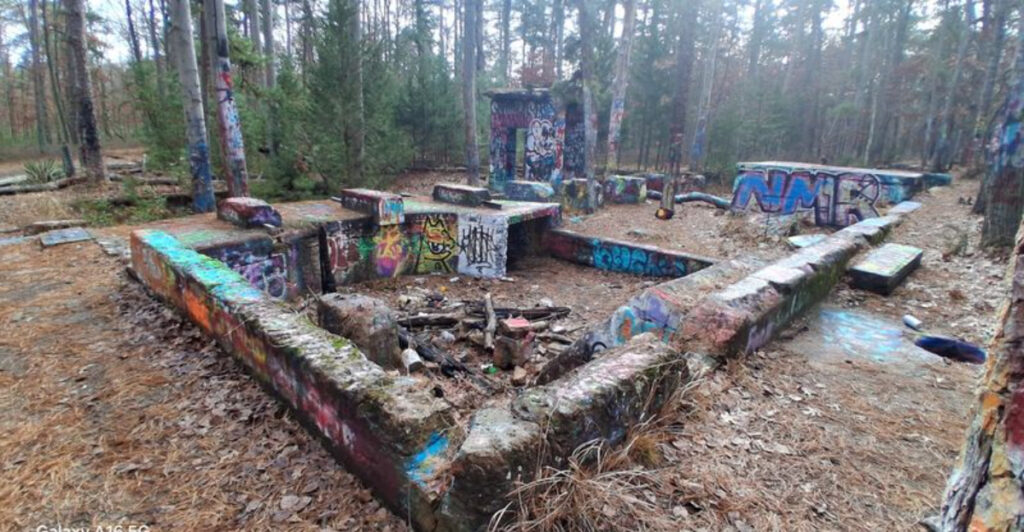
Deep in the Pine Barrens of New Jersey, there is a crumbling brick structure that most people drive right past without ever knowing it exists. This factory in Manchester Township is not your average roadside ruin.
Built in 1905 with big dreams and serious ambition, this factory never actually produced what it was designed to make, and the reasons why read more like a dramatic story than a history lesson. A sudden passing, a frozen estate, labor unrest, and a destructive fire all played a role in stopping this place before it ever really got started.
Today, the ruins stand covered in bold graffiti murals, surrounded by pine trees, and flanked by old railroad tracks that have not seen a train in decades. This is one of those New Jersey spots that rewards the curious, and the backstory behind it is genuinely hard to believe.
The 1905 Dream That Never Came True
The Brooksbrae Brick Factory was built in 1905 with one very specific goal: to produce thousands of clay bricks every single day. The operation was connected to the Adams Clay Mining Company, which had identified rich clay deposits in the Pine Barrens and saw a profitable future in turning that raw material into building bricks.
The factory was designed on an ambitious scale, with infrastructure meant to support high-volume production. Railroad access was built into the plan from the beginning, allowing bricks to be shipped out efficiently once manufacturing was underway.
But here is where the story takes a sharp turn. The factory never reached that production volume, and there is strong evidence suggesting it may never have produced bricks at all in any meaningful quantity.
The whole operation stalled almost as soon as it began, and the reasons behind that failure are layered, complicated, and surprisingly dramatic for a brick factory in the woods.
Railroad Workers, Strikes, and a Factory Already in Trouble
Even before the frozen estate became the main obstacle, the Brooksbrae Brick Factory was dealing with another serious problem: labor unrest along the nearby railroad lines. The factory depended on railroad access to function, and workers along those lines went on strike during a critical period in the factory’s early life.
Railroad strikes in the early 1900s were not uncommon across the United States, as workers pushed back against long hours, low wages, and dangerous conditions. For a brand-new operation like Brooksbrae, which had not yet established itself, a disruption in rail service was more than an inconvenience.
It was a threat to the entire business model.
Without reliable rail transport, there was no practical way to move raw materials in or finished bricks out. The combination of Kelly’s passing, the frozen estate, and the railroad labor disputes created a perfect storm of setbacks.
Each problem compounded the others, and the factory never recovered from any of them.
A Fire That Sealed the Factory’s Fate
On top of the ownership complications and the railroad troubles, a fire tore through the Brooksbrae Brick Factory at some point in its early history, adding yet another layer of damage to an already struggling site. Fires were a constant threat to industrial buildings of that era, especially those built with wood framing and housing equipment that generated significant heat.
The fire did not help matters for anyone hoping the factory might eventually be revived. Structural damage from a fire, combined with years of neglect and no active management, meant that the building began its long decline toward the ruins that stand today.
It is worth noting that the factory was already in a precarious position before the fire. The combination of frozen finances, labor disruptions, and now physical destruction made any realistic comeback nearly impossible.
What the fire did not take, the seasons did, as New Jersey winters and summers slowly wore the structure down over the following decades.
What the Ruins Actually Look Like Today
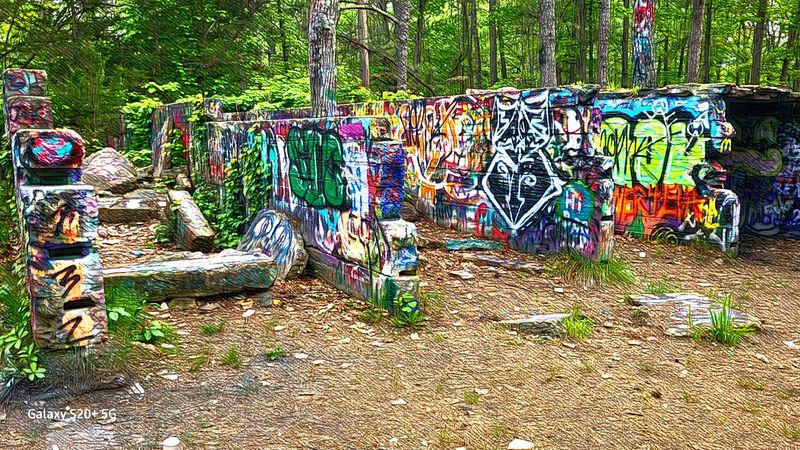
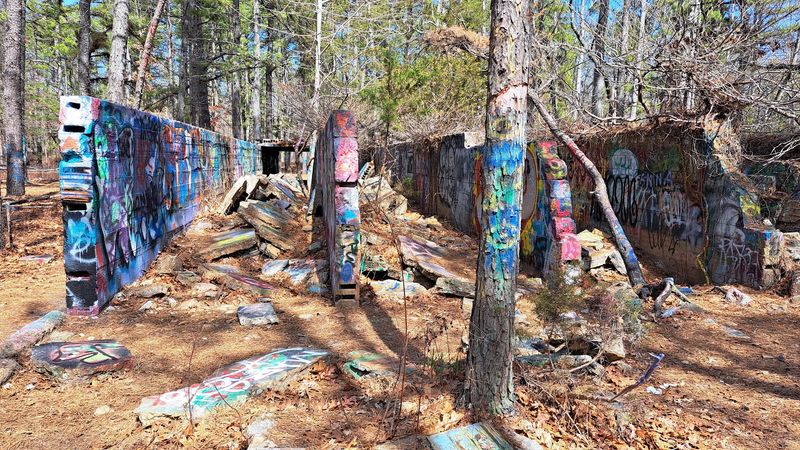
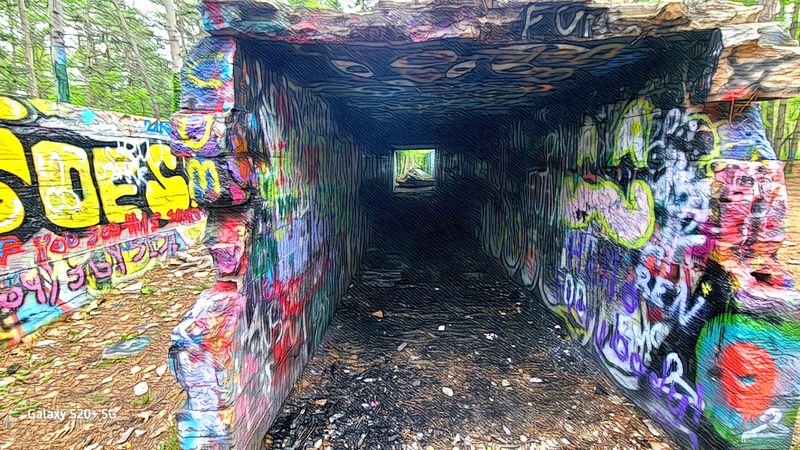
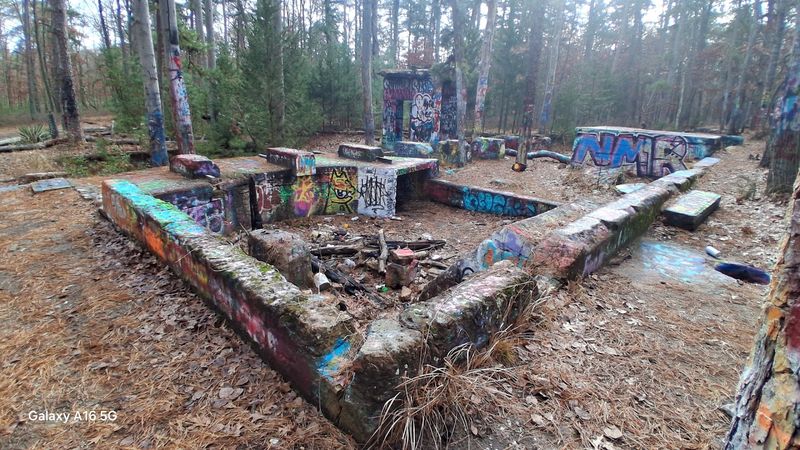
The Brooksbrae Brick Factory today is a collection of standing and partially collapsed brick walls, arched openings, and structural remnants that give a clear outline of what the building once was. The brickwork itself is still impressive in places, a reminder of the craftsmanship that went into constructing the factory even if it never served its intended purpose.
What makes the ruins visually striking now is the graffiti. Over the years, artists and taggers have covered nearly every available surface with murals, designs, and lettering in a wide range of colors.
The result is a layered, constantly evolving outdoor gallery that contrasts sharply with the quiet pine forest surrounding it.
The graffiti has become as much a part of the Brooksbrae experience as the ruins themselves. Some pieces are large-scale murals with real artistic ambition, while others are simple tags.
Together, they give the site a living, changing quality that no museum exhibit could replicate.
The Old Railroad Tracks That Still Run Through the Site
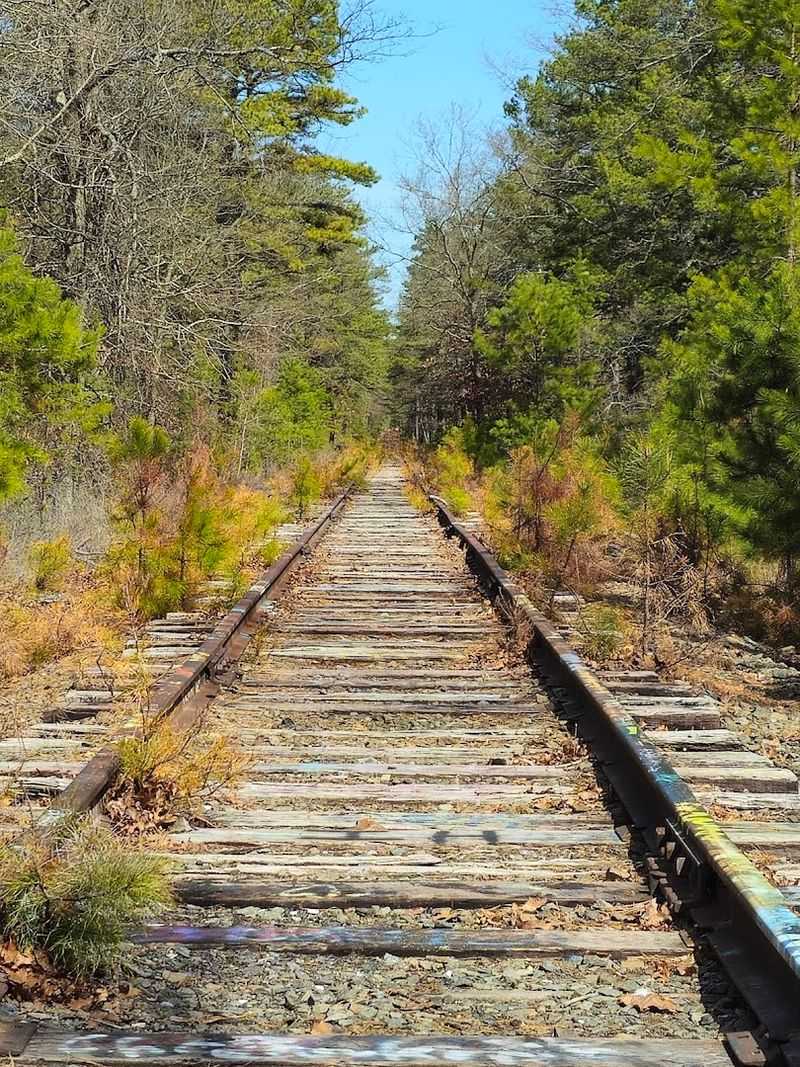
Running alongside and through the Brooksbrae site are railroad tracks that have been out of service for many years. These tracks were originally built to support the factory’s operations, providing the transportation link that the business model depended on.
Today, they serve as a trail marker and a piece of industrial history frozen in place.
Walking along or across the tracks is part of the experience for most people who visit the site. The trail from the parking area on Pasadena Road crosses the tracks before heading into the woods toward the ruins, making the railroad a natural part of the approach to the factory.
The tracks themselves are in various states of condition, with vegetation growing up around and between the rails in many sections. They add a quiet, almost forgotten quality to the landscape, reinforcing the sense that this whole corner of the Pine Barrens has been left behind by time while the rest of New Jersey kept moving forward.
Hiking Trails and How to Explore the Area
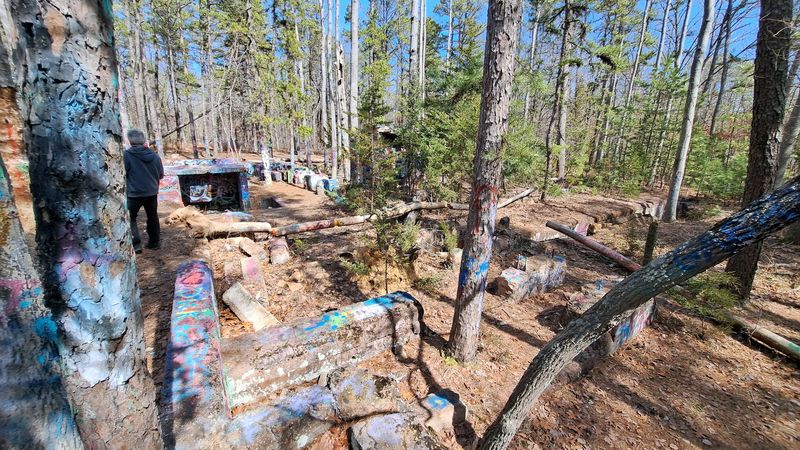
Beyond the ruins themselves, the Brooksbrae site connects to a network of natural trails that wind through the surrounding Pine Barrens. These trails offer a straightforward hiking experience through flat, sandy terrain that is characteristic of this part of New Jersey, making the area accessible to a wide range of fitness levels.
The trails are not maintained as part of a formal park system, so conditions vary depending on the season and how recently the paths have seen foot traffic. Sturdy footwear is recommended, especially after rain, when the sandy soil can become soft and uneven in places.
The area is also popular with people who bring their dogs along for the hike. The wide, open trails and relatively low foot traffic make it a comfortable outing for larger breeds especially.
There are no restrooms or facilities anywhere on or near the property, so planning ahead for water and other necessities before arriving is genuinely important.
Photography Opportunities That Are Hard to Find Anywhere Else
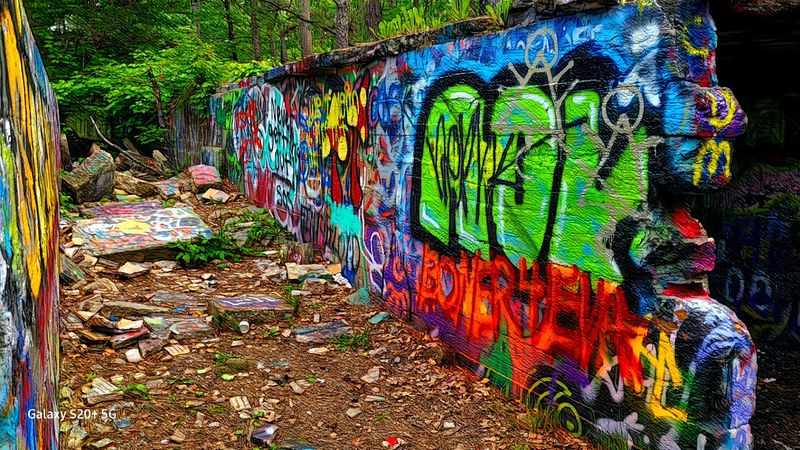
Few abandoned sites in New Jersey offer the kind of photographic variety that Brooksbrae does. The combination of crumbling brick walls, vivid graffiti, old railroad tracks, and surrounding pine forest creates a layered backdrop that works well for many different styles of photography.
The graffiti alone provides enough color and detail to keep a photographer busy for a full afternoon. Each section of wall tells a different visual story, and because the artwork changes over time as new pieces are added, no two visits look exactly the same.
The ruins earn a well-deserved reputation as one of the more photogenic spots in the Pine Barrens.
Natural light filters through the tree canopy in ways that shift throughout the day, creating different moods at different hours. Early morning visits tend to be quieter and cooler, while midday brings more contrast to the colors on the walls.
Either way, the spot consistently delivers compelling material for anyone with a camera.
The Pine Barrens Context That Makes This Place Even More Interesting
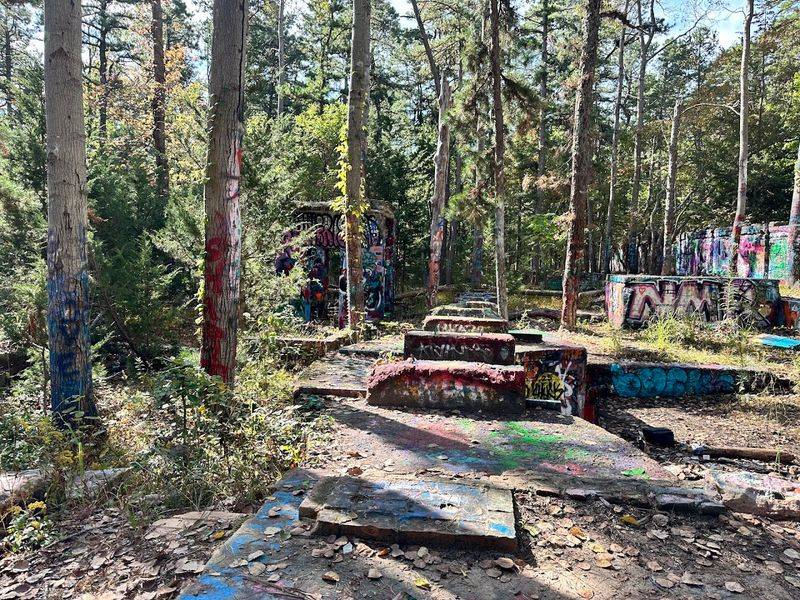
The Brooksbrae Brick Factory does not exist in isolation. It sits within the Pine Barrens, a massive stretch of coastal plain forest that covers more than one million acres across southern New Jersey.
This region is one of the largest and most ecologically significant forest areas in the northeastern United States.
The Pine Barrens has a long history of industrial activity, including iron furnaces, glass factories, and paper mills, many of which also ended up as ruins swallowed by the forest. Brooksbrae fits into this broader pattern of ambitious projects that the landscape eventually reclaimed.
The forest itself adds a particular quality to the experience of visiting the factory. The pine trees grow densely and tall, and the understory stays relatively open, making navigation straightforward.
The sandy soil underfoot and the characteristic quiet of the Pinelands create a setting that feels genuinely removed from the suburban and urban sprawl of the surrounding region.
Getting There Without Getting Lost
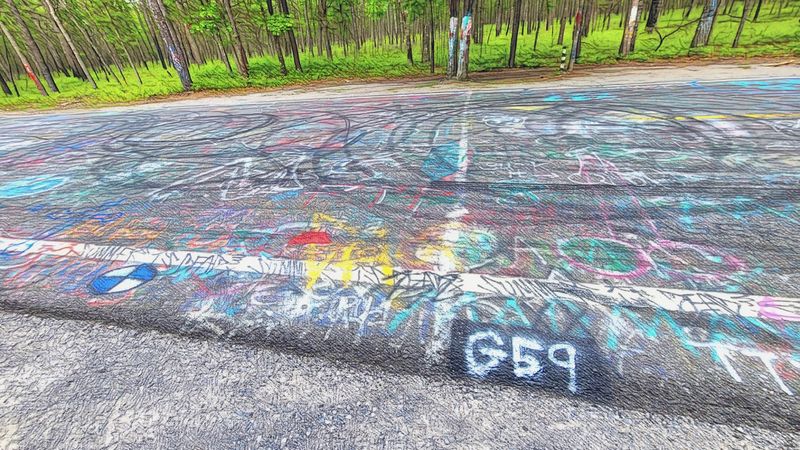
Navigation to Brooksbrae requires some advance preparation, because standard GPS apps do not reliably guide travelers to the correct access point. The right move is to park on the side of Pasadena Road, not Railroad Avenue, which is a common mistake that sends people to the wrong part of the area.
A useful landmark is the graffiti that appears on the road surface near the correct parking spot, which makes the turnoff easier to identify once you know to look for it. From there, the walk to the ruins is short and manageable, crossing the old railroad tracks and entering the tree line.
Cell service is essentially nonexistent in this area, which is worth knowing before heading out. Downloading an offline map in advance and saving the coordinates or written directions on a phone removes a lot of potential frustration.
Going with a companion is also a smart call, since the remote setting means help is not close by if something goes wrong.
Why This Spot Keeps Drawing People Back
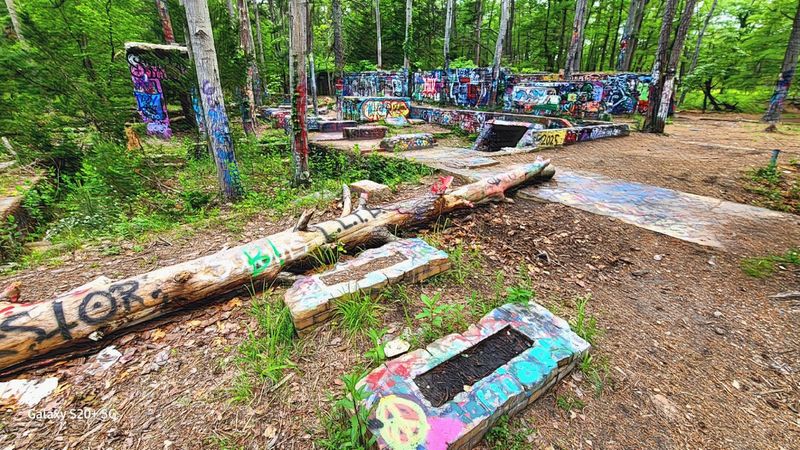
The Brooksbrae Brick Factory keeps drawing people back for reasons that go beyond simple curiosity about old buildings. The combination of history, art, nature, and the unexpected creates a visit that is genuinely hard to categorize.
It is part hiking trail, part outdoor gallery, part historical site, and part mystery.
The ever-changing graffiti means the place looks different every time someone visits. New artwork gets added regularly, and the overall visual character of the ruins evolves in ways that make repeat visits worthwhile.
There is also something compelling about a place that carries such a layered backstory, one involving ambition, setback, and eventual abandonment.
The Pine Barrens setting adds a layer of natural beauty that makes the trip feel like more than just a stop at a crumbling building. The trails, the trees, the old tracks, and the quiet of the forest all contribute to an experience that is genuinely distinct from anything else in New Jersey.
Once visited, Brooksbrae tends to stay in the memory.
Where Exactly This Place Is Located
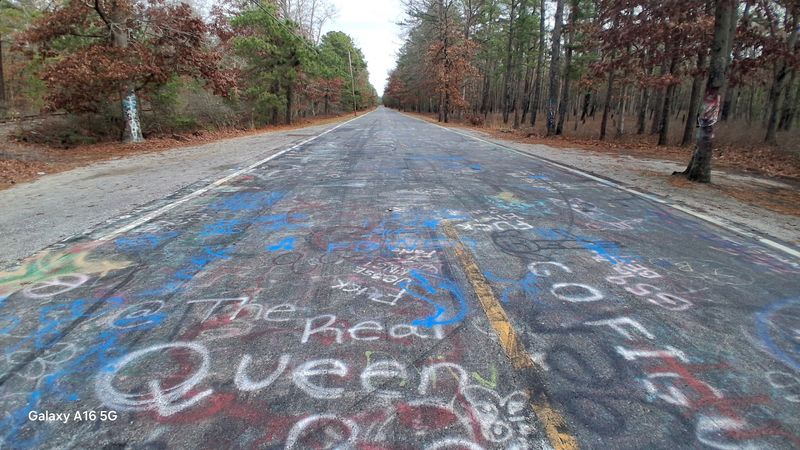
The Brooksbrae Brick Factory sits at VHQ5+X9, Manchester Township, NJ 08759, tucked inside the vast Pine Barrens region of Ocean County, New Jersey. Getting there requires a little navigation know-how, since GPS apps have been known to send travelers in the wrong direction.
The correct approach is to park along the side of Pasadena Road, not Railroad Avenue, and then follow the trail across the old railroad tracks and into the woods. The walk from the parking area to the ruins takes only a couple of minutes, making it a genuinely easy destination to reach on foot.
There is no signage welcoming you, no ticket booth, and no formal entrance. Cell service is unreliable in this area, so downloading offline maps before the trip is a smart move.
The Pine Barrens surrounding the factory stretch for miles, giving the whole site a remote, off-the-grid character that adds to its appeal.
Share this story