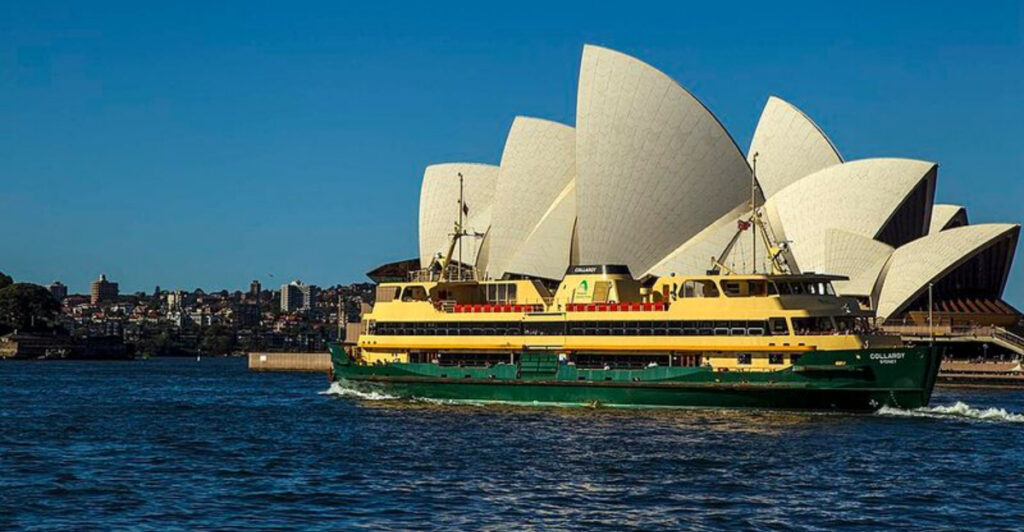
Some of the best travel moments happen before you even arrive at your destination. Ferry rides are proof of that.
Whether you’re crossing a harbor, threading through island chains, or gliding between continents, a good ferry trip turns a simple transfer into something worth writing home about. These 13 routes around the world don’t just get you there, they make the journey the highlight.
Staten Island Ferry, New York City, USA
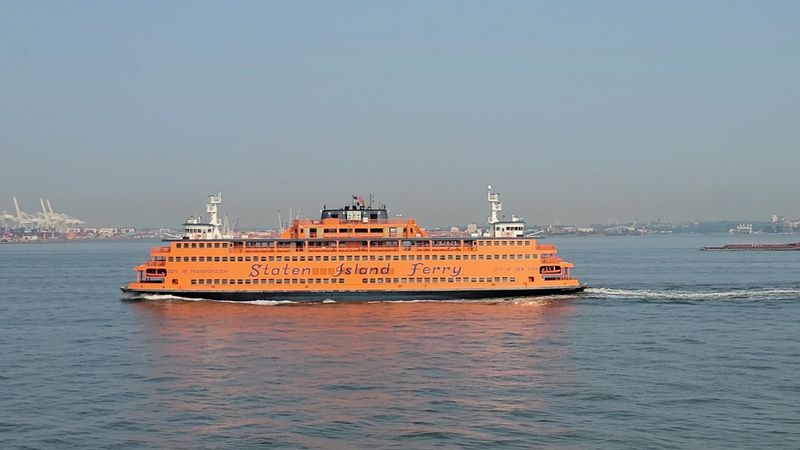
New York City charges a lot for most things, but this iconic harbor crossing will cost you exactly zero dollars. The Staten Island Ferry runs between Whitehall Terminal in Manhattan and St. George in Staten Island, cutting straight through New York Harbor with zero tolls and zero apologies.
Riders get front-row views of Lower Manhattan’s skyline, the open harbor, and the Statue of Liberty area without paying for a dedicated sightseeing tour. I once watched a tourist genuinely tear up watching the skyline shrink behind the boat.
Totally understandable.
The ferry runs around the clock, every day of the year, so there is no bad time to hop on. Early morning crossings offer a quieter, almost meditative version of the ride.
Sunset sailings, though, are pure drama. Pack a snack, grab a window seat, and enjoy what might be the world’s best free show.
Star Ferry, Hong Kong
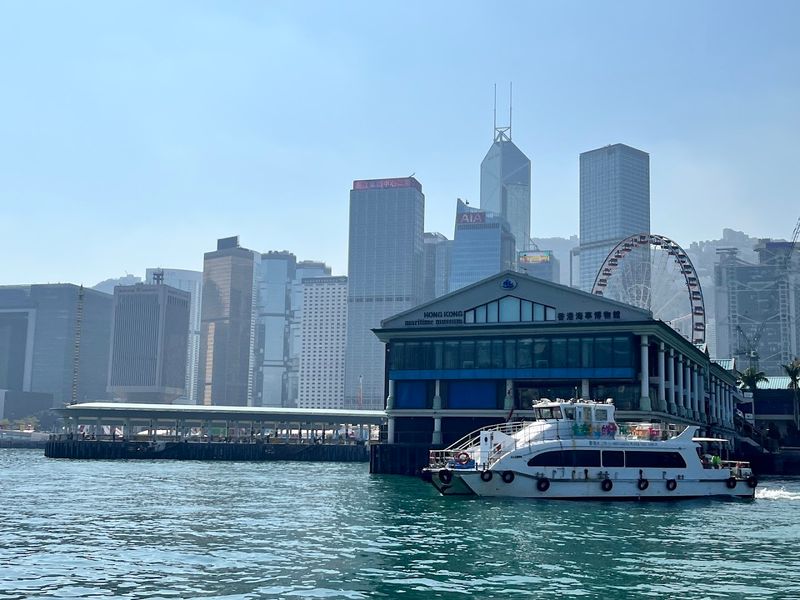
The Star Ferry has been crossing Victoria Harbour since 1888, and somehow it still manages to feel like the coolest way to get anywhere in Hong Kong. The boats are vintage-green, slightly creaky, and completely charming in a way that no sleek modern transit could replicate.
For just a few Hong Kong dollars, you sail from Kowloon to Hong Kong Island with one of the world’s most dramatic skylines putting on a full performance beside you. Near sunset, the whole thing goes golden and ridiculous.
It is genuinely unfair how good it looks.
The crossing only takes about eight minutes, which is both the best and worst part. Best because it is effortless.
Worst because you will immediately want to turn around and go back. Many people do exactly that.
Riding the Star Ferry is less a commute and more a ritual that every Hong Kong visitor quietly adopts within their first day.
Interislander, Wellington to Picton, New Zealand
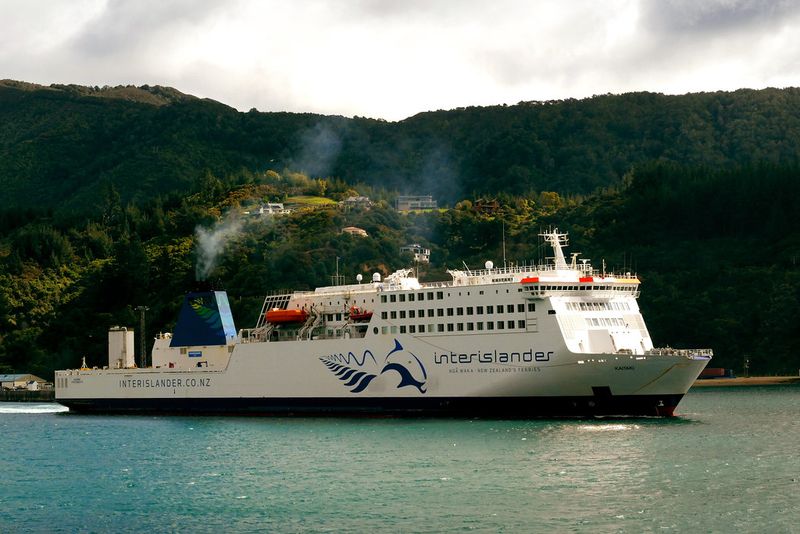
Three and a half hours sounds like a long time until the Marlborough Sounds start appearing outside the window. The Interislander connects Wellington on the North Island to Picton on the South Island, and the route manages to pack in open ocean drama, Cook Strait swells, and some of the most serene inland waterways you will ever float through.
Great Journeys NZ markets this as a scenic experience, and for once the marketing is not exaggerating. The transition from wide-open strait to the calm, forest-edged channels of the Sounds is genuinely jaw-dropping.
Passengers tend to drift toward the outer decks at that point, phones in hand, slightly speechless.
Pro tip: book a cabin or a lounge seat if you are doing this crossing in winter, because Cook Strait earns its rough reputation. In calmer conditions, though, standing on the bow as the Sounds close in around the ship is one of New Zealand’s great travel moments.
Tsawwassen to Swartz Bay, British Columbia, Canada
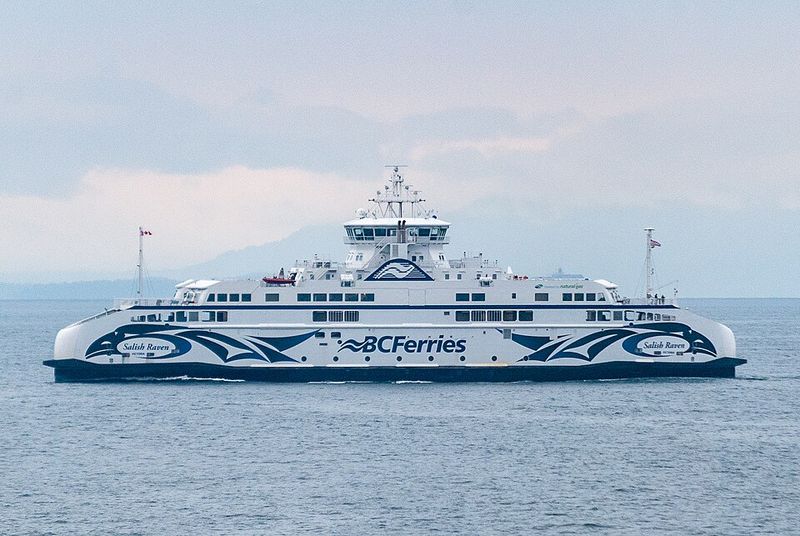
BC Ferries officially calls this a transportation route. Passengers call it a cruise they accidentally got on while trying to reach Vancouver Island.
The sailing from Tsawwassen to Swartz Bay weaves through the Gulf Islands, and the scenery is so good that people regularly miss their snack runs because they refuse to leave the deck.
The crossing takes about an hour and a half, which is just long enough to feel like an event. Forested islands drift by on both sides, eagles make occasional appearances, and the Salish Sea glitters in a way that makes British Columbia look like it is showing off.
Honestly, fair enough.
Ferries on this route are large and well-equipped, with cafeterias, lounges, and outdoor decks. Families, cyclists, and road-trippers all share the same quiet excitement of being somewhere beautiful without having to navigate anything.
Just stand outside, breathe the salt air, and let the Gulf Islands do all the work.
Seattle to Bainbridge Island, Washington, USA
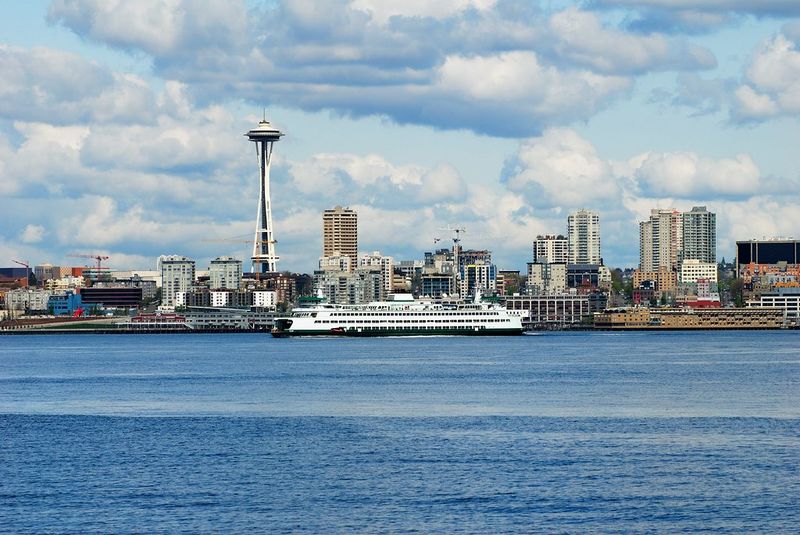
Thirty-five minutes is all it takes for Washington State Ferries to completely change your mood. The Seattle to Bainbridge Island route is short by ferry standards, but the views it delivers per minute are almost unreasonably generous.
Mount Rainier looms in the background on clear days, which feels like cheating.
Leaving from downtown Seattle, the boat pulls away from the terminal and immediately offers a sweeping look back at the city skyline from the water. That reverse view of Seattle, framed by Puget Sound and mountain peaks, is something a lot of first-time visitors are completely unprepared for.
Bainbridge Island itself is worth the trip, with a charming small-town waterfront, great coffee shops, and quiet streets that feel a world away from downtown Seattle. But honestly, plenty of people ride the ferry just for the crossing itself and turn right back around.
Nobody judges that. The boat is the destination.
Circular Quay to Manly, Sydney, Australia
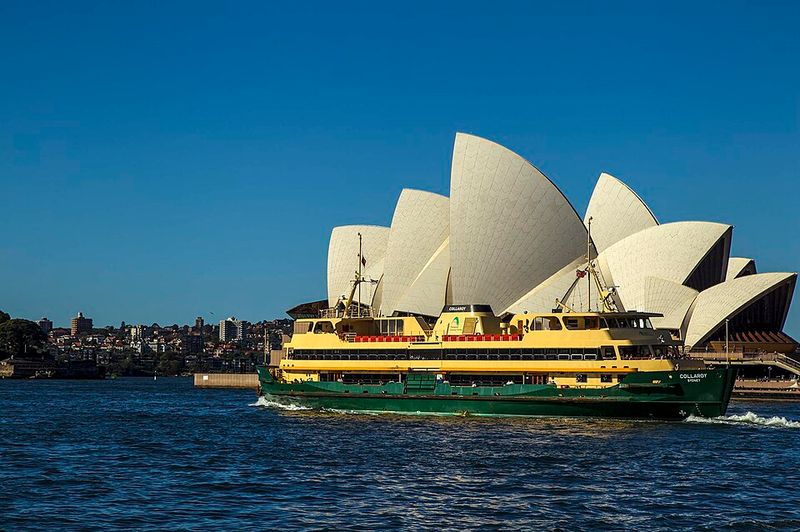
Sydney’s Manly ferry is the kind of ride that makes you feel smug about your travel choices. The route departs from Circular Quay, sails right past the Sydney Opera House and the Harbour Bridge, and then heads out through the harbor toward the open water and Manly Beach.
That is two of the world’s most photographed structures in the first ten minutes.
The full crossing takes about thirty minutes, and the further you get from the city, the more the harbor opens up. Sailboats, seaplanes, and the occasional pod of dolphins have all been spotted on this route.
The ferry itself is comfortable, with indoor and outdoor seating options.
Manly is a genuinely great beach suburb with excellent food, surf culture, and a relaxed vibe that contrasts nicely with central Sydney. But the ferry ride there is its own reward.
A return ticket on the Manly ferry is probably the most scenic $10 you will spend in Australia.
Bosphorus Ferry, Istanbul, Türkiye
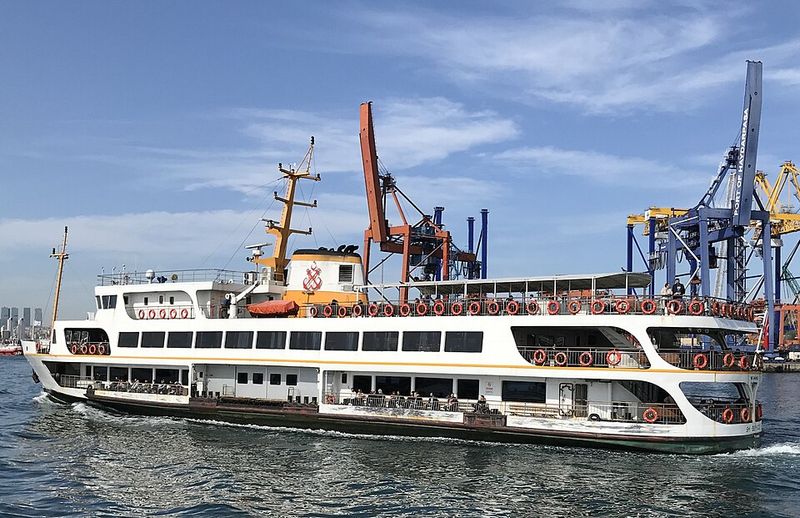
Crossing between two continents on a commuter ferry is not something most transit systems can offer. Istanbul’s public ferries, operated by Sehir Hatlari, do exactly that, connecting Europe and Asia across the Bosphorus as casually as a city bus might cross a street.
Except the view outside the window involves Ottoman palaces and hillside mosques.
The ferries are affordable, frequent, and genuinely beloved by locals. Vendors walk the aisles selling tea in tulip glasses, and passengers settle in with a relaxed confidence that comes from doing this every day.
Visitors tend to look slightly overwhelmed by how beautiful it all is, which is the correct response.
Dedicated Bosphorus tour boats also run from several terminals, offering longer routes with more time on the water. But even a standard commuter crossing delivers a concentrated hit of Istanbul’s waterfront character.
This is a city that makes a ferry ride feel like an event without even trying. That is a rare talent.
Auckland to Waiheke Island, New Zealand
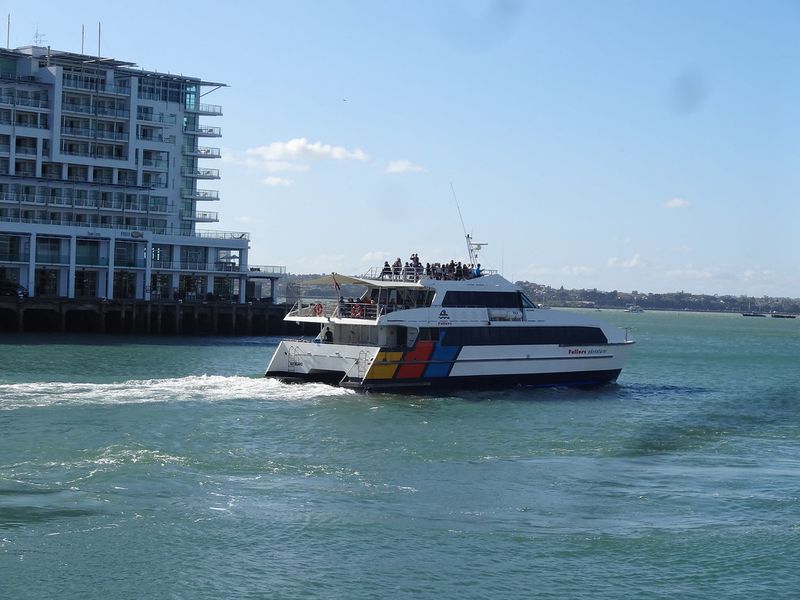
Waiheke Island is only 35 minutes from downtown Auckland by ferry, but it operates on a completely different energy. The city’s buzz fades the moment the boat pulls away from the terminal, replaced by the low hum of an engine and the very real feeling that a proper escape is underway.
Fullers360 and Island Direct run regular services, and the route is easy to book. Once on the island, vineyards, beaches, and olive groves are all within easy reach.
Waiheke has quietly developed a reputation as one of the best wine destinations in New Zealand, which is saying something in a country full of excellent wine destinations.
The ferry ride itself is a genuine pleasure. Auckland’s harbor is wide and busy, with the city skyline visible behind you as the island’s green hills come into focus ahead.
It is the kind of journey where you realize the transition between city and island is exactly half the appeal. Grab a window seat.
San Francisco to Sausalito, California, USA
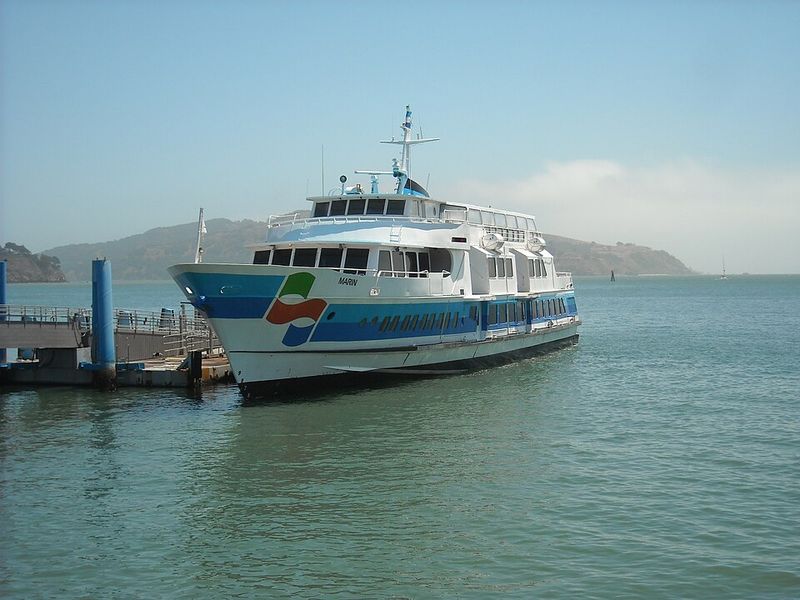
The Golden Gate Ferry’s Sausalito route is the kind of trip that makes San Francisco visitors wonder why they ever considered taking a rideshare instead. The boat departs from the Ferry Building, which is already one of the best spots in the city, and immediately heads out across the bay with the Golden Gate Bridge sitting right there on the horizon.
On a clear day, the views are almost comically good. The city recedes behind you, Alcatraz floats off to one side, and Sausalito’s hillside homes start appearing ahead like a postcard that got very ambitious.
The crossing takes about an hour, which is the perfect amount of time to decompress.
Sausalito itself is a charming waterfront town with galleries, seafood restaurants, and a houseboat community that is equal parts eccentric and wonderful. Most visitors arrive by ferry and immediately understand why.
The approach by water, with the hills and the bay and the light all working together, is genuinely hard to top.
Alaska Marine Highway, Inside Passage, USA
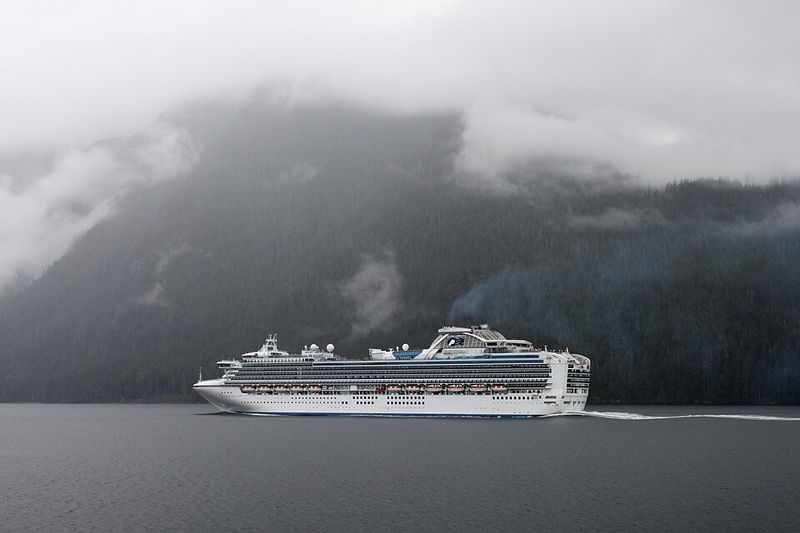
The Alaska Marine Highway is not a ferry ride. It is a ferry expedition.
Stretching over 3,500 miles and serving more than 30 communities, this state-run system is how Alaska moves, especially in coastal areas with no road connections. For travelers, it is one of the most spectacular and underrated journeys in North America.
The Inside Passage route is the crown jewel, threading through fjords, past glaciers, and alongside old-growth forests that make the rest of the world look underdeveloped. Bald eagles are a regular sightline.
Whales show up often enough to keep everyone on deck. The scenery does not really let up.
Passengers can book cabins or bring sleeping bags and claim deck space for longer legs. Some travelers spend days onboard, hopping between ports and treating the ferry as a floating base camp.
This is the kind of journey where the boat is genuinely the destination, and the ports are just bonus content.
Naples to Capri, Italy
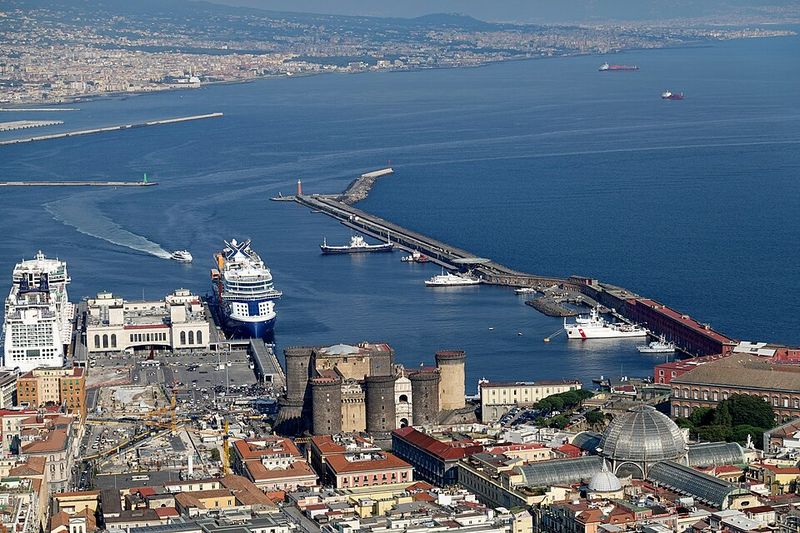
Capri has been drawing visitors for centuries, and the smartest ones have always arrived by boat. The ferry from Naples crosses the Gulf of Naples in about an hour, and the approach to the island builds a kind of anticipation that no airport arrival could ever replicate.
The cliffs get taller, the water turns colors it has no business being, and then suddenly Capri is right there.
Multiple operators run Naples to Capri service daily, with both standard ferries and faster hydrofoils available. The slower ferry is worth choosing at least once, simply because it gives you more time on the water with the island growing ahead of you.
Arriving at the Marina Grande by sea is the classic Capri entrance, and it sets the tone for everything that follows. The island is glamorous, crowded, and wildly beautiful.
But before all of that, there is the ferry ride, which is already doing plenty of the heavy lifting. Start the trip right.
Piraeus to Santorini, Greece
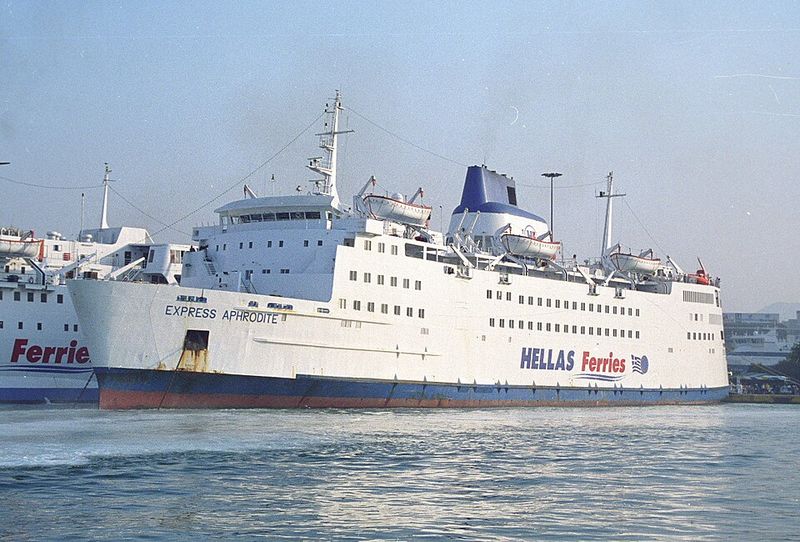
Flying into Santorini gets you there faster. Taking the ferry from Piraeus gets you there better.
The overnight or daytime crossing from Athens’ main port to Santorini is a slow-burn approach to one of the Mediterranean’s most famous destinations, and that slowness is entirely the point.
Greek ferries are large, social, and full of people heading to the islands for very good reasons. Deck seating fills up fast when the weather cooperates, and watching the Cycladic islands appear and disappear on the horizon becomes a quiet obsession.
Each one looks like a postcard. Each one is different.
The arrival at Santorini’s port, nestled inside the ancient caldera, is something that photos genuinely cannot prepare you for. The volcanic cliffs rise up on all sides, the whitewashed villages cling to the rim above, and the whole thing feels theatrical in the best possible way.
Flying over that entrance would be a genuine waste. Come by sea, always.
Bergen to Stavanger, Norway
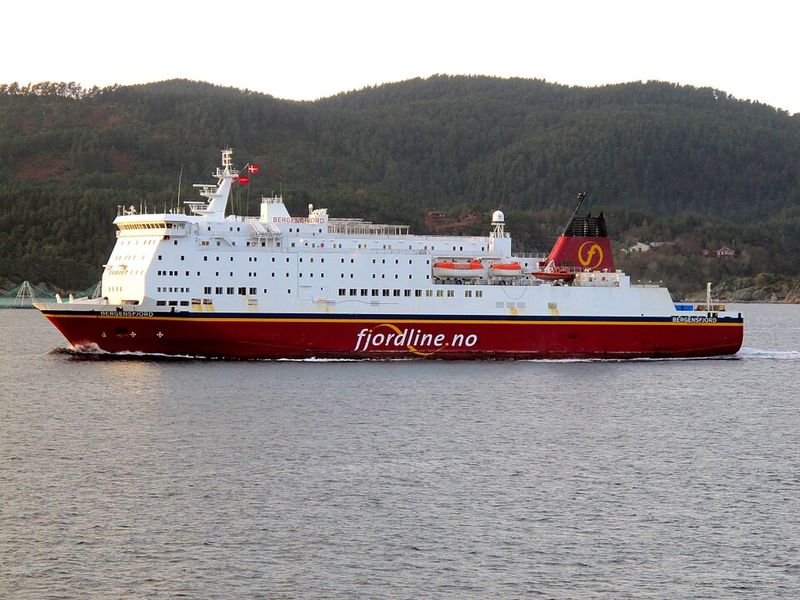
Norway has a habit of making even practical travel feel like a scenic detour. The Fjord Line service between Bergen and Stavanger is a solid example of this national tendency.
The route connects two of western Norway’s most visited cities, but the sailing itself cuts through coastal scenery that refuses to be ignored.
Bergen is already one of Europe’s most atmospheric port cities, and leaving it by sea gives you a long, slow goodbye that the city thoroughly deserves. The route then hugs Norway’s rugged western coastline, where the landscape alternates between open sea and sheltered inlets with the kind of dramatic indifference that Norwegian geography specializes in.
Stavanger, at the other end, is the gateway to Preikestolen and the Lysefjord, two of Norway’s most iconic natural sights. Arriving by ferry rather than by road or air means the fjord-country mood is already well-established before you even set foot on shore.
The crossing primes you perfectly for everything that comes next.
Share this story