Somewhere beneath your feet, history has been hiding. Long before skyscrapers and suburbs, ancient people were building entire cities downward, carving rooms, tunnels, and chapels straight into the earth.
Some of these underground worlds sheltered thousands of people from wars and harsh climates. Others were sacred spaces, salt mines, or Cold War bunkers that most travelers walk right past without a clue.
Derinkuyu, Turkey: A Whole City Straight Into the Earth
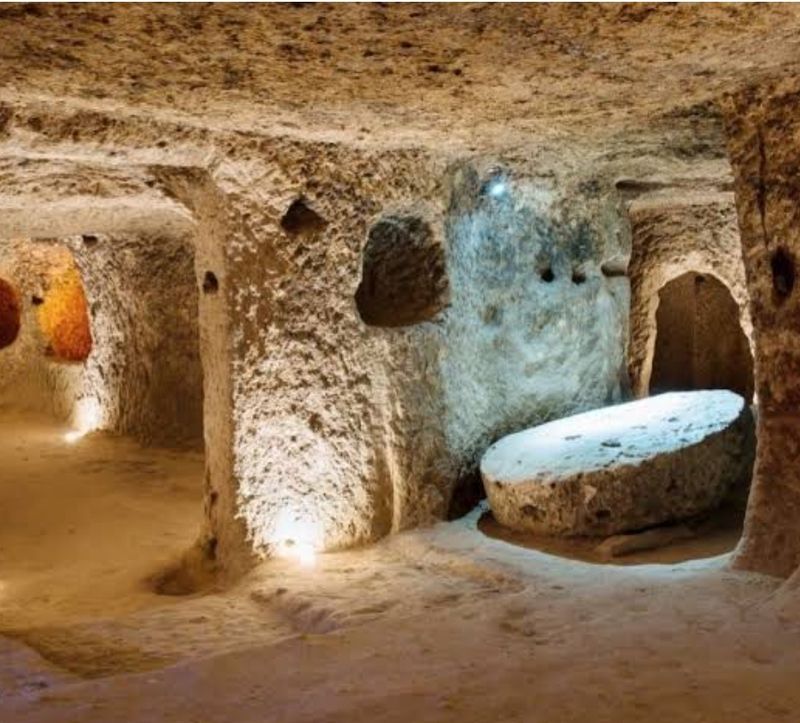
Derinkuyu does not mess around. This underground city in Cappadocia, Turkey, drops roughly 85 meters straight down into the earth, making it one of the deepest ancient underground settlements ever discovered.
That is about as tall as a 28-story building, just flipped upside down.
What really blows minds is the engineering. The city features ventilation shafts, storage rooms, stables, and massive stone doors that could seal off entire sections from the inside.
It could shelter around 20,000 people, plus their animals and food supplies.
I once read about the stone doors and spent ten minutes just staring at my apartment door feeling deeply inadequate. Historians believe it was used as a refuge during invasions.
The city was rediscovered in 1963 when a local man knocked down a wall and found a hidden room. Talk about a home renovation surprise.
Kaymaklı, Turkey: Cappadocia’s Wide Underground Maze
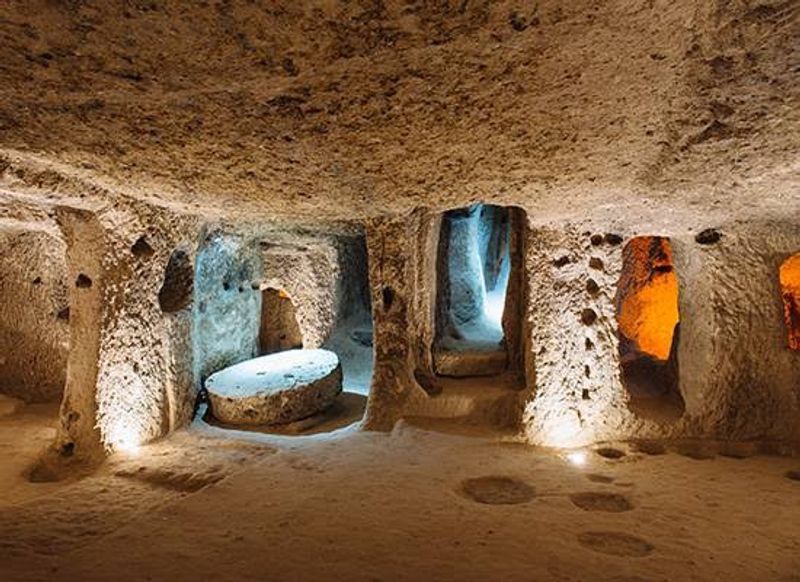
Kaymaklı is Derinkuyu’s neighbor, and honestly, it has serious sibling rivalry energy. While Derinkuyu goes deep, Kaymaklı goes wide.
It spreads out horizontally beneath the Cappadocian landscape in a sprawling maze that still has not been fully explored.
Turkey’s Ministry of Culture and Tourism confirms that four floors have been uncovered so far, and the site is considered one of the largest underground cities in the region by sheer width. The tunnels are low and narrow, so tall visitors get an unexpected core workout just moving around.
Each level had a specific purpose: stables, storage, kitchens, and even a winery. Yes, someone figured out how to make wine underground.
Priorities were clearly in order. Only a portion of Kaymaklı is open to visitors today, which means most of this ancient labyrinth is still sitting in the dark, waiting for someone curious enough to explore it.
Naours, France: Where WWI Soldiers Left Their Names Forever
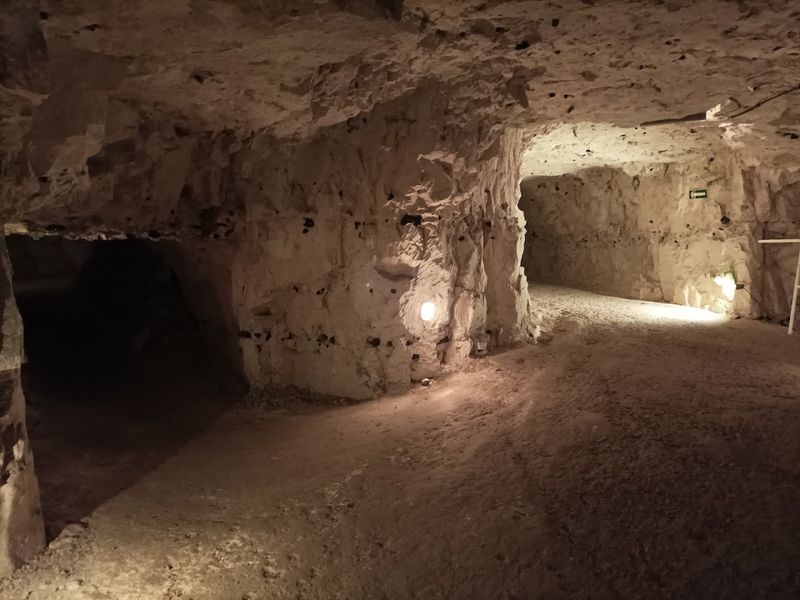
The Underground City of Naours, tucked beneath the Somme region of northern France, has a feature no other underground city on this list can claim: thousands of World War I soldier signatures carved directly into the walls. Troops sheltering there left their names, hometowns, and dates behind like the world’s most emotional guest book.
The network stretches through hundreds of rooms and galleries, originally carved by monks centuries before the war ever started. When the conflict rolled through, soldiers found the tunnels and made themselves at home underground, away from the chaos above.
Walking through Naours today feels like reading letters that were never sent. Some inscriptions are neat and careful.
Others look rushed, like someone was in a hurry to be remembered. The site is now a tourist attraction, and those carved names still stand as one of the most quietly powerful war memorials in all of Europe.
Wieliczka Salt Mine, Poland: A Cathedral Made of Salt
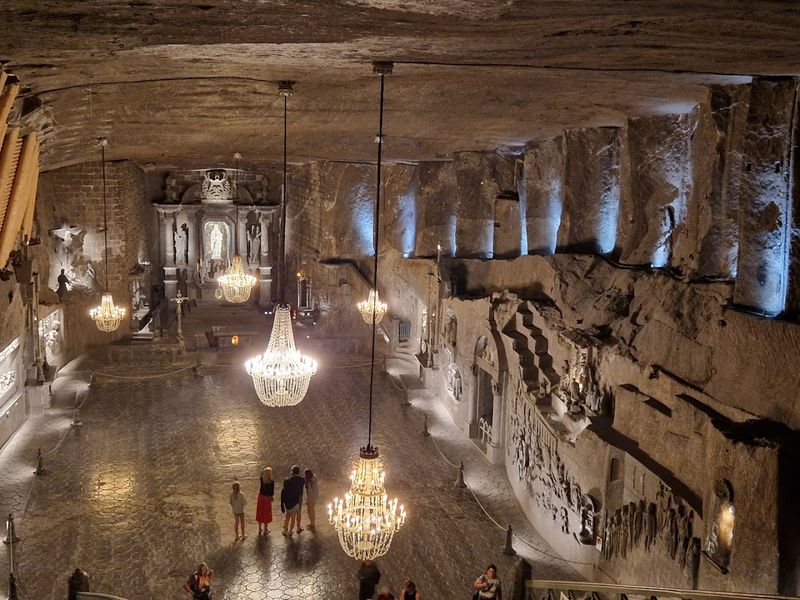
Everything in the Wieliczka Salt Mine is made of salt. The floors, the walls, the chandeliers, the sculptures, and even the stunning St. Kinga’s Chapel deep underground are all carved from salt.
Miners spent centuries turning a working salt mine into an underground art gallery, and the result is jaw-dropping.
Located near Kraków, Poland, Wieliczka is a UNESCO World Heritage Site and one of the oldest operating salt mines in the world. It has been mined continuously since the 13th century.
The chapel alone took 30 years to complete and features a salt-carved replica of Leonardo da Vinci’s Last Supper on the wall.
Visitors descend around 135 meters underground to explore the galleries and chambers. The air down there is actually considered good for respiratory health, which is a bonus nobody expects from a salt mine.
Mass is still held in St. Kinga’s Chapel regularly, making it one of the most unique active churches on earth.
Orvieto, Italy: The City With a Secret City Below
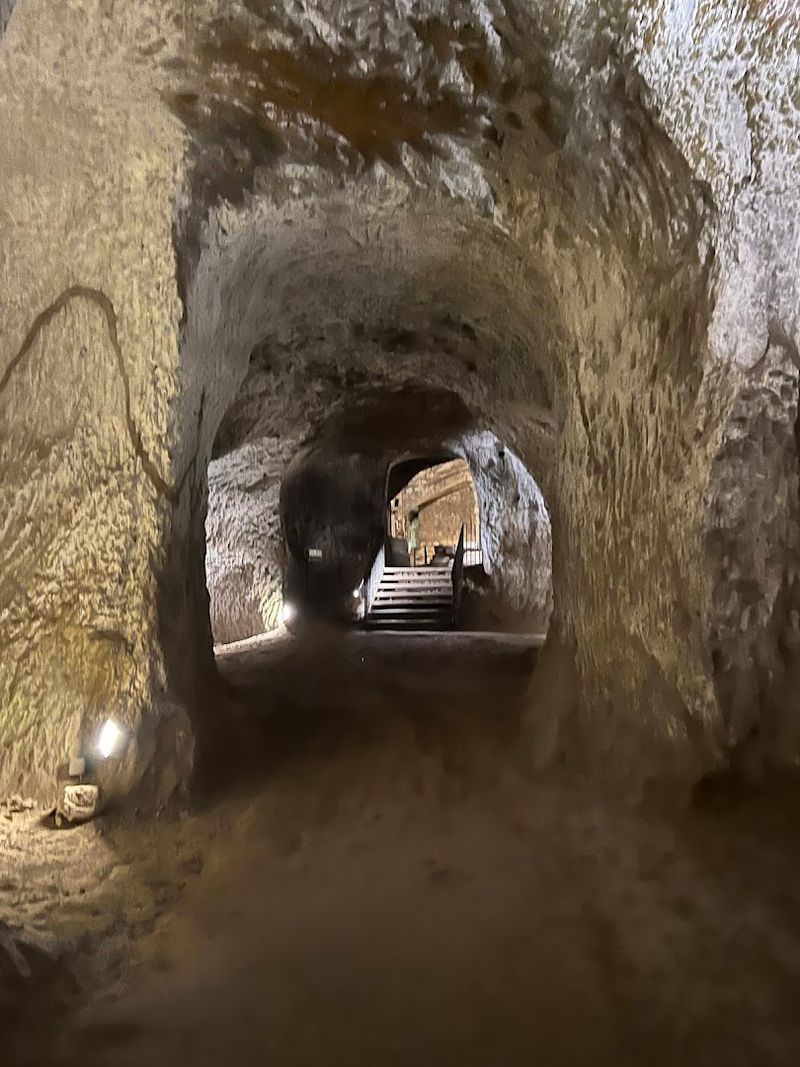
Orvieto sits on top of a massive chunk of tufa rock in central Italy, and beneath the entire city is a second city that most tourists never see. Centuries of digging created a labyrinth of wells, caves, tunnels, and storage rooms that run under the streets like a secret skeleton.
The showstopper is Pozzo di San Patrizio, or St. Patrick’s Well, built in the 1500s by order of Pope Clement VII. The well features two separate spiral staircases that wind around each other without ever meeting.
Donkeys carrying water could go down one staircase and come up the other without crossing paths. Ancient traffic management at its finest.
The underground spaces below Orvieto were used for everything from olive oil storage to pigeon farming. Yes, pigeon farming.
The city above is beautiful, but the city below tells a far stranger, more fascinating story that most visitors completely miss while eating pasta upstairs.
Lalibela, Ethiopia: Churches Carved Downward Into Rock
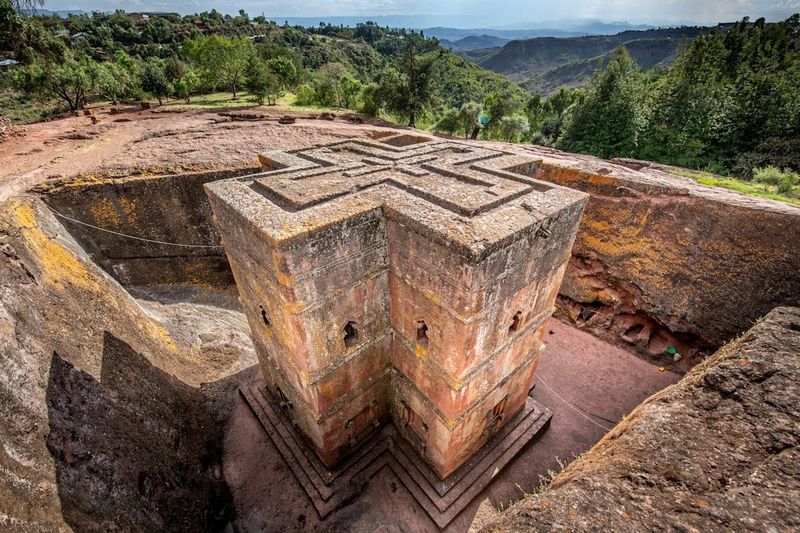
Most churches are built upward. Lalibela’s 11 famous rock-hewn churches were carved downward, straight into the living volcanic rock of the Ethiopian highlands.
Workers did not assemble these structures, they removed everything that was not a church until a church remained. That is some serious commitment to architecture.
King Lalibela ordered their construction in the 12th century, intending the site to be a “New Jerusalem” for Ethiopian Christians who could not make the pilgrimage to the Holy Land. The layout of the churches actually mirrors the geography of Jerusalem, which is a level of planning that still impresses historians today.
These are not museum pieces. Lalibela is a living, active pilgrimage site where worshippers gather year-round, especially during major Christian festivals.
Priests in white robes carry ancient manuscripts through the carved corridors. The site holds UNESCO World Heritage status, but its real power is that it never stopped being used for exactly what it was built for.
Beijing’s Underground City, China: Cold War Bunker Beneath a Capital
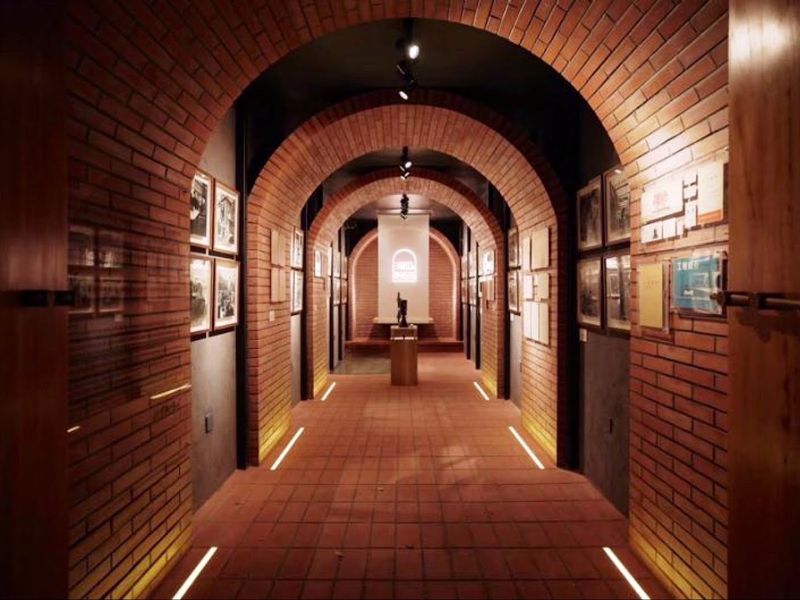
In 1969, with Sino-Soviet tensions at a breaking point, Beijing started digging. Fast.
The result was an enormous civil defense shelter system built beneath the capital, designed to protect residents from potential military attacks. At its peak, the tunnels stretched for miles beneath some of the busiest streets in the world.
The project was reportedly launched under Mao Zedong’s orders, with residents encouraged to help dig. Entire neighborhoods participated in building what was essentially a city beneath their city.
The tunnels included sleeping quarters, storage areas, and even basic facilities for long-term shelter.
For a period, parts of the underground city were open to tourists, offering a genuinely eerie walk through Cold War history. Access has changed significantly over the years, with sections closing and reopening unpredictably.
The bunker was never actually used for its intended purpose, which is both a relief and a little anticlimactic for something built with such urgency.
Pilsen Historical Underground, Czech Republic: Nearly 20 km of Tunnels Under a Beer City
Pilsen, Czech Republic, is internationally famous for one thing: beer. Pilsner lager was literally invented here.
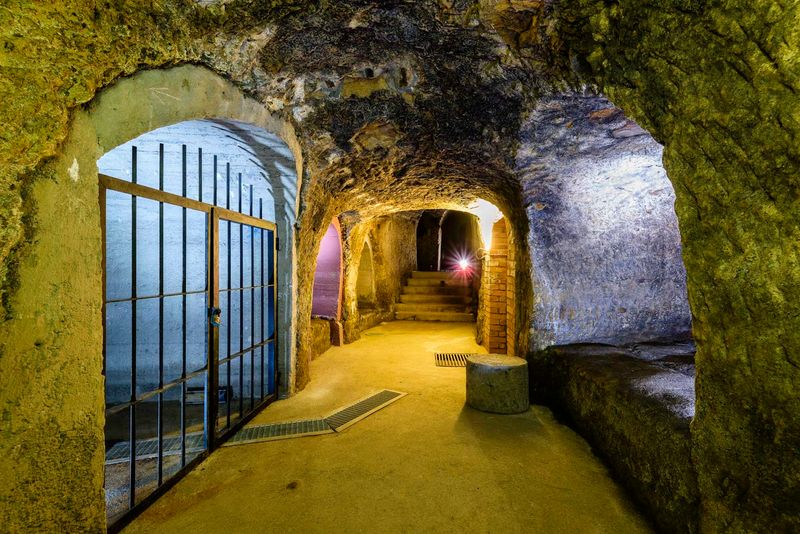
But beneath the cobblestone streets of this proud brewing city runs one of the largest underground complexes in the entire country, and it has nothing to do with beer at all.
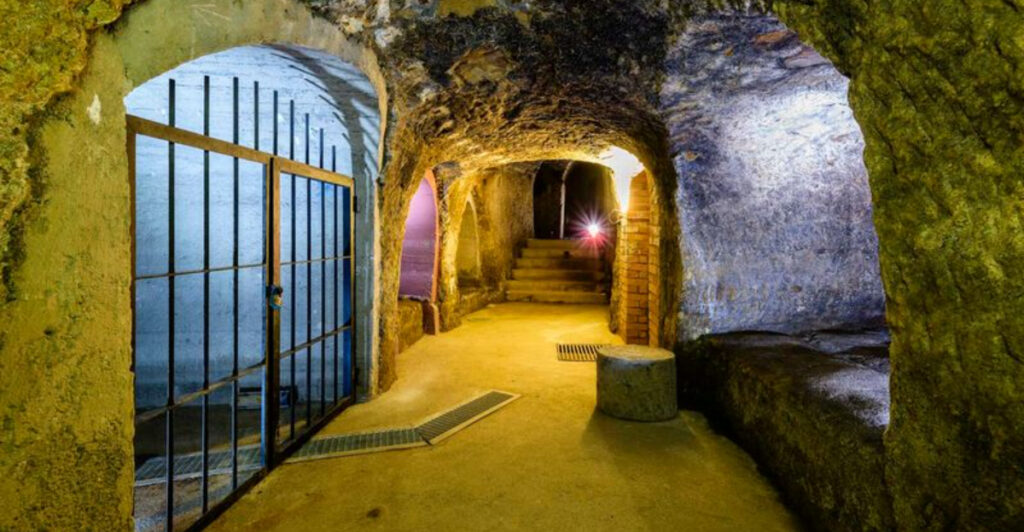
Construction of the tunnels began around the late 13th century, expanding over hundreds of years into a labyrinth of passageways, cellars, and wells stretching nearly 20 kilometers. The underground network was used for food storage, shelter during conflicts, and various other purposes that kept the city functioning through difficult centuries.
Today, guided tours take visitors through the accessible sections, which remain impressively well-preserved. The temperature underground stays consistently cool year-round, which, come to think of it, would have been excellent for storing beer.
The tunnels run directly beneath the city’s historic center, meaning shoppers and tourists above have no idea what is happening just a few meters below their feet.
Edinburgh Vaults, Scotland: The City’s Dark and Storied Underside
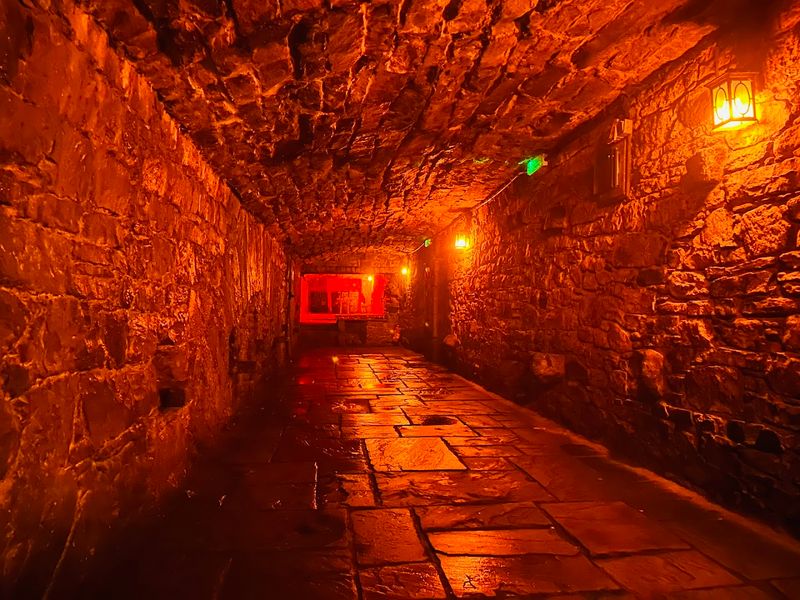
When Edinburgh’s South Bridge was completed in 1788, the arches beneath it created a series of chambers that seemed useful at the time. Tradespeople set up workshops, merchants stored goods, and the vaults hummed with everyday activity.
That respectable beginning did not last long.
As the decades passed, the vaults became associated with poverty and illegal activity. The damp, dark conditions made them unpleasant at best and genuinely grim at worst.
By the 19th century, they had been largely abandoned and sealed off, sitting forgotten under the bridge for nearly 200 years.
Rediscovered in 1985, the vaults are now one of Edinburgh’s most popular tourist attractions and a favorite stop on ghost tours. Stories connecting the vaults to notorious criminals Burke and Hare get repeated constantly, but there is no actual evidence they ever used the space.
The real history is fascinating enough without the embellishments. Edinburgh’s underground is creepy all on its own.
Matmata, Tunisia: Desert-Proof Homes Dug Into the Earth
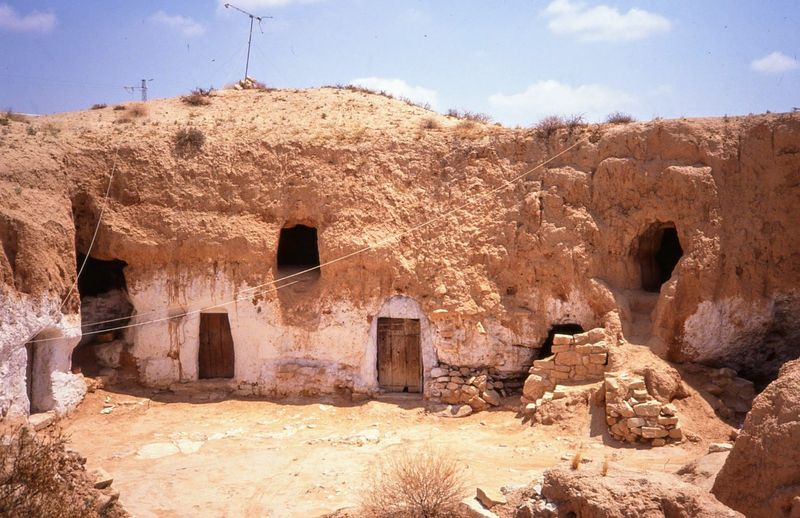
Matmata solved the Saharan heat problem in the most logical way possible: go underground. The Berber inhabitants of this Tunisian village carved their homes directly into the earth, creating sunken courtyards with rooms opening off the sides.
The ground itself became the insulation, keeping interiors cool even when temperatures above ground were scorching.
These troglodyte dwellings are not ancient ruins. Some families still live in them today, continuing a tradition that has kept people comfortable in one of the world’s harshest climates for centuries.
The design is brilliantly simple and remarkably effective.
Matmata also picked up an unexpected fan base in 1976 when George Lucas filmed parts of the original Star Wars there. The Hotel Sidi Driss, a real troglodyte home converted into accommodation, served as Luke Skywalker’s home on Tatooine.
Guests can still stay there today, sleeping in the same carved-earth rooms that appeared on screen. That is one seriously cool hotel origin story.
Coober Pedy, Australia: Where Underground Is Just Normal Life
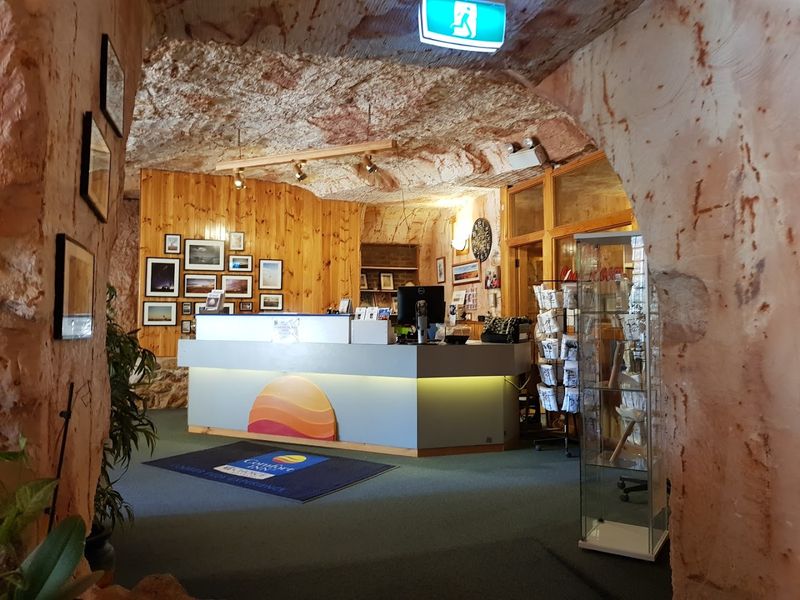
Coober Pedy is not a historical curiosity or an ancient wonder. It is a functioning Australian town where people simply decided that living underground made more sense than suffering through outback summers that regularly hit 50 degrees Celsius.
Hard to argue with that logic.
The town was established after opal discoveries in 1915, and miners quickly realized their dugout shelters were far more comfortable than any surface structure. Underground homes, called dugouts, followed the same principle: carved into the hillside, naturally cool, and remarkably livable.
The town has underground churches, hotels, and even a golf course above ground where players carry their own patches of artificial turf.
Coober Pedy produces a significant portion of the world’s opals, which means this quirky underground town is also quietly powering the global gem trade. The name is thought to derive from Indigenous terms, though sources differ on the exact meaning.
Either way, the place itself is completely one of a kind.
Ozkonak, Turkey: Communication Pipes and Serious Defenses
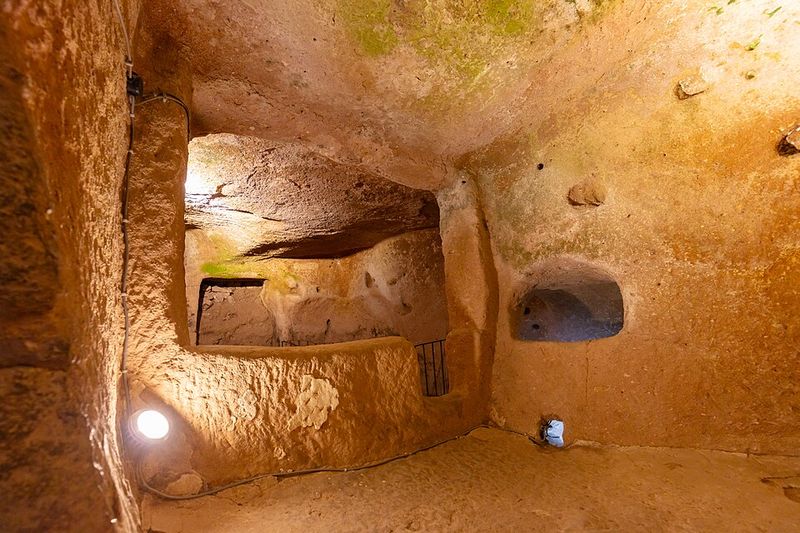
Cappadocia apparently decided that one underground city was not enough, or two, or three. Ozkonak is yet another entry in the region’s impressive collection of subterranean settlements, discovered as recently as 1972 when a local farmer noticed his crops were getting more water than they should.
Investigation revealed an entire underground city beneath the field.
What sets Ozkonak apart from its neighbors is its communication system. The city features small holes bored through the stone between levels, allowing residents to talk to each other or pass liquids between floors without opening the main passages.
It is ancient intercom technology, and it is genuinely clever.
The defensive design is also worth noting. Large stone doors could seal off sections, and the narrow tunnels were designed so attackers could only enter one at a time.
The exact construction date is uncertain, but it fits within the broader Byzantine-era tradition of underground settlements that made Cappadocia famous for all the right reasons.
Hypogeum of Hal-Saflieni, Malta: A Prehistoric Underground Masterpiece
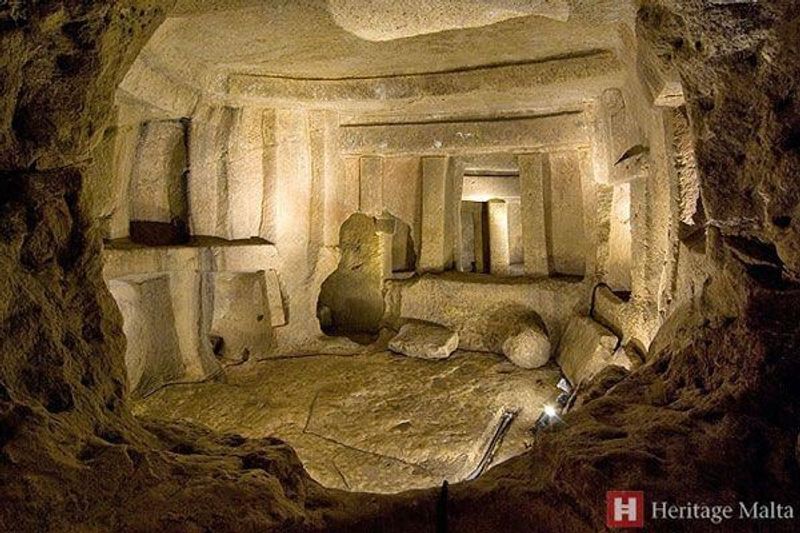
Malta is a tiny island, but it punches well above its weight in ancient wonders. The Hal Saflieni Hypogeum is a UNESCO-listed underground complex carved around 2500 BCE, making it one of the oldest prehistoric underground structures in the entire world.
Workers carved it entirely by hand using stone and antler tools, which is either inspiring or exhausting to think about.
The Hypogeum served first as a sanctuary and later as a burial site. The remains of around 7,000 people were eventually found within its chambers.
The walls retain traces of red ochre paint, and the acoustic properties of certain rooms are remarkable, with sounds resonating in ways that researchers still study today.
Entry is strictly limited to just 80 visitors per day to protect the fragile limestone. Booking in advance is essential, sometimes months ahead.
I tried to get tickets on short notice once and failed completely. The Hypogeum does not care about your schedule.
It has been here for 4,500 years and is not in a rush.
Petra, Jordan: Water Engineering Hidden Under the Stone
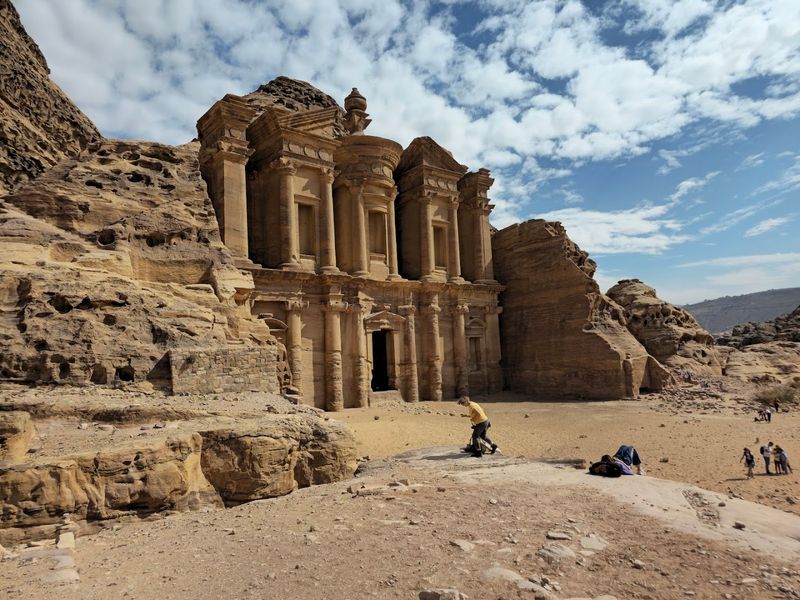
Everyone knows Petra for its stunning carved facades, the Treasury, the Monastery, the rose-red cliffs that glow at sunset. Fewer people know that beneath and around those famous structures lies one of the ancient world’s most sophisticated water engineering systems.
UNESCO highlights the remains of dams, tunnels, channels, reservoirs, and cisterns that the Nabataean people built to manage water in an extremely arid desert environment. They captured every drop of rainfall, redirected flash floods, and stored water reserves that kept a major city alive in conditions that should have made settlement nearly impossible.
The water system is not just impressive for its time. It is impressive by any standard.
Engineers today still study the Nabataean approach to water management as a model for sustainable desert living. Petra’s rock-cut architecture gets all the fame, but the real genius of the city runs quietly through its carved channels and hidden cisterns, doing the unglamorous work that kept everything else standing.
Share this story