American zoos are home to some of the most fascinating creatures on the planet, and many of them are animals most people have never even heard of. From prehistoric-looking birds to tiny primates with oversized eyes, the variety is truly remarkable.
Whether you are a lifelong animal lover or just looking for a fun day out, these animals are guaranteed to make your jaw drop. Get ready to meet 15 of the coolest animals you can spot at zoos across the United States.
1. Okapi
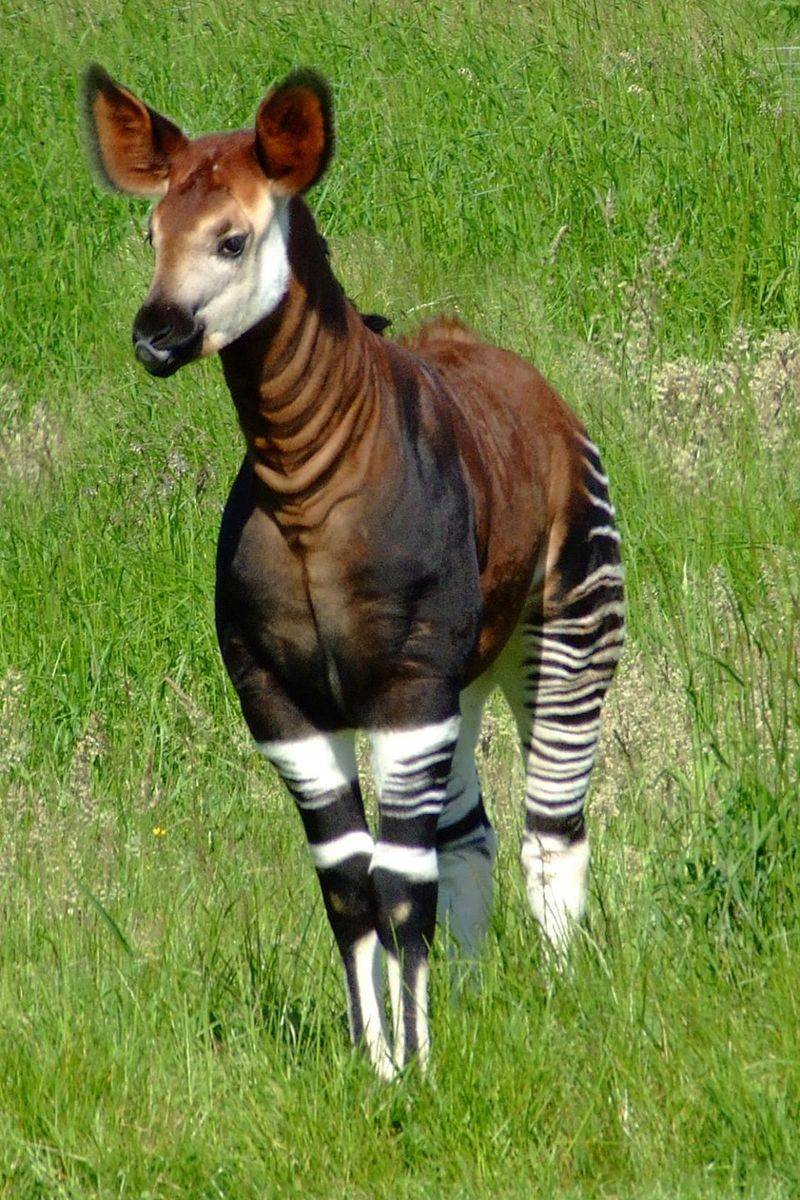
At first glance, the okapi looks like nature could not make up its mind. It has the long neck of a giraffe, the striped legs of a zebra, and the body of a horse, yet it is actually the giraffe’s only living relative.
This strange combination makes it one of the most visually striking animals in any zoo.
Native to the dense rainforests of the Democratic Republic of Congo, okapis are so secretive that scientists did not formally describe them until 1901. They are rarely spotted in the wild, which makes seeing one at a zoo like San Diego or the Bronx Zoo feel genuinely special.
Their dark, velvety coats and striped hindquarters are not just for looks. The markings help young okapis follow their mothers through dim forest light.
These animals are calm, curious, and absolutely unforgettable once you see them in person.
2. Axolotl
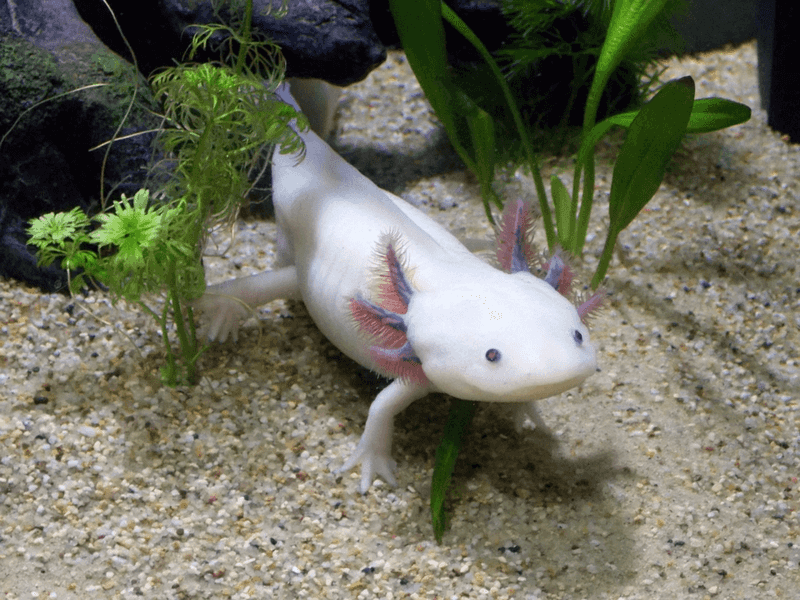
Few animals on Earth look as cheerful as the axolotl. With its permanent wide smile and feathery pink gills fanning out from its head, this aquatic salamander seems almost cartoon-like.
It is no surprise that it has become one of the most beloved creatures on the internet and in zoos alike.
What makes the axolotl truly extraordinary is its biology. Unlike most amphibians, it never fully transforms into an adult form, staying in its juvenile, water-breathing stage for its entire life.
Even more impressive, it can regrow lost limbs, parts of its heart, and even sections of its brain.
San Antonio Zoo is one of the places where visitors can see these remarkable animals up close. Native to a single lake system in Mexico, axolotls are critically endangered in the wild, making zoo populations incredibly important for conservation efforts worldwide.
3. Red Panda
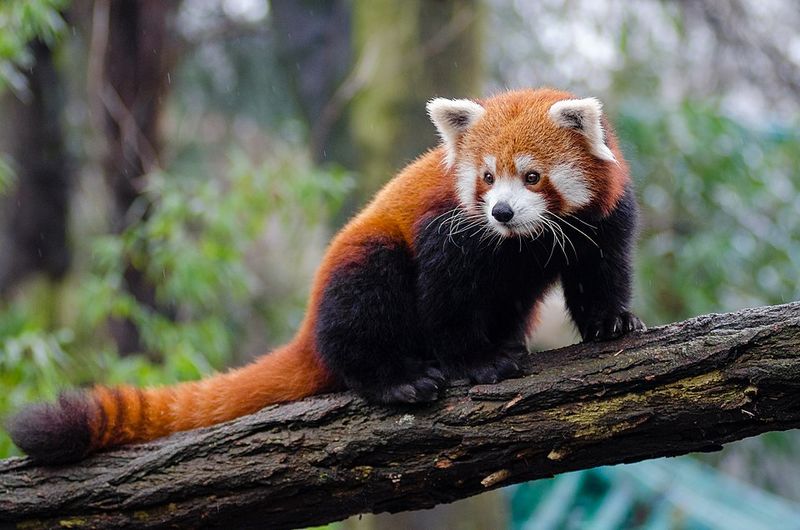
Rusty red fur, a bushy ringed tail, and a face that looks borrowed from a raccoon, the red panda is practically designed to be adored. Despite sharing a name with the giant panda, these two animals are not closely related at all.
Red pandas belong to their own unique family, Ailuridae, making them one of a kind.
Found across temperate forests in the eastern Himalayas and southwestern China, red pandas spend most of their time in trees, using their sharp claws to climb with ease. They have a special wrist bone that works almost like a thumb, helping them grip bamboo while they eat.
The Smithsonian National Zoo in Washington, D.C., is one of the best places in the country to see them. Watching a red panda curl its tail around itself like a blanket on a chilly day is one of those zoo moments you never forget.
4. Komodo Dragon
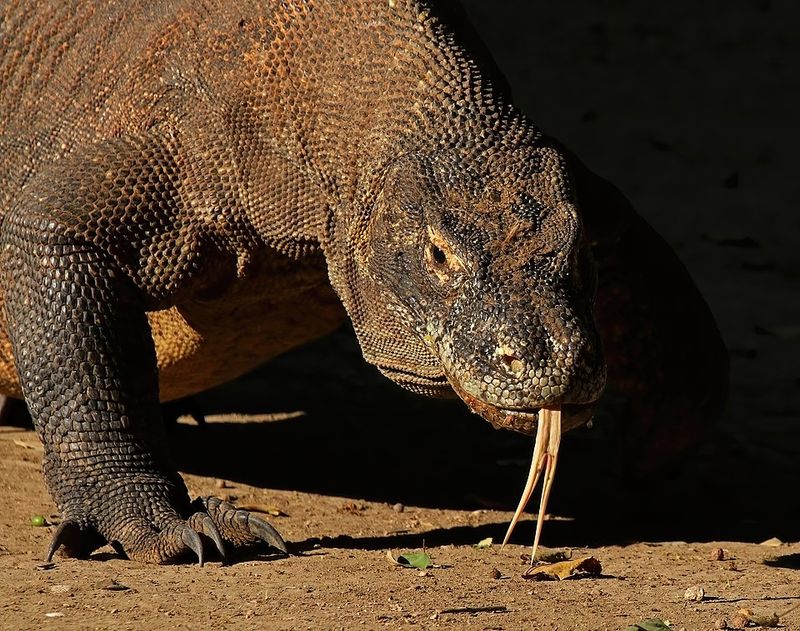
The Komodo dragon does not need a dramatic introduction. As the world’s largest living lizard, stretching up to ten feet long and weighing over 150 pounds, it commands attention the moment it enters your field of vision.
There is something almost prehistoric about watching one move with slow, deliberate power.
These reptiles are native to a handful of Indonesian islands, where they sit at the top of the food chain. Their hunting ability is formidable.
Scientists once believed their saliva alone was deadly, but research has since confirmed they also possess venom glands that prevent blood from clotting in prey.
Both the Smithsonian National Zoo and the San Diego Zoo house Komodo dragons, giving visitors a rare chance to see them safely. Zoos also play a role in breeding programs that help protect this vulnerable species.
Seeing one flick its yellow forked tongue is something that stays with you.
5. Shoebill Stork
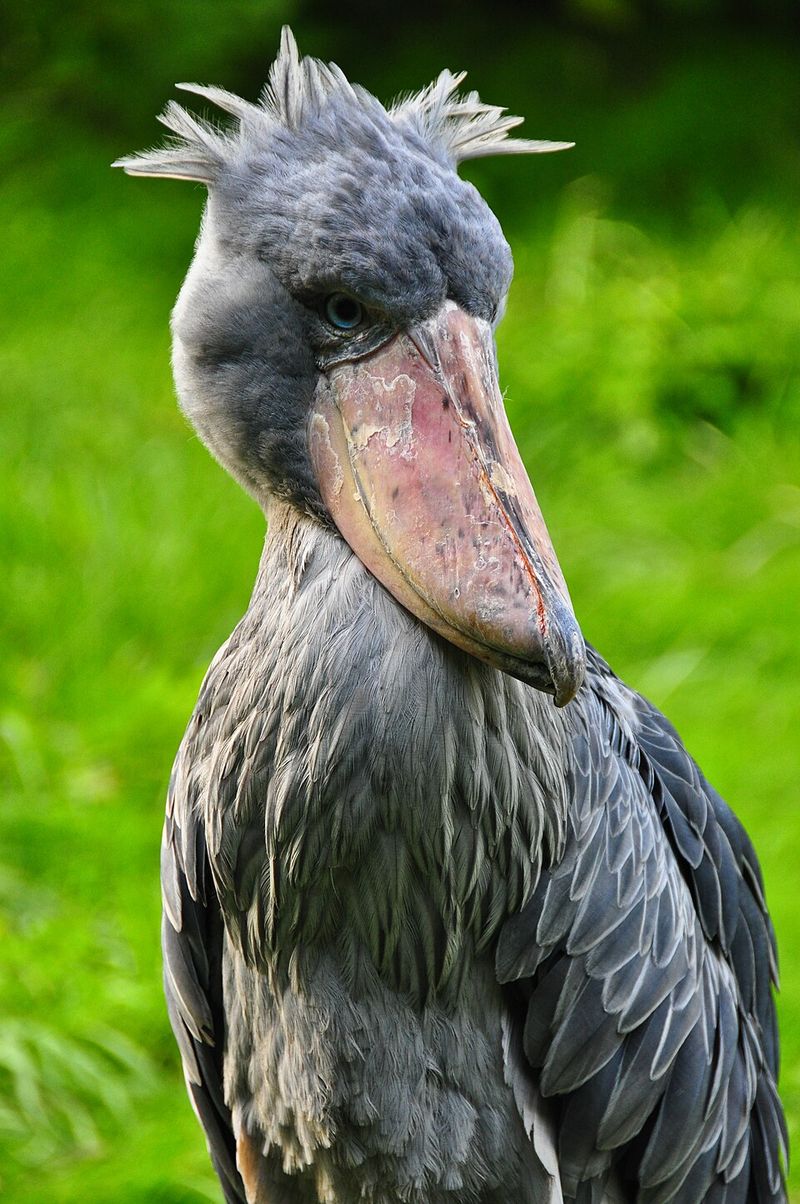
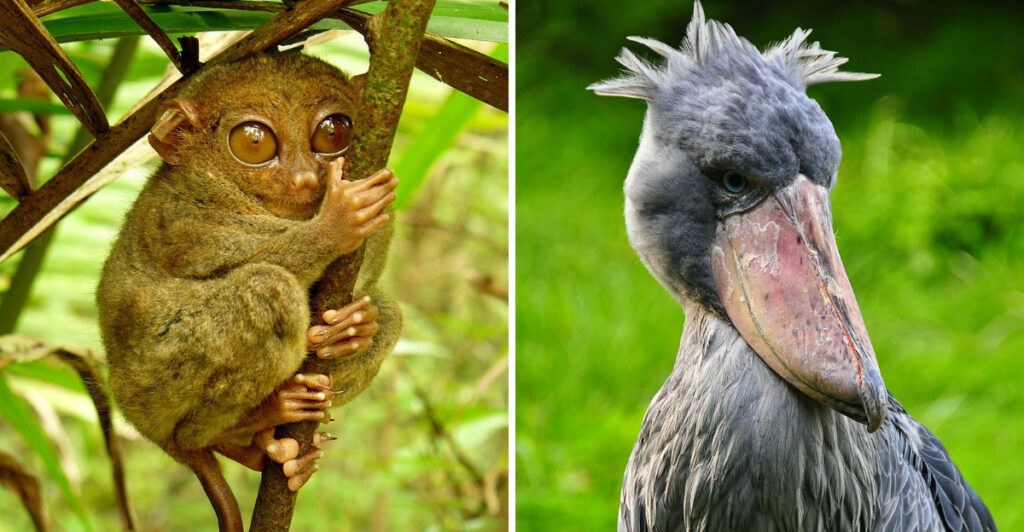
Standing nearly five feet tall with a bill that genuinely resembles a wooden clog, the shoebill stork looks like it stepped out of the Cretaceous period. Its unblinking yellow eyes and habit of staying perfectly motionless for long stretches give it an eerie, statue-like quality that unnerves and fascinates visitors in equal measure.
Native to the swamps of central and eastern Africa, shoebills use their massive bills to snatch lungfish, baby crocodiles, and other prey from shallow water. The bill snaps shut with surprising force, making it one of the most effective hunting tools in the bird world.
Tampa’s Lowry Park Zoo is among the U.S. facilities that have housed this extraordinary bird. Because shoebills are classified as vulnerable in the wild, zoo sightings offer a rare opportunity to observe them closely.
Once you lock eyes with a shoebill, you will understand why it has such a devoted fanbase.
6. Fennec Fox
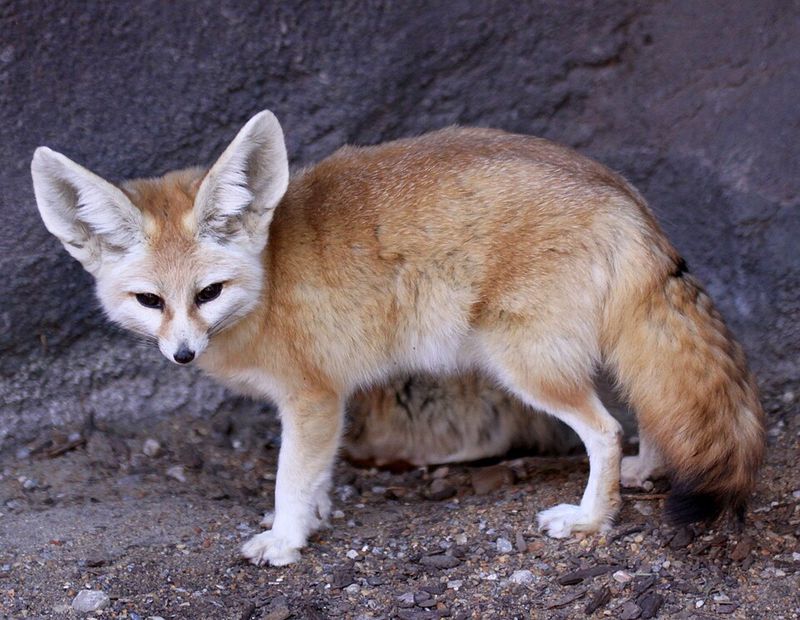
Imagine a fox that fits in the palm of your hand, equipped with ears so enormous they seem borrowed from a much larger animal. That is the fennec fox, and it is every bit as charming in real life as it looks in photos.
Weighing less than four pounds, it holds the title of the world’s smallest canid.
Those spectacular ears are not just for show. They serve a dual purpose: radiating body heat to keep the fennec cool in its native Sahara Desert habitat, and picking up the faint sounds of insects and small prey moving underground.
Their hearing is so sharp they can detect movement beneath the sand.
San Diego Zoo is one of the top spots to see fennec foxes in the United States. Visitors are often surprised by how energetic and playful these little foxes are.
Their nocturnal nature means evening zoo events sometimes offer the best viewing opportunities.
7. Snow Leopard
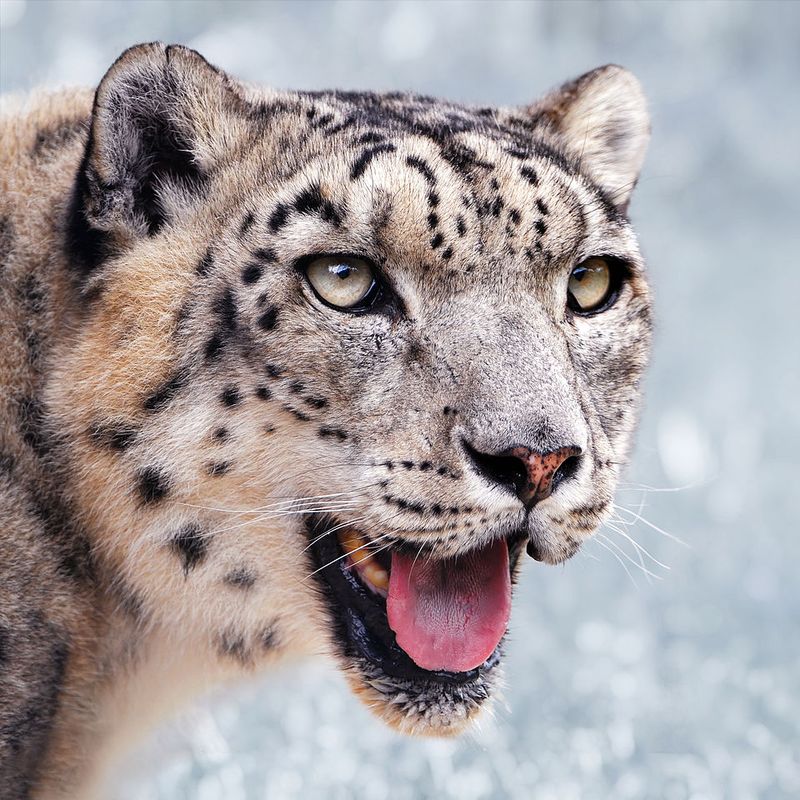
There is a reason the snow leopard is often called the ghost of the mountains. In the wild, these cats inhabit the remote, rocky ranges of Central Asia at elevations above 10,000 feet, and they are so elusive that even experienced researchers rarely spot one.
Seeing a snow leopard at a zoo feels like catching a glimpse of something mythical.
Their physical adaptations are extraordinary. A snow leopard’s thick, smoke-gray coat provides insulation against extreme cold, while its oversized paws act like natural snowshoes.
That famously long, thick tail is not just beautiful; it doubles as a warm wrap around the face during frigid nights.
The Bronx Zoo and Central Park Zoo both maintain snow leopard exhibits. Conservation programs at these institutions support efforts to protect wild populations, which number fewer than 7,000.
Watching one pad silently across its enclosure is a reminder of just how breathtaking the natural world can be.
8. Naked Mole-Rat
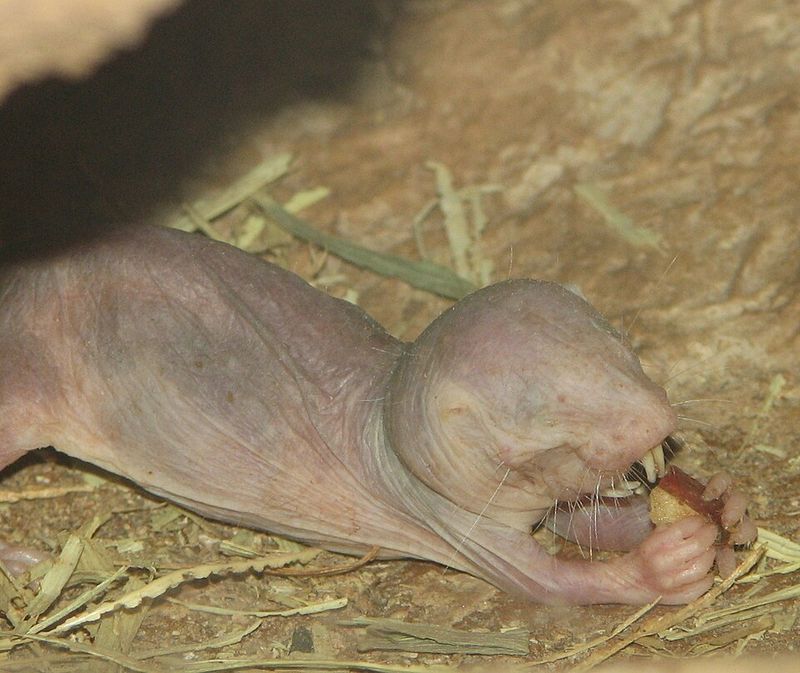
Wrinkled, nearly hairless, and perpetually squinting, the naked mole-rat is not winning any beauty contests. But what it lacks in conventional cuteness, it more than makes up for in sheer biological amazement.
This small rodent from East Africa is one of the most scientifically studied animals on the planet, and for good reason.
Naked mole-rats live in underground colonies led by a single breeding queen, much like ants or bees. They are cold-blooded for a mammal, feel almost no pain from certain stimuli, and have demonstrated a striking resistance to cancer.
Researchers are actively studying their cells in hopes of unlocking new medical treatments for humans.
The Smithsonian National Zoo in Washington, D.C., helped make these animals famous through their popular tunnel exhibit. Watching an entire colony bustle through clear acrylic tubes is oddly mesmerizing.
They may not be cuddly, but naked mole-rats are undeniably one of the coolest animals you will ever encounter.
9. Gharial
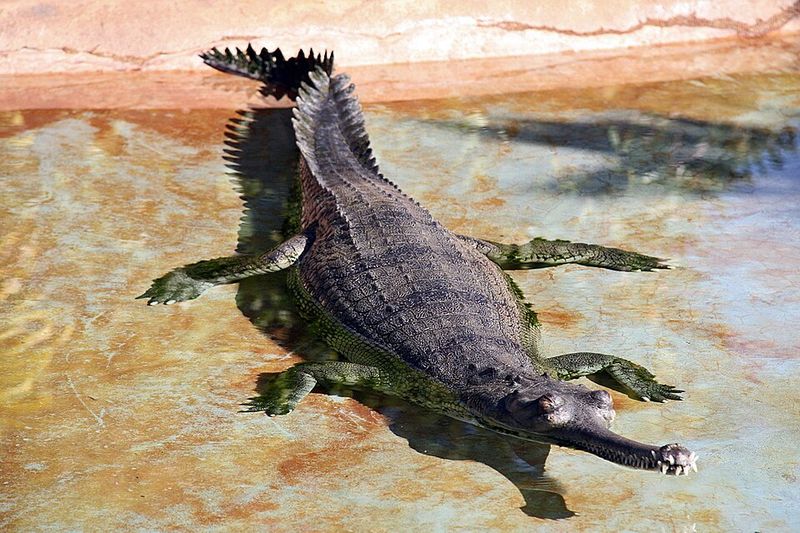
Among the world’s crocodilians, nothing looks quite like the gharial. Its snout is impossibly long and narrow, lined with over 100 interlocking teeth perfectly designed for snagging slippery fish.
Adult males develop a bulbous growth at the tip of their snout called a ghara, which they use to produce buzzing sounds and visual signals during mating season.
Native to the river systems of the Indian subcontinent, gharials are critically endangered, with wild populations numbering in the hundreds. Their specialized anatomy makes them poor walkers on land, but in the water they are graceful, powerful swimmers.
They pose virtually no threat to humans.
The Bronx Zoo is one of the rare U.S. facilities that has housed gharials, offering visitors an up-close look at this unusual reptile. Seeing one stretch out in the water, all narrow snout and ancient stillness, is a humbling reminder of how diverse life on Earth truly is.
10. Binturong (Bearcat)
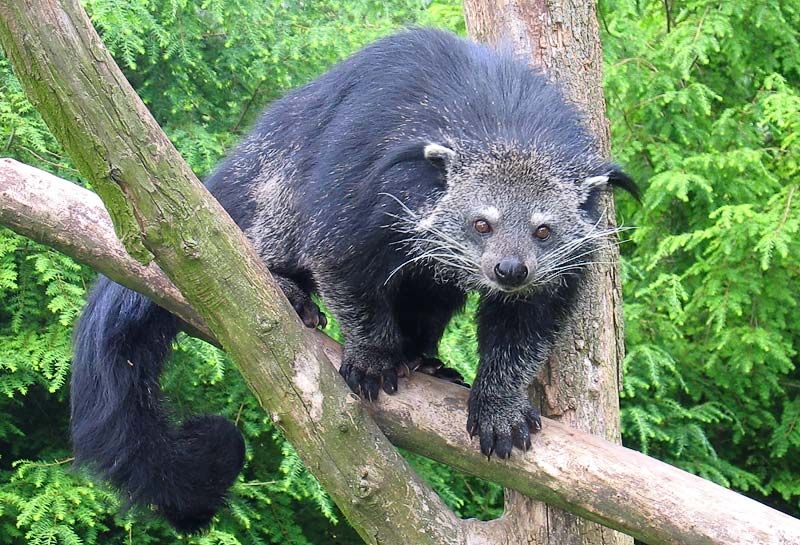
Walk past a binturong enclosure and your nose will know before your eyes do. This shaggy, slow-moving mammal from Southeast Asia produces a natural scent that smells remarkably like buttered popcorn, a result of a chemical compound in its urine.
It is one of the most unusual and delightful surprises any zoo visit can offer.
Despite its nickname, the bearcat is not related to bears or cats. It belongs to the family Viverridae, making it a distant cousin of civets and genets.
Binturongs are one of only two carnivores with a fully prehensile tail, which they use like a fifth limb to anchor themselves in the forest canopy.
San Diego Zoo is among the facilities where visitors can encounter this quirky arboreal mammal. Binturongs move with a deliberate, rolling gait and tend to be most active at night.
They are surprisingly affectionate animals with a personality that feels more like a dog than a wild creature.
11. Aye-Aye
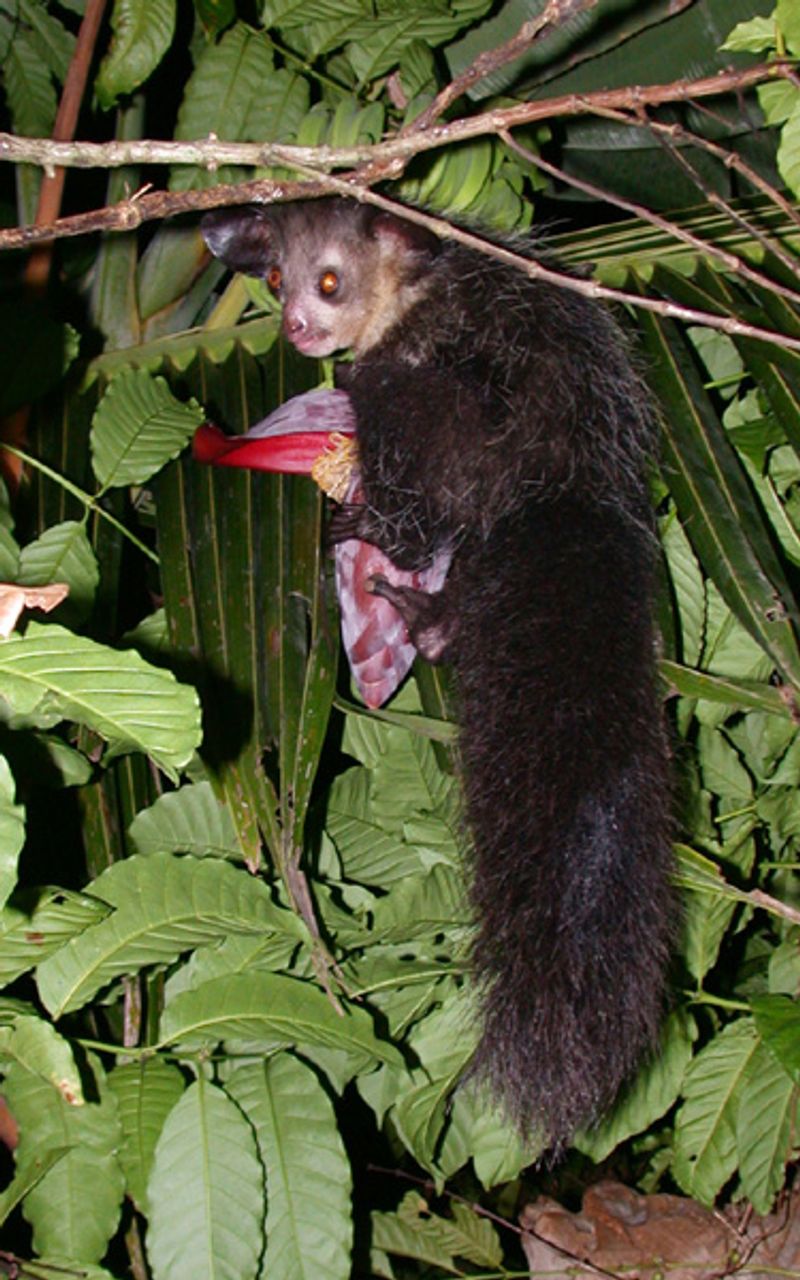
If you designed an animal specifically to look like it came from a fantasy novel, you might end up with something close to the aye-aye. This nocturnal primate from Madagascar has enormous amber eyes, bat-like ears that swivel independently, and one bizarrely elongated middle finger it uses to tap on wood and listen for hollow spaces where insects hide.
That tapping behavior, called percussive foraging, is unique among primates. Once the aye-aye detects a grub beneath the bark, it gnaws through the wood and hooks the insect out with that specialized finger.
It fills the same ecological niche as a woodpecker, despite being a mammal.
The Duke Lemur Center in North Carolina is the best place in the United States to see aye-ayes. A handful of other specialized facilities also house them.
Sadly, in Madagascar, aye-ayes are considered bad omens by some communities, adding cultural pressure to their conservation challenges. They are truly one of a kind.
12. Maned Wolf
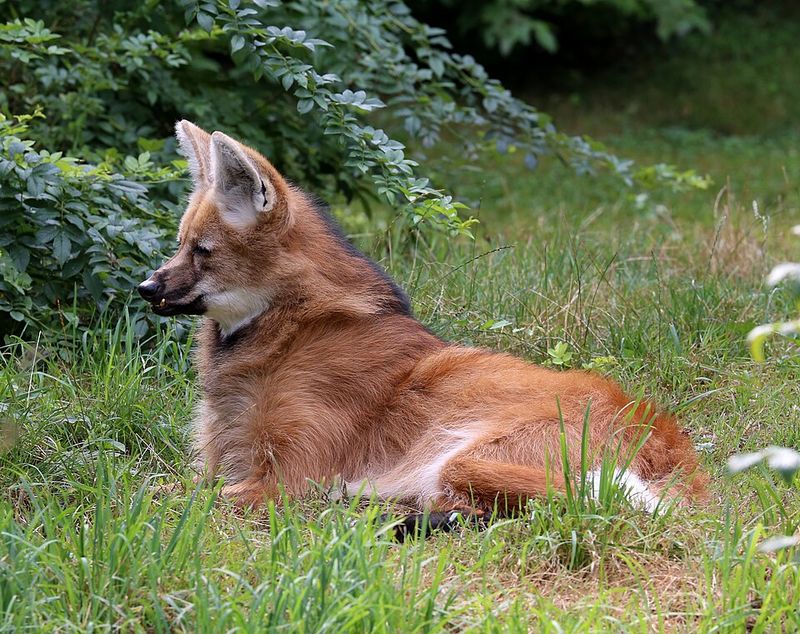
Picture a red fox that somehow grew legs twice as long as normal, and you are getting close to what the maned wolf looks like. This South American canid stands about three feet tall at the shoulder, earning it the affectionate nickname fox on stilts.
Despite its fox-like appearance, it is not closely related to foxes or wolves at all.
Those remarkable long legs evolved to help the maned wolf see over the tall grasses of the Brazilian cerrado, a vast tropical savanna. It is also a surprisingly omnivorous animal, with nearly half its diet consisting of fruit.
One fruit it particularly favors, the wolf apple, is so important to the plant that the maned wolf is considered a key seed disperser.
The Saint Louis Zoo and the Smithsonian National Zoo are both excellent places to observe these elegant, unusual canids. Their quiet, solitary nature and striking silhouette make them one of the most photogenic animals at any zoo.
13. Leafy Sea Dragon
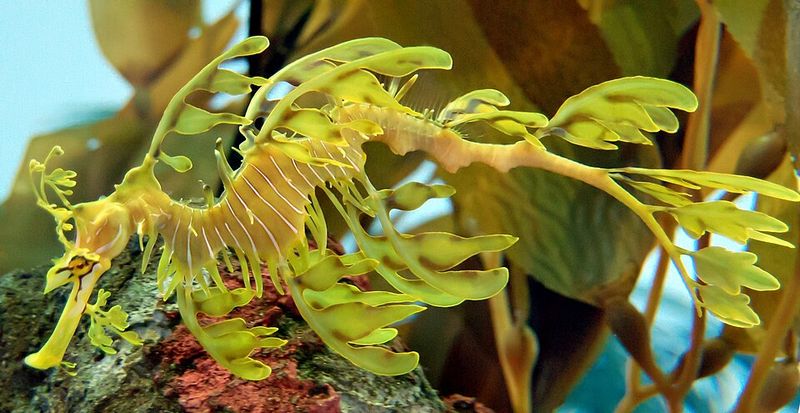
Floating through an aquarium tank like a living piece of drifting seaweed, the leafy sea dragon is one of the ocean’s most spectacular masters of disguise. Every part of its body is adorned with elaborate, leaf-shaped appendages that mimic kelp so convincingly that predators routinely swim right past without noticing it.
It is one of nature’s most elegant camouflage systems.
Related to seahorses, leafy sea dragons are found in the cool coastal waters off southern Australia. Like their seahorse cousins, it is the male that carries the eggs, attached to a specialized patch on his tail.
They are delicate creatures with no teeth, feeding exclusively on tiny shrimp and plankton.
The Monterey Bay Aquarium in California is one of the premier places in the United States to see leafy sea dragons in a well-designed habitat. Watching one drift silently through the water, barely distinguishable from the plants around it, is a genuinely magical experience that stays with visitors long after they leave.
14. Tarsier
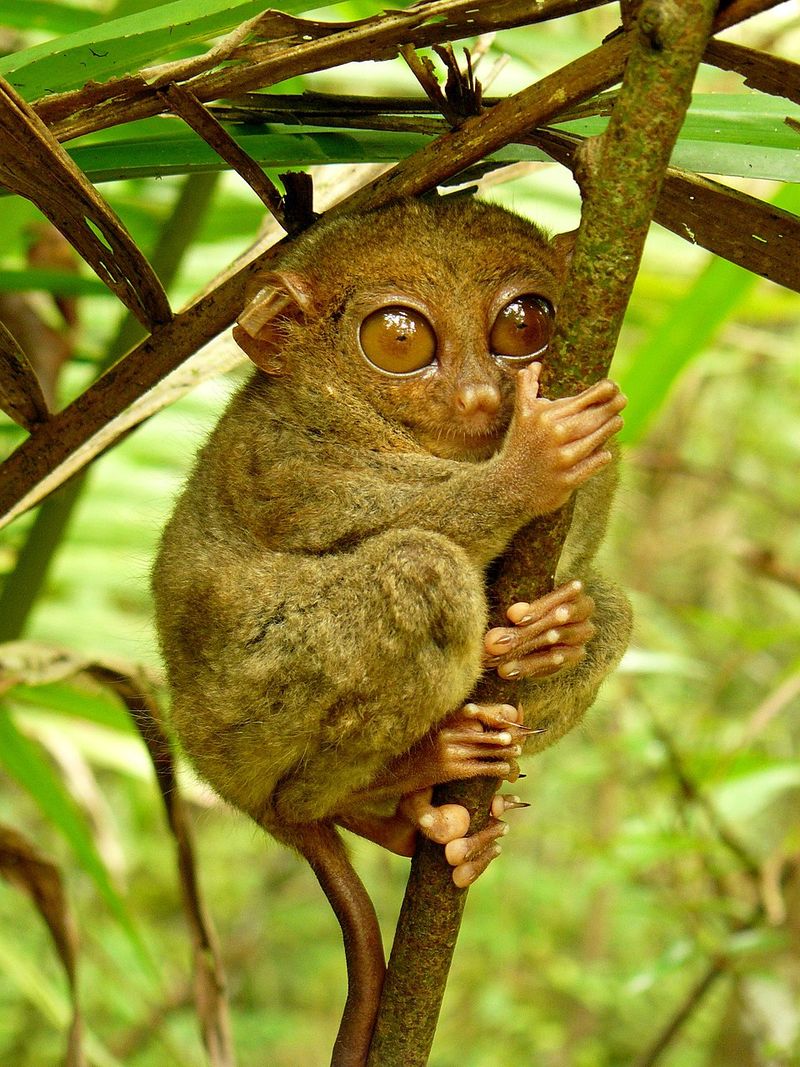
Each of a tarsier’s eyes is roughly the same size as its entire brain. Let that sink in for a moment.
These tiny primates, weighing barely more than a golf ball, possess the largest eyes relative to body size of any mammal on Earth. Those eyes cannot move in their sockets at all, so tarsiers compensate by rotating their heads up to 180 degrees to look around.
Native to the islands of Southeast Asia, tarsiers are entirely carnivorous primates, the only ones known to eat no plant material whatsoever. They hunt insects, lizards, and small birds with extraordinary precision, leaping distances many times their own body length between branches.
Tarsiers are rare in U.S. facilities, but a handful of specialized primate centers occasionally house them. Seeing one in person is a genuinely surreal experience.
Their enormous, luminous eyes and ghostly stillness make them look less like real animals and more like creatures conjured from imagination.
15. African Painted Dog
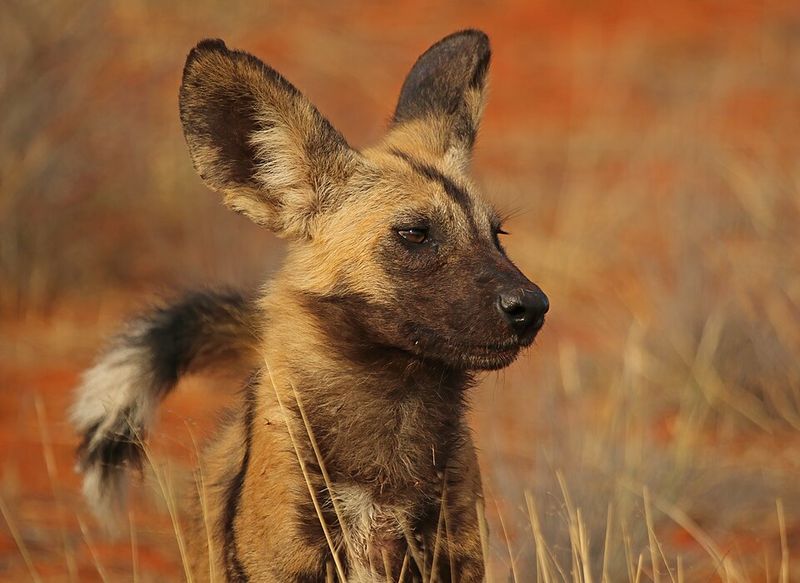
No two African painted dogs wear the same coat. Each animal’s blotchy pattern of brown, black, white, and gold is as unique as a fingerprint, making them one of the most visually striking canids in the world.
But their appearance is just the beginning of what makes them extraordinary.
These dogs are widely considered Africa’s most successful large predators, with hunt success rates that can exceed 80 percent, far outpacing lions and leopards. Their secret is teamwork.
Painted dogs hunt in coordinated packs, communicate with a range of vocalizations and body signals, and even care for injured or elderly pack members.
Zoo Miami and the San Diego Zoo both offer excellent exhibits where visitors can observe painted dogs interacting as a social unit. Watching a pack greet each other with frantic, joyful energy before a run is one of the most energetic and heartwarming sights in any zoo.
They are fierce, loyal, and utterly captivating.
Share this story