Some movies are more than entertainment. They shape the way we see the world, tell stories, and understand each other.
Whether you love action, drama, animation, or history, there is something on this list that will stay with you long after the credits roll. These are the films that defined cinema, and if you haven’t watched them yet, now is the perfect time to start.
1. The Godfather (1972)
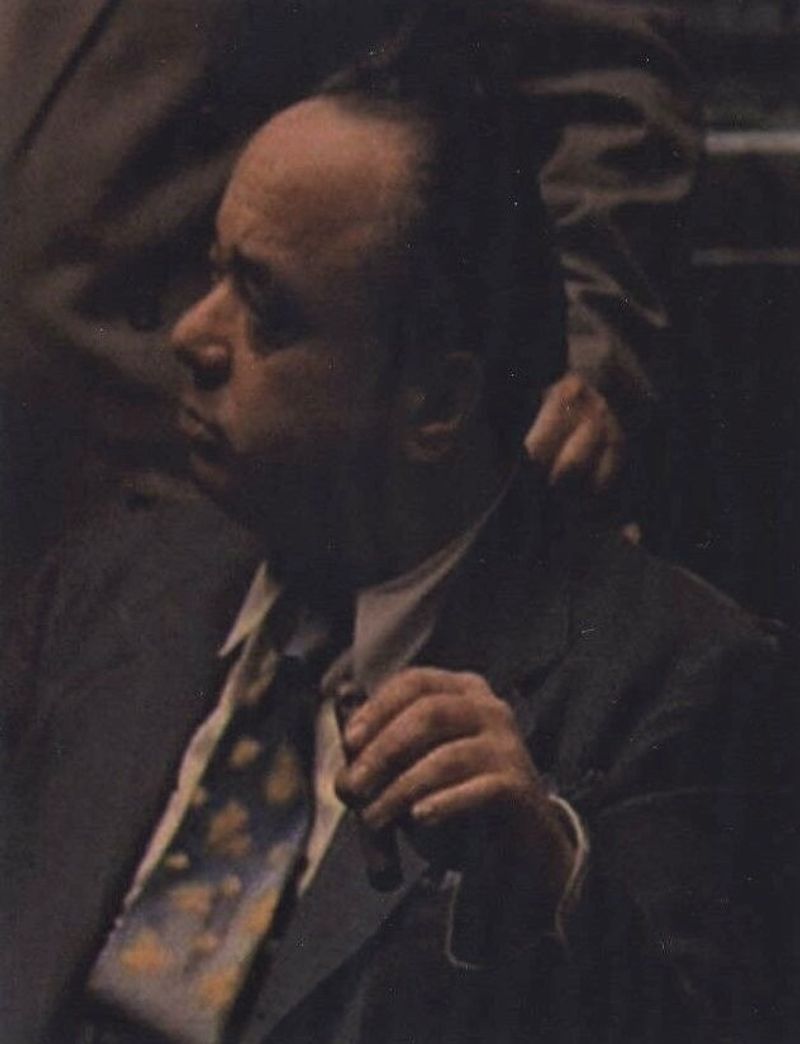
Few films have left a mark on storytelling quite like this one. Released in 1972 and directed by Francis Ford Coppola, The Godfather follows the powerful Corleone family as they navigate loyalty, crime, and consequence.
Marlon Brando’s performance as patriarch Vito Corleone became one of the most iconic in film history.
The movie won three Academy Awards, including Best Picture, and was based on Mario Puzo’s bestselling novel. What makes it so remarkable is how it turns a crime story into something deeply human.
You end up caring about characters who make morally complicated choices.
Even decades later, the film feels fresh and relevant. Its dialogue, pacing, and visual style have influenced countless movies, TV shows, and even pop culture references.
Watching it feels less like viewing an old film and more like reading a great novel for the first time.
2. Citizen Kane (1941)
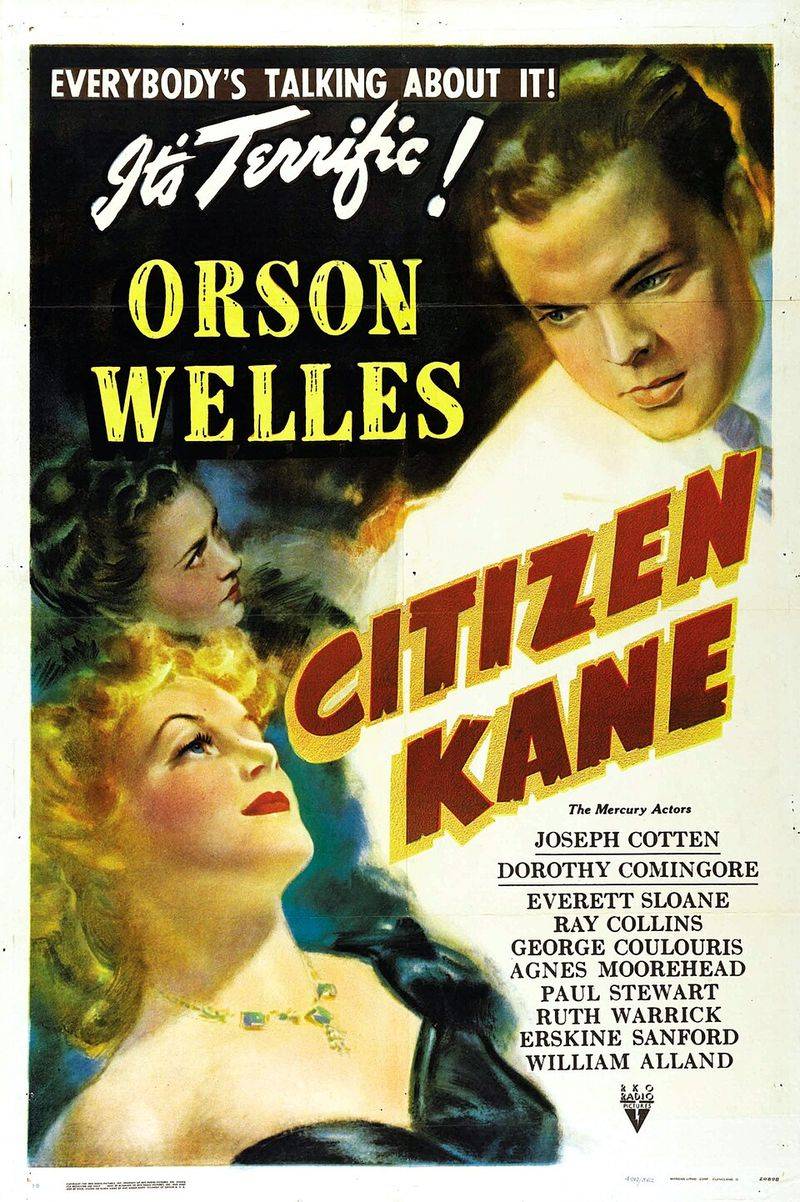
Orson Welles was only 25 years old when he directed and starred in Citizen Kane, a film that would go on to be called the greatest movie ever made by critics worldwide. That is a bold claim, but it holds up.
The story follows the rise and fall of a media mogul named Charles Foster Kane, told through the memories of people who knew him.
What set this film apart in 1941 was its revolutionary use of camera angles, lighting, and storytelling structure. Welles broke nearly every filmmaking rule of the time, and the result was something audiences had never seen before.
The famous final word of the film, “Rosebud,” has become one of cinema’s greatest mysteries. Even if you already know what it means, watching the story unfold is a genuinely rewarding experience that feels timeless and thought-provoking.
3. Schindler’s List (1993)

Steven Spielberg made many beloved films before 1993, but Schindler’s List stands apart as his most important work. Shot almost entirely in black and white, the film tells the true story of Oskar Schindler, a German businessman who saved the lives of over a thousand Jewish people during the Holocaust.
It won seven Academy Awards, including Best Picture and Best Director, and it remains one of the most emotionally powerful films ever produced. Spielberg chose not to take a salary for the project, calling it “blood money” given the subject matter.
Watching this film is not always easy, but it is absolutely necessary. History lessons can sometimes feel distant, but this movie makes the human cost of hatred and injustice feel immediate and real.
It is a reminder of what storytelling can do when it is used with honesty and courage.
4. Pulp Fiction (1994)

Before Pulp Fiction arrived in 1994, most movies told their stories from beginning to end. Quentin Tarantino threw that idea out the window.
The film jumps between different characters and timelines, weaving together crime, dark humor, and sharp dialogue in a way that felt completely new at the time.
John Travolta, Samuel L. Jackson, Uma Thurman, and Bruce Willis all deliver unforgettable performances.
The movie won the Palme d’Or at the Cannes Film Festival and is widely credited with reviving Travolta’s career after years of smaller roles.
What makes Pulp Fiction so rewatchable is how much you catch on a second or third viewing. Lines you laughed at the first time suddenly mean something different once you understand the full story.
It is clever, bold, and surprisingly funny for a film about crime and consequences. Tarantino at his most confident.
5. The Shawshank Redemption (1994)

Here is a fun fact: The Shawshank Redemption was not a massive hit when it first came out in theaters. It underperformed at the box office.
But something remarkable happened after it hit home video. People watched it, told their friends, and it slowly became the most beloved film on IMDb, where it held the number one spot for many years.
Based on a Stephen King novella, the story follows Andy Dufresne, a banker wrongly convicted of murder, and his friendship with fellow prisoner Red, played by Morgan Freeman. Their bond is the emotional core of the film, and it is genuinely moving without ever feeling manipulative.
The film is ultimately about hope, and it earns every emotional moment it asks of the audience. Whether you are 12 or 60, the ending hits hard every single time.
It is proof that quiet, character-driven storytelling never goes out of style.
6. 2001: A Space Odyssey (1968)
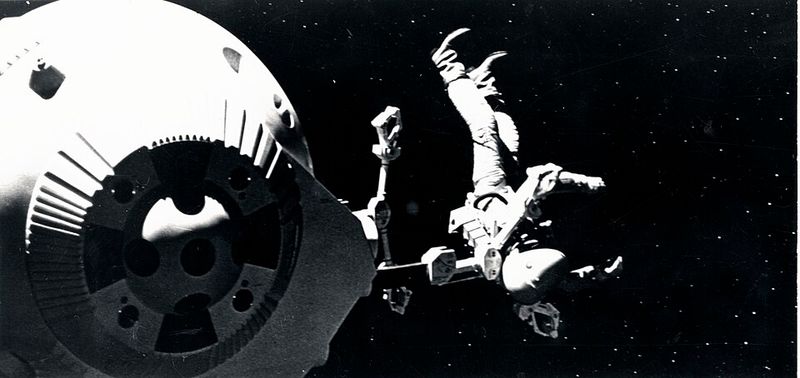
Stanley Kubrick made a film in 1968 that still confuses, inspires, and amazes audiences today. 2001: A Space Odyssey is not a traditional sci-fi adventure with explosions and heroes. It is slow, quiet, and deeply philosophical, asking big questions about human evolution, artificial intelligence, and what lies beyond our understanding.
The film features HAL 9000, one of cinema’s most chilling villains, a computer aboard a spacecraft that begins making unsettling decisions. What makes HAL so scary is how calm and polite he sounds while doing it.
Kubrick worked closely with science fiction writer Arthur C. Clarke to create a story that felt scientifically grounded and visually ahead of its time.
NASA has called the film’s depictions of space travel remarkably accurate for 1968. If you enjoy movies that make you think long after they end, this one will stay with you for days.
7. The Dark Knight (2008)
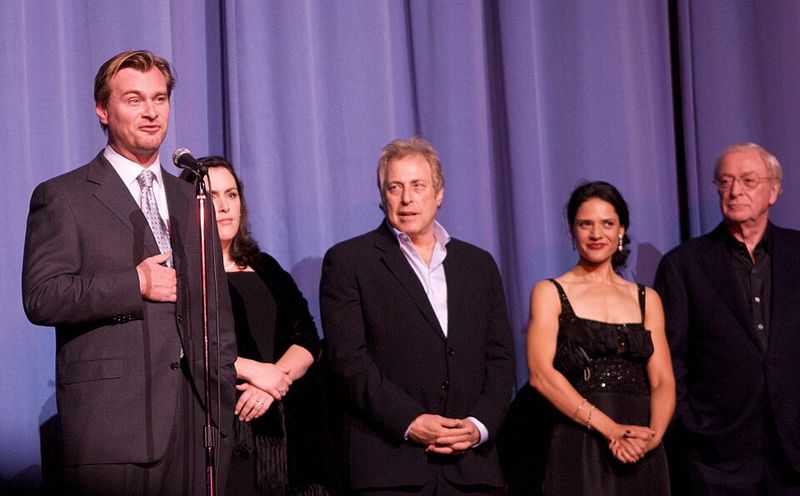
Superhero movies were popular before 2008, but they were rarely taken seriously as cinema. Christopher Nolan changed that with The Dark Knight, a film that feels less like a comic book adaptation and more like a gripping crime thriller set in a corrupt city on the edge of chaos.
Heath Ledger’s portrayal of the Joker is the stuff of legend. He won a posthumous Academy Award for Best Supporting Actor, and every scene he appears in crackles with unpredictable energy.
His performance is widely considered one of the greatest in film history.
The movie asks real questions about justice, fear, and what it costs to protect people who do not always deserve it. Christian Bale, Gary Oldman, and Michael Caine round out a cast that elevates the material at every turn.
This is the film that proved blockbusters can also be genuinely great art.
8. Parasite (2019)

No film in recent memory arrived with the kind of cultural shockwave that Parasite sent through the world in 2019. Directed by Bong Joon-ho, it became the first non-English language film ever to win Best Picture at the Academy Awards, a historic moment that felt long overdue for international cinema.
The story follows two families at opposite ends of the economic spectrum and the strange, darkly comedic, and ultimately terrifying events that bring them together. Calling it a thriller does not quite cover it.
It is also a sharp commentary on class, wealth, and the invisible walls society builds between people.
Bong Joon-ho said he wanted audiences to laugh and then feel uncomfortable about laughing. He succeeded brilliantly.
The film rewards careful attention, and a second viewing reveals layers you almost certainly missed the first time around. It is a masterwork of modern filmmaking by any standard.
9. Forrest Gump (1994)

“Life is like a box of chocolates.” Even people who have never seen Forrest Gump know that line. Released in 1994, the film follows a man with a below-average IQ who, through sincerity, determination, and a remarkable run of luck, manages to witness and accidentally influence some of the biggest moments in American history.
Tom Hanks won his second consecutive Academy Award for the role, and the performance is warm, funny, and surprisingly emotional. The film blends real historical footage with the fictional story in ways that felt groundbreaking at the time.
What keeps Forrest Gump so beloved is its emotional honesty. It never mocks its main character.
It celebrates his perspective as something rare and valuable in a complicated world. Bring tissues.
The scenes involving Jenny and Forrest’s son are the kind that sneak up on you when you least expect it.
10. The Matrix (1999)

The Matrix arrived in 1999 and genuinely changed what audiences expected from action movies. Directed by the Wachowskis, the film introduced a visual technique called bullet time, where the camera appears to move around a frozen moment in slow motion.
Every action film that followed owed something to what this movie pulled off.
But beyond the groundbreaking effects, The Matrix is a genuinely smart science fiction story. Neo, played by Keanu Reeves, discovers that the world he lives in is not real but a computer simulation designed to keep humans passive and controlled.
The question it raises about reality, free will, and identity still sparks debate today.
Philosophy professors have taught courses using this film as a starting point for discussions about consciousness and perception. It is rare for a big-budget Hollywood action movie to hold up that well intellectually.
The sequels have their fans, but the original stands alone as something truly special.
11. Casablanca (1942)
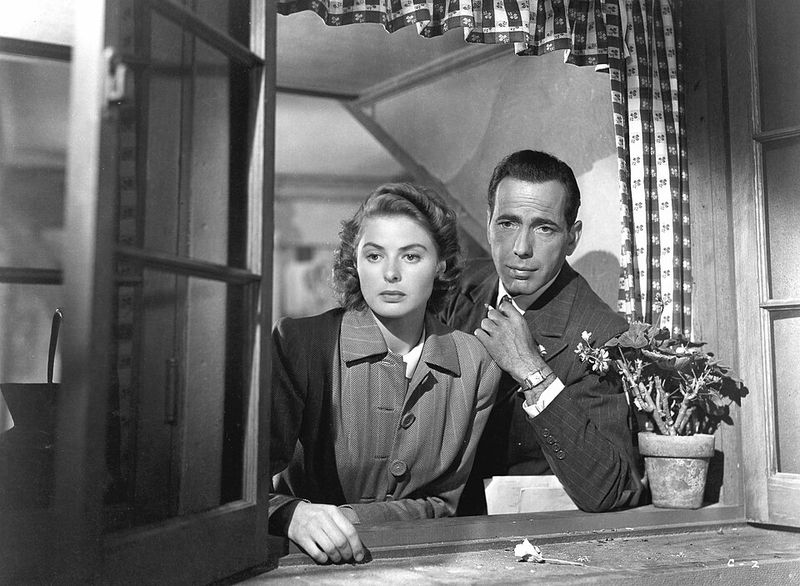
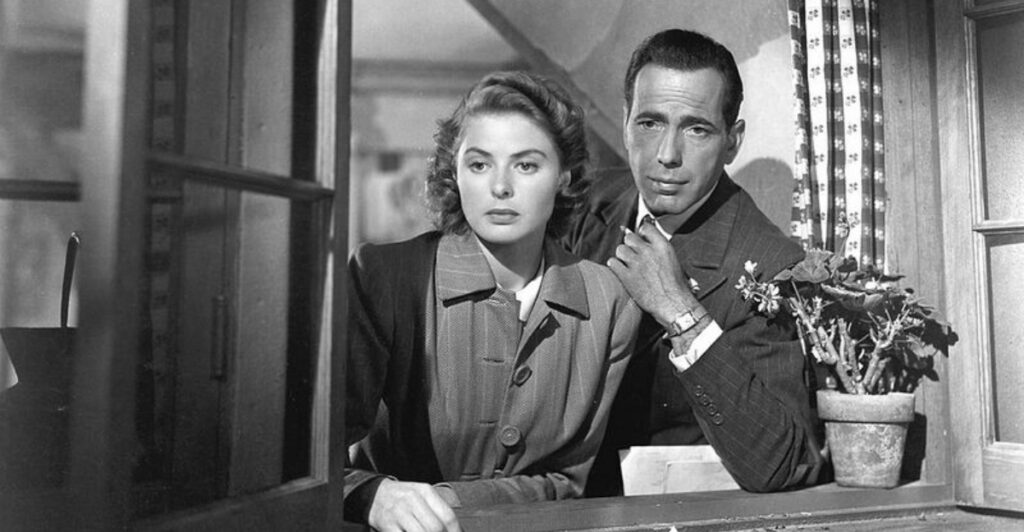
“Here’s looking at you, kid.” Casablanca is the kind of film that gets better every time you watch it. Set during World War II in a Moroccan city full of refugees, spies, and desperate people trying to escape to freedom, the story centers on Rick Blaine, a cynical American nightclub owner played by Humphrey Bogart, and the woman he once loved.
Released in 1942, the film was a wartime production made quickly and without a finished script. Remarkably, it won three Academy Awards including Best Picture and has never stopped being considered one of cinema’s finest achievements.
The chemistry between Bogart and Ingrid Bergman is electric, and the moral weight of the choices their characters make feels genuinely earned. The film manages to be romantic, politically charged, and emotionally satisfying all at once.
For a movie made over 80 years ago, it has aged extraordinarily well.
12. Spirited Away (2001)

Studio Ghibli has made many extraordinary animated films, but Spirited Away holds a place of special honor. Directed by Hayao Miyazaki and released in 2001, it follows 10-year-old Chihiro, who stumbles into a magical spirit world after her parents are transformed into pigs.
To save them, she must work at a mysterious bathhouse run by a powerful witch named Yubaba.
The film won the Academy Award for Best Animated Feature in 2003 and remains the highest-grossing film in Japanese box office history. What makes it extraordinary is how completely it builds its world.
Every background, creature, and character feels specific and alive.
Unlike many animated films aimed at children, Spirited Away does not over-explain its world or talk down to its audience. It trusts young viewers to feel things without having them spelled out.
Adults find just as much to love in it as kids do, often more.
Share this story