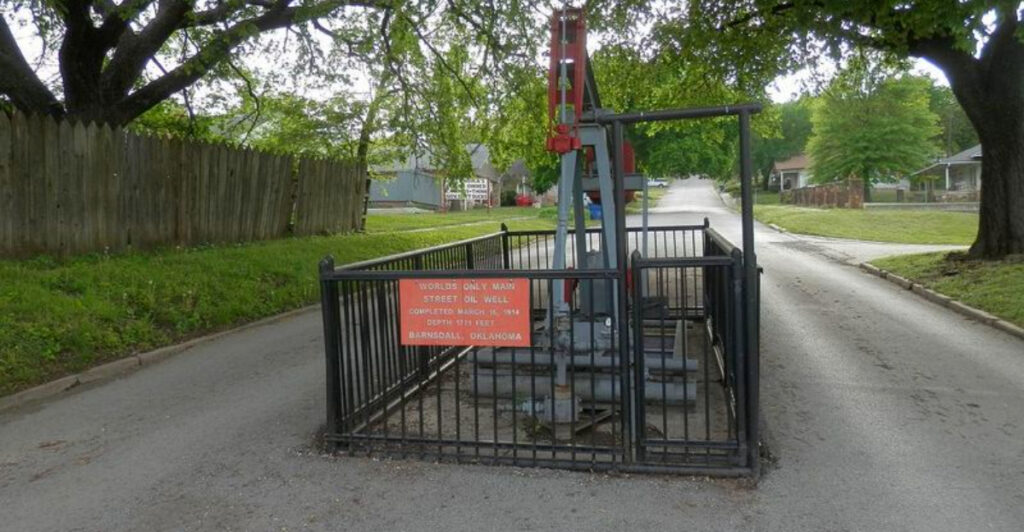
Most towns have a statue or a fountain sitting at their center. Barnsdall, Oklahoma, decided to go a different route and planted an actual oil well right in the middle of Main Street.
That bold choice turned out to be one of the most unexpectedly charming roadside landmarks in the entire state. The Barnsdall Main Street Well Site is a working piece of history that has outlasted the boom, the bust, and everything in between, and it is still pumping away today.
Stick around, because this little town has a story worth telling from start to finish.
Right in the Heart of Town: Address and Location
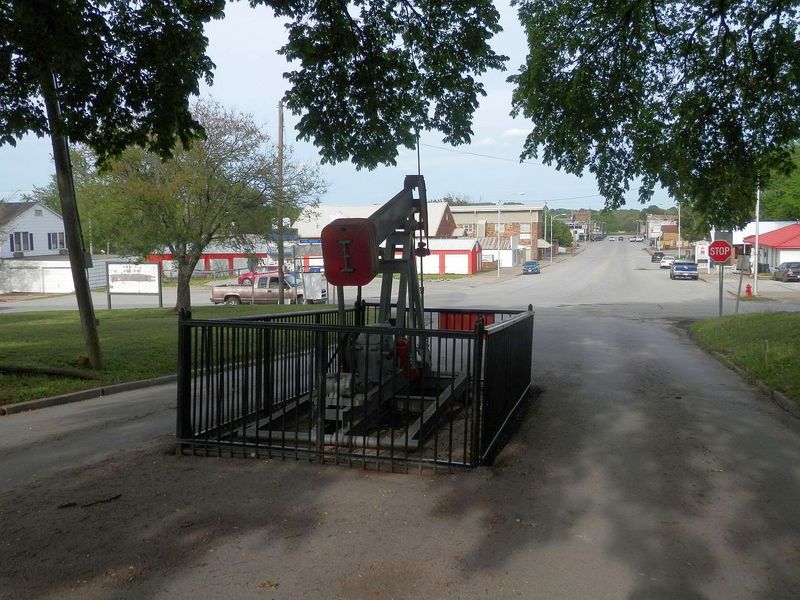
There are not many places in the country where you have to drive around an oil well to get to the post office, but Barnsdall pulls it off with a certain no-fuss charm. The Barnsdall Main Street Well Site sits at 800-898 W Main St, Barnsdall, OK 74002, right in the physical center of the town’s main road.
Barnsdall is a small city in Osage County, in the northeastern part of Oklahoma, roughly 20 miles north of Bartlesville. The well is not hidden behind a fence or tucked into a museum.
It simply occupies a traffic island in the middle of a functioning street, which makes the whole experience feel wonderfully surreal.
Parking is easy, with open spots on the corner nearby. The site is accessible 24 hours a day, every day of the week, so there is no wrong time to swing by.
Whether you pass through at noon or at dusk, the pump jack greets every visitor the same way, with quiet, steady persistence.
How an Oil Well Ended Up in the Street
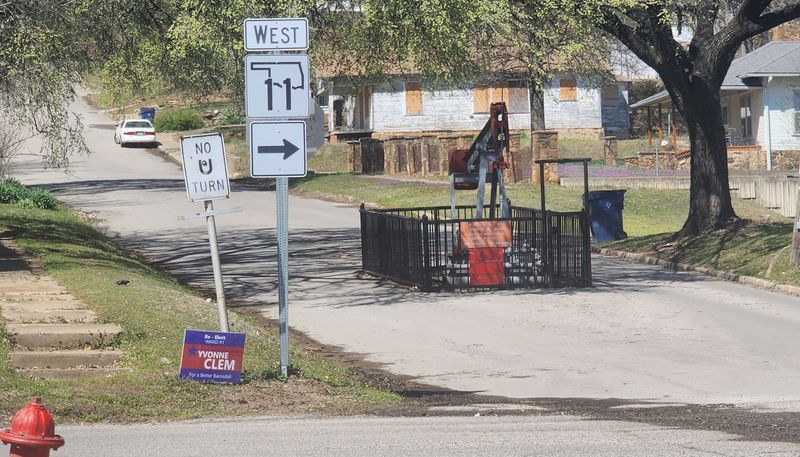
The story of how an oil well came to stand in the middle of a public road is not as strange as it sounds, once you understand the era that produced it. During the early 20th century, the oil boom transformed northeastern Oklahoma almost overnight.
Towns like Barnsdall grew up fast, built on the promise of underground wealth.
The well on Main Street was drilled during that frenzied period, when oil companies were punching holes in the ground wherever geology suggested profit, including, apparently, the middle of what would become the town center. As the town developed around it, the well simply stayed put.
Rather than remove it, the community made a quiet decision to preserve it as a reminder of what built the town in the first place. That choice turned a functional piece of industrial equipment into a living monument.
The pump jack still operates today, making it one of the most genuinely active historical landmarks you will find anywhere in Oklahoma or beyond.
The Town That Was Named for an Oil Company
Not every town gets named after a corporation, but Barnsdall wears that origin story with a certain straightforward pride. The town was originally called Bigheart, named for Osage Chief James Bigheart, a respected leader of the Osage Nation.
On January 1, 1922, the town officially changed its name to Barnsdall, honoring the Barnsdall Oil Company, which had a significant presence in the area.
That rename tells you everything about how deeply the oil industry shaped this part of Oklahoma. The company’s influence was not just economic.
It was woven into the identity of the community at the most basic level, right down to what people called their hometown.
Today, that layered history gives Barnsdall a depth that goes beyond its modest size. The town holds onto both stories, the Indigenous heritage tied to the Osage Nation and the industrial chapter that followed.
The Main Street well site sits at the intersection of both eras, a compact symbol of everything that shaped this corner of northeastern Oklahoma.
Clark Gable and the Unexpected Hollywood Connection
Here is a fact that tends to stop people mid-sentence: Clark Gable, one of the biggest movie stars of the 20th century, has a connection to Barnsdall, Oklahoma. Gable reportedly spent time in the area during his early years, and the town has embraced that association as part of its broader cultural identity.
The link adds an unexpected layer of glamour to what is otherwise a very grounded, working-class oil town. There is something genuinely entertaining about the contrast, a place known for pump jacks and dusty roads also being tied to the golden age of Hollywood.
Local pride around this connection is real and enthusiastic. It is the kind of detail that makes a brief stop feel like a fuller story.
Barnsdall is not just an oil town or a footnote in Oklahoma history. It is a place where industrial grit and cultural history overlap in ways that keep curious travelers lingering a little longer than they planned.
What the Pump Jack Actually Looks Like Up Close
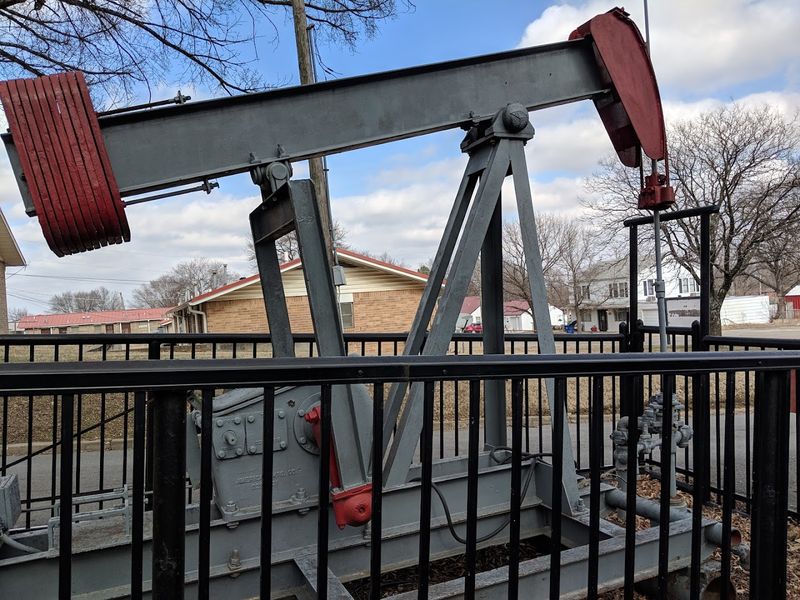
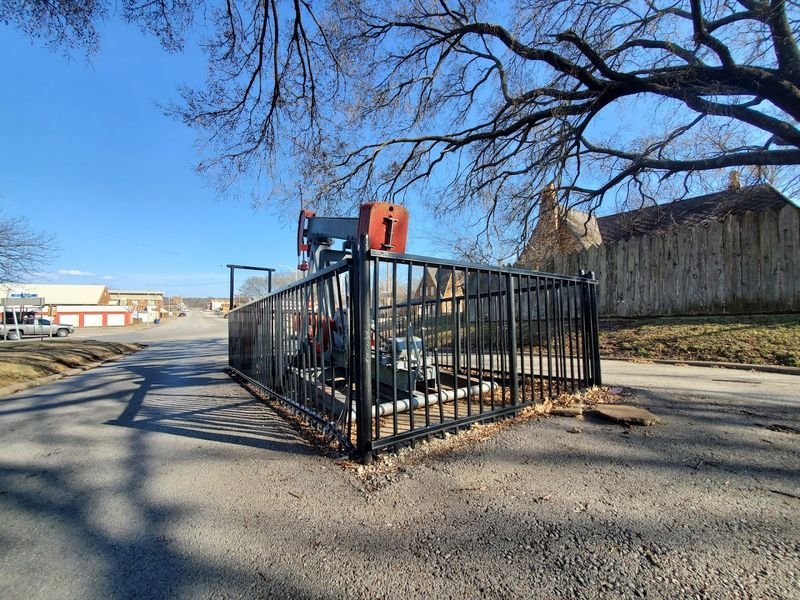
The first time you see the pump jack in person, your brain does a small double-take. You are driving down a regular small-town street, expecting a stop sign or a crosswalk, and instead there is a full-sized oil pump jack sitting on a raised median, slowly nodding up and down like it has nowhere better to be.
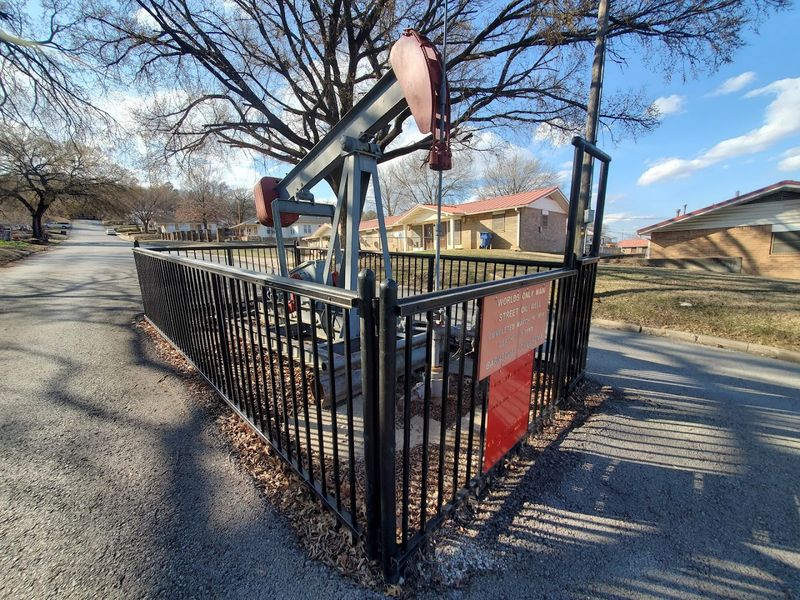
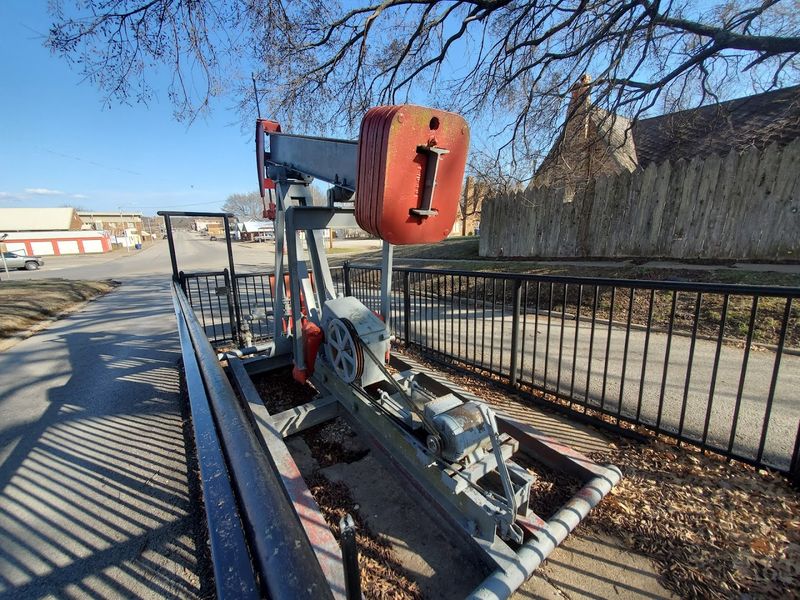
The equipment is an older-style pump jack, the kind that looks exactly like the toy versions sold in souvenir shops across Oklahoma, except this one is real and still moving. It is painted and maintained, not left to rust, which shows the town takes its landmark seriously.
Up close, the mechanical rhythm of the pump is oddly satisfying to watch. The steady rise and fall of the beam feels almost meditative.
It is functional, not decorative, which is precisely what makes it special. Most historical landmarks are frozen in time.
This one is still doing its job, which gives it a living quality that no museum exhibit could replicate.
A Landmark That Belongs to the Whole Community
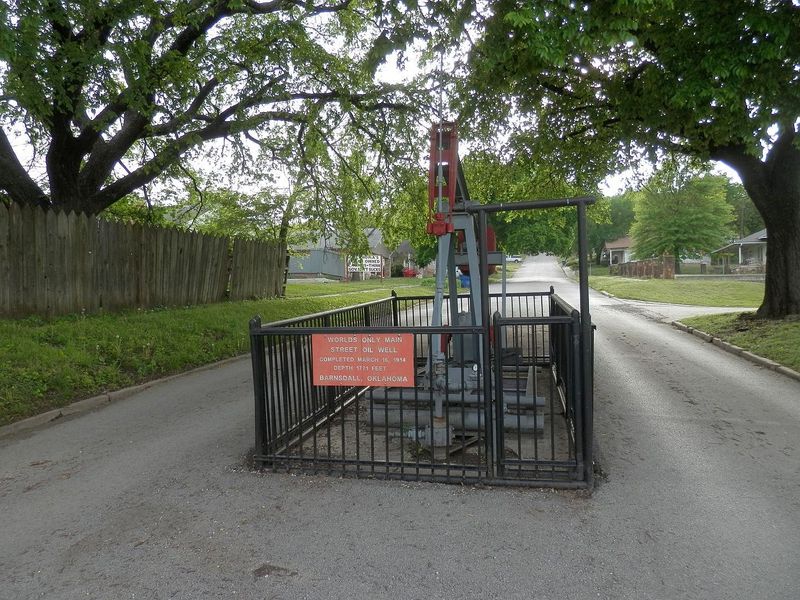
Some landmarks belong to tourists. The Barnsdall Main Street Well Site belongs to the people who grew up here.
For longtime residents, the pump jack is not a novelty. It is part of the furniture of daily life, as familiar as the local diner or the water tower on the edge of town.
People who were raised in Barnsdall talk about the well with the kind of casual affection you reserve for something that has always just been there. Kids grew up thinking it was perfectly normal to have an oil well in the road.
Adults look back on that and smile at how genuinely unusual their hometown was all along.
That community ownership gives the site a warmth that purely tourist-focused attractions often lack. Visitors are welcome, but the well is not performing for anyone.
It simply exists, as it always has, on behalf of the town that built itself around it. That authenticity is increasingly rare and worth appreciating every time you encounter it.
The Oil Boom Era That Built Northeastern Oklahoma
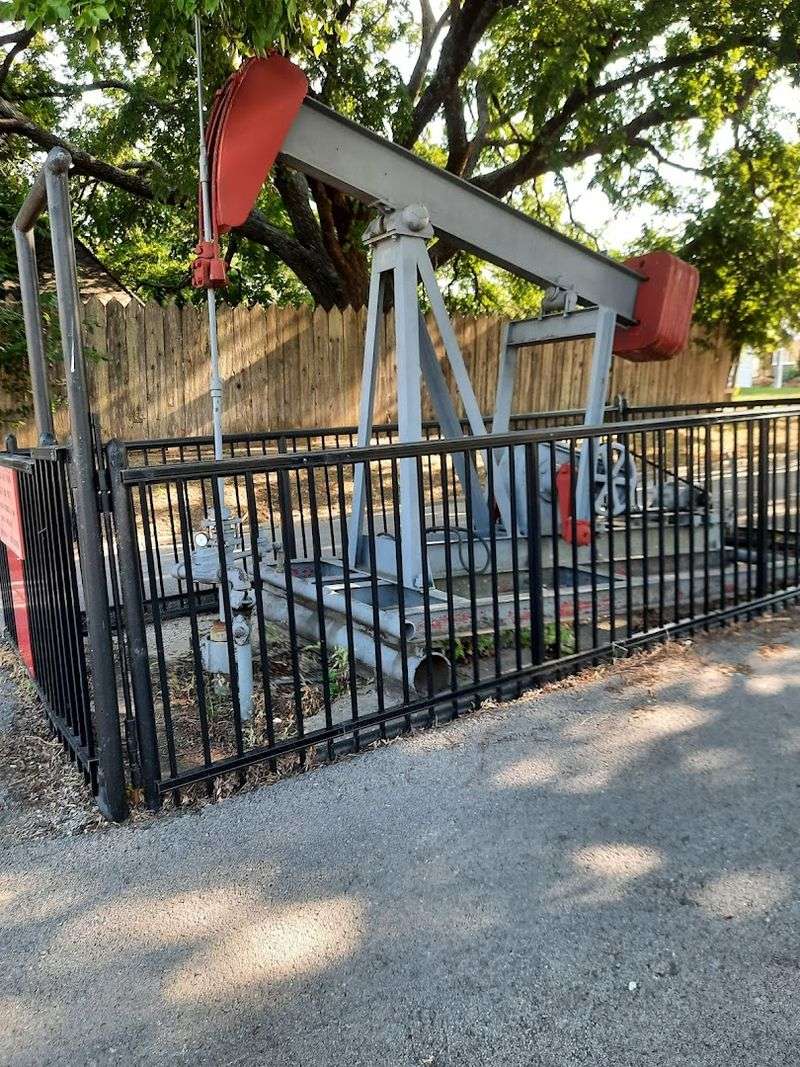
To understand why Barnsdall exists at all, you need a quick look at the oil boom that swept through northeastern Oklahoma in the early 1900s. The discovery of massive oil reserves beneath Osage County land triggered one of the most intense periods of industrial activity in American history.
Towns popped up almost overnight across the region. Boomtowns like Barnsdall attracted workers, speculators, and entrepreneurs from across the country, all chasing the same underground wealth.
The infrastructure of the modern oil industry took shape right here, in these flat and rolling plains of northeastern Oklahoma.
The Main Street well is a direct artifact of that period. It is not a replica or a reconstruction.
It is a surviving original piece of equipment from an era that transformed the American economy. That historical weight is easy to underestimate when you are just driving through, but once you know the backstory, the pump jack takes on a completely different significance.
History has a way of making ordinary-looking things feel extraordinary.
Tips for Visiting and Getting the Best Photos
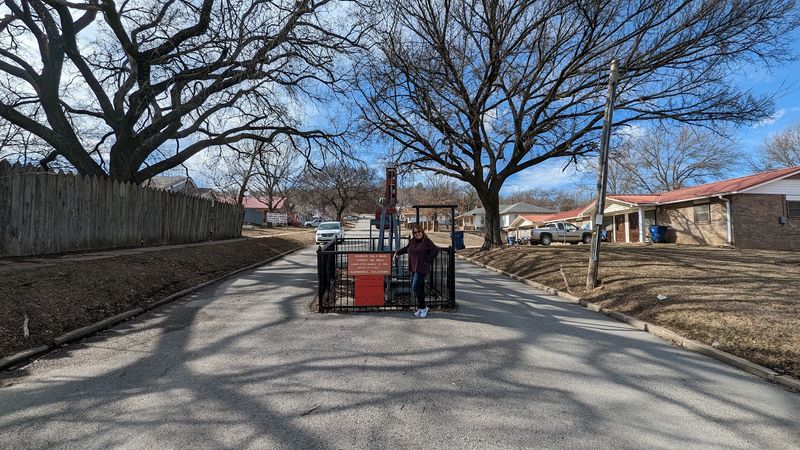
The site is open around the clock, which gives you flexibility most historical landmarks do not offer. Early morning visits are particularly rewarding.
The light is softer, traffic is minimal, and you can take your time without feeling rushed or in the way of local drivers.
One practical note worth taking seriously: the pump jack sits in an active street, not a pedestrian plaza. Cars do pass through, so keep your attention on traffic when you step off the curb to get a closer look or frame a photo.
The corner nearby has easy parking, so you will not need to circle the block repeatedly.
For photos, a wide-angle shot that includes the road and storefronts in the background gives the best sense of just how unusual the placement really is. A tight close-up of the moving beam against the sky also works beautifully.
Bring a little patience and a sense of humor, because explaining to someone back home that you photographed an oil well in the middle of a road is half the fun.
Historical Markers and the Broader Story Around the Site
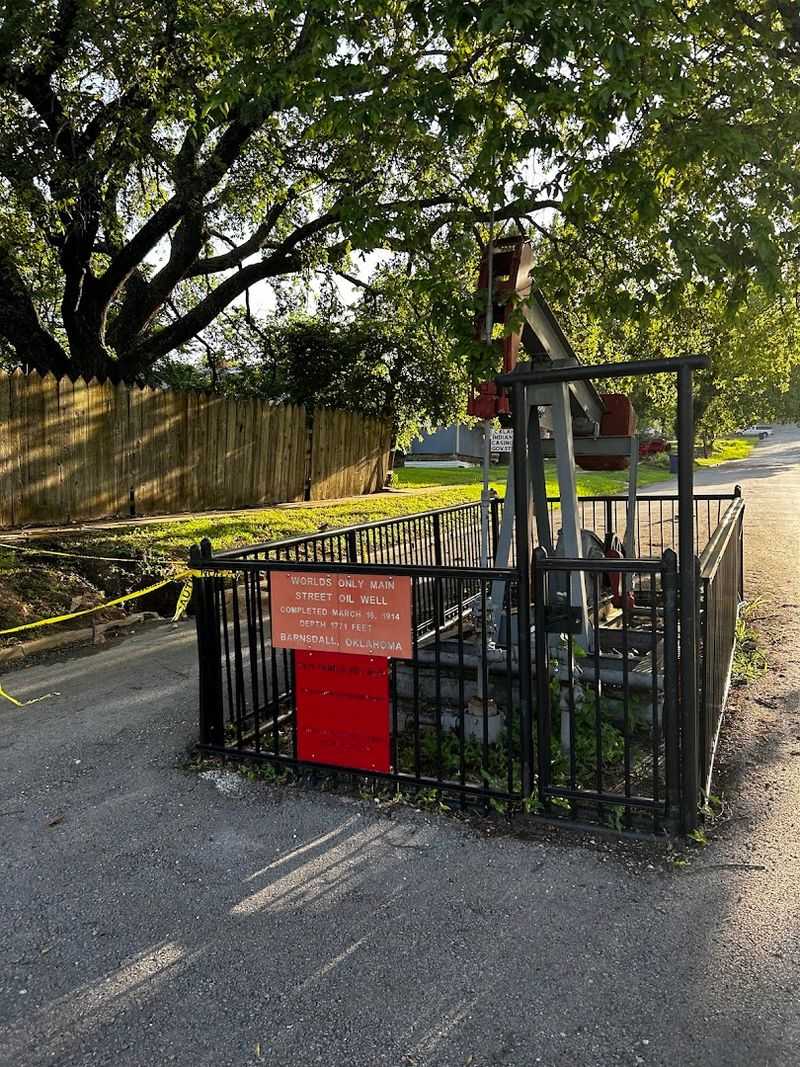
The pump jack is the main attraction, but the area around it holds additional historical markers that flesh out the story of the town and the region. These markers cover the Osage Nation history, the oil industry’s development, and the broader transformation of northeastern Oklahoma during the early 20th century.
Taking a few minutes to read through them turns a quick photo stop into a genuinely educational experience. The markers are well-maintained and written clearly enough that visitors of all ages can follow along without needing a history degree to keep up.
The combination of the active well and the surrounding interpretive signage makes this a more complete historical site than its small footprint suggests. You are not just looking at a piece of equipment.
You are reading the full context of why that equipment matters, who lived here before it arrived, and how the land changed because of it. That layered storytelling is what separates a good historical landmark from a great one, and Barnsdall gets it right.
Why This Small Town Deserves a Stop on Your Oklahoma Road Trip
Road trips through Oklahoma tend to follow the same well-worn routes, but some of the best stops are the ones that do not appear on the standard highlight reel. Barnsdall is exactly that kind of place.
It is a short detour off the main highway that pays back the time investment with something genuinely one-of-a-kind.
The town sits in a part of Oklahoma that rewards slow travel. The landscape is open and rolling, the pace is unhurried, and the people are the kind of friendly that does not feel performed.
A stop at the Main Street well fits naturally into a broader exploration of Osage County, which has its own rich cultural and historical identity worth exploring.
There are not many places left in the country where you can stand next to a fully operational oil well that has been pumping since the boom era, in the middle of a public road, for free, at any hour of the day. Barnsdall offers exactly that, no ticket required, no tour guide needed, just a landmark doing what it has always done, right out in the open for anyone curious enough to show up.
Share this story