There is something quietly magnetic about a place where water takes over and does all the talking. No fancy restaurant, no gift shop, no admission fee — just the steady rush of water spilling over concrete and rolling downstream while the world slows down around you.
I found myself at a small but surprisingly captivating spot in northeastern Oklahoma, and I left wondering why more people are not talking about it. The views shift with the seasons, the sound of the water is genuinely hard to walk away from, and the whole experience costs nothing but a short drive and a little curiosity.
Keep reading, because this one is worth your time.
Where to Find This Hidden Scenic Spot
The full address is Spavinaw Dam, Spavinaw, OK 74366, tucked into the small town of Spavinaw in Mayes County, northeastern Oklahoma. Getting there is straightforward — a drive through rolling green hills and quiet back roads that already set the mood before you arrive.
Spavinaw sits close to the Arkansas border, and the surrounding landscape has that unhurried, rural charm that makes you forget you ever had a schedule. The spillway itself is right at the dam, which holds back Spavinaw Lake, a reservoir that has served the region for decades.
The spot is open 24 hours a day, every day of the week, so there is no pressure to rush your visit or plan around closing times. Whether you swing by on a Tuesday morning or a Saturday afternoon, the water will be there doing its thing, completely indifferent to your schedule.
Coordinates put it at 36.38 degrees north, 95.05 degrees west, and your phone’s GPS will handle the rest without any drama.
The Dam That Started It All
Spavinaw Lake was created when the Spavinaw Dam was built in the 1920s to supply drinking water to Tulsa, Oklahoma, which is roughly 60 miles to the southwest. That makes this dam not just a scenic feature but a genuine piece of regional infrastructure history that still does its job today.
The project was a big engineering commitment for its time, and the fact that the dam still stands and functions nearly a century later says a lot about how it was built. There is something quietly impressive about standing on or near a structure that has been holding back water since your grandparents were children.
Most visitors do not know this backstory when they first arrive, and learning it adds a whole new layer to the experience. A concrete structure that supplies a major city’s water supply and also happens to look beautiful when it overflows — that is a combination you do not come across every day.
History has a funny way of hiding in plain sight like that.
What the Spillway Actually Looks Like
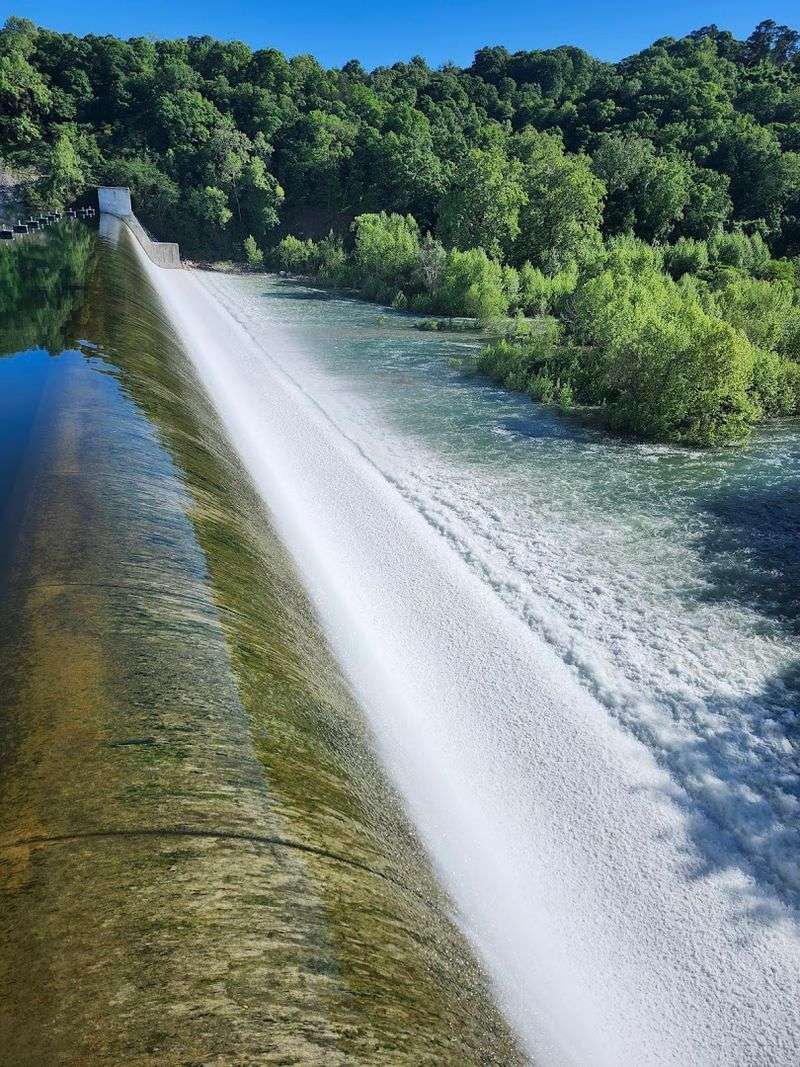
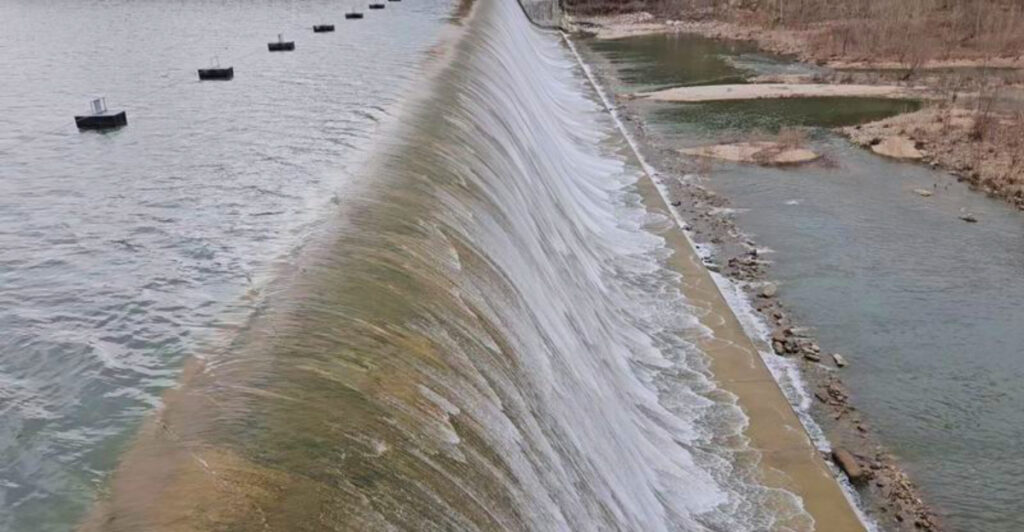
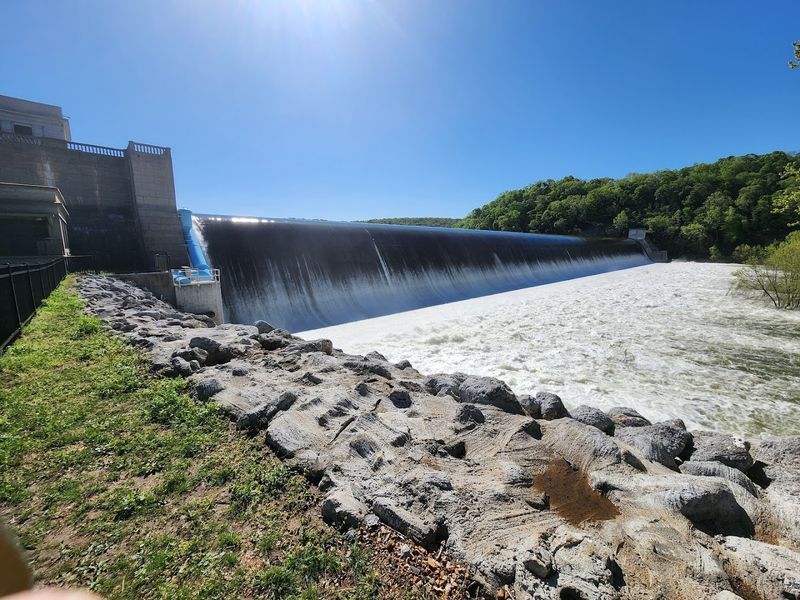
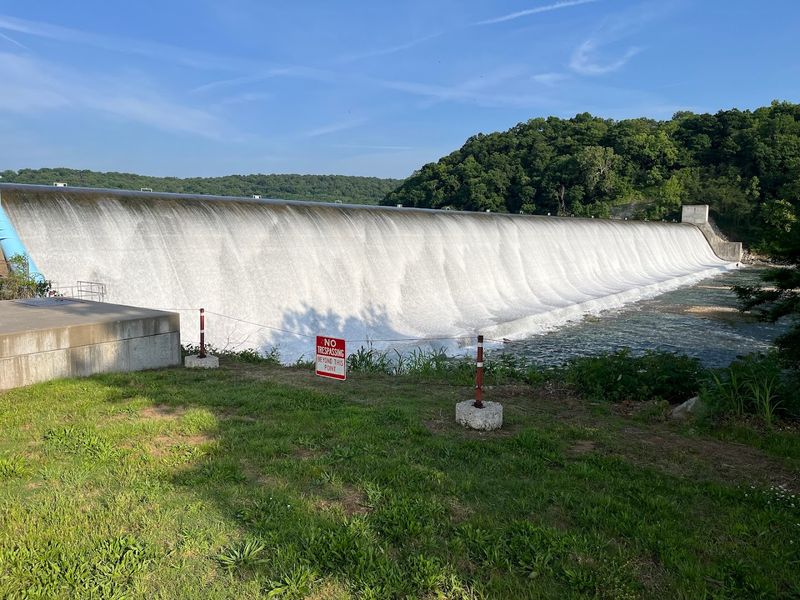
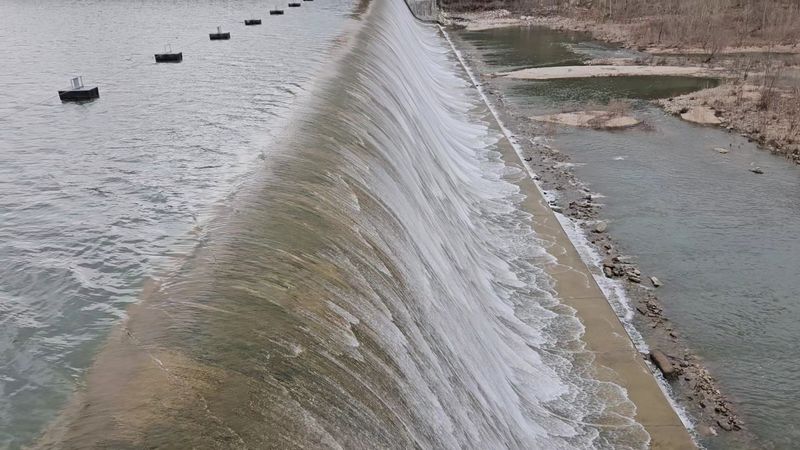
The spillway is a wide, flat concrete structure where water rolls over the edge and crashes down below in a wide curtain of white and churning green. When the lake level is high, the flow is dramatic and loud, filling the air with a fine mist that you can feel on your skin from a fair distance away.
The contrast between the still, mirror-like surface of the lake on one side and the rushing, turbulent water on the other is genuinely striking. You get two completely different moods of water within a few feet of each other, and that visual tension is part of what makes the spot so photogenic.
The surrounding area is green and wooded, with trees lining the banks and reflecting in the calmer sections of the creek below. On a bright day, the light catches the falling water in a way that makes everything look slightly more vivid than real life.
It is the kind of scene that makes you reach for your phone camera before you have even consciously decided to take a photo.
After Heavy Rain, the Scene Completely Changes
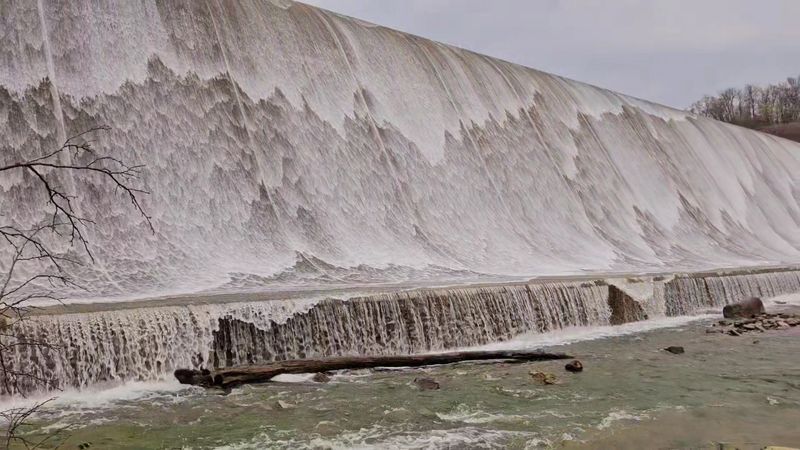
Rain transforms this place in a way that few other spots can match. After a significant storm, the lake level rises quickly and the spillway goes from a gentle trickle to a full, roaring pour of water that you can hear from the road before you even park.
The color of the water shifts too — from clear green to a deeper, murkier brown as runoff carries soil and sediment into the lake. That might sound less appealing on paper, but in person the sheer volume and energy of the flow is genuinely awe-inspiring in a completely grounded, no-exaggeration way.
Visiting right after heavy rainfall is one of the best timing tips I can offer for this spot. The spillway earns its name in those moments, and the visual payoff is significantly bigger than on a dry, low-water day.
Keep an eye on the weather forecast and plan a visit within a day or two of a good Oklahoma rainstorm, and the spillway will put on a show that sticks with you.
The Sound of the Water Is Half the Experience
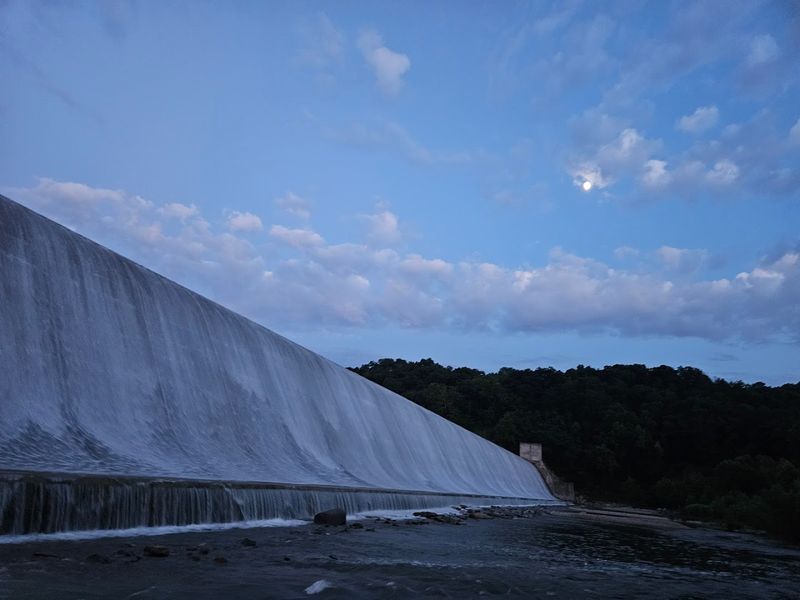
Sound is something that travel articles often skip over, and that is a mistake when it comes to this spot. The noise of water moving over the spillway is a constant, layered rush — not harsh or jarring, but full and enveloping in a way that naturally quiets your thoughts.
There is a reason people pay for white noise machines and nature sound apps, and the spillway delivers the real version for free. The rhythm of the water changes depending on how much is flowing, ranging from a soft, steady hum on calm days to a deep, rolling thunder after a big rain.
Many visitors mention how peaceful the spot feels, and the sound is a huge part of that. You can sit near the edge of the viewing area, close your eyes for a moment, and feel genuinely disconnected from whatever was stressing you out before you arrived.
A few minutes of that kind of quiet reset is worth more than most people expect, and the spillway delivers it without asking for anything in return.
Fishing Below the Dam
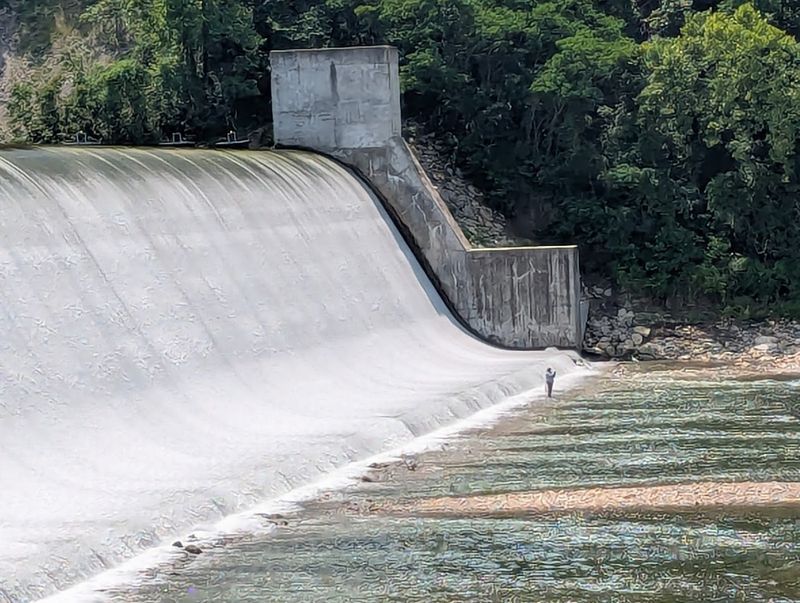
The stretch of water directly below the spillway is well regarded among local anglers, and it is easy to see why. The churning water at the base of the dam oxygenates the creek and tends to concentrate fish, which makes the area below a natural gathering point for species like bass and catfish.
Fishing below a dam is a classic strategy in Oklahoma, and Spavinaw is no exception to that pattern. The current is manageable in most conditions, and the banks provide decent footing for casting from the shore without needing a boat.
A valid Oklahoma fishing license is required, so make sure that is sorted before you drop a line. Local anglers tend to know exactly where to position themselves for the best results, so paying attention to where others are fishing can be a useful shortcut.
Even if you are not there to fish yourself, watching someone reel in a catch while standing below a waterfall-like spillway is its own kind of entertainment. The whole scene has a timeless, unhurried quality that feels genuinely satisfying.
Photography Opportunities at Every Angle
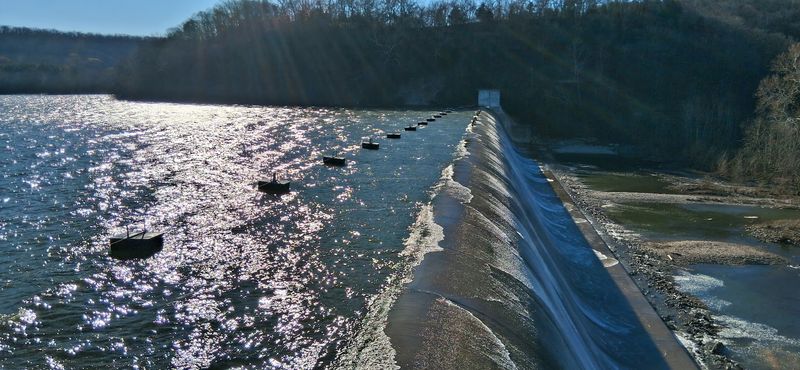
Few free scenic stops in Oklahoma offer as many distinct photo compositions as this spillway does. The wide shot from across the road captures the full arc of water flowing over the dam with the treeline as a natural backdrop, while getting closer reveals the texture and motion of the water in sharp detail.
Early morning light hits the water at a low angle and creates a warm, glowing effect on the surface that is hard to replicate at any other time of day. Late afternoon has its own appeal, with longer shadows and a golden tint that makes the whole scene feel slightly cinematic.
The reflections in the calm water above the dam are worth framing on their own — the sky, the trees, and the surrounding hills all appear in mirror form on the lake’s surface, and a slight breeze adds just enough ripple to make the reflection painterly rather than perfectly still. Smartphone cameras handle this spot surprisingly well, but if you have a camera with any kind of zoom, the details in the rushing water below are genuinely worth capturing up close.
Best Times of Year to Visit
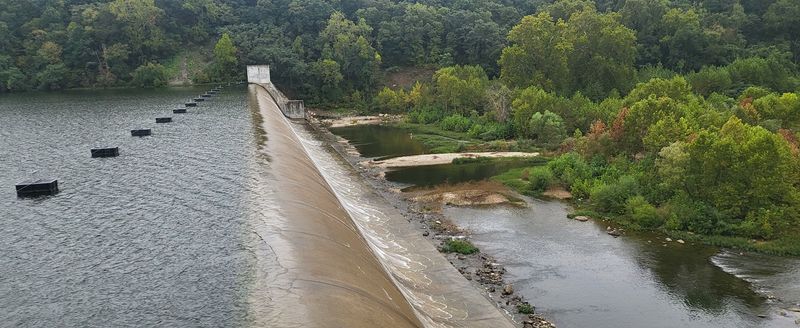
Spring is arguably the strongest season for a visit, and not just because of the higher water levels after winter and early spring rains. The surrounding trees are fully leafed out in that intense, electric green that only lasts a few weeks each year, and the combination of rushing water and fresh foliage is genuinely hard to beat.
Summer visits work well in the early morning before the heat of a typical Oklahoma day sets in. The light is softer, the parking area is less crowded, and the water sounds even more refreshing when the temperature is already climbing by 9 a.m.
Autumn brings a color change to the surrounding hillsides that makes the whole area look like a painting, and the cooler temperatures make standing near the mist of the spillway genuinely pleasant rather than chilly. Winter visits are quieter and more solitary, which has its own appeal if you are the type who enjoys a scenic spot without other people around.
The spillway itself runs year-round, so no season is truly off-limits for a worthwhile visit.
What to Bring for a Comfortable Visit
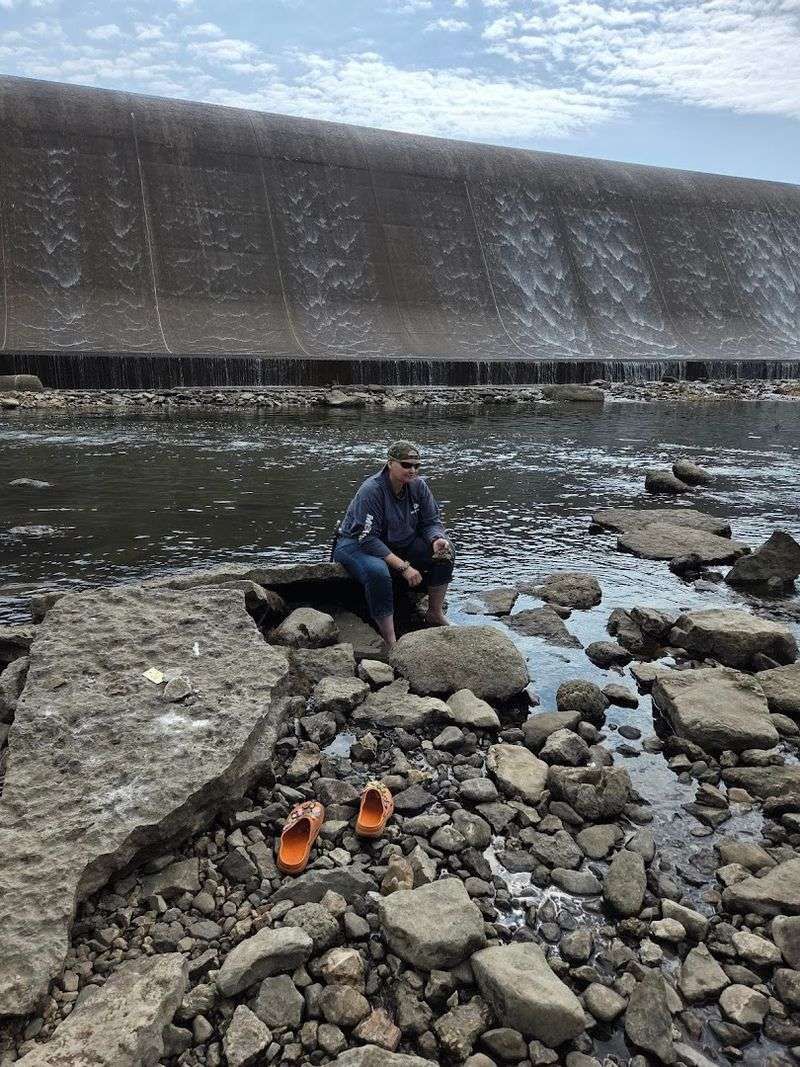
The spot is free and open all hours, but a little preparation goes a long way toward making the visit more enjoyable. Comfortable walking shoes are a good starting point since the ground near the dam can be uneven and occasionally slippery when the mist from the spillway settles on nearby surfaces.
A water bottle is worth packing, not because there are facilities on-site but because northeastern Oklahoma can get genuinely warm for much of the year and staying hydrated on an outdoor visit is just smart practice. A light jacket works well in the cooler months since the mist from a high-flow spillway carries a chill even on otherwise mild days.
Binoculars are a surprisingly useful addition if you enjoy watching wildlife, as the wooded banks and open water attract birds that are easier to appreciate up close. A small folding chair or a blanket to sit on transforms a quick stop into a proper relaxing break by the water.
The spillway rewards visitors who slow down and stay a while rather than snapping a photo and driving away.
Why This Spot Keeps Drawing People Back
A 4.7-star rating from visitors tells you something real about a free roadside natural attraction. People are not showing up with lowered expectations and leaving mildly impressed — they are arriving, experiencing something genuinely calming and beautiful, and going home to give it nearly perfect marks.
The appeal is not complicated. Moving water has a way of holding attention without demanding anything from you, and this spillway delivers that experience in a setting that feels natural and uncrowded.
There are no vendors, no entrance fees, no designated selfie spots with painted footprints telling you where to stand.
What keeps people returning is probably the combination of simplicity and reliability. The spillway is always there, always flowing in some form, and always free.
In a world where most worthwhile experiences come with a price tag or a reservation system, a spot like this one feels almost radical in its accessibility. Oklahoma has no shortage of natural beauty, but places that are this easy to reach and this consistently rewarding are genuinely worth bookmarking and revisiting with different people across different seasons.
Share this story