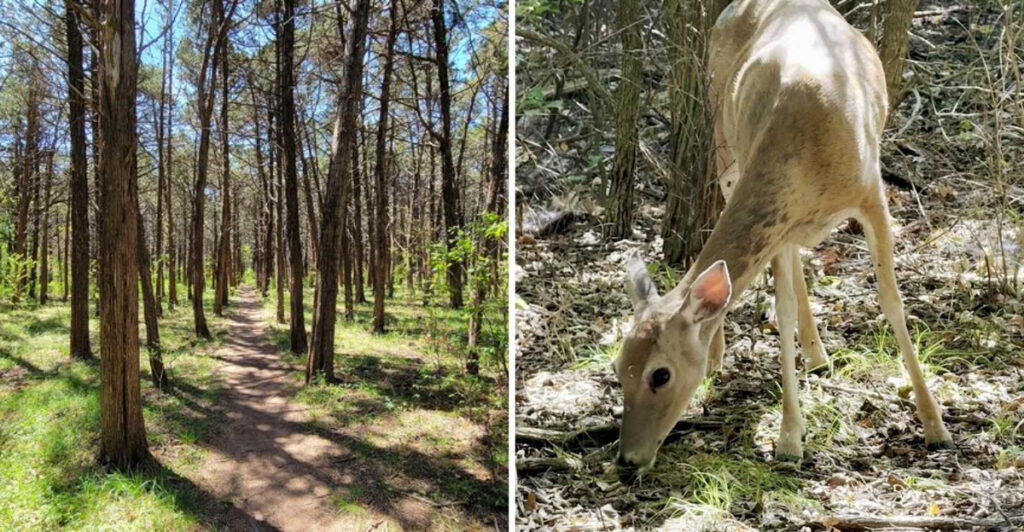
There is a forest in southwest Oklahoma where every single tree lines up in a perfect row, no matter which direction you look. It sounds like something out of a science experiment, and honestly, that is exactly what it is.
Back in the 1960s, the government planted roughly 20,000 red cedar trees exactly six feet apart in every direction, covering more than 16 acres, all in an effort to fight the effects of the Dust Bowl. The result is one of the most visually striking and quietly eerie natural spots in the entire state, and once you see it for yourself, you will completely understand why people keep coming back.
Where Exactly You Will Find This Place
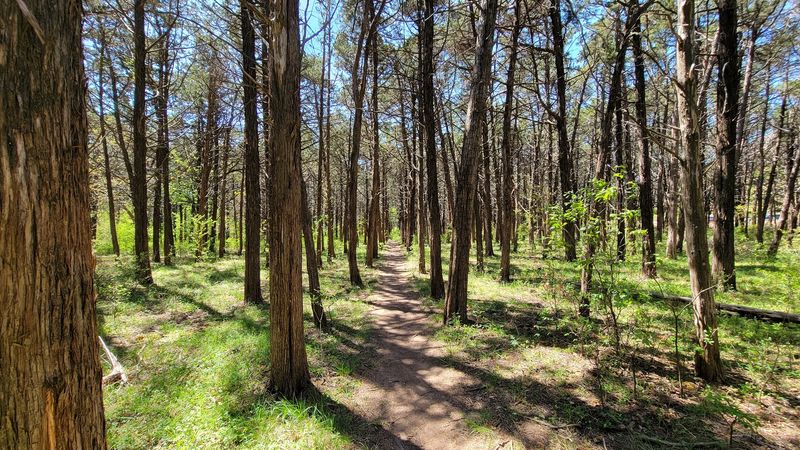
The Parallel Forest sits near Lawton, Oklahoma, at coordinates that place it within the broader Wichita Mountains Wildlife Refuge area, managed by the U.S. Fish and Wildlife Service.
The mailing address associated with the site is Lawton, OK 73507, and the refuge’s official website is fws.gov/refuge/Wichita_Mountains. Getting there is straightforward once you know the route, and the roads leading up to it have that classic southwestern Oklahoma feel, flat plains giving way to rocky outcroppings and open sky.
Parking is free, which is always a welcome surprise. The lot is small, so arriving early on weekends is a smart move.
On busy Saturday evenings, the entrance area can fill up quickly, especially around dusk when photographers arrive to capture the forest in golden light. Morning visits tend to be much quieter, and the soft early light filters through the cedar rows in a way that feels almost cinematic.
The drive itself is part of the experience, with wide open landscapes reminding you just how beautifully rugged this corner of Oklahoma truly is.
The Science Experiment That Became a Forest
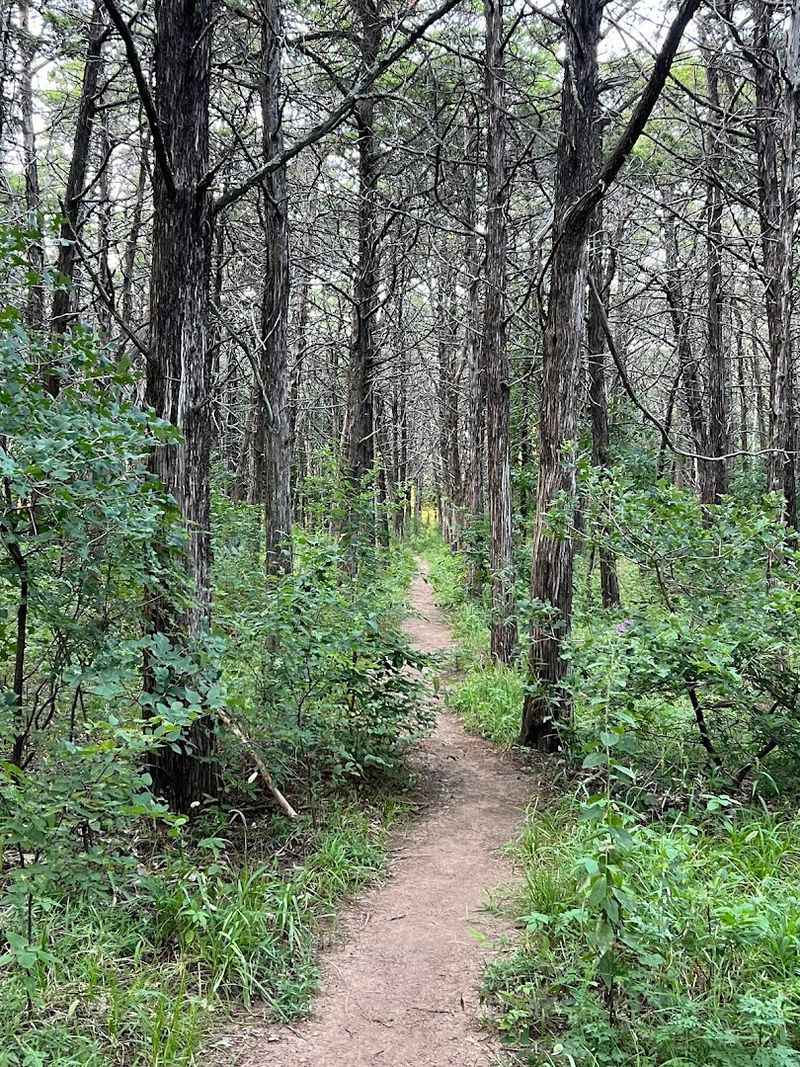
Not many forests can claim they started as a federal science project, but Parallel Forest can. Around the 1960s, the U.S. government arranged for approximately 20,000 red cedar trees to be planted in a precise grid, each one exactly six feet apart in every direction, across a span of more than 16 acres.
The goal was practical and urgent: help combat the devastating effects of the Dust Bowl, which had stripped the southern plains of vegetation and topsoil for decades.
The idea was to test whether a densely planted, uniform tree grid could stabilize the soil and reduce wind erosion. What started as environmental research gradually transformed into something far more visually fascinating than anyone likely anticipated.
The trees grew tall and close together, creating long, symmetrical corridors that stretch deep into the forest. Standing at the entrance and looking down those perfectly aligned rows feels genuinely surreal.
It is one of those rare places where science accidentally produced something beautiful, and the forest has been drawing curious visitors ever since.
The Visual Effect That Stops People in Their Tracks
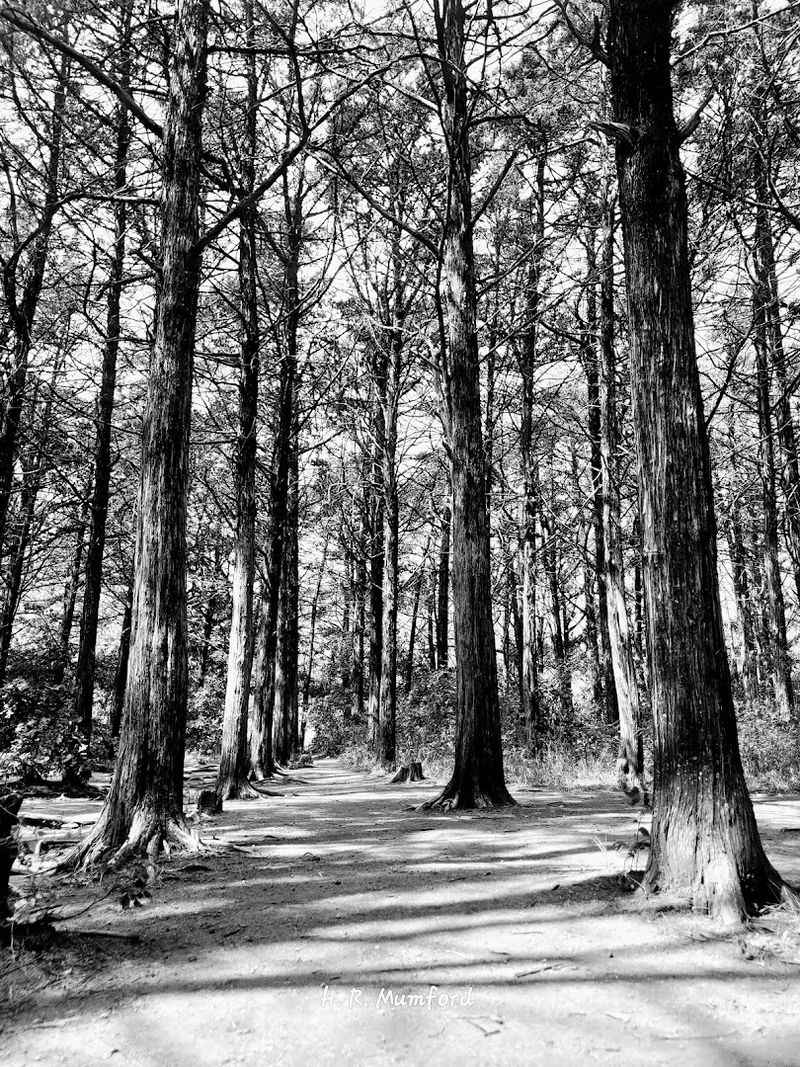
No matter which direction you turn inside this forest, the trees line up perfectly. That is not an exaggeration or a trick of the light.
Because every tree was planted exactly six feet from its neighbor in all directions, your eyes catch perfectly straight corridors no matter the angle. It creates a visual effect that genuinely messes with your sense of depth and direction in the best possible way.
First-time visitors often stop walking just to slowly rotate and take it all in. The uniformity is so precise that it almost looks like a digital rendering rather than a real forest.
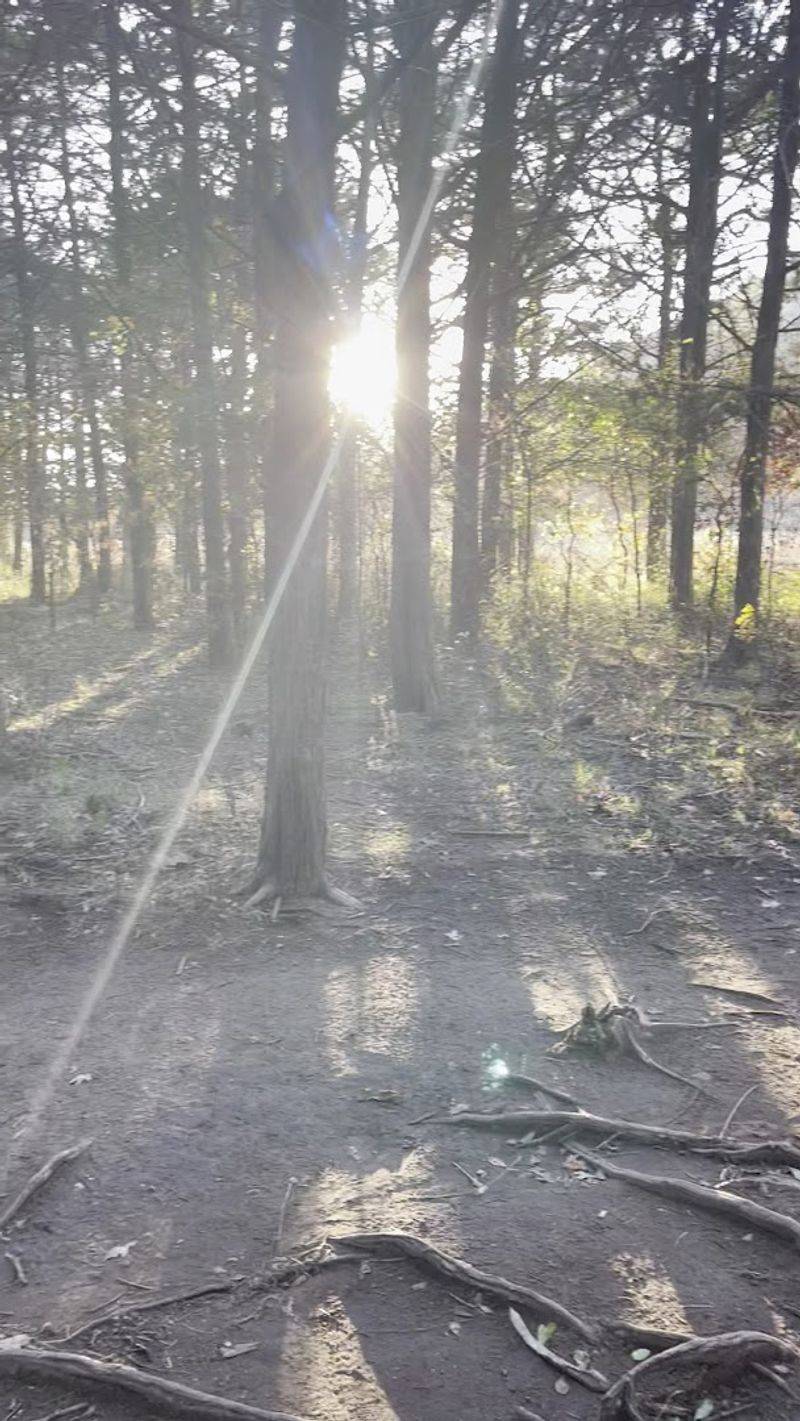
Photographers absolutely love it here for that reason, and the forest has become a popular backdrop for portrait sessions, creative shoots, and nature photography alike. The cedar canopy blocks enough sunlight to cast the forest floor in cool, filtered shade, adding to the slightly mysterious atmosphere.
Some people describe the feeling as serene, others call it quietly unsettling. Both reactions make complete sense once you are standing inside those perfectly parallel rows.
The Atmosphere and the Eerie Quiet
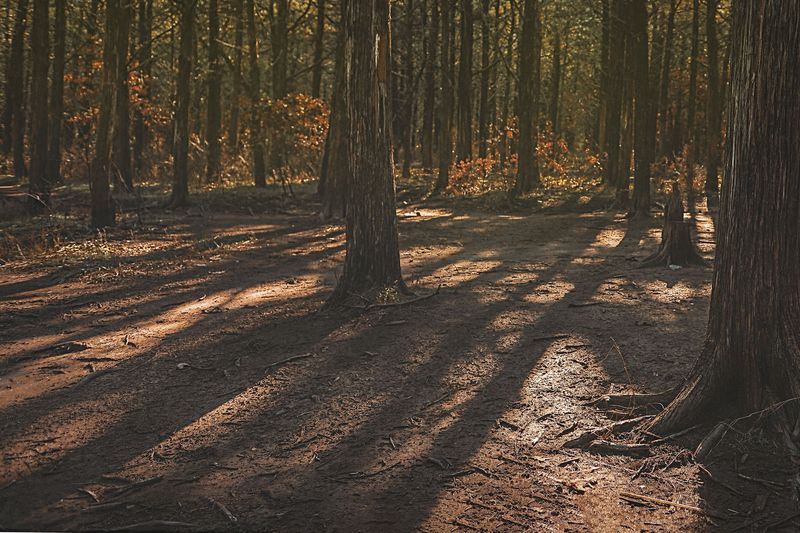
Something about the density of the trees makes Parallel Forest unusually quiet. Sound seems to get absorbed by the thick cedar growth, and even on days when the surrounding Oklahoma plains are windy, the inside of the forest can feel almost completely still.
That stillness is part of what gives the place its reputation for being a little eerie.
The trees grow close enough together that you can only see a short distance before the rows blur into shadow. Combine that with the absolute geometric precision of the layout and the near-total silence, and you get an atmosphere unlike any other forest in the region.
Some visitors have reported hearing almost nothing at all, no birds, no rustling, just the sound of their own footsteps on the trail. Others have had the opposite experience, catching glimpses of deer moving quietly between the rows.
The forest seems to hold its breath in a way that keeps you alert and attentive. That combination of calm and subtle tension makes every visit feel a little different from the last.
Wildlife You Might Encounter Along the Way
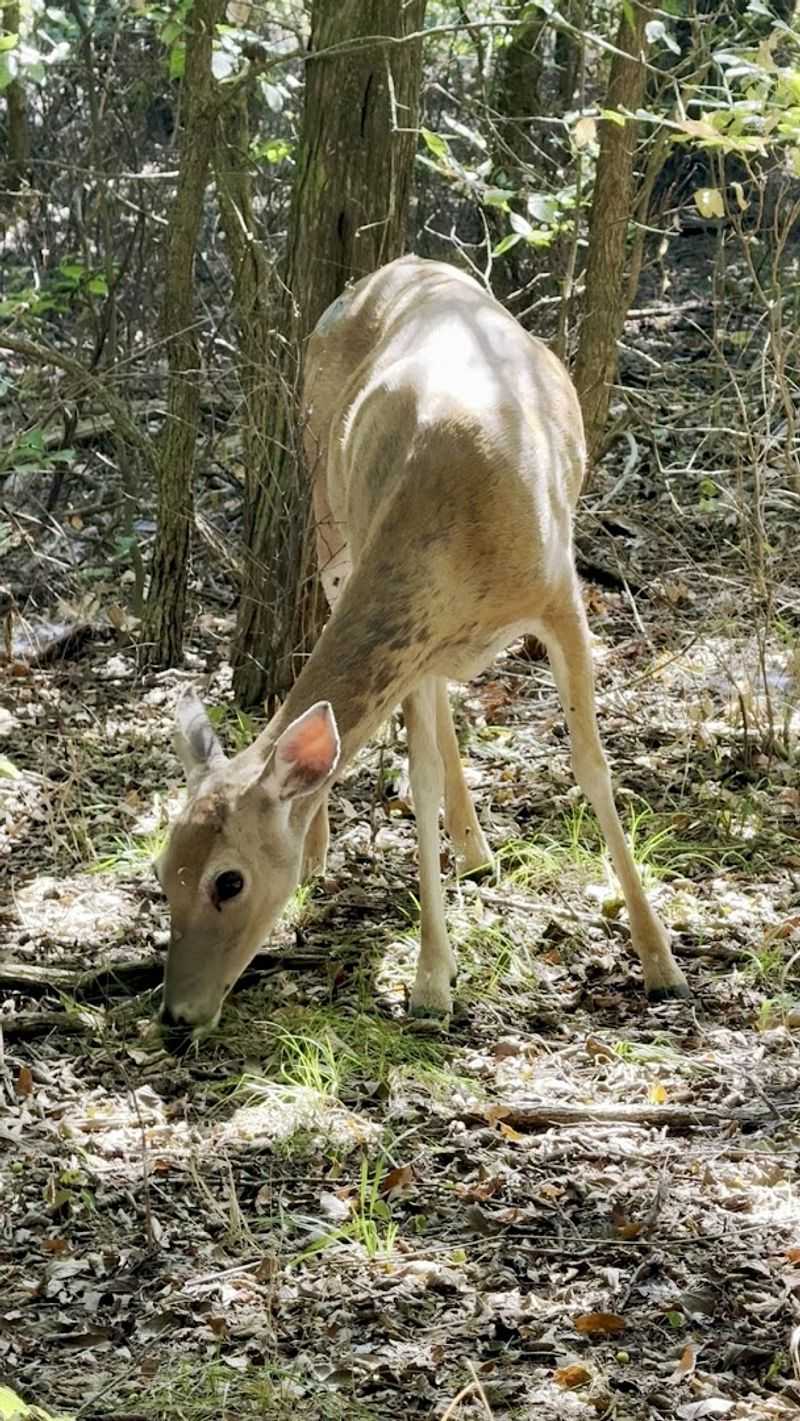
The Parallel Forest sits within the broader Wichita Mountains Wildlife Refuge, which means the surrounding area is home to an impressive range of animals. Wild bison roam freely through much of the refuge, and signs at the entrance warn visitors to stay alert.
Cattle guards are in place to help keep the bison within the safety of the park boundaries, but sightings near the forest are not uncommon.
Deer are perhaps the most frequent animal encounter inside the forest itself. The cedar rows provide excellent cover, and deer seem genuinely unbothered by hikers passing through.
Coming around a corner and finding a deer quietly foraging just a few feet away is the kind of moment that sticks with you long after the hike is over. The forest also draws various bird species, though the thick canopy can make them harder to spot than to hear.
Bringing a pair of binoculars adds a whole new layer to the experience. The wildlife here is not guaranteed on any given visit, but the refuge setting makes every walk feel like a genuine encounter with the natural world is always possible.
Trails, Terrain, and What to Expect on Foot
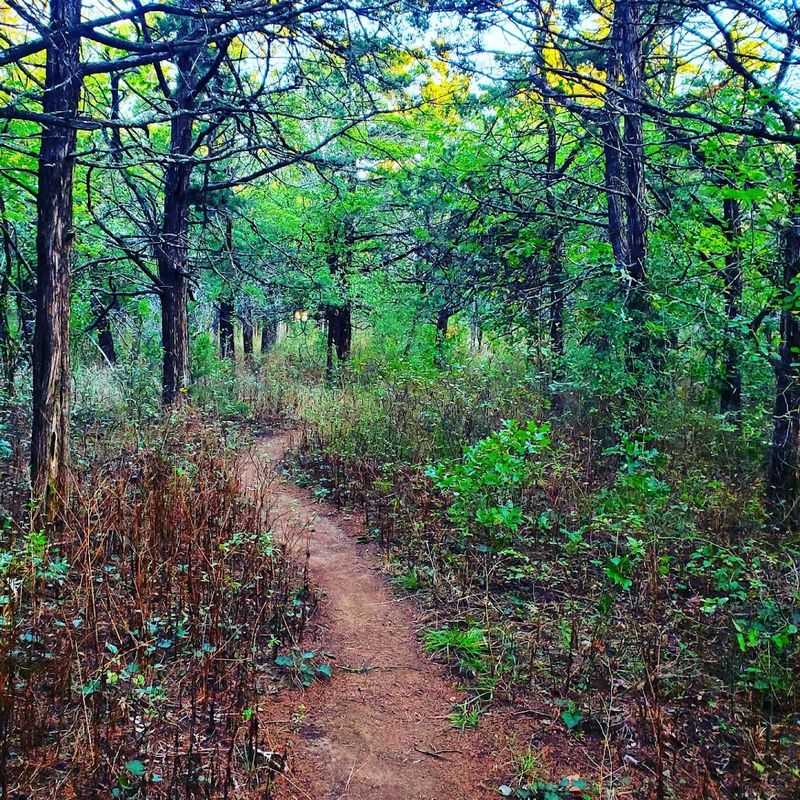
The trails at Parallel Forest are generally flat and accessible, which makes the spot appealing to a wide range of hikers. The terrain is mostly level with occasional tree roots crossing the path, so comfortable footwear is all you really need.
There are no steep climbs or technical sections, which is great news for anyone who finds the more rugged Wichita Mountains trails a bit too demanding.
The main forest loop is well worth completing in full. Follow it far enough and you will reach a stream that cuts through the landscape, separating the cedar grid from a more open rocky area with some elevated views of the surroundings.
The contrast between the tight, shadowy forest and the open creek area is genuinely refreshing. Some side trails can get narrow and slightly overgrown, and a few junctions are easy to miss, so downloading the AllTrails app before your visit is a practical move.
The trail markers are tree-based rather than signpost-based, so keeping your eyes on the marked trunks helps you stay on course. The whole loop is short enough to finish comfortably in under two hours.
The Stream and the Rocky Landscape Beyond
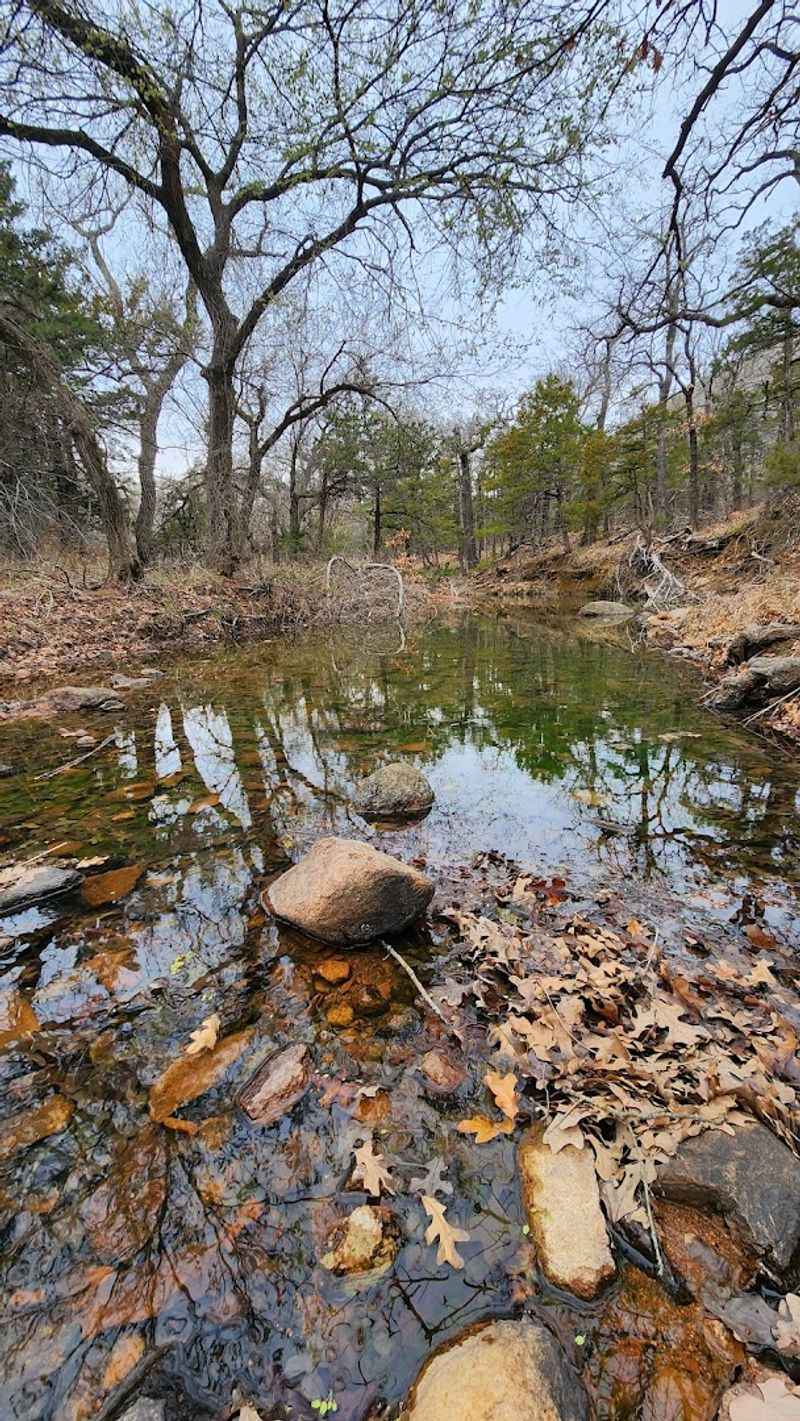
One of the most rewarding parts of hiking the full loop at Parallel Forest is what you find on the far side of the cedar grid. A creek winds through the northeast section of the trail, and the sound of moving water after the deep quiet of the forest feels like a genuine reward.
The stream is not large, but it is clear and peaceful, and the rocks along its banks make it a natural spot to pause and take a breath.
Beyond the creek, the landscape shifts dramatically. The tight cedar rows give way to open, rocky terrain with some elevation, offering views back toward the forest and out across the wider refuge landscape.
It is one of those moments where the full scale of the environment around you becomes clear. The combination of the geometric forest, the winding creek, and the rugged rocky outcroppings in a single short hike makes the trail feel far more varied than its modest length suggests.
Early fall is a particularly good time to visit this section, when the temperature drops enough to make the rocky stretches comfortable and the light sits low and golden over the stones.
Local Legends and the Witches Circle
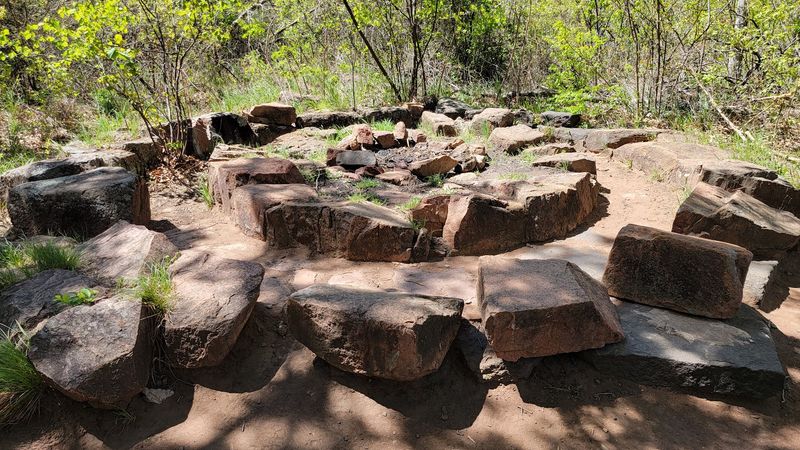
Parallel Forest has picked up a few local legends over the years, and they add an entertaining layer to any visit. The forest is sometimes described as haunted, and while there is no documented history to back that up, the perfectly uniform rows and the deep quiet certainly do their part to fuel the imagination.
The most talked-about feature is the so-called witches circle, a rock formation found deeper in the forest that visitors have been searching for and sharing for years.
There is also what some describe as a stone altar further east of the main entrance, a rough arrangement of rocks that looks like an old campfire site. Whether it has any real significance or is simply a remnant of past camping activity is unclear, but it adds to the forest’s mysterious reputation.
Orbs showing up in photographs is another recurring theme in visitor accounts, though the cedar dust in the air provides a perfectly reasonable explanation. Still, the playful mystery surrounding the forest is part of its charm.
You are unlikely to encounter anything truly unexplained, but the atmosphere is just spooky enough to keep things interesting throughout the hike.
Best Times to Visit and Practical Tips
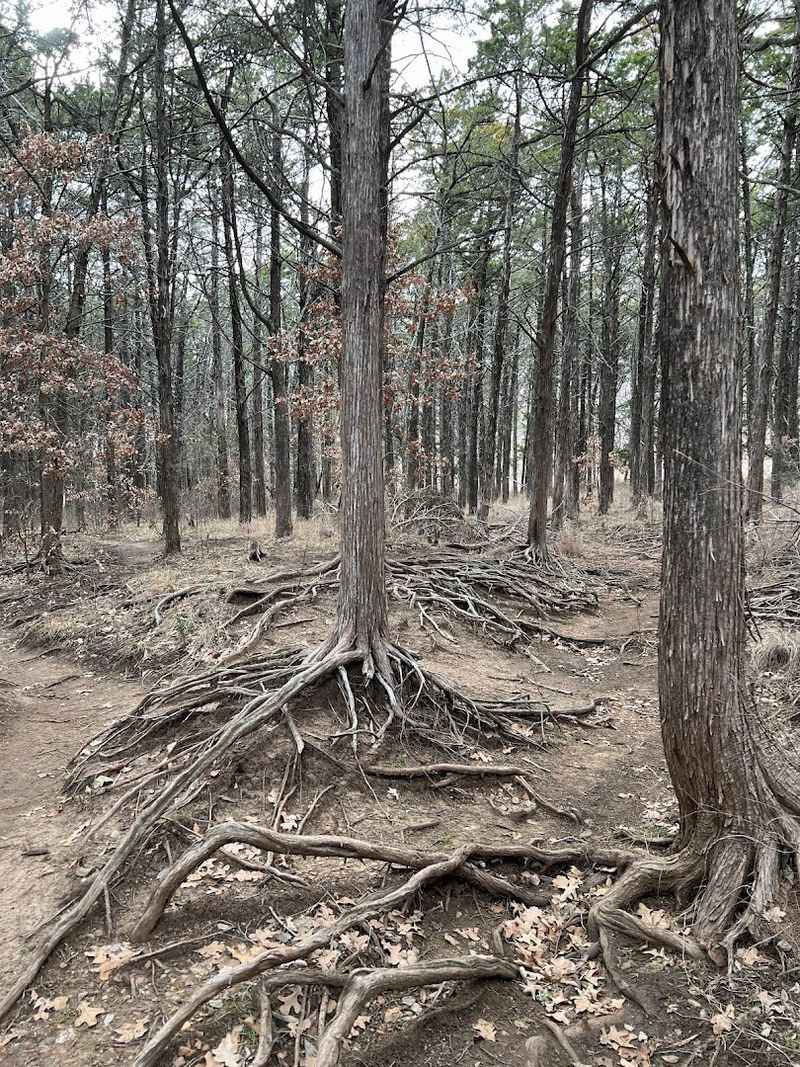
Fall is widely considered the best season to visit Parallel Forest. The Oklahoma heat in summer can make even a short hike uncomfortable, and the cedar canopy, while helpful, does not block heat the way it blocks sound.
September through November brings cooler temperatures, lower humidity, and light that sits at a flattering angle through the tree rows for most of the day.
Morning visits are generally more peaceful than afternoon or evening ones. Weekend evenings near dusk draw photographers and larger crowds, and the small parking lot fills up faster than you might expect.
Going early on a weekday almost guarantees you will have the forest largely to yourself. Bring water regardless of the season, since the Oklahoma sun has a habit of showing up even on cooler days.
Wearing layers in fall is smart since the forest interior stays cooler than the surrounding open land. Cell service can be spotty, so downloading your trail map before leaving the car is a good habit.
The parking lot is free, the trails require no permit, and the whole experience costs nothing beyond the drive.
Why This Place Stays With You Long After You Leave
There are plenty of natural attractions around the Wichita Mountains, and Oklahoma is full of outdoor spaces worth exploring. But Parallel Forest occupies a unique category all its own.
It is not the biggest forest, not the most dramatic landscape, and not the most challenging hike. What it offers instead is something harder to define: a combination of visual strangeness, quiet atmosphere, and genuine natural beauty that adds up to more than the sum of its parts.
The grid of trees is a reminder that human intervention and natural growth can sometimes produce something genuinely remarkable, even when the original purpose was purely practical. Walking those perfectly aligned rows, spotting a deer between the cedars, finding the creek on the far side, and standing in the rocky clearing with a view back over the whole scene, it all comes together in a way that feels complete.
The forest is free to visit, easy to reach, and short enough to explore in a single afternoon. For anyone passing through southwestern Oklahoma, skipping this place would be a quiet but genuine mistake, the kind you only realize once someone else tells you what you missed.
Share this story