America’s back roads are hiding some seriously weird, wonderful, and downright baffling attractions. Forget the theme parks and tourist traps; the real magic happens in tiny towns where someone decided to build a giant whale, a mountain covered in paint, or a museum dedicated entirely to canned meat.
I took a road trip last summer and stumbled onto three of these spots completely by accident, and honestly, they were the best parts of the whole trip. Buckle up, because these 16 strange small-town gems absolutely deserve a detour.
World’s Largest Ball of Twine – Cawker City, Kansas
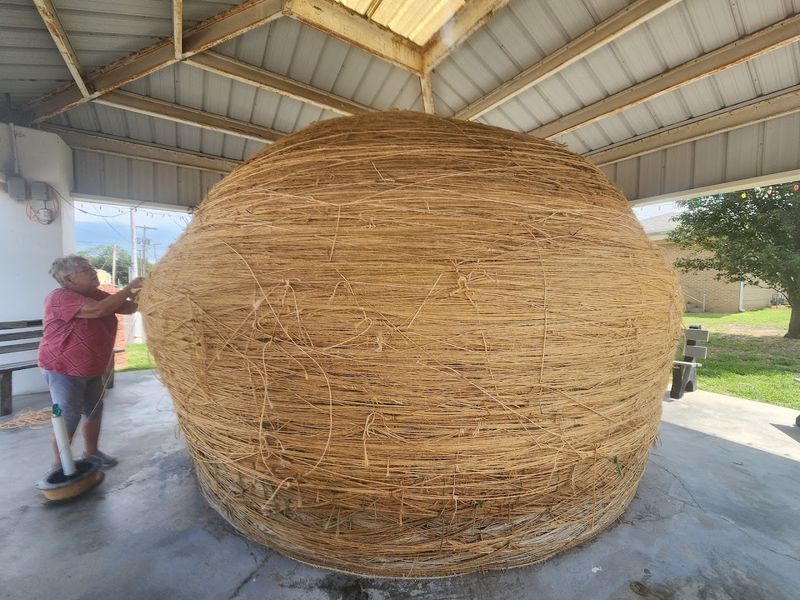
Nobody wakes up thinking, “Today I will drive to Kansas to stare at a ball of string.” Yet somehow, Cawker City’s famous twine ball makes that drive feel completely justified. Started by Frank Stoeber in 1953, this colossal sphere of sisal twine has been growing for over 70 years and now weighs more than 20,000 pounds.
What makes it genuinely cool is the community angle. Every year, locals host a “Twine-a-Thon” where visitors are invited to add their own wraps to the ball.
It is not just a relic sitting behind velvet rope; it is an actively growing landmark.
I wrapped a few feet of twine onto it myself and felt weirdly proud. The whole town embraces the weirdness with gift shops, murals, and cheerful locals who have clearly heard every “ball of twine” pun in existence.
Bring your own jokes anyway. They will appreciate the effort.
Carhenge – Alliance, Nebraska
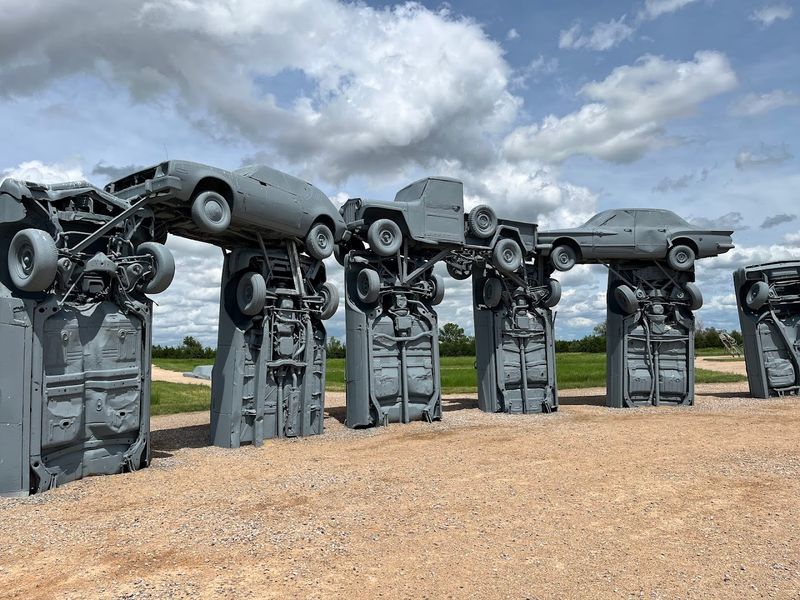
Stonehenge is impressive, sure. But has anyone ever stacked a 1962 Cadillac on top of another car to recreate it?
Jim Reinders did exactly that in 1987, building Carhenge as a tribute to his late father on the Nebraska plains. The result is equal parts art installation, road-trip legend, and glorious absurdity.
Thirty-eight vintage vehicles, all painted a uniform gray, are arranged to match the layout of England’s famous stone circle. The site also includes additional car-part sculptures scattered around the property, turning the whole visit into a quirky outdoor gallery.
Admission is free, the prairie backdrop is genuinely beautiful, and the photo opportunities are absolutely unbeatable. Carhenge works because it takes itself just seriously enough to be impressive but stays self-aware enough to be fun.
It is the rare roadside attraction that earns both a laugh and a genuine “wow.” Pack a wide-angle lens. Trust me on that.
House on the Rock – Spring Green, Wisconsin
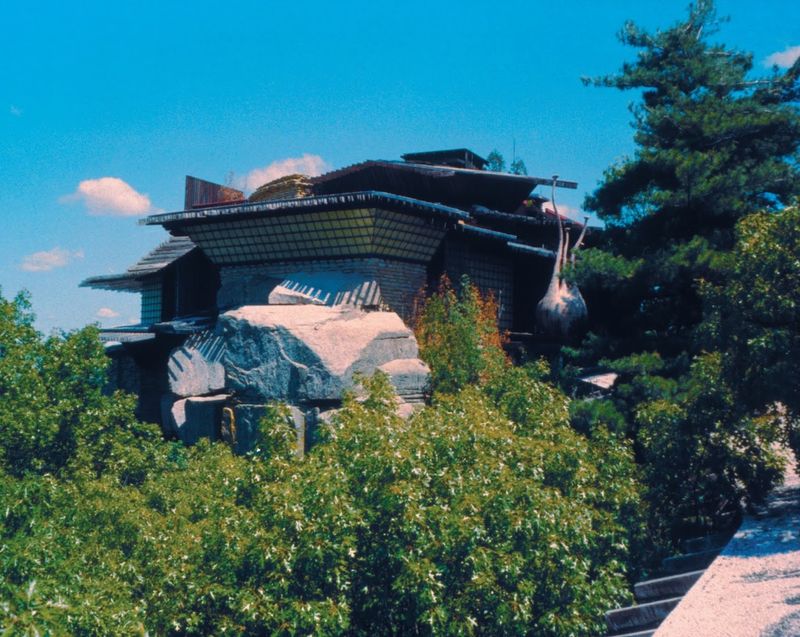
Alex Jordan built a house on a 60-foot chimney of rock in 1960, and things escalated spectacularly from there. What started as one man’s eccentric retreat became a sprawling complex of rooms, galleries, and collections that genuinely defies description.
I spent four hours inside and still felt like I missed half of it.
The Infinity Room alone is worth the trip. It juts out 218 feet over the Wyoming Valley with no visible support below, and walking to the end will test even the steadiest nerves.
Beyond that, you get mechanical orchestras, a giant whale fighting a sea monster, and carousel after carousel of bizarre beauty.
The House on the Rock is the kind of place that leaves people slightly speechless in parking lots afterward. Conversations tend to go, “Did you see the… ” followed by long pauses.
Budget a full day, wear comfortable shoes, and prepare to have your sense of “normal” permanently adjusted.
Salvation Mountain – Niland, California
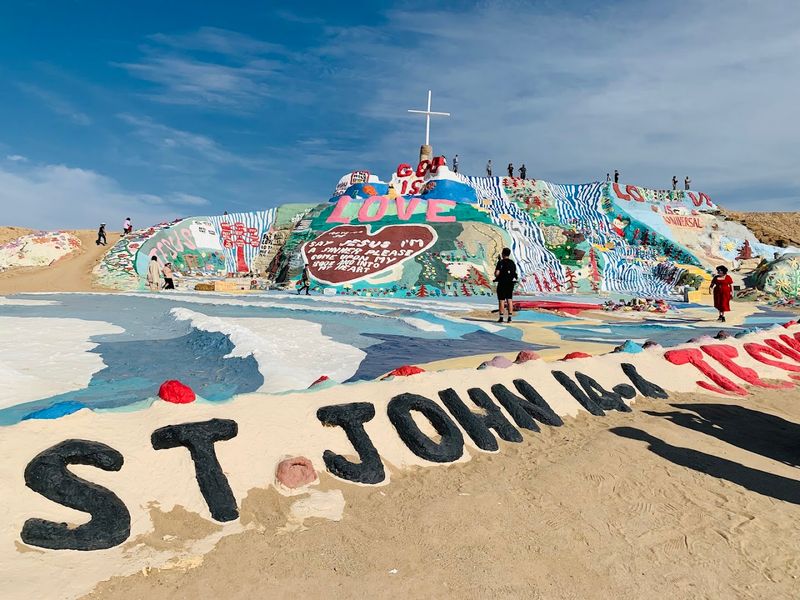
Leonard Knight showed up in the California desert in the 1980s with a can of paint and a message of love, and he never really stopped. Over decades, he built Salvation Mountain using adobe, hay, and more than 100,000 gallons of paint, creating one of the most visually striking folk-art sites in the entire country.
The mountain is covered in bright flowers, Bible verses, and the words “God Is Love” in letters large enough to read from a distance. The colors are almost aggressive in the best way possible.
Up close, the textures and layers of paint tell a story of obsessive, joyful dedication.
Leonard passed away in 2014, but volunteers continue to maintain the site and keep it open to visitors year-round. There is no admission fee, though donations are warmly welcomed.
Whether or not you share the spiritual message, the sheer commitment on display here is impossible not to respect. It is genuinely moving.
Enchanted Highway – Regent, North Dakota
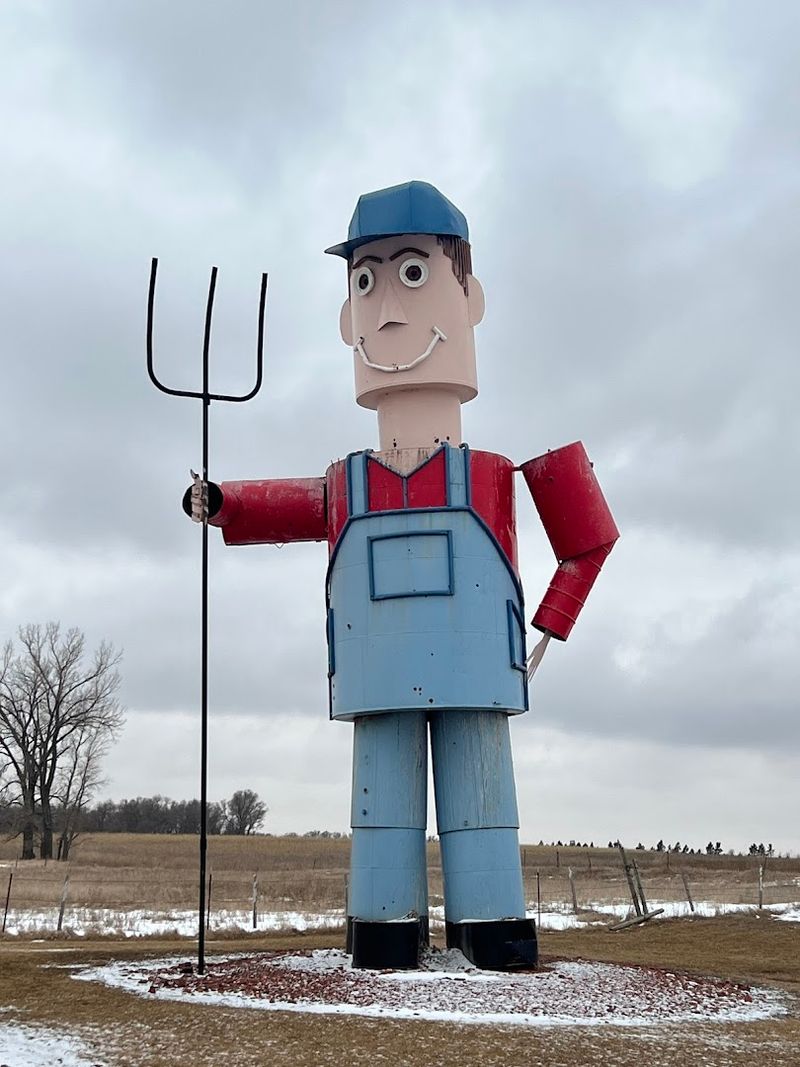
Most highways through North Dakota are, let us be honest, pretty flat and uneventful. Then Gary Greff decided to fix that.
Starting in 1989, he began welding enormous scrap-metal sculptures and placing them along a 32-mile stretch of road near the tiny town of Regent, and the result is one of the most unexpected drives in America.
The sculptures include a 110-foot-tall grasshopper, a family of deer, a school of fish leaping from the earth, and massive geese in flight. Each one is visible from miles away, which gives the whole drive a scavenger-hunt energy that keeps passengers genuinely excited.
The project was built largely to bring visitors to a struggling rural community, which makes the whole thing even more admirable. Greff funded much of it himself.
There is a small hotel in Regent at the end of the route. Stopping there feels like the right way to reward a man who turned an empty highway into public art worth celebrating.
Blue Whale of Catoosa – Catoosa, Oklahoma
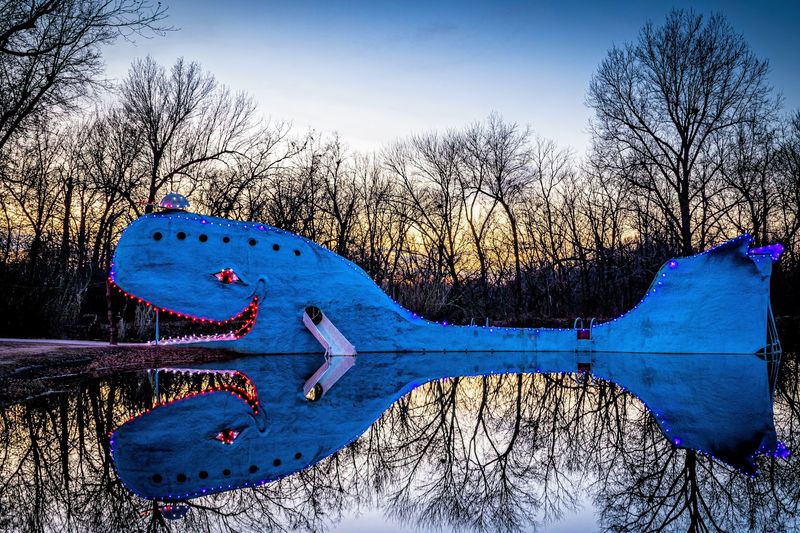
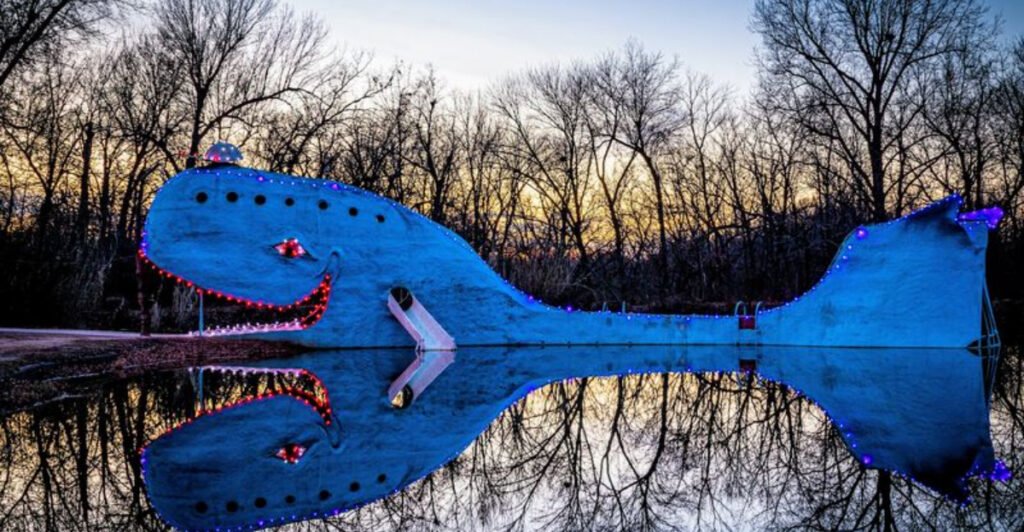
Hugh Davis built a giant blue whale in a pond as an anniversary gift for his wife, Zelta, who collected whale figurines. That sentence alone should convince you to add this stop to your road-trip list immediately.
The whale is 20 feet tall and 80 feet long, and it has been smiling at Route 66 travelers since 1972.
For years it served as a swimming hole for local kids, complete with a slide through the whale’s mouth. The swimming has since stopped, but the whale has been lovingly restored and remains one of Route 66’s most photographed landmarks.
It sits beside a small pond with turtles sunning themselves nearby, which adds to the charm considerably.
There is something genuinely heartwarming about a roadside attraction that started as a personal love letter. Catoosa leans into it fully, with the whale featured on local signage and merchandise throughout town.
Pull over, take the photo, and appreciate the fact that someone loved whales enough to build one.
UFO Watchtower – near Hooper, Colorado
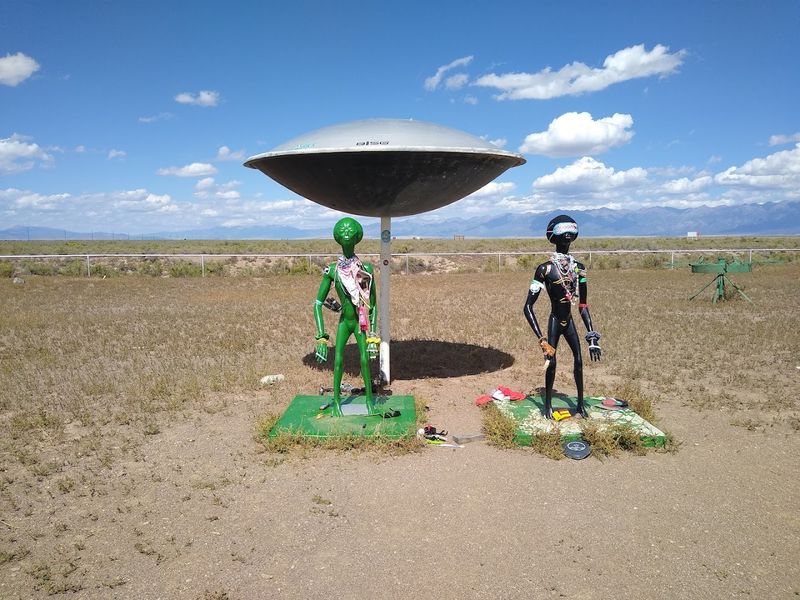
The San Luis Valley in Colorado has more reported UFO sightings per square mile than almost anywhere else in the United States. Judy Messoline decided in 2000 that the logical response was to build a watchtower, open a campground, and lean fully into the extraterrestrial reputation of her patch of desert.
Honestly, respect.
The tower itself is modest, just a two-story platform, but the surrounding “vortex garden” filled with visitor-donated trinkets and alien memorabilia makes the whole property feel like a folk-art installation. Nightly sky-watching events draw stargazers and true believers alike.
Even if you never spot anything unusual in the sky, the location is genuinely beautiful. The valley is remote, the stars are spectacular, and the campground is affordable.
Judy and her staff are enthusiastic hosts who take the UFO lore seriously without being weird about it. Whether you are a skeptic or a believer, this place delivers a uniquely Colorado experience that is hard to replicate anywhere else.
International Banana Museum – Mecca, California
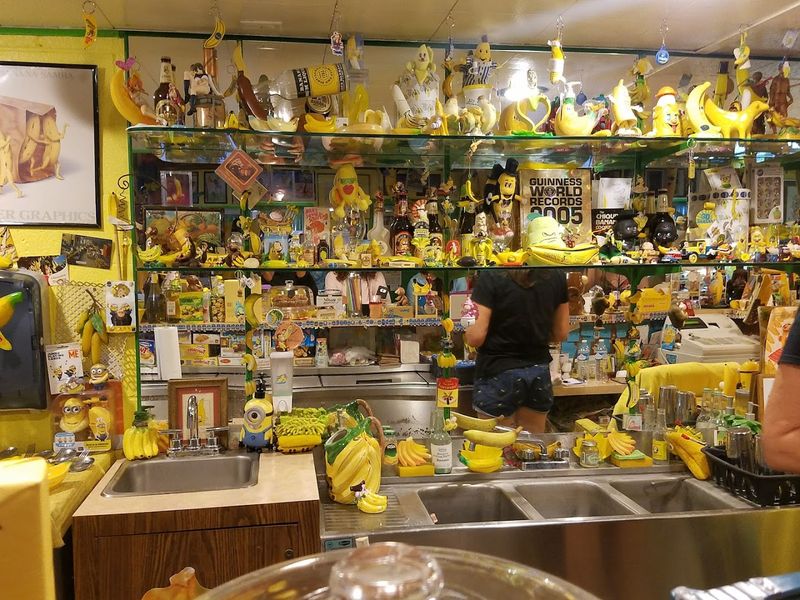
Ken Bannister, a man who apparently decided that one banana was never enough, spent decades assembling what is now certified as the world’s largest collection devoted to a single fruit. Over 20,000 banana-related items fill this small museum near the Salton Sea, and the density of banana chaos inside is something you have to witness personally.
We are talking banana phones, banana costumes, banana art, banana clocks, and banana-shaped everything. The gift shop sells banana-flavored soft-serve, which is the correct way to end any museum visit.
The whole experience takes maybe 45 minutes, but those are 45 very yellow, very memorable minutes.
The museum is located in a genuinely remote part of California, which makes finding it feel like a small adventure. Admission is minimal.
The Salton Sea is nearby and worth a visit on the same trip for completely different reasons. Few places on earth can deliver this particular combination of absurdity and sincerity.
The banana collection is real, and it is spectacular.
Coral Castle – Homestead, Florida
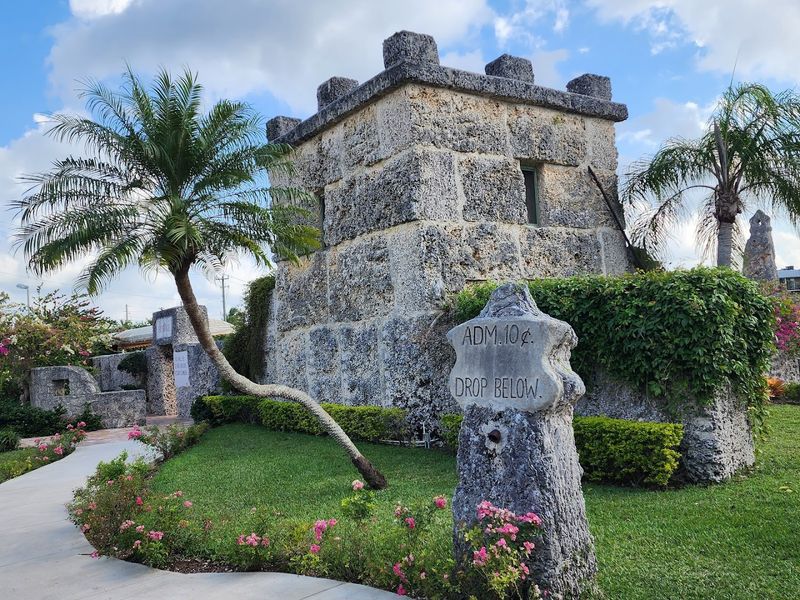
Edward Leedskalnin was a Latvian immigrant who, after being jilted by his teenage fiancee, moved to Florida and spent 28 years carving and moving massive coral rock structures entirely by himself. Nobody ever saw him do it.
Nobody knows exactly how he did it. The mystery is part of the whole appeal.
The finished site includes a nine-ton gate that once swung open with a single finger, stone furniture, a functioning sundial, and walls made of 8-foot-tall coral blocks. Engineers have studied the place for decades without landing on a satisfying explanation for the construction methods used.
Coral Castle opened as a tourist attraction in 1923 and has been drawing curious visitors ever since. Tours are available and genuinely informative, though they tend to raise more questions than they answer.
Located just south of Miami, it makes a natural add-on to any South Florida road trip. Few places reward the question “how did one person do all this?” quite so thoroughly.
Dinosaur Gardens – Ossineke, Michigan
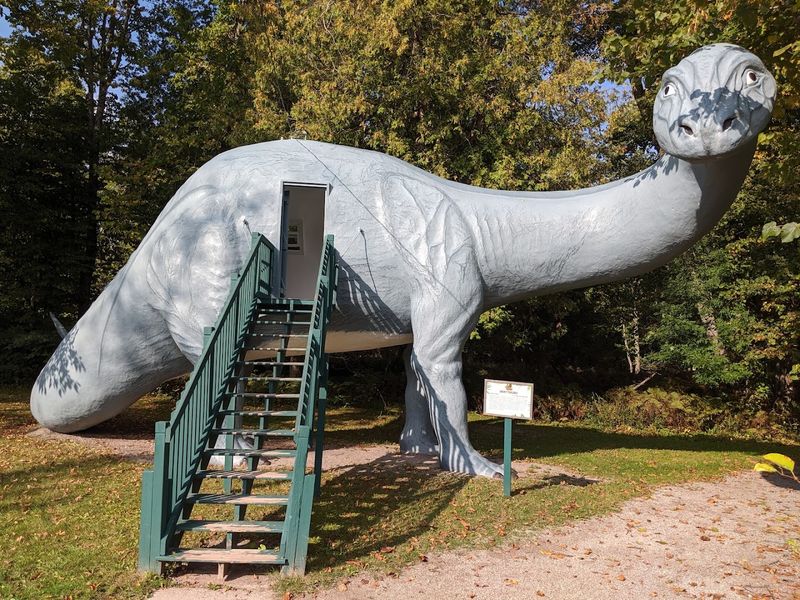
Paul Domke opened Dinosaur Gardens in 1935 with a simple vision: build really big dinosaurs in the Michigan woods and charge people to walk past them. Decades later, the place still operates, and the slightly weathered concrete creatures have taken on a charm that modern CGI simply cannot replicate.
Retro cool is a real thing.
The property features over two dozen prehistoric creatures spread across a forested trail, including a brontosaurus that towers above the tree line and a T. rex that looks ready to deliver a strongly worded lecture. The religious-themed additions Domke included throughout give the whole experience an extra layer of fascinating weirdness.
Dinosaur Gardens sits along US-23 in northern Michigan, making it a natural pit stop on a Lake Huron road trip. Kids absolutely love it.
Adults who grew up stopping here on family vacations get hit with a wave of nostalgia so strong it is almost physical. Sometimes the best attractions are the ones that have been quietly great for 90 years.
Ave Maria Grotto – Cullman, Alabama
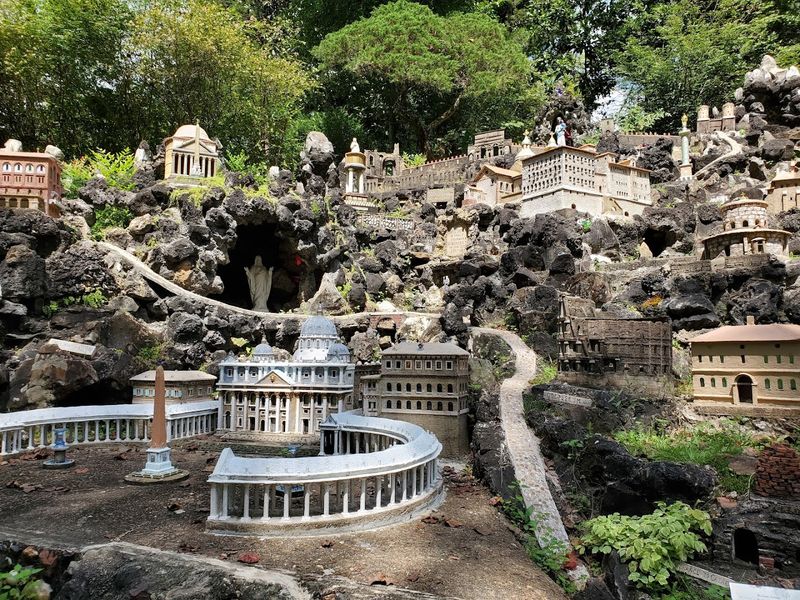
Brother Joseph Zoettl was a Benedictine monk who stood just four and a half feet tall and spent his free time building an entire miniature world by hand. Over several decades, he constructed more than 125 small-scale reproductions of famous religious sites and world landmarks using concrete, broken tiles, marbles, and whatever scraps he could find.
The collection includes tiny versions of St. Peter’s Basilica, the Lourdes Grotto, the Colosseum, and dozens of lesser-known religious sites from around the world. Each piece is packed with detail that rewards slow, close looking.
The grounds are peaceful and beautifully maintained by the abbey that still surrounds the site.
Located in Cullman, Alabama, Ave Maria Grotto is open year-round and charges a modest admission. It is the kind of attraction that surprises people who expect something kitsch and instead find something genuinely moving.
Brother Zoettl’s patience and creativity produced something that outlasted him by decades and keeps earning new admirers every year.
Jolly Green Giant Museum and Statue – Blue Earth, Minnesota
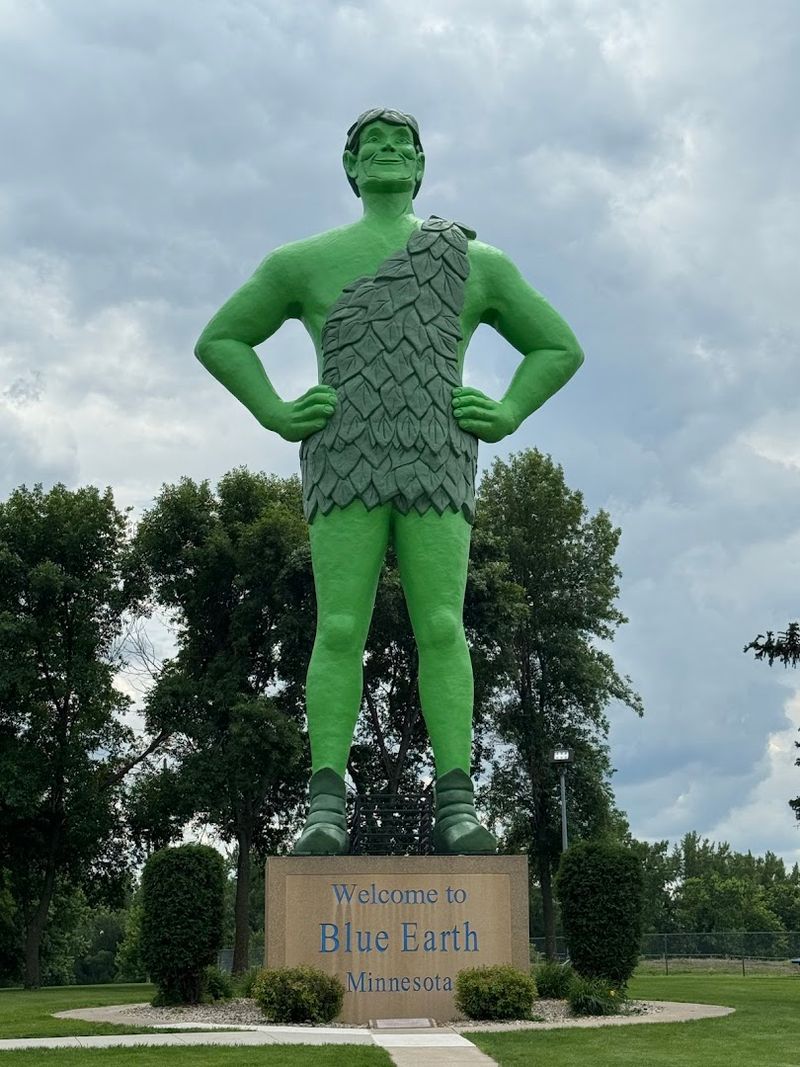
Blue Earth, Minnesota, is a town of about 3,200 people that decided to fully commit to being the Jolly Green Giant’s hometown. The result is a 55-foot-tall fiberglass statue of the iconic green mascot standing watch over the highway, plus a museum packed with Green Giant memorabilia dating back decades.
Ho ho ho, indeed.
The museum covers the history of the Green Giant brand, which has deep roots in the area thanks to local canning operations. Vintage cans, advertisements, and promotional items fill the displays in a way that feels genuinely nostalgic rather than just corporate.
The statue is free to visit and sits right off Interstate 90, making it one of the most accessible stops on this entire list. Blue Earth leans into the Giant theme with cheerful local pride that never feels forced.
There is a gift shop, naturally. Few things in American road-trip culture hit quite like a 55-foot vegetable mascot greeting you from a cornfield in southern Minnesota.
Lucy the Elephant – Margate, New Jersey
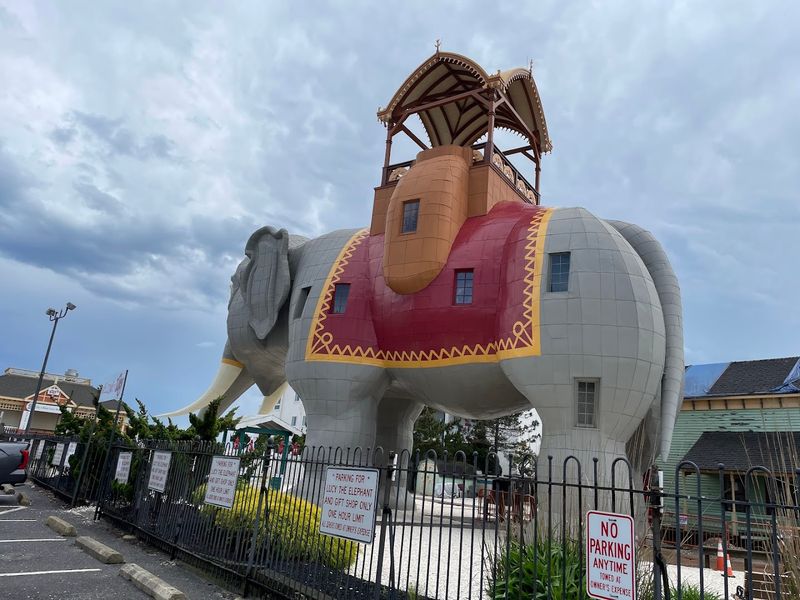
Built in 1881 as a real estate gimmick, Lucy the Elephant is a six-story tin-and-wood structure shaped like an elephant, complete with a howdah on top that once served as an observation deck. She has been a tavern, a summer cottage, and a real estate office over the years, which is a career arc most buildings can only dream about.
Lucy was declared a National Historic Landmark in 1976, making her one of the few roadside novelties in America to receive that level of official recognition. Tours run regularly and take visitors through the interior, which is more spacious than you expect from the outside.
Located in Margate, just south of Atlantic City, Lucy fits naturally into any Jersey Shore road trip. The surrounding neighborhood is residential and quiet, which makes stumbling across a six-story elephant feel even more surreal.
Admission is affordable, the guides are enthusiastic, and the photo from across the street is genuinely one of the best roadside shots on the East Coast.
SPAM Museum – Austin, Minnesota
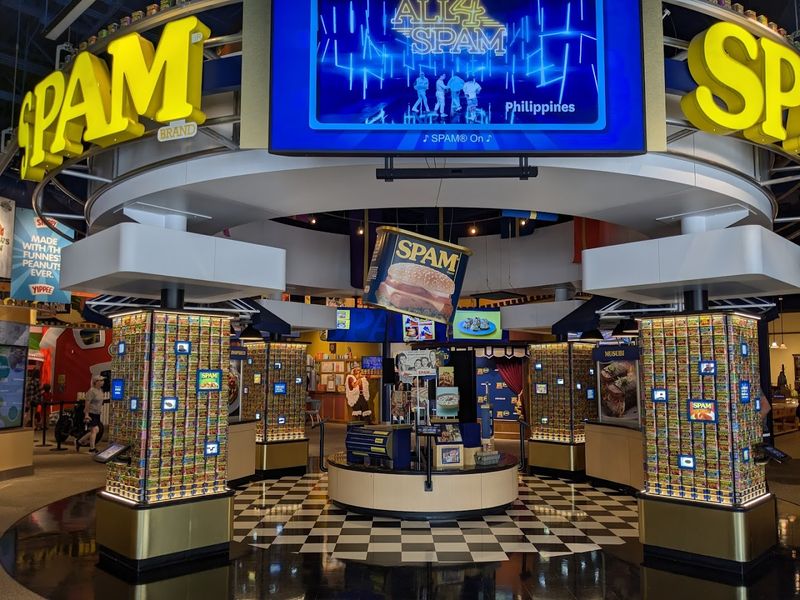
Austin, Minnesota, is the birthplace of SPAM, and the town is not remotely shy about it. The SPAM Museum opened in 2001 and has since become one of the most visited free attractions in the state, which says a lot about both the power of nostalgia and the enduring cultural footprint of a canned meat product introduced in 1937.
Inside, interactive exhibits trace SPAM’s history from its Depression-era origins through its role feeding Allied troops in World War II to its current status as a global comfort food with devoted fans in Hawaii, South Korea, and the Philippines. The museum takes its subject seriously, and that sincerity makes it genuinely fun.
Admission is completely free, parking is easy, and the gift shop sells every SPAM-related item you never knew you needed. I left with a SPAM Christmas ornament and zero regrets.
Austin itself is a pleasant small city worth exploring beyond the museum. Few stops on a Minnesota road trip deliver this much personality per square foot.
Forevertron – Sumpter/North Freedom area, Wisconsin
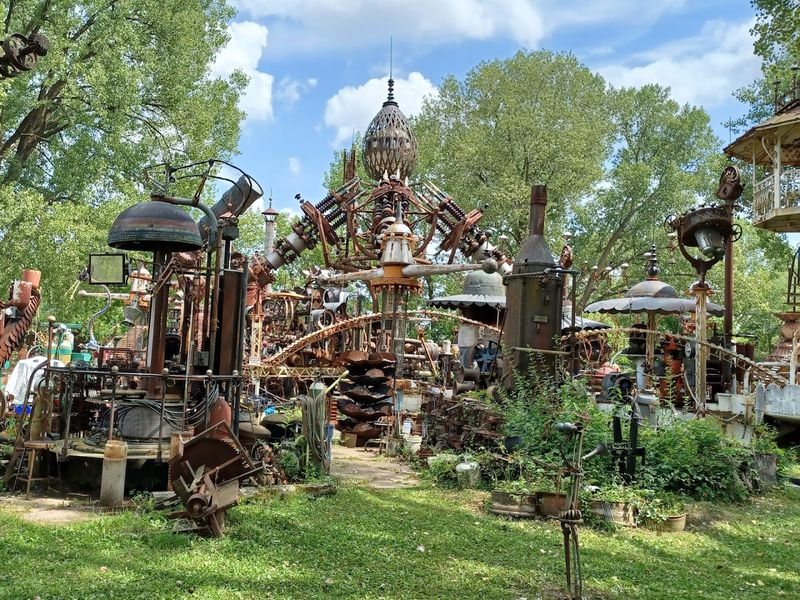
Tom Every, who went by Dr. Evermor, spent decades welding together the largest scrap-metal sculpture on earth in a field outside North Freedom, Wisconsin. The Forevertron stands roughly 50 feet tall and stretches 120 feet wide, built from salvaged industrial equipment including parts from the Apollo space program.
That detail alone earns it a spot on this list.
The sculpture is meant to represent a machine capable of launching its creator into the cosmos inside a glass and copper egg. Whether or not that sounds like the plan of a reasonable person, the result is extraordinary.
Surrounding pieces include giant birds, insects, and a full “band” of scrap-metal musicians.
Dr. Evermor passed away in 2020, but the site remains open and is maintained by his family. It sits beside a salvage yard on Highway 12, which somehow makes the whole thing feel more authentic.
No admission is charged. Bring a camera with a wide lens, because standard shots will not capture the scale of what this one person built.
Mystery Hole – Ansted, West Virginia
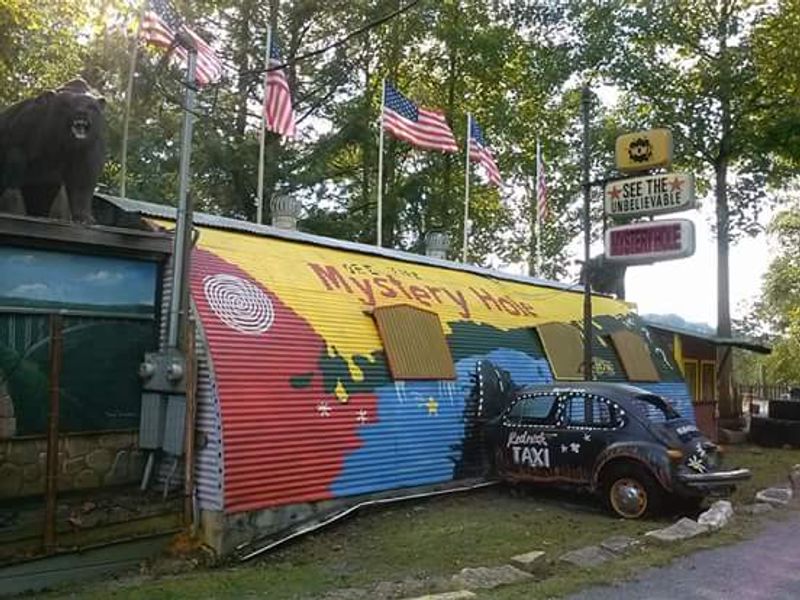
The Mystery Hole has been confusing and delighting visitors in Ansted, West Virginia, since the 1970s, and the hand-painted signs outside do not oversell the experience one bit. Step inside the tilted rooms and suddenly water runs uphill, people lean at impossible angles, and your brain quietly files a formal complaint with your eyes.
The whole thing is built on the classic “mystery spot” concept, where carefully angled rooms create optical illusions that make gravity seem optional. It is unabashedly kitschy, and that is exactly the point.
There is no pretension here, just pure, old-school roadside fun delivered with Appalachian charm.
Ansted sits along the New River Gorge area, so the Mystery Hole pairs nicely with actual outdoor adventures nearby. Admission is cheap, the tour is short, and the gift shop sells the kind of souvenirs that end up on refrigerators for 20 years.
Sometimes the best road-trip stops are the ones that never tried to be anything other than exactly what they are.
Share this story