National parks get most of the fame, but state parks across the country are quietly delivering some of the most jaw-dropping scenery, wildlife, and adventures you can find outdoors. Many of them offer the same incredible landscapes as their federally protected neighbors — minus the packed parking lots and long reservation waitlists.
From towering waterfalls and fiery canyons to starlit skies and roaming bison, these 15 state parks prove that you don’t need a national park pass to have an unforgettable experience.
Dead Horse Point State Park – Utah
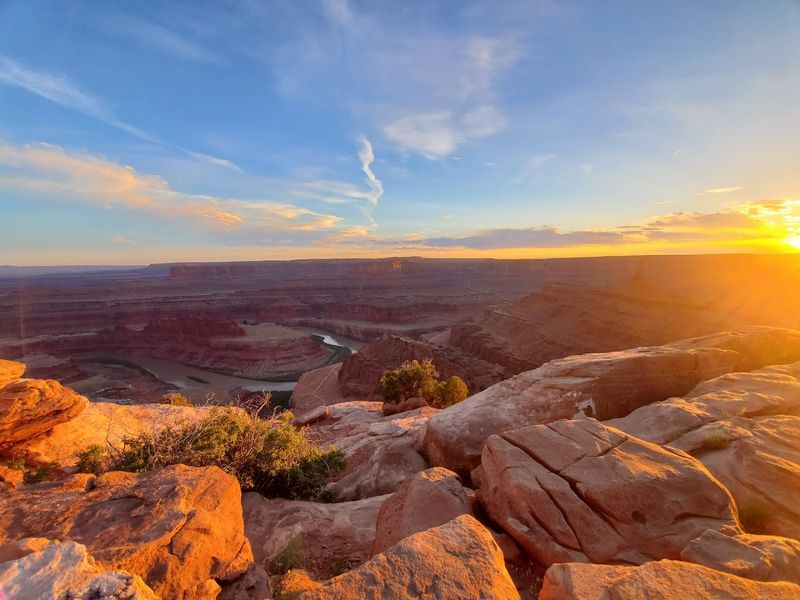
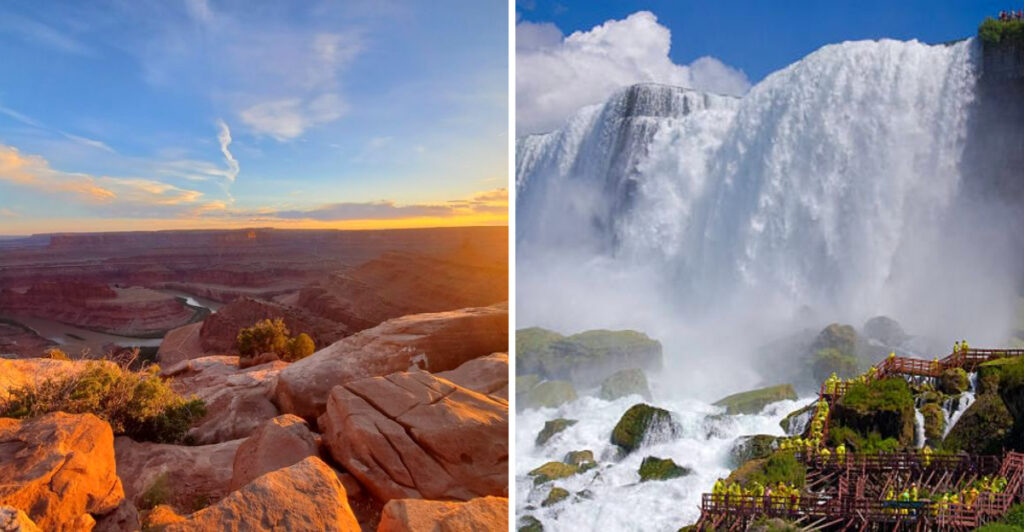
Standing at the edge of Dead Horse Point feels like the ground just dropped out from under the world — in the best way possible. Perched more than 2,000 feet above the Colorado River, this park hands you views that could make even a seasoned traveler go completely speechless.
The winding river below looks like a blue ribbon tossed into a sea of red rock.
Nearby Canyonlands National Park gets most of the attention, but Dead Horse Point delivers equally stunning scenery with a fraction of the foot traffic. Parking is easier, trails feel less rushed, and you can actually stand at an overlook without elbowing anyone out of the way.
That alone is worth the drive.
Photographers especially love this park during the golden hours of sunrise and sunset, when the canyon walls shift through shades of orange, crimson, and deep purple. The park also offers camping, mountain biking on the Intrepid Trail System, and stargazing under some of Utah’s darkest skies.
Whether you spend one hour or one weekend here, Dead Horse Point has a way of staying with you long after you’ve left.
Emerald Bay State Park – California
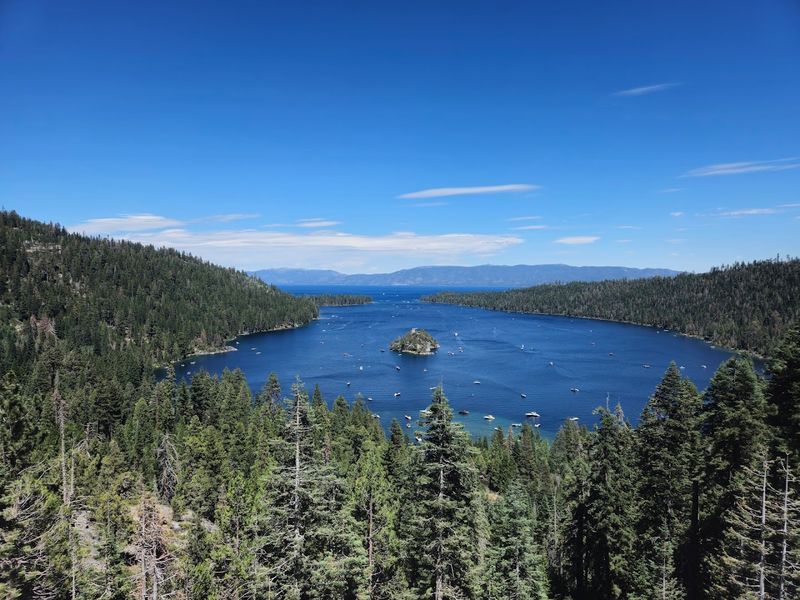
The color of the water at Emerald Bay isn’t a filter — it’s actually that unbelievably blue-green in real life. Tucked into the southwest corner of Lake Tahoe, this state park is the kind of place that makes people stop mid-sentence just to stare.
The surrounding Sierra Nevada mountains frame the bay like a painting that’s almost too pretty to believe.
Beyond the views, the park packs in a surprising variety of things to do. Hikers can follow trails down to the shoreline, kayakers paddle around Fannette Island, and history buffs can tour Vikingsholm — a 1929 Scandinavian-style mansion that somehow ended up sitting right at the water’s edge.
It’s not every day a historic castle comes with a mountain lake backdrop.
Summer brings the biggest crowds, but even then, the park manages to feel more relaxed than many national parks. Arriving early in the morning rewards visitors with calm water, soft light, and a peaceful atmosphere that feels almost private.
Fall is another great option, when the aspen trees turn gold and the crowds thin out considerably. Emerald Bay earns its name every single season.
Niagara Falls State Park – New York
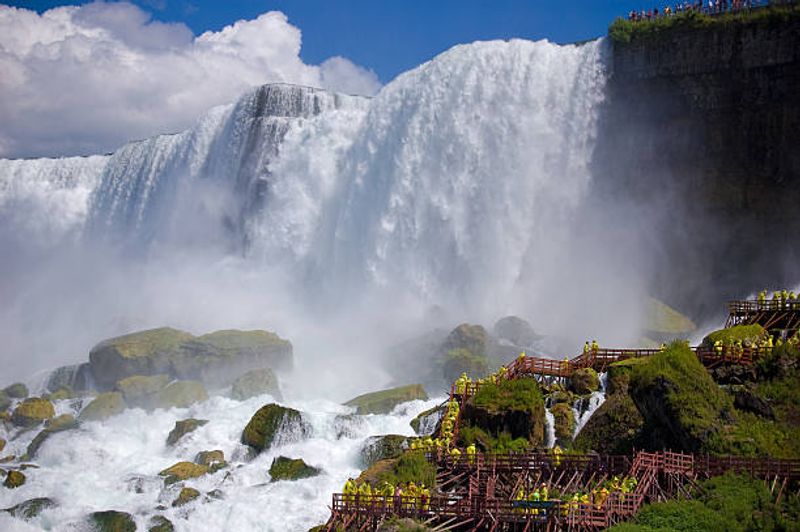
Niagara Falls State Park has been welcoming visitors since 1885, making it the oldest state park in the entire United States — and it still manages to leave every single visitor completely stunned. The sheer volume of water crashing over those falls is almost impossible to process until you’re standing right there, soaking in the mist and the noise and the raw power of it all.
No photo truly captures it.
What makes this park special beyond the obvious spectacle is how close you can actually get to the action. The Maid of the Mist boat tour takes passengers directly into the churning base of the falls, while the Cave of the Winds experience lets visitors walk along wooden walkways just feet from the rushing water.
Rain ponchos are provided — and absolutely necessary.
The park surrounds the American Falls, Bridal Veil Falls, and offers views of the famous Horseshoe Falls on the Canadian side. Trails wind along the Niagara Gorge for quieter, less-crowded perspectives.
Visiting in the off-season — late fall or early spring — means shorter lines and a moodier, more dramatic atmosphere. Niagara Falls existed long before national parks did, and it’s still in a league of its own.
Palo Duro Canyon State Park – Texas
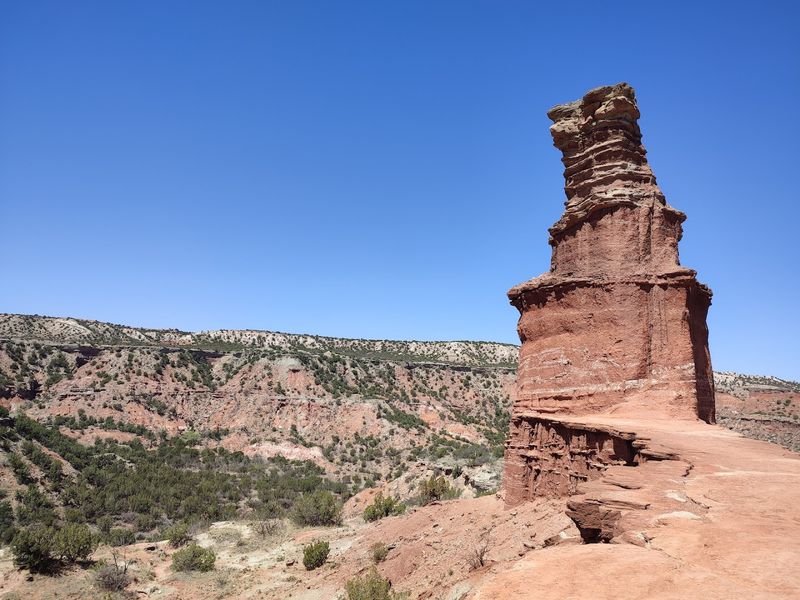
Texas doesn’t do anything small, and Palo Duro Canyon is proof. Stretching 120 miles long and dropping nearly 800 feet deep, this is the second-largest canyon in the United States — and most people have never even heard of it.
That’s honestly their loss, because the scenery here is absolutely remarkable.
The canyon’s colorful rock layers tell 250 million years of geological history, shifting from deep red to orange to pale yellow as you hike through. The Lighthouse Trail is the most popular route, leading to a stunning rock pillar formation that looks like it belongs on a movie set.
Horseback riding, mountain biking, and even an outdoor musical drama performed each summer add to the park’s appeal.
Compared to the Grand Canyon, Palo Duro is far more accessible and far less crowded. You can drive right into the canyon, set up camp near the canyon floor, and wake up surrounded by those towering rock walls without fighting for a campsite reservation months in advance.
Sunsets here are genuinely special — the canyon walls absorb the light and seem to glow from within. If you’re road-tripping through Texas, skipping Palo Duro would be a serious mistake.
Deception Pass State Park – Washington
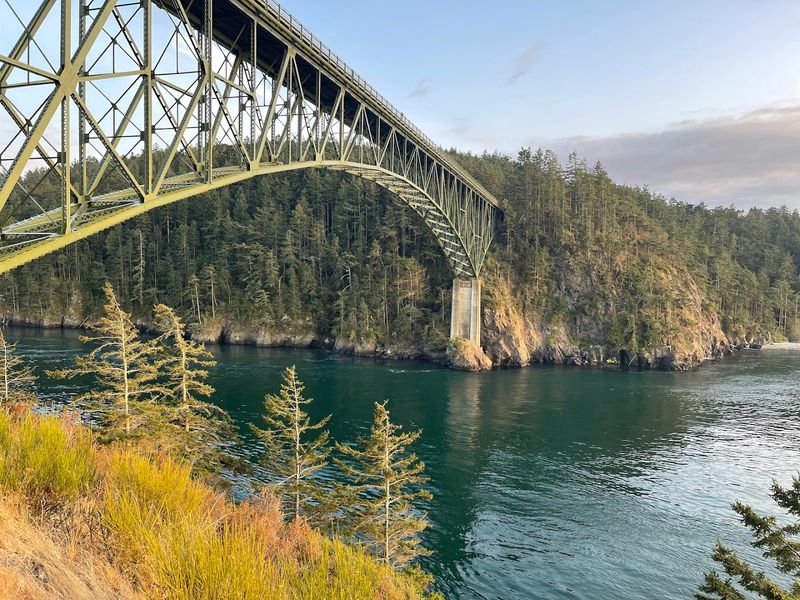
Few bridges in America are as dramatic to walk across as the one at Deception Pass. Built in 1935, the bridge spans a narrow, churning channel between Whidbey Island and Fidalgo Island, with water rushing below and forest-covered cliffs rising on both sides.
Looking down from the railing is simultaneously terrifying and completely thrilling.
Washington State’s most-visited state park packs an impressive variety of landscapes into one relatively compact area. Sandy beaches, old-growth forests, rocky bluffs, and calm freshwater lakes all exist within the same park boundaries.
You can swim in the morning, hike through towering Douglas firs in the afternoon, and watch the sunset over Puget Sound in the evening — all without moving your car.
Wildlife sightings are common here, including bald eagles, harbor seals, and great blue herons. The tidal currents at the pass itself create a constantly changing, hypnotic flow of water that photographers and kayakers both love.
Camping options range from tent sites tucked among the trees to spots with water views. Deception Pass delivers the kind of rugged Pacific Northwest scenery that makes people move to Washington in the first place — and it does it without a national park entrance fee.
Bear Head Lake State Park – Minnesota
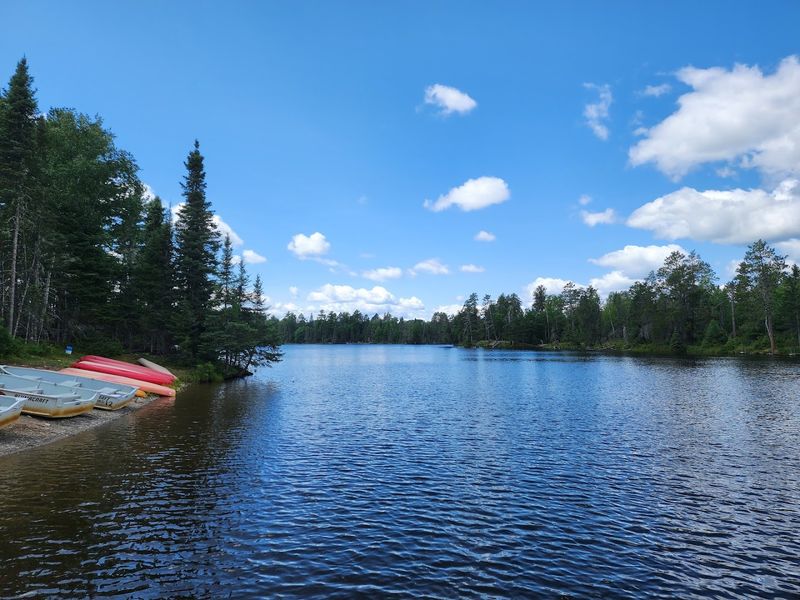
Loons calling across a mirror-still lake at dusk — that’s the sound of Bear Head Lake State Park, and once you’ve heard it, you’ll understand why people return here year after year. Tucked in the heart of the Northwoods near Ely, Minnesota, this park captures everything magical about the boundary waters region without requiring a permit or a multi-day paddling commitment.
The park covers over 4,000 acres of forest and connects to a chain of small lakes perfect for canoeing and kayaking. Wildlife is abundant — black bears, otters, osprey, and white-tailed deer are regular sightings.
Fishing is excellent, with walleye and northern pike drawing anglers throughout the warmer months. In winter, the park transforms into a cross-country skiing and snowshoeing destination with a completely different kind of quiet beauty.
Camping here feels genuinely remote, even though the facilities are comfortable and well-maintained. Canoe-in campsites add an extra layer of adventure for those willing to paddle a short distance from the main launch area.
The park also sits near the edge of the Boundary Waters Canoe Area Wilderness, making it an ideal base for day trips into that legendary landscape. Bear Head Lake offers wilderness-level peace without wilderness-level logistics.
Black Rock Mountain State Park – Georgia
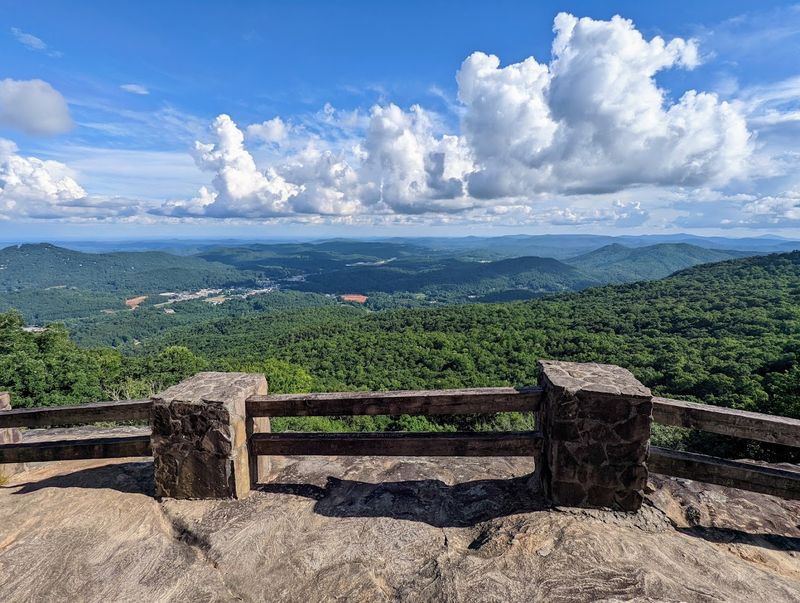
At nearly 3,640 feet above sea level, Black Rock Mountain is the highest state park in Georgia — and the views from the top make every switchback on the drive up completely worth it. On a clear day, visitors can see into four states from the mountain’s rocky overlooks.
That’s not a bad payoff for a state park entrance fee.
The park sits in the Blue Ridge Mountains near the town of Clayton, and its rugged terrain feels far more dramatic than most people expect from a Georgia state park. The Tennessee Rock Trail is a favorite, looping through hardwood forests and granite outcrops before rewarding hikers with sweeping ridge views.
Spring brings wildflowers and rushing waterfalls fed by snowmelt, while fall transforms the mountainsides into a blaze of red, orange, and gold.
Wildlife is plentiful throughout the year, with black bears, wild turkeys, and white-tailed deer frequently spotted along the trails. The park also offers cottages and camping for those who want to extend their stay and catch the mountain sunrise from above the clouds.
Compared to the Great Smoky Mountains just to the north, Black Rock Mountain sees far fewer visitors — which makes the trails feel refreshingly uncrowded and the scenery feel almost exclusively yours.
Ohiopyle State Park – Pennsylvania
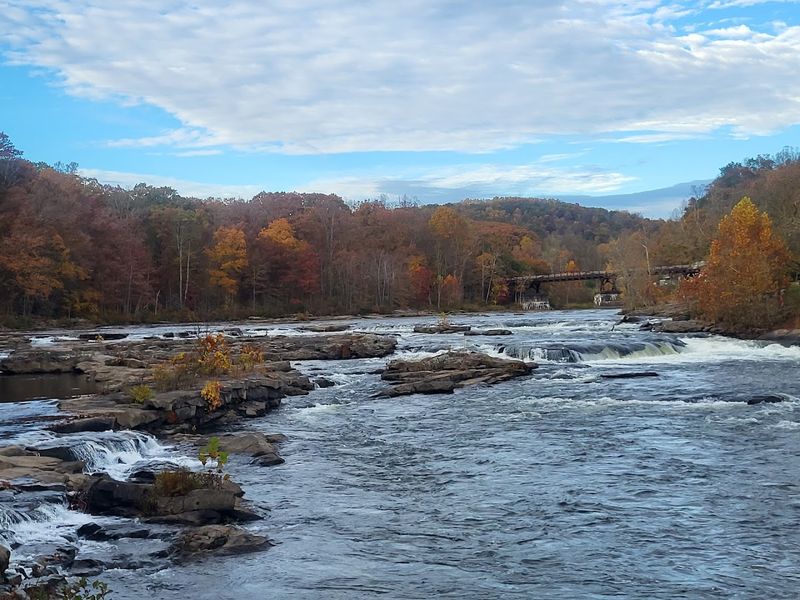
The Youghiogheny River — locals just call it the Yough — tears through Ohiopyle State Park with an energy that gets your heart rate up before you’ve even put on a life jacket. This southwestern Pennsylvania gem is one of the top whitewater destinations on the East Coast, drawing rafters and kayakers from hundreds of miles away every summer.
The rapids range from family-friendly floats to genuinely challenging Class IV runs.
Water isn’t the only attraction here. The park contains nearly 80 miles of trails, including sections of the Great Allegheny Passage — a rail-trail that stretches all the way to Pittsburgh.
Cucumber Falls and Ohiopyle Falls are two of the park’s most photographed spots, tucked into forested gorges where the light filters through the canopy in dramatic, moody ways.
Budget-conscious outdoor lovers take note: Ohiopyle has been repeatedly ranked among the best value state parks in the entire country. Camping options are plentiful, and many of the park’s best features — the waterfalls, the trails, the scenic overlooks — are completely free to enjoy.
Frank Lloyd Wright’s Fallingwater is just a short drive away, making Ohiopyle an easy anchor for a longer regional road trip. Adventure and accessibility rarely come packaged this well together.
Hocking Hills State Park – Ohio
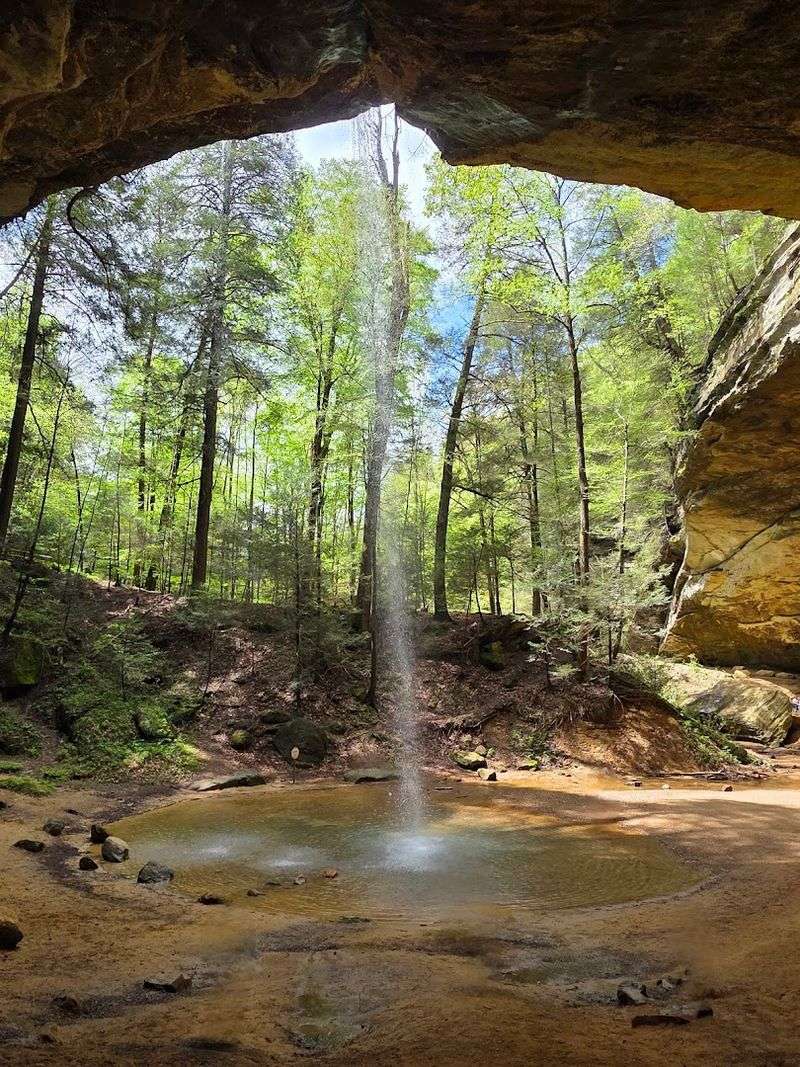
Ohio is not the first state that comes to mind when you think of dramatic wilderness — but Hocking Hills has been quietly proving that assumption wrong for decades. Hidden within its forested hills are sandstone caves, towering recess caves, and waterfalls that feel genuinely wild and ancient.
Old Man’s Cave is the park’s most iconic spot, a sprawling gorge system carved by glacial meltwater thousands of years ago.
The trail system connects six distinct natural areas, each with its own personality. Ash Cave features a massive semicircular recess with a ribbon waterfall dropping from the rim above.
Cedar Falls is often considered the most beautiful waterfall in Ohio, surrounded by hemlocks and mossy rocks that stay green even in winter. The trails are well-maintained and relatively short, making the park accessible for families and casual hikers.
Fall and winter visits reveal a completely different side of Hocking Hills. Ice formations coat the cave walls in January, creating surreal frozen landscapes that look nothing like the lush green version seen in summer.
The park draws around five million visitors annually, so weekday visits are strongly recommended. Despite the traffic, Hocking Hills manages to feel surprisingly intimate — the terrain is compact, the scenery is exceptional, and the whole place has an unmistakably wild soul.
Custer State Park – South Dakota
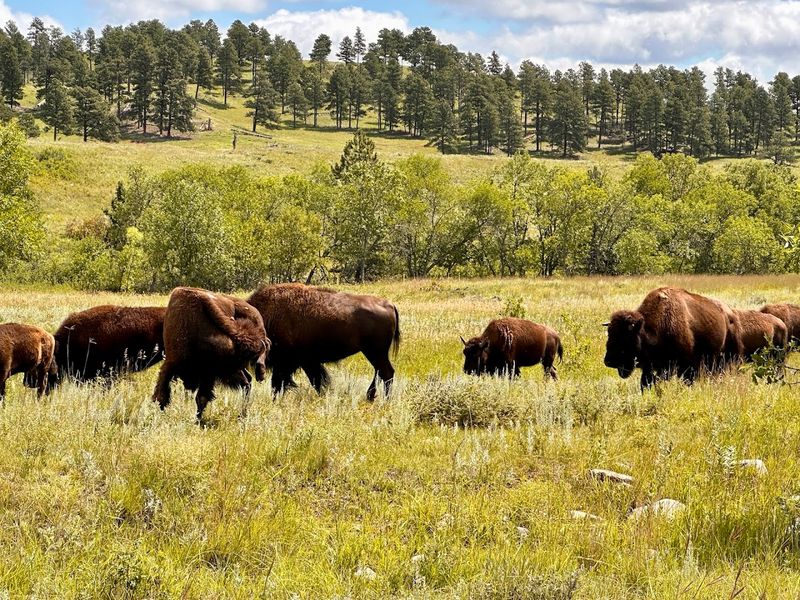
About 1,300 bison roam freely through Custer State Park, and occasionally they decide that the road belongs to them — which it kind of does. The annual Buffalo Roundup each September is one of the most spectacular wildlife events in the entire country, drawing thousands of spectators to watch cowboys and helicopters herd the massive animals across the open prairie.
It’s chaotic, loud, and absolutely unforgettable.
The park spans nearly 71,000 acres in the Black Hills of South Dakota, offering granite peaks, clear mountain lakes, and some of the most scenic drives in the American West. The Wildlife Loop Road is a must-do, winding through open meadows where pronghorn antelope, wild burros, white-tailed deer, and coyotes are regular sightings alongside the bison.
The famous Needles Highway adds a dramatic twist, threading through towering granite spires on a road that barely fits two cars.
Camping, fishing, kayaking, and horseback riding round out the activity list. The park also sits conveniently close to Mount Rushmore, Wind Cave National Park, and Badlands National Park, making it a natural hub for a Black Hills road trip.
Custer offers the wildlife drama and scenic grandeur of a national park — with the pricing and flexibility of a state park.
Valley of Fire State Park – Nevada
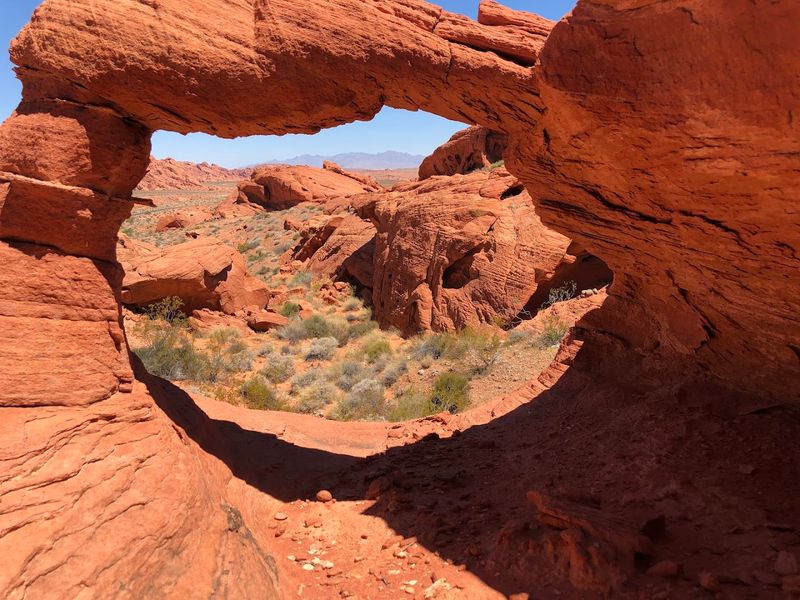
Mars called — it wants its landscape back. Valley of Fire State Park sits about an hour northeast of Las Vegas, and its alien-looking terrain of fiery red sandstone formations is so otherworldly that it has been used as a filming location for science fiction movies and TV shows.
The rock formations glow an almost electric orange during golden hour, creating a light show that no Vegas casino could ever compete with.
The park gets its name from the way sunlight reflects off the Aztec sandstone, which was formed from ancient sand dunes more than 150 million years ago. Ancient petroglyphs carved by the Ancestral Puebloans are scattered throughout the park, adding a fascinating layer of human history to the geological spectacle.
Atlatl Rock and Petroglyph Canyon are the best spots to see these remarkable carvings up close.
Despite being Nevada’s oldest and largest state park, Valley of Fire remains surprisingly uncrowded compared to nearby Zion or Arches national parks. The best times to visit are spring and fall, when temperatures are manageable and the low-angle sunlight makes the rocks glow even more intensely.
Sunrise visits are particularly magical — you might have an entire canyon of blazing red rock almost entirely to yourself. That’s a rare thing anywhere near Las Vegas.
Silver Falls State Park – Oregon
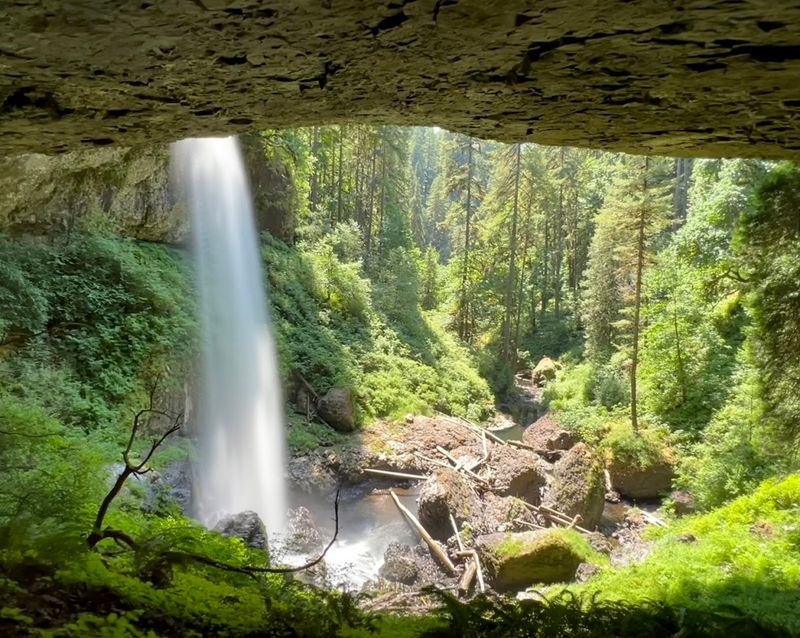
Walking behind a waterfall sounds like something from a fantasy novel, but at Silver Falls State Park, it’s just a Tuesday. The Trail of Ten Falls is one of the most celebrated hikes in the Pacific Northwest, looping through old-growth forest and passing behind — not just beside — several of its ten named waterfalls.
South Falls, the largest at 177 feet, is the showstopper, but every single waterfall along the trail earns its moment.
Oregon’s largest state park covers more than 9,000 acres of Cascade foothills, and the trail system goes well beyond the famous waterfall loop. Horse trails, mountain biking paths, and backcountry camping options give the park plenty of depth for repeat visitors.
The old-growth Douglas firs and bigleaf maples create a canopy so thick that even rainy days feel magical rather than miserable — which is convenient, given Oregon’s weather reputation.
Spring and early summer bring peak waterfall flow, when snowmelt and rain send maximum water over every falls. Fall is equally beautiful, with golden maple leaves floating through the mist near the canyon floors.
The park has been so beloved for so long that it was once considered for national park designation. Honestly, it didn’t need the upgrade — Silver Falls is already perfect exactly as it is.
Adirondack Park – New York
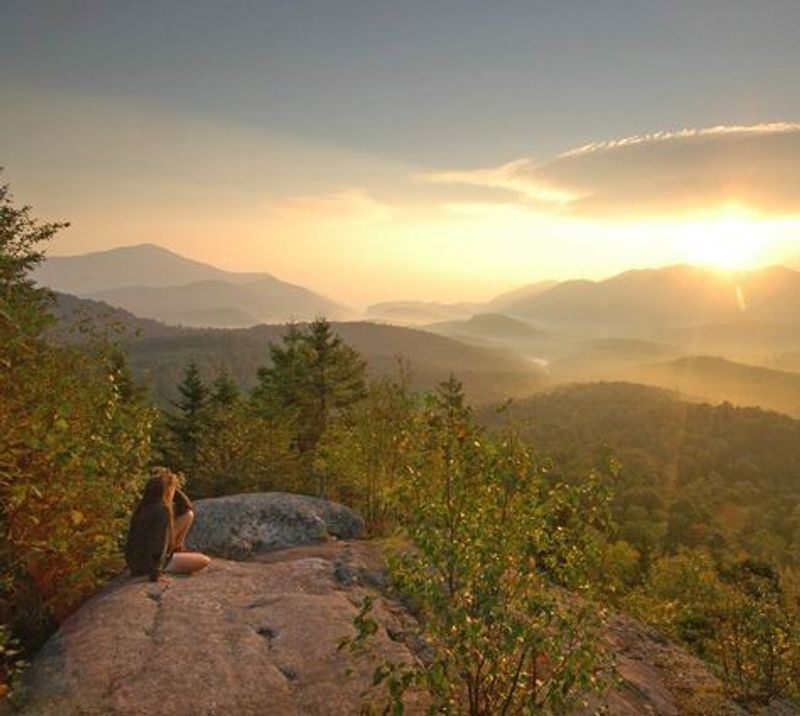
Here’s a fun fact that tends to stop people mid-conversation: Adirondack Park is larger than Yellowstone, Yosemite, Grand Canyon, Glacier, and Great Smoky Mountains national parks combined. At six million acres, it is the largest publicly protected area in the contiguous United States.
And yet, somehow, it still doesn’t get nearly the recognition it deserves outside of New York.
The park is a patchwork of public and private land containing 46 peaks over 4,000 feet — the famous 46 High Peaks that dedicated hikers spend years summiting. The park also holds over 3,000 lakes and ponds, 1,500 miles of rivers, and 2,000 miles of hiking trails.
Canoeing, kayaking, fishing, rock climbing, and cross-country skiing are all world-class here. The town of Lake Placid, site of two Winter Olympics, sits right in the middle of the park.
Wildlife in the Adirondacks includes moose, black bears, loons, bald eagles, and bobcats. The fall foliage season is legendary — the mix of hardwoods and conifers creates a color palette that photographers travel great distances to capture.
Unlike most national parks, the Adirondacks have no single entrance gate or fee, giving the whole experience a refreshingly open, exploratory feel. The Adirondacks reward curiosity generously.
Amicalola Falls State Park – Georgia
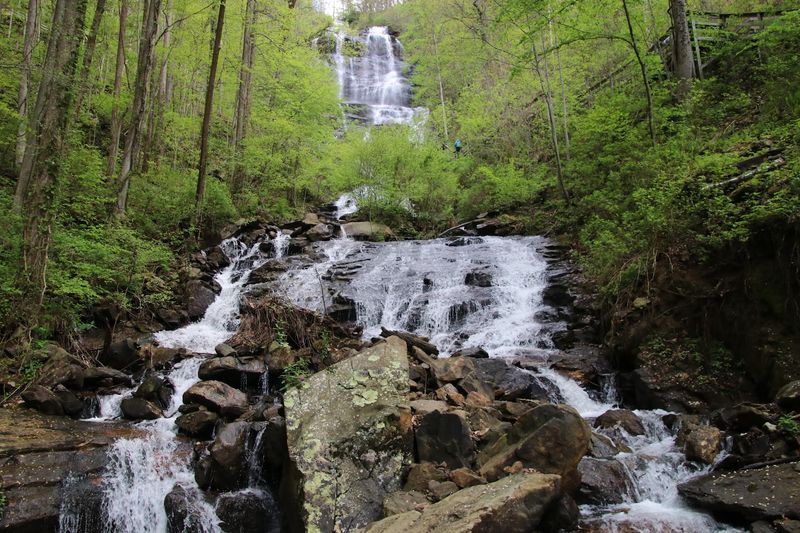
At 729 feet, Amicalola Falls is the tallest cascading waterfall east of the Mississippi River — and seeing it for the first time genuinely takes your breath away. The falls tumble down a steep mountainside in a series of dramatic cascades, and the park has built a staircase of 600+ steps right alongside them so visitors can climb up for increasingly jaw-dropping views at every level.
Leg day has never had a better reward.
The park sits in the Blue Ridge Mountains of north Georgia and serves as the approach trail gateway to the Appalachian Trail, which begins its 2,190-mile journey to Maine just eight miles away at Springer Mountain. Thru-hikers heading north often spend their first night at the park’s lodge or backcountry shelter, making it a fascinating place to meet people at the very start of a life-changing adventure.
The energy around the trailhead in early spring is genuinely electric.
Day visitors who aren’t planning a multi-month hiking expedition will still find plenty to love. Shorter trails wind through the forest, wildlife sightings are common, and the lodge offers comfortable accommodations with mountain views.
The waterfall is the obvious centerpiece, but the park’s connection to the Appalachian Trail gives it a depth and significance that most state parks simply don’t have. Amicalola Falls punches well above its weight.
Staunton River State Park – Virginia
Most people go to state parks during the day — but Staunton River State Park is one of the rare places where the real magic starts after sunset. Designated as an International Dark Sky Park, it sits far enough from Virginia’s major cities to offer some of the clearest, most star-filled skies on the entire East Coast.
On a moonless night, the Milky Way is visible with the naked eye, which is something millions of Americans have never actually seen in person.
The park sits at the confluence of the Staunton and Dan Rivers, creating a peaceful, water-rich environment that’s beautiful even in daylight. Fishing, kayaking, and hiking fill the daytime hours comfortably.
The park’s trails wind through bottomland forest and along river bluffs, with views that feel quietly dramatic rather than showy. It’s the kind of park that rewards slow, attentive visitors more than those rushing between highlights.
Stargazing programs are offered regularly, especially around meteor showers and celestial events. Bringing a blanket, lying on the grass, and watching the sky slowly fill with stars is genuinely one of the most humbling outdoor experiences available anywhere in Virginia.
Staunton River doesn’t have towering cliffs or famous waterfalls, but it offers something increasingly rare in the modern world — genuine, uninterrupted darkness. That might be the most valuable thing a park can give you.
Share this story