Some roads just go on and on — and then keep going. The world’s longest highways stretch across continents, cross dozens of countries, and cut through landscapes so varied it’s hard to believe one road can experience all of them.
These epic routes connect people, cultures, and economies in ways that no airplane ever could. Whether you’re a curious traveler or just someone who loves a good road trip, these highways will absolutely blow your mind.
Pan-American Highway (Multiple Countries)
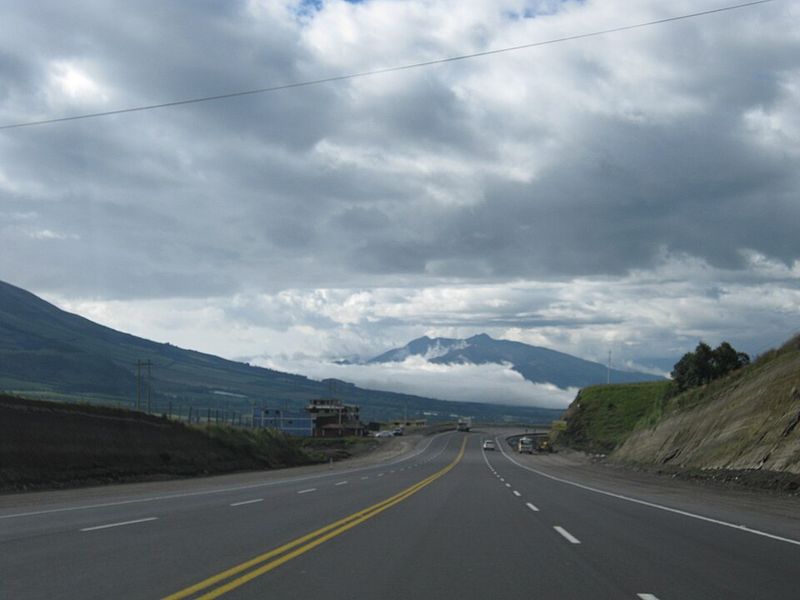
Imagine hopping in a car and driving from the frozen wilderness of Alaska all the way to the windswept tip of Argentina. That’s exactly what the Pan-American Highway makes possible, stretching roughly 30,000 km (19,000 miles) across the Western Hemisphere.
No other road on Earth comes close to matching its sheer ambition.
Crossing 14 countries, this legendary route passes through Arctic tundra, volcanic mountain ranges, sun-baked deserts, and thick tropical jungles. Every few hundred kilometers, the climate, culture, and cuisine completely change.
It’s basically 14 road trips packed into one absolutely wild adventure.
There’s one famous hiccup along the way — the Darién Gap, a dense jungle stretch between Panama and Colombia with no driveable road. A handful of daredevils have crossed it, but it’s considered one of the most dangerous overland challenges on Earth.
For most drivers, a short detour by boat is the practical workaround. Despite this gap, the Pan-American Highway remains the undisputed king of long-distance road travel and a bucket-list experience for adventurers worldwide.
Highway 1 (Australia)
Picture a highway that literally hugs an entire continent — that’s Highway 1 in Australia, looping around the country for approximately 14,500 km without ever needing to backtrack. It’s the longest national highway in the world, and it connects every major mainland city from Sydney to Perth to Darwin.
Driving the whole thing would take weeks, and you’d earn serious bragging rights.
What makes this route so jaw-dropping is how wildly different each stretch feels. One day you’re cruising past stunning coastal cliffs with waves crashing below.
The next, you’re deep in the red-dirt outback where the nearest town is three hours away and kangaroos outnumber people.
Unlike many other long highways that zigzag across multiple countries and require border crossings, Highway 1 is a single, continuous route entirely within one nation. That makes it one of the cleanest and most complete long-distance driving experiences on the planet.
Australians affectionately call a full loop of the country “doing the big lap,” and retirees in campervans tackle it every year. If you ever get the chance, the Great Ocean Road section alone is worth the flight to Australia.
Asian Highway 1 (Asia)
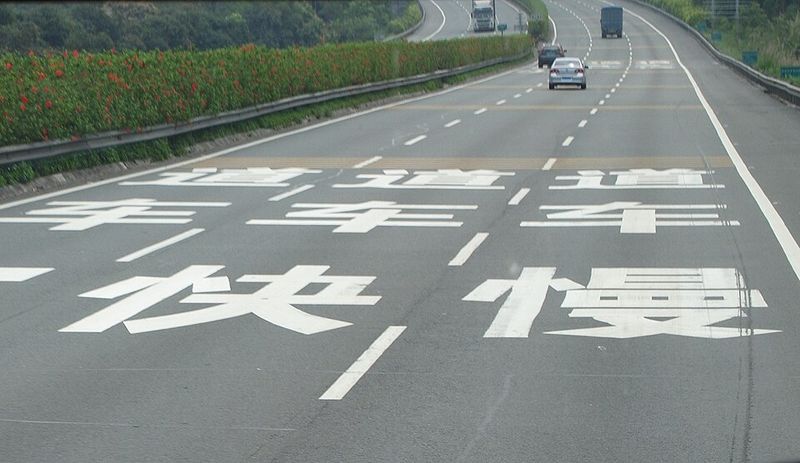
Running from the western edge of Turkey all the way to the port city of Tokyo, Japan, Asian Highway 1 covers an astonishing 20,557 km — making it one of the longest international highway systems ever planned. That’s longer than the distance from Earth’s North Pole to South Pole.
Seriously, wrap your head around that for a second.
This route passes through some of the most historically rich and culturally diverse countries on Earth, including Iran, India, Bangladesh, Myanmar, Thailand, and Vietnam. Along the way, travelers encounter ancient temples, bustling megacities, mountain passes, and tropical coastlines.
Every country adds its own flavor to the journey.
Of course, some sections are separated by bodies of water, requiring ferry crossings — particularly between mainland Asia and Japan. But those sea legs are part of the adventure, giving drivers a chance to catch their breath between epic overland stretches.
Asian Highway 1 is part of the United Nations-backed Asian Highway Network, a massive project designed to improve transportation and trade across the continent. Whether you’re a geography nerd or a seasoned traveler, this route is basically a masterclass in how connected our world really is.
Trans-Siberian Highway (Russia)
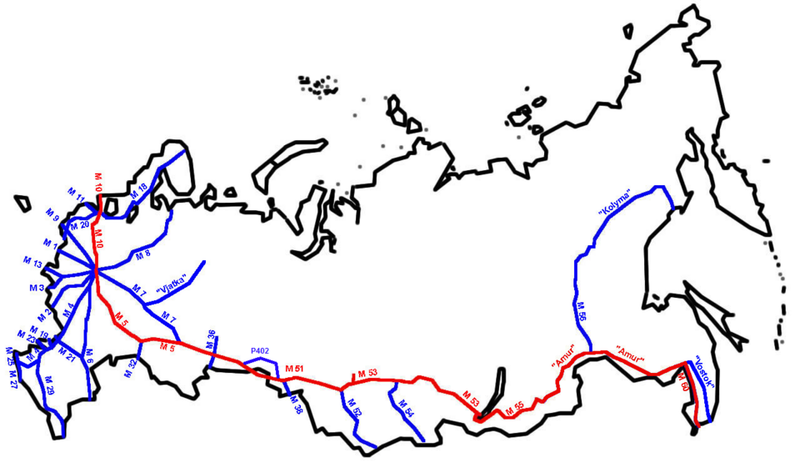
Cold, remote, and absolutely relentless — the Trans-Siberian Highway is not for the faint of heart. Stretching over 11,000 km from St. Petersburg in the west all the way to Vladivostok on the Pacific coast, this road crosses the entire width of Russia.
That’s roughly the same distance as driving from London to New York, except there’s no ocean shortcut.
The scenery along this route is stunning in the most extreme way possible. Drivers pass through dense taiga forests, frozen tundra, towering mountain ranges, and remote villages where the nearest gas station might be 200 km away.
In winter, temperatures can plunge to -40°C, turning the road into a genuine survival challenge.
Despite the harsh conditions, adventurous road-trippers have been tackling this route for decades. Some sections are well-paved and modern, while others are dirt tracks that turn into muddy nightmares during spring thaw — a phenomenon locals call the rasputitsa, or “quagmire season.” The Trans-Siberian Highway runs roughly parallel to the famous Trans-Siberian Railway, so you can even hop on the train if your car gives up.
Few drives on Earth feel this raw, this vast, or this genuinely off the beaten path.
Tripoli–Cape Town Highway (Africa)
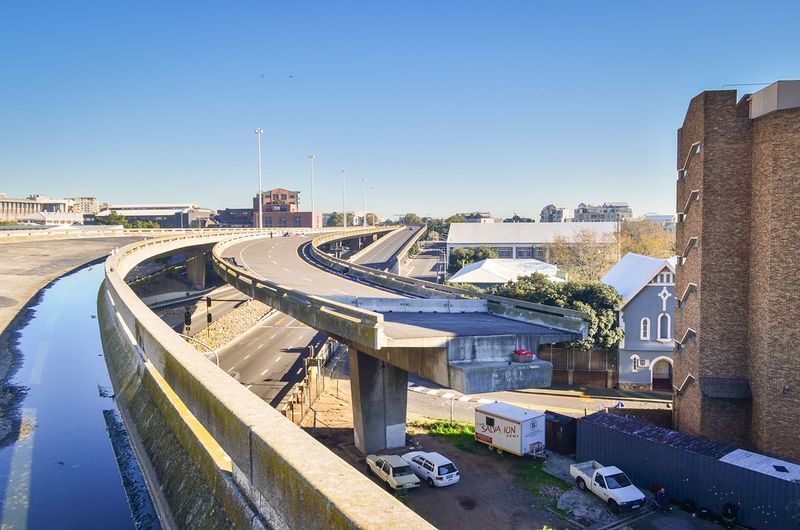
Connecting the sun-scorched coast of Libya in the north to the vibrant city of Cape Town at Africa’s southern tip, the Tripoli–Cape Town Highway is one of the most ambitious road projects ever attempted on the African continent. Covering around 10,800 km, this route cuts through some of the world’s most breathtaking and challenging terrain.
It’s part dream, part work-in-progress.
Not every section of this highway is fully complete or smoothly paved. Some stretches pass through regions affected by conflict, flooding, or simply a lack of infrastructure funding.
But that hasn’t stopped it from serving as a vital lifeline for communities across Central and West Africa who depend on it for trade and transport.
When you look at a map and trace this route from the Mediterranean coast south through the Sahara Desert, across the Congo Basin rainforest, and down through the savannas of Southern Africa, it reads like a greatest-hits album of the entire continent. Lions, elephants, and ancient cultures sit just off the roadside in some sections.
Completing this highway could transform African economies by reducing travel times and opening new trade corridors. It’s an unfinished masterpiece — and that’s what makes it so fascinating.
Asian Highway 2 (Asia)
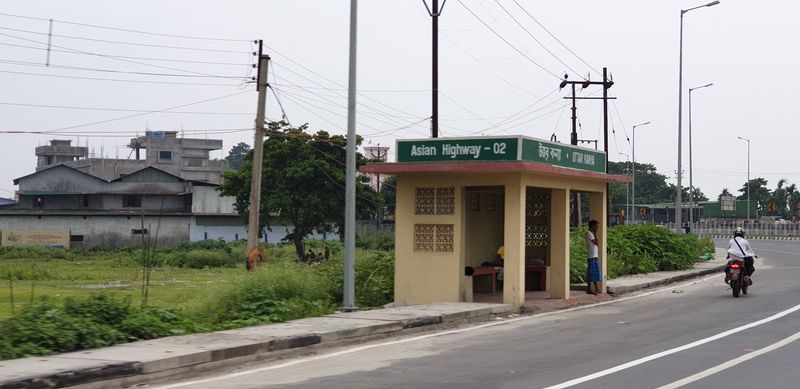
Few highways on Earth can claim a journey that begins on a tropical island and ends in a Middle Eastern desert, but Asian Highway 2 does exactly that. Stretching approximately 13,177 km from Denpasar, Indonesia to Khosravi on the Iran-Iraq border, this route is one of the longest in the entire Asian Highway Network.
It’s basically a greatest-hits tour of Asia’s most diverse landscapes.
Along the way, Asian Highway 2 passes through Indonesia, Malaysia, Thailand, Myanmar, India, Bangladesh, and Pakistan before reaching Iran. Each country brings wildly different road conditions, cultures, and cuisine.
Traveling this route is like flipping through a geography textbook — except the food is infinitely better and the views are real.
The highway plays a crucial role in connecting Southeast Asia to South Asia and the Middle East, making it a major corridor for international trade and tourism. Many sections have been upgraded in recent years as part of regional development agreements, improving safety and travel times significantly.
For truck drivers hauling goods across borders, this is an essential route that keeps economies moving. For adventure travelers, it offers a rare chance to experience Asia’s full complexity in one extraordinary overland journey that few people ever attempt.
Cairo–Cape Town Highway (Africa)
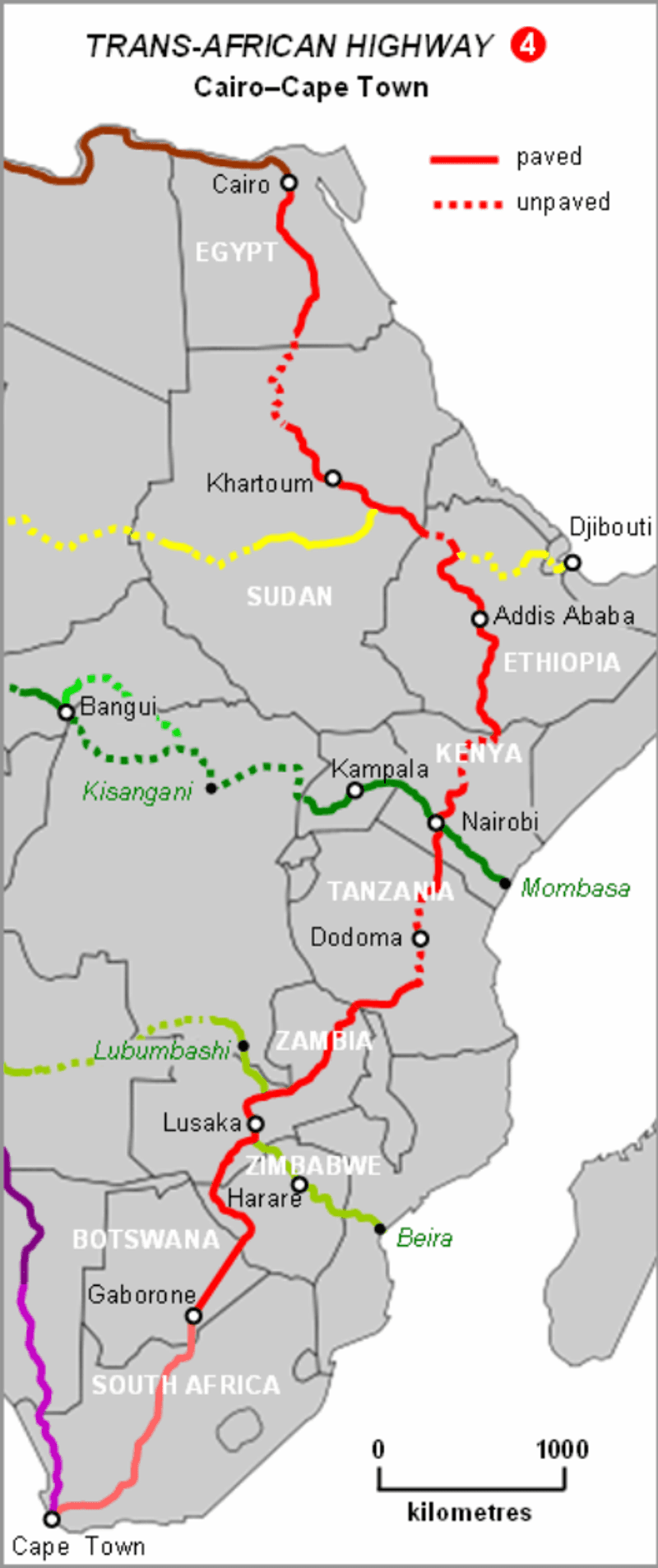
There’s a reason explorers and adventurers have dreamed about driving from Cairo to Cape Town for over a century — it’s one of the great north-south journeys on Earth. This major African route spans roughly 10,228 km, connecting Egypt’s ancient capital to South Africa’s most iconic city.
The road passes through some of the most geographically and culturally spectacular places on the planet.
Unlike the Tripoli–Cape Town route, which runs through West and Central Africa, this highway follows the eastern spine of the continent. Drivers pass through Sudan, Ethiopia, Kenya, Tanzania, Zambia, Zimbabwe, and Botswana before reaching Cape Town.
Along the way, you’ll encounter the Nile River, the African Great Rift Valley, the Serengeti, and Victoria Falls.
Completing the full journey is a serious undertaking that requires careful planning, multiple visas, and a vehicle that can handle everything from smooth tarmac to corrugated dirt roads. But thousands of overlanders attempt portions of it every year, drawn by the wildlife, the sunsets, and the sheer variety of experiences packed into one route.
The Cairo–Cape Town Highway is also a key piece of Africa’s long-term infrastructure vision, designed to boost trade and connectivity across the continent for generations to come.
National Highway 219 (China)
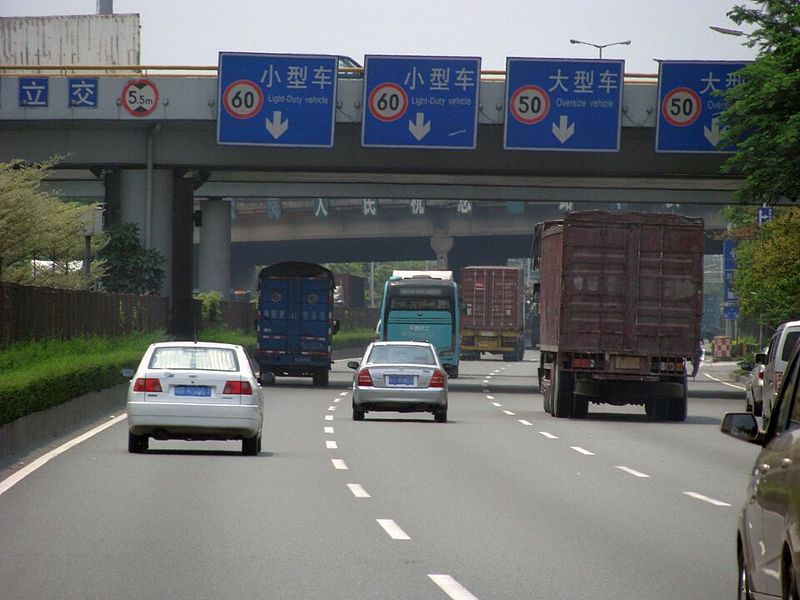
At altitudes so high that altitude sickness is a real concern, China’s National Highway 219 is not your average Sunday drive. Stretching approximately 10,000 km from Xinjiang in the northwest to Guangxi in the south, this is one of the longest highways within a single country in the world.
It’s also one of the most scenically jaw-dropping roads you’ll ever see on a map.
The highway cuts across the Tibetan Plateau, reaching elevations above 5,000 meters in some sections. Snow-capped Himalayan peaks loom overhead, glacial rivers run alongside the road, and yak herders occasionally block traffic.
It’s a road that demands respect — and a good supply of oxygen.
Despite its remote reputation, National Highway 219 is a strategically important route for China, connecting border regions and supporting military logistics in some of the country’s most sensitive territories. In recent years, significant improvements have been made to the road surface, making it more accessible to adventurous tourists.
Traveling it in summer, when the passes are clear of snow, is increasingly popular among Chinese road-trippers seeking something extraordinary. For geography enthusiasts, this highway is practically a living textbook on China’s astonishing physical diversity — mountains, deserts, forests, and subtropical regions all in one route.
European Route E40 (Europe–Asia)
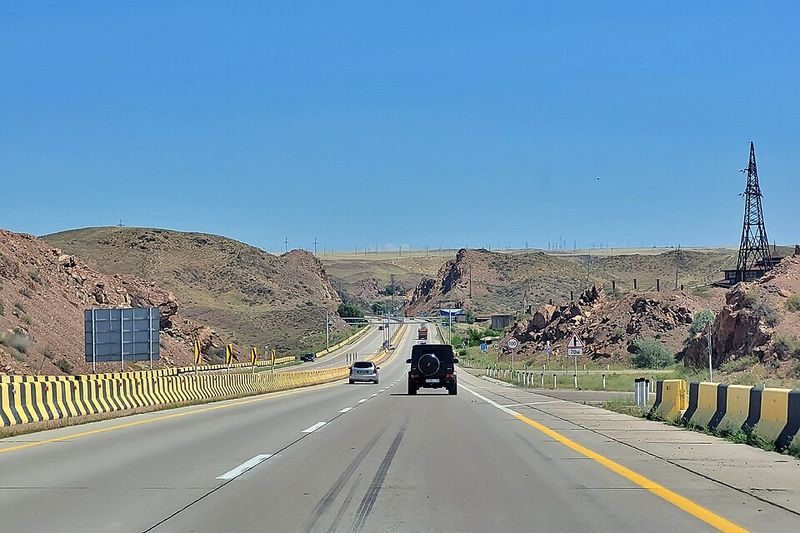
Starting in Calais, France — where the English Channel tunnel spits out travelers from Britain — European Route E40 heads east with remarkable determination, covering about 8,690 km before finally ending in Ridder, Kazakhstan. It’s the longest European road ever designated, passing through more than ten countries and two continents.
Not bad for a highway that starts near a ferry terminal.
The western half of E40 is classic European driving: French countryside, Belgian motorways, German autobahns, Polish plains, and Ukrainian sunflower fields stretching to the horizon. Then things get increasingly wild as the route crosses into Russia and eventually into the wide-open steppes of Central Asia.
The landscape shifts from cozy to epic in the most dramatic way.
For truckers, E40 is a lifeline — a direct overland connection between Western Europe’s consumer markets and the raw materials of Central Asia. For road-trippers, it’s a chance to watch the world transform mile by mile, from pastry shops and cobblestoned squares to yurt camps and horseback herders.
Several sections run through areas with complex political histories, adding an extra layer of intrigue to the journey. E40 is proof that Europe’s story doesn’t end where most tourists stop looking.
Trans-Canada Highway (Canada)
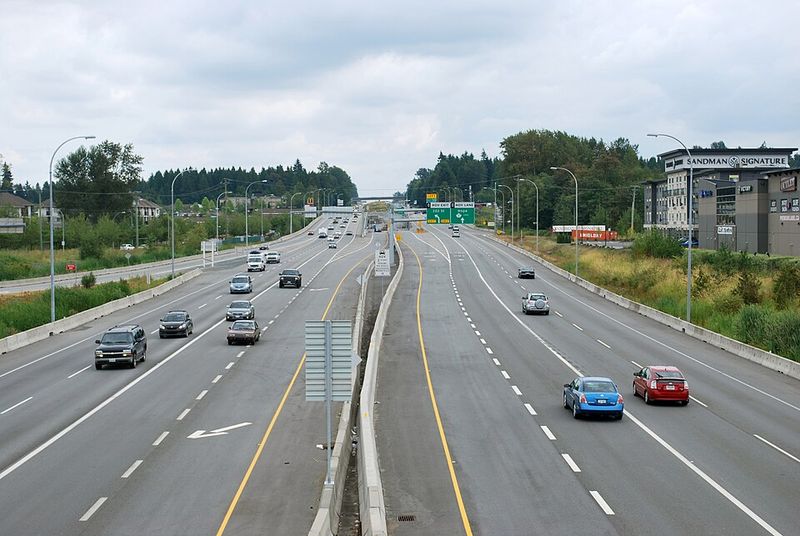
When it opened in 1962, the Trans-Canada Highway was the longest uninterrupted national highway in the entire world — a title it wore proudly for years. Stretching about 7,476 km from St. John’s, Newfoundland on the Atlantic coast to Victoria, British Columbia on the Pacific, it stitches the second-largest country on Earth together with a single ribbon of asphalt.
Canadians are rightfully proud of it.
The scenery along this route changes so dramatically that it feels like driving through multiple countries. You start in the rugged, fog-wrapped landscapes of Atlantic Canada, roll through the farmlands of Quebec and Ontario, cross the vast prairies of Manitoba and Saskatchewan, and then suddenly the Rocky Mountains appear on the horizon like a wall of ice and rock.
The highway passes through or near some of Canada’s most beloved national parks, including Banff and Yoho, where wildlife crossings over the road help bears, wolves, and elk move safely between habitats. In winter, sections through the mountains can be treacherous, but snowplow crews work around the clock to keep things moving.
For Canadians, driving the Trans-Canada is a rite of passage — a chance to truly understand just how enormous, beautiful, and wonderfully varied their country really is.
U.S. Route 20 (United States)
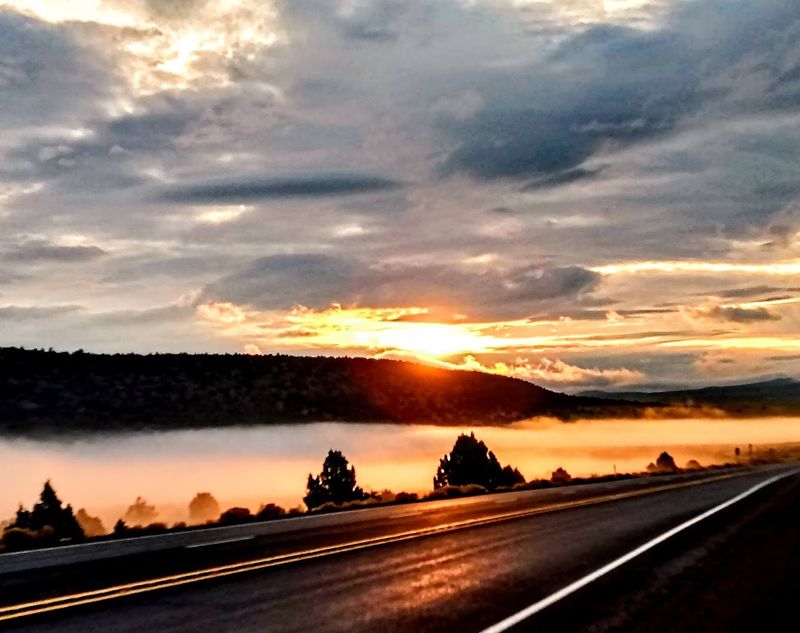
Most Americans have heard of Route 66, but U.S. Route 20 is actually the longest road in the entire country — and it doesn’t get nearly enough credit.
Running about 5,415 km from Newport, Oregon on the Pacific coast to Boston, Massachusetts on the Atlantic, it crosses the full width of the United States through landscapes that feel endlessly varied and distinctly American.
The western stretch of Route 20 passes through Oregon’s dramatic volcanic terrain, the high desert of Idaho, and the sweeping plains of Wyoming and Nebraska. Then it rolls into the Great Lakes region of Illinois and Indiana before heading through the historic small towns of upstate New York and finally into New England.
Each state adds a completely different flavor.
Unlike the interstate system, which was designed for speed and efficiency, Route 20 was built to pass through towns and communities. That means roadside diners, quirky local museums, grain elevators, and Main Streets that feel frozen in time.
It’s the kind of road where you might stop for pie in a town of 300 people and end up chatting with a farmer for an hour. U.S.
Route 20 isn’t trying to be the flashiest road in America — it’s just quietly being one of the most authentically American roads you’ll ever travel.
Share this story