There is a tree in the Nevada desert that wears hundreds of shoes, and nobody is quite sure how to explain it. Pairs of sneakers, boots, sandals, and heels dangle from nearly every branch, tossed there by travelers passing through one of the most remote stretches of highway in the country.
The tree sits along Highway 50, a road famously nicknamed the Loneliest Highway in America, and it has become one of the most talked-about roadside stops in the entire western United States. Whether you are a first-time visitor or a returning fan, this quirky landmark has a way of making people stop, laugh, and reach into their trunk for an old pair of shoes they no longer need.
Where Exactly You Will Find This Legendary Spot
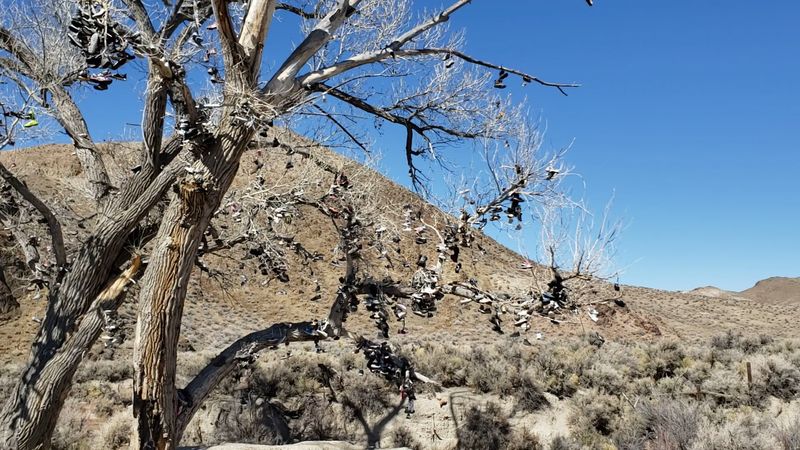
Right off Highway 50 near Middlegate, Nevada, the Shoe Tree stands at 41763 Lincoln Hwy, Fallon, NV 89406, making it easy to find even on a long desert drive. The surrounding landscape is flat, dry, and wide open, with mountains visible in the distance and almost no other buildings or signs of life nearby.
Highway 50 earned its nickname, the Loneliest Highway in America, for good reason. Driving through this part of Nevada can feel like traveling through a different world entirely, where the sky takes up more space than anything else and the road stretches endlessly in both directions.
The Shoe Tree sits right along the roadside, so you can pull over safely and walk up to it without any complicated directions. The attraction is open 24 hours a day, seven days a week, and there is no entrance fee.
It is the kind of stop that works perfectly whether you are heading east toward Salt Lake City or west toward Reno.
The Origin Story That Started It All
The most popular story behind this landmark involves a newlywed couple driving east on Highway 50 after a Reno wedding. The two got into their very first argument as a married couple and pulled over beside a cluster of trees in the middle of the Nevada desert.
The bride announced she would rather walk home than continue the trip. Her new husband, frustrated and not thinking clearly, grabbed her shoes and flung them up into the nearest tree, then drove off down the highway.
He stopped at the first place he could find and eventually came to his senses, returning to patch things up.
According to the legend, the couple made peace and returned to that same tree every year on their anniversary, tossing a celebratory pair of shoes into the branches as a symbol of their commitment. Other travelers heard the story and started doing the same.
That small tradition slowly snowballed into the towering, shoe-covered spectacle that draws visitors from across the country today, including curious road trippers who had never even heard of Nevada’s Highway 50 before.
What the Tree Actually Looks Like Up Close
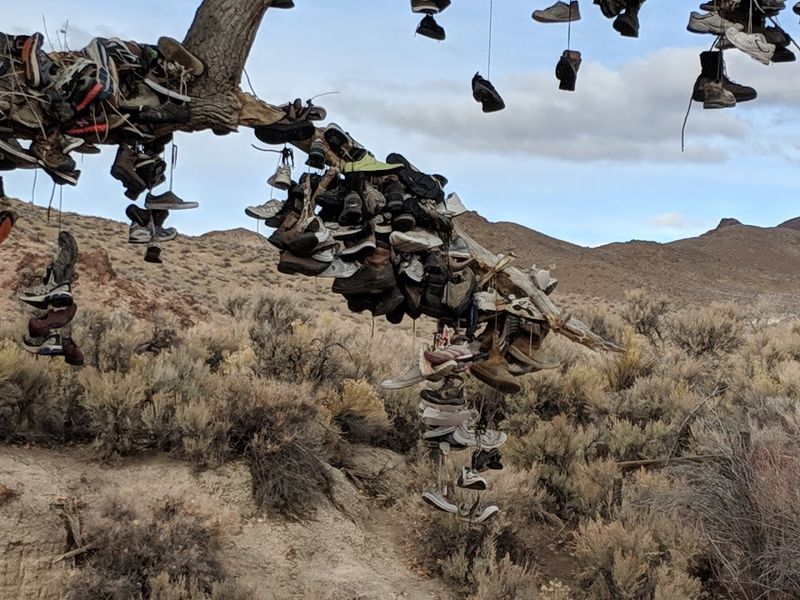
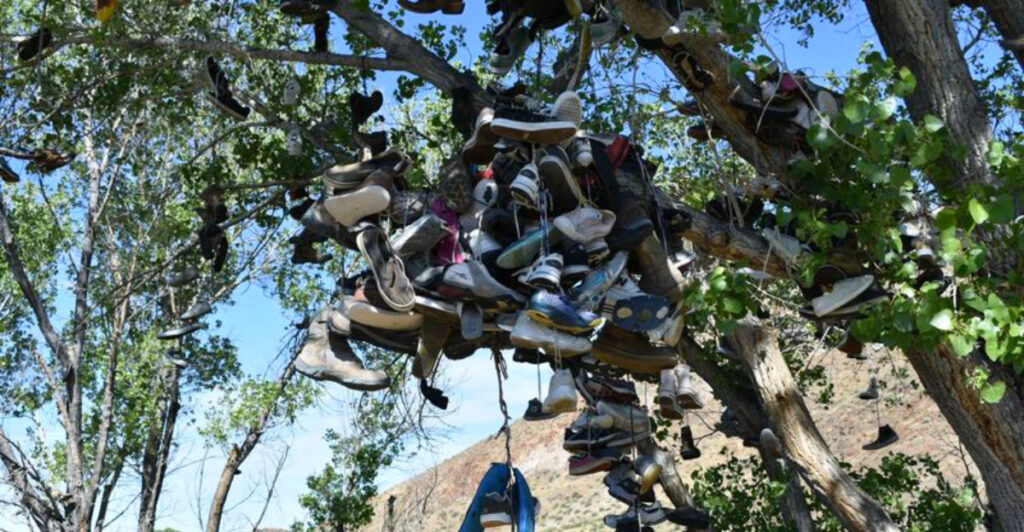
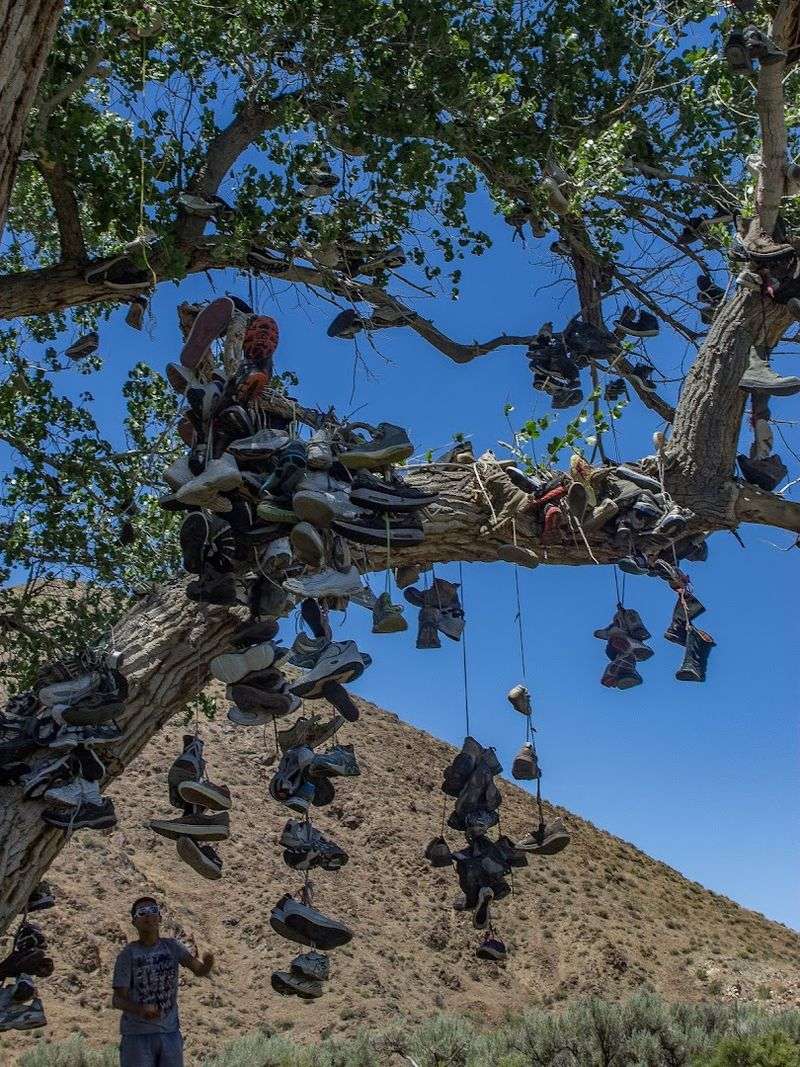
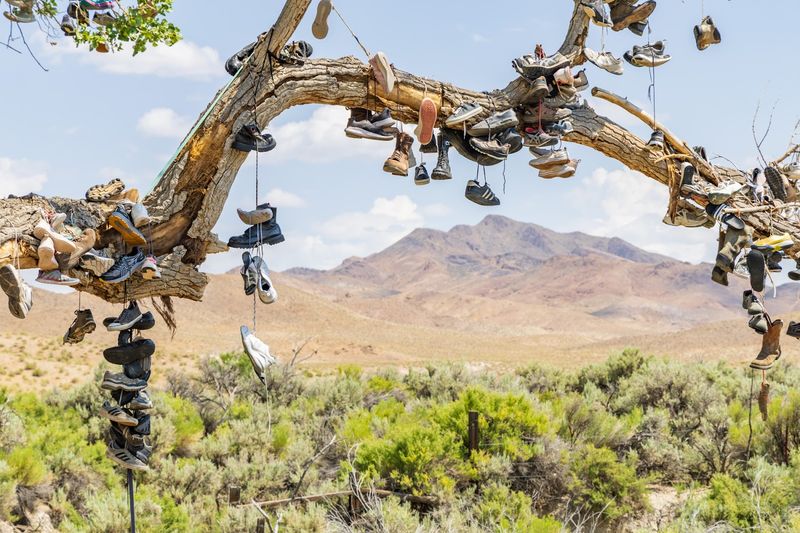
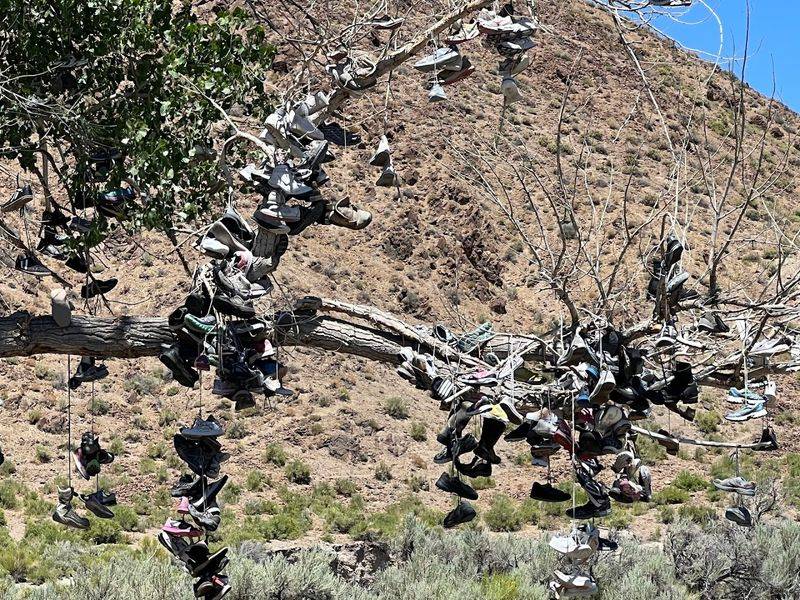
From a distance, the Shoe Tree looks almost like a bird roosting spot, with dark shapes hanging off every branch. Get closer, and the full picture comes into focus: hundreds of pairs of shoes dangling by their laces, covering the tree from the lowest branches all the way up to the highest tips.
Nike sneakers share space with hiking boots, dress shoes, sandals, and even a few pairs of cowboy boots. The variety is genuinely surprising, and it gives the tree a colorful, chaotic energy that feels completely out of place in the quiet desert.
Shoes also pile up on the ground beneath the branches, either from missed throws or pairs that worked loose over time.
The tree itself is a large cottonwood, and it has a weathered, knotted appearance that fits perfectly with the rugged Nevada landscape. The weight of so many shoes has bent some of the lower branches noticeably downward.
Visiting feels a little like walking into an outdoor art installation that nobody planned but everybody contributed to, and the result is genuinely unlike anything else you will find anywhere from Nevada to Oklahoma.
The Sad Chapter: When the Original Tree Was Cut Down
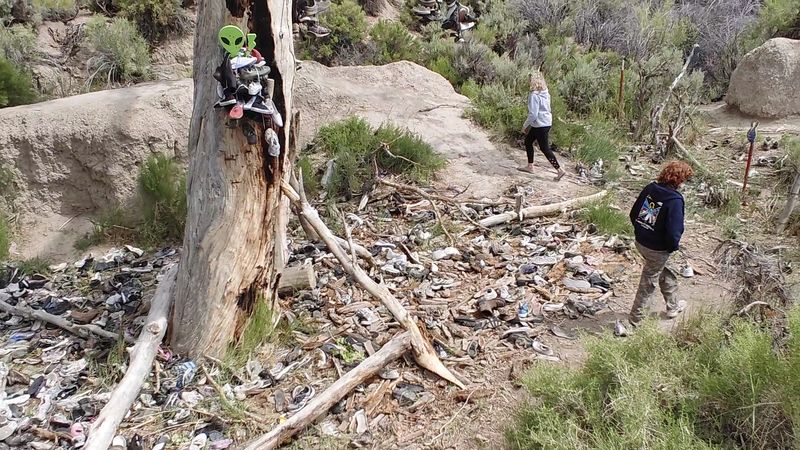
Not every chapter in this landmark’s history is lighthearted. The original Shoe Tree, a massive cottonwood that had been collecting shoes for decades, was cut down by a vandal around 2010.
The act shocked the local community and the broader community of road trip enthusiasts who had visited and loved the tree over the years.
People were genuinely upset. The tree had become a recognized landmark, a point of connection between strangers traveling the same lonely stretch of road.
Losing it felt like losing a piece of Nevada’s personality.
Rather than letting the tradition fade, travelers began tossing shoes onto nearby trees in the same area, and a new Shoe Tree was born. The replacement trees have now collected an impressive number of shoes in their own right, and the spirit of the original lives on through every pair that gets added.
It is a rare example of a roadside tradition that proved stubborn enough to survive even a direct attempt at ending it, which says something meaningful about why people connect so strongly with unexpected, unplanned places like this one.
Tips for Tossing Your Own Pair Into the Branches
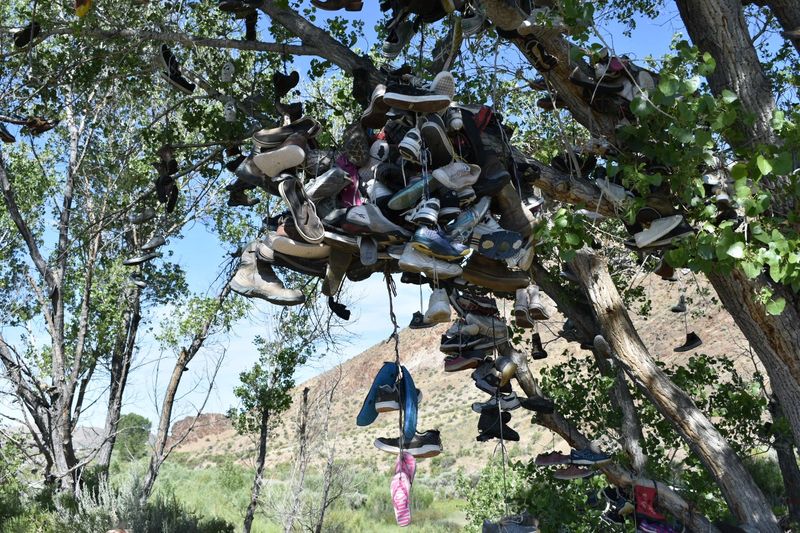
Tossing a pair of shoes into the Shoe Tree is harder than it looks, and that is part of the fun. The branches are high, the laces need to wrap just right to catch, and the wind in the open desert does not always cooperate.
Most first-timers miss on the first try, and sometimes the second and third tries too.
The standard technique involves tying the laces of two shoes together and then swinging the pair overhead before releasing. Aim for a mid-level branch rather than the very top, since lower branches are easier to clear and give the laces a better chance of catching.
Worn-out sneakers with long laces work best.
Bring an old pair from home if you want to participate, since there are no vendors or shops nearby selling shoes for the occasion. Many travelers plan ahead and toss a pair they were already planning to throw away, which makes the stop feel even more satisfying.
Even if you miss and your shoes end up on the ground with the others, they still become part of the collection, so the effort is never truly wasted.
The Wild Horses That Sometimes Share the Scene
One of the most unexpected bonuses of stopping at the Shoe Tree is the chance to spot wild horses in the surrounding desert. Several visitors have reported seeing small herds, including mares with young foals, crossing the open land near the tree during their visits.
Nevada has one of the largest wild horse populations in the country, and the open range along Highway 50 is prime territory for these animals. Seeing them up close, moving freely across the landscape with no fences in sight, adds a whole different layer of excitement to what might otherwise be a quick photo stop.
There is no guarantee you will see horses on any given visit, since they roam freely and follow their own schedule without any concern for your road trip timeline. Early morning and late afternoon tend to be the best windows for wildlife sightings in the Nevada desert.
Keep your eyes on the scrubland beyond the tree as well as on the road itself, since the horses sometimes cross Highway 50 without much warning. It is the kind of bonus encounter that turns a two-minute stop into a story worth telling all the way from Nevada to Oklahoma.
The Smell, the Trash, and What to Expect Honestly
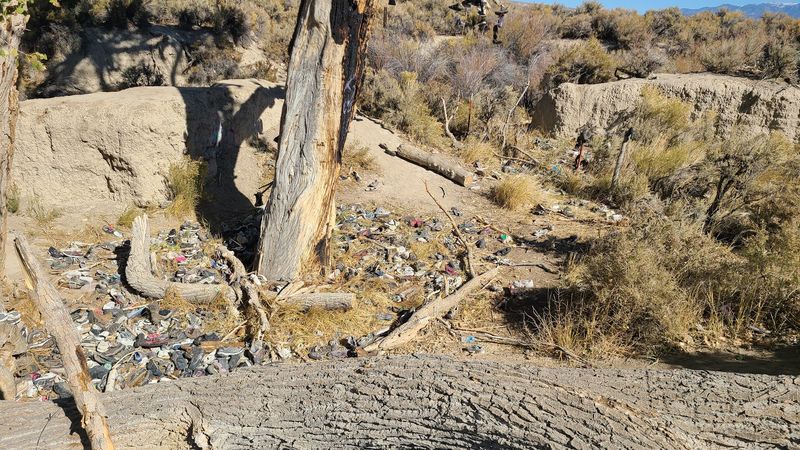
There is no polished visitor center here, no gift shop, no restroom, and no trash can. The Shoe Tree is a completely unmanaged roadside stop, and that means the experience comes with a few rough edges that are worth knowing about before you arrive.
The smell can be noticeable, especially during the warmer months when the Nevada sun beats down on hundreds of old shoes that have been sitting outside for years. Visiting in the cooler months, from October through March, makes for a much more comfortable experience on that front.
The ground around the tree can also collect litter beyond just shoes, since there is nowhere to dispose of trash at the site. Bringing a small bag and packing out any garbage you bring with you is a considerate habit that helps keep the spot worth visiting for everyone who comes after you.
Despite these imperfections, the vast majority of people who stop here find the experience genuinely memorable. The rawness of the place is actually part of its appeal, a reminder that not every great roadside attraction needs to be cleaned up or commercialized to be worth the detour.
Why Highway 50 Makes This Stop Feel Even More Special
Highway 50 across Nevada carries a reputation that sets the tone for everything along its route. Life Magazine once called it the Loneliest Highway in America back in 1986, and the label stuck so well that Nevada eventually put it on road signs as a point of pride rather than a warning.
The highway runs roughly 400 miles across the state, connecting Fernley near Reno to the Utah border, and the Shoe Tree sits near Middlegate, one of the most isolated stretches along the entire route. There are long gaps between towns, fuel stations, and any kind of services, which makes every stop feel significant.
That context matters when you pull over at the Shoe Tree. After miles of open desert with nothing but sagebrush and sky, a tree covered in hundreds of shoes feels genuinely surreal in the best possible way.
It gives the highway a personality and a sense of humor that pure distance alone cannot provide. Road trippers who make the full crossing from one end of Highway 50 to the other consistently rank the Shoe Tree among their most memorable stops, right up there with the salt flats and the ghost towns that dot this part of the American West.
The Pony Express Connection and Local History
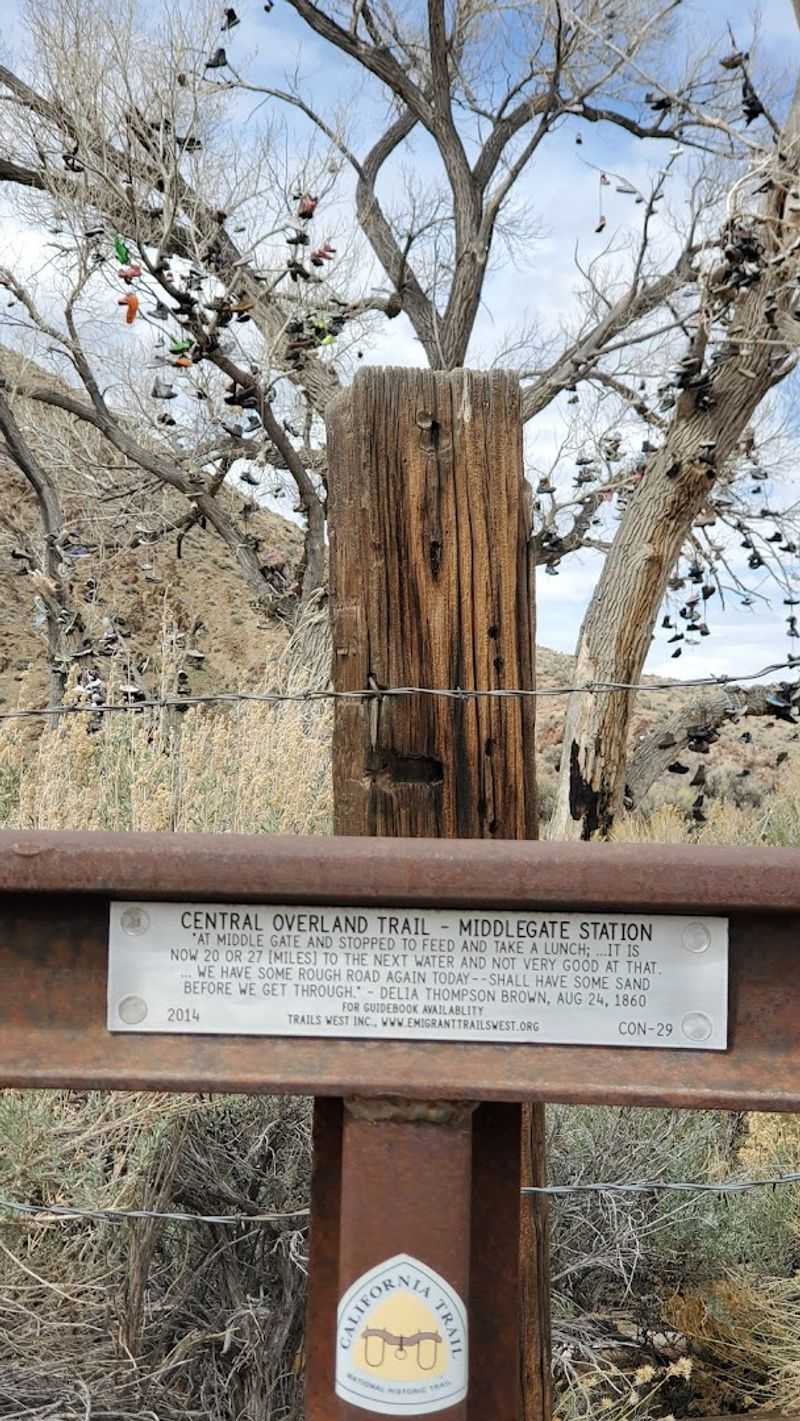
The land around the Shoe Tree has more history layered into it than most people realize when they pull over for a quick photo. Highway 50 roughly follows the route of the original Pony Express trail, which carried mail across the American West between 1860 and 1861 before the telegraph made it obsolete.
Middlegate itself was a station stop along that route, and the area around the Shoe Tree sits within a landscape that riders on horseback crossed at full speed more than 160 years ago. Some visitors have noted that a Pony Express monument near the Shoe Tree area has been documented by photographers working on historical projects about that era.
Standing next to the Shoe Tree and thinking about those riders crossing the same desert terrain adds a surprisingly moving dimension to what might seem like a silly roadside stop at first glance. The Nevada desert has a way of connecting different eras of American history in unexpected ways.
The Pony Express riders would likely have been baffled by a tree full of shoes, but they would have appreciated the same thing travelers appreciate today: a reason to pause, catch your breath, and take in the enormity of the open land around you, from the western valleys all the way east toward Oklahoma.
Best Times to Visit and Practical Planning Advice
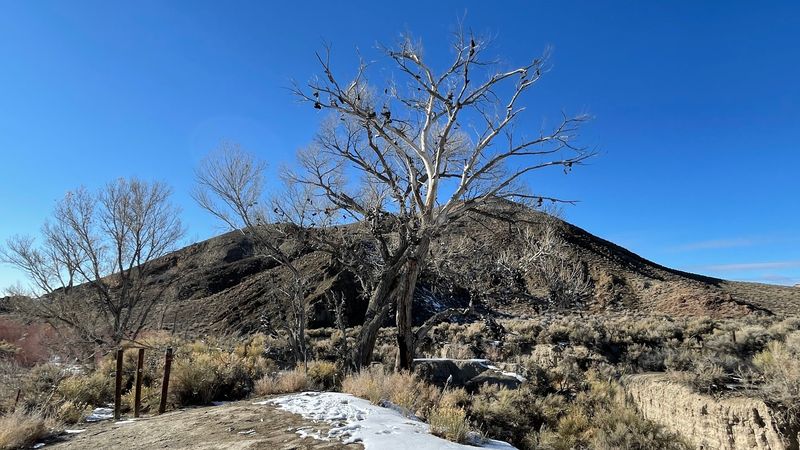
The Shoe Tree is open around the clock every single day of the year, which means there is truly no wrong time to stop. That said, the experience varies quite a bit depending on the season and time of day you choose to visit.
Spring and fall offer the most comfortable temperatures for spending a few minutes outside in the Nevada desert. Summer visits are manageable in the early morning hours, but midday heat can make the stop feel rushed, and the smell from the shoes intensifies significantly in high temperatures.
Winter visits are quiet and crisp, and the tree looks especially striking against a pale sky with frost on the ground.
There are no nearby restrooms, so plan accordingly before you leave the last town behind. Bring water, a snack, and that old pair of shoes you have been meaning to throw away anyway.
The nearest services are back toward Fallon to the west or Austin to the east, both of which are significant drives from the Shoe Tree. Road trippers coming from as far as Oklahoma have made this a deliberate stop on cross-country routes, and nearly all of them agree it is worth the brief detour off the main flow of travel for a moment of genuine roadside wonder.
Share this story