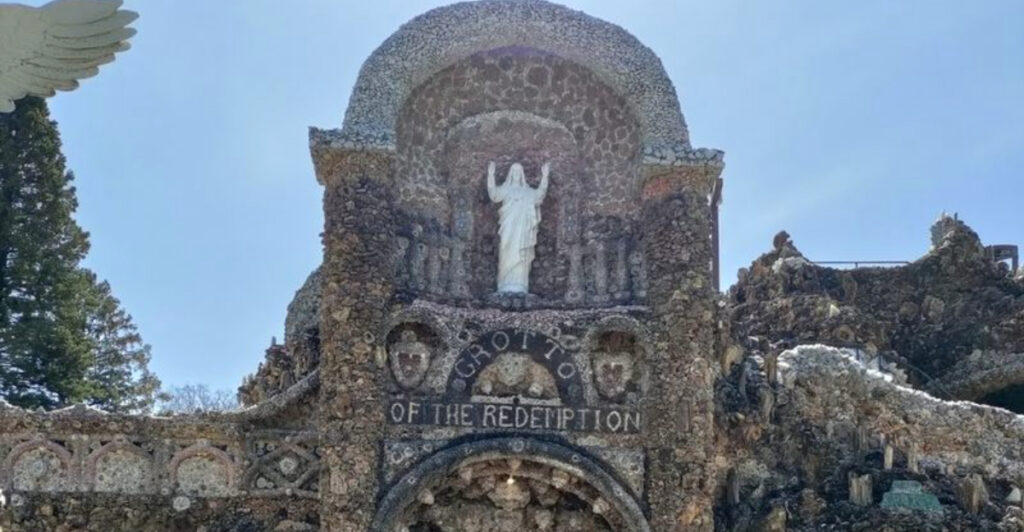
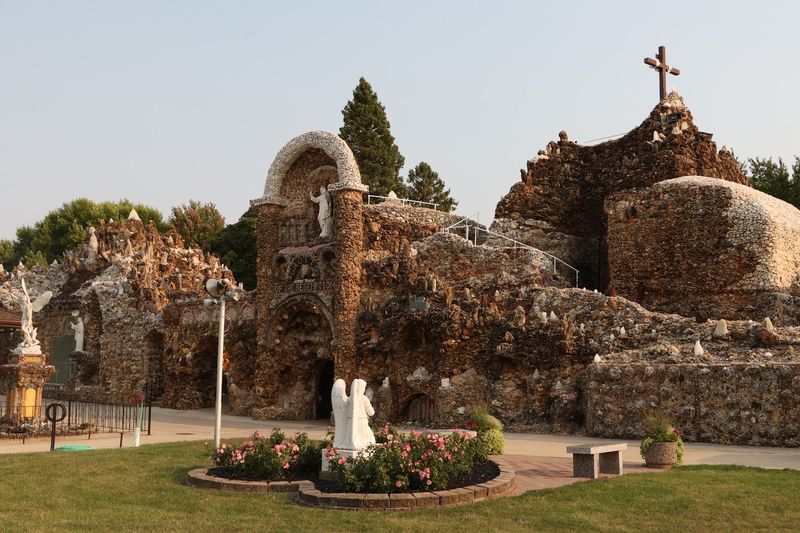
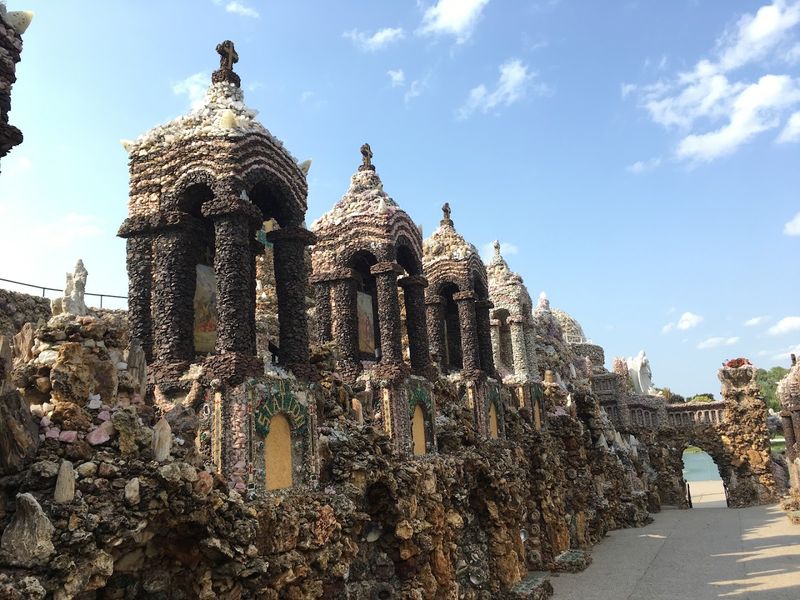
Somewhere in the rolling farmlands of northwest Iowa, there is a place that stops people cold in their tracks, not because of a billboard or a flashy sign, but because of what a single determined priest built with his own hands over 43 years. Hundreds of thousands of precious stones, gems, fossils, and minerals cover every surface of nine separate grottos, making this one of the most extraordinary religious and artistic achievements in the entire country.
I had heard about it from a friend who had driven two hours out of her way just to see it, and she told me flatly that no photograph could prepare me for the real thing. She was right.
The Address and Setting: West Bend, Iowa
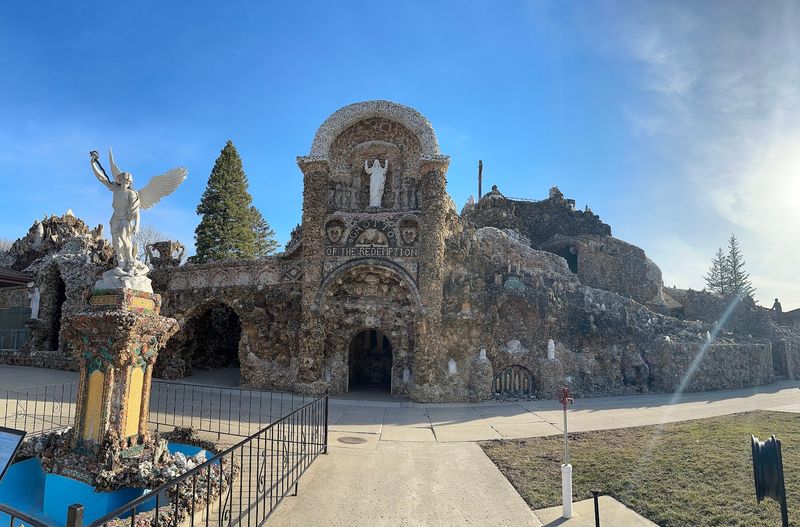
There are places in the United States that feel completely out of place with their surroundings, and the Shrine of the Grotto of the Redemption at 208 1st Ave NW, West Bend, IA 50597, is one of them. West Bend is a quiet town of fewer than 800 people in Palo Alto County, a part of Iowa that most travelers speed past without a second thought.
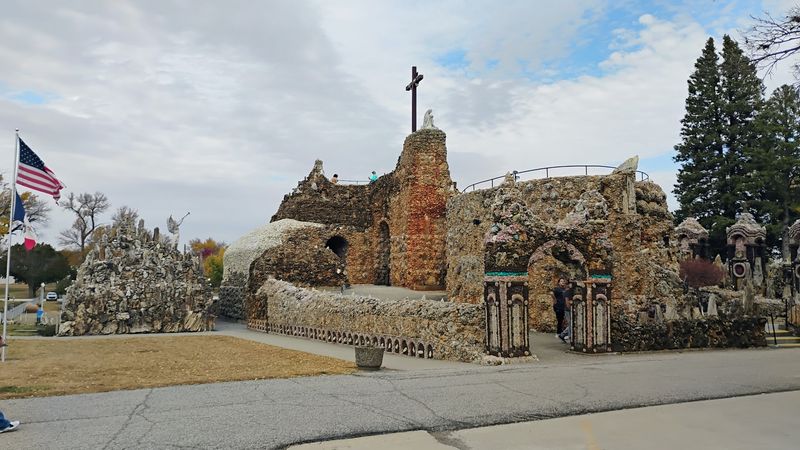
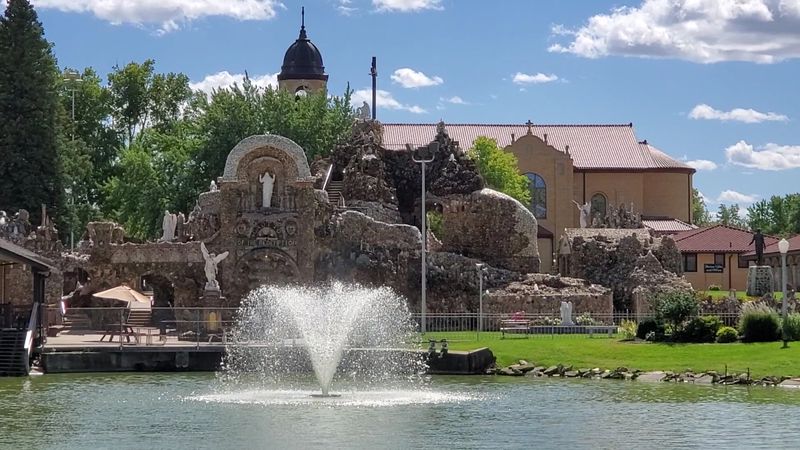
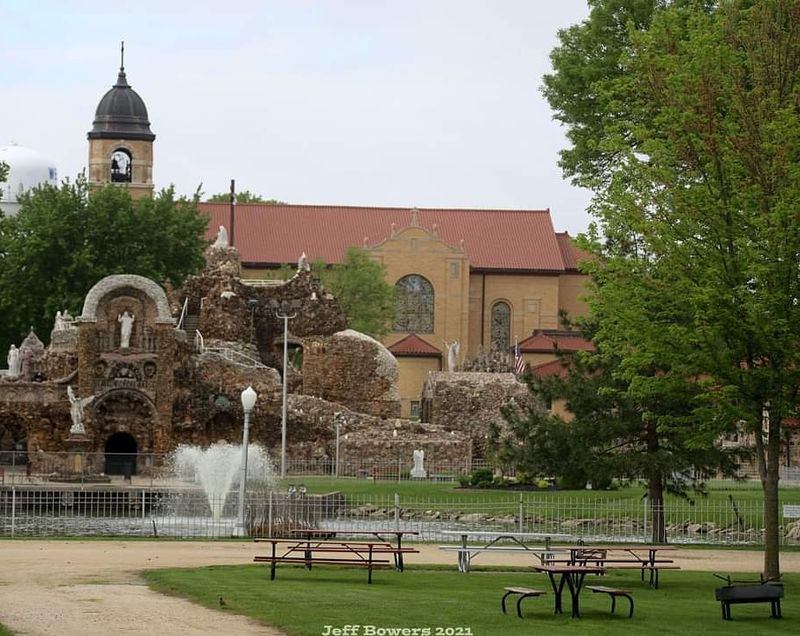
Yet right in the middle of this small community sits a towering, sprawling collection of stone grottos that draws visitors from across the country and beyond. The site covers an entire city block, and the moment you pull up and see the stone structures rising above the flat Iowa horizon, you understand immediately that something remarkable happened here.
The address is easy to find, and free parking is available nearby. The grotto is open 24 hours a day, seven days a week, so there is no need to rush your visit or worry about closing times.
The town of West Bend has built its entire identity around this extraordinary landmark, and the community pride is visible everywhere you look.
Father Paul Dobberstein: The Man Behind the Vision
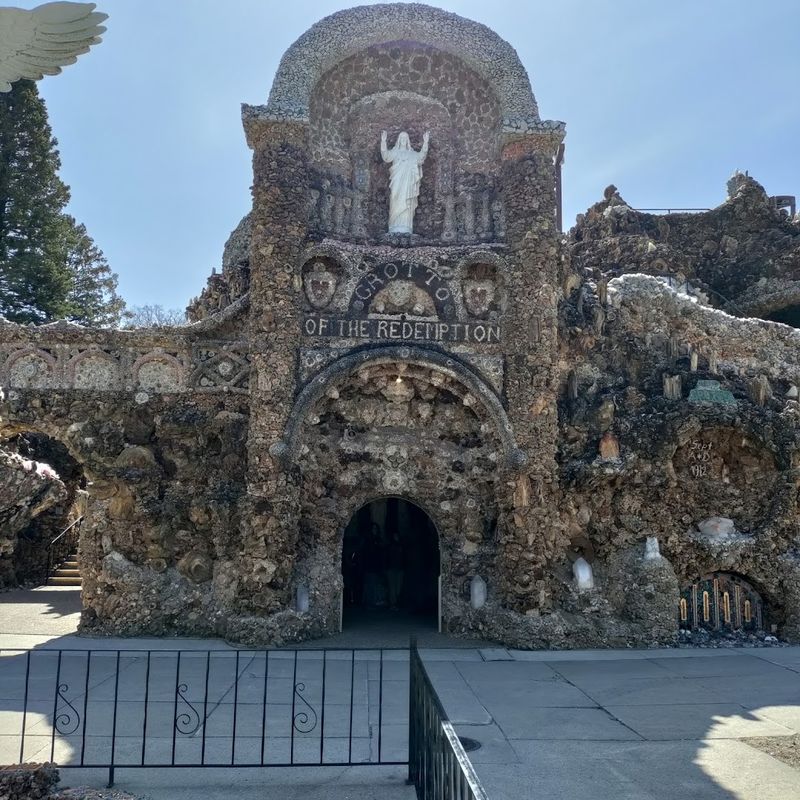
Father Paul Dobberstein was a German-born priest who arrived in Iowa in 1898, and his story reads like something between a miracle and a monument to sheer willpower. As a young seminary student in Wisconsin, he became seriously ill and promised the Virgin Mary that if he recovered, he would build her a shrine.
He recovered. And he kept his promise in the most spectacular way imaginable.
Starting in 1912, Father Dobberstein spent decades collecting precious stones, petrified wood, stalactites, stalagmites, coral, and minerals from around the world. He worked on the grotto almost every day, fitting the stones together with extraordinary care and artistic precision.
He had no formal training in architecture or geology, yet the structures he created rival anything built by trained professionals.
Father Dobberstein worked on the grotto until his passing in 1954, leaving behind a legacy that his assistant, Father Louis Greving, continued for decades afterward. The project spanned more than 40 years and involved three main builders over its full history.
What started as a personal promise became one of the most visited religious sites in the Midwest, a testament to what faith and patience can actually build.
The Nine Grottos: A Walk Through Biblical Stories in Stone
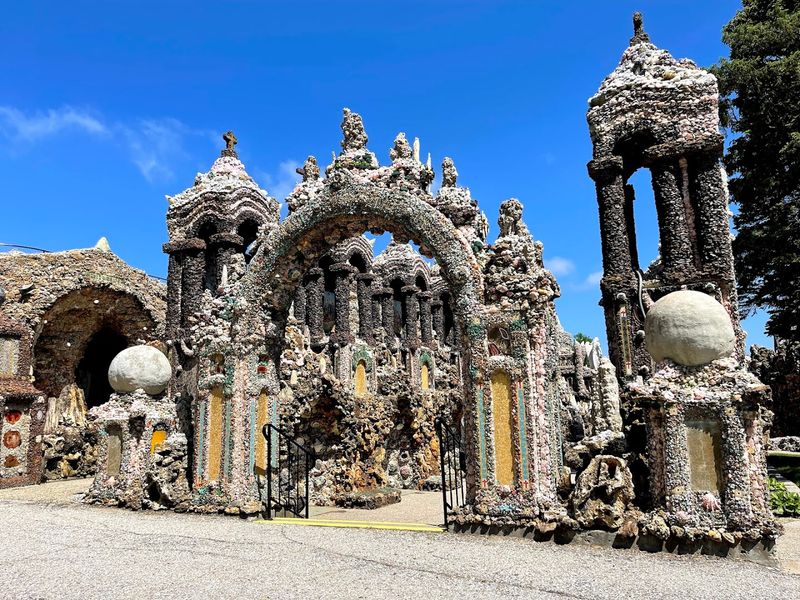
The grotto complex is not just one structure but nine separate grottos, each one depicting a different scene from the life of Jesus Christ. You move from one to the next like chapters in a book, with each chapter written entirely in stone, crystal, and mineral.
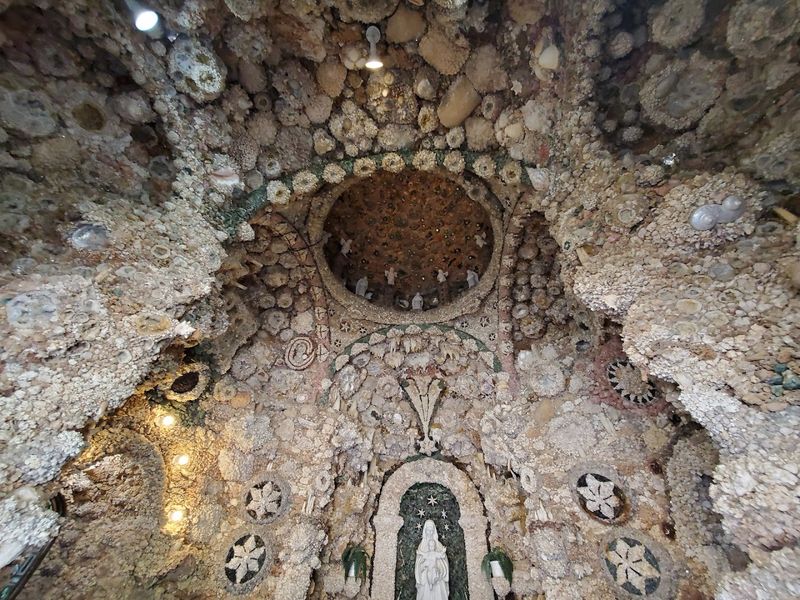
The scenes include the birth of Jesus, the Stations of the Cross, the Pietà, the Garden of Gethsemane, and the Resurrection, among others. Every surface is covered in carefully selected and placed stones, some of them rare and valuable, all of them chosen with a clear artistic eye.
The sheer variety of materials used is astonishing. Petrified wood, Brazilian amethyst, malachite, calcite, jasper, coral, and seashells are just a fraction of what you will see.
Geologists have estimated that the collection of minerals embedded in the grotto walls represents one of the largest single collections of precious stones in any one location in the world.
Each grotto has its own color palette and texture, so no two sections feel the same. Spending time moving slowly through each one, looking at the details up close, is genuinely one of the most unusual and memorable things I have done anywhere in the country.
The Stunning Church of St. Peter and Paul
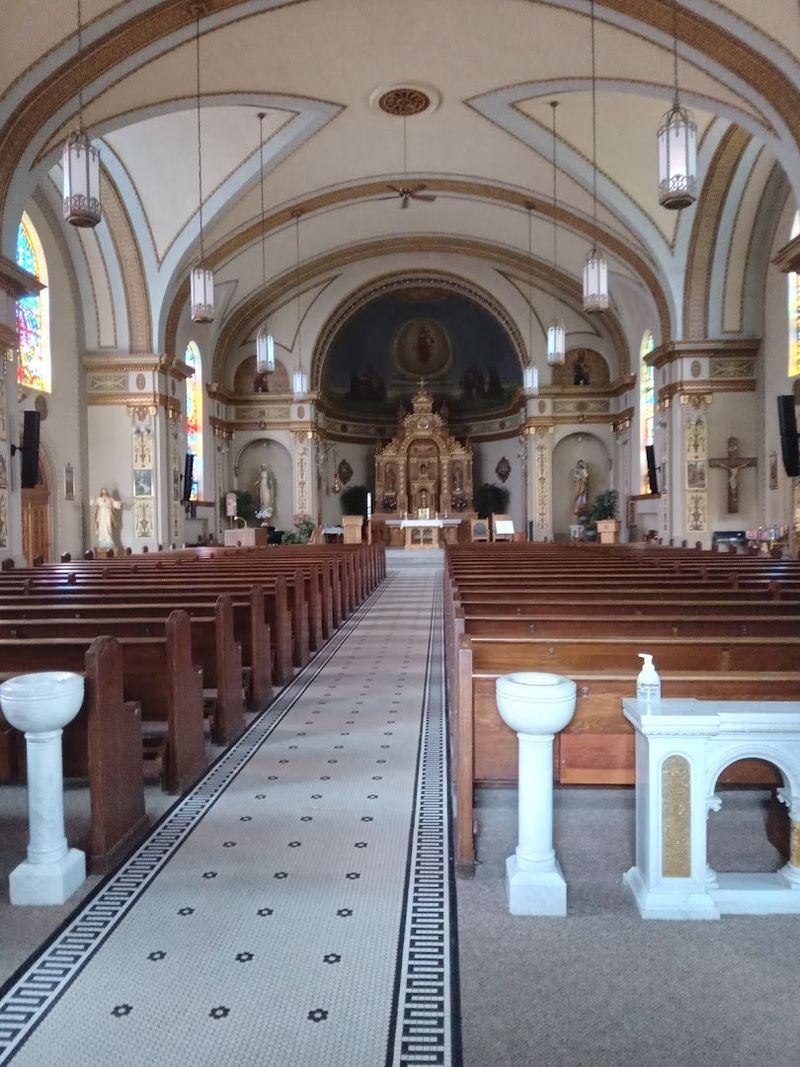
Right next to the outdoor grottos stands the Church of St. Peter and Paul, and it is every bit as impressive as the stone structures outside. The church is built in a traditional Catholic style with soaring ceilings, intricate stonework, and beautiful stained glass that fills the interior with warm, colored light.
Part of the grotto actually extends inside the church, so the transition from outdoor to indoor is seamless. You find yourself standing inside a building where the walls are embedded with the same extraordinary mineral work that covers the outdoor structures, and the effect is genuinely breathtaking.
I sat quietly in one of the pews for about fifteen minutes just taking it all in. The atmosphere is calm and deeply peaceful, the kind of quiet that feels intentional rather than accidental.
Whether you are Catholic, another faith, or no faith at all, the artistry and devotion built into every corner of this church are impossible to dismiss.
Devotional candles are available for a small donation, and the church welcomes visitors of all backgrounds. The overall feeling inside is one of reverence and warmth, and many visitors say it is the highlight of their entire trip to this remarkable site.
The Mineral Museum: A Rockhound’s Dream
Right on the property, there is a self-guided mineral museum that gives context to everything you see in the grottos outside. The museum houses a large display of the rocks, crystals, and minerals used in the construction of the grotto, all carefully labeled and organized so you can learn exactly what you are looking at.
For anyone who loves geology, this museum alone is worth the trip. The variety of specimens is remarkable, ranging from common Midwestern stones to rare gems sourced from places as far away as Brazil, Africa, and Asia.
Father Dobberstein sourced materials from all over the world, and the museum makes that global scope very clear.
Even visitors who have never thought twice about rocks tend to find themselves leaning in close to read the labels and marvel at the colors and formations. There is something genuinely exciting about seeing the raw materials and then walking outside to see how they were used in the finished structures.
The museum is free to enter along with the rest of the site, which makes it an easy and worthwhile addition to any visit. It adds a layer of understanding that transforms the grotto from a visual spectacle into something you can also appreciate intellectually and historically.
Guided Tours and the Local Volunteers Who Bring It to Life
Free guided tours are offered on weekends, typically around 1 p.m., and they last approximately 45 minutes. The guides are local volunteers who know the history of the grotto inside and out, and their enthusiasm for the place is entirely genuine.
One local guide, affectionately known as Grotto Gary, has become something of a legend among repeat visitors. He knows the history of every stone, can tell stories about Father Dobberstein with a personal warmth that makes the whole experience feel alive, and has even taught the resident swans a few tricks that he is happy to demonstrate if you ask nicely.
The tours are free, though donations are always appreciated. Even if you arrive outside of tour hours, the self-guided experience is fully satisfying because informational signage throughout the property explains each grotto and its significance.
That said, catching a guided tour adds a completely different dimension to the visit. The kind of detail and storytelling that comes from someone who genuinely loves this place is hard to replicate from a sign or a brochure.
My visit happened to coincide with a tour, and I stayed for the full 45 minutes without checking my phone once, which is saying something.
Admission, Hours, and Practical Visit Tips
One of the most refreshing things about this destination is that admission is entirely free, based on a free-will donation model. There are no tickets, no timed entry windows, and no required reservations.
The grounds are open 24 hours a day, every day of the year, which means you can visit at any time that suits you.
That said, visiting during daylight hours gives you the best view of the mineral details in the grotto walls, since the colors and textures really come alive in natural light. Night visits have their own appeal, especially in winter when snow covers the structures and soft lighting creates a completely different atmosphere.
Plan to spend at least two hours if you want to see everything, including the grottos, the church, and the museum. Some visitors find themselves staying considerably longer once they start examining the details up close.
Bringing a snack and a drink is a smart idea, especially if you are visiting with children or elderly family members.
The site is family-friendly, with a newer playground on the property for younger visitors. Restrooms and a gift shop are also available on-site.
The phone number for the shrine is +1 515-887-2371, and the website at westbendgrotto.com has current event and tour schedule information.
Rocking the Grotto: The Annual Summer Celebration
Every June, the grotto hosts an annual event called Rocking the Grotto, and it has become a beloved tradition for both locals and visitors from across the region. The event features live auctions, silent auctions, and community fundraising activities that support the ongoing maintenance and preservation of the shrine.
The food alone makes the event worth attending. The Knights of Columbus run a grill serving hamburgers and steak sandwiches that have earned a devoted following among regulars, and the homemade pies served by local volunteers are the kind of thing people talk about for the rest of the year.
The slices are enormous, served with ice cream, and priced so reasonably that you will feel guilty for not ordering two.
The event brings together people from all walks of life, from deeply religious pilgrims to curious tourists who just want to see what all the fuss is about. The atmosphere is warm, community-driven, and genuinely fun in a way that feels organic rather than manufactured.
If your schedule allows a June visit, planning around Rocking the Grotto is absolutely worth it. The combination of the grotto itself and the community celebration around it creates an experience that feels unique to this corner of Iowa and nowhere else.
Camping on the Grounds: Stay the Night in a Remarkable Setting
Not many religious shrines offer a campground, but the Grotto of the Redemption does, and it is one of the more unusual overnight options you will find anywhere in the Midwest. The campground accommodates both tents and RVs, with each site equipped with its own grill.
Staying overnight gives you something that day visitors never get: the grotto at night. After the daytime crowds thin out and the sky goes dark, the illuminated stone structures take on a completely different quality.
The play of light across the mineral surfaces creates shadows and glows that feel almost otherworldly, and having the place nearly to yourself in the quiet evening hours is a genuinely special experience.
The campground is a practical choice for road trippers passing through Iowa who want to break up a long drive with something memorable. It is also a popular option for families who want to extend their visit beyond a single afternoon without driving back to a larger town for accommodation.
Reservations for the campground can be made through the shrine’s website or by calling the main number. The rates are modest and in keeping with the free-will donation spirit of the overall site, making it accessible to visitors at almost any budget level.
Why This Iowa Landmark Belongs on Every Road Trip List
Most people who visit the Grotto of the Redemption arrive skeptical and leave completely converted. The reviews speak for themselves, with nearly 2,900 ratings averaging 4.9 out of 5 stars, which is the kind of consistency that is almost impossible to achieve for any public attraction anywhere.
The site draws visitors from all 50 states and from countries around the world. It has been compared favorably to religious sites in Europe, and while Iowa might not be the first state that comes to mind when planning a pilgrimage, this grotto holds its own against far more famous destinations.
Unlike popular spots in states like Oklahoma, where road trip attractions can feel commercialized, this Iowa landmark has kept its authenticity and community spirit completely intact.
The grotto is not just for Catholics or Christians. Rockhounds, art lovers, history enthusiasts, and curious travelers of every background consistently report that the experience exceeded their expectations.
The combination of artistic ambition, geological wonder, and human dedication makes it genuinely one-of-a-kind.
Oklahoma travelers heading north, Midwestern families looking for a meaningful day trip, or anyone crossing Iowa on I-90 or Highway 169 should build in a detour to West Bend. This is the kind of place that earns a permanent spot in your memory long after the drive home is done.
Share this story