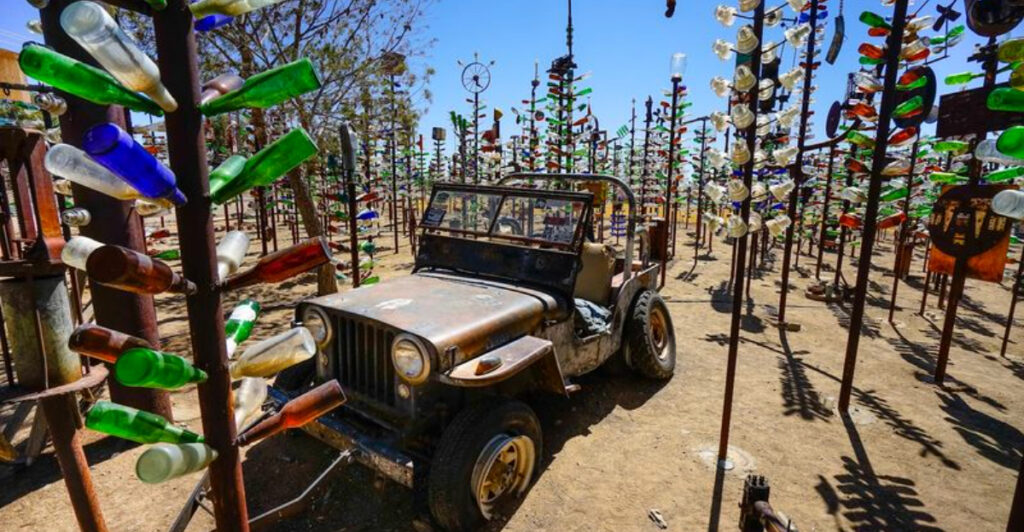
There is a stretch of old Route 66 in the California desert where something truly unexpected rises up from the dusty ground. Hundreds of glass bottles, in every color you can think of, are stacked onto metal poles to form what looks like a glowing, glittering forest.
The creator spent years collecting bottles, antiques, and vintage oddities to build this one-of-a-kind outdoor art installation. This place sits quietly along the highway, but once the sun hits those bottles just right, it stops every road-tripper in their tracks, and for very good reason.
Where to Find This Bottled-Up Wonder
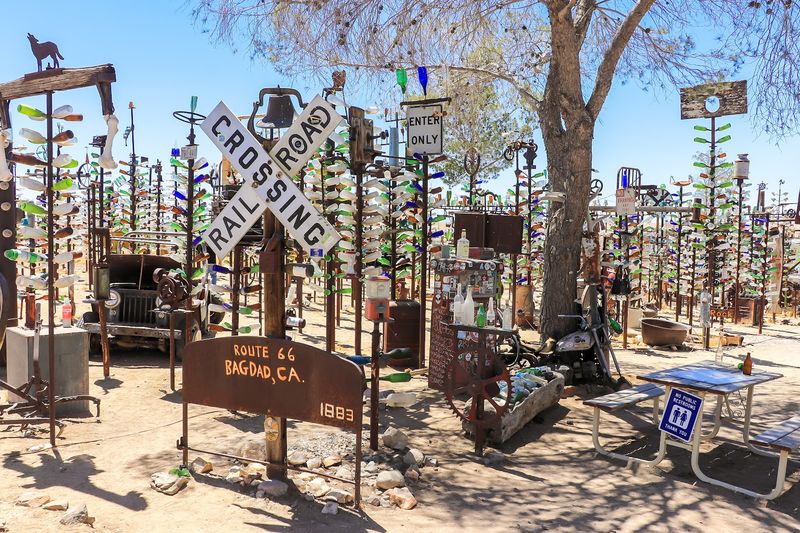
Right along National Trails Highway in Oro Grande, California, you will find one of the most surprising roadside stops in the entire American Southwest. The full address is 24266 National Trails Hwy, Oro Grande, CA 92368, and it sits just about five minutes from Interstate 15, making it an easy detour whether you are heading toward Las Vegas or looping back through the Mojave Desert.
Oro Grande is a small community in San Bernardino County, and it does not exactly show up on most travel bucket lists. That is exactly what makes this place such a rewarding find.
The surrounding landscape is flat, dry, and wide open, so when those towering bottle sculptures suddenly appear on the horizon, the contrast is almost surreal.
Unlike spots that require a reservation or a long hike, this one just asks you to pull over and look around. The location on old Route 66 also gives it a classic American road trip character that feels connected to a long tradition of quirky highway culture, much like the roadside attractions scattered across Oklahoma and other states along the historic Mother Road.
The Man Behind the Bottles
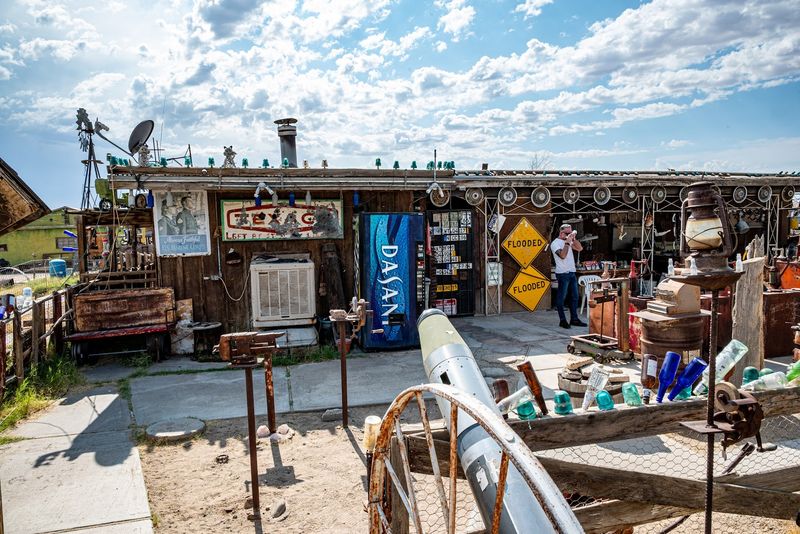
Elmer Long is the creative force behind this entire installation, and his story is as compelling as the artwork itself. He spent decades collecting bottles, metal scraps, antique tools, and vintage curiosities, slowly transforming a patch of Mojave Desert into something that blurs the line between junkyard and art gallery.
Elmer grew up watching his father collect bottles, and that early influence clearly stuck with him. What started as a personal hobby eventually grew into something that draws visitors from across the country and even from overseas, including travelers who have made it a specific stop on Route 66 road trips planned from as far away as Australia.
There is no staff on site and no formal museum experience. The whole place carries the spirit of one person’s quiet, persistent dedication to making something beautiful out of things most people would throw away.
That kind of personal vision, poured into a public space for everyone to enjoy for free, is genuinely rare. Oklahoma has its own Route 66 folk art traditions, and Elmer’s work fits right into that proud American roadside legacy, even though his roots are firmly planted in the California desert.
A Forest Made Entirely of Glass
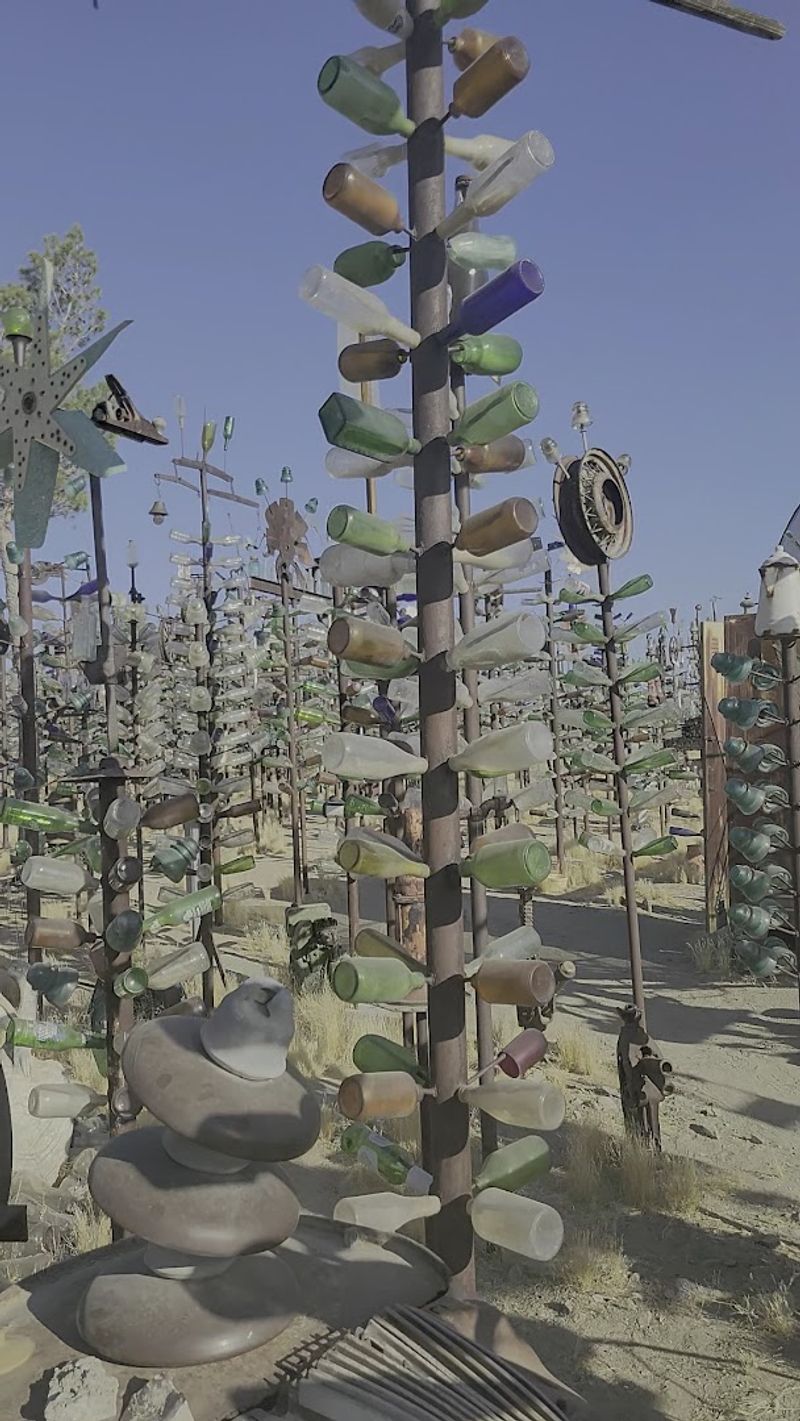
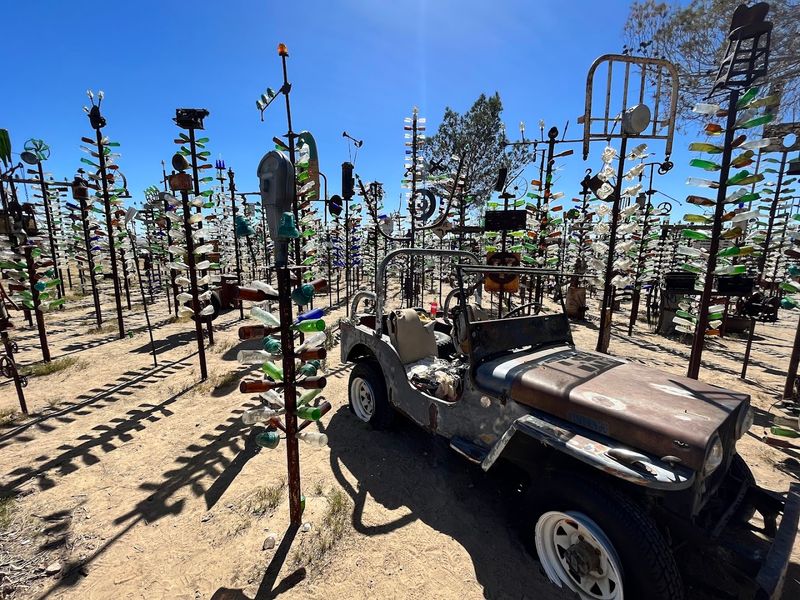
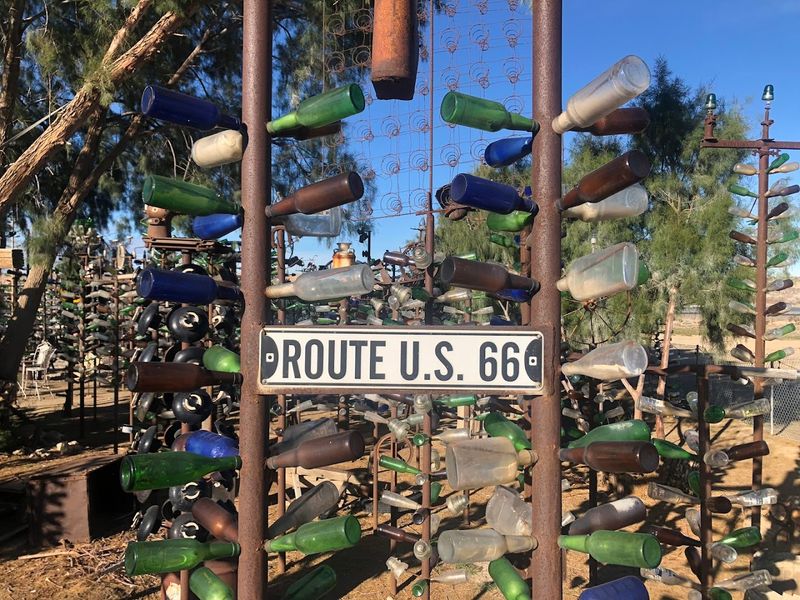
The first thing that grabs your attention when you step inside the fence is sheer scale. There are hundreds of metal poles, each one loaded with glass bottles in colors ranging from deep cobalt blue to amber, green, clear, and red.
From a distance, they genuinely look like a forest, which is a strange and wonderful thing to experience in the middle of a flat desert.
Up close, each tree reveals its own personality. Some are tightly packed with matching bottles arranged in careful patterns.
Others look more spontaneous, with mismatched shapes and sizes that give them a wilder, more chaotic energy. No two are exactly alike, even though at first glance they might seem repetitive.
The ground is all dirt, so sturdy footwear is a smart choice. The pathways between the sculptures are narrow in places, and the whole layout feels organic rather than planned, like the collection just kept growing outward over time.
When a breeze moves through, the bottles occasionally clink together softly, adding a subtle sound layer to the visual experience. It is the kind of detail that makes the place feel alive in a way that a traditional art gallery simply cannot replicate.
Vintage Artifacts Mixed Into the Art
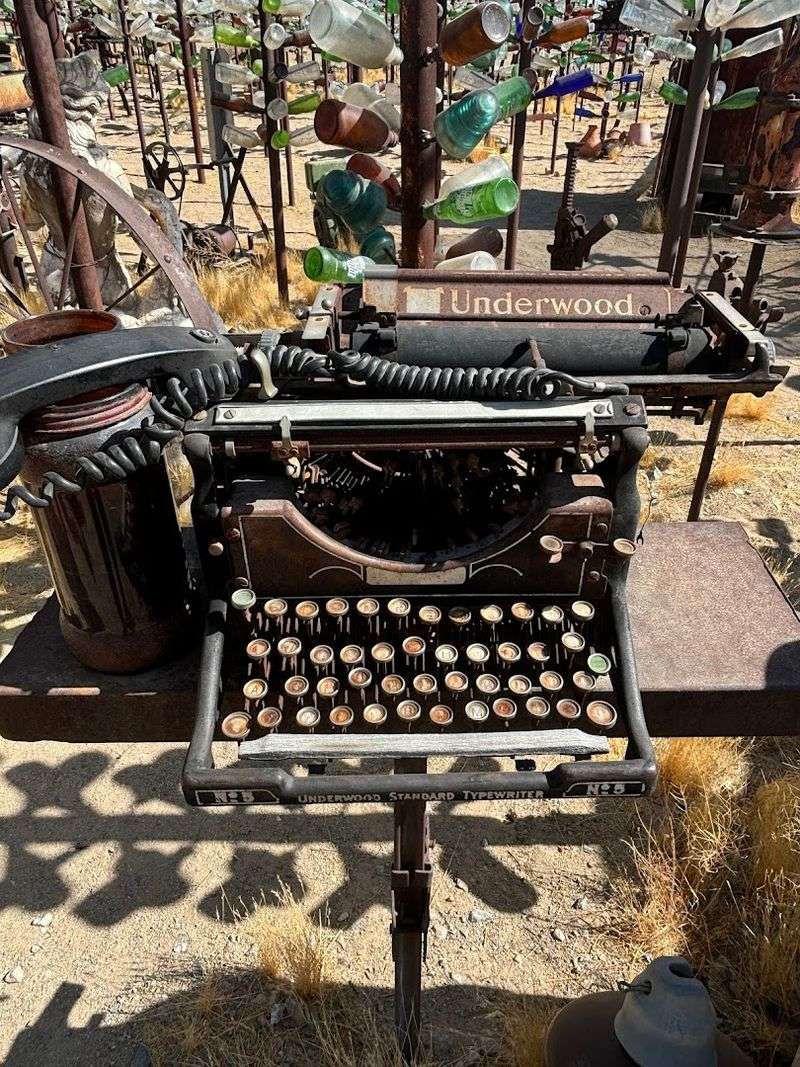
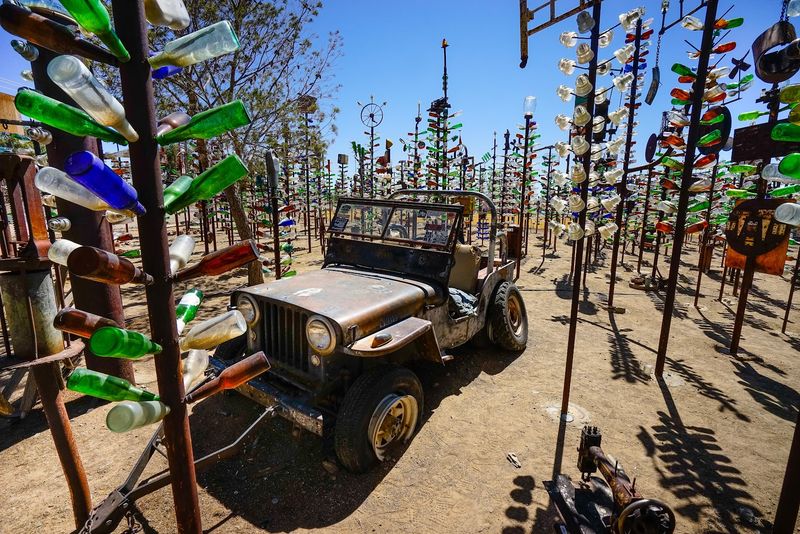
The bottle sculptures are the main event, but they share the space with a fascinating collection of vintage artifacts that deserve just as much attention. Scattered throughout the property are old typewriters, antique refrigerators, rusted farm equipment, car parts, road signs, and tools that look like they were pulled straight from a mid-century workshop.
These objects are not just props. They are integrated into the overall composition, propped against bottle trees or arranged in small clusters that feel like frozen scenes from another era.
The combination of transparent glass and heavy, rusted metal creates a visual contrast that is genuinely striking.
Fans of Americana, vintage collecting, or roadside history will find plenty to study here. The artifacts connect the installation to a broader tradition of Route 66 nostalgia, the same spirit that has drawn travelers to quirky roadside stops across Oklahoma, Texas, New Mexico, and beyond for generations.
Every piece has clearly been chosen with care, even if the overall effect feels wonderfully chaotic. You could spend fifteen minutes here and still feel like you missed something worth a second look.
The Magic That Happens at Sunset
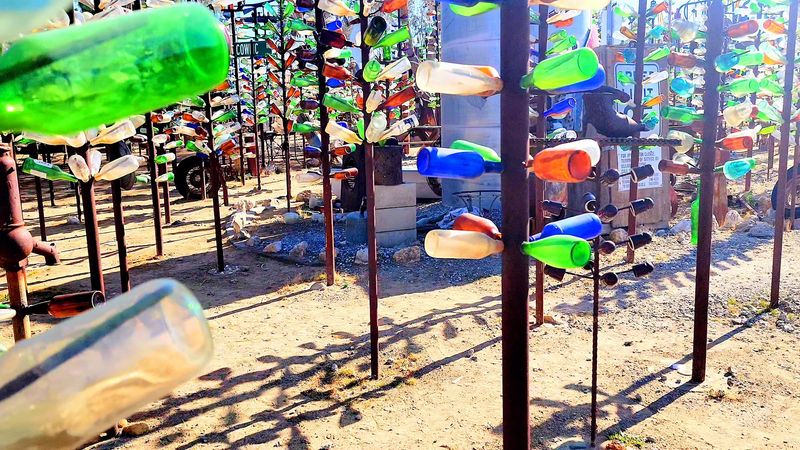
Timing your visit around sunset is one of the best decisions you can make at this stop. When the sun drops low in the western sky and the light hits those bottles at a sharp angle, the entire installation transforms.
Every bottle glows from within, casting small pools of colored light onto the dirt below and turning the whole place into something that feels almost otherworldly.
Blue bottles turn a deep sapphire. Amber ones light up like lanterns.
Green glass takes on a warm, almost tropical tone. The effect only lasts for a short window of time, but that is part of what makes it special.
Visitors who have caught it at just the right moment consistently describe it as one of the most unexpectedly beautiful things they have seen on a road trip.
Sunrise offers a similar payoff if you happen to be passing through early in the morning. The ranch is open from 6 AM on most days, which means early risers have a real opportunity to experience that soft, golden morning light filtering through the glass.
Route 66 has inspired unforgettable moments across multiple states, from California through Oklahoma and beyond, but few are quite as visually dramatic as this one.
Completely Free to Visit
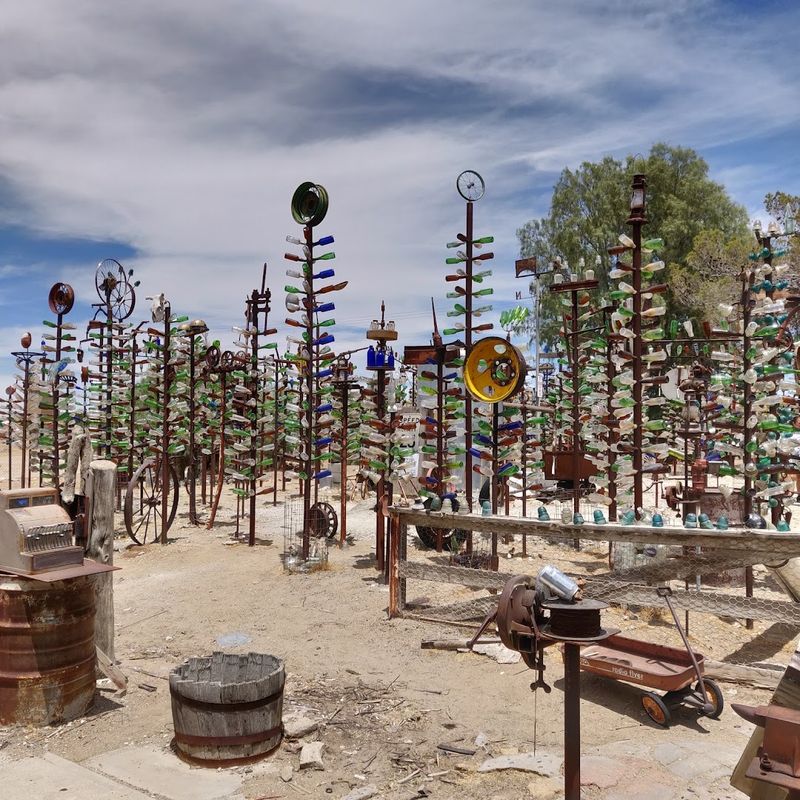
One of the most refreshing things about this stop is that there is no admission fee. You simply pull up, park either outside the fence or in the adjacent lot, and walk right in.
In an era when even minor tourist attractions often charge entry, this kind of open-access art space feels genuinely generous.
There is a donation bucket located a short walk into the property, and a QR code you can scan to contribute digitally. The suggested approach from most visitors is to leave something if you enjoyed the experience, even a small amount, since the place is maintained entirely through that kind of voluntary support.
No ticket booth, no gift shop, no souvenir stand.
The absence of commercial infrastructure is actually part of the charm. There are no restrooms on site, so planning ahead is wise, especially if you have kids along for the ride.
The dirt paths are accessible to most visitors on foot, though wheelchair access to all areas is limited due to the uneven terrain. For a completely free, genuinely memorable stop along old Route 66, this one delivers in a way that paid attractions sometimes struggle to match.
A Perfect Stop for Families and Photography Lovers
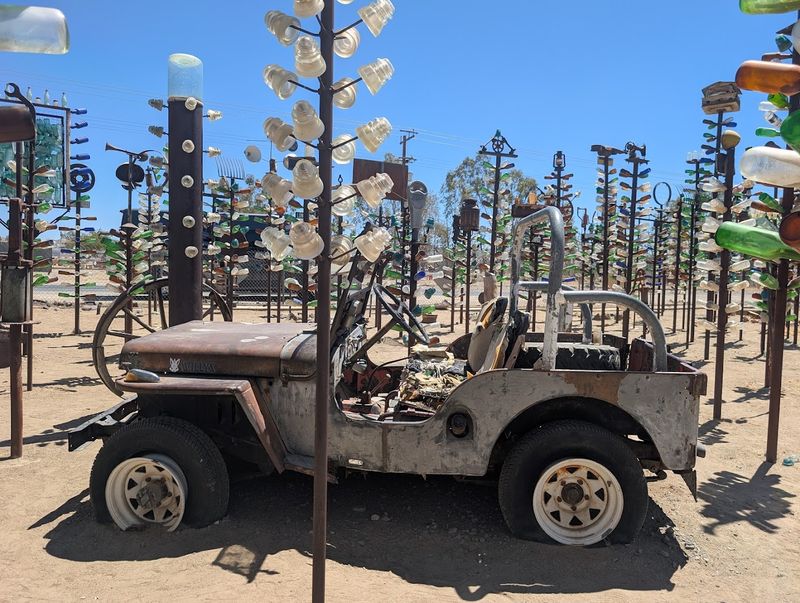
Kids and adults respond to this place in completely different ways, and both reactions are worth watching. Younger visitors tend to treat the installation like a giant scavenger hunt, hunting for hidden objects tucked between bottle trees or spotting familiar shapes in the vintage artifacts.
The game of I Spy works surprisingly well here, and the variety of objects keeps attention spans from wandering too quickly.
For photographers, the location is a genuine playground. The combination of bold colors, interesting textures, dramatic desert light, and layered compositions creates opportunities that are hard to replicate anywhere else.
Wide shots capture the forest-like density of the sculptures, while close-up frames reveal the individual character of each bottle arrangement.
The best light for photography falls in the early morning and late afternoon, when shadows are long and colors are richest. Midday visits are still worthwhile, but the harsh overhead sun flattens the visual depth a bit.
Selfies, portrait shots, and detail photography all work well here, and the free-roaming layout means you can position yourself exactly where the composition feels strongest. It is one of those rare places where almost every angle produces something worth keeping.
Practical Tips Before You Go
A few simple preparations will make your visit much more comfortable, especially if you are passing through during warmer months. The Mojave Desert gets genuinely hot, and there is very little shade anywhere on the property.
Bringing water, wearing a hat, and putting on sunglasses before you step out of the car are all practical moves that experienced road-trippers will already know.
Footwear matters more than you might expect. The entire ground surface is dirt, and some areas have small rocks or uneven patches.
Sandals or flat shoes with thin soles are less ideal than sneakers or boots, particularly if you plan to explore deeper into the installation rather than just viewing it from the edges.
The ranch is open most days from 6 AM until 10 PM, giving you a generous window to time your visit around sunrise, sunset, or whatever fits your travel schedule. There are no restroom facilities on site, so the nearest options will require a short drive.
Parking is available directly outside the fence or in an adjacent lot, and the whole experience typically takes between five and twenty minutes depending on how deeply you explore. Quick stop or slow wander, both work perfectly here.
Its Place in Route 66 History and Culture
Route 66 has always been more than just a road. Since it was established in 1926, the highway has served as a canvas for American creativity, independence, and the particular kind of roadside showmanship that turns a long drive into an adventure.
Elmer’s Bottle Tree Ranch fits naturally into that tradition, sitting on National Trails Highway, which is the original alignment of Route 66 through this part of California.
The Mother Road has inspired folk art, roadside attractions, diners, and monuments across eight states, from Illinois all the way to California, passing through Oklahoma twice along the way. Oklahoma in particular has preserved a remarkable stretch of the original highway, and the spirit of creative, homemade roadside culture that thrives there is very much alive at this California stop as well.
What makes this installation feel historically significant is that it was not built by a corporation or a tourism board. It grew organically out of one person’s passion, which is exactly how the best Route 66 landmarks have always come to exist.
The highway’s character has always been shaped more by individual vision than by official planning, and this bottle forest is a vivid, colorful proof of that idea still working in the present day.
Why This Stop Stays With You Long After You Leave
Most roadside stops are easy to forget by the time you reach the next town. This one tends to linger.
There is something about the combination of scale, color, personal vision, and unexpected beauty that makes it hard to shake, even days after your visit.
Part of what makes it memorable is the contrast between the setting and the experience. The Mojave Desert is not exactly known for lush, colorful environments, so stumbling onto a field of glowing glass trees feels like a genuinely surprising reward for paying attention to the road.
The fact that it is free and unmanned adds to the sense that you discovered something rather than just visited it.
Travelers who have driven Route 66 from end to end, through Oklahoma, Texas, New Mexico, Arizona, and into California, often cite this as one of the highlights of the entire journey. Not because it is the most polished or the most famous stop, but because it captures something honest and joyful about what roadside art can be.
One person, one vision, hundreds of bottles, and a stretch of old highway that still has the power to surprise you when you least expect it.
Share this story