There is a 946-acre park in Monmouth County, New Jersey, that most people drive past without a second thought, and that is exactly what makes it worth stopping for. Tucked into Wall Township along the winding path of the Shark River, this park offers a surprisingly full outdoor experience without requiring a long road trip or a packed itinerary.
Trails cut through pine forests, a fishing pond sits quietly near a well-kept playground, and open fields stretch out wide enough for a proper afternoon. Despite the dramatic name of the river running through it, there are absolutely no sharks involved.
What there is, though, is a genuinely rewarding mix of history, natural terrain, and riverfront scenery that keeps people coming back season after season. This article covers everything worth knowing before a first visit or a return trip to one of New Jersey’s most underrated county parks.
Where the Park Begins: Address, Location, and Basic Facts
Shark River Park sits at 1101 Schoolhouse Road, Wall Township, NJ 07753, managed by the Monmouth County Park System. The park spans 946 acres and takes its name from the Shark River, which winds through much of the property.
The park is open every day of the week from 7 AM to 5:30 PM, though hours can extend during warmer months, so checking the official Monmouth County Parks website before a visit is a smart move. Access points exist on both sides of Schoolhouse Road, which is an important detail first-time visitors often miss.
The main parking lot sits on one side of the road, where the playground, picnic areas, and pond are located. The hiking trails are mostly found on the opposite side.
Knowing this layout in advance saves a lot of confusion and helps visitors make the most of their time from the moment they arrive.
A River With a Fierce Name and a Calm Personality
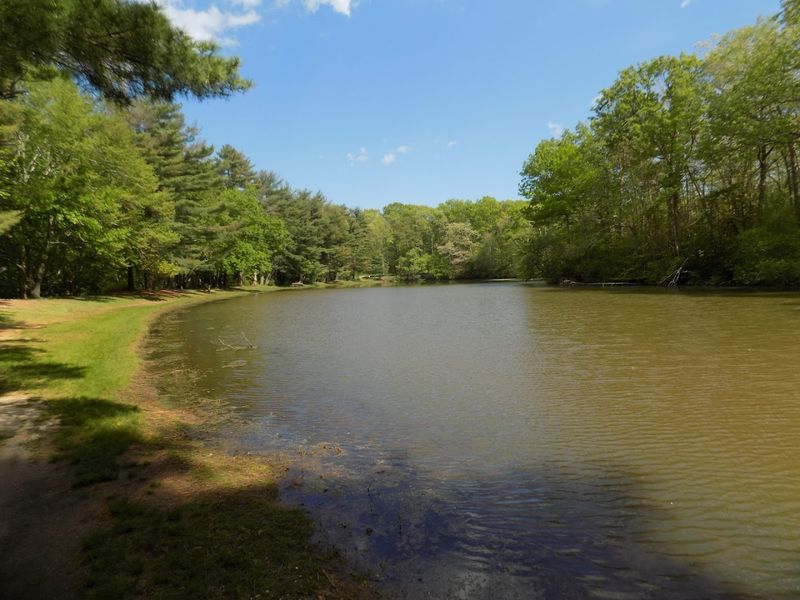
The Shark River is the backbone of this entire park, and despite its intimidating name, the waterway is calm, relatively shallow in most areas, and surrounded by wetlands that support a wide range of wildlife. The name actually comes from an old English word rather than any connection to ocean predators.
The river corridor creates a natural habitat for birds, turtles, and fish, making it a popular spot for anyone who enjoys watching wildlife without needing specialized gear. Kayaking and canoeing are possible along the river, giving paddlers a ground-level view of the wetlands and forested banks that line the water.
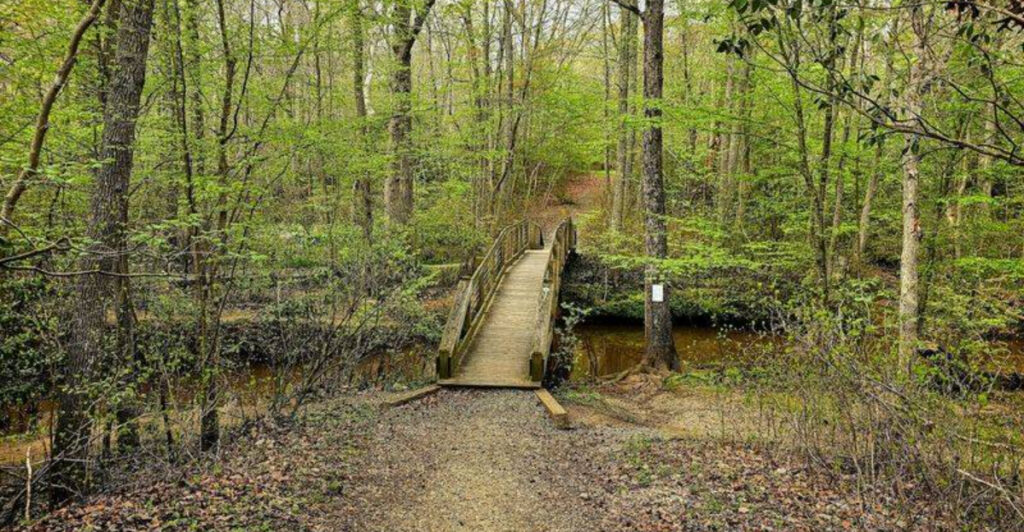
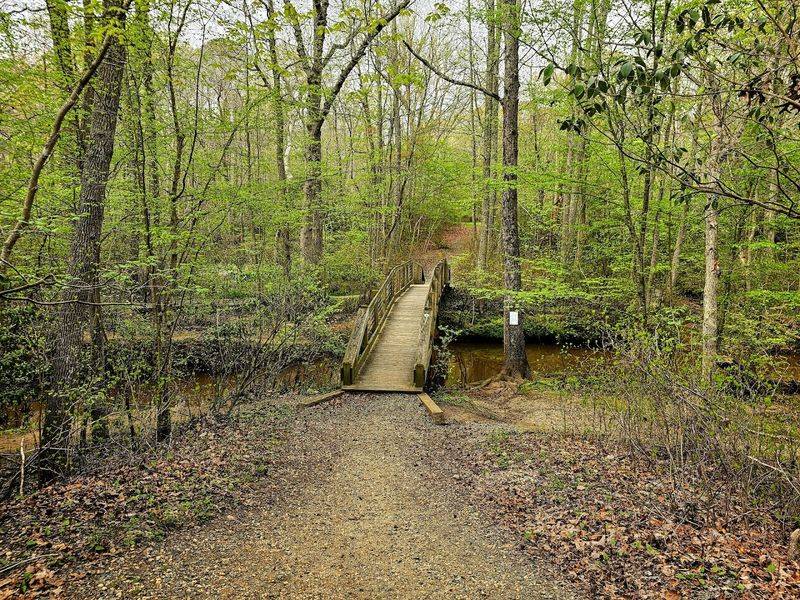
The river also shapes the terrain of the hiking trails, which cross it at several points via wooden bridges. Those bridge crossings are some of the more memorable moments on any trail loop, offering open views of the water from above and a chance to pause and take in the natural setting around them.
Trail System Overview: More Miles Than Most Expect
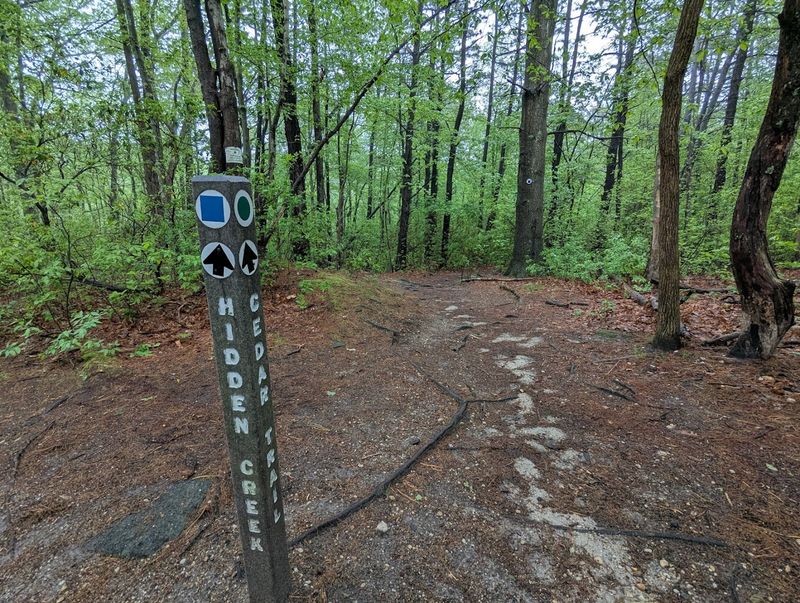
The trail system at Shark River Park is more extensive than the park’s relatively low profile might suggest. With roughly six or more miles of marked trails spread across the property, hikers have enough variety to return multiple times without repeating the exact same route.
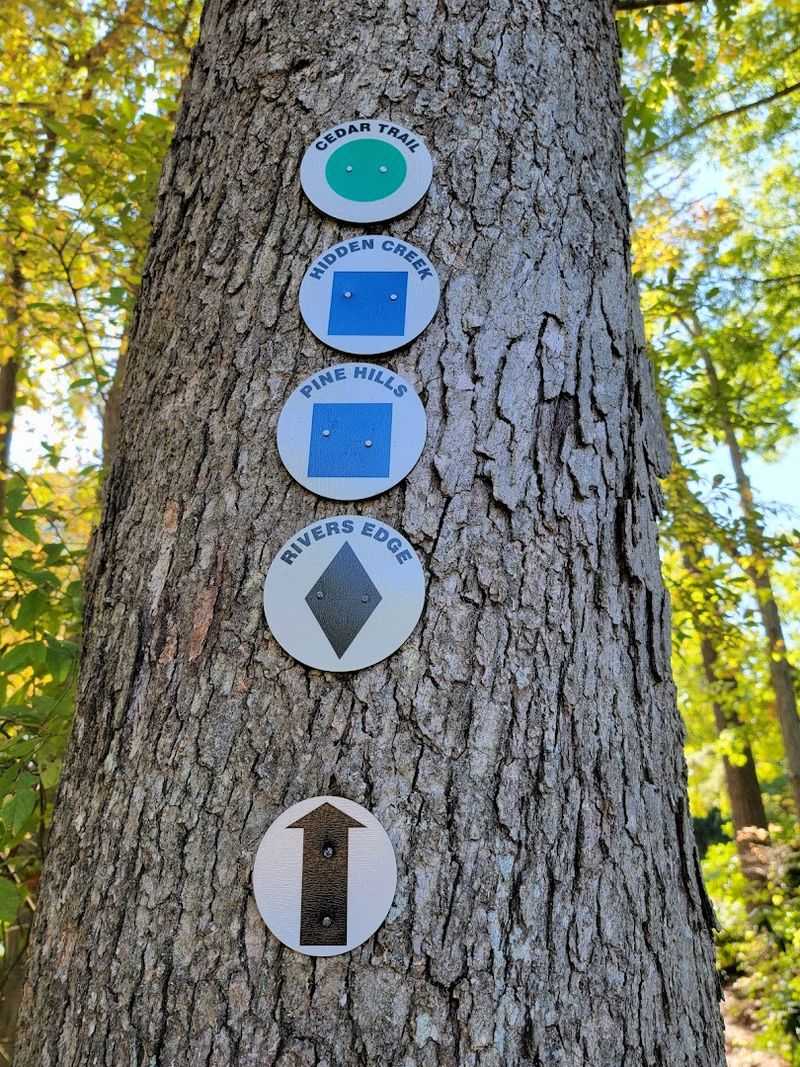
Trails are color-coded by difficulty level. The green circle marks the easier, shorter paths designed for casual walking, while the blue square signals moderate terrain suited for longer hikes and all-terrain cyclists.
Some sections include wooden steps built into hillsides, raised plank walkways over wet ground, and stretches of sandy soil mixed with rocky patches.
First-time hikers often find the intersections a bit confusing, so bringing a trail map is genuinely useful rather than optional. Maps are available through the Monmouth County Parks website.
Once the layout becomes familiar, navigating the trail system gets much easier, and the variety of terrain keeps the experience from ever feeling repetitive or flat.
Hidden Creek Trail: A Quiet Route Worth Following
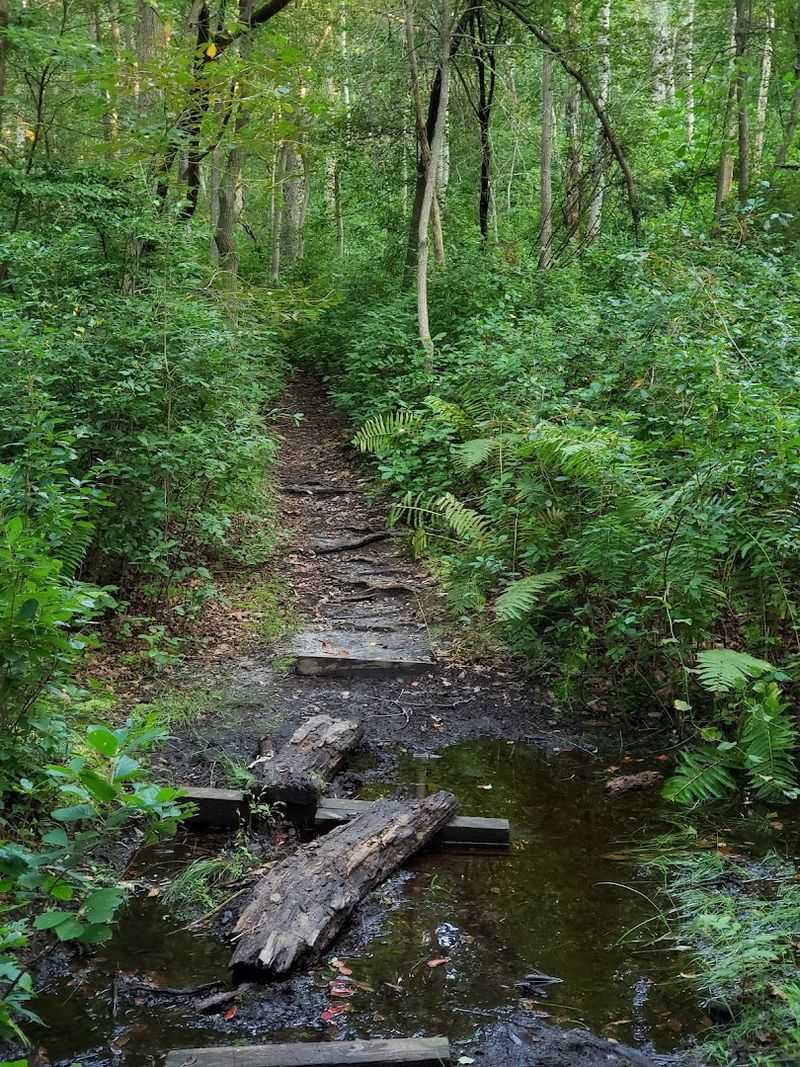
Among the named trails at Shark River Park, the Hidden Creek Trail stands out as a favorite for hikers who want a mix of terrain without committing to a strenuous outing. Estimated at around two miles in length, the trail moves through a landscape that shifts noticeably as it progresses.
Sections of pine trees give way to sandier ground, then rocky stretches, then raised plank walkways built over low-lying wet areas. The variety of terrain in a single trail makes it feel longer and more interesting than the mileage might suggest.
Trail markers exist but have been noted as occasionally hard to read, so keeping the map accessible is a practical habit.
The trail connects with other routes in the park, which means hikers who want a longer outing can link trails together for a more extended trip. Hidden Creek is a solid starting point for anyone new to the park who wants to get a feel for the overall layout and terrain.
The Bridge Loop: Short, Easy, and Worth Every Step
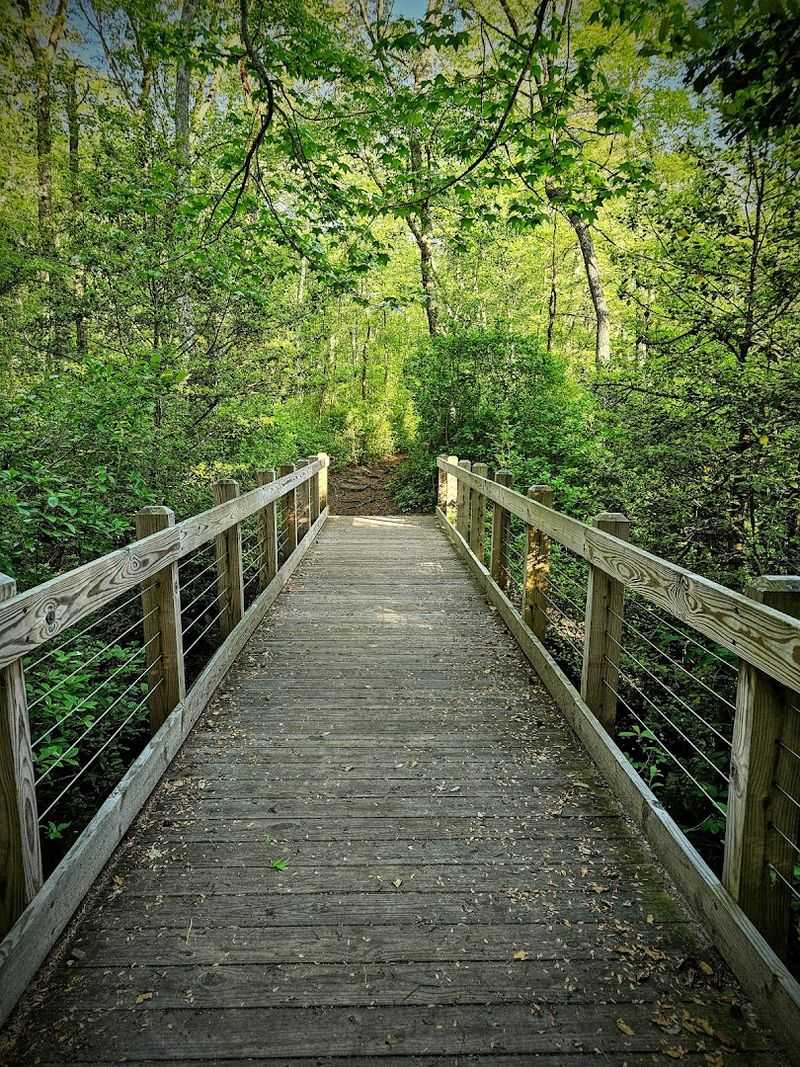
The Bridge Loop trail is one of the most accessible routes in the park, covering roughly one mile and staying mostly flat with only a couple of short elevation gains of around twenty feet. It is walkable in regular sneakers, making it an easy entry point for those who are not regular hikers but still want to spend time on the trails.
The path moves through wooded terrain with small streams running alongside portions of the route. Several bridges cross over these water features, which gives the loop its name and provides some of the more visually rewarding moments of the walk.
The trail is not handicap-accessible due to its natural surface of dirt and small stones.
One practical note worth knowing: the hiking trails, including the Bridge Loop, are located across Schoolhouse Road from the main parking area. A sign near the parking lot exit points toward the crossing.
Missing that sign on a first visit is a common experience, but the trails are worth the extra few steps to find them.
The Fishing Pond: A Peaceful Spot With Some Caveats
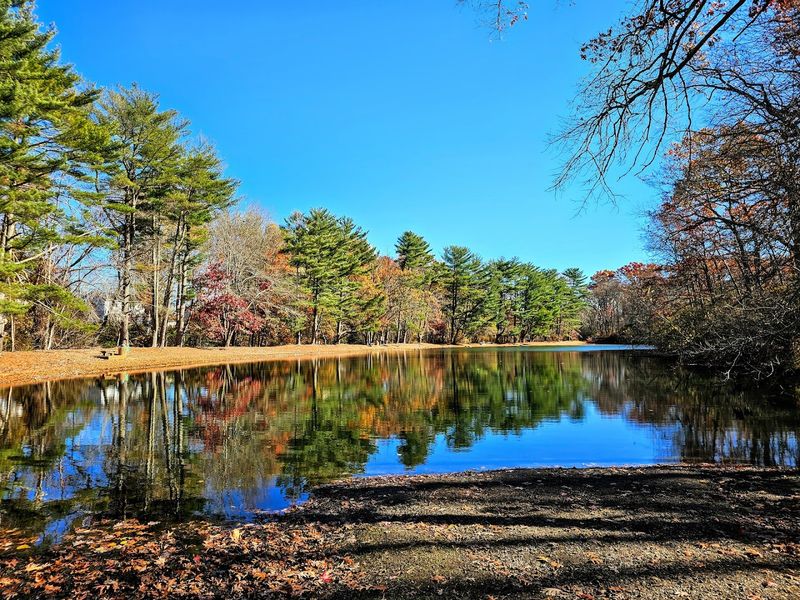
A small pond sits near the main parking area on the recreational side of the park, and it draws visitors who want to sit quietly near the water without committing to a full hike. The pond has a certain peaceful quality, with benches positioned nearby and trees providing shade along the edges.
Fishing is technically possible at the pond, though the water quality has been inconsistent, with algae visible on the surface during warmer months. The pond is not part of a full walking loop, meaning visitors who want to circle the water will eventually need to either head out to the main road or turn back the way they came, since there is no complete path around it.
Despite those limitations, the pond remains a popular gathering point, particularly for families with younger children who enjoy watching the water. It adds a calm, unhurried quality to the recreational side of the park that balances nicely against the more active trail system across the road.
Picnic Areas: Built for Groups, Comfortable for Everyone
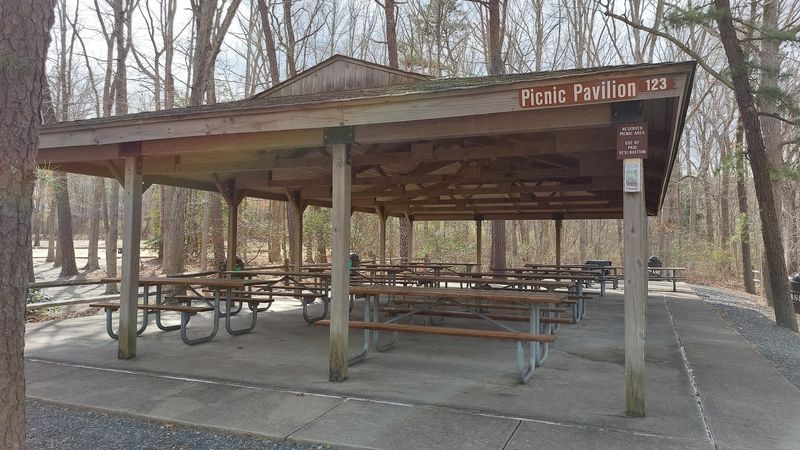
The picnic infrastructure at Shark River Park is genuinely well-organized. Multiple picnic tables are spread across the main recreational area, with enough seating to accommodate large groups comfortably.
Grilling spots are available for those who want to cook outdoors, and the areas are kept clean and maintained consistently throughout the season.
For larger gatherings, a designated group picnic area can be reserved in advance for a fee, which makes the park a practical option for family reunions, team outings, or community events. The open fields surrounding the picnic zones provide extra space for lawn games, casual sports, or simply spreading out a blanket.
Restrooms are available on-site and are noted for being well-maintained, which is always a welcome detail on a longer outing. Free parking adds to the overall accessibility of the space.
The combination of tables, grills, open fields, and clean facilities makes the picnic area one of the most functional parts of the entire park.
The Playground: Designed With Safety and Age in Mind
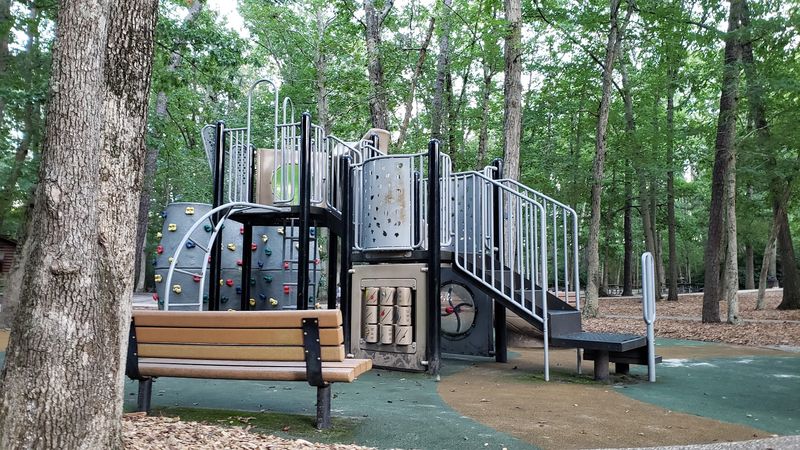
The playground at Shark River Park is a well-thought-out space for families with younger children. Equipment is installed over soft ground material throughout all play zones, reducing the risk of injury from falls.
Signs mark each area with age-appropriate recommendations and supervision guidance, which helps parents navigate the space with kids of different ages.
The setup is relatively standard for a county park playground, but the cleanliness and maintenance level are consistently good. One somewhat unusual feature is a tire-based play element, which stands out among the more typical equipment found at similar parks in the region.
The playground is positioned near the picnic area and parking lot, making it easy for families to move between activities without covering a lot of ground. Children who need a break from walking or who are too young for the trails have a dedicated space to burn energy.
It rounds out the family-friendly side of the park in a practical and reliable way.
Wildlife Along the Trails: What to Watch For
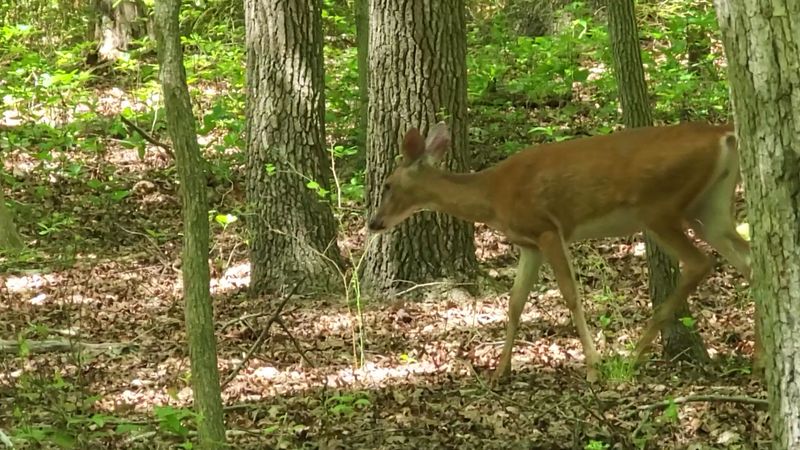
The variety of habitat within Shark River Park, from forested uplands to river wetlands and open fields, supports a solid range of wildlife that trail users encounter regularly. Birds are the most consistently spotted, with the wetland areas along the Shark River drawing species that prefer water-adjacent environments.
Turtles are commonly seen near the pond and along slower-moving sections of the river, particularly during warmer months when they move onto rocks or logs to rest. Fish are present in the river corridor, and deer are spotted throughout the forested trail sections, especially during early morning hours when the park first opens.
Bringing insect repellent is a practical preparation, particularly during spring and summer when trail conditions can be moist after rain and bugs are more active. The park does not require any special equipment for wildlife observation, making it an accessible option for casual nature watching.
Staying on marked trails also helps avoid disturbing the habitats that support this variety of animal life.
Seasonal Changes: How the Park Shifts Through the Year
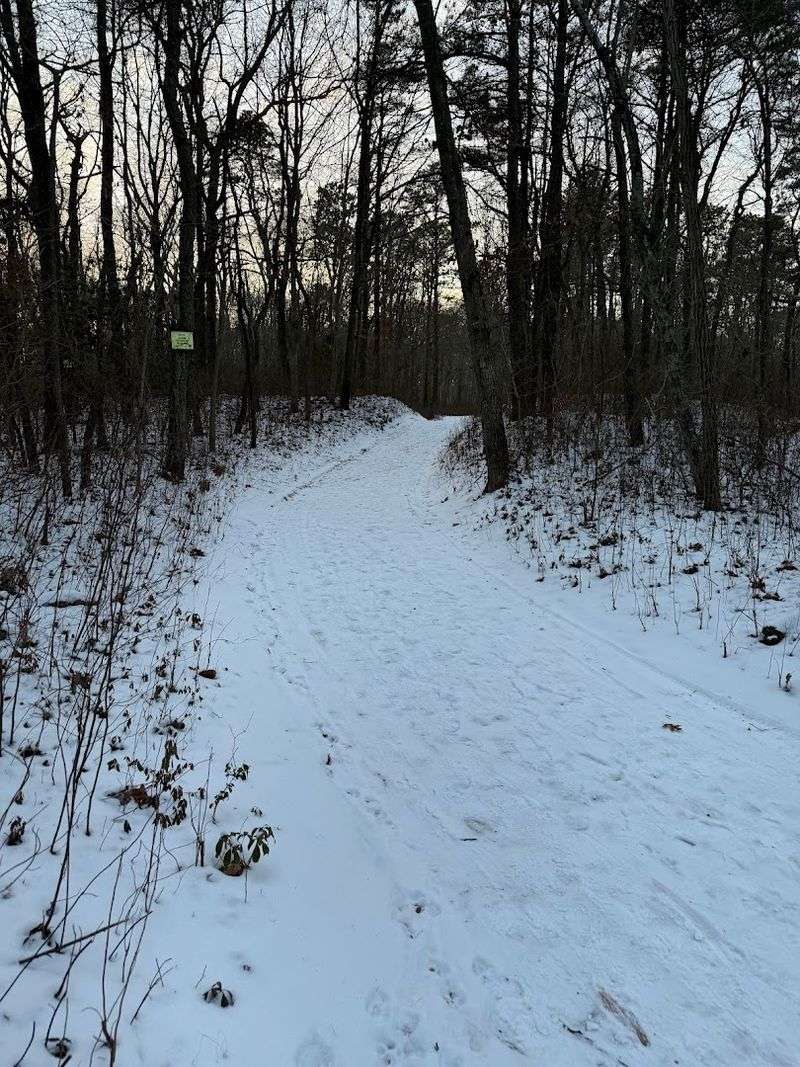
Shark River Park holds appeal across all four seasons, though the experience changes noticeably depending on when a visit happens. Fall is particularly striking along the trails, when the tree canopy shifts through orange, yellow, and red before the leaves drop.
The Hidden Creek Trail through the pine and mixed forest sections is a popular fall route for that reason.
Winter brings a quieter version of the park, and the Monmouth County Park System has noted that winter sports are possible within the park’s boundaries, though specific facilities vary by season and conditions. Spring brings mud to the trails, which is worth preparing for with appropriate footwear, but it also brings renewed wildlife activity along the river corridor.
Summer hours extend the park’s operating window significantly, with the schedule shifting to allow visits until 9:30 PM during the warmer months. That extended window makes early evening walks possible, which adds a different quality to the experience compared to a midday visit in full sun.
Practical Tips Before the First Visit
A few practical details make a significant difference between a smooth visit and a frustrating one at Shark River Park. Parking is free and the lot is described as large, which helps during busy weekend hours when the recreational area draws families for picnics and playground time simultaneously.
Bringing a printed or downloaded trail map is strongly recommended for first-time hikers. The trail markers are present but can be difficult to read at certain intersections, and the layout of multiple crossing paths can be disorienting without a reference point.
The Monmouth County Parks website at monmouthcountyparks.com is the best source for current maps, trail conditions, and any seasonal closures.
Footwear matters more than it might seem. Trails can be muddy after rain, and some sections include uneven terrain with rocks and roots.
Comfortable walking shoes handle the easier loops, while sturdier hiking footwear is a better choice for longer or more varied routes. Sunscreen and bug spray round out the standard preparation for a full-day outing.
Why This Park Keeps Drawing People Back
Shark River Park does not try to be everything at once, and that restraint is part of what makes it work so well. The park offers a focused set of outdoor experiences, trails, water access, open fields, and family amenities, all within a single manageable property that does not require hours of driving to reach.
The proximity to the Garden State Parkway means some road noise is audible near certain parts of the park, particularly the Bridge Loop area. That is a minor trade-off for a park that is otherwise easy to access from multiple points in Monmouth County and the broader Jersey Shore region.
What keeps people returning is the combination of low cost, solid trail variety, and a setting that genuinely changes with the seasons. Whether the goal is a solo morning run, a family picnic, a dog walk through the woods, or a few hours on the water, the park accommodates all of those without overcrowding or overcomplicating the experience.
That consistency is its quiet strength.
Share this story