Most people think of Christian landmarks as being limited to places like Italy or Bethlehem. That overlooks how far the faith actually spread, leaving churches, monasteries, and historic sites across regions many travelers would not expect.
This list highlights that wider footprint. You will find rock-hewn churches in Ethiopia, a major Marian pilgrimage site in Turkey, early Christian inscriptions in China, and cathedrals in countries where Christianity is not the dominant religion.
Some of these sites are well known, others rarely make travel lists, but each one shows how deeply and widely Christian history is rooted beyond its traditional map.
1. Church of Saint George, Ethiopia
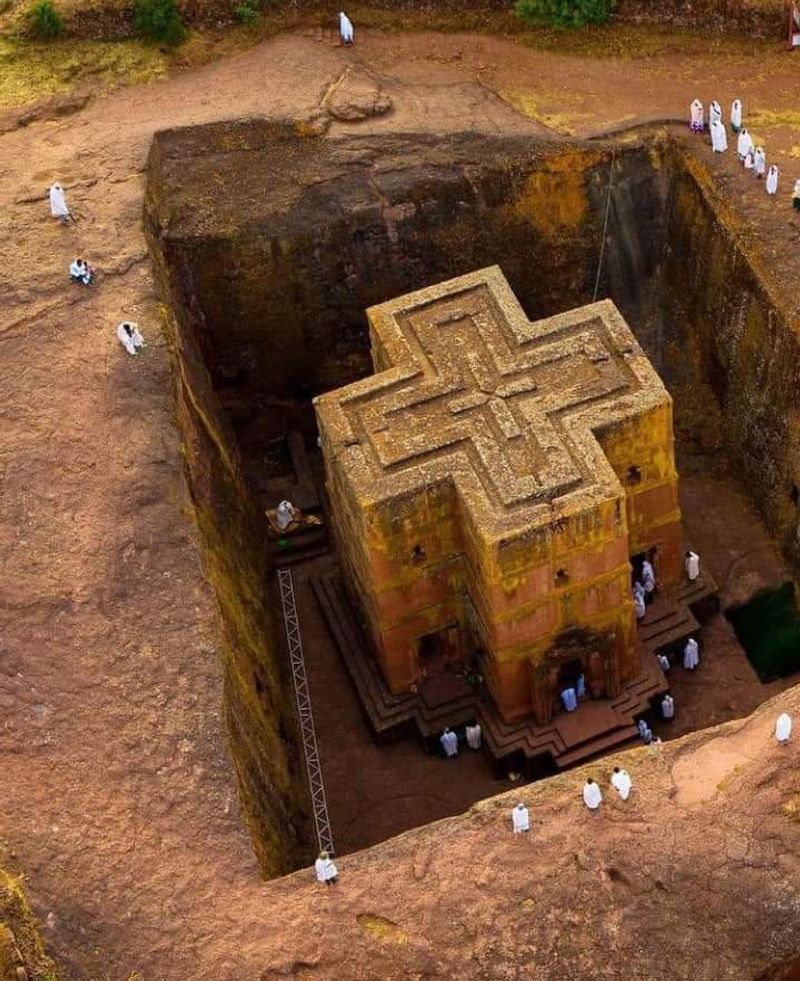
Here is the kind of church that makes ordinary buildings look a little lazy. The Church of Saint George in Lalibela is carved straight down into solid rock, creating a freestanding cross-shaped sanctuary that seems hidden until you reach its edge.
Built in the 12th or 13th century, it belongs to Ethiopia’s extraordinary group of rock-hewn churches, created during the reign of King Lalibela. Many visitors arrive expecting something impressive and leave wondering why this site is not in every world history textbook.
The layout is practical as much as dramatic, with trenches, passages, and carefully cut walls guiding pilgrims toward the entrance. Ethiopia’s Christian heritage goes back many centuries, and this church makes that fact impossible to ignore, proving East Africa was never a side note in Christian history but a major chapter with serious architectural confidence.
2. Saint Catherine’s Monastery, Egypt
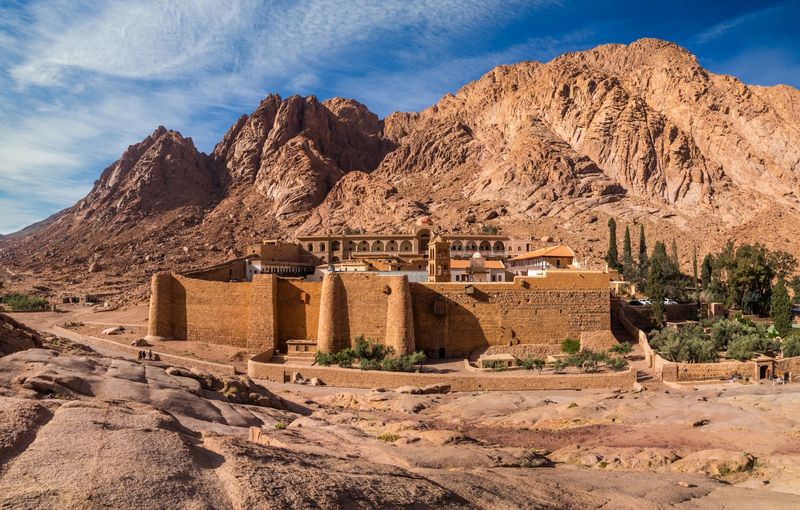
Few places make a stronger historical entrance than a monastery standing firm at the foot of Mount Sinai. Saint Catherine’s Monastery in Egypt has operated since the 6th century, which is an astonishingly long run for any institution, let alone one in a remote desert setting.
The complex is famous for its fortified walls, priceless manuscripts, ancient icons, and deep ties to biblical tradition. This is not a decorative afterthought in the landscape but a major center of Christian continuity that has served monks, scholars, and pilgrims across many centuries.
Its setting in a predominantly Muslim country often surprises travelers who have only learned Egypt through pharaohs and pyramids. Then this monastery appears and politely rewrites the script, showing that Egypt also holds one of the world’s oldest living Christian traditions, preserved with remarkable persistence and an impressive ability to outlast every fashionable assumption.
3. Saint Thaddeus Monastery, Iran
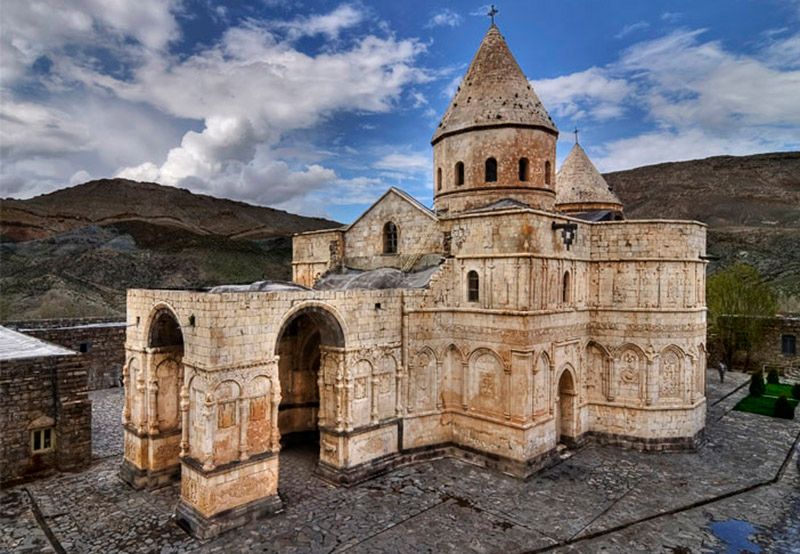
Iran is not the country most travelers expect to deliver an ancient Armenian monastery with serious visual drama. Saint Thaddeus Monastery, often called the Black Church, stands in northwestern Iran as one of the oldest and most important Christian sites in the region.
Its origins reach deep into early Christian tradition, and the monastery became a major center for Armenian Christianity over many centuries. The structure combines dark and lighter stone, giving it a distinctive appearance that sets it apart even before you start reading the history.
The real surprise is how clearly it reveals the Middle East’s layered religious past. Iran is often discussed in narrowly modern terms, but this monastery reminds you that Christian communities have long been part of the wider cultural fabric there, leaving behind architecture, pilgrimage traditions, and a record of continuity that complicates every easy stereotype in the most useful way possible.
4. Church of Saint Simeon Stylites, Syria
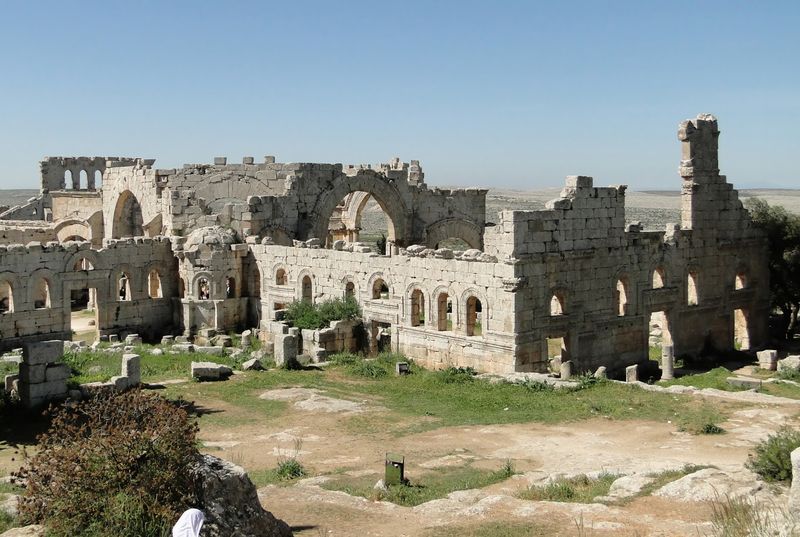
A church built around a pillar is not standard design, which is part of this site’s lasting appeal. The Church of Saint Simeon Stylites in Syria grew around the column associated with Simeon, the ascetic saint who spent years living atop a pillar and became famous across the Christian world.
The complex, dating to the 5th century, was once among the largest church sites anywhere. Its basilicas, courtyards, and central octagonal space reveal how devotion to one remarkable figure shaped an entire pilgrimage destination and created an architectural plan unlike the usual church blueprint.
For many readers, the surprise starts with Syria itself, since modern headlines often overshadow its older religious significance. Yet early Christianity flourished here, and the ruins of Saint Simeon Stylites still show how influential the region was in shaping Christian pilgrimage, monastic ideals, and sacred architecture long before the modern era started rearranging popular memory.
5. House of the Virgin Mary, Turkey
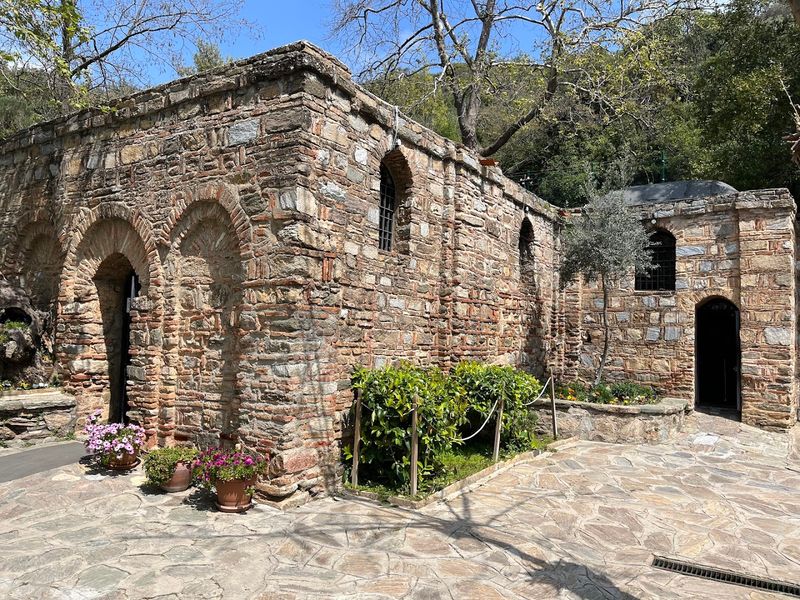
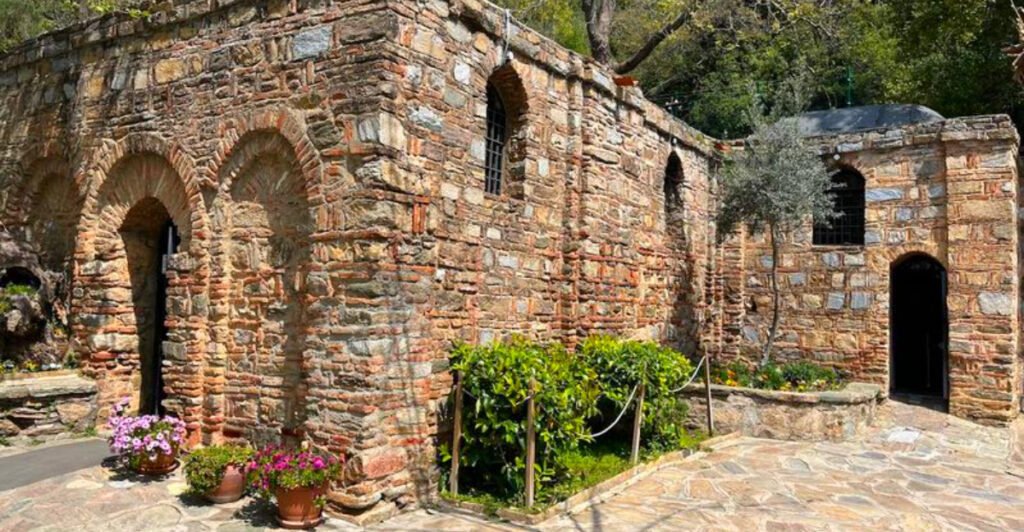
A humble stone house in Turkey is probably not what most people picture when they think about Marian pilgrimage. Yet the House of the Virgin Mary, near ancient Ephesus, has drawn visitors for generations because tradition holds that Mary spent her final years here.
The site is modest, and that simplicity is part of its power. Instead of towering walls or elaborate decoration, you find a compact structure, a chapel space, and a steady flow of pilgrims who come for prayer, reflection, and a moment of quiet curiosity.
Its location makes the surprise even sharper, since modern Turkey is usually associated with other layers of religious history first. Still, early Christianity took deep root in this region, and places like this remind you that the eastern Mediterranean was central to the faith’s early story, long before modern borders and assumptions started bossing the map around.
6. Bet Medhane Alem, Ethiopia
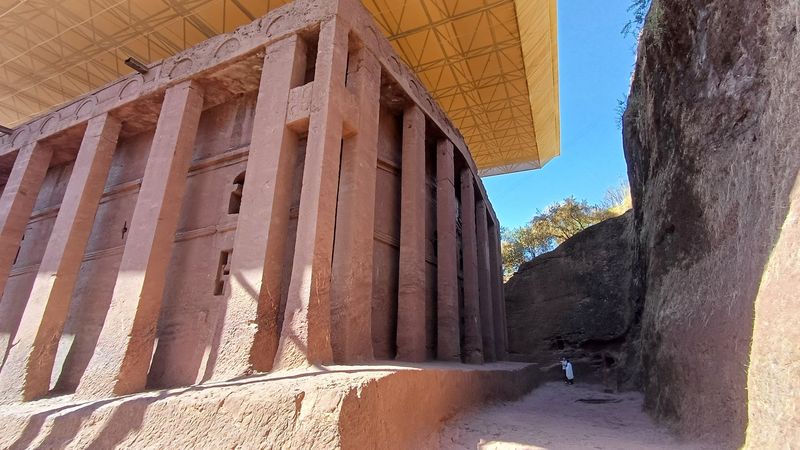
Size steals the show at Bet Medhane Alem, and it does so without adding a single brick. This enormous church in Lalibela is carved from living rock and is often described as one of the largest monolithic churches in the world, which is a title with plenty of bragging rights.
Its rectangular form, rows of pillars, and sunken courtyard create a structure that feels both engineered and improbable. Part of the famed Lalibela complex, it reflects the ambition of a sacred landscape designed to serve pilgrims and express Ethiopia’s long-established Christian identity in unforgettable form.
Many travelers know Ethiopia for highlands, coffee, or ancient kingdoms, yet these churches reset the conversation very quickly. Bet Medhane Alem shows that Ethiopian Christian architecture was not merely devotional but technically daring, large in scale, and fully confident, offering one more reminder that major chapters of Christian history were written far beyond Europe’s usual spotlight.
7. Saint Gregory the Illuminator Cathedral, Armenia
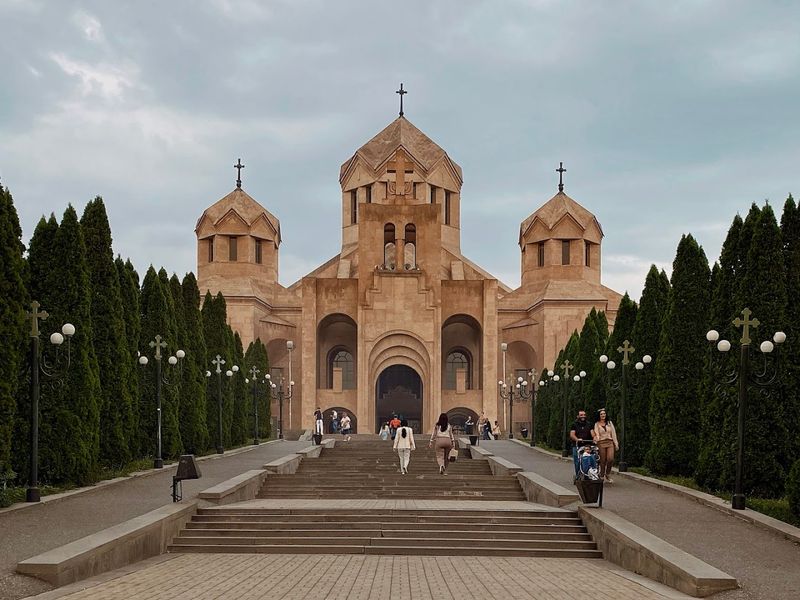
Armenia does not always headline mainstream Christian travel lists, which is a mistake this cathedral corrects quickly. Saint Gregory the Illuminator Cathedral in Yerevan is one of the largest Armenian Apostolic churches in the world and a bold statement of national religious identity.
Completed in 2001 to mark 1700 years since Armenia adopted Christianity as a state religion, the cathedral links ancient heritage with modern construction. Its pale stone, clean lines, and commanding scale make it feel ceremonial without becoming overly ornate, which suits Armenia’s church tradition remarkably well.
The surprise here is not that Armenia is Christian, since it famously embraced the faith early, but that so many travelers still overlook the country in favor of Western Europe. This cathedral is a useful correction, showing that the Caucasus belongs in any serious conversation about Christian history, architecture, and national memory, and it does so without needing to shout.
8. Notre-Dame Cathedral of Saigon, Vietnam
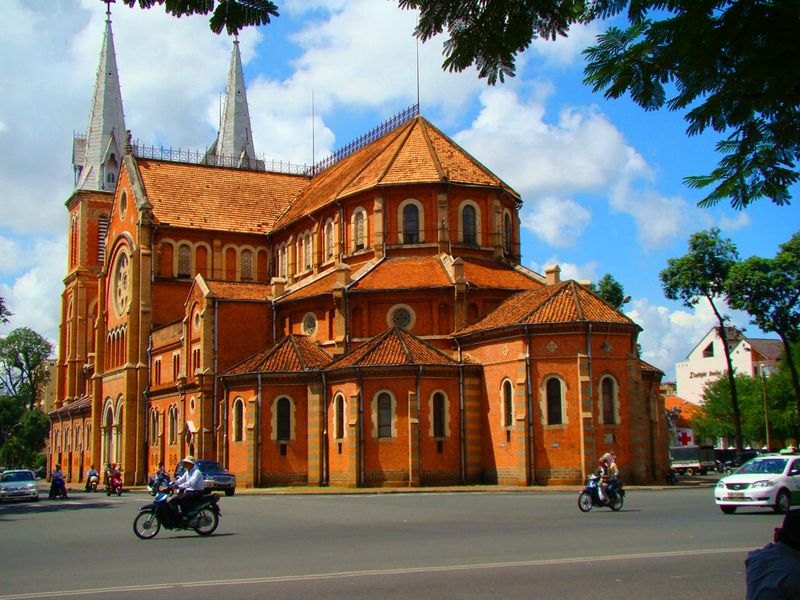
Red brick towers in central Ho Chi Minh City have a way of stopping assumptions mid-stride. Notre-Dame Cathedral of Saigon looks like a European transplant at first glance, yet it has become one of Vietnam’s most recognizable religious landmarks and a lasting marker of the country’s Catholic history.
Built in the late 19th century during French colonial rule, the cathedral features Romanesque and Gothic elements, imported materials, and a central location that keeps it firmly woven into city life. Visitors often come for the architecture, but the building also tells a wider story about missionary activity, colonial influence, and local Christian communities that took root over time.
Vietnam is more often associated internationally with Buddhist temples, modern urban growth, and layered political history. Then this cathedral enters the frame and reminds you that Christianity is also part of the national picture, visible in brick, towers, and the daily rhythm of worship in a busy modern city.
9. Paoay Church, Philippines
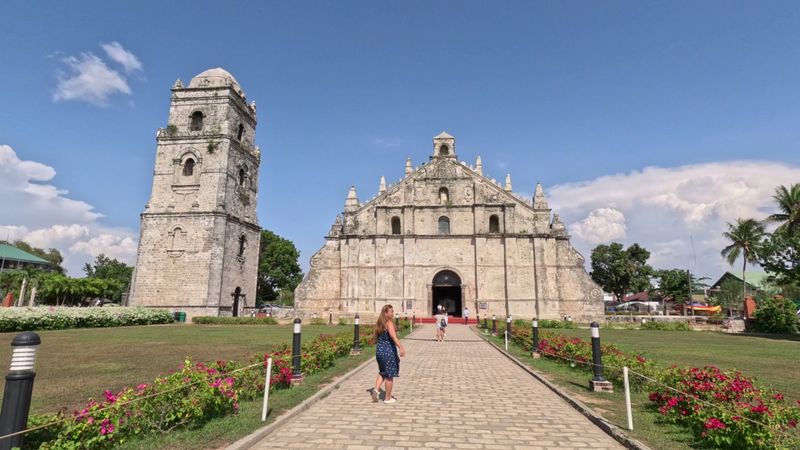
Officially called Saint Augustine Church, this landmark in Ilocos Norte is one of the country’s most famous colonial-era churches and a UNESCO-listed site.
Built with massive buttresses designed to withstand earthquakes, the church blends European Catholic architecture with local materials and practical engineering. The result is a structure that looks both familiar and distinct, carrying Christian tradition into a landscape shaped by tropical weather, seismic risk, and regional craftsmanship.
What makes Paoay memorable is not just its age or scale, but the way it represents Christianity taking root in Southeast Asia on its own architectural terms. It is not a copy of Europe so much as a local reinvention, which makes it a much stronger fit for this list than a vaguely identified replica site.
10. Nestorian Stele, Xi’an, China

This surprise comes in stone tablet form, which is not flashy but is wonderfully persuasive. The Church of the East Stele in Xi’an records the presence of Christianity in China during the Tang dynasty, proving the faith reached East Asia far earlier than many people realize.
Erected in 781, the monument contains Chinese and Syriac text describing the arrival and development of a Christian community often called the Jingjiao or Church of the East tradition. In other words, Christianity was not simply a modern Western import dropped onto China later, despite how often that simplified version circulates.
The stele matters because it turns a vague historical possibility into hard evidence. You can point to it, read about it, and watch the timeline shift in your head, which is always satisfying when history decides to correct the room and do it with the calm confidence of a carved monument that has already waited centuries.
11. Jakarta Cathedral, Indonesia
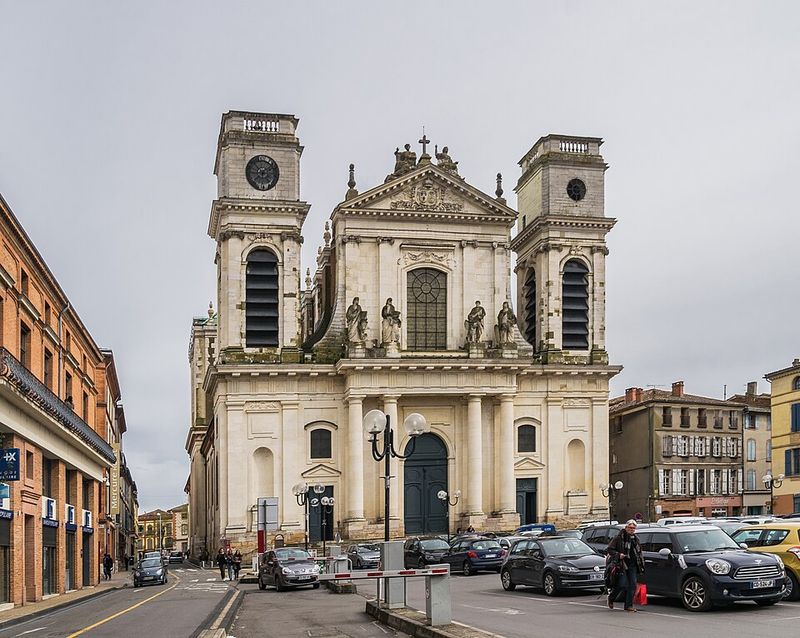
Across from one of Jakarta’s most prominent mosques stands a cathedral that instantly makes the city’s religious geography more interesting. Jakarta Cathedral, officially the Cathedral of Our Lady of the Assumption, is a neo-Gothic landmark in the world’s largest Muslim-majority country, and that contrast is exactly what surprises many visitors.
Built in the early 20th century, the church features pointed arches, tall spires, and a distinctly European design translated into an Indonesian urban setting. It serves an active Catholic community while also standing as a visible reminder that Indonesia’s history has always included more religious diversity than outsiders sometimes assume.
12. Velankanni Basilica, India
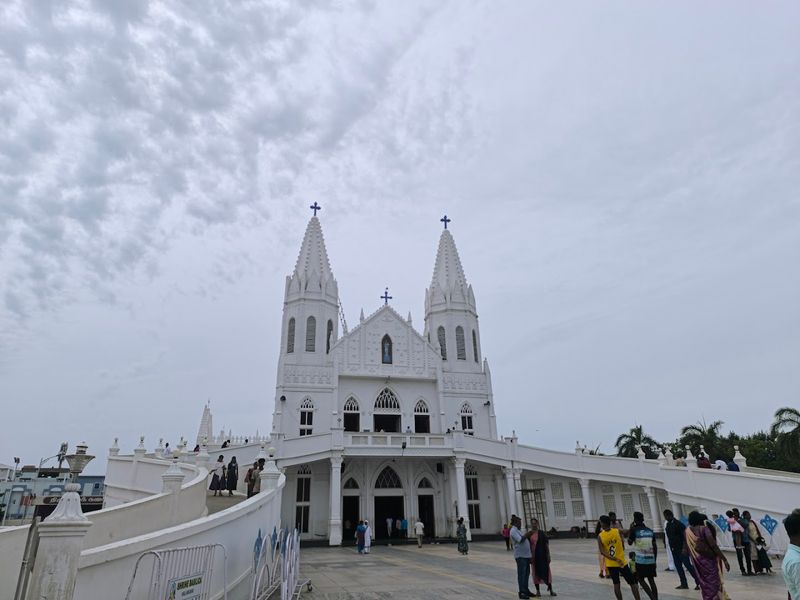
White spires rising in Tamil Nadu can catch first-time visitors pleasantly off guard. Velankanni Basilica, officially dedicated to Our Lady of Good Health, is one of India’s biggest Christian pilgrimage destinations and draws enormous crowds each year from many backgrounds.
The church’s reputation comes from longstanding devotional traditions tied to Mary, and its reach extends far beyond local Catholic communities. Pilgrims arrive for prayer, thanksgiving, and major feast days, turning the site into a huge gathering point that reflects India’s layered religious map more clearly than any tidy summary could.
That is what makes Velankanni so striking. In a country usually described through Hindu, Muslim, Sikh, Jain, and Buddhist landmarks, this basilica firmly claims its place in the national religious landscape and does so at impressive scale, proving that Christian practice in India is not a footnote, not a curiosity, and certainly not hiding in the back row.
13. Our Lady of China (Sheshan Basilica), China
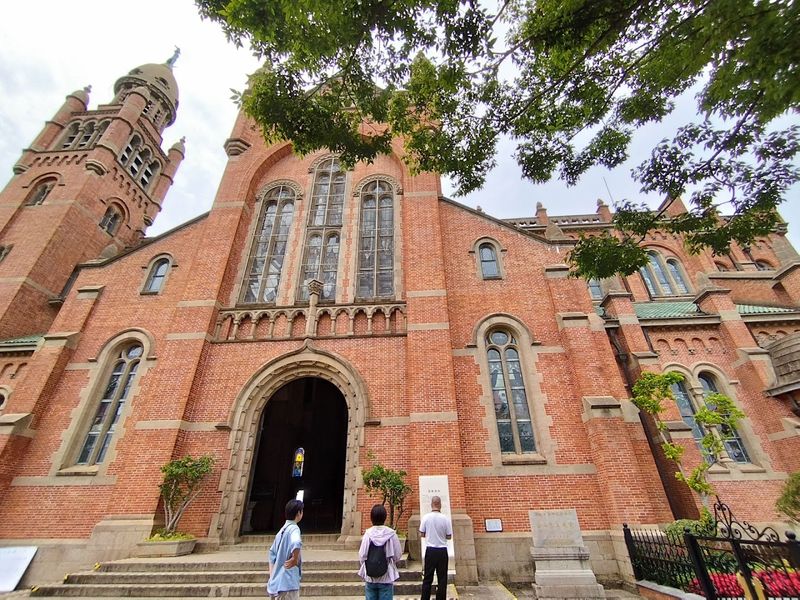
China and a hilltop Catholic basilica are not a pairing many casual travelers expect to see on the same itinerary. Sheshan Basilica, dedicated to Our Lady of China, rises near Shanghai as one of the country’s most recognizable Christian landmarks and a powerful symbol of endurance.
Built in the late 19th and early 20th centuries, the church sits on Sheshan Hill and has long attracted pilgrims, especially during important Marian observances. Its architecture is striking, but the larger story is even more compelling because the site represents a faith community that has persisted through changing political eras and strict oversight.
What makes Sheshan memorable is not just its design, but its context. In a country often discussed through dynasties, commerce, and state control, this basilica quietly insists that Christian history in China is older, more complex, and more rooted than many outsiders assume at first glance.
Share this story