The 1970s were a wild decade for toys. Before video games took over every living room, kids were busy stretching rubber men, spinning colored pegs, and making plastic bugs in their ovens.
These toys were gloriously weird, wonderfully creative, and occasionally a little dangerous. Get ready for a serious blast from the past.
Stretch Armstrong
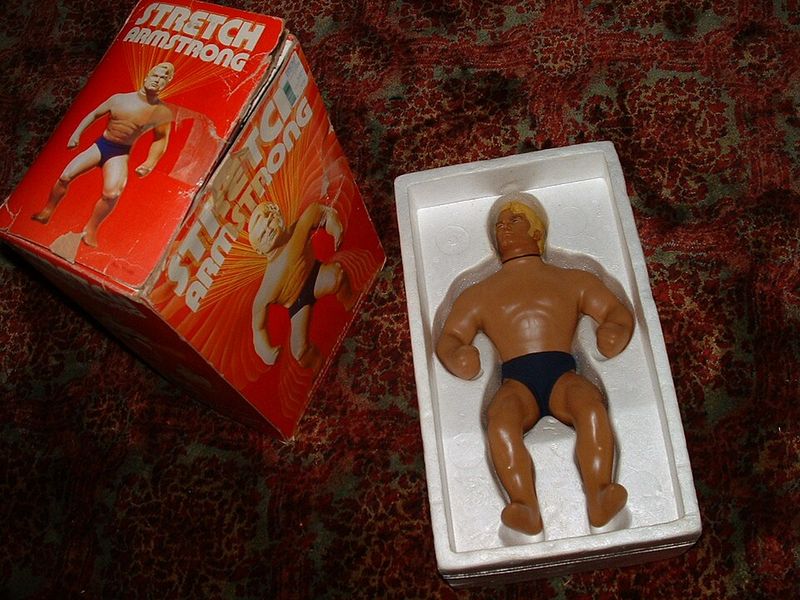
Nobody could resist pulling Stretch Armstrong to his absolute limit. This guy was basically a bodybuilder made of corn syrup gel wrapped in latex, and kids everywhere treated him like a science experiment waiting to happen.
How far could he stretch? Very, very far.
How fast did he snap back? Surprisingly fast.
Stretch Armstrong hit shelves in 1976, made by Kenner, and became an instant hit. Parents loved that it was non-violent.
Kids loved it because stretching things is just fun, full stop. Some brave souls cut him open to see what was inside.
Spoiler: it was a sticky, gooey mess.
Reproductions have been made since, but nothing beats the memory of the original. He was indestructible until he very much was not.
Once he got a hole, the syrup leaked everywhere. Rest in peace, big guy.
You were truly one of a kind.
Weebles
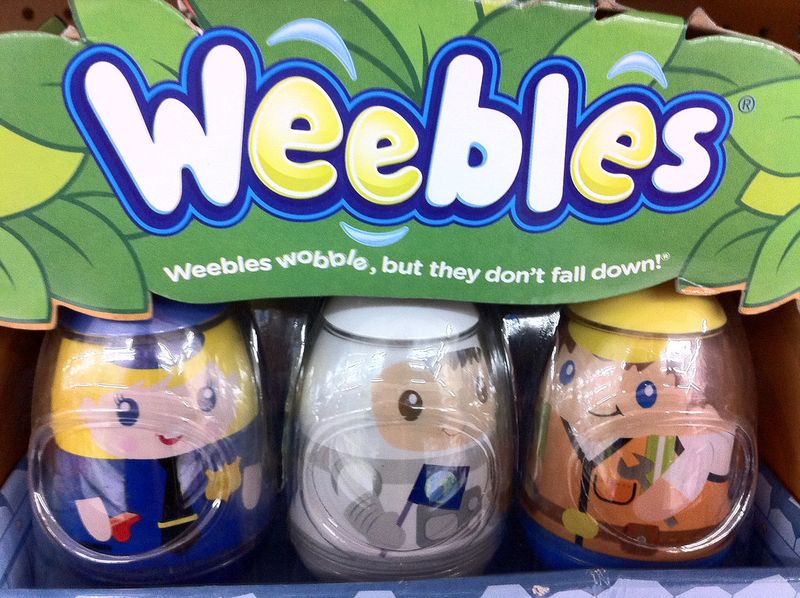
Weebles wobble but they don’t fall down. That slogan was burned into the brain of every kid who grew up in the 1970s.
These chubby little egg-shaped figures were practically indestructible, which made them perfect for toddlers who treated every toy like a crash test.
Hasbro launched Weebles in 1971, and they came with all kinds of playsets, from farms to haunted houses. The secret to their wobbly magic was a weight hidden inside the bottom of each egg.
Simple physics, genius toy design. My little sister used to line them up just to knock them over, which defeated the entire point.
What made Weebles so lovable was their total chill attitude. Nothing could keep them down.
Life lesson, honestly. They were endlessly repackaged through the years, but the original chunky 70s versions had a charm that the newer plastic versions just cannot match.
Spirograph
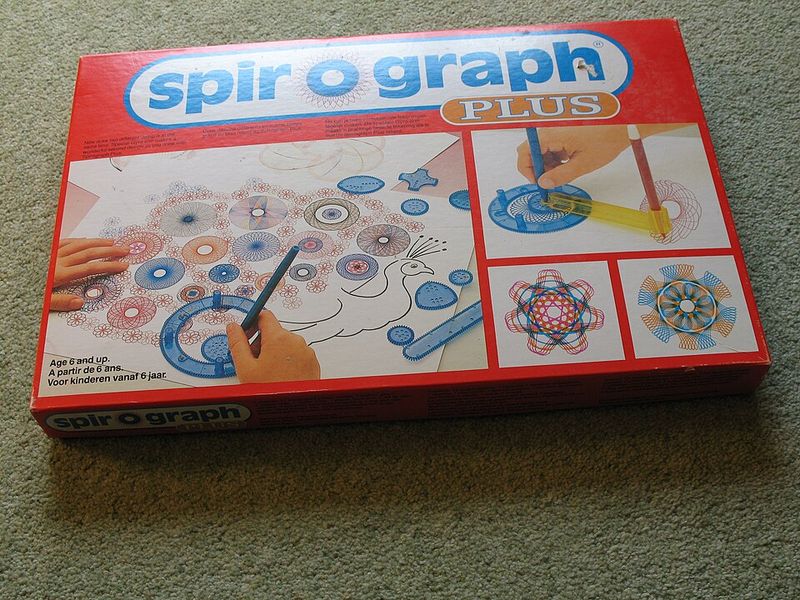
Spirograph turned every kid into a math-powered artist without them even realizing it. The set came with plastic gears, rings, and colored pens, and you would spin one gear inside another to create wild, hypnotic patterns.
The results looked like something a professional designer spent hours on.
Kenner introduced Spirograph in the US in 1966, but it hit peak popularity throughout the 1970s. Every household seemed to have one buried in a drawer.
The only rule was keeping the gear from slipping, which was harder than it sounds. One slip and your perfect flower became a chaotic scribble.
Kids who mastered Spirograph felt genuinely accomplished. There was something deeply satisfying about watching a pattern emerge from what seemed like random spinning.
The toy quietly taught geometry, patience, and fine motor skills. Teachers probably loved it.
Kids just thought it looked really, really cool. Both sides won on this one.
Clackers
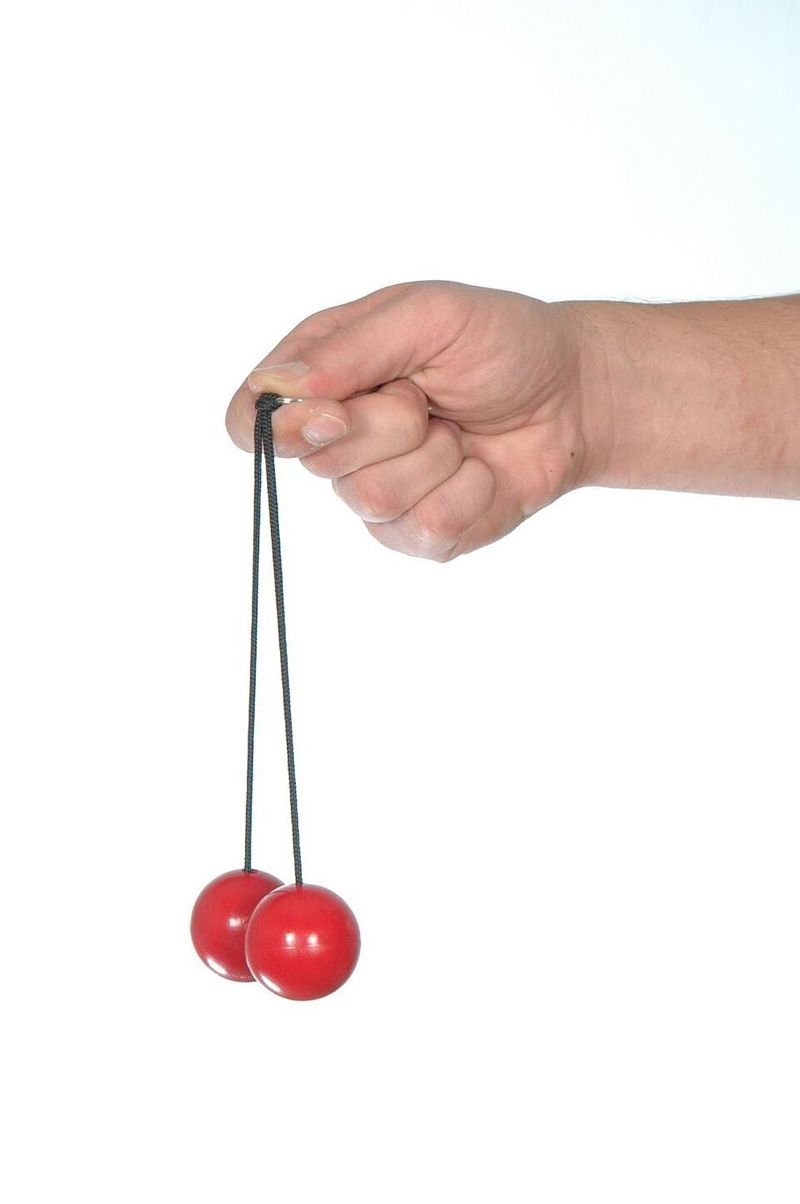
Clackers were exactly as dangerous as they sound. Two hard acrylic balls on a string, swung up and down until they clacked together above and below your hand.
The noise was loud. The bruises were real.
Parents hated them, which obviously made kids love them even more.
They went by many names: Ker-Bangers, Whackers, Knockers. The FDA actually banned them in 1985 because the balls could shatter and send sharp plastic flying.
Before that, though, millions of sets were sold throughout the early 70s. Safety regulations were more of a suggestion back then.
Getting good at Clackers was a serious playground flex. The rhythm took practice, and mastering the full overhead swing earned genuine respect from classmates.
There was no app, no screen, no battery required. Just two balls, a string, and a willingness to risk your knuckles.
Simpler times, truly. Dangerous, but undeniably simple.
Creepy Crawlers
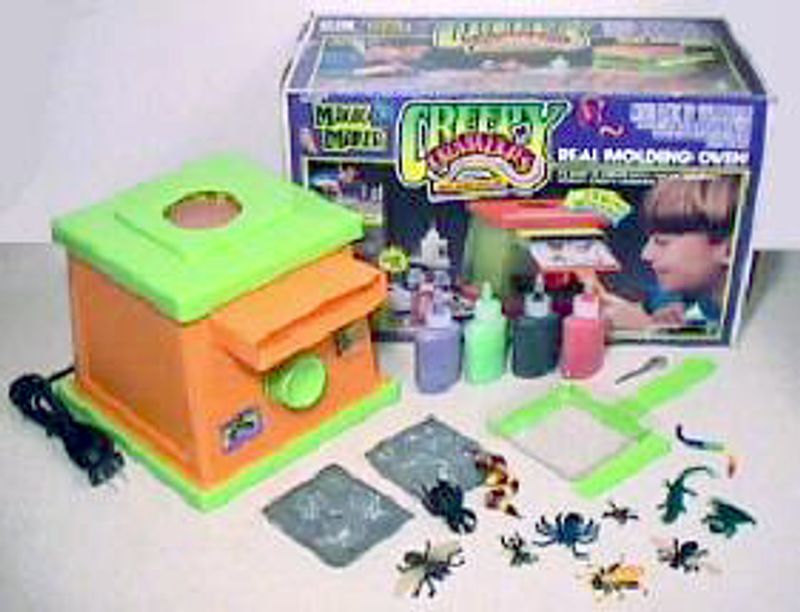
Creepy Crawlers handed kids a hot metal plate and liquid plastic and basically said, go wild. The original Thingmaker by Mattel launched in 1964 but dominated 70s playrooms well into the decade.
You poured Plasti-Goop into bug-shaped metal molds, baked them on the heating unit, and popped out rubbery, squishy insects.
The bugs were surprisingly satisfying to make and even more satisfying to leave in places where adults would find them. Older siblings used them for maximum little-brother terror.
The Thingmaker ran hot enough to cause real burns, which is why later versions came with safety guards. The originals had no such concerns.
Creepy Crawlers came back multiple times over the decades, always slightly safer than before. But the original 70s version had a reckless, crafty energy that newer editions never quite captured.
Making your own rubbery tarantula at age seven felt like pure power. Weird, slightly dangerous, totally brilliant power.
Evel Knievel Stunt Cycle
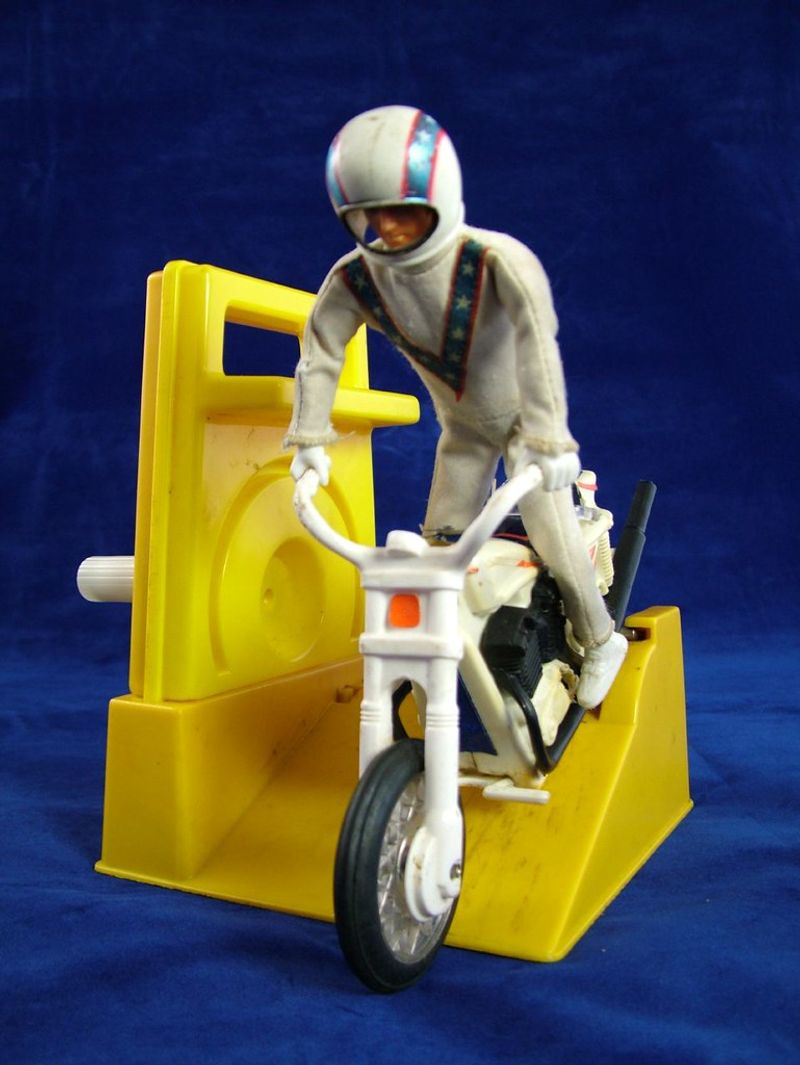
Evel Knievel was the coolest man alive in the 1970s, and this toy proved it. The Ideal Toy Company released the Stunt Cycle in 1973, and it flew off shelves faster than Evel himself flew over buses.
You cranked the launcher, revved up the white motorcycle, and sent it screaming across the floor.
The toy came with a small Evel figure in his iconic white jumpsuit, complete with stars and stripes. Kids set up ramps from books, pillows, anything available.
Crashes were frequent. That was the whole point.
Evel himself crashed constantly, so the toy was basically a perfect replica of his career.
At peak popularity, the Evel Knievel toy line was one of the best-selling action figure sets in America. The stunt cycle alone sold millions of units.
Decades later, collectors pay serious money for mint-condition sets. The legend of the crank-powered motorcycle lives on, helmets optional.
Sit ‘n Spin
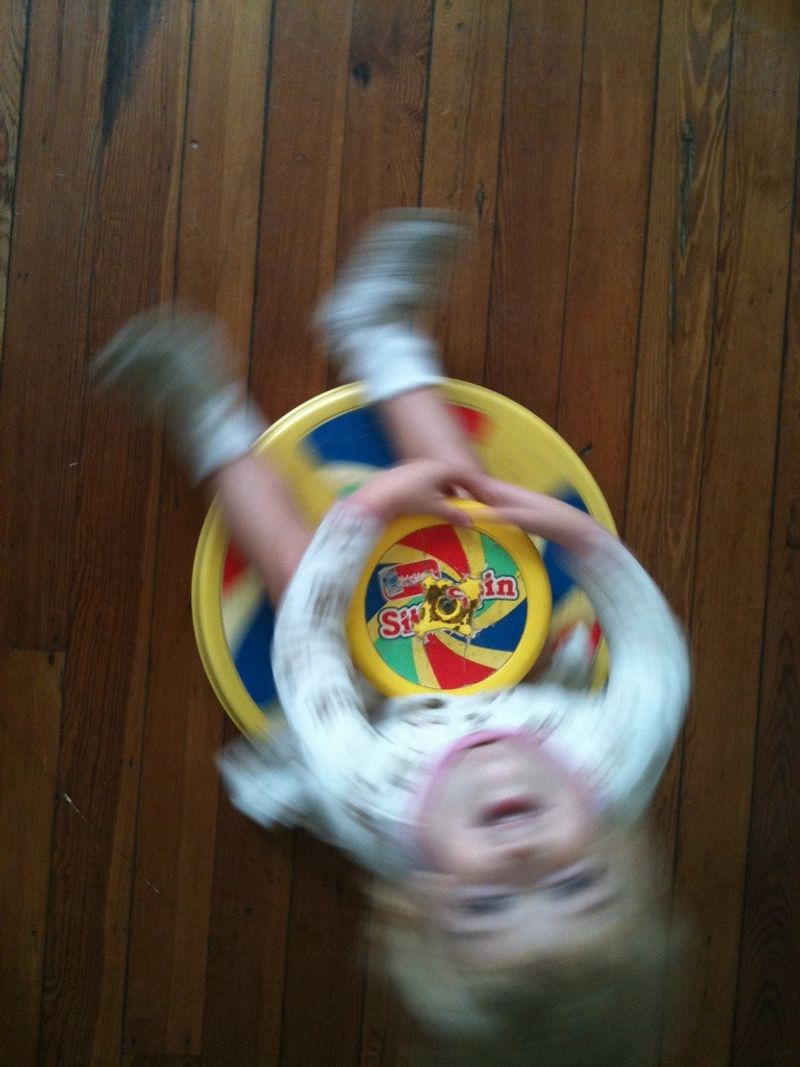
Sit ‘n Spin was the original dizzy machine, and kids absolutely could not get enough of it. The concept was genius in its simplicity: sit on the plastic disc, grab the center wheel, and spin yourself around until the room became a colorful blur.
No motor needed. Pure human-powered chaos.
Kenner released Sit ‘n Spin in 1975, and it became a staple of playrooms across America. There was always that one kid who could spin faster than anyone else and somehow never got sick.
Then there was everyone else, stumbling off the disc and walking into walls. Good times, genuinely good times.
Parents appreciated that it burned energy without making too much mess. Kids appreciated that it felt vaguely like a carnival ride.
Sit ‘n Spin is still sold today, which says everything about how solid the original idea was. Some toys are just timeless.
This round little legend is one of them.
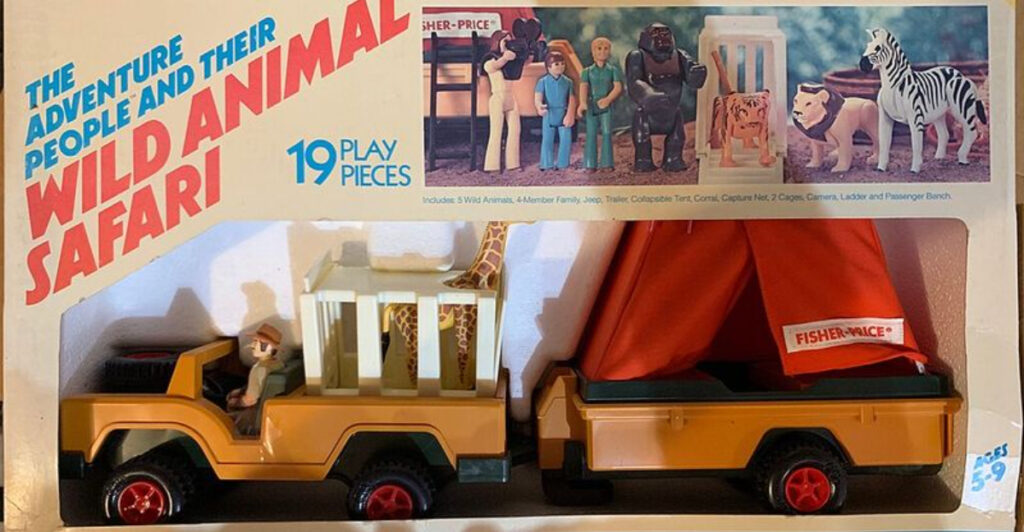
Fisher-Price Adventure People
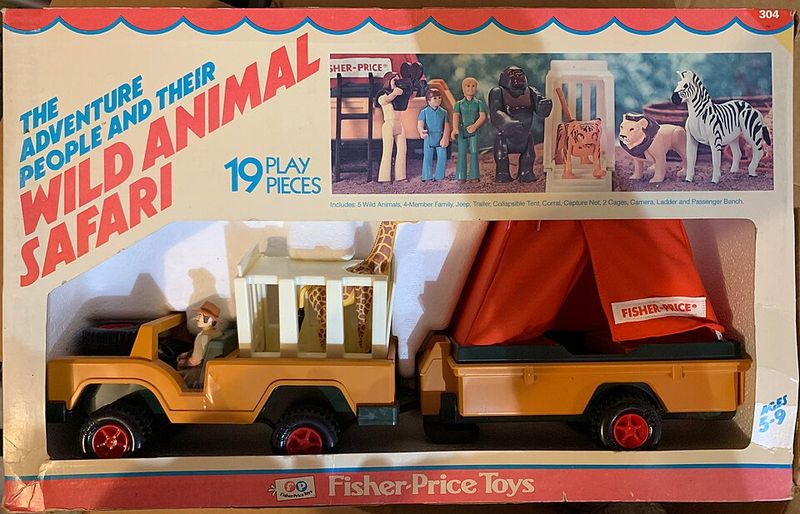
Fisher-Price Adventure People were the action figures that came before action figures were cool. Launched in 1975, these small, sturdy plastic figures came in themed sets covering everything from deep-sea diving to space exploration.
They were chunky, durable, and packed with personality despite having no articulation whatsoever.
Each set came with matching vehicles and gear, making them endlessly customizable for playtime adventures. The figures were sized perfectly for small hands, and they survived being left in the backyard, dropped in puddles, and run over by bikes.
Fisher-Price built toys like they expected war conditions.
What separated Adventure People from other figures was the sheer variety of occupations and scenarios. Kids could be astronauts one minute and race car drivers the next.
They quietly encouraged kids to explore different roles and careers through play. Looking back, that was genuinely forward-thinking toy design.
Plus the little helmets were adorable. That matters too.
Rock ‘Em Sock ‘Em Robots
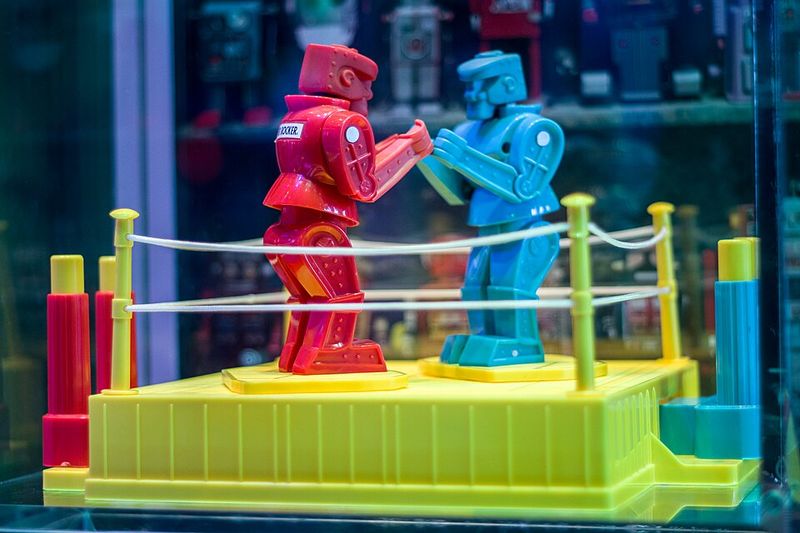
Rock ‘Em Sock ‘Em Robots settled every sibling argument the only civilized way: robot boxing. Marx Toys introduced these two plastic brawlers in 1964, but the 70s were their true golden era.
Red Rocker versus Blue Bomber. You each grabbed a controller, mashed the buttons, and tried to knock your opponent’s block off.
Literally.
Landing a clean hit sent the loser’s head popping straight up with a satisfying click. Then someone would push it back down and the whole glorious fight started over.
The game was fast, loud, and required zero skill, which meant anyone could win on any given day. Democracy at its finest.
Mattel bought the brand and has kept it alive through multiple revivals. The core design has barely changed because why mess with perfection?
Two robots, two controllers, one winner. It sounds simple because it is simple.
Sometimes the greatest toys are the ones that need no explanation at all.
Lite-Brite
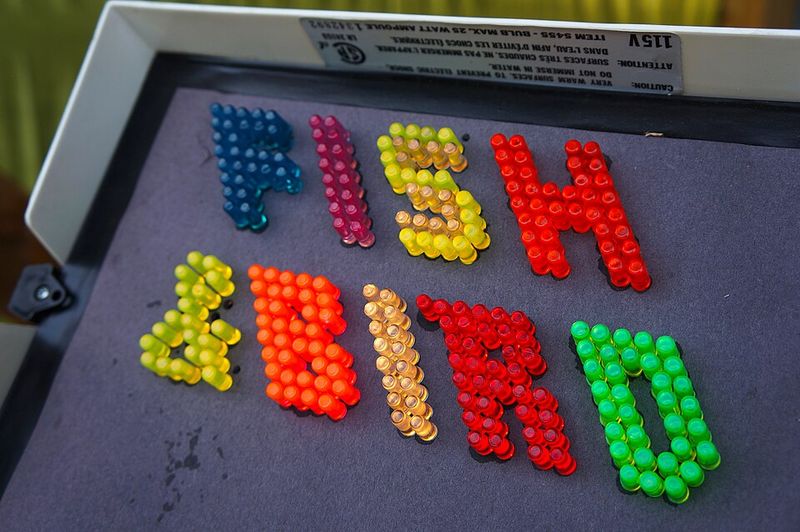
Lite-Brite was basically the original pixel art tool, and nobody even knew it. Hasbro launched it in 1967, but the toy reached legendary status throughout the 1970s.
You pushed colored translucent pegs through black paper into a backlit board, and the pegs glowed like tiny stained glass windows. The effect was genuinely stunning for a kid.
Each set came with pre-printed templates of clowns, flowers, and holiday scenes. But the real fun was going off-script and making your own designs.
Spelling out your name in glowing pegs felt like putting your name in lights. The pegs were also extremely easy to lose, step on, or accidentally swallow, but that was part of the charm.
Lite-Brite is still sold today in updated versions. The original, though, had a warmth that modern editions struggle to match.
Turning off the bedroom lights to admire your glowing masterpiece was a ritual millions of 70s kids shared. Simple joy, perfectly packaged.
Johnny Horizon Environmental Test Kit
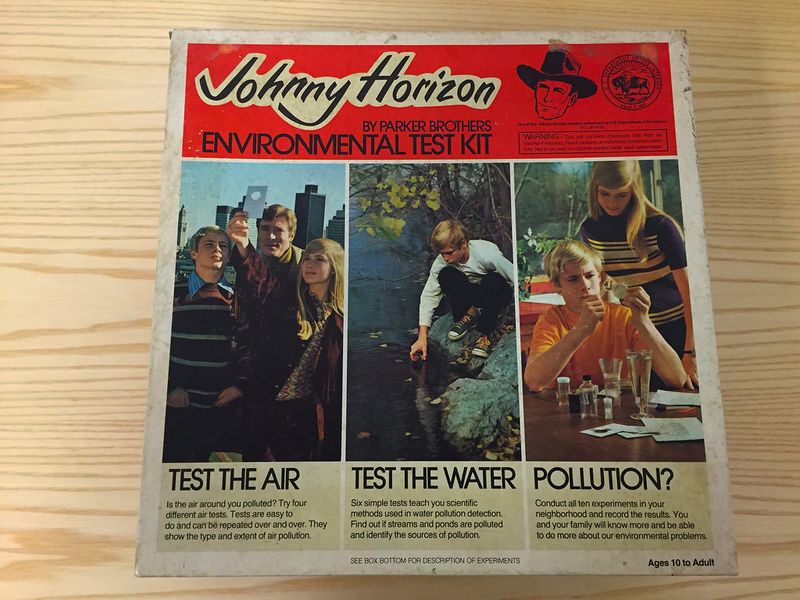
Johnny Horizon was not a superhero. He was the US Bureau of Land Management’s mascot, and somehow he got his own science kit in 1971.
Released right in the middle of America’s early environmental movement, this toy let kids test their local water and air for pollutants. It was part science kit, part civic responsibility lesson.
The kit included test tubes, chemical tablets, and a booklet explaining what the results meant. Kids could test tap water, pond water, and even soil samples.
For a generation just discovering Earth Day, this felt genuinely important. It turned backyards into laboratories and kids into junior environmentalists.
Johnny Horizon kits are extremely rare today and fetch surprisingly high prices among collectors who remember them fondly. It was ahead of its time in the best possible way.
A toy that taught real science and real-world awareness to kids in the early 70s deserves far more recognition than it gets. Johnny Horizon, underrated legend.
Baby Alive
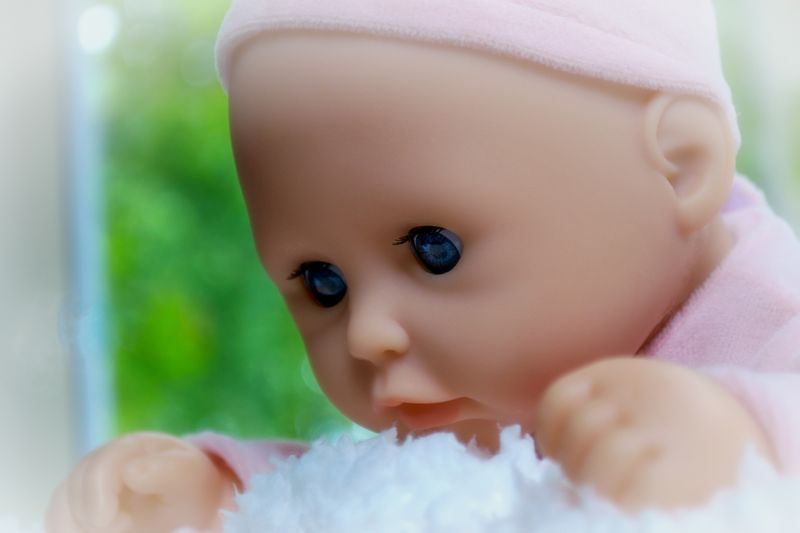
Baby Alive took the baby doll concept and cranked it all the way up. Kenner released the original in 1973, and this doll could actually eat.
You mixed the included powder with water to make fake food, spooned it into her mouth, and she would chew and swallow it. Then, inevitably, the other end happened too.
Kids were obsessed.
The feeding and diaper-changing cycle made Baby Alive feel genuinely lifelike in a way other dolls simply did not. The food packets ran out fast, which meant parents were constantly buying refills.
Kenner absolutely knew what they were doing from a business standpoint. Genius, slightly devious genius.
Baby Alive has been relaunched multiple times over the decades with updated features and better mechanics. The original 1973 version, though, had a charm rooted in its novelty.
Nobody had seen a doll that ate and needed changing before. For 70s kids, that was nothing short of revolutionary.
Messy, smelly, completely unforgettable.
Share this story