Paris is a city that wears its history on its skyline, and nowhere is that more visible than in its stunning churches and cathedrals. From soaring Gothic towers to gleaming white domes, these sacred buildings have stood for centuries, surviving revolutions, wars, and the test of time.
Each one tells a different story about faith, art, and the people who built them. Whether you are a history lover, an architecture fan, or simply a curious traveler, Paris’s churches are guaranteed to leave you speechless.
Notre-Dame de Paris
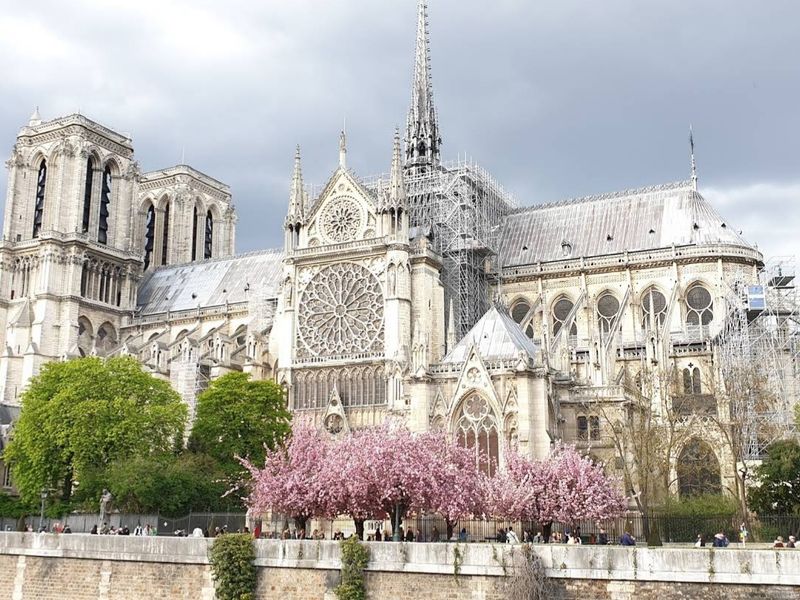
Few buildings in the world carry as much weight as Notre-Dame de Paris — both literally and emotionally. Construction kicked off in 1163, and workers spent nearly 200 years chiseling, hauling, and assembling one of the greatest Gothic masterpieces ever made.
Every stone has a story.
The flying buttresses are more than decorative — they are a brilliant engineering solution that allowed walls to grow taller and windows to grow wider. Gargoyles peer down from every corner, originally designed as waterspouts to protect the structure from rain damage.
The massive rose windows flood the interior with kaleidoscopic color.
Located on the Île de la Cité, right in the geographic heart of Paris, Notre-Dame has witnessed coronations, funerals, and revolutions. The 2019 fire shocked the entire world, but restoration crews have worked tirelessly to bring her back.
Watching the scaffolding come down piece by piece has felt like watching a beloved friend recover. Notre-Dame is not just a church — she is a living monument to human ambition, resilience, and beauty that simply refuses to fade away quietly into history.
Sacré-Cœur Basilica
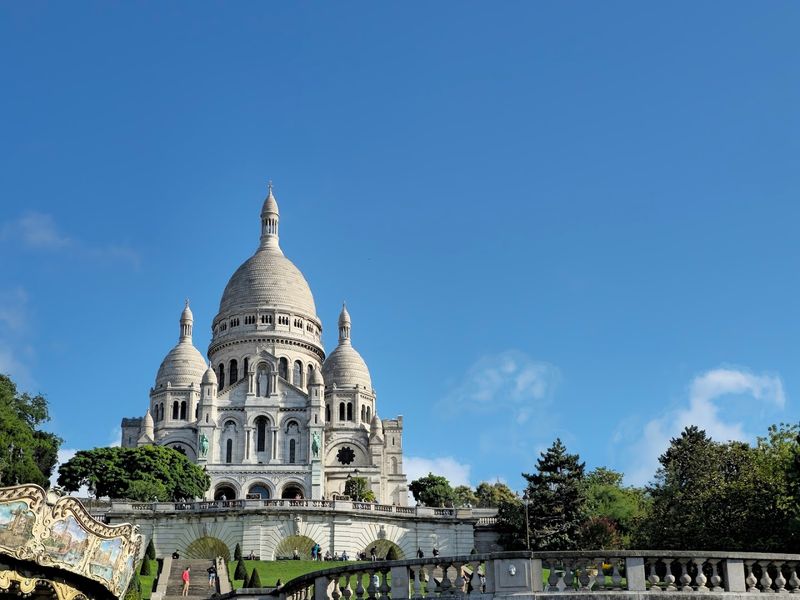
Climb the steps of Montmartre on a clear morning and you will understand why Sacré-Cœur feels almost otherworldly. The gleaming white exterior — built from a special travertine stone that actually whitens when it rains — seems to glow against any sky, whether blue or stormy grey.
Built between 1875 and 1914 as a symbol of hope after France’s defeat in the Franco-Prussian War, the basilica blends Romanesque arches with Byzantine domes in a way that feels completely unique. Step inside and your eyes will immediately travel upward to one of the largest mosaics in the world, covering the ceiling in shimmering gold and deep blue.
The view from the front steps is worth every stair you climbed. On a clear day, you can see across virtually the entire city, rooftops stretching endlessly toward the horizon.
Street artists set up nearby, adding a lively, creative energy to the sacred atmosphere. Sacré-Cœur manages to be both a place of quiet prayer and one of Paris’s most vibrant gathering spots — a rare combination that very few landmarks anywhere in the world can honestly claim to pull off.
Sainte-Chapelle
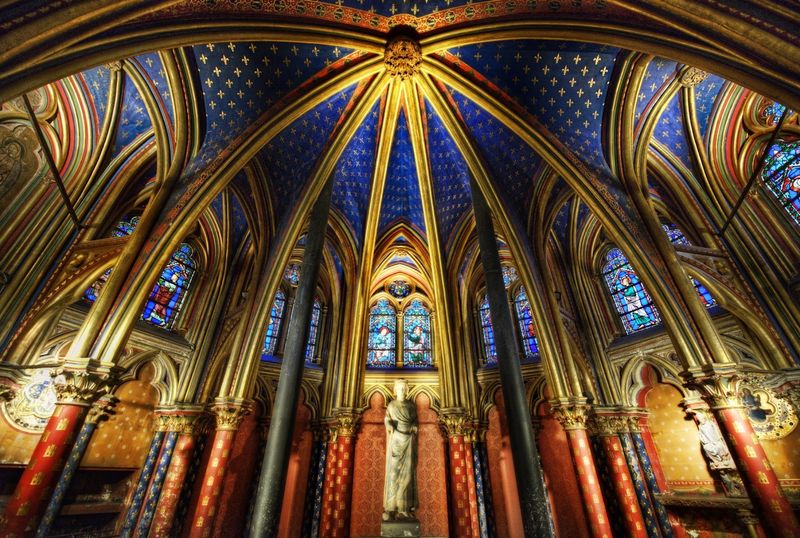
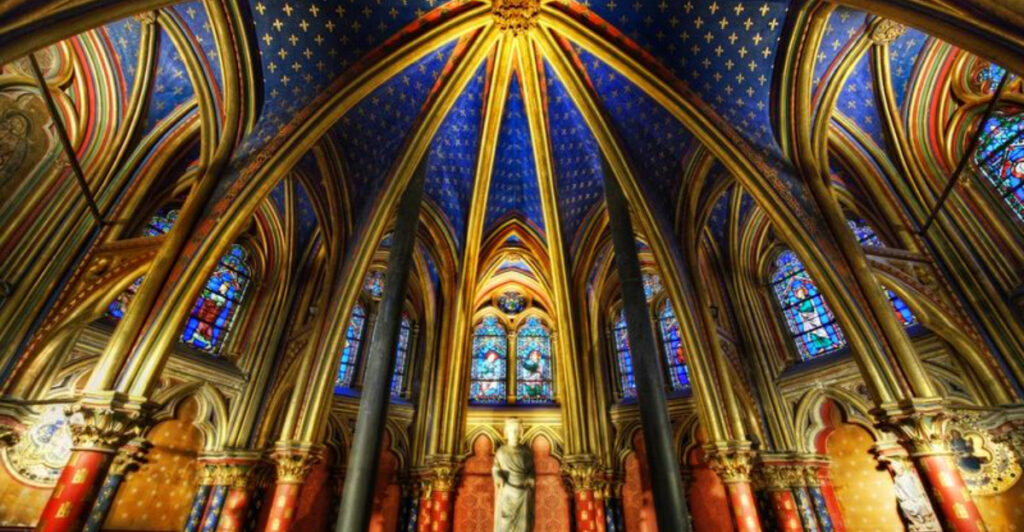
Imagine standing inside a kaleidoscope — that is roughly what visiting Sainte-Chapelle feels like on a sunny afternoon. Built in the 13th century by King Louis IX to house what were believed to be Christ’s Crown of Thorns and other holy relics, this chapel is essentially a glass box dressed in stone.
The upper chapel is the showstopper. Fifteen floor-to-ceiling stained-glass windows, covering nearly 6,500 square feet of surface area, depict over 1,000 biblical scenes in vivid crimson, cobalt, and gold.
The stone walls almost seem to vanish, replaced entirely by light and color. On bright days, the floor itself appears to glow.
Sainte-Chapelle sits tucked inside the Palais de la Cité complex, which means many visitors walk right past it without realizing what is hidden inside. That makes the moment you step into the upper chapel even more dramatic.
Architects of the era essentially used the stone structure only as a frame, letting the windows do all the heavy lifting visually. No photography fully captures the experience — the light shifts constantly, making every visit feel slightly different from the last.
Saint-Sulpice Church
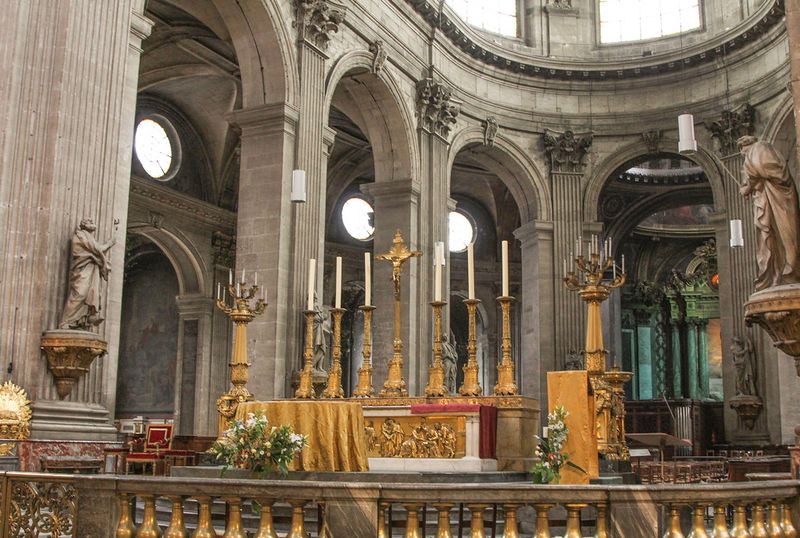
Saint-Sulpice has a quiet confidence about it — no flashy location, no famous fire, just centuries of steady, impressive presence in the heart of the Left Bank. Construction started in 1646 and dragged on for over 130 years, which explains why the twin towers look slightly different from each other.
One was never quite finished.
Walk inside and the scale hits you immediately. The nave stretches wide and tall, bathed in soft light that filters through high windows.
Three chapels contain dramatic paintings by Eugène Delacroix, including his powerful “Jacob Wrestling with the Angel” — a masterpiece hiding inside a church that many tourists overlook entirely.
The pipe organ is one of the finest in France, boasting nearly 7,000 pipes and a rich history of legendary organists who have played here over the centuries. Sunday mass accompanied by that organ is a genuinely moving experience, even for non-religious visitors.
A brass line embedded in the floor marks the Paris Meridian, adding a nerdy historical bonus for those who notice it. Saint-Sulpice rewards the curious visitor who takes time to look closely rather than rushing through on the way to somewhere else.
Saint-Germain-des-Prés
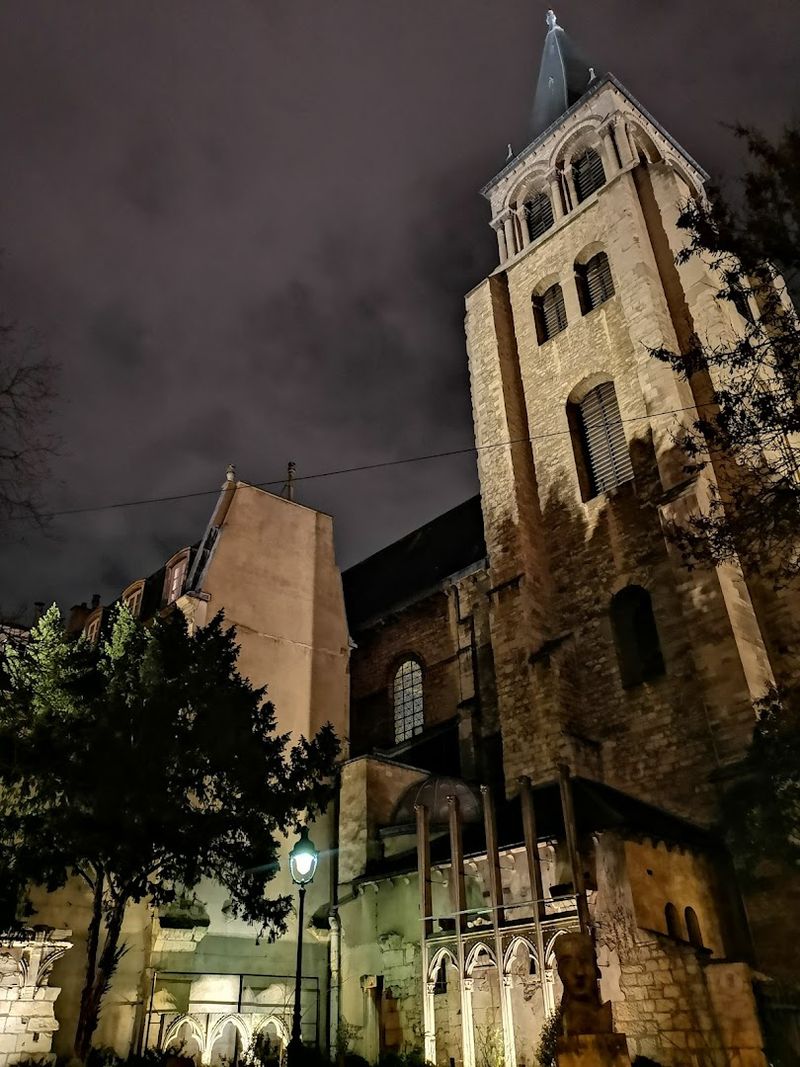
Right in the middle of one of Paris’s trendiest neighborhoods, surrounded by busy cafes and designer boutiques, sits a church that predates almost everything around it by about 1,400 years. Saint-Germain-des-Prés traces its origins to the 6th century, making it the oldest surviving church in Paris by a considerable margin.
The sturdy Romanesque bell tower — the oldest part of the current structure — has been standing since the 11th century. Over the following centuries, Gothic additions were layered in, creating a fascinating architectural patchwork that reflects how the building evolved alongside the city itself.
The interior features rich 19th-century frescoes that add warm color to the stone walls.
One of the most appealing things about Saint-Germain-des-Prés is the contrast it creates with its surroundings. Step off a lively, espresso-scented boulevard and suddenly you are in a cool, hushed space where monks once walked.
The church also serves as the burial site of philosopher René Descartes, adding a layer of intellectual history to its spiritual one. It is the kind of place where you sit down for five minutes and end up staying for an hour without quite knowing why.
Saint-Eustache Church
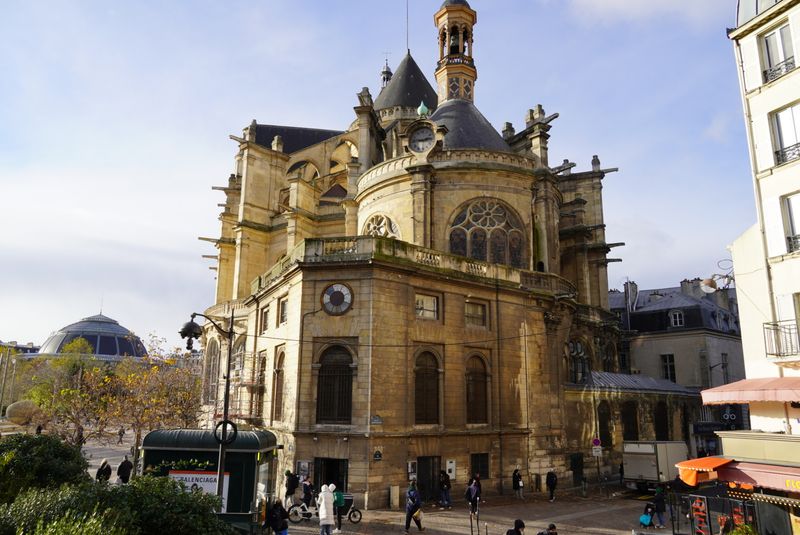
Hidden in plain sight near the bustling Les Halles district, Saint-Eustache is the kind of church that makes architecture lovers stop mid-sentence and stare. Built between 1532 and 1640, it attempted something genuinely ambitious: the Gothic skeleton of Notre-Dame dressed up in Renaissance clothing.
The result is spectacular.
The interior vaults soar to nearly 35 meters — comparable to Notre-Dame — creating a breathtaking vertical drama that catches most visitors completely off guard. Massive stained-glass windows flood the nave with colored light, while side chapels contain artwork spanning several centuries, including a touching piece by Keith Haring completed just before his death in 1990.
The pipe organ here is one of the largest in France, with over 8,000 pipes, and the church hosts regular concerts that draw serious music fans from across the city. Cardinal Richelieu was baptized here, and Louis XIV received his first communion within these walls — so the building has witnessed its fair share of history.
Saint-Eustache flies under the tourist radar compared to Notre-Dame and Sacré-Cœur, which honestly makes visiting it feel like discovering a brilliant secret that most guidebooks somehow forgot to mention.
La Madeleine (Église de la Madeleine)
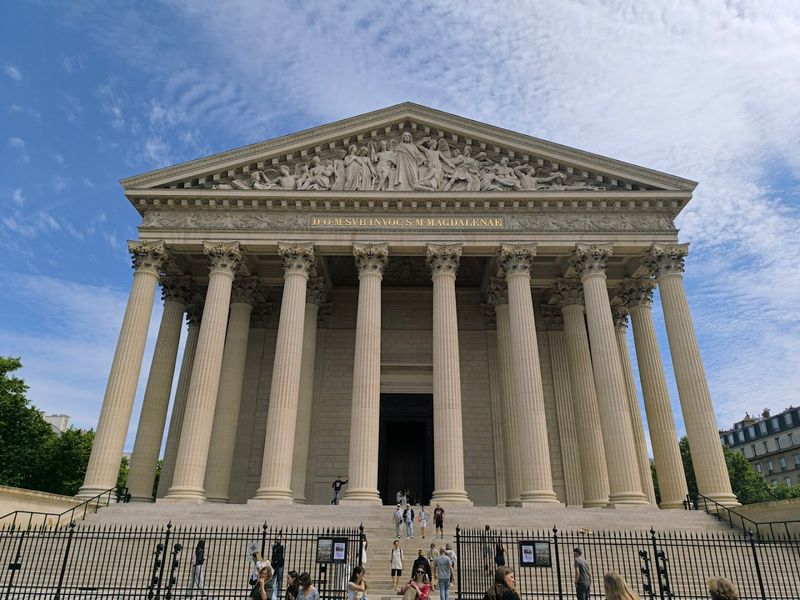
At first glance, La Madeleine looks like it accidentally teleported from ancient Athens and landed squarely in the 8th arrondissement. Fifty-two massive Corinthian columns wrap around the entire building, creating one of the most dramatically un-churchy churches you will ever walk up to.
There is no cross on the facade, no visible stained glass — just pure, imposing stone.
Napoleon originally envisioned the building as a temple of glory dedicated to his Grande Armée. The project changed hands and purposes several times before it was finally consecrated as a church in 1842.
That turbulent history gives La Madeleine a slightly defiant personality — a building that never quite settled on what it wanted to be.
Step inside and the mood shifts completely. The interior is richly decorated with colored marble, gilded details, and dramatic sculptures bathed in soft light from three shallow domes above.
The contrast between the cold, austere exterior and the warm, ornate interior is genuinely startling. La Madeleine also hosts some of Paris’s most prestigious concerts and funerals — Chopin’s funeral was held here in 1849, with Mozart’s Requiem performed in his honor.
That detail alone says everything about the building’s cultural status.
Saint-Étienne-du-Mont
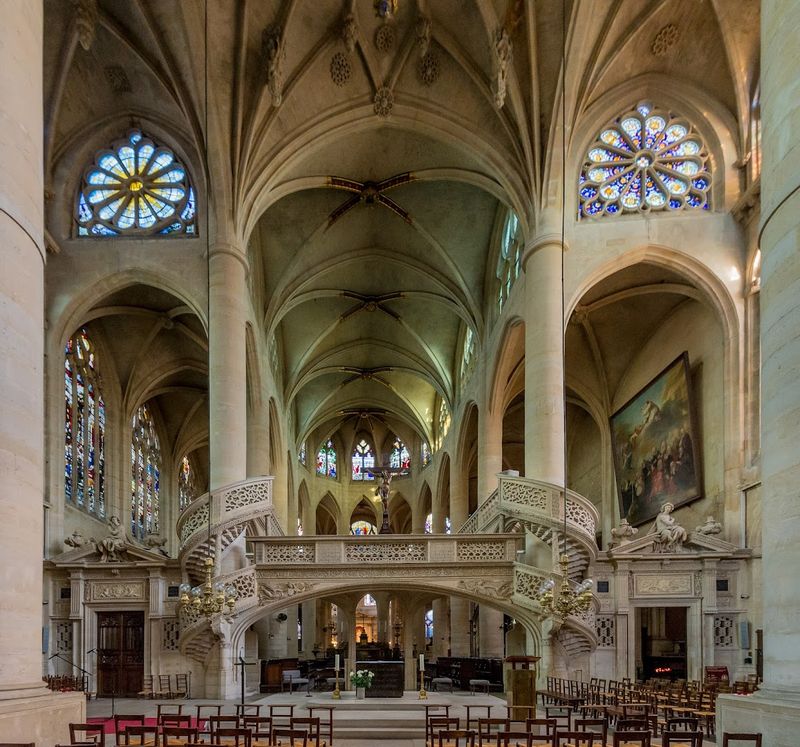
Tucked just behind the Panthéon on the Left Bank, Saint-Étienne-du-Mont is the kind of church that architecture students travel specifically to see — and regular tourists walk past without a second glance. That is a genuine shame, because the interior contains one of the most remarkable surviving features of any church in Paris.
The rood screen — the ornate stone bridge that once separated the clergy from the congregation — is the only one still standing in the entire city. Intricately carved and arching gracefully across the nave, it looks like lace made from stone.
Most Parisian churches had theirs demolished during the Revolution, making this one extraordinarily rare.
The stained-glass windows here are also exceptional, particularly a swirling spiral staircase window that seems to defy both gravity and logic. Saint Geneviève, the patron saint of Paris, is closely associated with this church — her shrine sits inside, and pilgrims still visit regularly.
The building itself blends Gothic structure with Renaissance decoration in a way that feels entirely natural rather than forced. Visiting on a quiet weekday morning, when light pours through the windows and the space is nearly empty, feels like having one of Paris’s best-kept secrets entirely to yourself.
Saint-Augustin Church
When engineer Victor Baltard designed Saint-Augustin in the 1860s, he did something that raised a few eyebrows at the time: he built a traditional-looking church using a hidden skeleton of iron and steel. The result was one of the first major religious buildings in France to use metal framing — a quiet revolution wrapped in stone clothing.
The exterior blends Romanesque arches with Byzantine dome shapes, creating a silhouette that feels familiar yet distinctly 19th-century. The large central dome floods the interior with natural light, giving the space an airy, open quality that contrasts pleasantly with the heavier atmosphere of older Gothic churches nearby.
Inside, decorative paintings cover large sections of the walls and vaulted ceilings, adding warmth and color to what might otherwise feel like a very industrial space. The church sits on a triangular plot where Boulevard Malesherbes meets two other streets, which forced Baltard to design a tapered floor plan — wider at the entrance, narrowing toward the altar.
That unusual shape gives the interior a slightly theatrical quality, as if the whole space is pointing you forward. Charles de Gaulle was married here in 1921, adding a famous footnote to an already historically interesting building.
American Cathedral in Paris
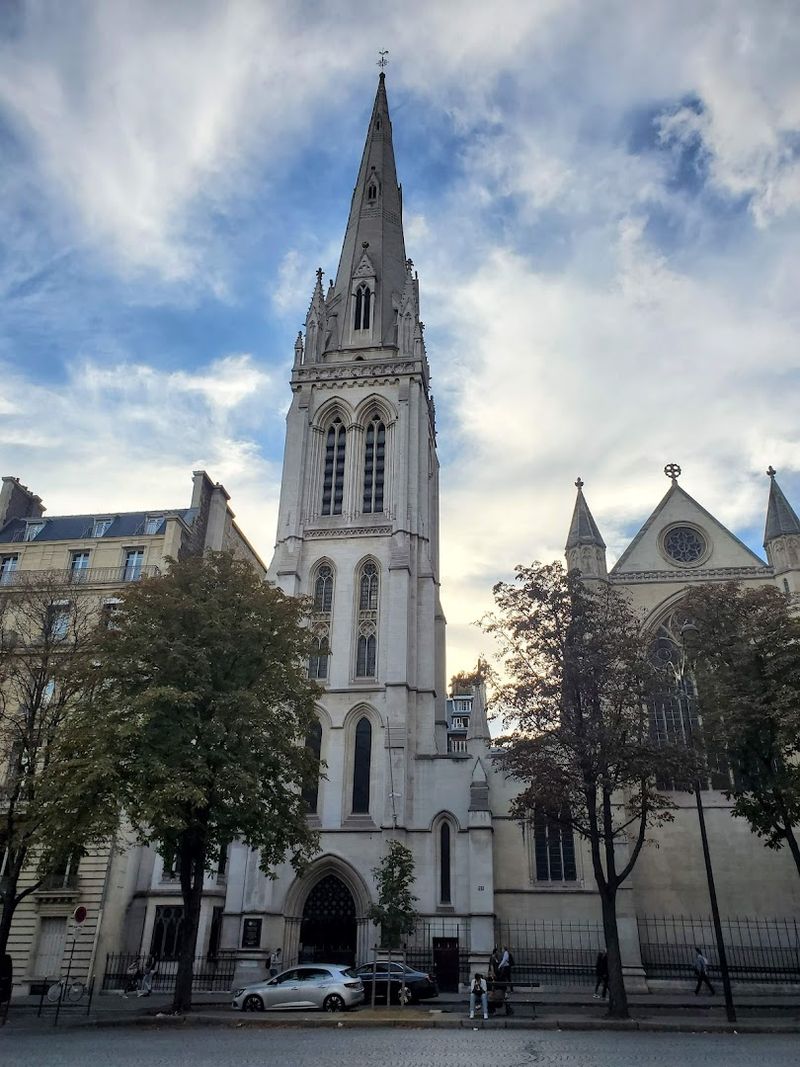
Not every Paris church was built by or for the French — and the American Cathedral on Avenue George V is proof of that. Officially known as the Cathedral Church of the Holy Trinity, it was completed in 1886 and has served as a spiritual home for English-speaking Parisians and expatriates ever since.
The Gothic Revival architecture is faithful to medieval English cathedral traditions, featuring a tall stone spire, pointed arches, and detailed carved stonework that would not look out of place in Canterbury or York. Inside, beautiful stained-glass windows — many donated by American families — fill the nave with warm, jewel-toned light.
Several windows were created by Tiffany Studios, which adds an unexpected American art history connection.
The cathedral sits just a short walk from the Champs-Élysées, making it surprisingly accessible for tourists exploring that part of the city. Beyond Sunday services, it hosts concerts, community events, and outreach programs, giving it an active, welcoming energy that feels different from many of Paris’s quieter historic churches.
A memorial chapel inside honors Americans who served in World War One and Two, adding a moving dimension to what is already a deeply layered and internationally significant building worth seeking out.
Saint-Louis-en-l’Île Church
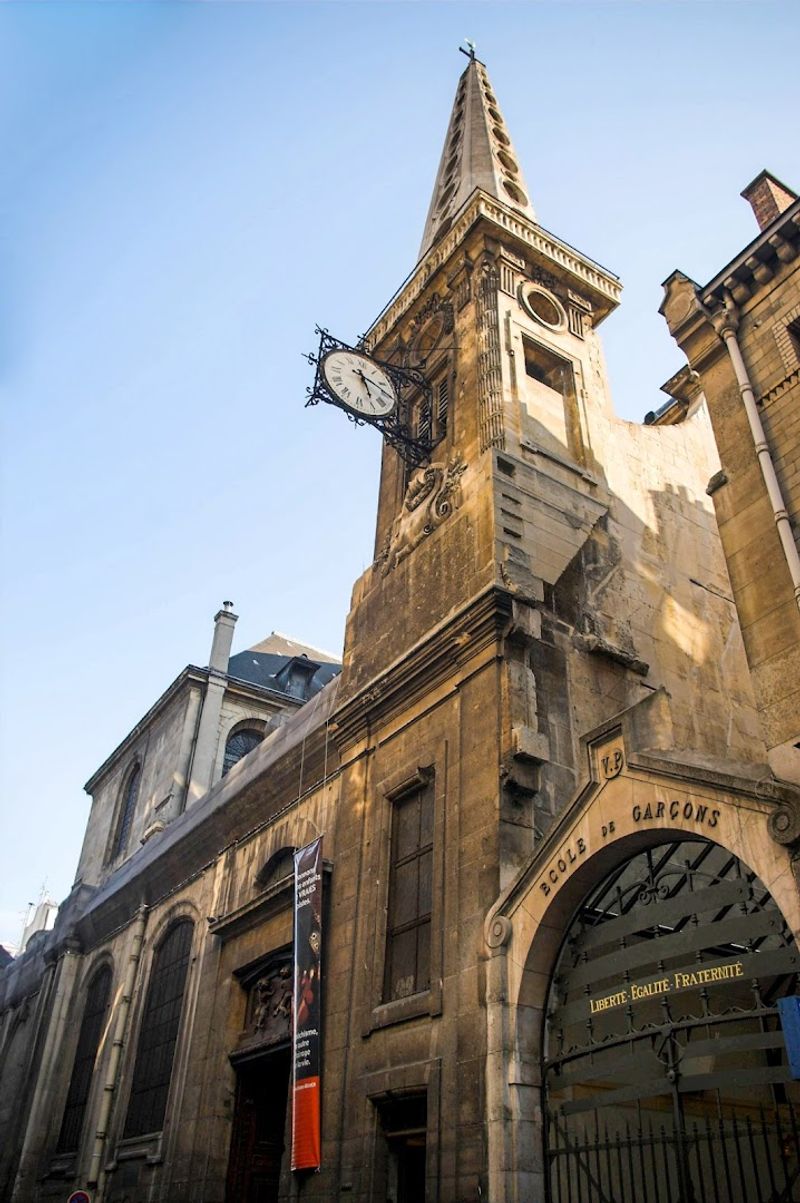
Slipping onto the Île Saint-Louis feels like stepping into a quieter, slower version of Paris — and Saint-Louis-en-l’Île fits that mood perfectly. Tucked along a narrow cobblestone street, this Baroque church was built between 1664 and 1726, and it carries the elegant, unhurried confidence of the island it calls home.
The exterior is relatively understated, but the interior tells a completely different story. Gilded decorations, carved wood, marble columns, and rich paintings fill every corner, creating a lavish warmth that feels genuinely surprising given how modest the entrance looks from outside.
The side chapels are particularly beautiful, each one a small world of its own.
One quirky detail that delights visitors: a clock juts out horizontally from the tower, which is an unusual design choice you will not see on many other Paris churches. Saint Louis, King of France and the island’s namesake, is honored throughout the interior with artwork and dedications.
The church maintains a close connection with Saint Louis, Missouri — its American namesake city — and a plaque inside commemorates that transatlantic friendship. Visiting here feels intimate and personal in a way that the city’s larger, more famous cathedrals simply cannot replicate, no matter how grand they are.
Saint-Nicolas-du-Chardonnet
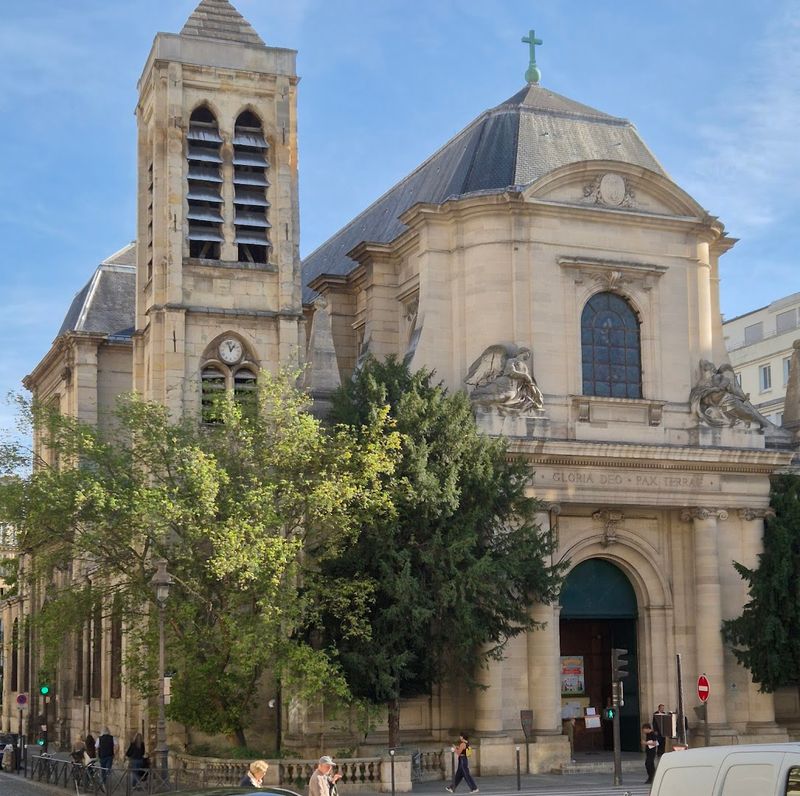
Ask most tourists about Saint-Nicolas-du-Chardonnet and you will likely get a blank stare — which is exactly what makes it such a rewarding find for anyone willing to wander slightly off the beaten path. This 17th-century Baroque church on the Left Bank has a fascinating and somewhat controversial modern story attached to it.
In 1977, traditionalist Catholics took over the building in protest against post-Vatican II liturgical changes and have held Latin Tridentine masses there ever since. That ongoing situation gives the church a unique living history that extends well beyond its architectural merits.
The interior has been lovingly maintained and is filled with beautiful paintings, sculptures, and carved wooden furnishings.
Charles Le Brun, the famous French painter who decorated the Palace of Versailles, is buried here — and his tomb is one of the highlights of any visit. A painting by Le Brun himself, depicting the baptism of Christ, hangs prominently inside.
The church is not always easy to visit outside of service times, so checking ahead is a smart move. When you do get inside, the combination of artistic treasures, living tradition, and unusual political backstory makes Saint-Nicolas-du-Chardonnet one of the most genuinely fascinating religious sites in the entire city.
Notre-Dame-de-la-Victoire
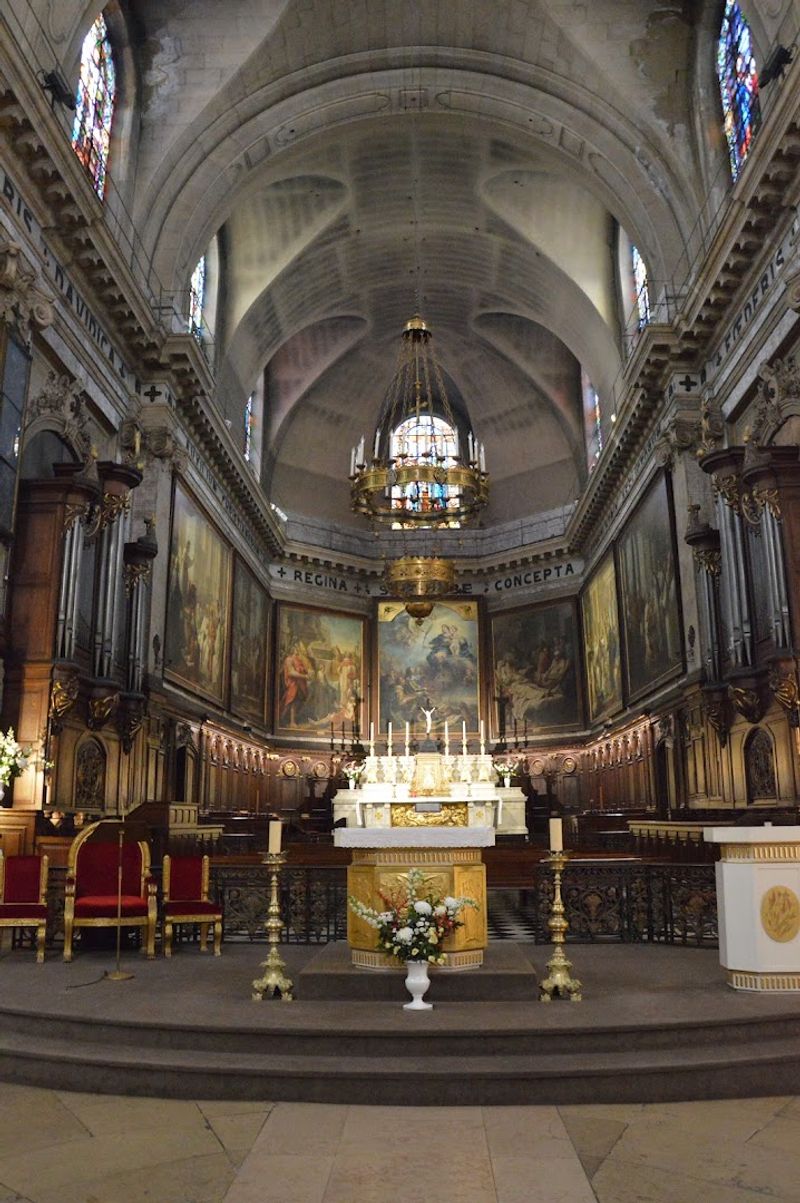
History has a way of hiding in plain sight in Paris, and Notre-Dame-de-la-Victoire is a perfect example. Founded in 1629 to celebrate the French victory at the siege of La Rochelle, this Baroque church near the Opéra district carries a triumphant origin story that most visitors never hear about as they rush past on their way to the grands magasins.
The interior is remarkable for its collection of over 37,000 ex-votos — small devotional objects left by worshippers as thanks for answered prayers. These offerings, covering the walls in dense layers, create an almost overwhelming visual testimony to centuries of personal faith and gratitude.
It is unlike anything you will see in any other Paris church.
The church was also the site where the Archconfraternity of Our Lady of Victories was established in 1836, a religious movement that spread rapidly around the Catholic world. Architecturally, the Baroque style is well-preserved, with carved stone details and a dignified facade that holds its own on a busy commercial street.
The contrast between the noisy shopping district outside and the hushed, devotion-filled interior makes stepping through the door feel like a genuinely significant shift in both atmosphere and perspective.
Saint-Gervais-Saint-Protais
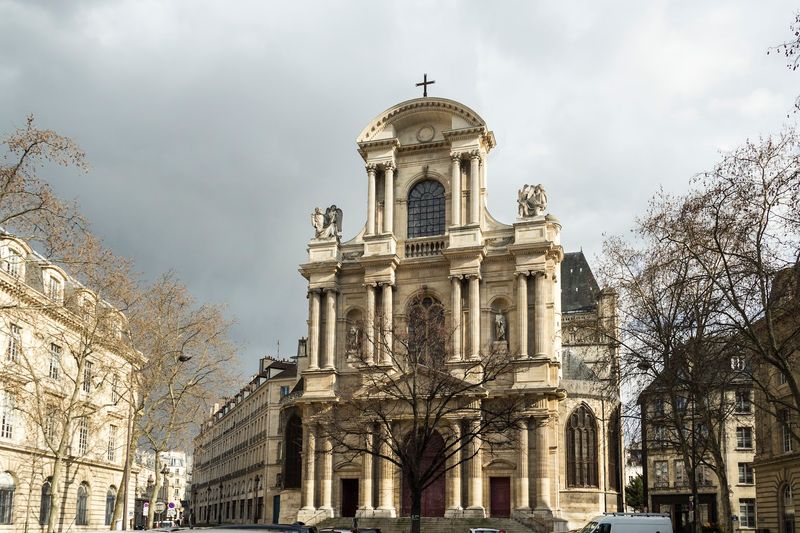
Standing just a short walk from the Hotel de Ville, Saint-Gervais-Saint-Protais wears one of the most architecturally significant facades in all of Paris — and yet it remains remarkably underappreciated. Completed in 1621, the front exterior was the very first use of the classical three-tiered column order in French religious architecture, making it a genuine landmark in the history of French design.
The interior mixes Gothic structure — the building itself dates to the 15th and 16th centuries — with later Baroque and Classical additions, creating a layered visual experience that rewards slow, careful looking. The stained-glass windows are among the finest in the city, spanning several centuries of craftsmanship and glowing beautifully in afternoon light.
The church has a deep musical heritage: members of the Couperin family, one of France’s most celebrated musical dynasties, served as organists here for over 170 years. The current organ still hosts regular concerts that honor that legacy.
A tragic footnote in the church’s history: during Good Friday services in 1918, a German shell struck the building, killing nearly 100 worshippers. A memorial inside honors those victims.
That combination of artistic brilliance and human tragedy gives Saint-Gervais-Saint-Protais a depth of character that is impossible to manufacture and impossible to forget.
Share this story