Europe is full of surprises, and not just the kind you find in history books. Hidden between famous landmarks and tourist hotspots are places so bizarre, so unexpected, that most travelers scroll right past them.
I stumbled upon one of these spots by accident years ago, and it completely changed how I travel. These 14 places are proof that the strangest destinations are often the most unforgettable.
Setenil de las Bodegas, Spain
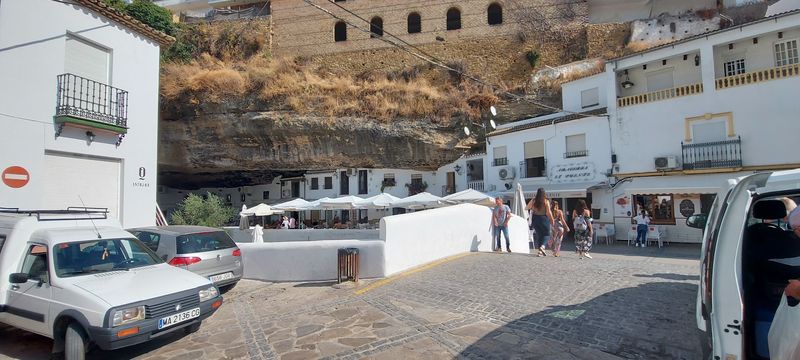
A town that literally grew inside a rock sounds like something from a fantasy novel, but Setenil de las Bodegas is completely real. Tucked into a gorge in Andalusia, its white houses are wedged under enormous volcanic rock overhangs.
The rock acts as a natural roof for entire streets.
Locals have been living this way for centuries, and honestly, they seem pretty unbothered by it. Some of the best tapas bars in the region sit right under the stone ceiling.
You can eat jamón ibérico while a million tons of rock hovers above your head.
The town gets its name from the wine cellars once carved into the rock. Today, those caves have been converted into homes and restaurants.
Getting there requires a scenic drive through olive groves, which makes the arrival even more dramatic. Setenil is only about 20 minutes from Ronda, making it a perfect day trip.
Giethoorn, Netherlands
No roads. No cars.
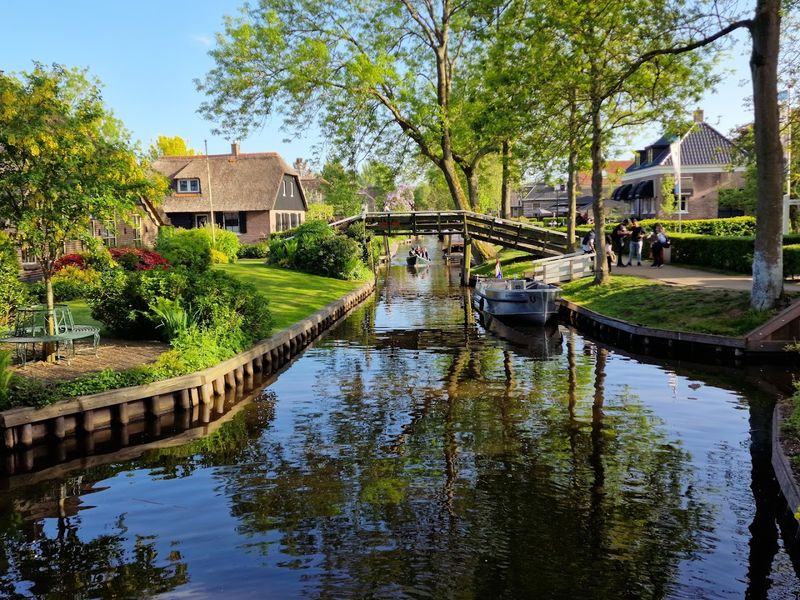
Just canals, wooden bridges, and absolute peace. Giethoorn is a Dutch village where the only way to get around is by boat or bicycle, and that is not a quirky marketing gimmick.
It is just how the place works.
The village was founded in the 13th century, and its canal system developed naturally as peat was dug out of the ground. What remained was a patchwork of small islands connected by over 170 bridges.
Each island holds a thatched farmhouse that looks straight out of a postcard.
Renting a whisper boat and drifting through the canals is the best way to see everything. The boats are electric, so it stays genuinely quiet.
Go early in the morning before the tour groups arrive and you will have whole stretches of water almost to yourself. Spring is especially beautiful when the gardens along the banks are in full bloom.
Les Orgues d’Ille-sur-Têt, France
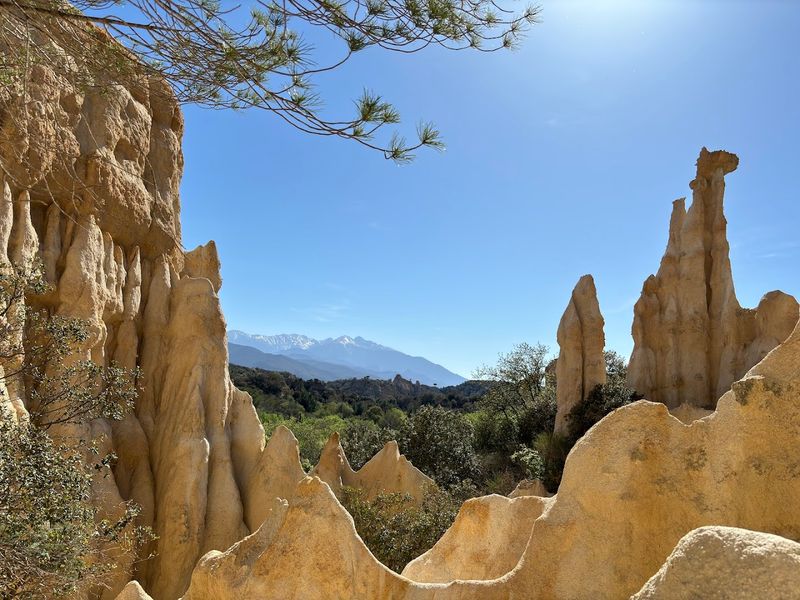
France has a secret it has been hiding behind all those châteaux and vineyards. Near the small town of Ille-sur-Têt in the Pyrénées-Orientales, hundreds of pale rock columns shoot straight up from the earth like a petrified pipe organ.
Hence the name: Les Orgues, meaning the organs.
These formations are called fairy chimneys, created over millions of years by rain and wind eroding soft sedimentary rock. Each column is capped by a harder rock that protected the softer material underneath from washing away.
The result looks almost architectural, like something deliberately built.
The site has a well-marked walking trail that loops through the formations, taking about 45 minutes at a relaxed pace. Afternoon light turns the columns golden and pink, which makes for genuinely spectacular photos.
Entry costs only a few euros, and the nearby town has good Catalan food worth sticking around for. This one is wildly underrated for how accessible it is.
Predjama Castle, Slovenia
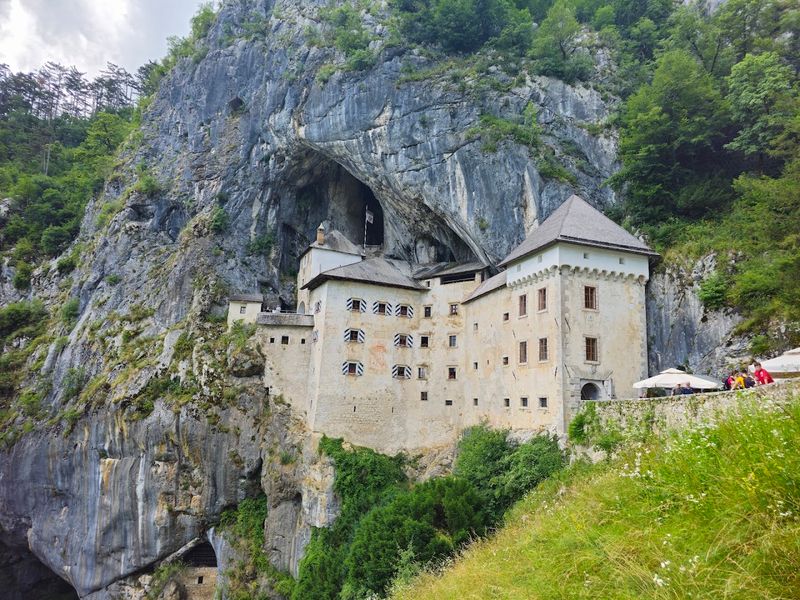
Built inside the gaping mouth of a cave halfway up a cliff, Predjama Castle looks like it was designed by someone who took the concept of a fortress a bit too seriously. And yet, here it stands in Slovenia, completely real and open to visitors.
The castle dates back to the 12th century, though most of what you see today is from the 16th century. Its most famous resident was Erazem of Predjama, a robber knight who held off a siege for over a year by using secret tunnels through the cave to smuggle in supplies.
He was eventually defeated in a rather undignified way involving a cannonball and a bathroom break.
The cave system behind the castle is one of the longest in Slovenia and can be explored on guided tours. The whole complex sits just 9 kilometers from Postojna Cave, so combining both in a day trip is very doable.
Book tickets online to skip the queues.
Sedlec Ossuary, Czech Republic
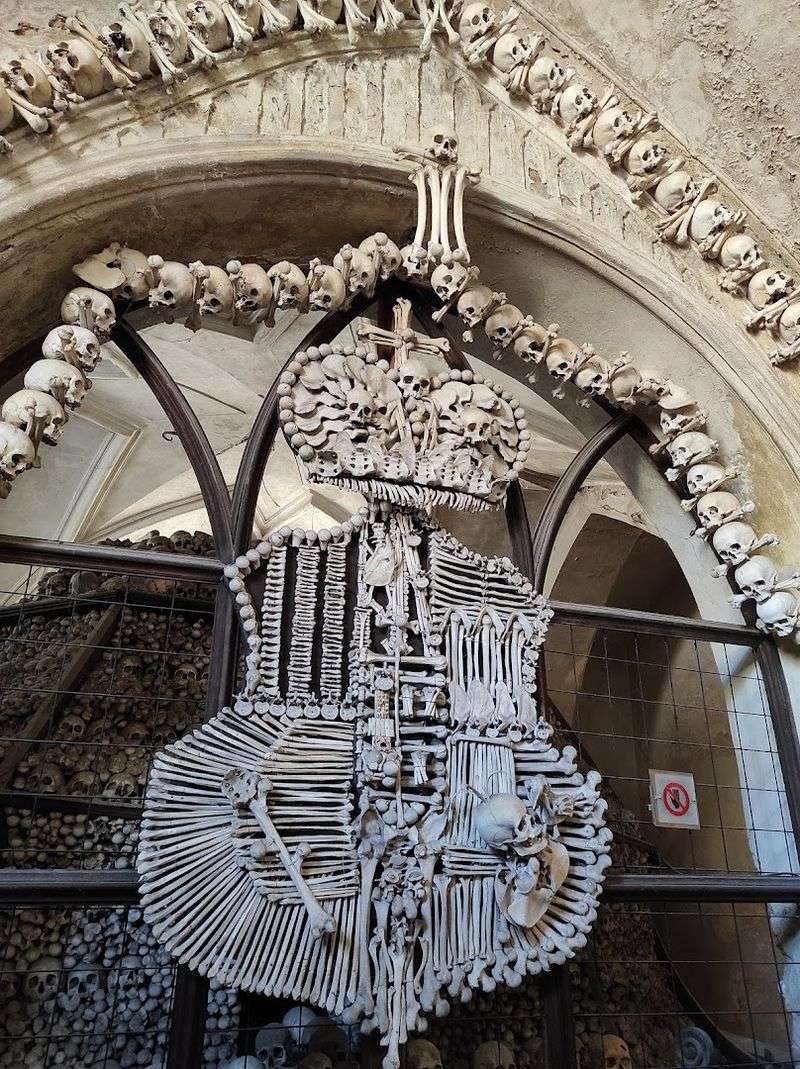
Somewhere between deeply unsettling and genuinely impressive, the Sedlec Ossuary is a small Gothic church decorated almost entirely with human bones. Around 40,000 skeletons were used to create chandeliers, garlands, and even a family coat of arms.
It is one of those places you feel you have to see to believe.
The bones came from plague victims and those killed during the Hussite Wars in the 14th and 15th centuries. When the cemetery ran out of space, a half-blind monk arranged the bones into artistic displays in the 1500s.
A local woodcarver named Frantisek Rint completed the elaborate decorations in 1870.
Located in Kutna Hora, about an hour from Prague by train, it makes an easy and memorable day trip. The town itself is a UNESCO World Heritage Site with a stunning Gothic cathedral worth seeing while you are there.
The ossuary is small but packs an enormous amount of history into every corner. Wear comfortable shoes for the cobblestones.
Civita di Bagnoregio, Italy
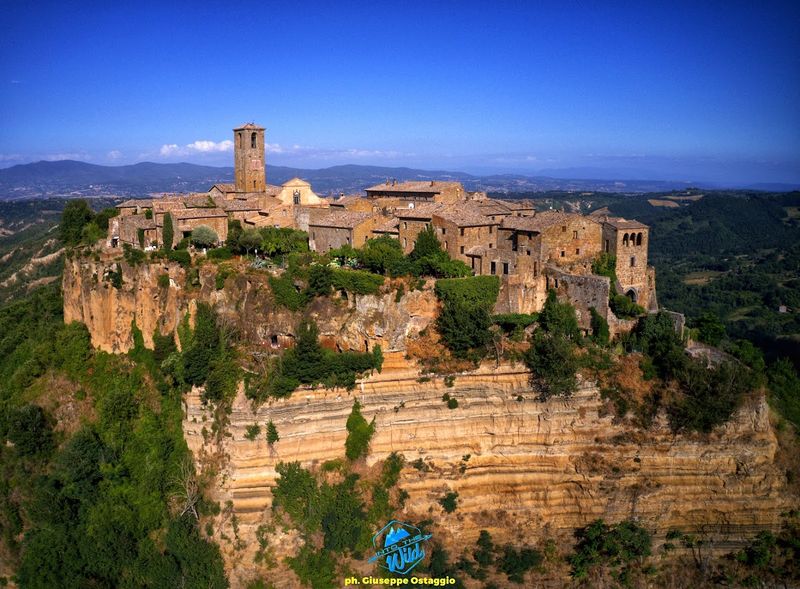
Called the dying city by Italians, Civita di Bagnoregio sits on top of a crumbling volcanic rock plateau that has been slowly eroding for centuries. The only way in is a long pedestrian bridge stretching across a dramatic gorge.
When I first crossed that bridge, I genuinely felt like I was walking into another era.
The town dates back to Etruscan times and was once a thriving settlement. Earthquakes and erosion have been slowly eating away at the plateau for hundreds of years.
Today, fewer than ten people live there permanently, though the population swells with tourists during the day.
A small entrance fee is charged to cross the bridge, which helps fund preservation efforts. The streets inside are entirely car-free and lined with stone buildings, tiny gardens, and one very good restaurant.
Visit on a weekday morning to experience the rare quiet that makes the place feel genuinely ancient. The views from the edge of the plateau are outstanding.
Castellfollit de la Roca, Spain
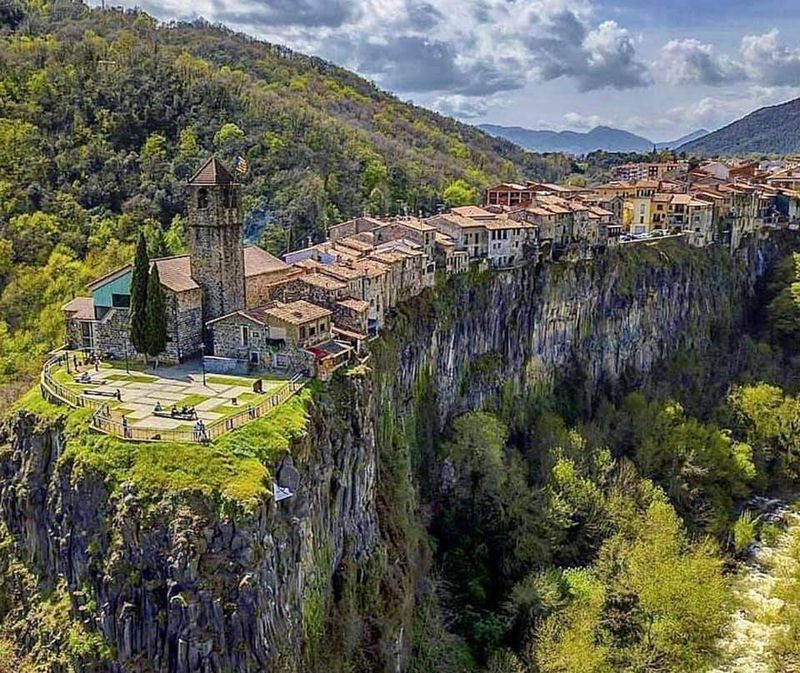
Standing on a basalt cliff just 50 meters wide and over 50 meters tall, Castellfollit de la Roca might be the most precarious village in Spain. The medieval stone buildings at the cliff edge look like they are about to step off into thin air.
It is genuinely nerve-wracking to stand at the viewpoint below and look up.
The cliff itself is made of two layers of ancient lava flows from volcanic eruptions that happened millions of years ago. The result is a perfectly dramatic natural pedestal for a town.
The whole village is only about 1,000 meters long, making it one of the smallest municipalities in Catalonia.
The best view is from the road below, where the full scale of the cliff becomes obvious. The village also has a small sausage museum dedicated to local cured meats, which is either charming or bizarre depending on your perspective.
It sits in the Garrotxa Volcanic Zone Natural Park, so combining both in one visit makes total sense.
Las Médulas, Spain
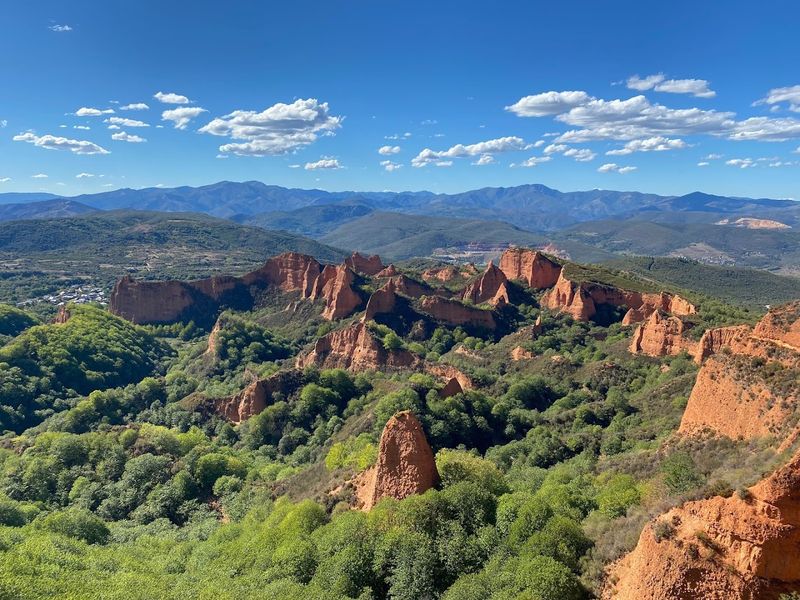
Las Médulas looks like Mars landed in northwestern Spain. The jagged, rust-red peaks and valleys stretching across the León countryside are the remains of the largest gold mine in the entire Roman Empire.
Rome did not just dig here. They basically exploded the mountain using water pressure to collapse it.
The technique was called ruina montium, and it involved directing enormous quantities of water through tunnels to hydraulically blast apart the rock. Over 200 years of mining produced around 1.6 million kilograms of gold.
What was left behind is one of the most otherworldly landscapes in Europe.
Today it is a UNESCO World Heritage Site with several hiking trails winding through the formations. The viewpoint at Orellán offers the most sweeping panorama of the whole area and requires a short uphill walk.
Autumn is particularly beautiful when the chestnut trees turn gold, adding another layer of color to the already vivid landscape. The nearby village of Las Médulas has a good interpretation center worth visiting first.
Monsanto, Portugal
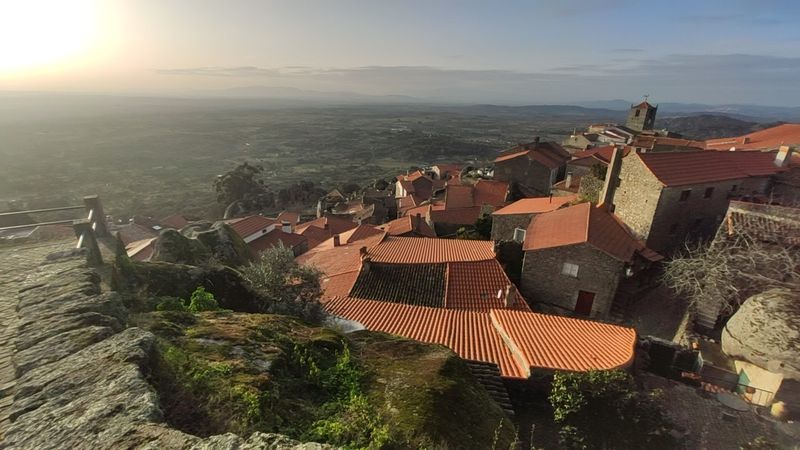
Monsanto is a village that grew between boulders rather than around them. Enormous granite rocks, some the size of houses, are woven into the architecture so completely that it is hard to tell where the mountain ends and the buildings begin.
A competition in 1938 officially named it the most Portuguese village in Portugal.
The boulders have been used as walls, roofs, and foundations for centuries. Some houses literally have a massive rock as one entire wall.
Walking through the narrow lanes feels like navigating a giant’s obstacle course, in the best possible way.
The ruined castle at the top offers sweeping views over the surrounding plains all the way to the Spanish border on a clear day. The village sits in the Beira Baixa region, which is quiet and largely undiscovered by mass tourism.
There is a small local restaurant serving traditional food that is worth seeking out after the hike. Go on a weekday and you will practically have the place to yourself.
Rocamadour, France
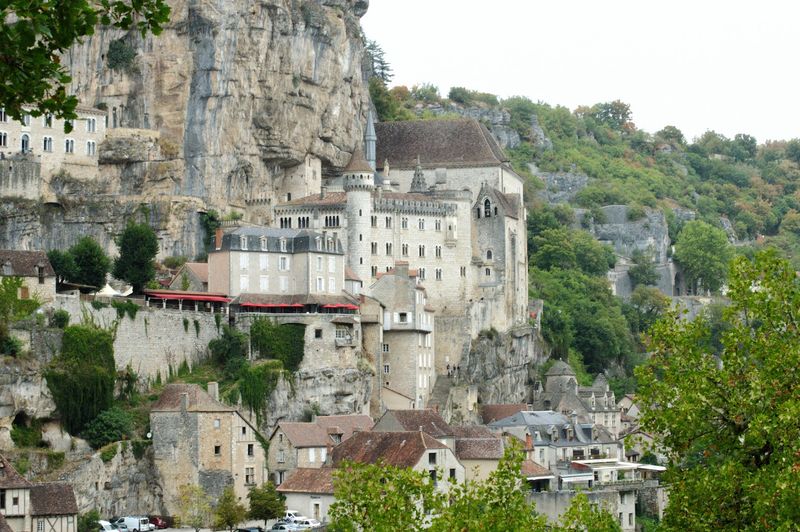
Rocamadour defies basic logic. An entire medieval town, complete with chapels, a castle, and a palace, has been stacked vertically up a sheer limestone cliff face in the Dordogne Valley.
People have been making pilgrimages here since the 12th century, climbing 216 steps on their knees as an act of devotion.
The town is named after Saint Amadour, whose preserved body was reportedly found in the cliff in 1166. The discovery triggered centuries of religious tourism that essentially funded the whole remarkable construction.
Henry II of England and King Louis IX of France both visited as pilgrims.
Three distinct levels make up the town: the village at the base, the sanctuary level with its chapels carved into the rock, and the château at the very top. A lift connects the levels for those who prefer not to tackle the stairs.
The best overall view is from the L’Hospitalet plateau directly across the gorge. Arrive in the early morning before tour buses fill the narrow streets.
Monemvasia, Greece
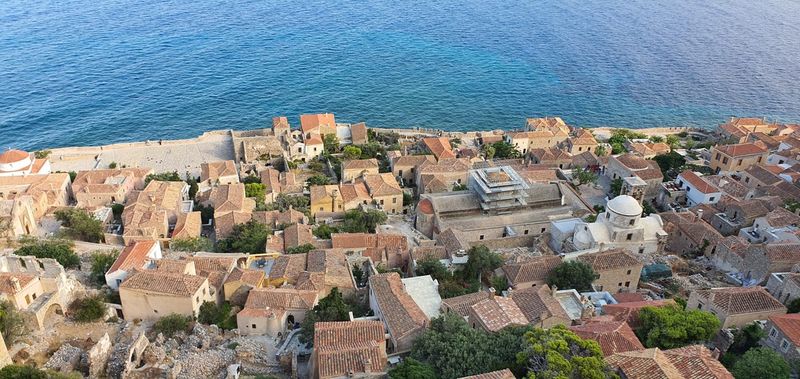
Monemvasia is a medieval town hiding on a massive rock that juts out of the Aegean Sea. From the main road on the Peloponnese coast, you would barely notice it.
The entire settlement is tucked behind the rock, invisible until you cross the single narrow causeway and pass through the ancient gate.
The name literally means single entrance in Greek, which tells you everything about how defensible this place was. Byzantine emperors, Venetians, and Ottomans all fought over it for centuries.
Walking through the lower town feels like stepping directly into a living museum where people still actually live.
The upper town, now largely in ruins, requires a steep climb but rewards you with extraordinary views over the sea and coastline. The lower town has several excellent restaurants and small hotels converted from Byzantine stone buildings.
Summer gets busy, so September and October offer the best combination of warm weather and manageable crowds. The sunsets from the sea wall are genuinely hard to forget.
Matera, Italy
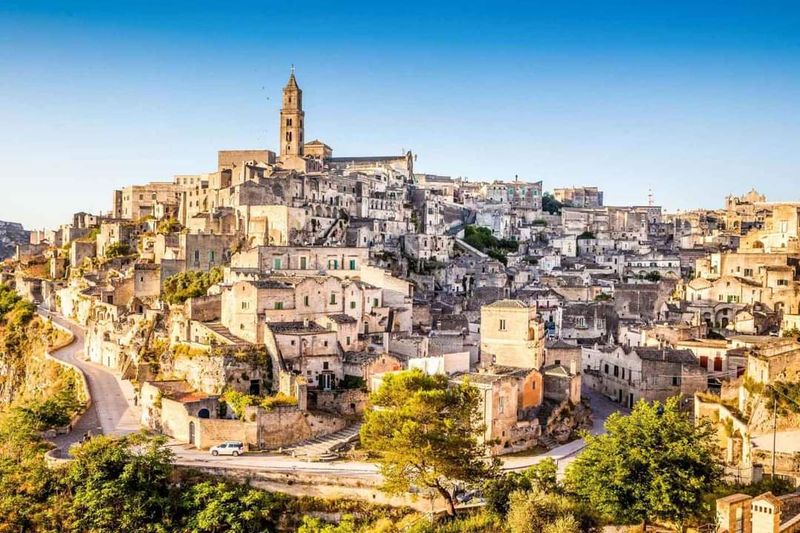
Matera is one of the oldest continuously inhabited cities on Earth, with people living in its cave dwellings for at least 9,000 years. The Sassi districts, carved directly into the sides of a deep ravine, look like a city that forgot the concept of flat ground.
It was used as a filming location for ancient Jerusalem in several major films, which tells you something about how timeless it looks.
For much of the 20th century, Matera was considered a national embarrassment. The Italian government forcibly relocated residents out of the caves in the 1950s because of poverty and poor sanitation.
Today those same caves have been converted into boutique hotels, restaurants, and galleries.
The best way to see Matera is to get completely lost in it. The cave churches, some dating back to the 8th century and filled with faded frescoes, are scattered throughout the Sassi and easy to stumble upon.
Matera was a European Capital of Culture in 2019, which finally gave it the international recognition it deserved.
Meteora, Greece
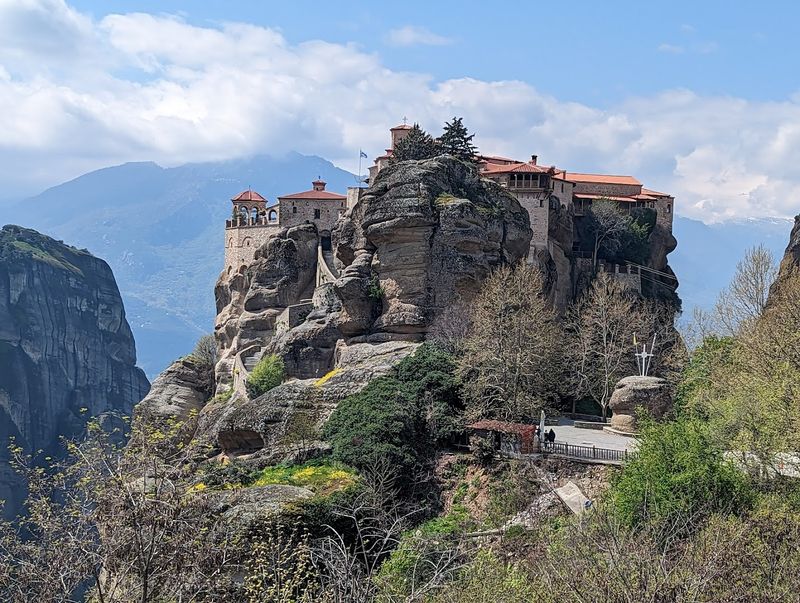
Monks decided the best place to build their monasteries was on top of enormous sandstone pillars rising straight out of the ground in central Greece. Honestly, fair enough.
The monasteries of Meteora sit hundreds of meters above the valley floor, and for centuries the only way up was by rope ladder or net.
The rocks themselves were formed around 60 million years ago from river sediment that solidified and then eroded into these dramatic vertical columns. The first hermit monks began living in the caves of the rocks as early as the 11th century.
By the 14th and 15th centuries, 24 monasteries had been built on the summits.
Six monasteries are still active today and open to visitors, though modest dress is required. The town of Kalambaka at the base is a convenient and affordable base for exploring.
Sunrise and sunset turn the rocks extraordinary shades of orange and purple. Renting a bicycle to ride between the monasteries at your own pace is genuinely one of the best ways to spend a day in Greece.
Bourtange, Netherlands
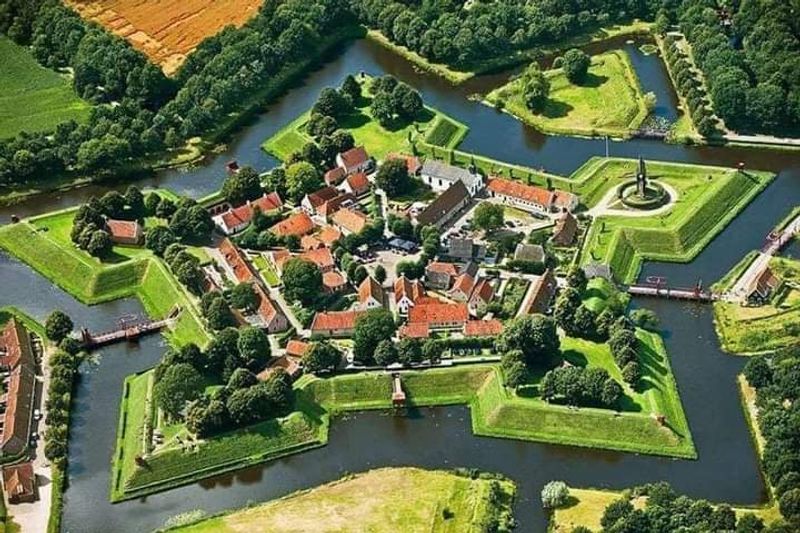
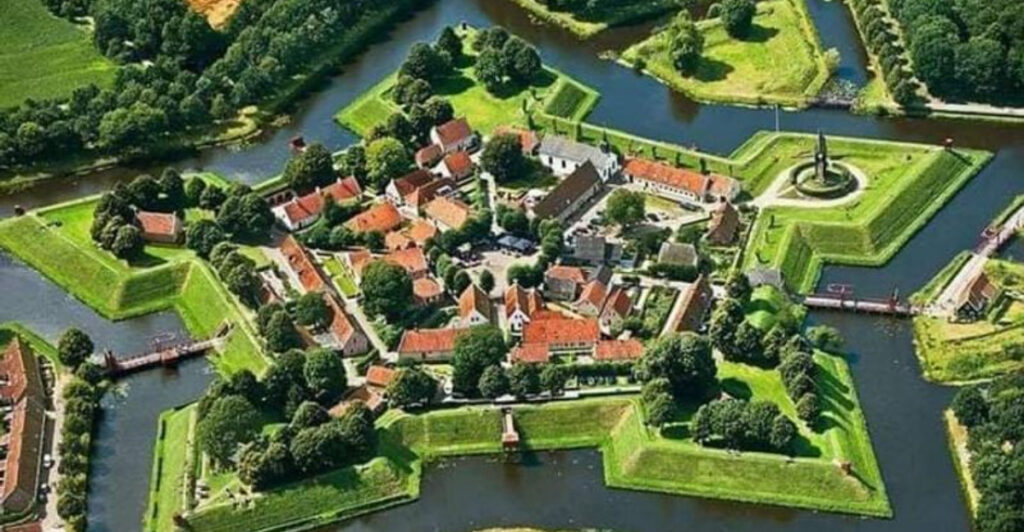
From the air, Bourtange looks like a perfect five-pointed star drawn on a map of the Dutch countryside. That geometric precision is not accidental.
The fortress was built in 1593 by William of Orange to control the only road between Germany and the city of Groningen. Military engineering rarely looked this beautiful.
The star shape was a deliberate defensive design that eliminated blind spots and gave defenders a clear line of fire in every direction. Attackers trying to approach would be exposed to cannon fire from multiple angles simultaneously.
It worked so well that the fortress was never successfully stormed.
Today the entire fortress has been carefully restored to its 1742 appearance, complete with moats, ramparts, and historic buildings inside. The village within the walls has a small museum, a couple of cafes, and costumed guides during summer.
It sits in the far northeast corner of the Netherlands, which means most tourists never make it there. That is their loss and your gain.
Share this story