Back in 1858, a quiet stretch of land in southern New Jersey quietly rewrote everything scientists thought they knew about dinosaurs. What was uncovered there became the first relatively complete dinosaur skeleton ever found in North America, and it sparked a wave of paleontological excitement that is still felt today.
The town of Haddonfield holds this remarkable piece of history at the end of a residential street, marked by plaques, a small memorial, and a bronze statue downtown that has become a point of local pride. Whether you are a history buff, a curious traveler, or a parent looking for a genuinely unique day trip, this spot delivers something most places simply cannot: a real, documented connection to a creature that walked the earth roughly 80 million years ago.
Keep reading to find out why this unassuming New Jersey landmark deserves a place on your must-visit list.
The Discovery That Rewrote Paleontology
In 1858, William Parker Foulke was vacationing in Haddonfield when he heard a story about large bones that had been dug up from a marl pit years earlier. Foulke tracked down the site, organized an excavation, and uncovered what became recognized as the first relatively complete dinosaur skeleton ever found in North America.
The bones belonged to a duck-billed dinosaur that was later named Hadrosaurus foulkii in honor of its discoverer. What made the find so groundbreaking was not just its completeness, but what it revealed about how dinosaurs actually stood and moved.
Before this discovery, most scientists assumed dinosaurs walked on all fours like lizards. The anatomy of Hadrosaurus foulkii showed that at least some dinosaurs walked upright on two legs, completely shifting the scientific understanding of these animals.
That single excavation in New Jersey changed the direction of dinosaur research for generations to come.
The Man Behind the Name: William Parker Foulke
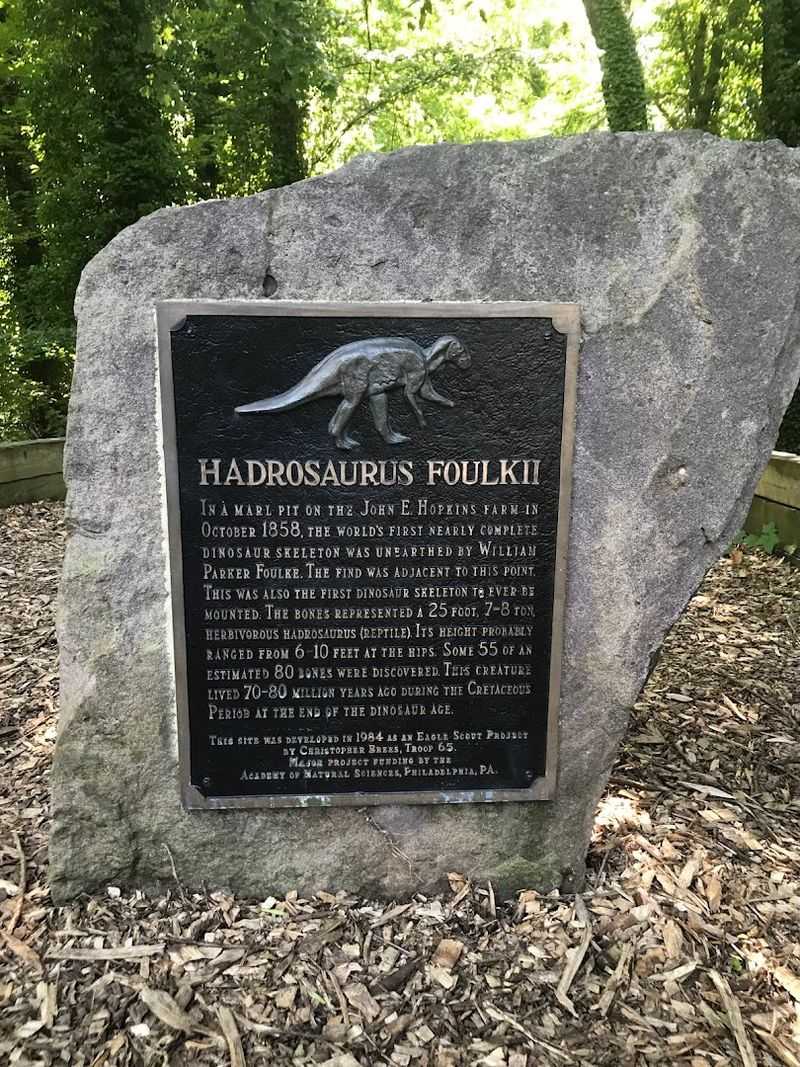
William Parker Foulke was not a professional paleontologist by training. He was a Philadelphia lawyer, abolitionist, and philanthropist who happened to be in the right place at the right time, and who had the curiosity and resources to act on what he heard.
When Foulke learned that large bones had previously been removed from a marl pit on the property of John E. Hopkins, he convinced Hopkins to allow a new excavation.
Working with paleontologist Joseph Leidy, Foulke oversaw the careful recovery of the bones that would make history.
Joseph Leidy then formally described and named the species, giving Foulke permanent recognition in the scientific name Hadrosaurus foulkii. The collaboration between a curious amateur and a trained scientist produced one of the most important fossil finds ever recorded.
Foulke’s story is a reminder that scientific breakthroughs do not always follow a predictable path or come from expected sources.
What Hadrosaurus Actually Looked Like
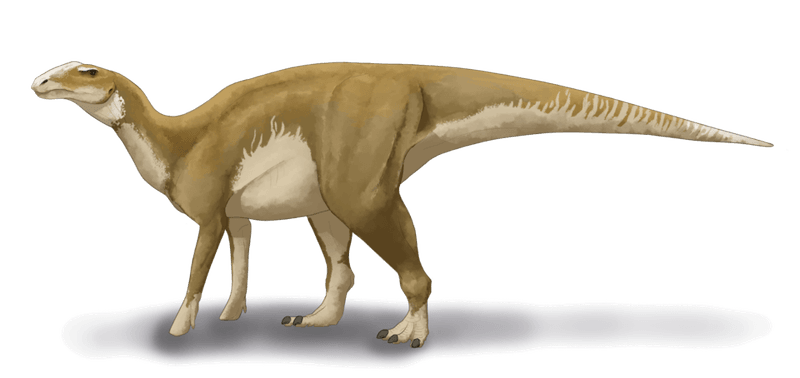
Hadrosaurus foulkii was a large, plant-eating dinosaur that lived approximately 80 million years ago during the Late Cretaceous period. It belonged to a group called hadrosaurs, commonly nicknamed duck-billed dinosaurs because of the broad, flat shape of their snouts.
Adults could reach lengths of around 23 to 26 feet and likely weighed several tons. The body structure, with powerful hind legs and shorter front limbs, supports the bipedal interpretation that Leidy first proposed after examining the Haddonfield bones.
Hadrosaurs were widespread across North America during the Cretaceous and are now one of the best-understood groups of dinosaurs thanks to numerous finds across the continent. The Haddonfield specimen was not the most complete hadrosaur ever found, but it was the most complete dinosaur skeleton known at the time of its discovery, which made it uniquely important in shaping early scientific ideas about what dinosaurs really were.
The Bronze Statue Downtown: Haddy Takes Center Stage
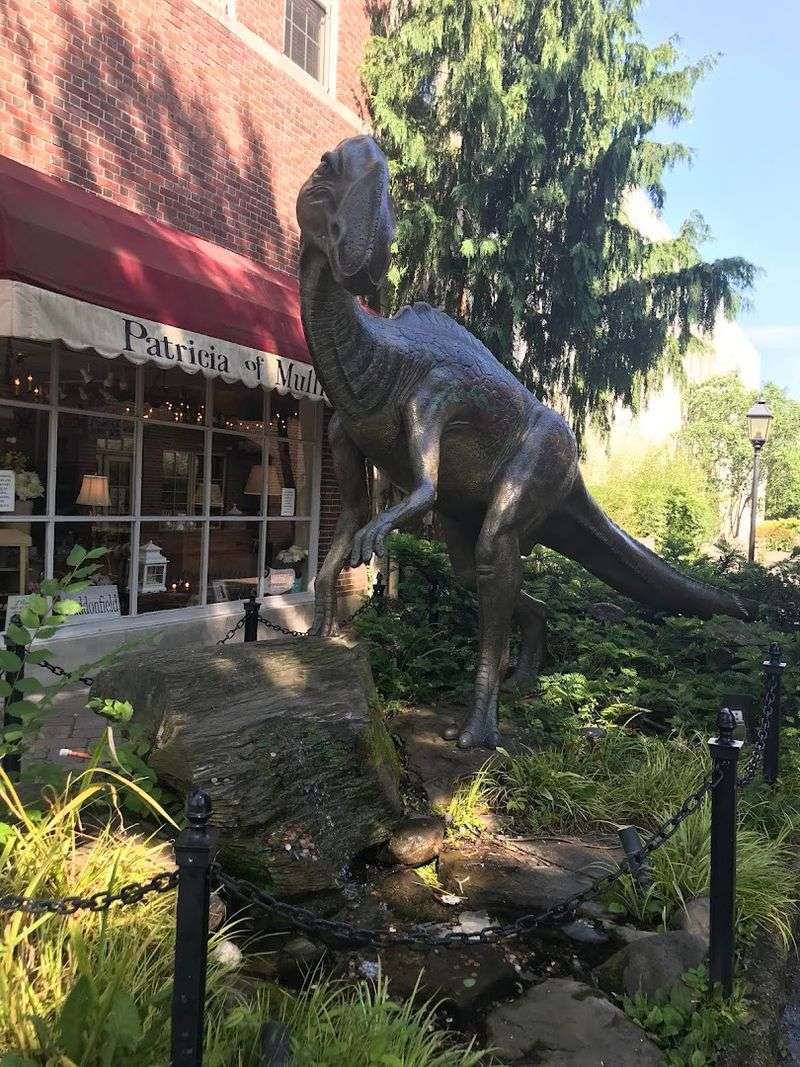
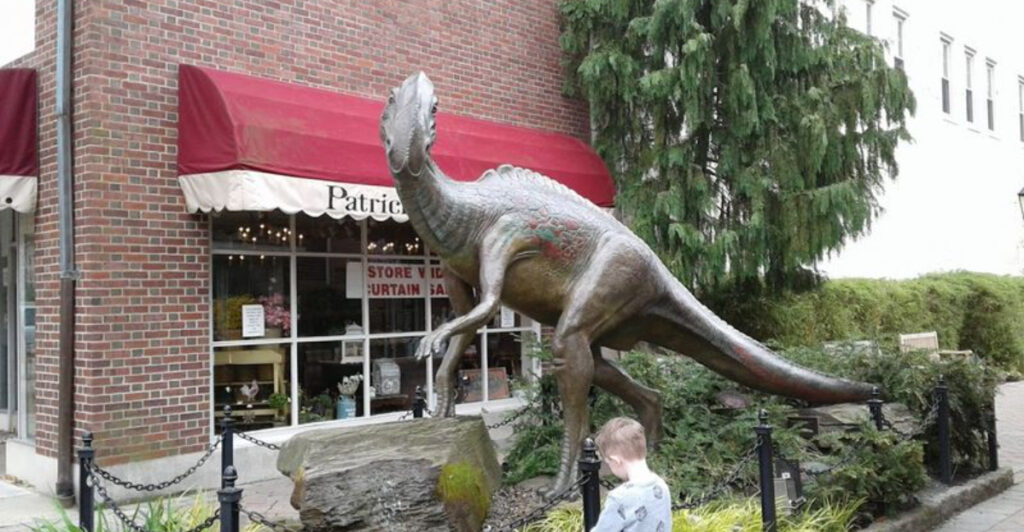
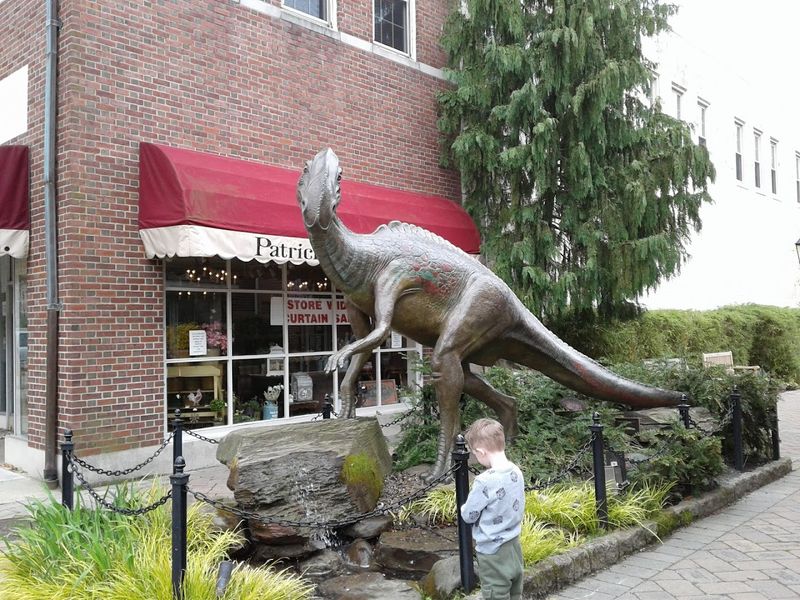
A few blocks from the excavation site, in the heart of downtown Haddonfield at the intersection of Kings Highway and Chestnut Avenue, stands a bronze statue of the Hadrosaurus that has become a beloved local landmark. Known affectionately as Haddy, the sculpture gives residents and visitors a tangible, life-size impression of what the animal may have looked like.
The statue was created by sculptor John Giannotti and was unveiled in 2003. It stands in a prominent public space, making it easy to visit as part of a broader walking tour of Haddonfield’s historic downtown area.
The statue is not located at the actual dig site but rather serves as a downtown celebration of the town’s unique scientific legacy. Pamphlets about the discovery and the history of the site are often available nearby, giving context to anyone who wants to learn more before or after visiting the memorial site on Maple Avenue.
The Eagle Scout Who Found the Lost Site
By the mid-20th century, the exact location of the original 1858 excavation had been largely forgotten. The marl pit had been filled in, the land had changed hands, and no clear marker indicated where one of history’s most important fossil finds had actually taken place.
Then, in 1984, a young man named Christopher Brees took on the challenge of relocating the site as part of an Eagle Scout project with Troop 65. Through research, historical records, and on-the-ground investigation, Brees successfully identified the location of the original dig.
The Brees family has continued to maintain the site in the years since, which explains why the memorial has a distinctly personal, community-driven quality rather than a polished, institutional one. The Eagle Scout connection adds a genuinely heartwarming layer to the site’s story, showing that the legacy of a 19th-century discovery was kept alive not by a government agency or museum, but by a determined teenager and his family.
Where the Real Bones Are Today
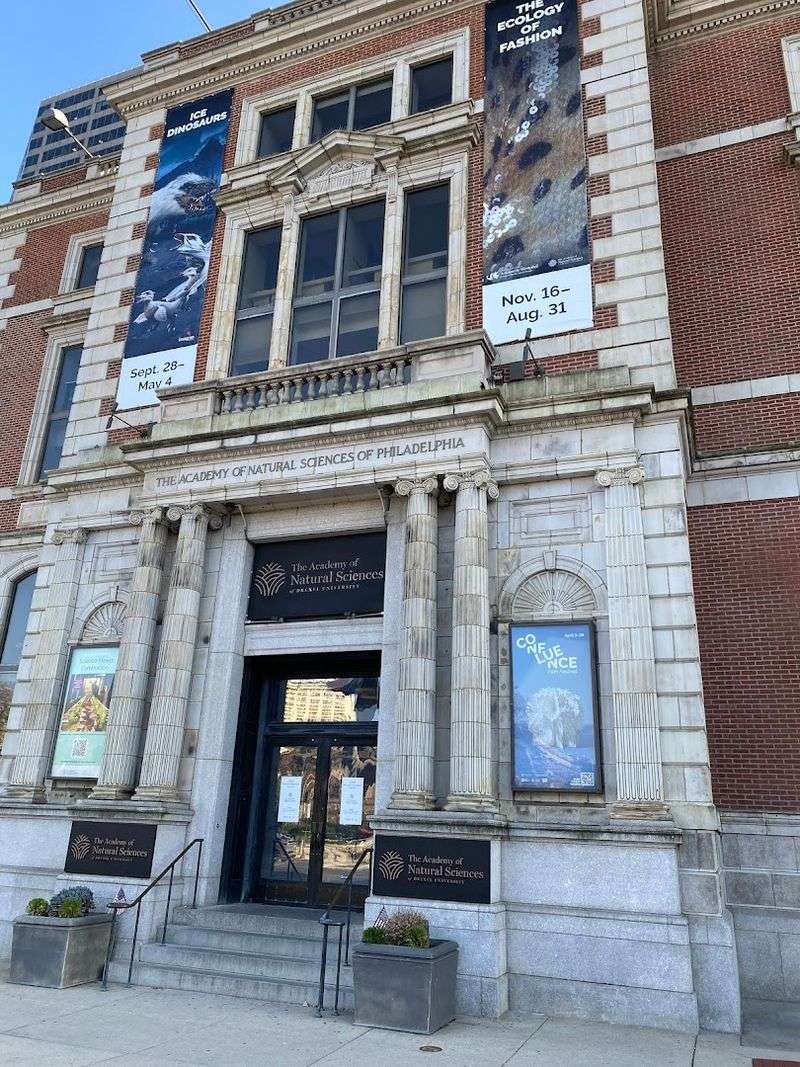
The actual bones recovered from the Haddonfield excavation are not at the New Jersey site itself. They are housed at the Academy of Natural Sciences at Drexel University in Philadelphia, Pennsylvania, where they have been part of the collection since shortly after the 1858 discovery.
The Academy of Natural Sciences is the oldest natural history museum in the Americas, founded in 1812, and the Hadrosaurus foulkii specimen has been one of its most historically significant holdings for well over a century. The museum is open to the public and offers exhibits on paleontology, natural history, and ecology.
For anyone making the trip to the Haddonfield site, a follow-up visit to Philadelphia to see the actual bones is a natural extension of the experience. Seeing where the fossil was found and then seeing the fossil itself creates a satisfying full-circle connection that few other historical outings can match.
The Picnic Table and the Toy Dinosaurs
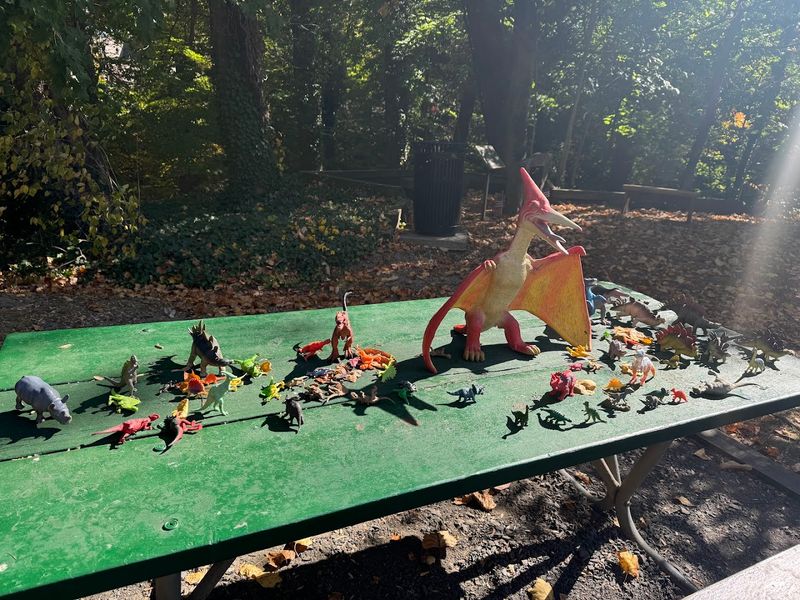
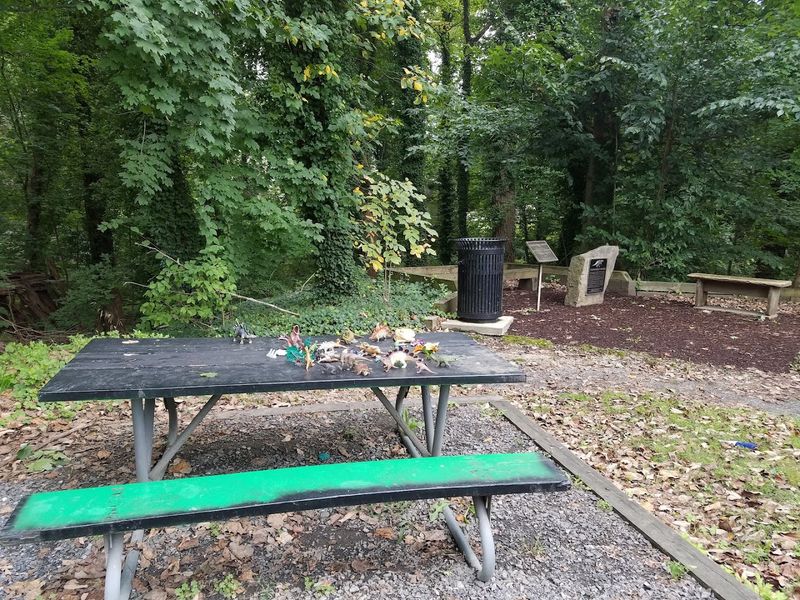
One of the most charming details about the Hadrosaurus Foulki Site is a picnic table that has become a kind of informal community tradition. Over the years, visitors have taken to leaving small plastic dinosaur toys on the table for other visitors, especially children, to discover and play with.
Nobody officially organizes this. There is no sign instructing people to do it.
It simply evolved as a spontaneous, ongoing act of generosity among the people who visit the site.
The result is that families arriving with young children often find a small collection of toy dinosaurs waiting for them, which turns what might otherwise be a brief stop into a genuinely memorable experience for kids. The instruction, understood without being written anywhere, is to be respectful and leave the toys for the next group to enjoy.
It is a small detail, but it captures something real about the spirit of the place and the community around it.
The Ravine, the Creek, and What Might Still Be There
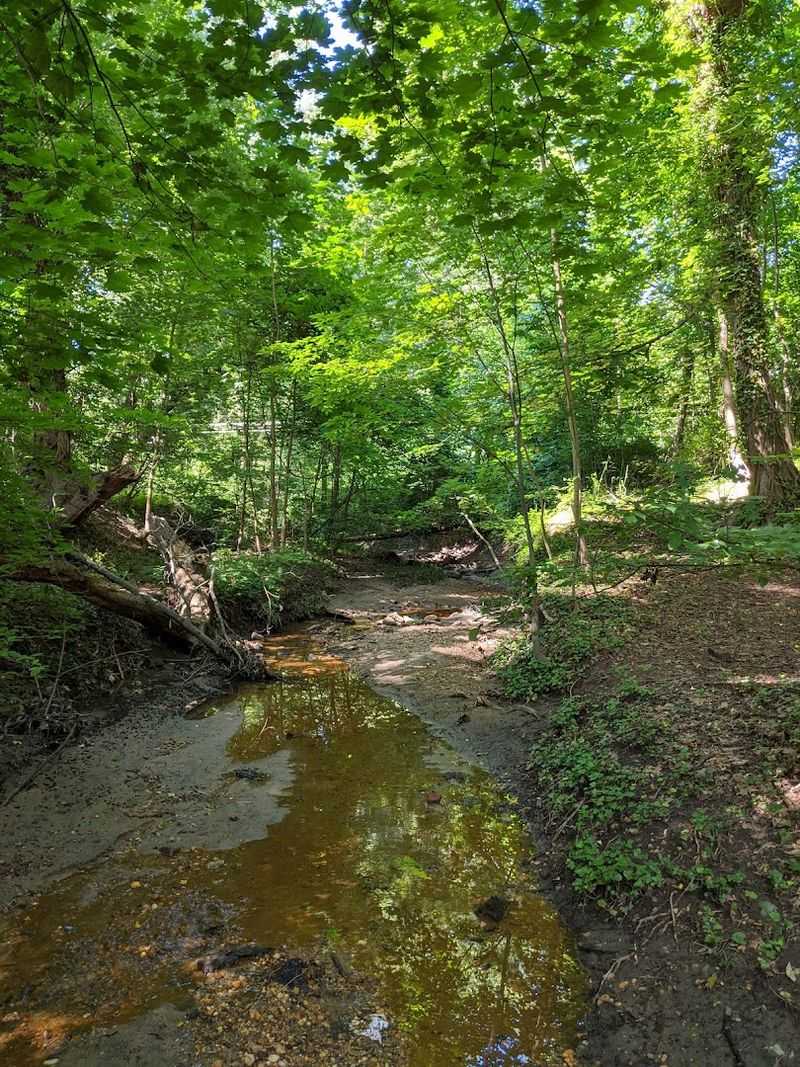
Just beyond the memorial clearing, the land drops down into a ravine that leads to a small creek. This is where the original marl pit excavation took place, and while no bones are visible today, the area still holds geological interest for those willing to explore it carefully.
Some visitors who have ventured down the slope have reported finding shark teeth, arrowheads, and small fossils along the streambed. The New Jersey coastline was once underwater during the Cretaceous period, which is part of why marine and terrestrial fossils can both be found in the region’s sedimentary layers.
The trail down to the creek is not officially marked and can be overgrown depending on the season, so long pants and high socks are strongly recommended to guard against ticks and prickly ground cover. The ravine is a genuinely interesting natural feature, but it rewards preparation rather than spontaneity, especially for families with younger children.
Haddonfield as a Historic Town Worth Exploring
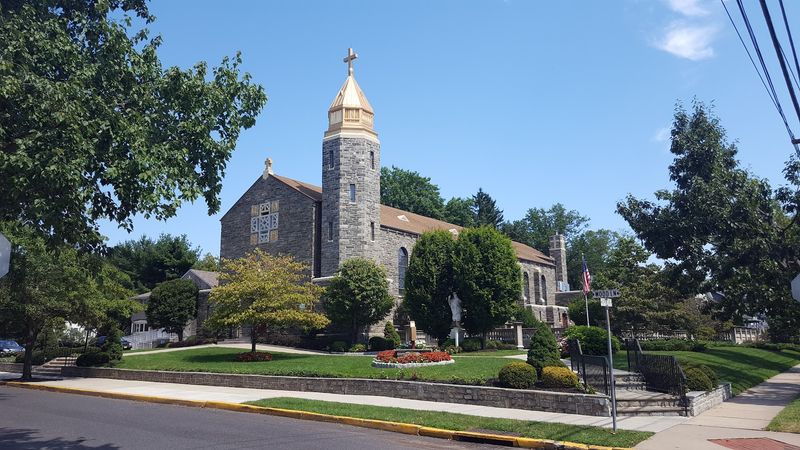
The Hadrosaurus site does not exist in isolation. Haddonfield itself is one of the most historically rich small towns in New Jersey, with a walkable downtown full of well-preserved colonial and Victorian architecture, independent shops, and a strong sense of local identity.
The town was founded by Elizabeth Haddon in 1713 and has maintained much of its historic character through careful preservation efforts. A self-guided historical tour map of Haddonfield, which incorporates the dinosaur discovery as one of its featured stops, is available and makes for a satisfying way to spend a few hours in the area.
Kings Highway, one of the oldest roads in America, runs through the center of town and connects several of Haddonfield’s key landmarks. Combining a visit to the Maple Avenue memorial site with a walk through downtown and a stop at the Haddy statue creates a well-rounded outing that covers both natural history and American colonial heritage in a single afternoon.
New Jersey’s Official State Dinosaur
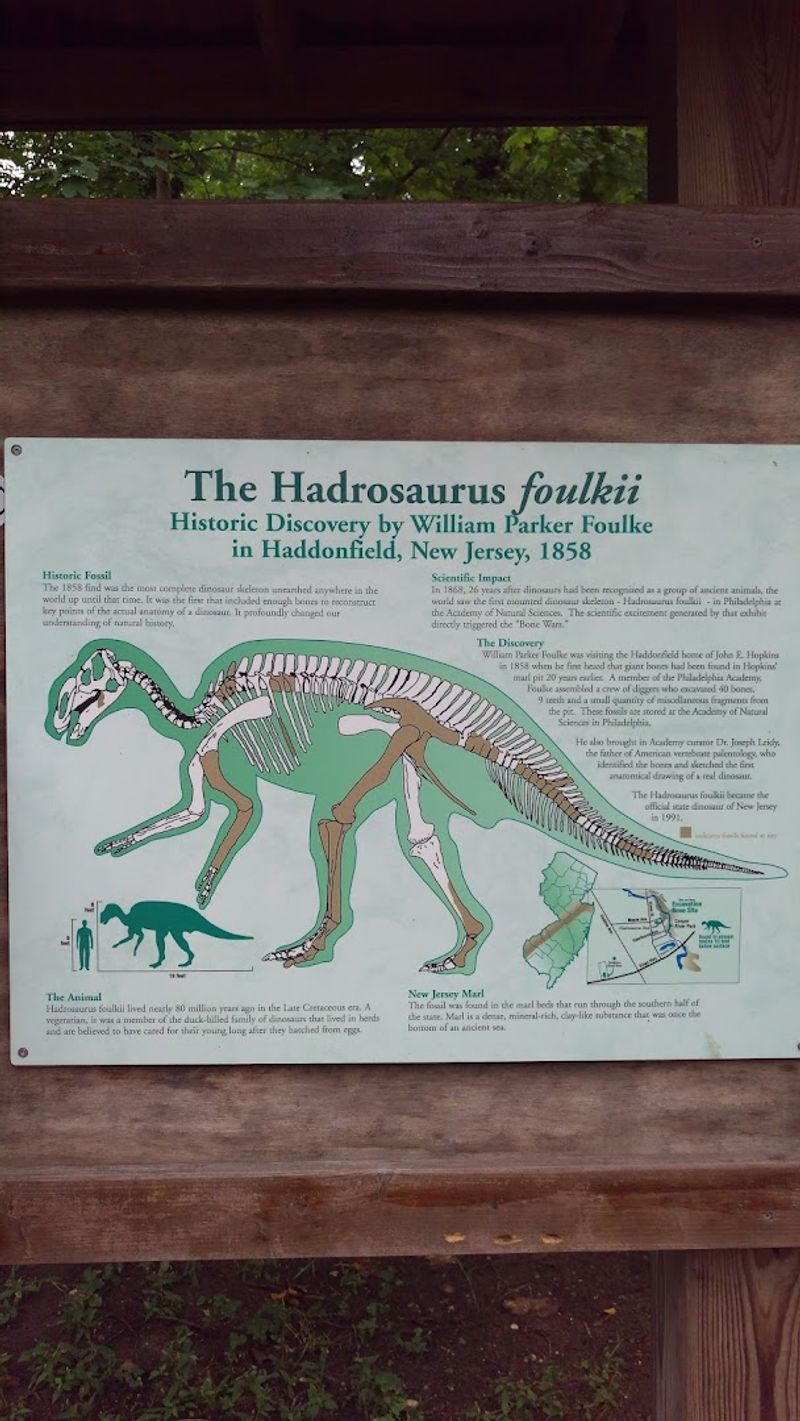
In 1991, New Jersey made it official: Hadrosaurus foulkii was designated the state dinosaur of New Jersey. The designation was the result of a campaign led largely by schoolchildren and their teachers, which makes the story even better.
A fourth-grade class from Strawbridge Elementary School in Haddonfield played a central role in lobbying the state legislature to recognize the dinosaur, and their efforts paid off when Governor Jim Florio signed the bill into law. New Jersey became one of the first states in the country to officially name a state dinosaur.
The story of how a group of elementary school students successfully pushed a bill through the state legislature is one of the more inspiring civic education examples in New Jersey history. It also added another layer of community ownership to the Hadrosaurus legacy, connecting the 1858 discovery to a modern act of collective pride that involved the youngest members of the Haddonfield community.
A Day Trip That Connects Two States
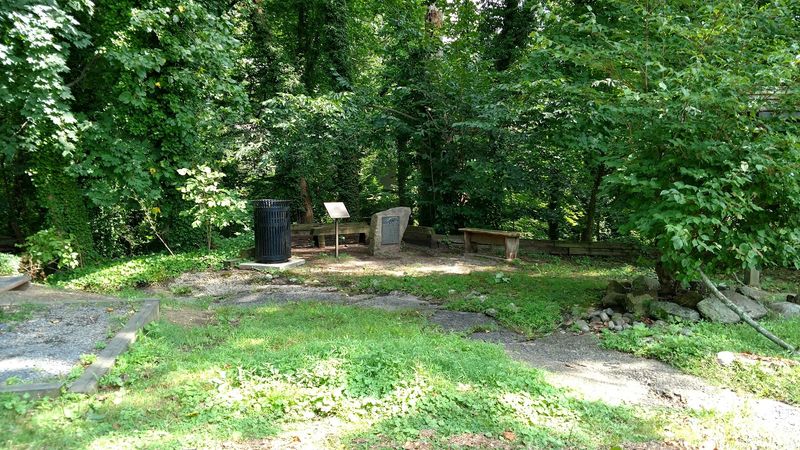
The Hadrosaurus Foulki Site makes for an unusually satisfying day trip because it connects naturally to destinations in both New Jersey and Pennsylvania. Starting at the Maple Avenue memorial in Haddonfield, then heading downtown to see the Haddy statue, and finishing with a visit to the Academy of Natural Sciences in Philadelphia creates a coherent, thematic itinerary with something for every age group.
Haddonfield is located just across the Delaware River from Philadelphia, roughly 8 miles from Center City, making it an easy drive or even a doable public transit trip for those coming from the city. The New Jersey Aquarium and the Battleship New Jersey museum in Camden are also nearby, rounding out the options for families who want to extend the day.
The combination of a free outdoor historical site, a walkable small town, and a world-class natural history museum within a short drive of each other is genuinely hard to beat as a value-for-time day trip in the mid-Atlantic region.
Why This Small Site Still Matters Today
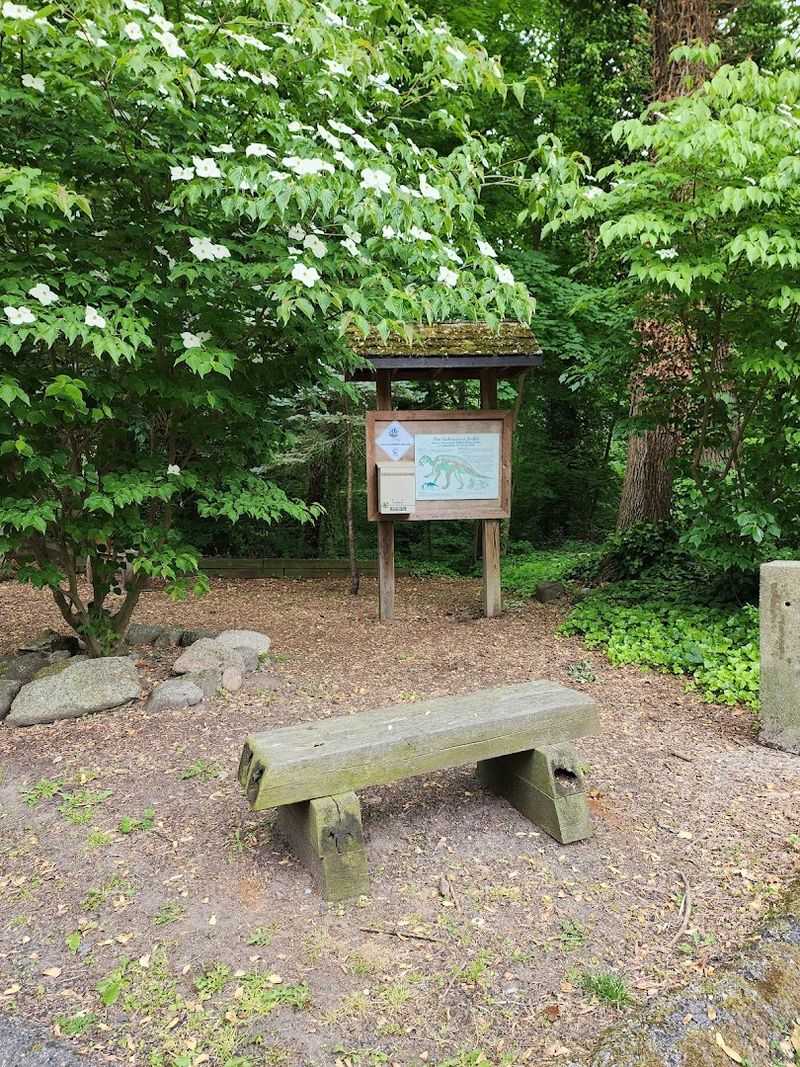
There is a strong argument that no single fossil site in American history has had a larger impact on how the public thinks about dinosaurs than the marl pit in Haddonfield. The 1858 discovery did not just add a new species to the scientific record.
It fundamentally changed the mental image people had of what a dinosaur was.
Before Hadrosaurus foulkii, dinosaurs were often reconstructed as slow, quadrupedal reptiles without much dynamism. The Haddonfield skeleton introduced a different possibility, one that eventually led to the upright, active, and behaviorally complex dinosaurs that fill museum halls and popular culture today.
The site on Maple Avenue is modest by design, maintained by volunteers and open without charge, which in some ways makes it more powerful rather than less. It is a place where a genuinely world-changing discovery happened, and it has been preserved not by institutions but by community care.
That combination of scientific importance and grassroots stewardship is what makes the Hadrosaurus Foulki Site genuinely worth the visit.
Where It All Began: The Address and Setting
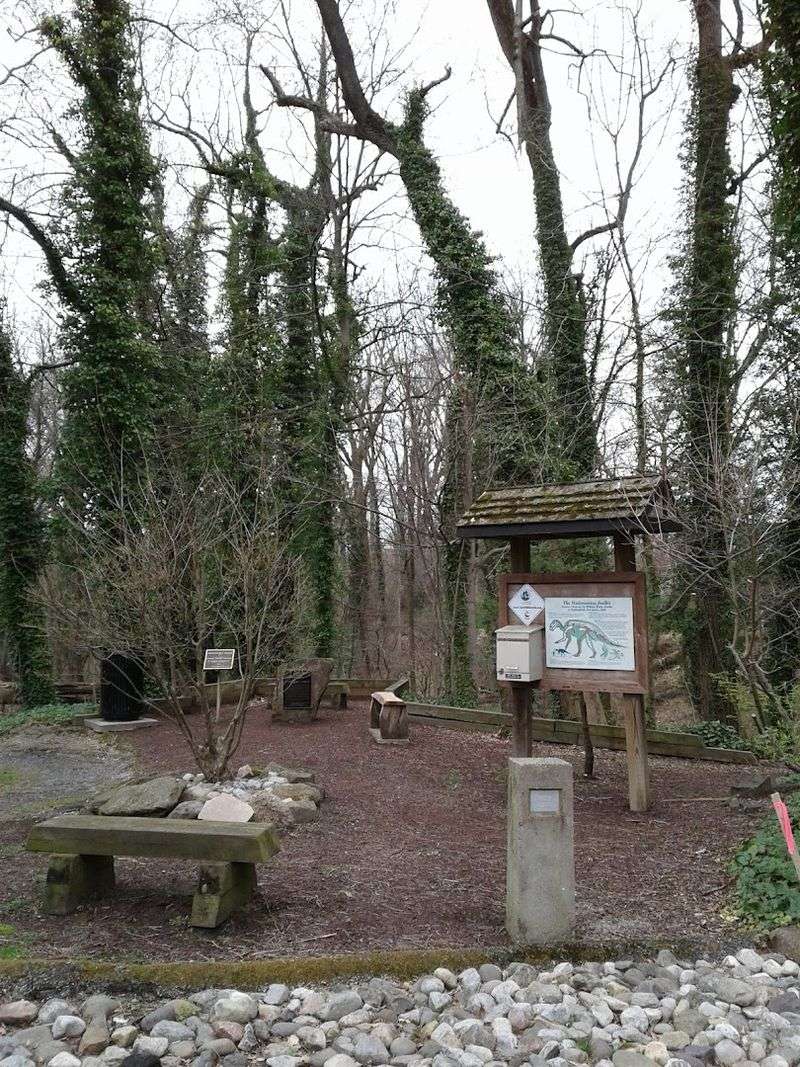
At the dead end of Maple Avenue in Haddonfield, New Jersey 08033, a small clearing marks one of the most scientifically significant spots in American history. The Hadrosaurus Foulki Site sits tucked behind a peaceful residential neighborhood, accessible to the public 24 hours a day, every day of the year, with no admission fee required.
The location feels surprisingly low-key for a place with such an outsized impact on science. A modest info board, a picnic table, and a ravine leading down toward a creek make up the physical footprint of the site.
Parking is available nearby, and the area is maintained through volunteer efforts rather than a commercial operation, which gives it a genuinely grassroots character. The site connects directly to Pennypacker Park, offering additional trails for those who want to extend their visit beyond the memorial clearing itself.
Share this story