This southwestern Michigan state park offers a quieter stretch of Lake Michigan, with a full mile of shoreline and a dune system that feels more rugged than most nearby spots. Just beyond the beach, three inland lakes sit within walking distance, creating a mix of landscapes you do not usually find in one place.
Many visitors pass it by on their way to bigger-name destinations, but that is part of the appeal. The trails move through forest, marsh, and open dunes in a single hike, and the walk to the shoreline ends up being just as memorable as the beach itself.
It is the kind of park that rewards anyone willing to take a closer look.
Where Exactly This Hidden Park Sits
Grand Mere State Park sits at 7337 Thornton Dr, Stevensville, MI 49127, tucked into the southwestern corner of Michigan’s Lower Peninsula near the shores of Lake Michigan.
The park is managed by the Michigan Department of Natural Resources and sits just a short drive from the Indiana border, making it surprisingly accessible for visitors coming up from Chicago or Indianapolis.
Stevensville itself is a small, quiet town, and the park blends right into that low-key character. There are no flashy signs or big resort developments nearby, just a modest trailhead and a parking area that gives very little hint of the dramatic landscape waiting inside.
The park is open daily from 8 AM to 10 PM, and you can reach the park office at 269-426-4013. A Michigan Recreation Passport, displayed on your license plate, covers your entry fee, so there is no need to fumble for cash at the gate.
The Dunes That Catch You Off Guard
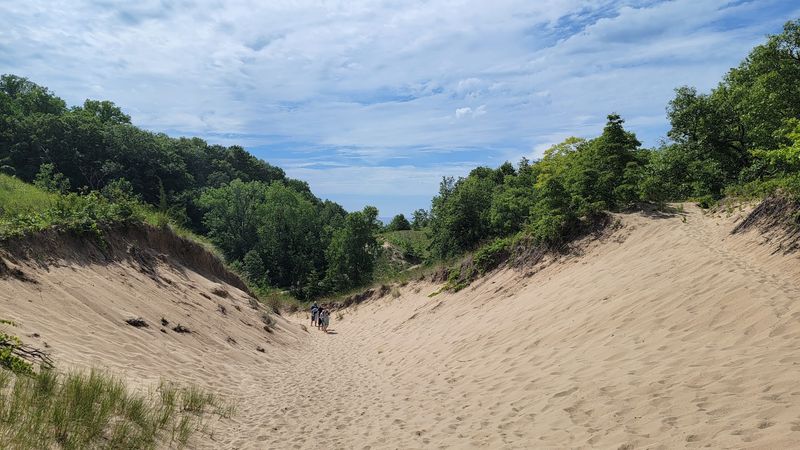
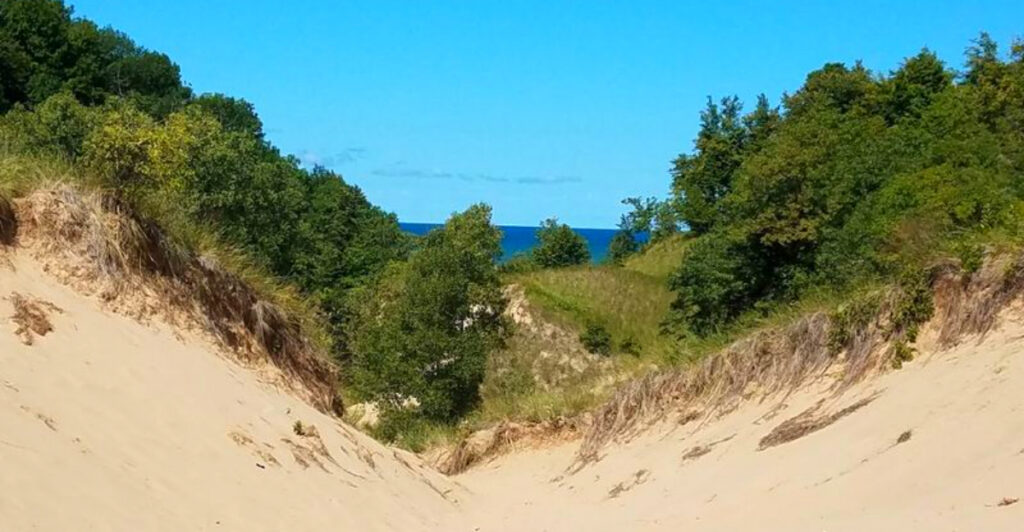
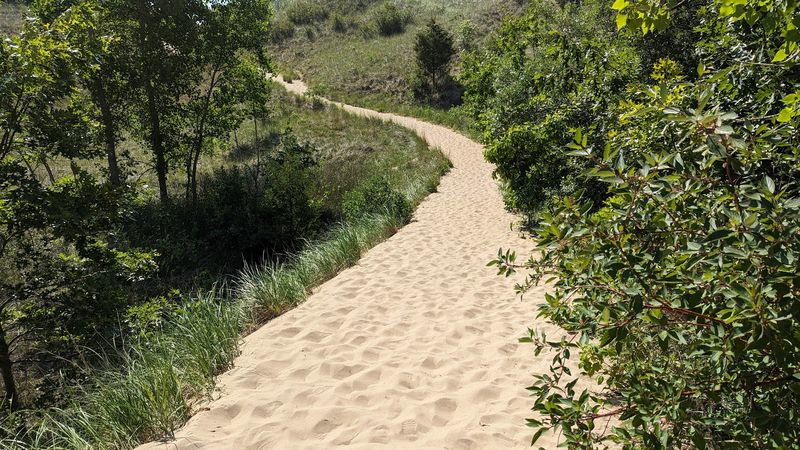
The trail starts on cracked pavement that looks almost abandoned, and for the first few minutes you might wonder if you took a wrong turn somewhere. Then the asphalt ends, the sand takes over, and suddenly you are face to face with a towering dune that demands your full attention.
These dunes are not quite as enormous as those at Sleeping Bear, but they are genuinely challenging and surprisingly tall. The first climb is the steepest, and your legs will feel it, but the reward waiting on the other side makes the burning in your calves feel completely worth it.
The dunes here formed over thousands of years as wind pushed sand inland from Lake Michigan, and the process is still ongoing. You can actually watch the dune edge shift slightly with a strong wind, which is a quiet reminder that this landscape is very much alive and always changing.
Three Inland Lakes You Probably Did Not Expect
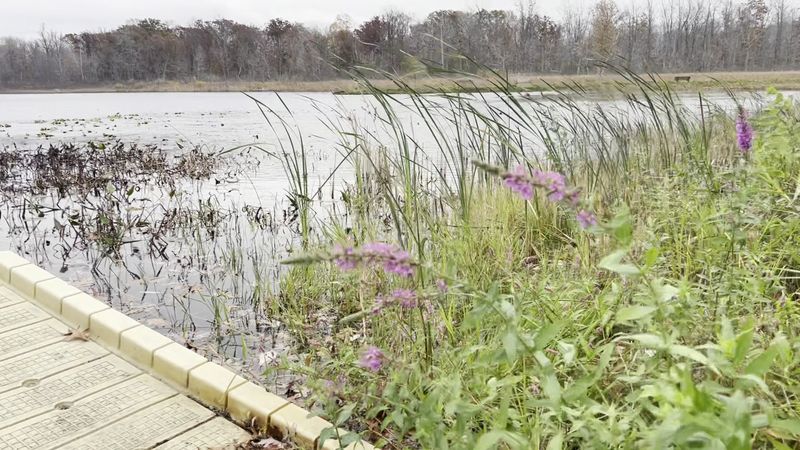
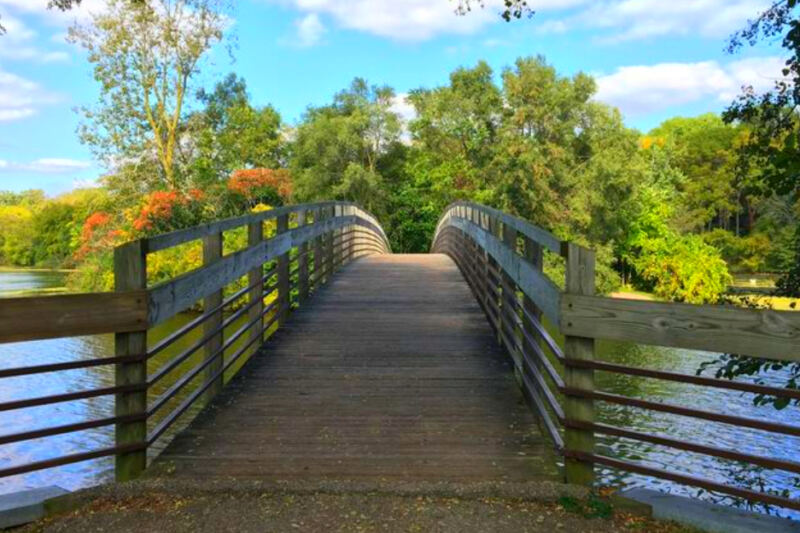
Most visitors come for the Lake Michigan beach, but the three inland lakes tucked inside this park are honestly one of its most surprising features. Grand Mere North Lake, South Lake, and Middle Lake each have their own quiet personality, ringed by marsh grasses, cattails, and dense tree cover that makes them feel completely removed from the outside world.
These lakes formed in low areas between ancient dune ridges, a process that geologists call interdunal lake formation. The result is a series of calm, mirror-like water bodies that reflect the sky and the surrounding forest in a way that feels almost unreal on a still morning.
Birdwatchers have a particular fondness for this area because the lakes attract a wide variety of waterfowl and shorebirds, especially during spring and fall migration seasons. Bring binoculars, find a quiet spot along the bank, and you might spot species you have never seen before.
What the Hike to the Beach Actually Feels Like
The trail to the Lake Michigan beach covers roughly a mile and a half from the main parking area on Willow Drive, though parking closer to Wishart Road cuts that distance down a bit. Either way, plan on a genuine workout rather than a casual stroll.
The path moves through several distinct zones. First comes the paved section, then a stretch of shaded woodland trail, then the open dune climb, and finally a brief descent onto the beach.
Each zone feels noticeably different from the last, which keeps the hike interesting even when your legs are protesting.
The wooded section offers welcome shade on hot days, with tall trees closing in on both sides and the occasional turtle spotted crossing the path. The dune section, by contrast, is wide open and exposed, with sand that heats up fast under a summer sun.
Shoes are a good idea, and so is a bottle of cold water.
The Beach Itself: Worth Every Step
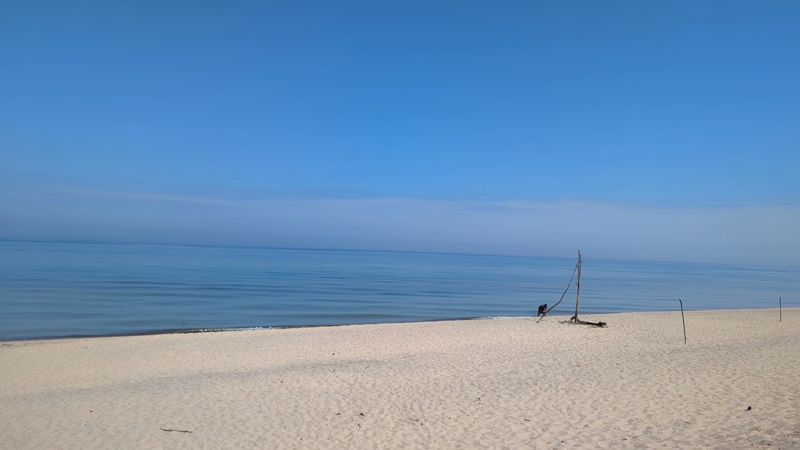
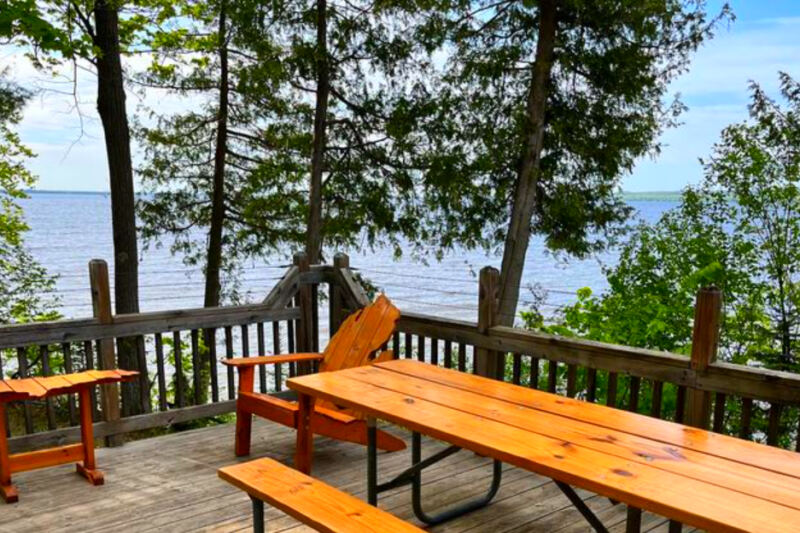
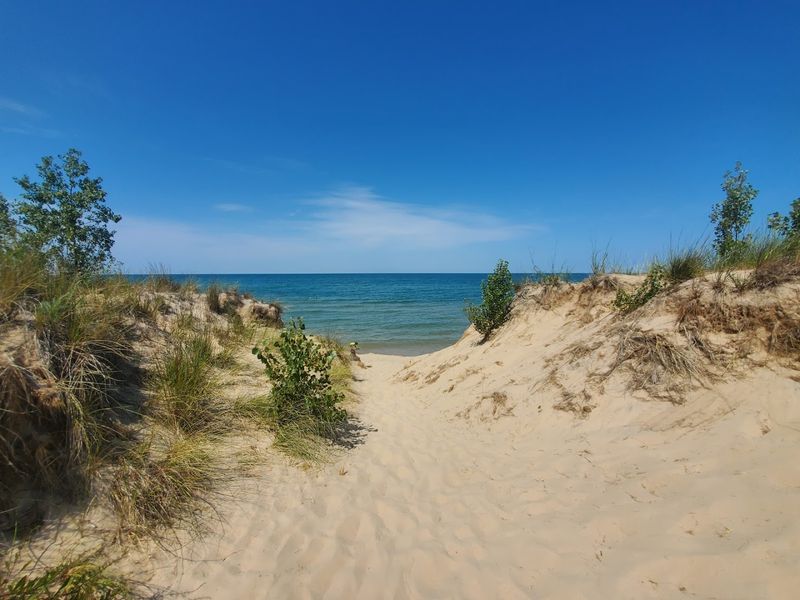
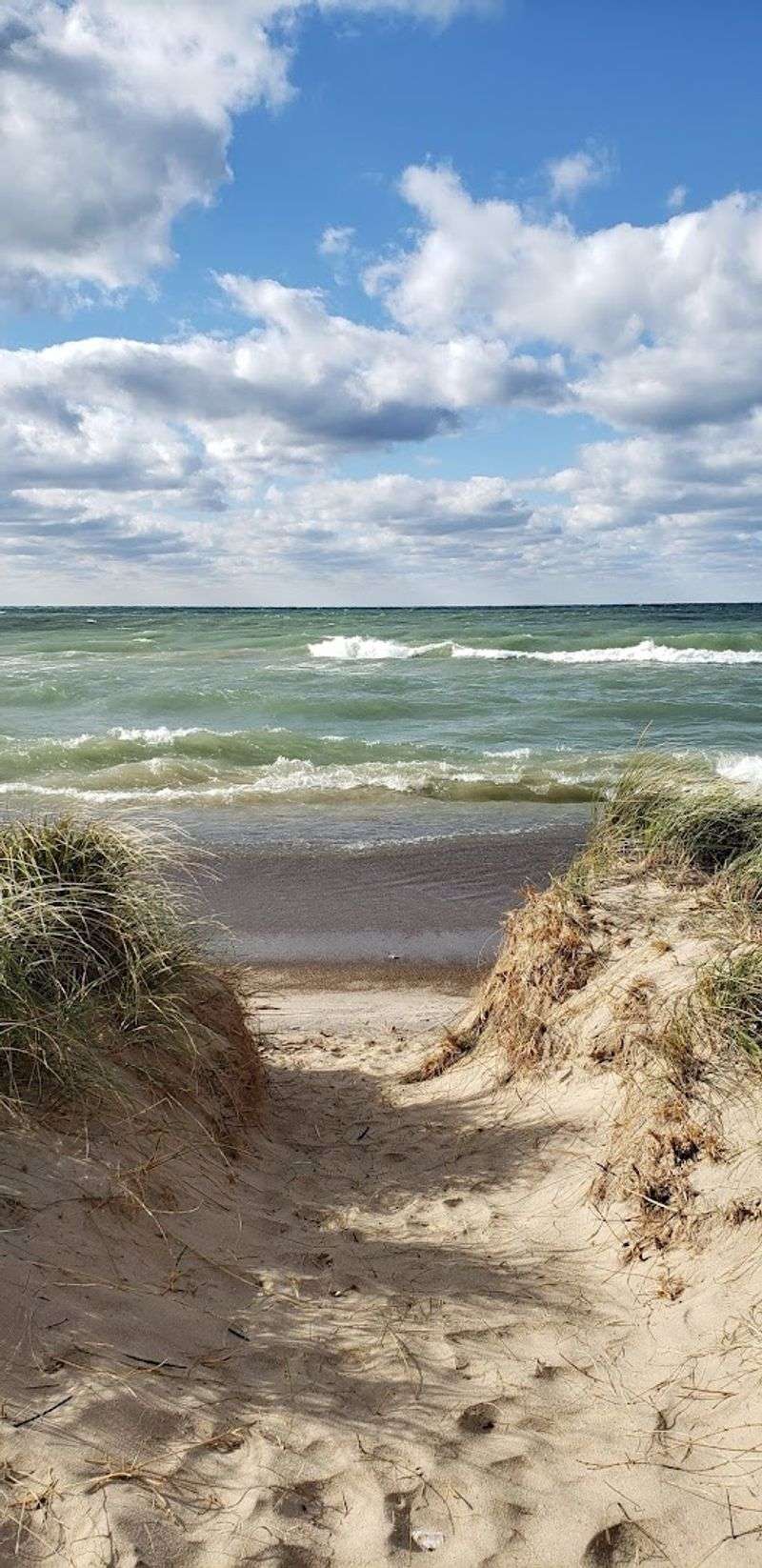
After all that hiking, the moment you crest the final dune and see Lake Michigan stretching out in front of you, the effort simply evaporates. The water is that deep, clear blue-green that Lake Michigan is famous for, and on a calm day the surface looks almost tropical.
The beach here stays noticeably less crowded than nearby spots like Warren Dunes, partly because the hike filters out anyone looking for a quick, easy beach day. The people who make it here tend to be genuinely happy to be there, and the atmosphere reflects that.
The shoreline runs for about a mile, giving you plenty of room to find your own quiet patch of sand. Rip currents and larger waves can occur on rough days, so it is worth checking conditions before you swim.
On calmer days, the water is clear enough to see your feet well past waist depth, and the sunsets from this beach are something you will remember for a long time.
Ecosystems That Shift With Every Hundred Feet
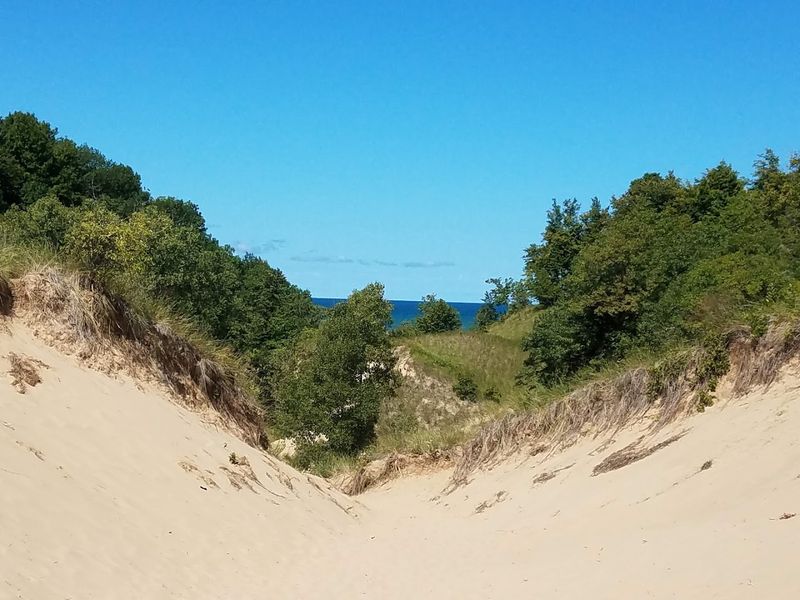
One of the genuinely fascinating things about this park is how quickly the landscape changes as you move through it. Within a single hike you pass through mature hardwood forest, open dune fields, freshwater marsh, and finally open Great Lakes shoreline, all within about a mile and a half.
Each zone supports its own community of plants and animals. The woodlands are home to ferns, wildflowers, and a dense canopy that blocks most of the summer heat.
The marsh zones buzz with insects and frogs, and the dune areas support specialized plants like marram grass and cottonwood saplings that have adapted to survive in shifting sand.
This variety makes Grand Mere a genuinely interesting place for anyone curious about natural history, not just hikers looking for a workout. The Michigan DNR has designated portions of the park as a natural area to protect these sensitive ecosystems, which means development stays minimal and the landscape stays wild.
That commitment to preservation is a big part of what makes this place feel so different from more commercial parks.
Birdwatching During Migration Season
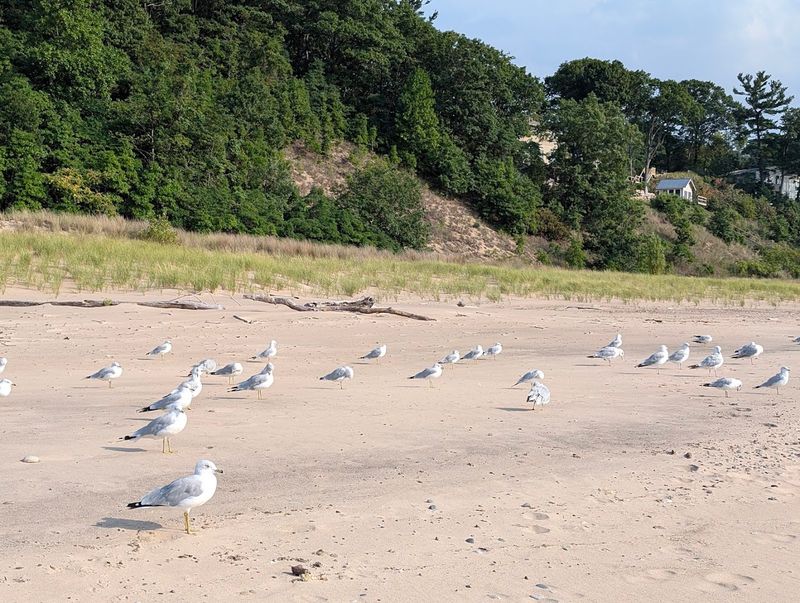
Spring and fall transform Grand Mere into one of the better birdwatching spots in southwestern Michigan. The park sits along the Lake Michigan shoreline, which acts as a natural corridor for migrating birds moving north in spring and south in fall, and the inland lakes provide ideal resting spots for waterfowl and shorebirds making long journeys.
Warblers move through in impressive numbers during May, filling the woodland sections with color and sound. Shorebirds work the edges of the inland lakes, and raptors can sometimes be spotted riding thermals above the dune ridges on clear days with a good northwest wind.
You do not need to be a serious birder to enjoy this aspect of the park. Even a casual visitor who simply pauses near one of the lakes for a few minutes will likely spot something interesting.
The relative lack of crowds means the birds are less disturbed here than at busier parks, which tends to make the sightings more relaxed and satisfying. Bring a simple field guide and you might leave with a new hobby.
Fossils, Beach Glass, and Small Shoreline Discoveries
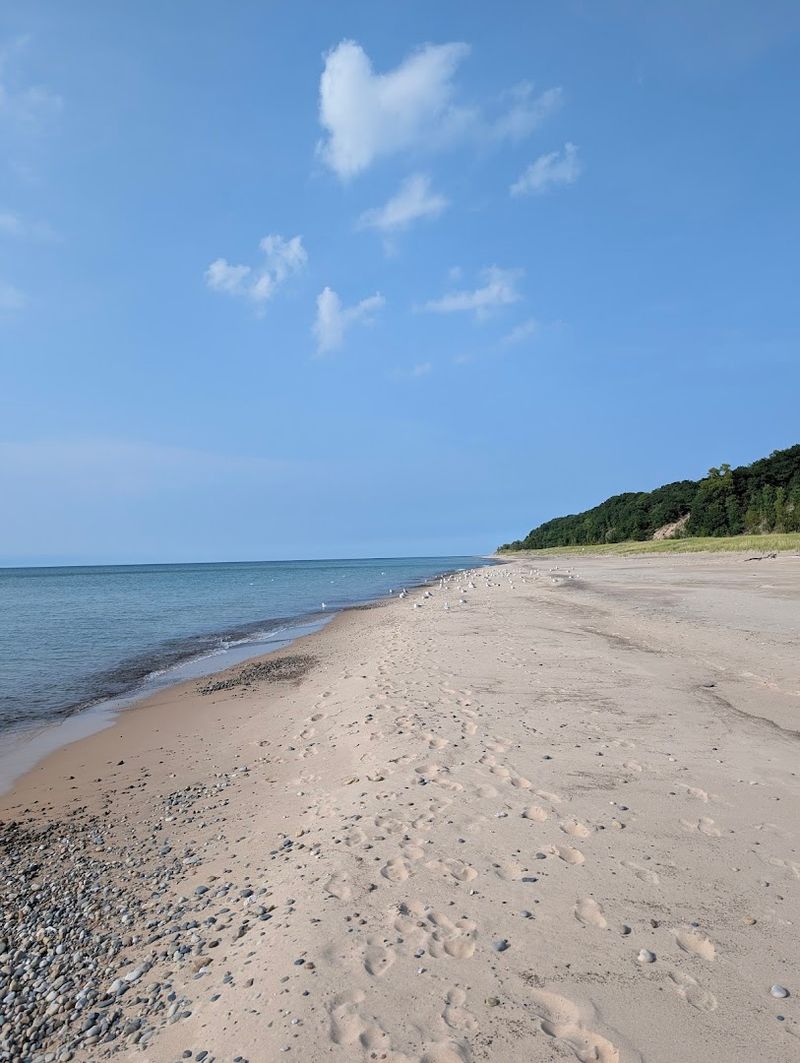
The Lake Michigan shoreline at Grand Mere has a reputation among regular visitors for turning up small treasures if you take the time to look. Beach glass, worn smooth and frosted by decades of wave action, shows up in green, brown, and occasionally rare blue or white pieces along the waterline.
Fossils also appear here with some regularity. The bedrock underlying much of Michigan is rich in Devonian-era marine fossils, and wave action gradually works pieces loose and deposits them on beaches like this one.
Coral fragments, brachiopods, and crinoid stems are the most commonly found types, and none of them require any special equipment to spot.
Rock skipping is another low-key pleasure the beach handles well, since the mix of flat stones and calm nearshore water on quiet days creates near-perfect conditions. These small discoveries are part of what gives the beach here a different feel from a typical swim-and-sunbathe beach day, and they give kids a genuine reason to stay engaged for hours.
Practical Tips for Handling the Bugs
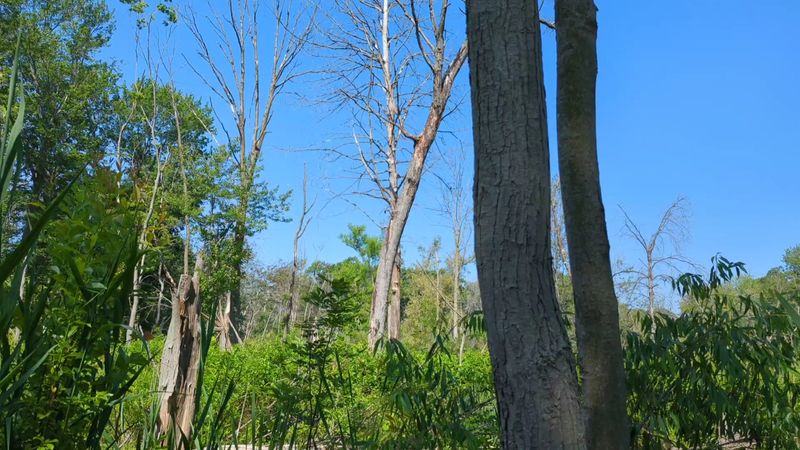
Let’s be honest about something: the insects at Grand Mere can be genuinely intense, especially in midsummer. Mosquitoes, gnats, deer flies, and stable flies all make their presence known, particularly in the wooded and marshy sections of the trail and along the open beach during humid, low-wind days.
Bug spray is not optional here, it is essential. A repellent with DEET works best for mosquitoes and gnats, while deer flies and stable flies are harder to deter with spray alone.
Some experienced visitors wear lightweight long sleeves and a hat with a brim, which helps more than you might expect.
The good news is that wind off Lake Michigan usually keeps the beach itself more tolerable than the trail sections. Earlier morning visits tend to be less buggy than late afternoon trips, and cooler days in late spring or early fall are dramatically more comfortable than the peak of July and August.
Plan accordingly and the insects become a minor inconvenience rather than a trip-ruining problem.
What to Pack for a Day Here
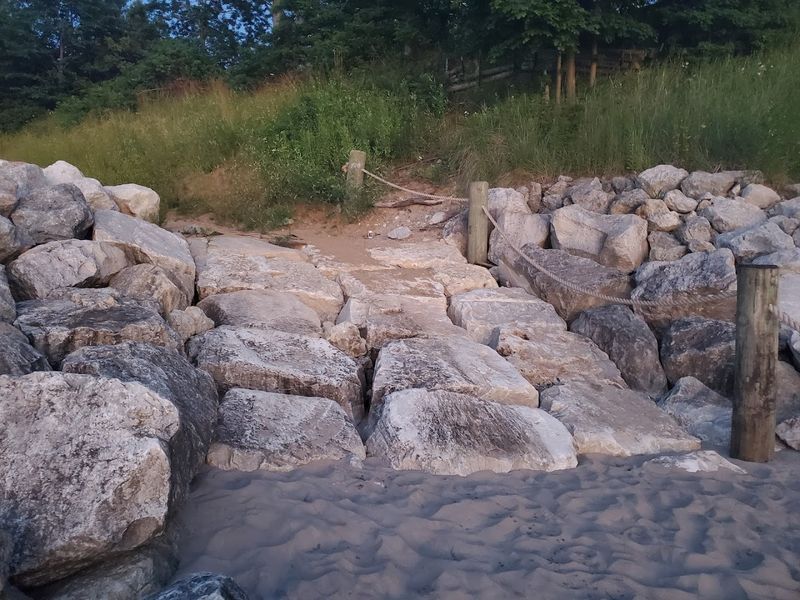
Grand Mere is genuinely undeveloped, which is a big part of its charm, but it also means you need to bring everything you plan to use. There are no concession stands, no rental shops, and no cold water fountains waiting at the trailhead.
The restroom facilities are basic pit toilets, so managing expectations there is worthwhile.
Water is the most important thing to pack, and more than you think you will need. The dune climb and the sandy trail sections are physically demanding, especially in warm weather, and dehydration sneaks up faster than expected when you are working hard in the sun.
Sunscreen, a hat, and closed-toe shoes that you do not mind filling with sand are all practical choices. If you are bringing a dog, note that leashed pets are allowed on the beach, but the sand gets extremely hot and can hurt paw pads on sunny days.
A product like Musher’s Secret or similar paw protection is worth considering for your four-legged hiking partner.
How This Park Compares to Warren Dunes Nearby
Warren Dunes State Park sits just a few miles to the south and draws massive crowds on summer weekends, with full parking lots, busy beaches, and the kind of energy that comes with being one of Michigan’s most visited parks. Grand Mere offers a genuinely different experience just up the road.
The dunes at Grand Mere are more wooded and less dramatically steep than those at Warren Dunes, which actually makes them more interesting to explore on foot rather than just climb and slide. The beach is smaller and harder to reach, which naturally keeps the visitor numbers low and the atmosphere quiet.
Choosing between the two really comes down to what kind of day you want. Warren Dunes suits a big group beach day with easy access and plenty of space.
Grand Mere suits someone who wants a more solitary, nature-focused experience where the journey to the water feels like part of the reward. Both parks are worth visiting, but they offer very different versions of a Michigan beach day.
Why This Park Stays a Secret Worth Keeping
Part of what makes Grand Mere special is exactly what makes it easy to overlook. The entrance is modest, the facilities are minimal, and the trail does not immediately announce the beauty waiting at the end of it.
The park essentially asks you to trust the process, and most people who do come away genuinely glad they made the effort.
The mile-long Lake Michigan shoreline here sees far fewer footprints than comparable beaches nearby, which means the sand stays cleaner, the wildlife stays less disturbed, and the overall experience feels more personal. Sunsets from the beach are unhurried and unobstructed, with the kind of wide-open western sky view that reminds you why this stretch of Michigan coastline has always attracted people looking for something real.
Grand Mere State Park rewards curiosity and a willingness to work a little for something beautiful. The fossils, the hidden lakes, the dune scramble, and that final view of Lake Michigan all add up to a day that feels genuinely earned, and those tend to be the days you remember longest.
Share this story