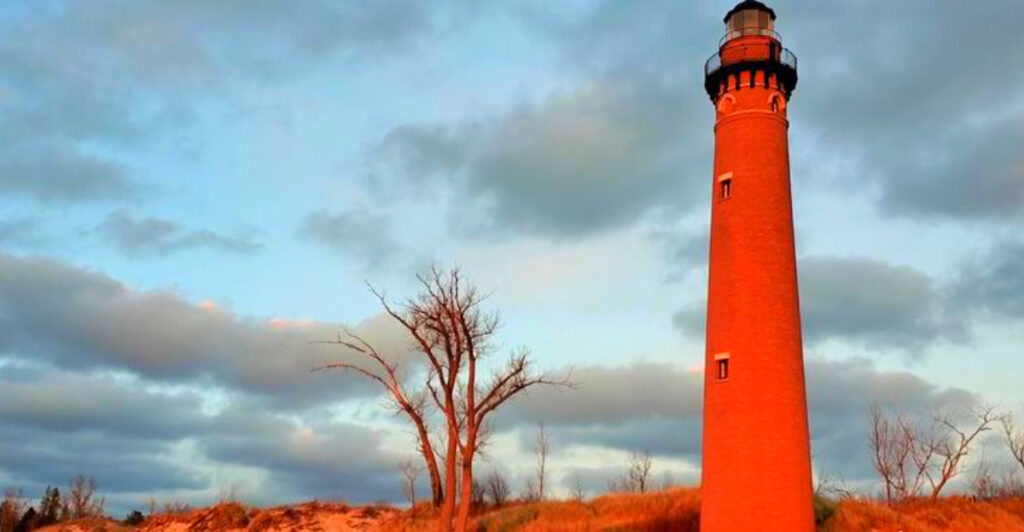
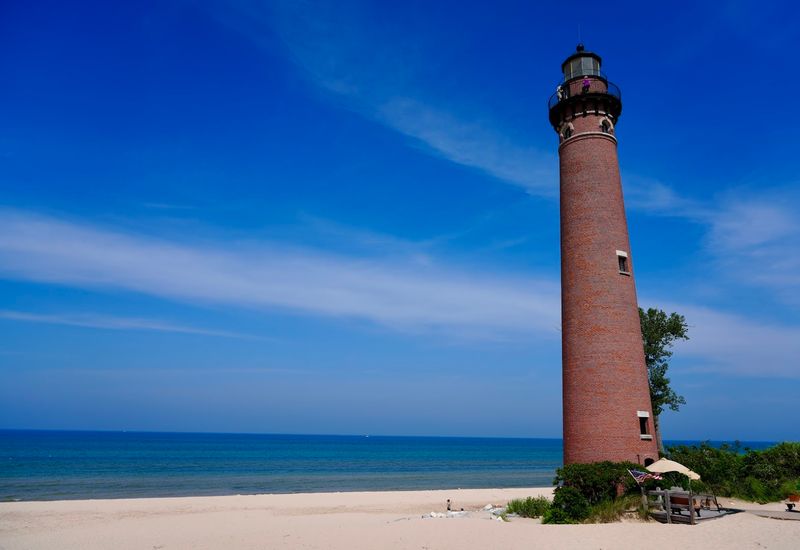
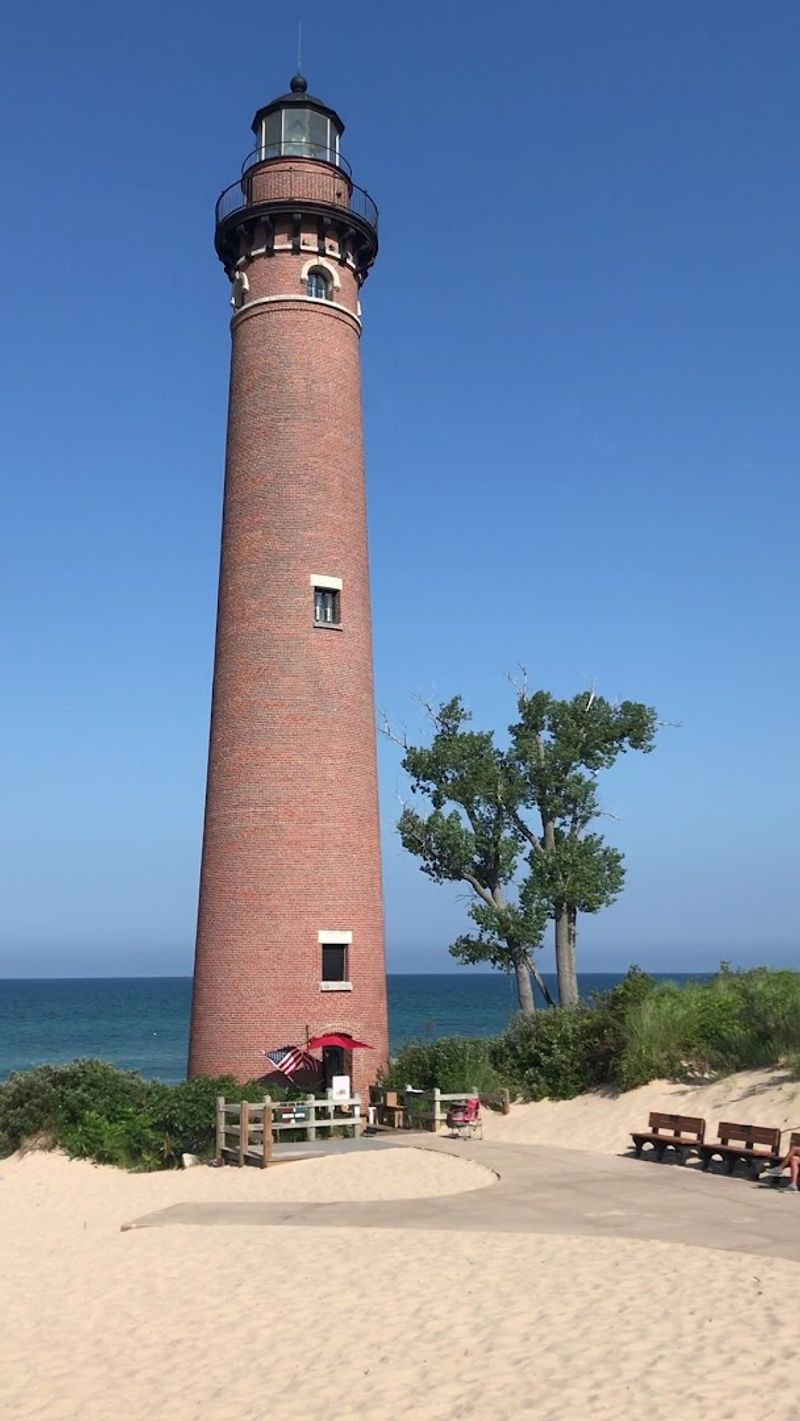
This Lake Michigan lighthouse has been a landmark since 1874, rising 107 feet above the shoreline with a red brick tower that stands out against the surrounding dunes. It is one of the most recognizable spots on Michigan’s west coast, drawing visitors who come for both the structure and the setting around it.
The location adds to the appeal. A wide beach, rolling dunes, and clear water all sit within a short walk, and visitors can climb to the top for a full view of the coastline.
It is not just a quick photo stop. People tend to stay longer than planned once they arrive.
There is more to this spot than the lighthouse itself, and it becomes clear the moment you start exploring beyond the base.
Where Exactly You Will Find This Red Brick Beauty
The full address is 287 N Lighthouse Dr, Mears, MI 49436, and getting there is genuinely part of the fun. You take US-31 to the Hart exit, then follow signs toward Silver Lake State Park, and the road winds through some of the most scenic forested dune country in the entire Lower Peninsula.
The drive alone is enough to make you slow down and appreciate where you are. Tall pines line the road, the terrain rolls and dips, and you get the sense that something worth finding is just ahead.
Once you reach the parking lot, a smooth paved path leads you directly to the lighthouse, making it accessible for visitors with mobility needs as well. The lighthouse sits right at the edge of the beach, which means your first full view of it includes Lake Michigan shimmering in the background.
That combination of red brick, blue water, and white sand is hard to beat anywhere in Michigan.
The Story Behind 150 Years of Guiding Ships
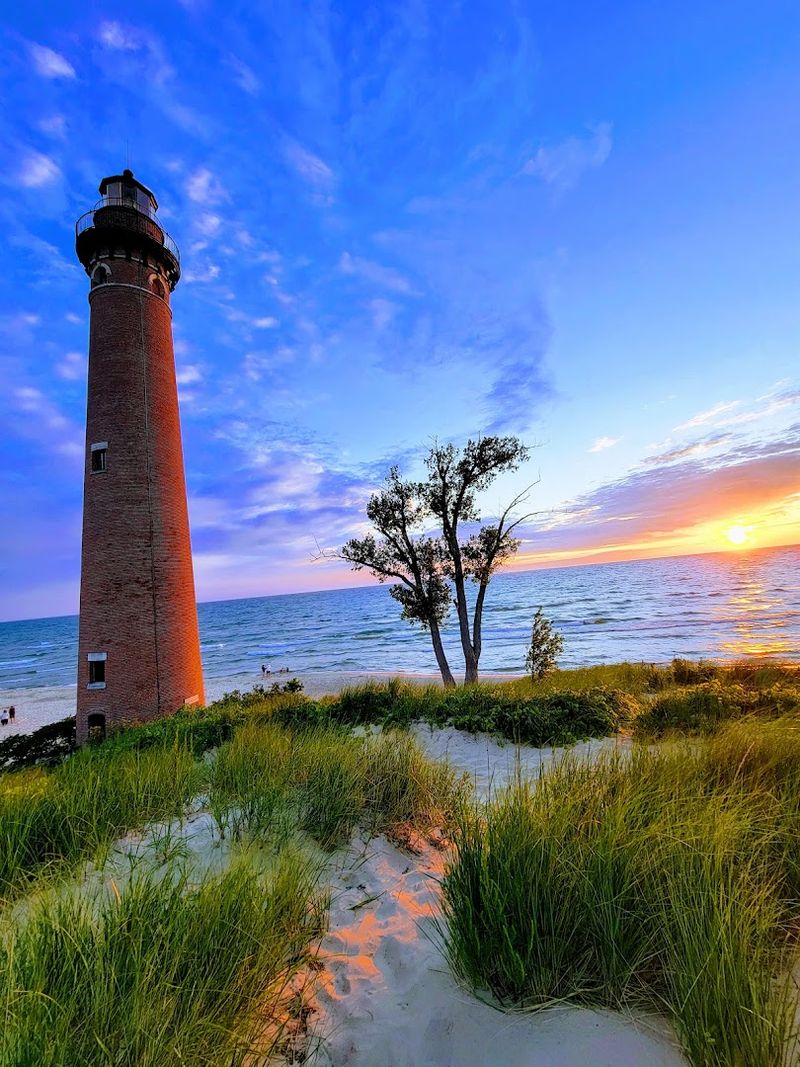
Completed in 1874, this lighthouse was built to help ships navigate one of the more treacherous stretches of Lake Michigan’s eastern shoreline. The waters off this part of the coast had claimed more than a few vessels before the tower went up, and the lighthouse changed that in a significant way.
The third-order Fresnel lens installed inside the lantern room could project its beam roughly 19 miles across the open water, which gave ship captains enough warning to adjust course well before reaching shore.
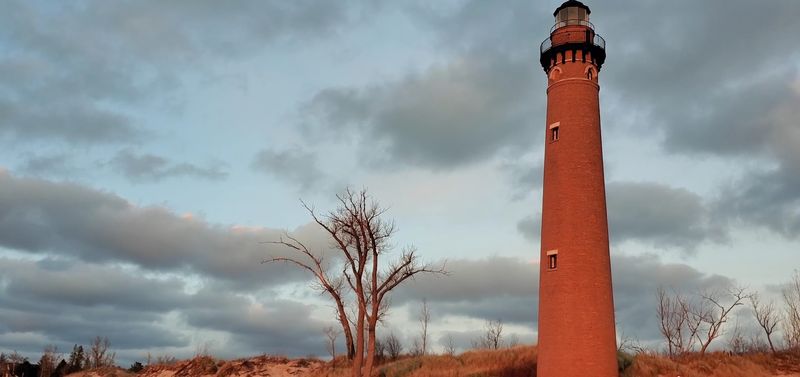
Inside the tower, information panels on the walls walk visitors through the lighthouse’s history, covering everything from the original keepers who lived on-site to the major restorations that kept the structure standing through harsh Michigan winters. The brick itself has aged beautifully, giving the tower a warm, earthy tone that photographs differently depending on the light.
Knowing that this structure has been doing its job for over 150 years adds a layer of meaning to every step you climb.
Climbing 139 Steps and What Waits at the Top
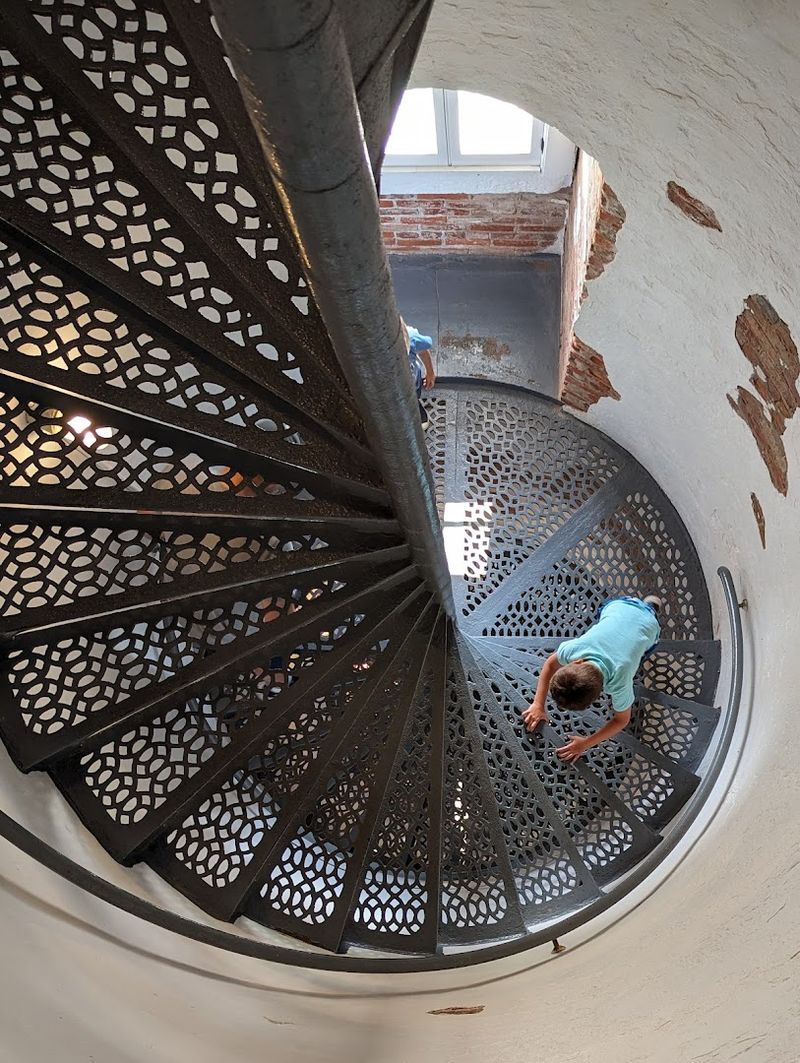
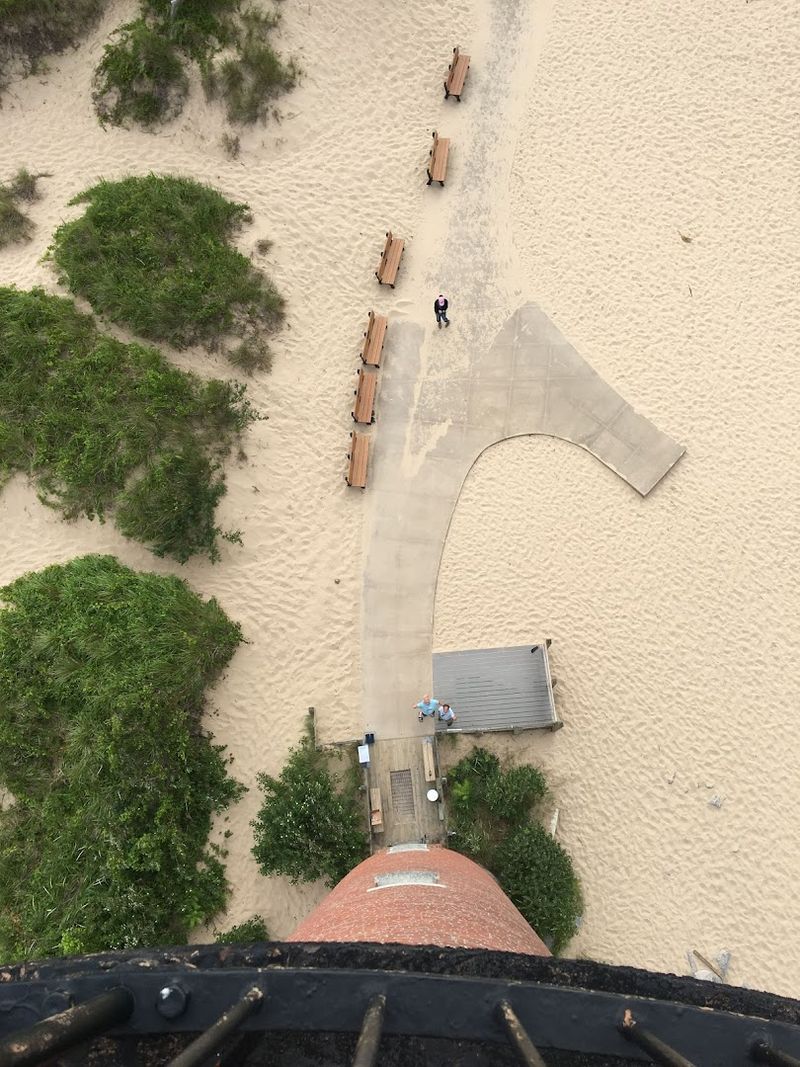
The climb to the top is 139 steps, and yes, you will feel it in your legs by the time you reach the lantern room. There are three landings along the way where you can pause, catch your breath, and read more historical information posted on the interior walls.
The staircase is a classic spiral design, narrow and atmospheric, and the brick walls surrounding you feel genuinely old in the best possible way. Ten people are allowed up at a time due to weight restrictions on the outdoor catwalk, so there may be a short wait during peak season, but it moves quickly.
Once you step outside onto the catwalk, the view opens up in every direction. Lake Michigan stretches to the horizon on one side, while the Silver Lake sand dunes roll inland on the other.
On a clear day, the scale of everything around you is genuinely humbling, and most people stand up there longer than they planned.
The Fresnel Lens That Still Earns Its Keep
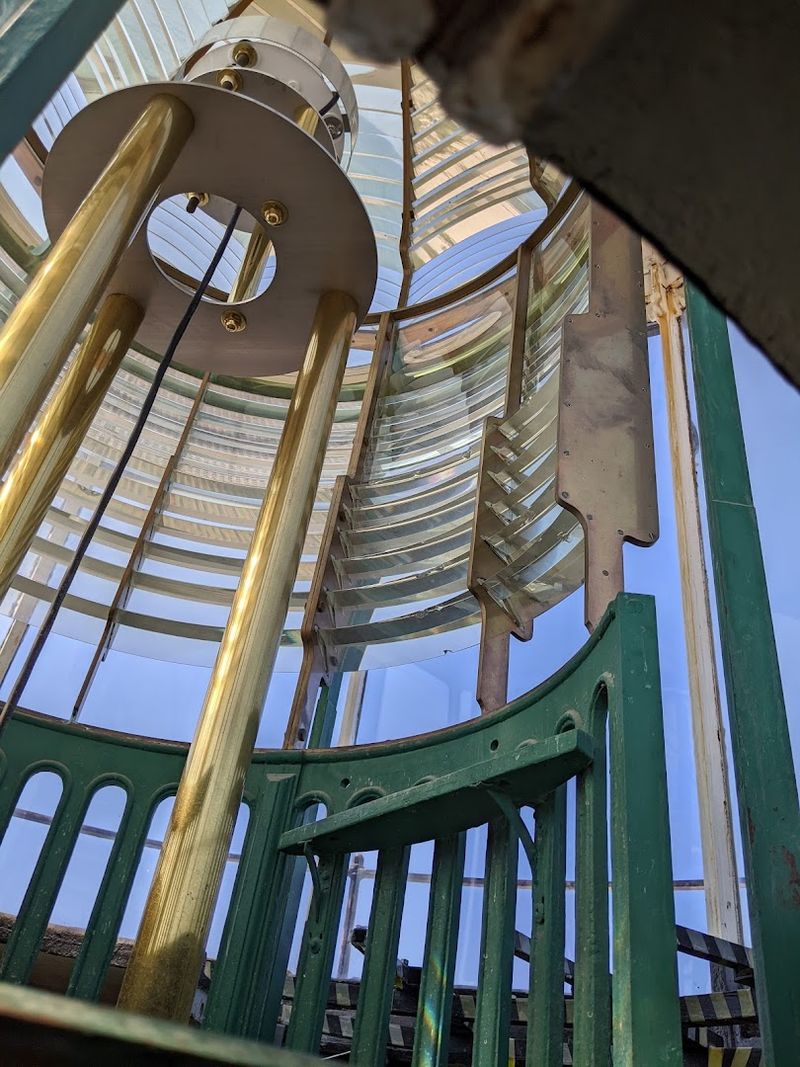
Not every lighthouse still has its original Fresnel lens, which makes this one worth paying attention to. The third-order lens at the top of the tower is a masterpiece of 19th-century engineering, built from dozens of precisely cut glass prisms arranged to focus light into a single powerful beam.
When you reach the lantern room, you can get a fairly close look at the lens and its brass fittings, and the volunteers stationed up there are genuinely enthusiastic about explaining how it works. The geometry of the glass is almost hypnotic once you start looking at it closely.
The lens is still functional and continues to serve as an active aid to navigation on Lake Michigan, which means this is not just a museum piece. There is something quietly satisfying about a piece of technology from 1874 still doing exactly what it was designed to do, night after night, season after season, without much fuss or fanfare.
Knowledgeable Volunteers Who Make the Tour Come Alive
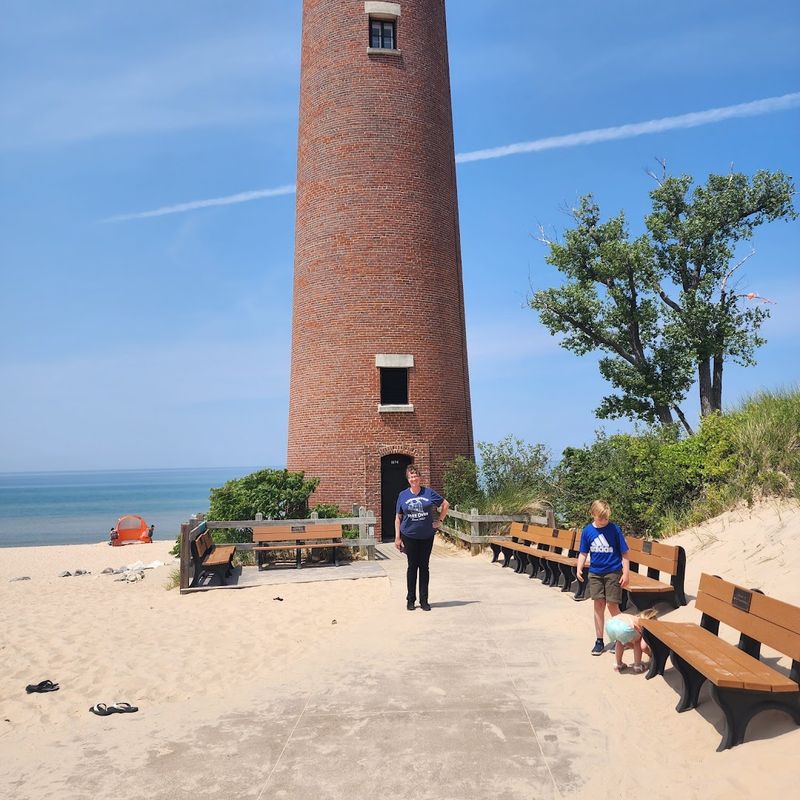
The tours at this lighthouse are run by volunteers, and that detail matters more than you might expect. These are people who genuinely care about the history of the place, and it shows in the way they talk about it.
At the top of the tower, the volunteer on duty during my visit rattled off facts about the original lighthouse keepers, the lens mechanics, and the local maritime history with the kind of enthusiasm that made the whole experience feel personal rather than scripted. No two visits are quite the same because the conversation shifts depending on who is there and what questions people ask.
The admission fee is $8 for adults and $5 for visitors 17 and under, and active-duty service members and veterans get in free. Every dollar goes to the nonprofit organization that maintains this lighthouse and others around the state, so the cost feels less like a ticket price and more like a small contribution to keeping something irreplaceable intact for future generations.
The Beach That Surrounds the Tower on Three Sides
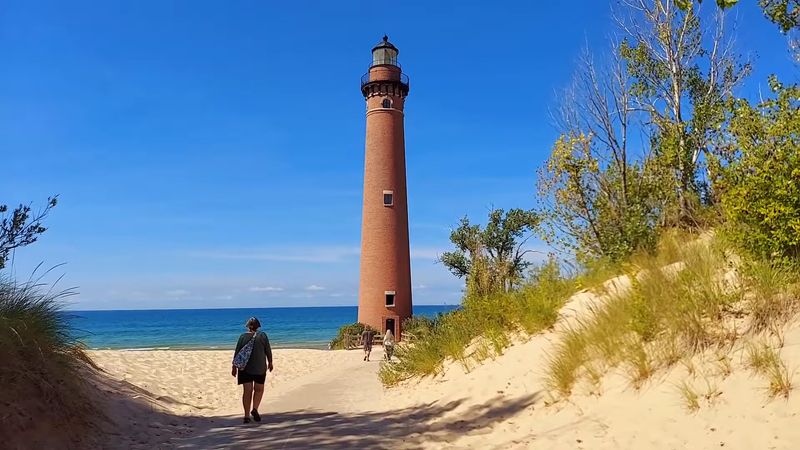
Even if you never pay the admission fee or set foot inside the tower, the beach alone justifies the drive out here. The sand is soft, pale, and remarkably clean, the kind that makes a squeaking sound underfoot when it is dry, which never gets old no matter how many times you hear it.
The water at this stretch of Lake Michigan is unusually clear, with a color that shifts from pale green near the shore to deep blue farther out. The beach is shallow for a good distance, which makes it comfortable for younger visitors who want to wade without going in over their heads.
There is plenty of space to spread out even on busy summer days, and the lighthouse itself makes for a dramatic backdrop whether you are swimming, picnicking, or just sitting on the sand doing nothing in particular. The combination of clean water, soft sand, and that tall red tower on the horizon is the kind of scene that tends to stay with you long after you drive home.
Sunsets Here Are Something Else Entirely
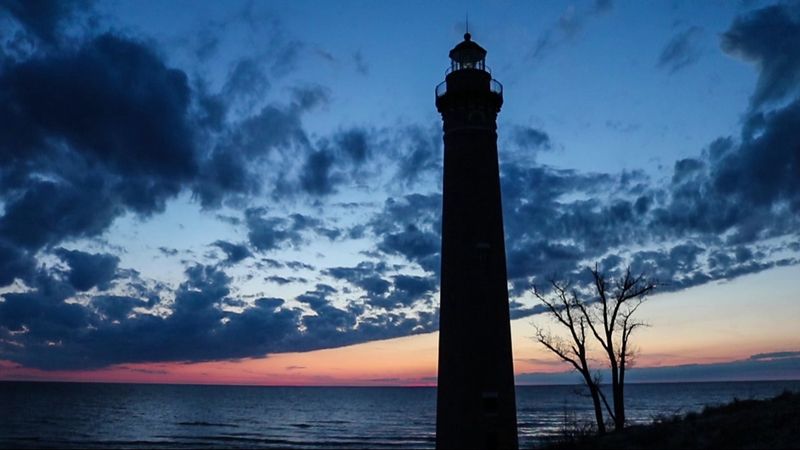
The western-facing shoreline at this spot is perfectly positioned for watching the sun go down over Lake Michigan, and the light show that follows is the kind of thing that makes people reach for their cameras and then put them away because no photo does it justice.
The sky turns orange, then pink, then a deep purple that reflects across the water in long, rippling bands. The lighthouse tower catches the last light of the day and glows in a way that feels almost theatrical, though nobody arranged it on purpose.
Arriving in the late afternoon gives you time to tour the lighthouse, walk the beach, and then settle in for the sunset without feeling rushed. Bring something to sit on, because the best viewing spots fill up quickly as the sun gets lower.
The whole experience, from the first warm colors on the horizon to the moment the last light fades, takes about 45 minutes, and every one of those minutes is worth staying for.
Sand Dunes, Silver Lake, and the Landscape Around the Tower
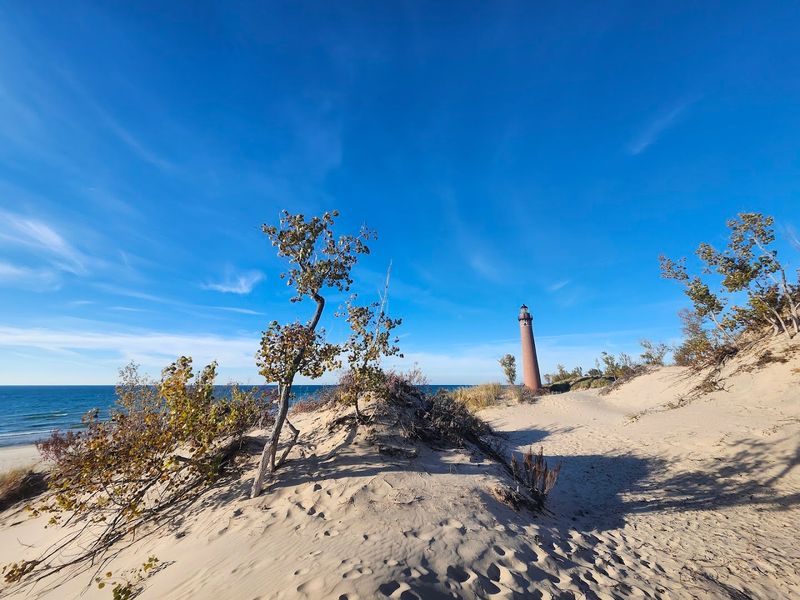
The landscape around this lighthouse is part of what makes the whole visit feel so different from other Michigan destinations. Silver Lake State Park, which surrounds the area, contains some of the most dramatic dune terrain in the Lower Peninsula, with tall sandy ridges that kids love to scramble up and adults find surprisingly challenging.
The dunes behind the beach rise steeply and offer a bird’s-eye perspective of the lighthouse and the lake below once you reach the top. The contrast between the white sand, the dark green pine forest, and the blue water is striking from any angle.
Silver Lake itself is a short distance inland and adds a second swimming option if the Lake Michigan surf feels too energetic on a particular day. The whole area has a layered quality that rewards exploration beyond the immediate lighthouse grounds.
Most visitors end up spending more time here than they originally planned, simply because there is more to see around every corner than the parking lot suggests.
A Gift Shop, Souvenirs, and a Surprisingly Charming Setup
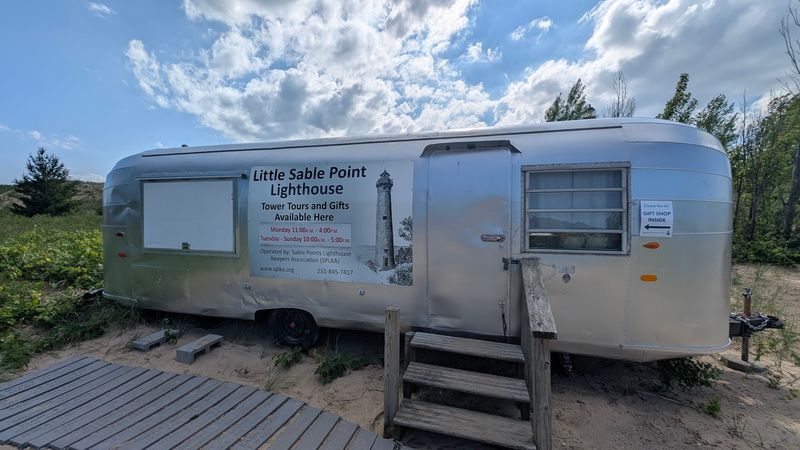
Near the parking lot, a small trailer serves as both the ticket booth and the gift shop, and it has a charm that a full-sized building would not be able to replicate. The setup feels appropriately low-key for a place that is all about natural beauty rather than commercial flash.
Inside, you will find the usual lighthouse-themed souvenirs: postcards, magnets, small prints, and a few locally made items that are worth a closer look. Tickets for the tower climb are sold here as well, so it is the first stop before heading down the path.
The staff and volunteers running the trailer are friendly and quick with recommendations if you are trying to figure out how to spend your time on the grounds. Picking up a small souvenir here feels like a genuinely good use of a few dollars, partly because the nonprofit behind the operation uses the proceeds to keep the lighthouse maintained and open to visitors year after year.
When to Visit and What the Seasons Look Like Here
The lighthouse is open for tours from mid-May through late September, with hours that shift depending on the time of year. Summer brings the biggest crowds, especially on weekends in July and August, but the beach is large enough that it never feels truly packed.
September is a particularly good time to visit. The water is still warm enough for swimming, the crowds thin out noticeably after Labor Day, and the surrounding forest starts showing the first hints of fall color by mid-month.
October visits are free of tower tours since the lighthouse closes for the season, but the grounds remain accessible, and the fall foliage surrounding the area makes for stunning photography even without climbing to the top. Winter visits are also possible, and the lighthouse in snow is a genuinely striking sight, though the beach takes on a completely different, more austere character.
Each season offers something distinct, which is part of why so many people come back more than once.
Practical Tips That Will Make Your Visit Smoother
A few practical details can make the difference between a smooth visit and a frustrating one. Closed-toe shoes are required to climb the tower, so sandals and flip-flops will get you as far as the base and no further.
Keep that in mind when you are packing for the day.
The paved path from the parking lot to the lighthouse is wide and smooth, which makes it genuinely accessible for visitors using wheelchairs or strollers. Restrooms are available near the parking area, though they do not have running water, so bring a water bottle filled before you arrive.
Parking during peak summer weekends fills up faster than most people expect, so arriving before 10 a.m. gives you a much more relaxed start. Dogs are welcome on the grounds, which makes this a solid option for visitors traveling with pets.
Why This Lighthouse Keeps Drawing People Back Year After Year
A 4.8-star rating from over 2,100 reviews is not something that happens by accident. The consistency of the experience here, from the well-maintained grounds to the knowledgeable volunteers to the spectacular natural setting, adds up to something that earns genuine loyalty from the people who visit.
Many visitors come back in different seasons just to see how the place changes, and the lighthouse has even hosted beach weddings on its grounds, which says something about how people feel about this spot.
What keeps drawing people back is harder to pin down in a single sentence. It is partly the view, partly the history, and partly the fact that the whole experience feels unhurried and real in a way that more commercialized attractions do not.
The lighthouse does not need gimmicks or elaborate programming to justify the trip. The tower, the beach, the dunes, and the lake do all the work on their own, and they do it remarkably well every single time.
Share this story