Some beaches are so breathtaking they look like they belong in a fantasy movie. From waters that glow in the dark to lagoons that shimmer in impossible shades of pink, turquoise, and electric blue, our planet is full of coastal surprises.
These natural wonders are created by science, geology, and tiny living creatures working together in the most spectacular ways. Whether you are a traveler, a dreamer, or just someone who loves cool facts, these 15 beaches will leave you absolutely speechless.
Vaadhoo Island – Maldives (Glowing Blue “Sea of Stars”)
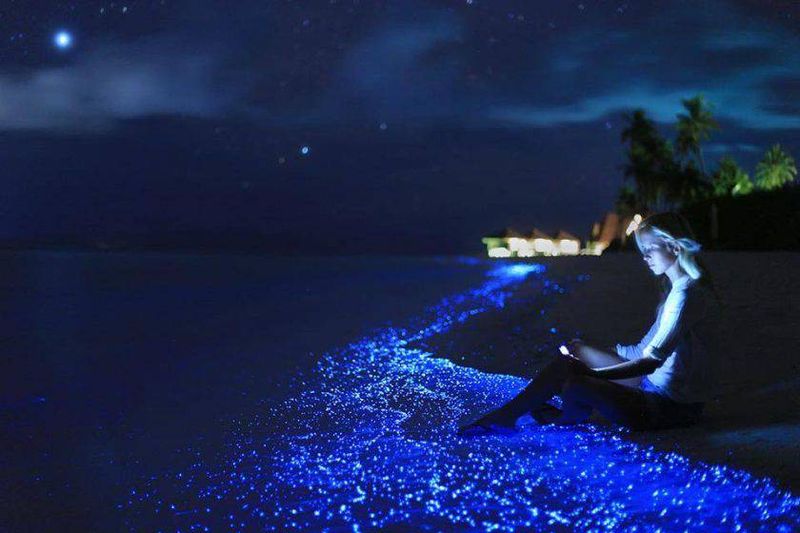
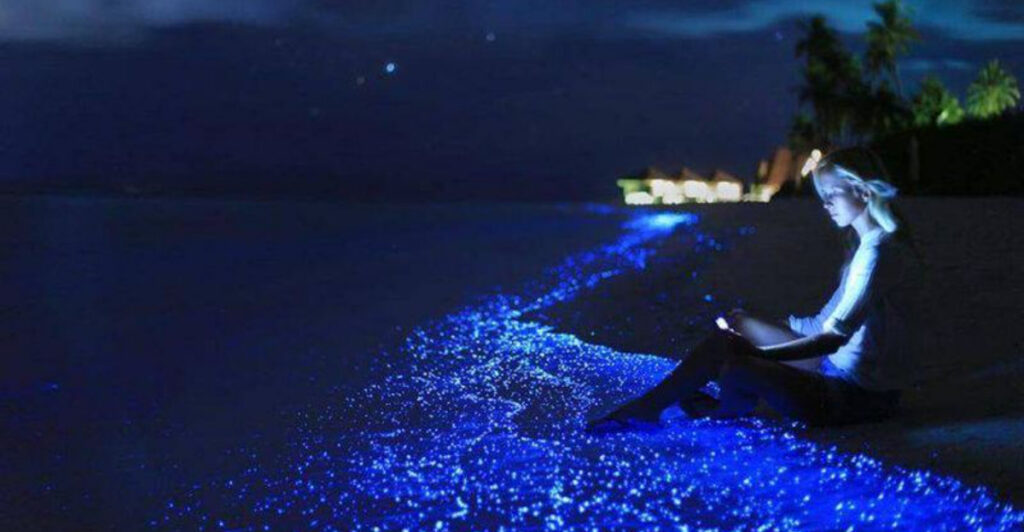
Imagine walking barefoot on a beach where every wave you touch bursts into electric blue light. That is exactly what happens on Vaadhoo Island in the Maldives, where bioluminescent plankton transform the shoreline into one of nature’s most jaw-dropping light shows.
The tiny organisms, called dinoflagellates, release light when disturbed by movement in the water.
The glow is most intense on dark, moonless nights when there is no competing light to wash it out. Visitors often describe the experience as stepping onto the surface of another planet.
Some even say it made them tear up — and honestly, who could blame them?
The best time to witness the Sea of Stars is between July and February, when plankton populations are at their peak. You do not need any special equipment — just your eyes and a willingness to stay up past midnight.
Photographers love this spot because long-exposure shots capture the glow in stunning detail. If you ever get the chance to visit the Maldives, skip the resort pool for one night and head to the shore.
You will never forget it.
Navagio Beach – Greece (Electric Blue Waters)
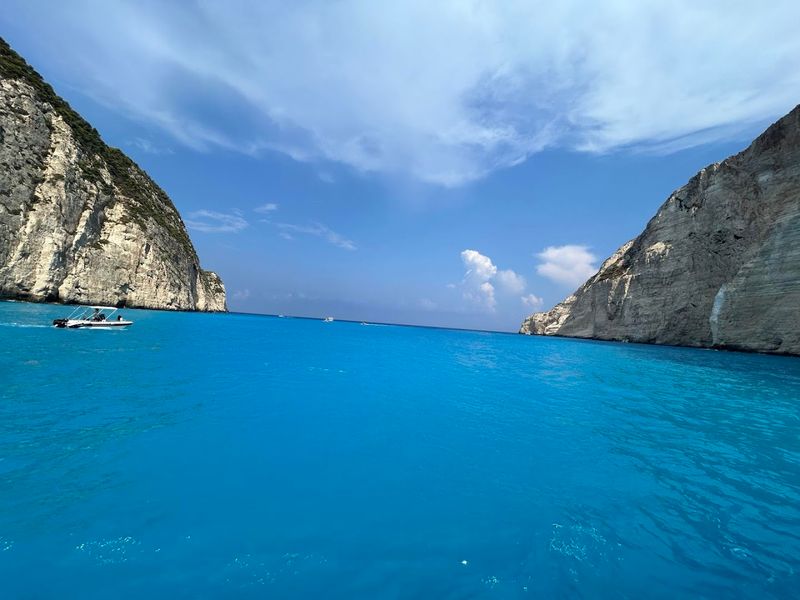
Trapped between walls of white limestone cliffs and completely inaccessible by land, Navagio Beach in Greece plays by its own rules. The water here is not just blue — it is the kind of electric, glowing turquoise that makes you double-check whether someone cranked up the color saturation on your camera.
Spoiler: they did not.
The brilliant hue comes from sunlight bouncing off the pale limestone seabed beneath the clear, shallow water. Add a rusted shipwreck sitting right on the beach, and you have a scene so dramatic it barely looks real.
The ship, a smuggler’s vessel called the Panagiotis, ran aground here in 1980 and has been slowly rusting into legend ever since.
Getting to Navagio requires a boat ride from the nearby port of Porto Vromi, which honestly adds to the adventure. Crowds can be heavy in summer, so arriving early in the morning gives you the best chance of catching the beach at its most peaceful.
The light is also softer in the morning, making it ideal for photos. Greece has no shortage of gorgeous beaches, but Navagio stands in a category entirely its own.
Elafonissi Beach – Crete, Greece (Pink-Tinted Waters)
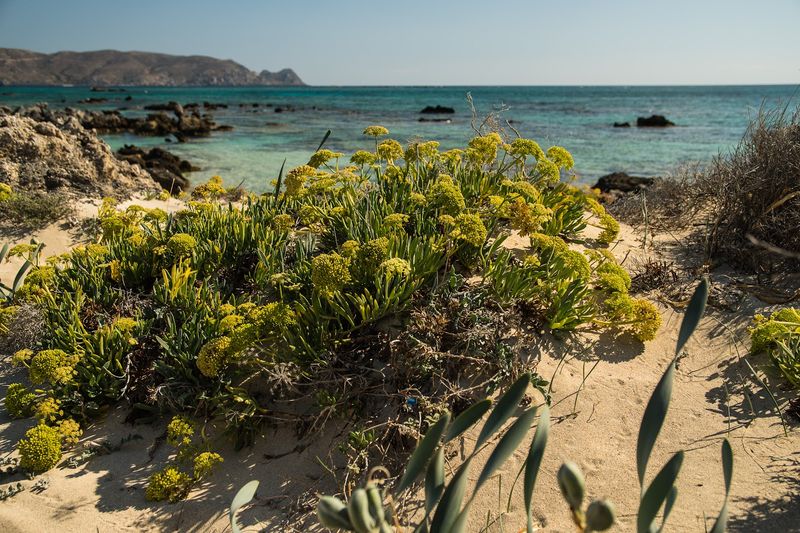
Pink sand beaches sound like something out of a fairy tale, but Elafonissi Beach in Crete is 100 percent real and every bit as dreamy as it sounds. The rosy hue comes from tiny fragments of crushed coral and red shell debris mixing into the white sand over thousands of years.
In certain light, even the shallow water takes on a warm, blushing pink tone.
The beach is actually a small peninsula that connects to a lagoon, meaning the water stays remarkably calm and shallow — perfect for wading, snorkeling, or just sitting and staring in disbelief. The shallow depth also means the sunlight hits the sandy floor directly, amplifying those warm pink and peach tones in a way that deeper water simply cannot replicate.
Elafonissi is a protected nature reserve, so the environment here stays surprisingly clean and well-preserved despite being a popular tourist destination. Visiting in late spring or early September helps you avoid the biggest summer crowds.
The area is also home to rare sea turtles, so keep your eyes open while swimming. Few beaches in Europe manage to feel both tropical and ancient at the same time, but Elafonissi somehow pulls it off beautifully.
Mosquito Bay – Puerto Rico (Brightest Bioluminescent Water)
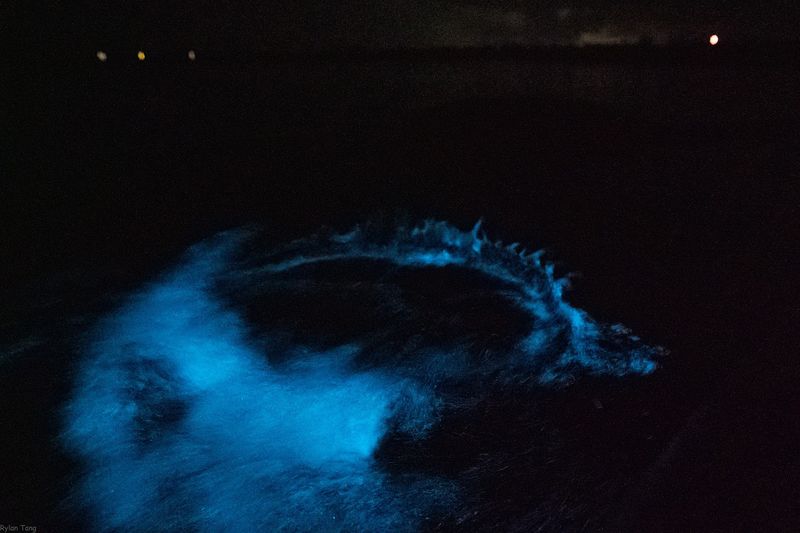
Hold on tight, because Mosquito Bay in Vieques, Puerto Rico holds a Guinness World Record — it is officially the brightest bioluminescent bay on the planet. That is not a small claim.
The water here glows so intensely blue that a hand dragged through it leaves a trail of light bright enough to read by.
The secret behind the glow is an extraordinarily high concentration of dinoflagellates, the same bioluminescent microorganisms found in other glowing waters around the world. What makes Mosquito Bay different is the sheer number of them packed into a relatively small, enclosed lagoon.
Scientists estimate there can be up to 720,000 of these tiny organisms per gallon of water.
The most popular way to experience the bay is by kayaking at night with a guided tour. Glass-bottom kayaks are especially popular because they let you watch the glowing water beneath you without even getting wet.
Swimming was once allowed but has since been restricted to protect the ecosystem, so kayaking is the way to go. Overcast nights can actually enhance the experience by blocking out ambient light.
If Puerto Rico is on your travel list, this bay alone is worth the entire trip.
Whitehaven Beach – Australia (Milky Turquoise Water)
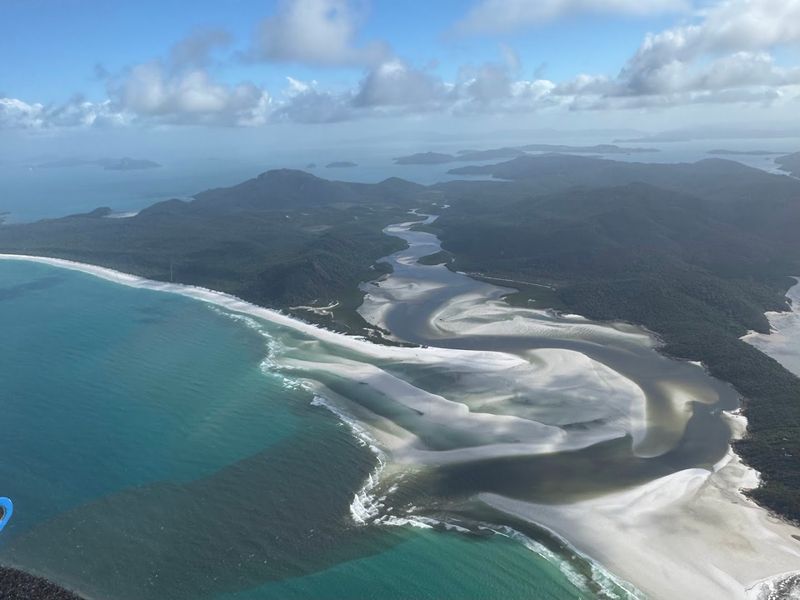
From above, Whitehaven Beach looks like someone spilled a giant cup of liquid turquoise over a strip of pure white powder. Located in the Whitsunday Islands of Queensland, Australia, this beach is famous for its silica sand so fine and white that it squeaks under your feet and stays cool even on hot days.
That same sand is what gives the water its dreamy, milky glow.
As tides shift throughout the day, the white sand swirls into the turquoise water, creating patterns that look like abstract paintings when viewed from above. The lookout at Hill Inlet is one of the most photographed spots in all of Australia for exactly this reason.
The colors constantly change depending on the tide and the angle of the sun.
The silica content in the sand is so pure — around 98 percent — that it was actually used to clean the Hubble Space Telescope. That is a fun fact worth casually dropping at your next dinner party.
Whitehaven is accessible only by boat or seaplane, which keeps the crowds manageable and the beach beautifully unspoiled. Snorkeling around the nearby reef adds another layer of color to an already stunning experience.
Pink Sands Beach – Bahamas (Soft Rose-Colored Water)
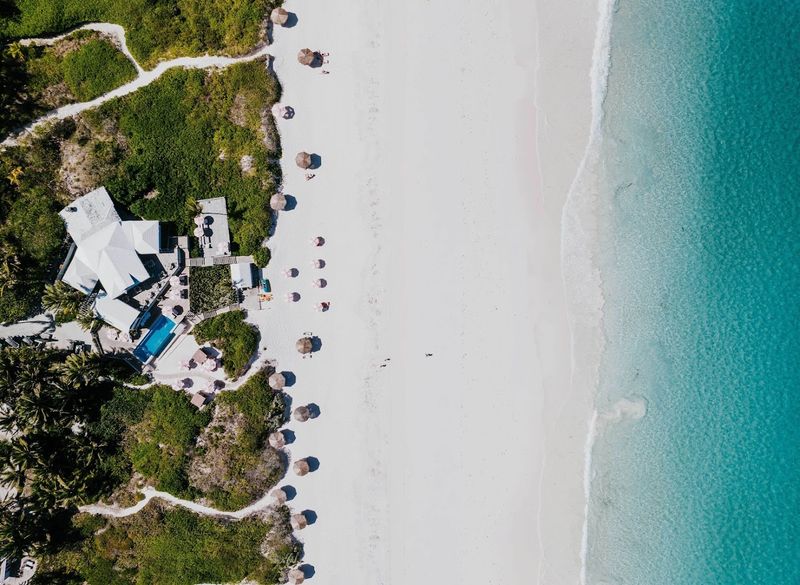
There is a beach in the Bahamas where even the water blushes. Pink Sands Beach on Harbour Island is one of the most iconic pink beaches in the world, stretching about three miles along the island’s eastern coast.
At sunrise and sunset, when the light hits just right, the water takes on a soft rose and coral tint that looks almost too pretty to be natural.
The color originates from a microscopic creature called foraminifera, which has a bright reddish-pink shell. When these organisms die, their shells wash ashore and blend into the white sand, gradually turning it pink over time.
The shallow water reflects this rosy tone back, especially in low-angle morning light.
Harbour Island itself is a charming, golf-cart-only community known for its colorful colonial buildings and laid-back atmosphere. The beach is calm enough for swimming and shallow enough for kids to splash around safely.
Unlike some of the more remote pink beaches on this list, Pink Sands Beach has nearby restaurants and boutique hotels, making it an easy choice for travelers who want luxury alongside natural beauty. The combination of soft colors, warm water, and gentle waves makes this one of the most relaxing beaches on Earth.
Jokulsarlon Diamond Beach – Iceland (Black Sand & Ice Blue Water)
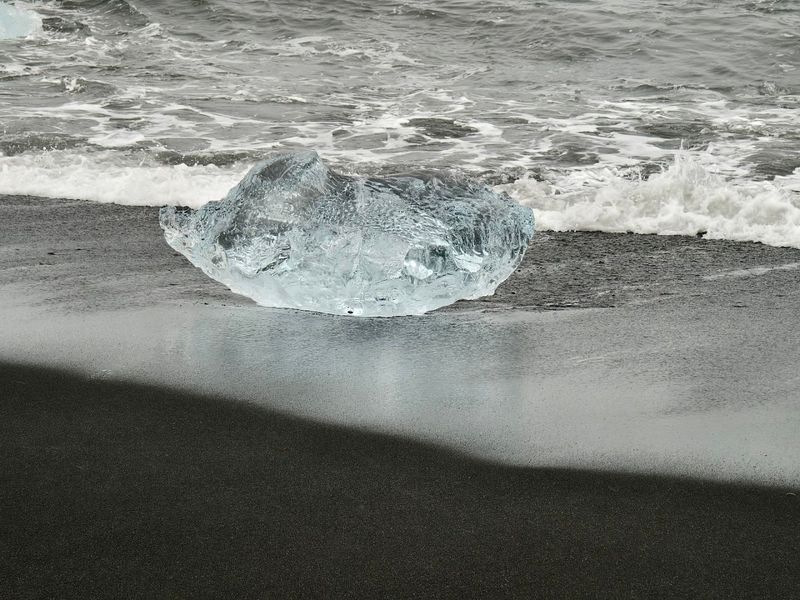
No two visits to Diamond Beach in Iceland ever look the same. Every day, chunks of glacial ice break off from the nearby Vatnajokull glacier, float through the lagoon, and wash up onto a beach made entirely of black volcanic sand.
The result is a scene that looks like diamonds scattered across a dark velvet surface.
The ice itself ranges from completely clear to milky white to a deep, ghostly blue, depending on how long each piece has been compressing inside the glacier. Some chunks are the size of a fist.
Others are as tall as a person. The icy blue water of the Atlantic crashes behind them, completing one of the most dramatic color contrasts found anywhere on Earth.
Diamond Beach sits right next to Jokulsarlon Glacier Lagoon, and visiting both in a single trip is absolutely worth it. The lagoon is calm and mirror-like, while the beach is raw and windswept — two completely different moods just minutes apart.
Sunrise and sunset paint the ice in shades of orange and pink, which contrasts wildly with the black sand. Dress in layers because the wind here is no joke.
Iceland constantly earns its reputation as one of the most visually dramatic countries in the world, and Diamond Beach is proof.
Havelock Island – India (Glowing Shorelines)
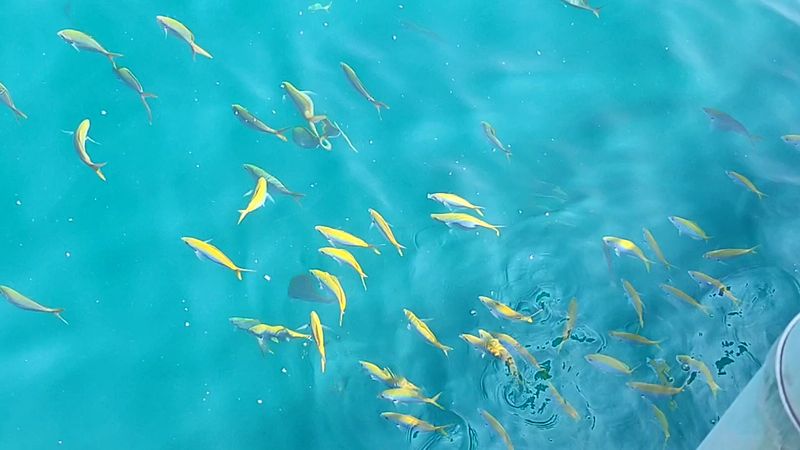
Way out in the Andaman Sea, far from the chaos of mainland India, Havelock Island keeps a quiet secret — some of its beaches glow at night. The bioluminescence here is caused by plankton activity near the shore, creating a faint but genuinely magical blue shimmer along the waterline after dark.
It is softer than Puerto Rico, but that subtlety gives it its own kind of charm.
Havelock is already one of India’s most celebrated beach destinations, known for its crystal-clear water, dense jungle, and coral reefs teeming with life. Radhanagar Beach, often ranked among the best beaches in Asia, is the most popular spot on the island.
The bioluminescence tends to appear further along less-visited stretches of shoreline, away from tourist lights.
To catch the glow, head out after 10 p.m. on a night with little to no moonlight, and let your eyes adjust to the dark before scanning the water. Gentle wading can trigger flashes of light around your feet.
The Andaman Islands are somewhat remote, requiring a flight or long ferry ride from the Indian mainland, but travelers who make the journey consistently call it one of the most rewarding trips of their lives. The glowing shorelines are just one reason why.
Reynisfjara Beach – Iceland (Jet-Black Water Contrast)
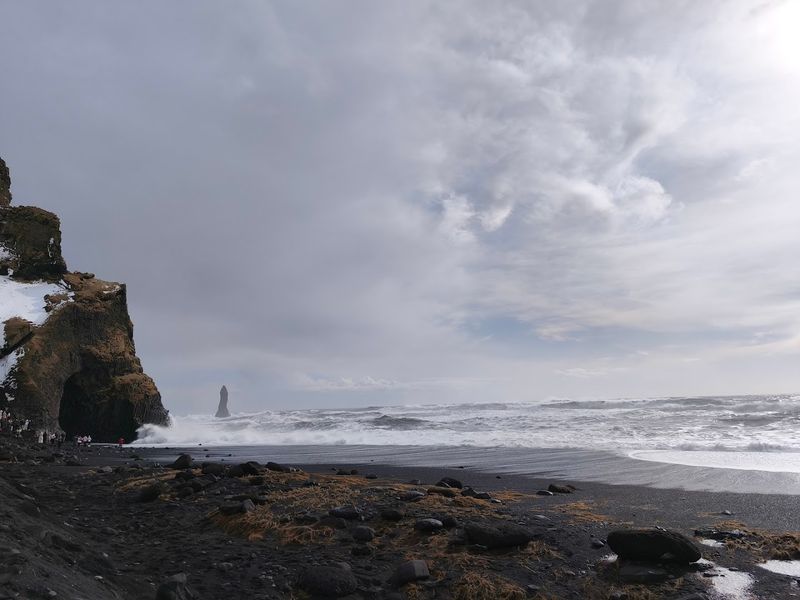
Reynisfjara Beach is the kind of place that makes you feel small in the best possible way. Located near the village of Vik in southern Iceland, this beach is famous for its jet-black volcanic sand and the enormous basalt columns that rise from the cliffs like a giant’s staircase.
The ocean here is not gentle — the waves are powerful, unpredictable, and absolutely mesmerizing.
What makes the water look so unique is the contrast. Against the deep black sand, the Atlantic Ocean appears almost silver-blue, shifting between dark steel and bright cyan depending on the weather and light.
On overcast days, the whole scene takes on a moody, cinematic quality that has made it a favorite filming location. Parts of Game of Thrones were filmed here, which should tell you everything about the vibe.
A firm warning for visitors: the waves at Reynisfjara are notorious for sneaker waves — sudden surges that can knock people off their feet without warning. Signs at the beach urge visitors to stay back from the waterline.
Admire from a safe distance and you will have an experience that is thrilling, beautiful, and completely unforgettable. Iceland rarely does anything halfway, and Reynisfjara is one of its most powerful expressions of raw, dramatic beauty.
Blue Lagoon Beach – Cyprus (Crystal-Clear Cyan Water)
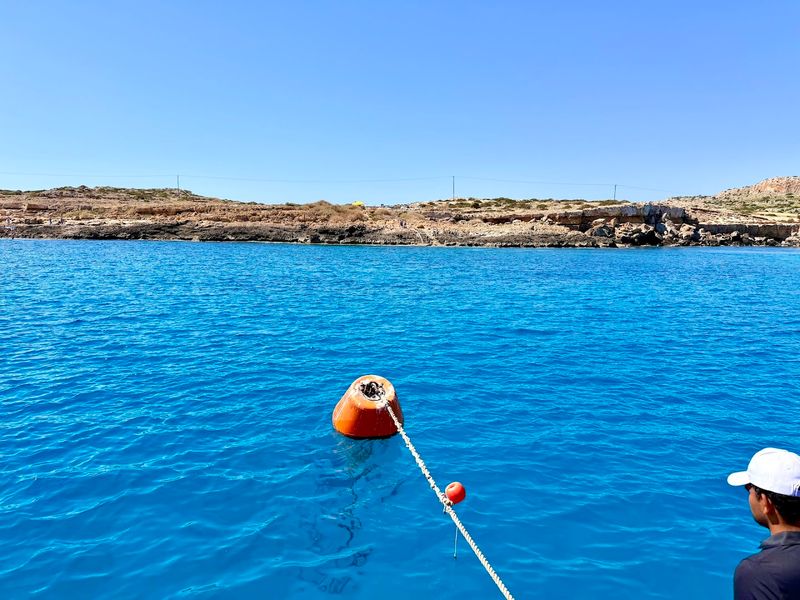
Crystal-clear water is common enough, but the Blue Lagoon in Cyprus takes transparency to a whole new level. Located within the Akamas Peninsula, this sheltered cove features water so clear and so brilliantly cyan that boats anchored in it appear to be floating on air.
Looking down from the surface, you can see every pebble and grain of sand on the floor below.
The intense cyan color comes from a combination of shallow depth, a white and sandy seabed, and remarkably low levels of pollution. Sunlight passes straight through the water and bounces off the pale bottom, creating that vivid, almost neon-blue glow that photographers go absolutely wild for.
There are no resorts or hotels right on the lagoon, which helps keep the water this pristine.
The most popular way to reach the Blue Lagoon is by boat trip from Latchi harbor, and most tours include snorkeling time in the water. The marine life here is surprisingly rich, with sea turtles occasionally spotted cruising through the lagoon.
Because the area sits within a protected national park, development is limited, and the environment stays exceptionally clean. Cyprus is already known for beautiful coastlines, but the Blue Lagoon is the jewel that outshines everything else on the island.
Horseshoe Bay – Bermuda (Pink & Blue Blend)
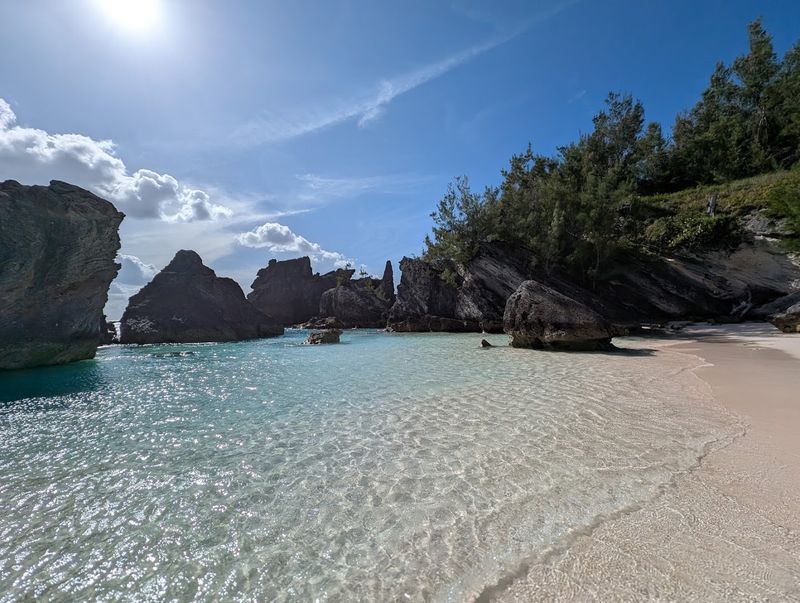
Bermuda is already famous for being impossibly photogenic, but Horseshoe Bay takes things to a different level entirely. The beach gets its name from its horseshoe-shaped curve, and it is best known for the striking combination of soft pink sand and deep, vivid blue Atlantic water.
The color contrast between the two is so bold it almost looks digitally enhanced in photographs.
Like other pink beaches, the rosy hue here comes from foraminifera shells mixing into the white sand over centuries. The Atlantic water at Bermuda runs especially deep and clear, which makes that rich blue color pop even harder against the pale shoreline.
As the sun moves across the sky, the pink tones in the sand shift from pale blush in the morning to deeper rose in the afternoon light.
Horseshoe Bay is one of the most accessible beaches in Bermuda, reachable by bus or scooter from Hamilton. Facilities like restrooms, chair rentals, and a snack bar make it a comfortable spot for a full day out.
The hidden coves tucked along the rocky edges of the bay are worth exploring too — they tend to be quieter and offer some of the most concentrated pink sand on the whole beach. Bermuda consistently ranks among the most beautiful island destinations in the Atlantic, and Horseshoe Bay is the reason why.
Glass Beach – California, USA (Multicolored Shoreline)
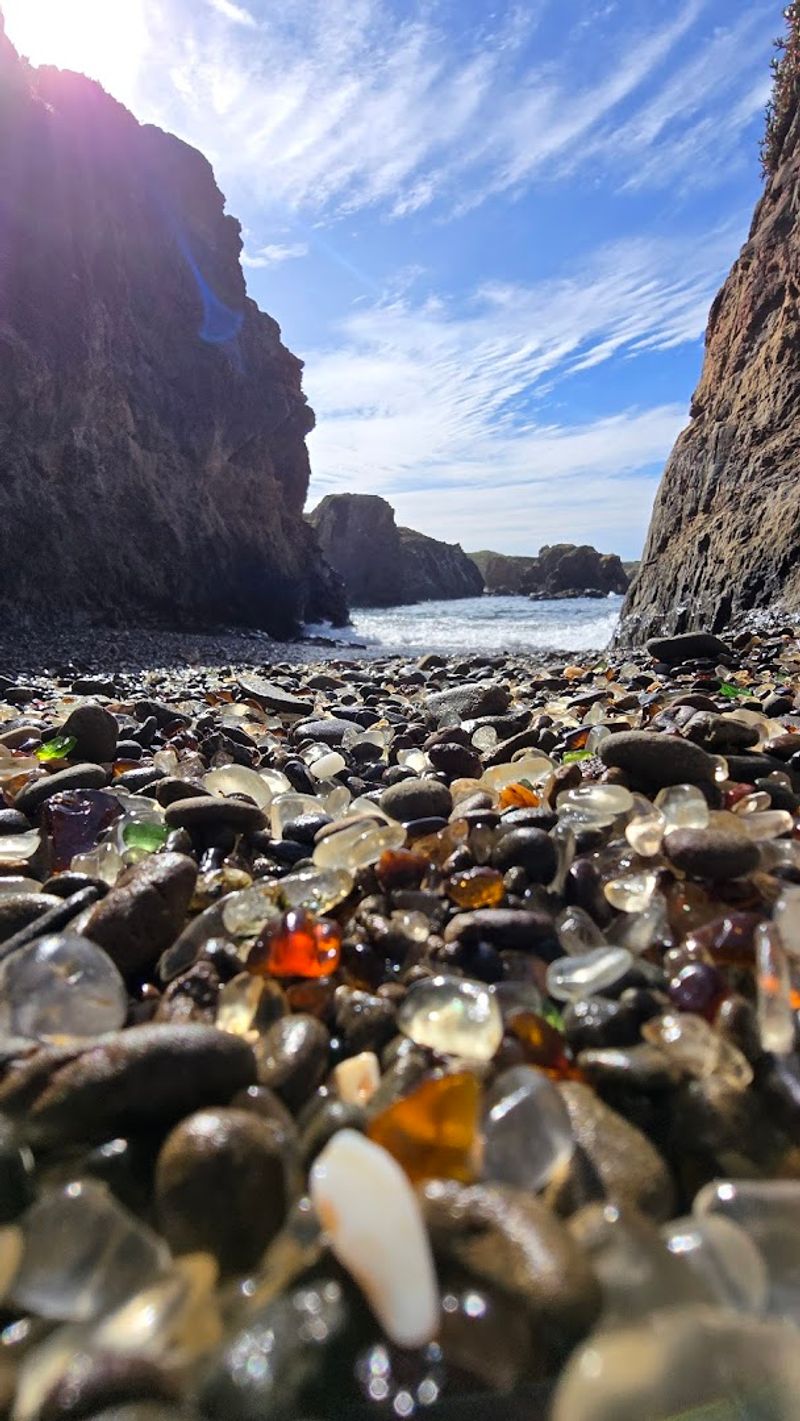
Glass Beach in Fort Bragg, California, is living proof that nature can turn trash into treasure. For decades, this stretch of coastline was used as a dump site where locals tossed everything from bottles to appliances directly into the ocean.
Then the waves got to work, and over fifty years, they tumbled all that broken glass and ceramic into smooth, colorful gems.
Today, the beach is carpeted in thousands of rounded pieces of sea glass in shades of green, cobalt blue, amber, white, and rare red. When shallow water washes over them, the entire shoreline shimmers with a multicolored glow that is unlike anything found at a natural beach.
The effect is especially striking at golden hour when the low sun catches each piece individually.
The dumping stopped in 1967, and the beach became part of MacKerricher State Park in 2002, meaning the glass is now protected — you can look but not take. Some visitors are surprised to learn that collecting sea glass is actually illegal here, so leave those pockets empty.
The water itself reflects the colorful bed beneath it, creating an ever-shifting mosaic of hues with each incoming wave. Fort Bragg is a quirky, artsy coastal town, and Glass Beach perfectly captures that creative, slightly offbeat spirit.
Sardinia’s Cala Goloritzé – Italy (Neon Turquoise Water)
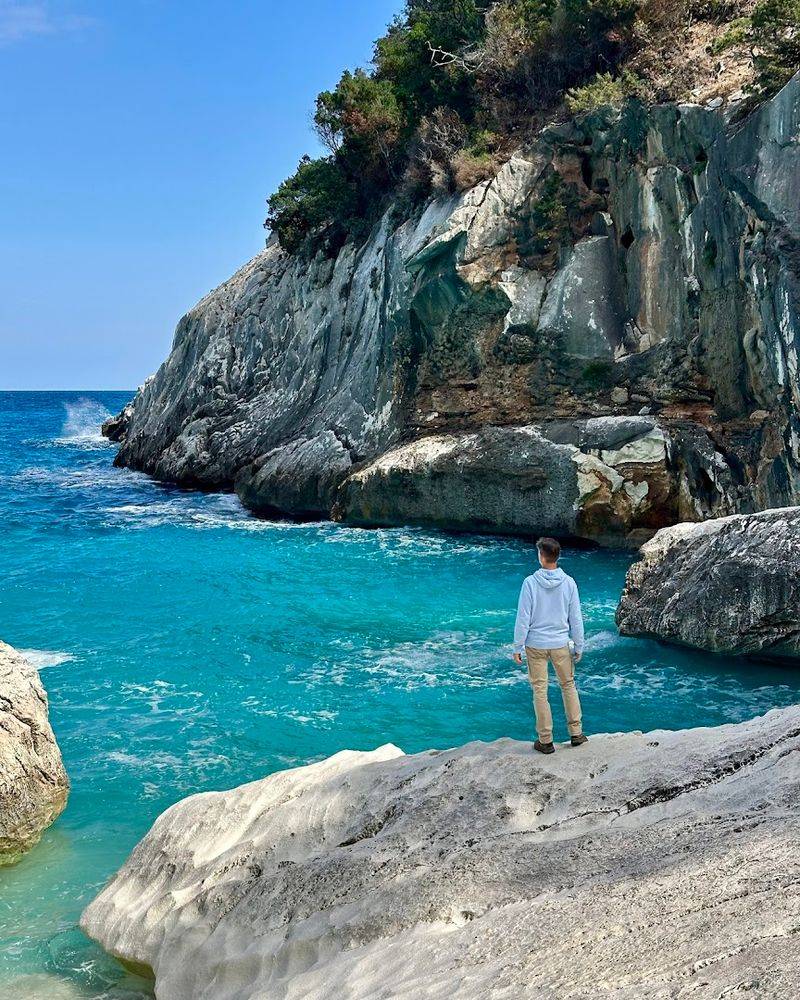
Cala Goloritzé is the kind of beach that earns gasps the moment it comes into view. Tucked into the rugged eastern coast of Sardinia, this UNESCO-protected cove is famous for water so intensely turquoise it almost looks artificially colored.
A towering white limestone pinnacle rises from the sea beside it, making the whole scene look like a postcard that no filter could improve.
The neon quality of the water comes from its extraordinary clarity and the white limestone and pebble bottom that reflects light back up through the surface. There is virtually no pollution here because the beach sits within the Gulf of Orosei national park and is accessible only by boat or a fairly demanding two-hour hike through the mountains.
That limited access is exactly what keeps the water so pristine.
Snorkeling here is considered some of the best in the Mediterranean, with visibility stretching up to 30 meters on calm days. The underwater rock formations are just as dramatic as the ones above the surface.
The hike down to the beach is steep and requires decent footwear, but the reward waiting at the bottom makes every step worthwhile. Sardinia has dozens of gorgeous beaches, but Cala Goloritzé holds a special status — it is widely considered the most beautiful of them all, and the water color is the main reason.
Luminous Lagoon – Jamaica (Glowing Green-Blue Water)
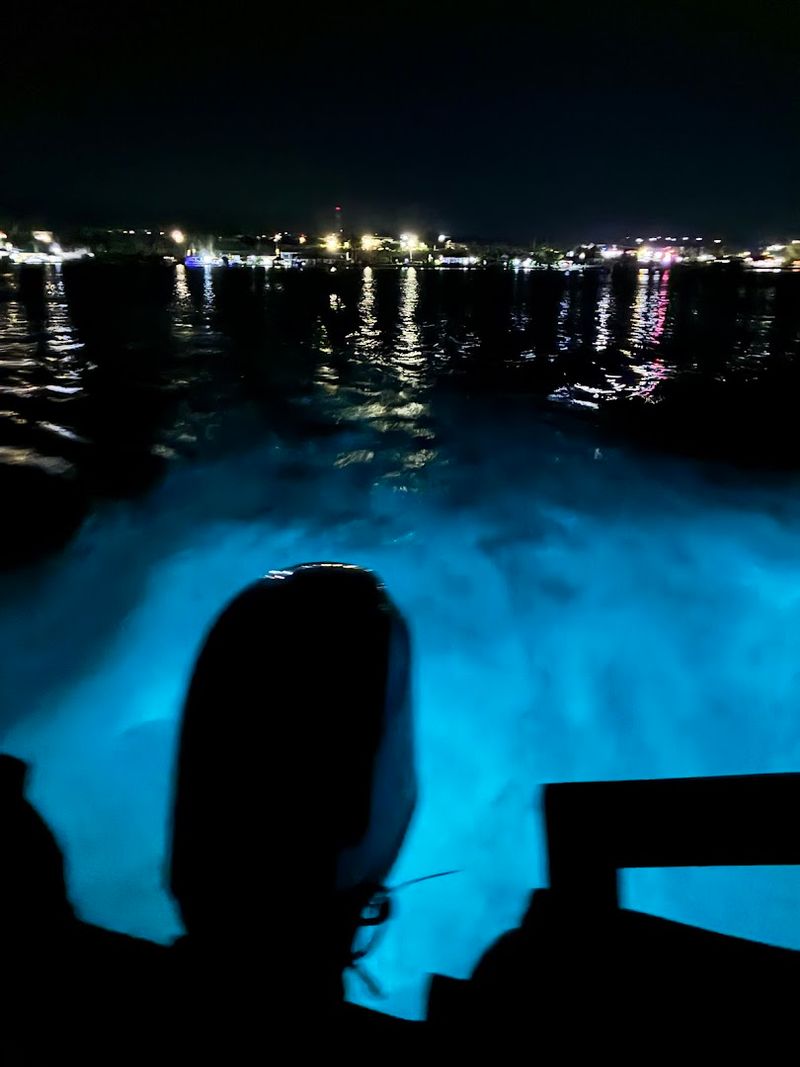
Most people go to Jamaica for the beaches, the music, and the jerk chicken. But just outside the town of Falmouth, there is a lagoon that offers something no beach can compete with — the chance to swim inside glowing water.
The Luminous Lagoon is one of the few bioluminescent bays in the world where swimming is still permitted, and that changes everything.
The green-blue glow is produced by dinoflagellates, the same microorganisms responsible for bioluminescence elsewhere. What makes the Luminous Lagoon stand out is the interaction.
Every movement you make — a splash, a kick, a wave of your hand — produces a burst of light that surrounds you like living electricity. It is disorienting in the best possible way.
The lagoon sits at the meeting point of the Martha Brae River and the Caribbean Sea, and the mix of fresh and salt water creates the perfect environment for these microorganisms to thrive in unusually high numbers. Boat tours depart from Falmouth most evenings and include a swimming stop in the middle of the lagoon.
The glow is visible to the naked eye, though cameras struggle to capture it without long-exposure settings. Going on a cloudy, moonless night gives you the most vivid experience.
Jamaica has plenty of reasons to visit, but this glowing lagoon might just be the most unforgettable one.
Share this story