There is a waterfall in Tennessee that you will never see from the outside, because it is completely hidden inside a mountain. No trail winds up to it, no overlook frames it, and no amount of squinting at the hillside will give it away.
The only way to reach it is to step into an elevator, drop 260 feet straight down into solid rock, and walk nearly half a mile through a limestone cavern carved by millions of years of geology. What waits at the end of that walk is a 145-foot underground waterfall that has been drawing visitors to Lookout Mountain in Chattanooga, Tennessee for nearly a century, and it still manages to stop people mid-sentence the moment the lights come on.
Where the Mountain Keeps Its Secret: Location and Address
Ruby Falls sits at 1720 S Scenic Hwy, Chattanooga, TN 37409, right on the western brow of Lookout Mountain, one of the most storied ridgelines in the entire southeastern United States.
The drive up the mountain is a preview of the adventure itself. The road curves and climbs through dense tree cover, and by the time the parking area comes into view, you already feel like you have traveled somewhere genuinely removed from everyday life.
Chattanooga is a mid-sized city in southeastern Tennessee, nestled where the Tennessee River cuts through the Appalachian ridges. It is not a place you stumble through on the way to somewhere else.
You come here on purpose, and Lookout Mountain is usually near the top of any itinerary.
The attraction sits within easy reach of downtown Chattanooga, roughly a ten-minute drive, which makes it surprisingly accessible for something that feels so remote and otherworldly. The mountain itself has a long history tied to Civil War battles, scenic overlooks, and natural curiosities, and Ruby Falls is the crown jewel of all of them.
The Story Behind the Discovery: How Ruby Falls Was Found
The story of how this waterfall was found reads like something out of an adventure novel, and the best part is that it is completely true.
In 1928, a chemist and cave enthusiast named Leo Lambert was working to reopen an old cave on Lookout Mountain called Lookout Mountain Cave. While drilling an elevator shaft to access that cave, his team broke through into an entirely different and previously unknown cavern system.
Lambert and a small group explored the new passage in 1928, crawling and squeezing through tight limestone corridors for hours. After traveling about 17 hours into the cave system, they reached an enormous underground waterfall that no human had ever seen before.
Lambert named the waterfall Ruby Falls after his wife, Ruby, who was part of that first exploration group. That detail alone makes the whole story feel warmer and more personal than your average geology lesson.
The cave opened to the public in 1930, and visitors have been making the underground journey ever since. The original discovery story is shown in a short video at the start of every tour, and it genuinely sets the mood for everything that follows.
Going Underground: The Elevator Ride and Cave Entrance
The tour begins before you even see a single stalactite. After gathering in a lobby area and watching the short discovery film, your group boards an elevator that drops 260 feet straight down through solid rock.
The shaft is narrow and the walls of stone are just inches away through the elevator glass, which gives the whole descent a thrilling, slightly surreal quality. It takes only about 30 seconds, but those 30 seconds have a way of resetting your sense of where you are in the world.
At the bottom, the elevator opens into a waiting area carved directly into the cave. The air is noticeably cooler, holding steady at around 60 degrees Fahrenheit year-round, which makes it a refreshing stop in summer and a chilly one in winter.
A tour guide meets the group there and leads everyone through the cave passage toward the waterfall. The guides are well-trained, knowledgeable, and genuinely entertaining.
The route is about 0.6 miles round trip, well-lit, and paved enough to walk comfortably in regular sneakers, though you will want closed-toe shoes with decent grip.
A Walk Through Deep Time: The Cave Formations
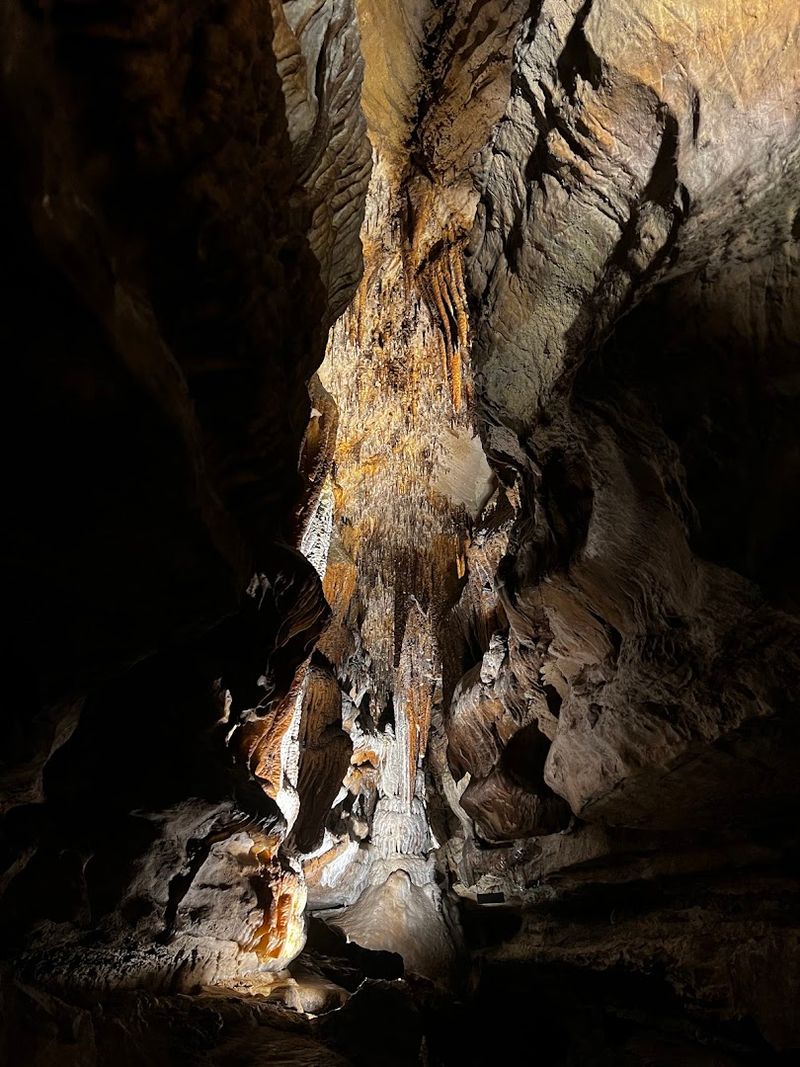
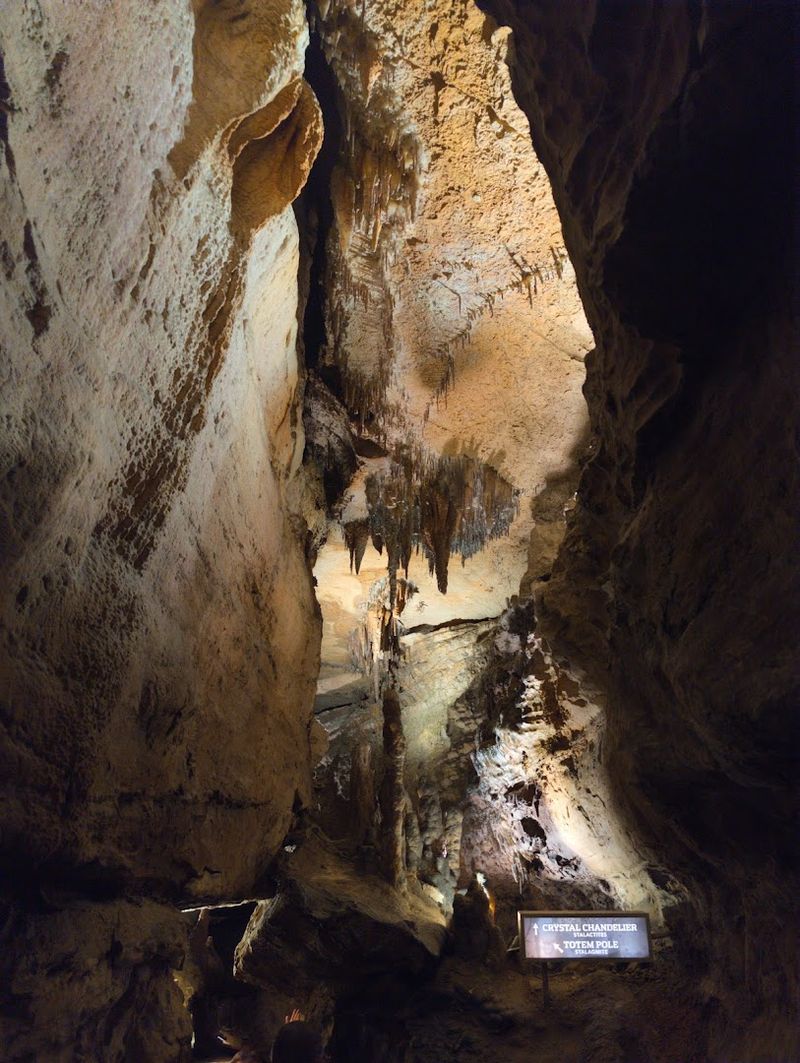
The walk to the waterfall is not just a means to an end. The cave passage itself is packed with limestone formations that have been growing for millions of years, and each one has a name that the guides deliver with perfectly timed humor.
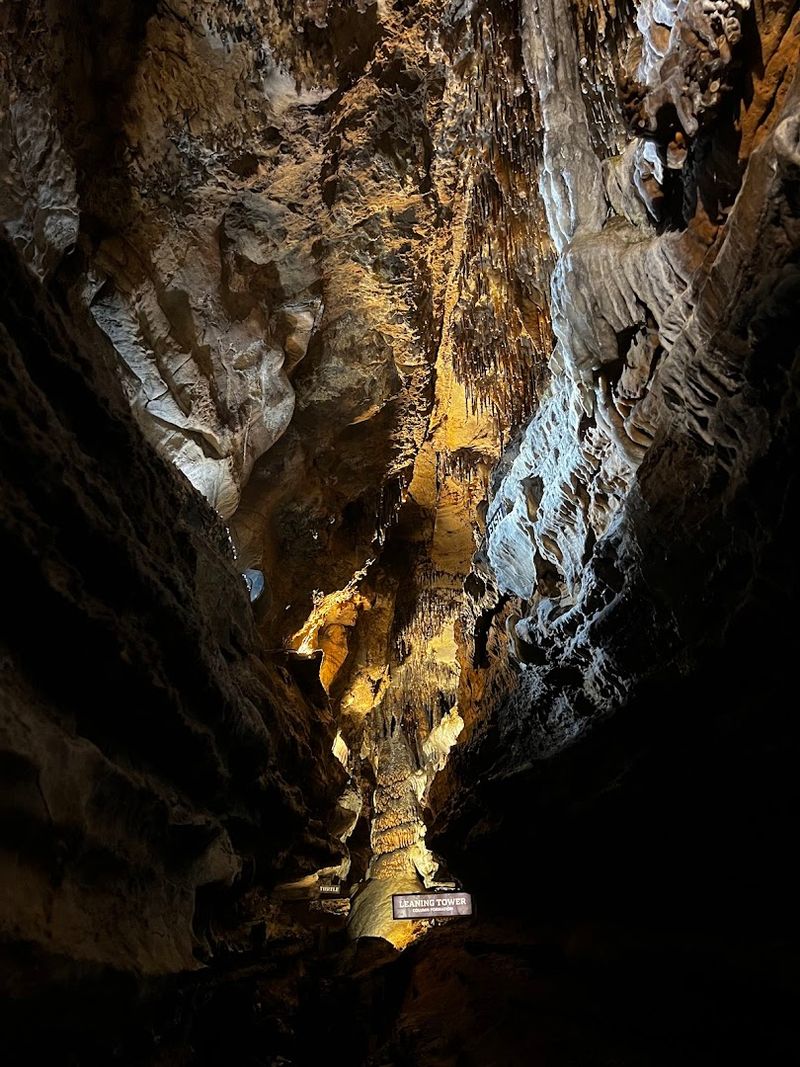
Stalactites hang from the ceiling in shapes that range from thin, delicate needles to thick, ribbed columns. Stalagmites rise from the floor to meet them, and in some places they have fused together into full columns that look like they belong in a fantasy film set.
Some of the named formations have become crowd favorites. A formation called Steak and Potatoes consistently gets laughs because it actually looks like what it sounds like.
An angel wing formation and a bat-shaped rock are also popular stops along the route.
The lighting throughout the cave is thoughtfully designed, with warm tones that highlight the textures and colors of the limestone without making the space feel artificial. The cave maintains a temperature of around 60 degrees Fahrenheit throughout the year, which helps preserve the formations and keeps the environment stable for visitors and the small cave-dwelling creatures that live there.
The Moment the Lights Come On: Seeing the Waterfall
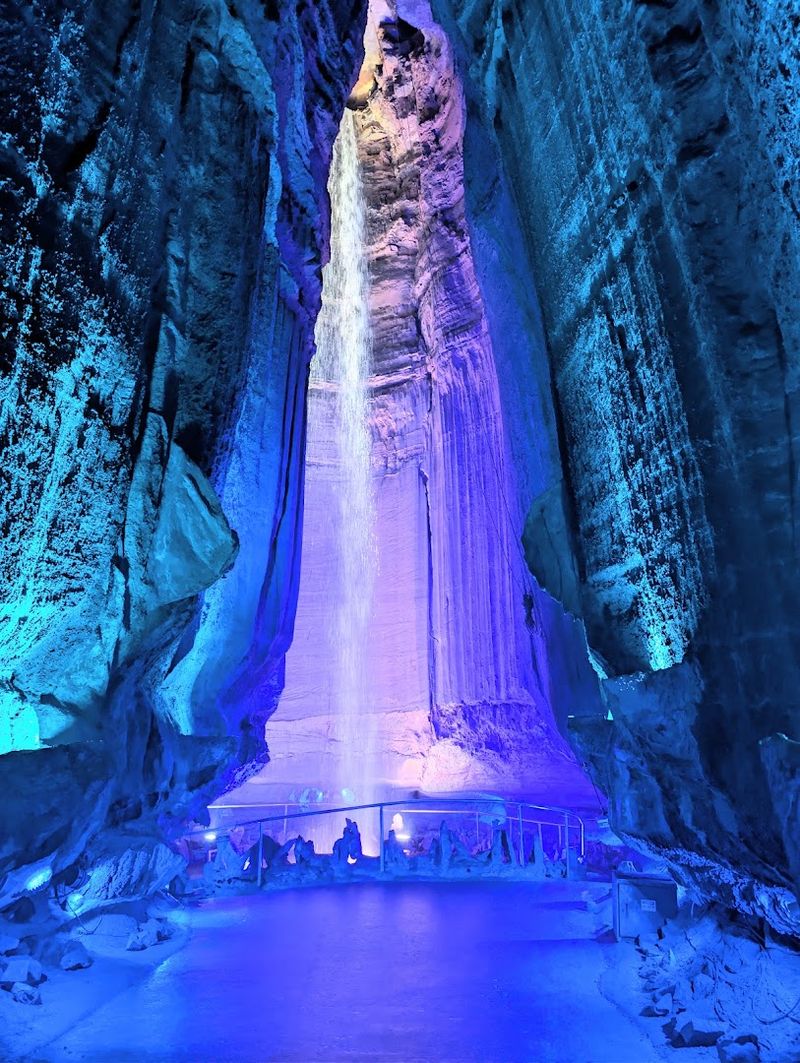
You hear it before you see it. As the tour group rounds the final bend in the cave passage, the sound of falling water grows noticeably louder, and there is a collective shift in the group’s energy as everyone realizes they are close.
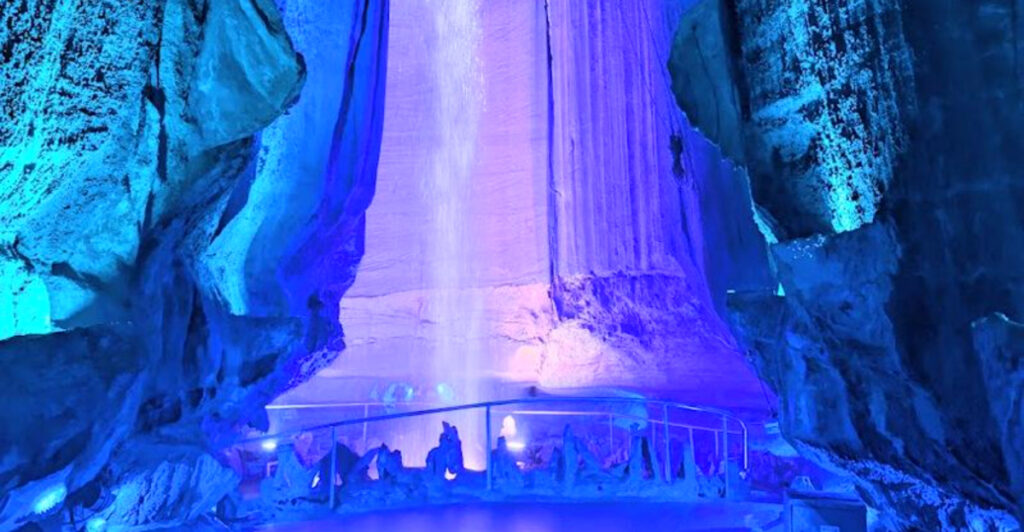
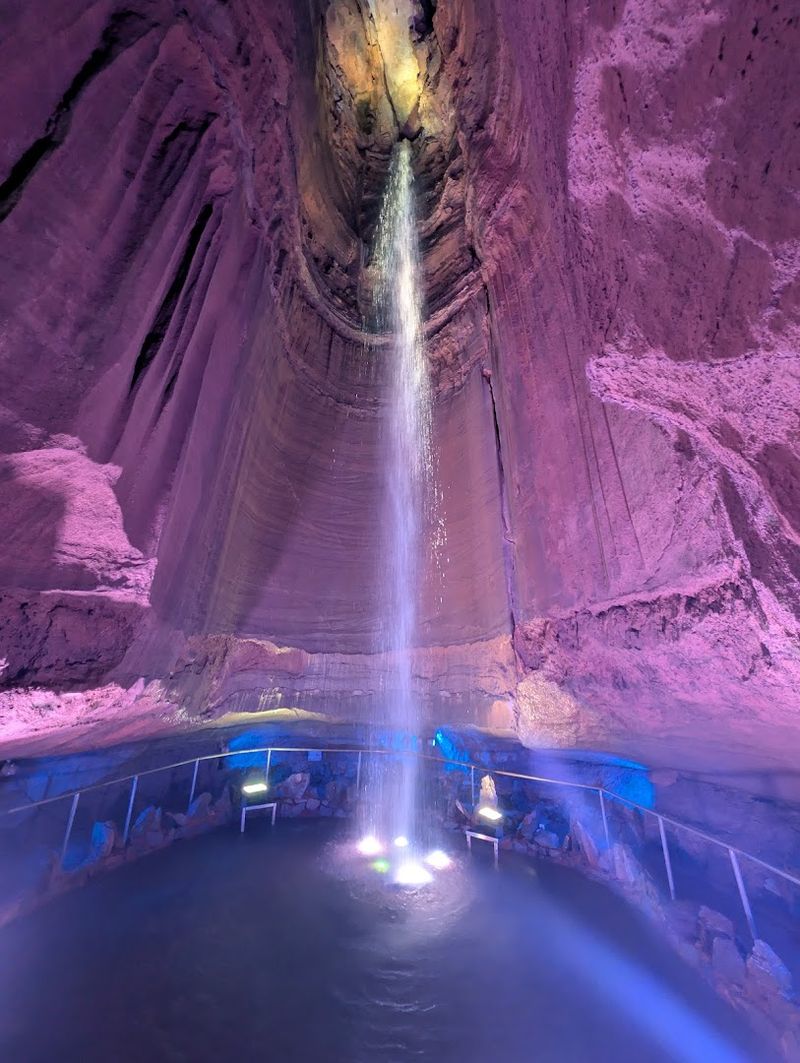
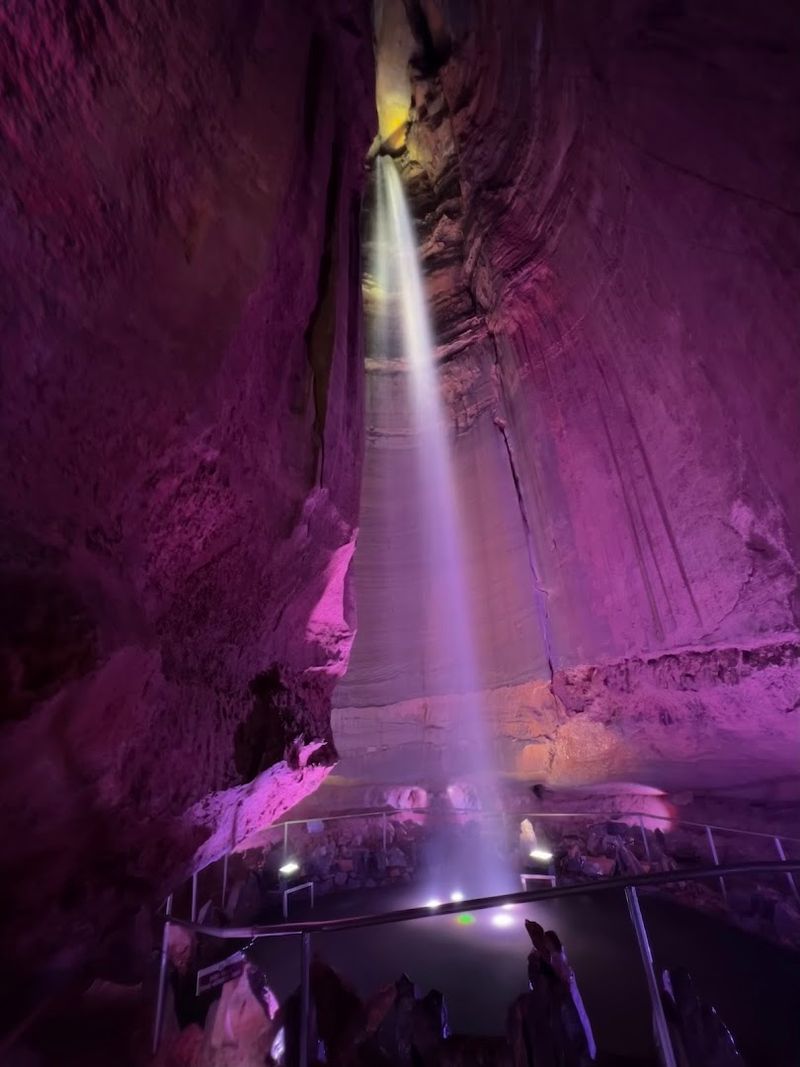
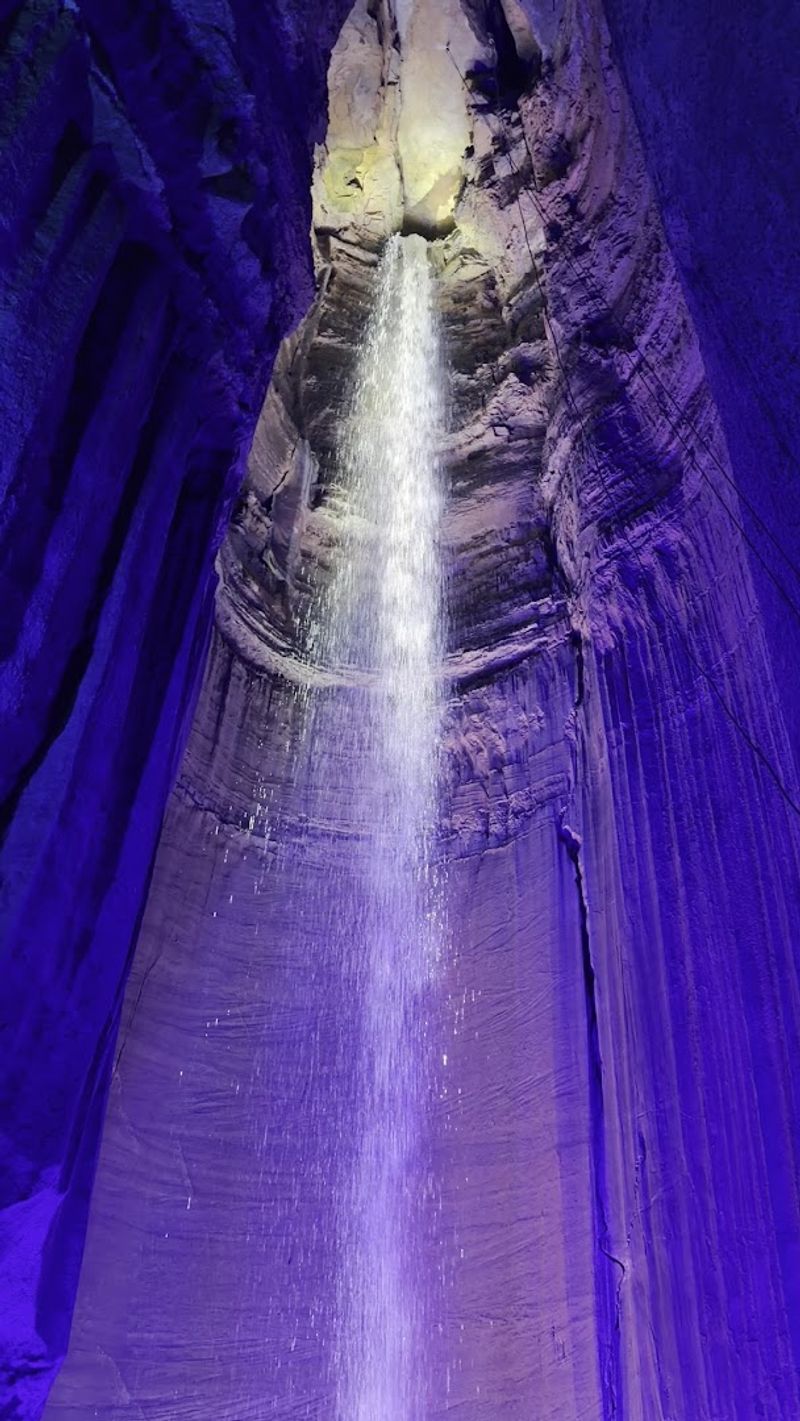
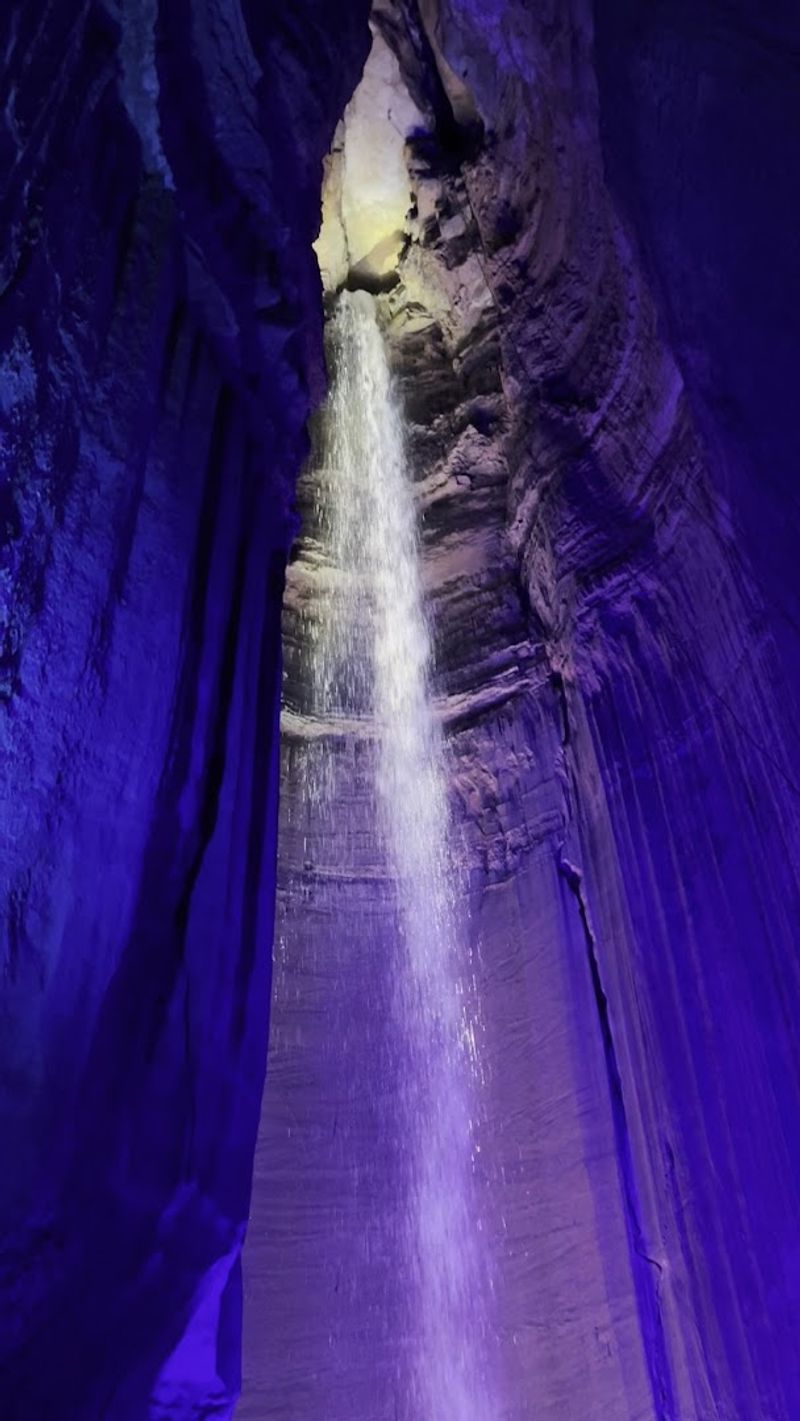
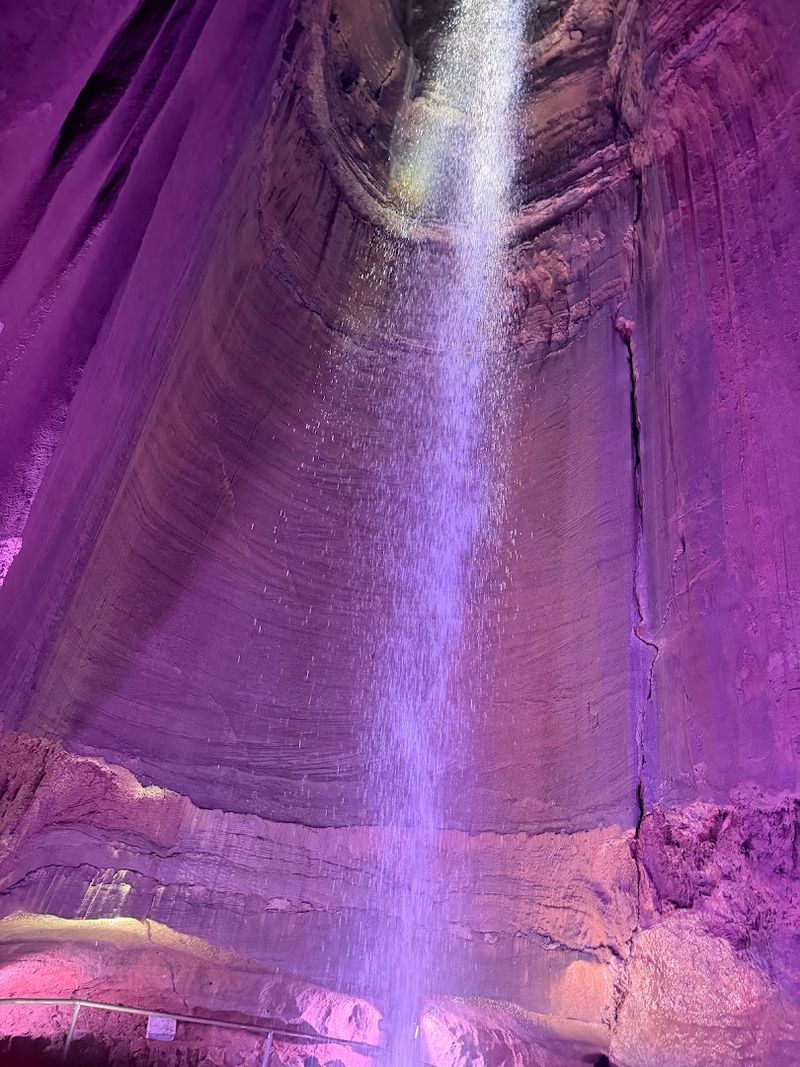
Then the chamber opens up, and the waterfall appears in full. Ruby Falls drops 145 feet from a crack in the cave ceiling to a pool far below, making it the tallest and largest underground waterfall open to the public in the United States.
The scale of it inside a cave chamber is genuinely difficult to process at first.
The guides time a light show to music that cycles through colors, bathing the falls in reds, blues, purples, and whites. The effect is theatrical without feeling cheap, and the combination of sound, mist, and shifting color makes the moment feel like a proper finale.
Photos from the waterfall chamber are tricky because no camera fully captures the depth and movement of the falls in low light. The experience is one of those rare ones that actually exceeds what you saw in pictures, which is not something you can say about many tourist attractions anywhere in the country.
Tour Guides Who Make the Difference
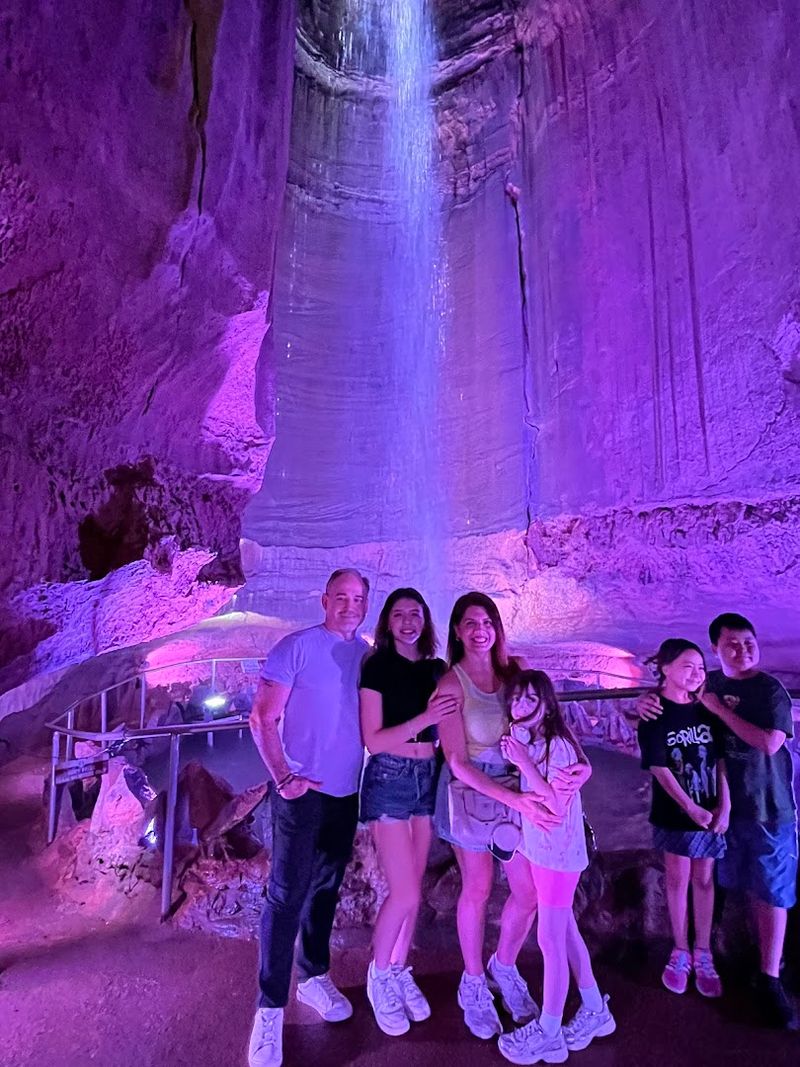
A guided tour is only as good as the person leading it, and Ruby Falls seems to have figured that out. The guides here have a reputation for being genuinely engaging, and that reputation is well earned.
Each guide brings their own personality to the tour. Some lean into geology and history, delivering detailed explanations of how the cave formed and why certain formations grow the way they do.
Others lean into humor, keeping the group loose and laughing through the long walk with well-timed jokes and playful commentary on the rock formations.
What they all share is a real familiarity with the cave. Some guides have led thousands of tours through this passage, and that depth of experience shows in how confidently they answer questions and how smoothly they manage groups of all sizes and ages.
The tour lasts approximately 90 minutes from start to finish, and the guides keep things moving at a pace that feels neither rushed nor dragging. If you have a chance to go on a smaller tour group, the experience becomes even more personal, with more time to ask questions and linger at the formations that catch your eye along the way.
Family-Friendly From the Start: Who Should Visit
Ruby Falls works well for a wide range of visitors, which is part of why it has remained popular for nearly a century. Families with school-age children tend to have a particularly great time here, partly because the cave tour doubles as an accidental geology and history lesson.
The cave walk is manageable for most ages and fitness levels. The path is paved and well-lit, and the total distance is about 0.6 miles round trip, with no significant elevation changes once you are underground.
That said, some passages are narrow and low-ceilinged, so anyone with strong claustrophobia should consider that before booking.
Very young children, especially babies and toddlers, tend to find the cave environment uncomfortable. The cool temperature, the echoing sounds, and the confined space can be unsettling for the youngest visitors, so that is worth factoring into your planning.
For older kids, teenagers, and adults, the experience tends to land somewhere between genuinely thrilling and deeply educational. The cave visit pairs well with a stop at the Lookout Mountain Tower after the tour, which offers sweeping views of Chattanooga and the surrounding Tennessee Valley for those who want to end the outing at ground level with fresh air and a wide-open view.
Practical Tips Before You Book Your Visit
A few practical details can make a real difference in how smoothly your visit goes. Tickets should be purchased in advance online, because tour slots fill up quickly, especially on weekends and during peak travel seasons.
Walk-up availability is not guaranteed, and some time slots sell out days ahead.
The cave temperature stays around 60 degrees Fahrenheit year-round, so a light jacket or layer is worth bringing regardless of what the weather is doing outside. This makes Ruby Falls a surprisingly comfortable summer outing on a hot Tennessee day, and a slightly chilly one if you visit in winter without a layer handy.
Wear closed-toe shoes with some grip. The cave path is mostly paved, but there are spots where the ground is uneven or slightly damp from the natural moisture in the cave environment.
Sandals and dress shoes are technically allowed but not recommended.
Evening tours tend to have smaller group sizes, which translates to a more relaxed pace and more time to take in each section of the cave. If your schedule allows for a later tour time, it is often worth choosing that slot over a midday one.
Parking is free on-site, and the facility includes a gift shop and food options near the entrance.
The Tower at the Top: Views Above Ground
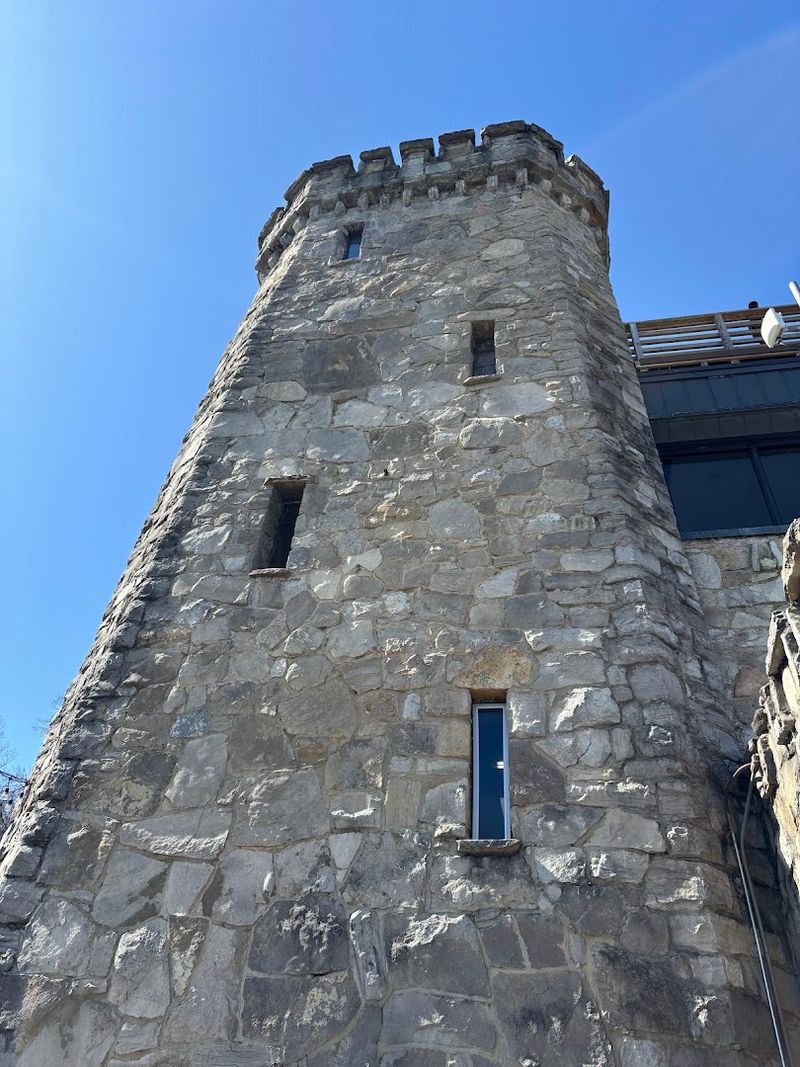
After spending 90 minutes underground, stepping back out into daylight feels like a reset, and the experience does not have to end at the cave exit. Ruby Falls includes access to the Lookout Mountain Tower, a stone observation structure that stands near the entrance to the cave complex.
The tower offers a clear, wide view of Chattanooga and the surrounding Tennessee Valley. On a clear day, you can see the city laid out below, the Tennessee River winding through it, and the ridgelines of the Appalachian system stretching into the distance in multiple directions.
The climb to the top of the tower is short and easy, just a spiral staircase of modest height, and the payoff is a perspective on the landscape that puts everything into context. You just walked through the inside of that mountain, and now you are standing on top of it looking out over the same terrain that soldiers fought over during the Civil War in 1863.
The combination of the underground cave tour and the above-ground tower view makes for a genuinely complete outing. It is the kind of place where the experience keeps layering on itself, and you leave with more to think about than you expected when you arrived.
The Geology Behind the Magic: How the Cave Formed
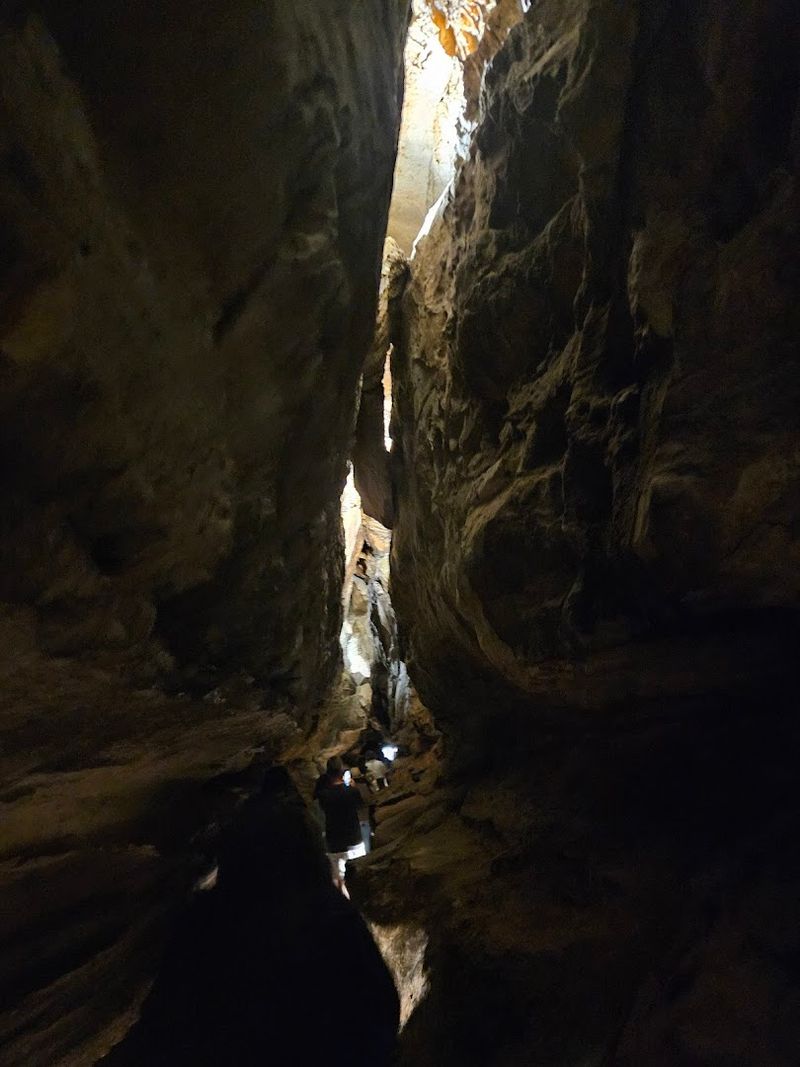
The cave at Ruby Falls did not appear overnight. It formed over hundreds of millions of years through a process called karstification, where slightly acidic groundwater slowly dissolves soluble limestone rock, carving out passages, chambers, and voids deep inside the earth.
Lookout Mountain is made largely of limestone deposited during the Mississippian period, roughly 300 to 340 million years ago, when the region was covered by a shallow inland sea. The shells and skeletons of marine organisms accumulated on the seafloor, compressed over time, and became the thick limestone layers that now form the mountain.
Water seeping through cracks in the rock over millions of years gradually widened those cracks into the cave passages visitors walk through today. The waterfall itself is fed by a natural underground stream that enters the cave through fissures higher in the mountain and drops through a vertical shaft to the chamber below.
The formations inside the cave, the stalactites, stalagmites, and columns, grow at an extremely slow rate, typically about one cubic inch every 100 years. That means some of the larger formations you see on the tour have been growing since long before human civilization developed writing, which gives the whole cave a quietly humbling sense of scale.
Ruby Falls in Popular Culture and Regional Identity
Ruby Falls has been a fixture of Tennessee tourism for nearly 100 years, and that kind of longevity tends to leave a mark on regional identity. It has appeared in travel features, road trip guides, and bucket list articles for decades, consistently holding a spot among the most distinctive natural attractions in the entire southeastern United States.
For many Tennessee families, a visit to Ruby Falls is a generational tradition. The reviews and comments from visitors frequently mention returning after 10, 15, or even 20 years away, bringing their own children to see the same waterfall they saw as kids.
That cycle of return visits says something genuine about how the place stays with people.
The attraction also draws visitors from well outside the region. Travelers passing through Chattanooga on road trips from states like Georgia, Alabama, Kentucky, and even as far as Oklahoma have made it a planned stop on longer journeys through the South.
The name recognition stretches far, and the reality of the place tends to match or exceed the expectations that name builds.
Oklahoma travelers, in particular, often note that nothing in the flat plains of their home state quite prepares them for the experience of descending into a mountain and finding a waterfall waiting at the bottom.
Why This Underground Wonder Still Earns Its Reputation
Some attractions build a reputation and then coast on it for years without really delivering. Ruby Falls is not one of those places.
The combination of genuine geological wonder, thoughtful presentation, and a staff that clearly cares about the visitor experience keeps it earning strong reviews year after year.
The 145-foot waterfall is the anchor, but the cave passage leading to it does real work too. The formations, the lighting, the cool air, and the guided commentary all build toward that final reveal in a way that feels deliberate and satisfying rather than rushed.
The fact that the waterfall exists at all inside a mountain in Tennessee still feels slightly improbable, even after you have seen it in person. That sense of pleasant disbelief is part of what makes it memorable.
Visitors from across the country, including those making long drives from states like Oklahoma, Georgia, and the Carolinas, consistently say the trip was worth every mile.
Ruby Falls is the kind of place that reminds you that the natural world still has a few surprises left, and that sometimes the most extraordinary things are the ones hidden completely out of sight, waiting for someone curious enough to take the elevator down and find out what is inside the mountain.
Share this story