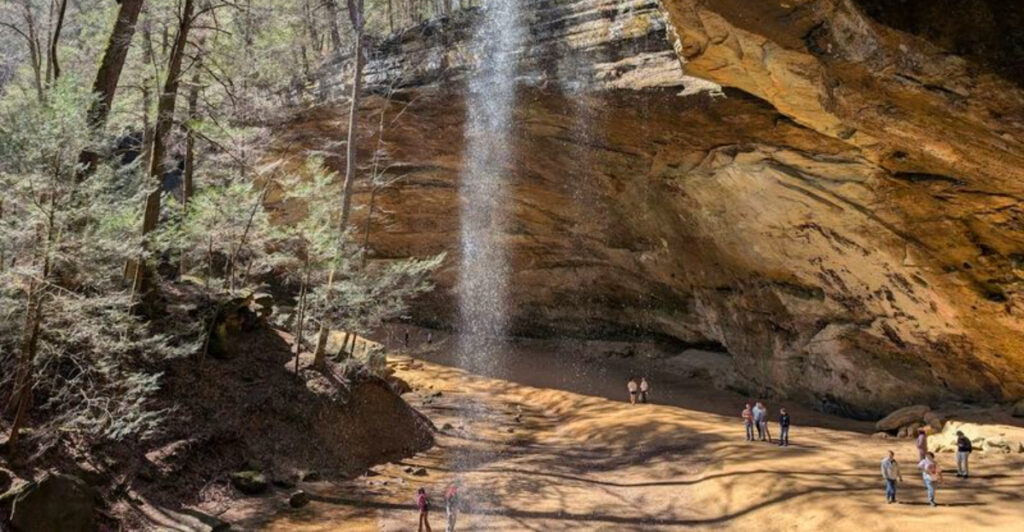
There is a place in Ohio where the ground opens up into something so massive and quiet that you almost forget the outside world exists. A horseshoe-shaped cavern stretches wide enough to swallow a crowd, a soft waterfall trickles down from above, and ferns line the path like a green welcome mat.
I had driven past plenty of state parks before, but nothing quite prepared me for the scale of what waited at the end of a short woodland trail. This is the kind of place that makes you stop mid-sentence and just stare, and I am here to tell you exactly why it deserves a spot on your must-visit list.
Where Ash Cave Actually Is
Ash Cave sits at 26400 OH-56, South Bloomingville, OH 43152, tucked inside Hocking Hills State Park in southeastern Ohio. The park is managed by the Ohio Department of Natural Resources, and the cave is one of its most celebrated natural features.
Getting there from Columbus takes roughly an hour and a half, making it a very doable day trip. The surrounding region is known for its sandstone cliffs, dense forests, and quiet creek valleys that feel a world away from city noise.
The parking lot is well-marked and spacious, with restroom facilities right at the trailhead. You can reach the cave by phone at +1 740-385-6842, and the park website at ohiodnr.gov has trail maps and seasonal updates worth checking before you go.
Hours run from 7 AM to 5 PM daily, so an early start gives you the best light and the fewest crowds. Unlike destinations in Oklahoma or other southern states, Ohio’s Hocking Hills region offers a distinctly lush, green landscape that feels refreshingly cool even in summer.
The Sheer Scale of the Cavern
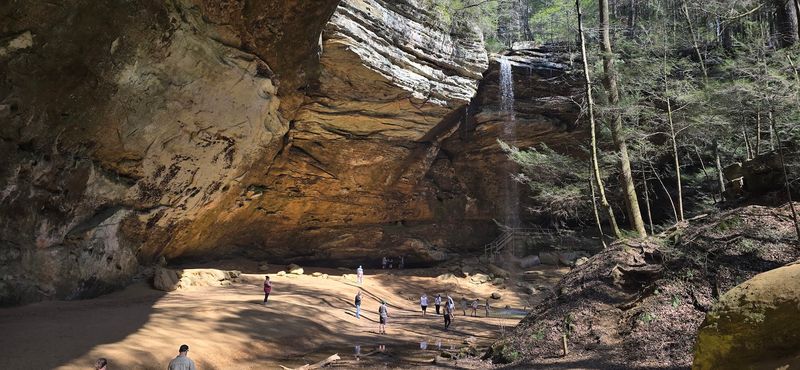
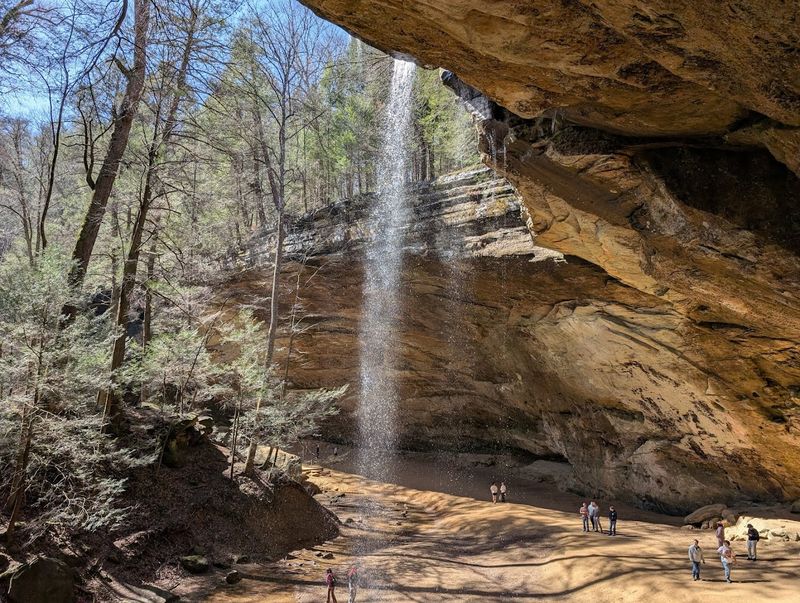
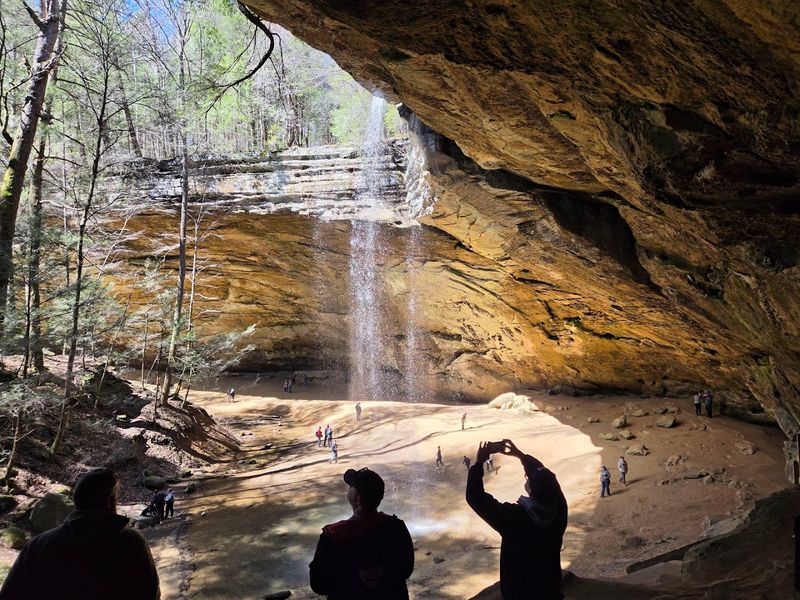
The first time you round the bend in the trail and the cave comes into full view, your brain genuinely struggles to process what it is seeing. Ash Cave is considered one of the largest recessed caves east of the Mississippi River, and that title is not an exaggeration.
The horseshoe-shaped overhang stretches approximately 700 feet in length and reaches up to 100 feet in height at its tallest point. The floor beneath it is a soft, sandy surface that feels almost like a natural amphitheater.
From below the overhang, you can look straight up at the curved ceiling and feel remarkably small in the best possible way. The rock face is streaked with mineral patterns and patches of moss that shift in color depending on the season and moisture levels.
Visitors often go quiet when they first arrive under the overhang, not because anyone tells them to, but because the space demands a moment of quiet appreciation. Much like certain geological wonders found across states from Oklahoma to New York, Ash Cave carries a weight and presence that photographs simply cannot capture fully.
The Waterfall at the Heart of It All
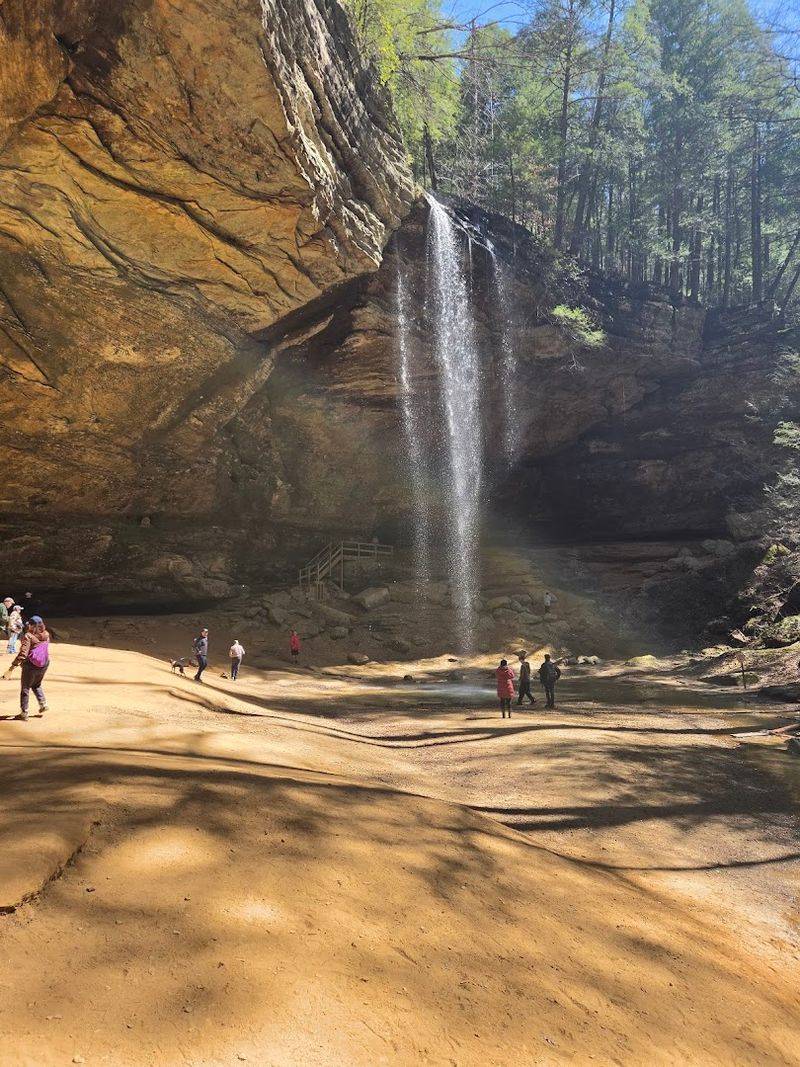
Right at the center of the cave’s back wall, a waterfall drops from the rim above and lands on the sandy floor below. Its flow depends entirely on recent rainfall, so the experience changes dramatically from visit to visit.
After a heavy rain, the falls push out a wide, dramatic curtain of water that sends mist drifting across the cave floor. On drier days, it becomes a delicate trickle that still catches the light beautifully and fills the space with a soft, steady sound.
In winter, something truly extraordinary happens. Cold temperatures cause the waterfall to freeze into a towering ice cone at the base, which grows taller as the season deepens.
Hikers who brave the cold are rewarded with a frozen sculpture that looks almost too perfect to be natural.
The waterfall is visible from the accessible trail, so you do not need to scramble over rocks to enjoy it. Whether you visit in spring when it roars or in late summer when it whispers, the falls remain the emotional centerpiece of the entire cave experience.
Trail Options for Every Fitness Level
One of the most refreshing things about visiting Ash Cave is that the trail genuinely welcomes everyone. The lower portion of the path from the parking lot to the cave is paved and flat, covering about 0.3 miles, which takes most people under ten minutes at a comfortable pace.
That flat section is considered wheelchair accessible, and families with strollers have completed it without any trouble. The path winds alongside a quiet creek, passes through a fern-lined gorge, and slowly reveals the cave as you get closer, which builds anticipation in a very satisfying way.
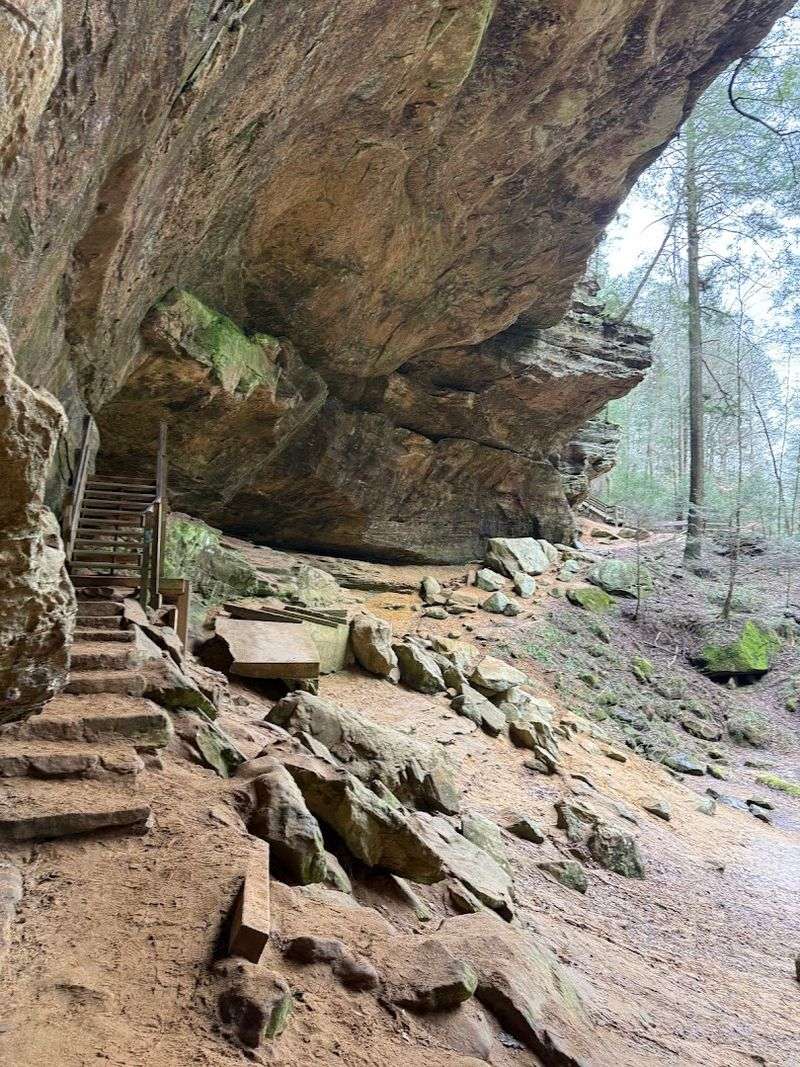
For those who want more of a workout, the rim trail loops up and over the top of the cave with a noticeable elevation gain and several sets of stairs. That upper route rewards hikers with a bird’s-eye view of the recess and a different perspective on the surrounding forest.
The out-and-back option along the lower path is perfect for younger kids or anyone with physical limitations, while the full loop adds maybe another 20 to 30 minutes. Compared to more rugged terrain in states like Oklahoma, this trail system is genuinely beginner-friendly without feeling tame.
Acoustics That Will Catch You Off Guard
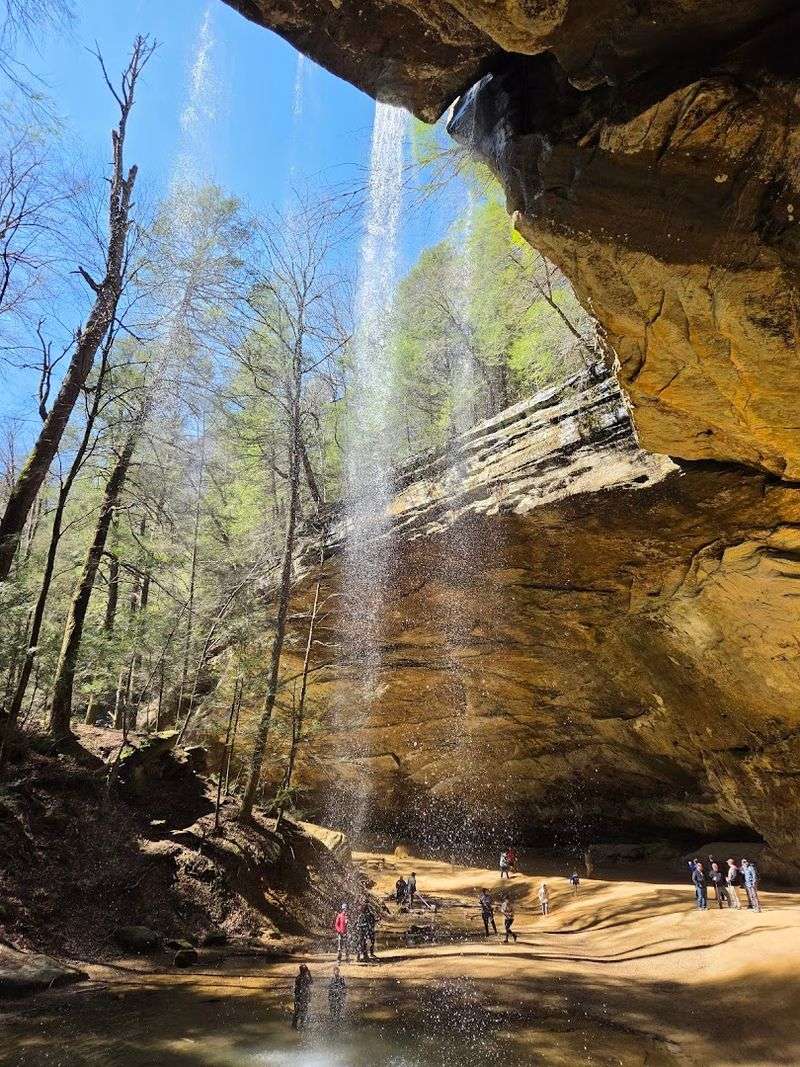
Nobody warns you about the sound. The curved ceiling of Ash Cave acts like a natural acoustic shell, bouncing noise around in ways that feel almost theatrical.
A normal conversation spoken near the back wall carries farther than expected, and sounds from across the cave arrive with unusual clarity.
On one recorded visit, a group of singers near the top of the rim trail began performing, and their voices floated down into the cave below with a rich, full quality that surprised everyone standing beneath the overhang. Nobody even saw where the music was coming from at first.
The effect is not limited to singing. Even the sound of the waterfall seems amplified and layered in a way that changes as you move through the space.
Standing at the far edge of the recess versus standing directly beneath the falls produces two noticeably different sonic experiences.
Bringing a musical instrument here, even something small like a harmonica, turns into an unexpectedly moving experience. The cave rewards curiosity in all kinds of ways, and the acoustics are one of those quiet surprises that visitors remember long after the photos have been taken.
What the Gorge Looks Like Before You Arrive
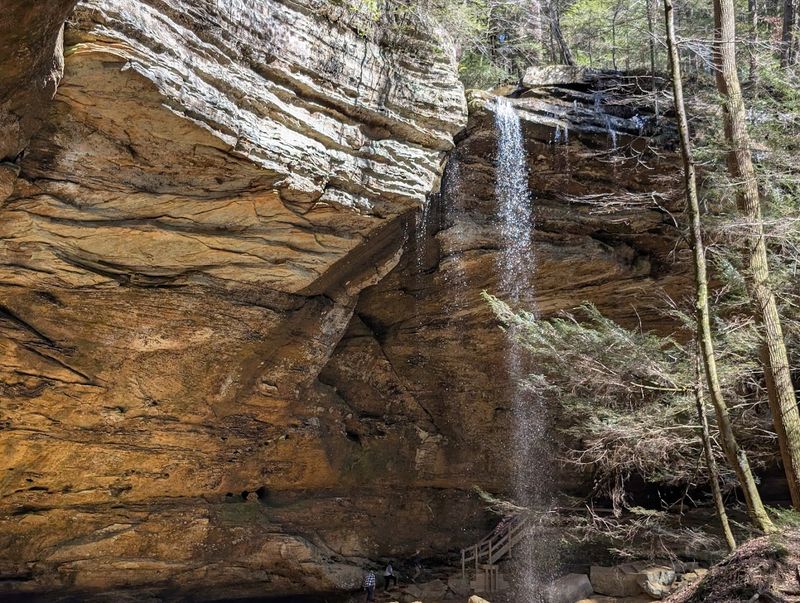
The journey to the cave is half the experience. The trail from the parking lot follows a narrow gorge carved by centuries of water movement, and the walls on either side rise steeply, giving the path a hushed, enclosed feeling.
Ferns cover nearly every surface along the lower trail, and the combination of the green canopy above and the rocky walls on each side makes the gorge feel like a separate ecosystem. In spring and early summer, the vegetation is so thick that the light turns a soft, filtered green.
A small creek runs alongside the path for much of the walk, and its sound provides a constant, calming backdrop. The trail is wide enough that you never feel crowded, even when other hikers are nearby, and there are natural spots along the way to pause and take in the surroundings.
The cave does not appear all at once. It reveals itself gradually as you round the final bend, which makes the moment of first seeing it feel genuinely earned.
That slow reveal is one of the trail’s best design features, and it adds a sense of discovery that keeps the experience feeling fresh no matter how many times you visit.
Visiting in Different Seasons
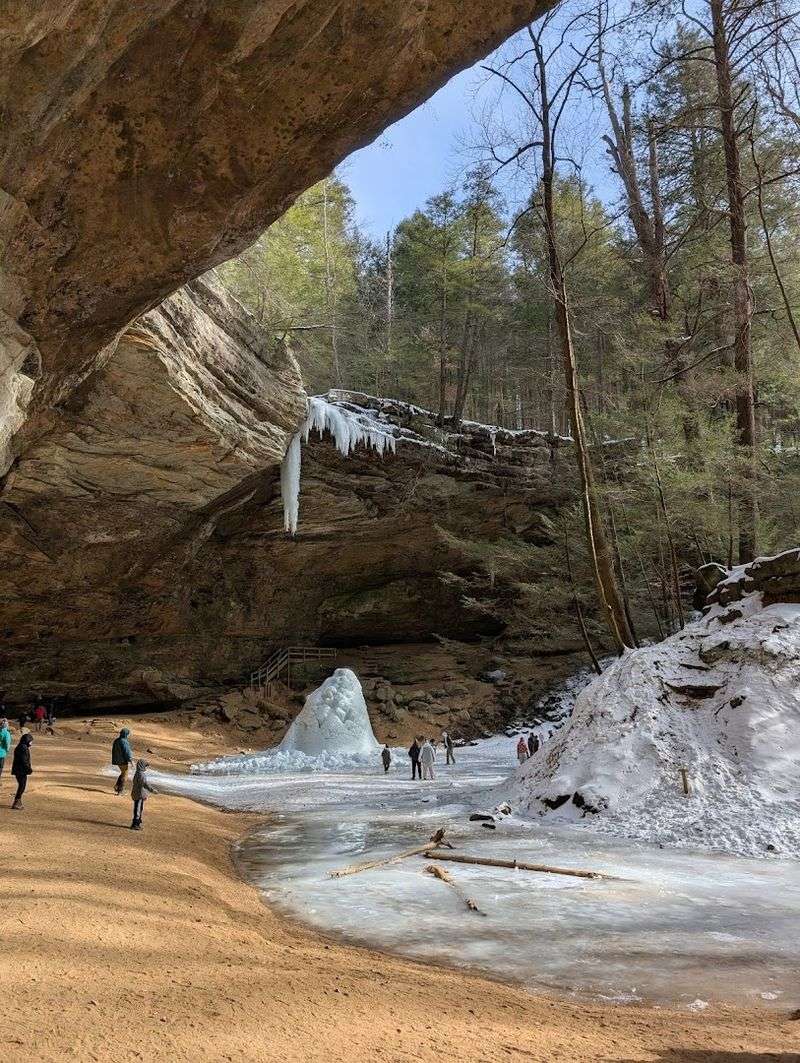
Ash Cave behaves differently depending on when you show up, and that variability is one of its greatest strengths as a destination. Spring brings the most dramatic waterfall flow and the richest green along the trail, making it the most photogenic time for many visitors.
Summer keeps the gorge noticeably cooler than the surrounding area, which is a genuine relief on hot Ohio afternoons. The shade from the overhang and the moisture from the creek combine to drop the temperature inside the cave by several degrees compared to the open parking lot.
Autumn transforms the rim trail into a corridor of orange, red, and gold, and the contrast between the colorful canopy and the grey sandstone walls is striking. The waterfall may slow to a trickle by late fall, but the foliage more than compensates.
Winter is perhaps the most underrated season for a visit. The frozen ice cone that forms at the base of the waterfall draws dedicated hikers even in January and February, and the bare trees open up views of the rock faces that leafy summers conceal entirely.
Unlike the flat winter landscapes of Oklahoma, Ohio’s Hocking Hills turns dramatically sculptural when temperatures drop.
Tips for Parking and Crowds
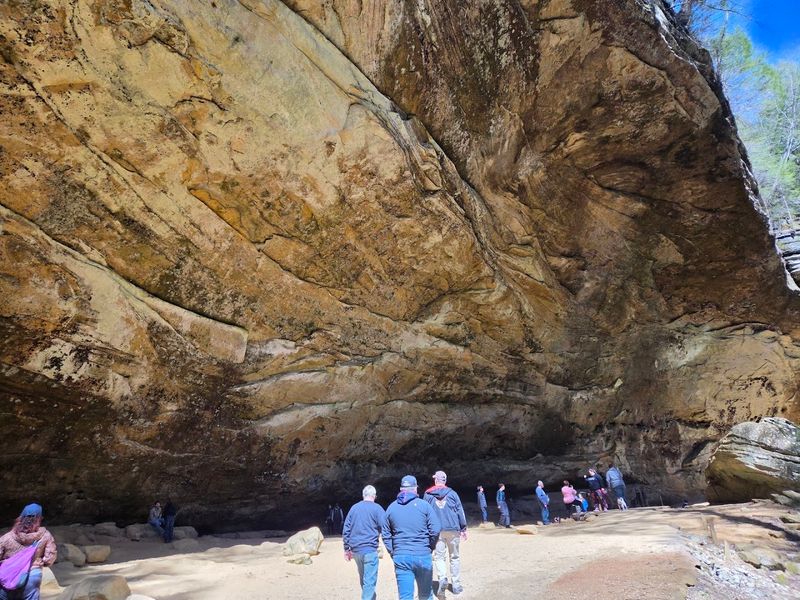
The parking situation at Ash Cave is genuinely better than at many popular natural sites, but weekends during peak season still require some strategy. The lot is large and well-organized, but it can fill up by mid-morning on Saturday and Sunday from spring through fall.
Arriving before 9 AM on weekends almost guarantees a spot near the trailhead, and the early morning light in the gorge is worth the early alarm anyway. Weekday visits are significantly quieter, and a Tuesday or Wednesday morning can feel almost private.
Clean restrooms are available right at the trailhead, which is a detail that matters more than people admit when planning a hike with kids or older family members. There is also a dumpster in the parking area, so you can pack a full picnic without worrying about carrying trash back out.
The cave itself does not have a formal entry fee as part of Ohio’s state park system, which makes it one of the most accessible natural attractions in the region. Budget travelers and families appreciate that kind of generosity, especially when planning multi-stop trips through Hocking Hills rather than spending a full budget on a single destination.
History and Human Connection to the Cave
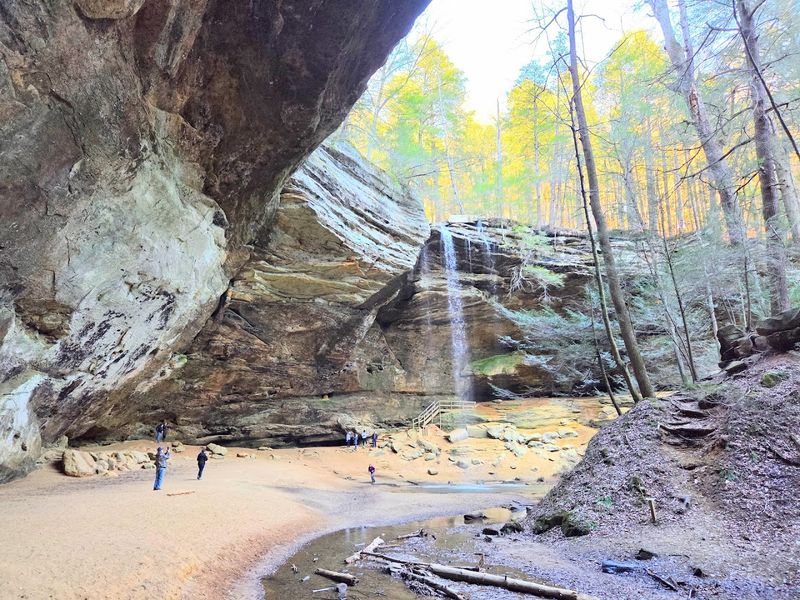
The name Ash Cave comes from a practical piece of history. Early settlers and Indigenous peoples used the large recess as shelter, and explorers later found a significant pile of ash beneath the overhang, evidence of long-term human habitation and fire use over many generations.
The cave’s protected shape made it a logical gathering point. The overhang blocks rain, the sandy floor provides a dry surface, and the natural acoustics would have made communication easy across the full width of the space.
It does not take much imagination to picture people living and gathering here long before hiking trails existed.
If you look carefully at the rock walls, you can find old carvings left by visitors over the past century and more. Some are genuinely old, dating back to the 1800s, and while adding new marks is not condoned, searching for the historical ones is a quiet, interesting activity that connects you to everyone who has stood in the same spot before.
That layered human history gives Ash Cave a depth beyond its geology. It is not just a beautiful rock formation but a place where people have gathered, rested, and found shelter for far longer than Ohio has been a state.
Why This Cave Stays With You Long After You Leave
Most natural attractions are impressive in the moment and then fade into a general memory of trees and rocks. Ash Cave is different.
The scale of it, the sound of it, and the way the light moves across the ceiling throughout the day give it a quality that stays specific in your memory rather than blurring into everything else you have ever hiked.
Part of what makes it linger is the contrast. The trail feels intimate and enclosed, and then the cave opens up with a sudden generosity that feels almost theatrical.
That shift in scale is something your body registers as well as your eyes.
The cave also rewards repeat visits in a way that few places do. Every season brings a genuinely different version of the same space, and the waterfall alone can look completely different after a rainstorm versus after a dry week.
Ohio may not have the red rock canyons of the Southwest or the dramatic coastlines of New England, but places like Ash Cave prove that the state holds its own when it comes to raw natural beauty. Much like how Oklahoma surprises visitors with its own varied landscapes, Ohio keeps revealing new layers the more you explore it, and Ash Cave is the best possible starting point for that discovery.
Share this story